

Why Your Burn Injury Deserves Maximum Compensation
A burn injury lawsuit can help you recover the compensation you need when someone else’s negligence causes your burns. These cases often result in significant settlements because burns cause intense pain, permanent scarring, and life-changing medical expenses.
Key facts about burn injury compensation:
- First-degree burns: Settlements typically range from $7,700 to $35,779
- Second-degree burns: Compensation often falls between $20,000 to $455,000
- Third-degree burns: Awards can reach $35.7 million for severe cases
- Fourth-degree burns: The most catastrophic cases have resulted in settlements over $100 million
Burn injuries affect hundreds of thousands of Americans each year. According to the American Burn Association, over 480,000 people receive medical treatment for burn injuries each year in the United States. These aren’t just statistics – they represent people whose lives changed in an instant due to workplace accidents, car crashes, defective products, or unsafe property conditions.
The legal process can feel overwhelming when you’re already dealing with physical pain, emotional trauma, and mounting medical bills. But understanding your rights is the first step toward getting the compensation you deserve. Whether your burns came from a car accident, workplace incident, or defective product, you may have grounds for a lawsuit if someone else’s negligence caused your injury.
Most burn injury lawyers work on contingency fees – meaning you pay nothing upfront and only pay if you win your case. This removes the financial barrier to getting experienced legal help when you need it most.
Understanding Your Burn Injury and Its Legal Value
When you’re dealing with a burn injury, it’s so much more than just a physical wound. It’s an event that can truly turn your life upside down, bringing with it lasting pain, emotional distress, and often, significant financial challenges. How severe your burn is, where it’s located on your body, and its long-term effects are all key pieces in figuring out the potential value of your burn injury lawsuit. To build a strong case, it’s really important to understand how doctors classify burns and how these medical terms translate into legal ones.
Burn injuries are incredibly complex. They don’t just affect your skin; they can also damage the tissues, nerves, and even organs underneath. That’s why medical classification is so vital. It directly impacts the kind of treatment you’ll need, how long your recovery might take, and, crucially, the types of financial compensation you can claim in a burn injury lawsuit. Factors like the Total Body Surface Area (TBSA) affected by your burn also play a huge role in determining its severity and potential settlement value.
Classifying Burn Injuries by Degree
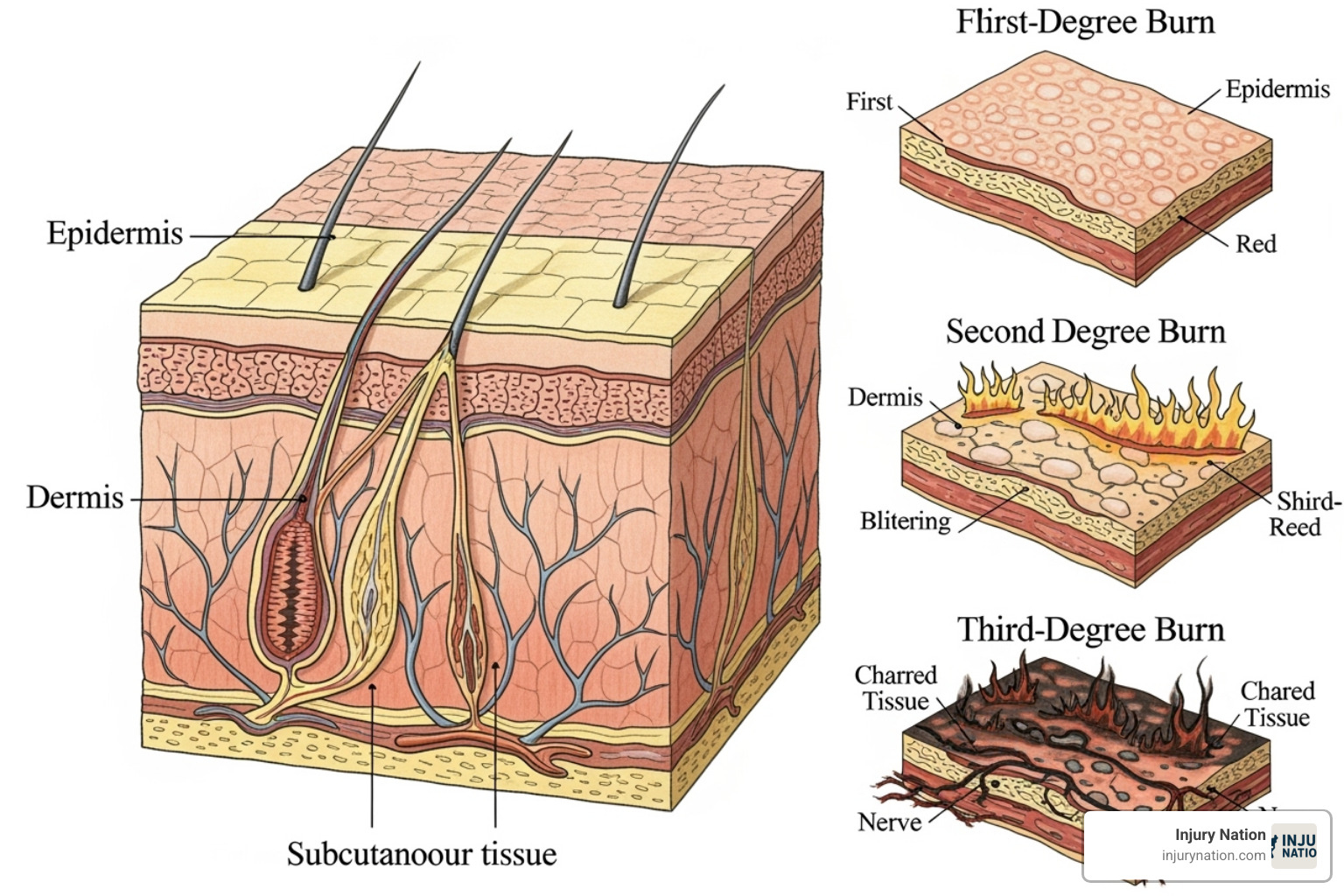
Burns are typically categorized into four degrees, each showing a different level of damage to your skin and the tissues beneath it. These classifications are fundamental to understanding just how serious your injury is and how it might impact your life moving forward. The higher the degree, generally the more severe the injury and, often, the higher the potential compensation in a burn injury lawsuit.
Let’s look at the different classifications:
- First-degree burns: These are the mildest, affecting only the very top layer of your skin, called the epidermis. Think of a really bad sunburn – symptoms include redness, some swelling, and pain. While they usually heal up quickly with minimal fuss, if someone else’s carelessness caused your first-degree burn, it could still be part of a burn injury lawsuit.
- Second-degree burns: These burns go a bit deeper, damaging both the epidermis and the layer beneath it, called the dermis. You’ll likely see blisters, feel intense pain, and notice significant swelling. Second-degree burns can sometimes lead to scarring or permanent damage and almost always require medical attention. For example, water at 60°C can cause a second-degree burn in just one second!
- Third-degree burns: These are considered quite severe. They destroy all layers of your skin and can even damage underlying tissues, nerves, and fat. The affected skin might look white, black, or charred, and sometimes there’s surprisingly little pain because the nerves have been damaged. Third-degree burns almost always cause permanent scarring, need long-term medical care (like skin grafts), and often lead to significant compensation in a burn injury lawsuit.
- Fourth-degree burns: These are the most catastrophic. They extend beyond the skin, reaching into muscles, tendons, or even bones. The area might appear charred or blackened, and there’s usually a complete loss of sensation. Fourth-degree burns can cause truly devastating damage, often requiring extensive medical treatment, possible amputation, and can result in permanent disability. These types of burns are unfortunately common in extreme situations, like house fires, which are a leading cause of unintentional fire-related deaths.
Common Types of Burns That Lead to Lawsuits
Burn injuries can happen in many different ways, and the type of burn often gives us clues about what caused it and who might be responsible. If your burn was due to someone else’s negligence, regardless of the type, you might have grounds for a burn injury lawsuit.
Here are some common types of burns we see in legal cases:
- Thermal burns: These are the most frequent, caused by direct contact with flames, extremely hot liquids (we call these scalding injuries), steam, or hot objects. Scalding from hot tap water, for instance, is especially dangerous for children. Many thermal burns occur in residential fires, often linked to cooking accidents, or are sustained in car accidents where vehicles catch fire.
- Chemical burns: These happen when harmful chemicals touch your skin, eyes, or are even ingested. They can occur in industrial accidents, from mishandling hazardous materials, or even from common household products like drain cleaners or strong detergents. Chemical burns can cause long-term damage and scarring.
- Electrical burns: These result from an electric current passing through your body. What’s tricky about electrical burns is that they might look minor on the outside but can cause significant internal damage, sometimes affecting the heart or nerves. Common causes include faulty wiring, exposed power lines, or defective appliances.
- Radiation burns: Less common, these are caused by prolonged exposure to radiation sources, such as industrial equipment, or even from severe sunburns.
- Flash burns: These occur from a sudden, intense burst of heat, often from an explosion.
Estimating Potential Settlement Values
The potential value of your burn injury lawsuit settlement depends on many factors. However, the degree of your burn, its location on your body, the extent of scarring, and how it impacts your daily life are always top considerations. These factors help determine your “general damages,” which compensate you for the pain and suffering you’ve endured.
For example, a minor second-degree burn that heals well with few lasting effects might result in general damages around $8,000. But a severe third-degree burn, especially one that leads to significant and lasting physical and psychological consequences, could result in awards of $100,000 or even much more. Beyond pain and suffering, we also look at “economic damages,” like your medical bills (both current and future), lost wages, and rehabilitation costs. Then there are “non-economic damages,” which cover things like permanent disfigurement and the emotional distress you’ve experienced.
Here’s a look at potential settlement ranges based on the severity of the burn:
| Burn Severity | Description | Potential Settlement Range (General Damages) |
|---|---|---|
| First-Degree | Minor redness and pain, affecting the top layer of skin. | $5,000 – $15,000 |
| Second-Degree | Blistering, significant pain, and potential scarring. | $25,000 – $100,000+ |
| Third-Degree | Destroys all skin layers, causing nerve damage and permanent scarring. Often requires skin grafts. | $100,000 – several million dollars |
| Fourth-Degree | Extends to muscle and bone, resulting in catastrophic, life-altering injuries. | Can exceed several million dollars |
Understanding Your Burn Injury and Its Legal Value
When you suffer a burn, it’s not just a physical wound; it’s an event that can dramatically alter your life. The severity, location, and long-term impact of your burn injury are crucial factors in determining the potential value of your burn injury lawsuit. Understanding how medical professionals classify burns and how these classifications translate into legal terms is essential for building a strong case.
Burn injuries are complex, affecting not only the skin but also underlying tissues, nerves, and even organs. This is why medical classification is so important, as it directly influences the extent of treatment, recovery time, and the types of damages you can claim.
Classifying Burn Injuries by Degree
Burns are typically classified into four degrees, each indicating a different level of damage to the skin and underlying tissues. These classifications are fundamental to assessing the severity of your injury and its impact on your life.
- First-degree burns: These are the mildest type, affecting only the outermost layer of skin (epidermis). Symptoms include redness, swelling, and pain, much like a severe sunburn. While they usually heal quickly with minimal treatment, if caused by someone else’s negligence, they can still contribute to a burn injury lawsuit.
- Second-degree burns: These burns damage both the epidermis and the layer beneath it (dermis). They are characterized by blisters, intense pain, and significant swelling. Second-degree burns can lead to scarring or permanent damage and often require medical treatment. Water at 60°C, for instance, can cause a second-degree burn in just one second.
- Third-degree burns: Considered severe, these burns destroy all layers of the skin and can damage underlying tissues, nerves, and fat. The skin may appear white, black, or charred, and there might be little to no pain due to nerve damage. Third-degree burns cause permanent scarring, require long-term medical care (such as skin grafts), and often lead to significant compensation in a burn injury lawsuit.
- Fourth-degree burns: These are the most catastrophic, extending beyond the skin to muscles, tendons, or bones. The affected area may look charred or blackened, and there is often a complete loss of sensation. Fourth-degree burns can lead to catastrophic damage, requiring extensive medical treatment, amputation, and permanent disability. These types of burns may be more common in extreme situations, such as house fires, which are a leading cause of unintentional fire-related deaths.
For a deeper understanding of these classifications, you can refer to scientific research on burn classification. Scientific research on burn classification
Common Types of Burns That Lead to Lawsuits
A burn injury can arise from various sources, and the type of burn often points to the potential cause and liable parties.
- Thermal burns: The most common type, caused by contact with flames, hot liquids (scalding), steam, or hot objects. Scalding injuries from hot tap water are particularly dangerous for children. Residential fires are a leading cause of cooking accidents, and thermal burns are often seen in motor vehicle crashes where vehicles catch fire. For more information, explore resources on Thermal Burns.
- Chemical burns: Occur when harmful chemicals come into contact with the skin, eyes, or internal organs. These can happen in industrial accidents, from hazardous materials, or even from common household products like drain cleaners, oven cleaners, or strong detergents. Chemical burns can lead to long-term damage and scarring. For more information, explore resources on Chemical Burns.
- Electrical burns: Result from an electric current passing through the body, often causing burns at the entry and exit points. These can be deceptive, appearing minor externally while causing significant internal damage, including heart problems or nerve damage. Faulty wiring, exposed power lines, or defective appliances are common culprits. You can learn more about Electrical Burns.
- Radiation burns: Caused by prolonged exposure to radiation, such as from industrial sources or even severe sunburn.
- Flash burns: Occur from a sudden, intense burst of heat, like an explosion.
Estimating Potential Settlement Values
The value of your burn injury lawsuit settlement depends on numerous factors, but the degree of your burn, its location, the extent of scarring, and its impact on your daily life are paramount. General damages, which compensate for pain and suffering, vary significantly.
For instance, minor second-degree burns with minimal long-term effects might result in a settlement in the tens of thousands, while severe third-degree burns with lasting physical and psychological consequences could lead to a settlement of hundreds of thousands of dollars or more. Beyond pain and suffering, we also consider economic damages like medical expenses and lost income, and non-economic damages such as disfigurement and emotional distress.
Here’s a look at potential settlement ranges based on the severity of the burn:
| Burn Severity | Description | Potential Settlement Range (General Damages) |
|---|---|---|
| First-Degree | Minor redness and pain, affecting the top layer of skin. | $5,000 – $15,000 |
| Second-Degree | Blistering, significant pain, and potential scarring. | $25,000 – $100,000+ |
| Third-Degree | Destroys all skin layers, causing nerve damage and permanent scarring. Often requires skin grafts. | $100,000 – several million dollars |
| Fourth-Degree | Extends to muscle and bone, resulting in catastrophic, life-altering injuries. | Can exceed several million dollars |