

Why Getting the Right Help After an Accident Changes Everything
Accident victim help is critical in the moments following a collision. Knowing where to turn can mean the difference between fair compensation and financial hardship. If you’re feeling overwhelmed, that’s completely normal. In Las Vegas alone, over 33,800 car accidents occurred in 2019, causing more than 18,000 injuries.
Insurance companies have one goal: pay out as little as possible. This guide will help you steer the complex system and protect your rights. Here are the essential first steps:
- Stop at the scene – Never leave, even if damage seems minor.
- Check for injuries – Assess yourself and others, and call 911 if needed.
- Call the police – An official report is vital if there are injuries or significant damage.
- Exchange information – Get names, contact details, insurance info, and license plates.
- Document everything – Take photos, get witness details, and note road conditions.
- Seek medical attention – Go to a doctor even if you feel fine, as some injuries appear later.
- Report to your insurer – Notify them within your policy’s required timeframe.
- Consult a lawyer – Speak to an attorney before talking to the other party’s insurance adjuster.
This guide will walk you through what to do after an accident, how to find financial support, and when you need professional help. You don’t have to figure this out alone.
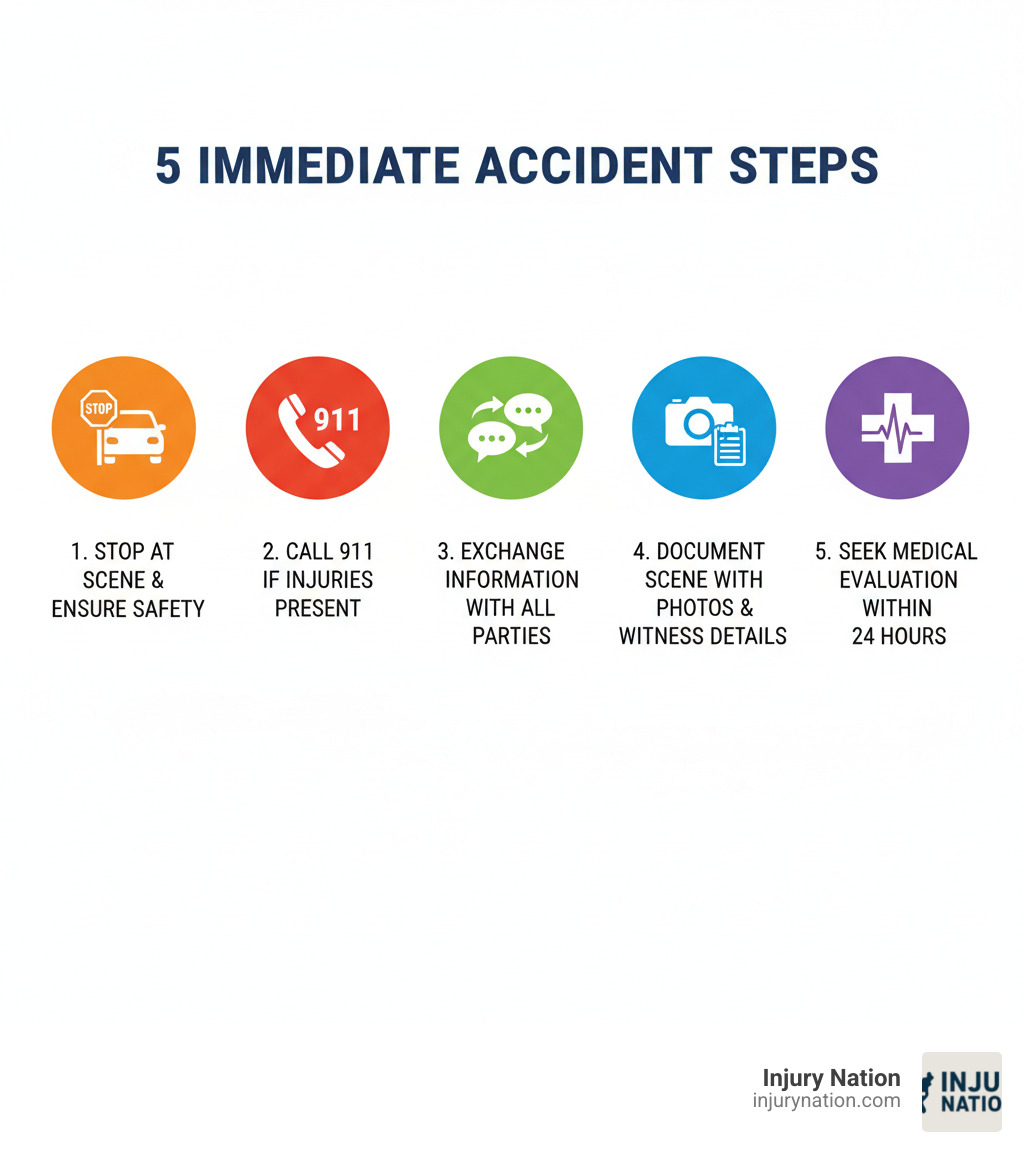
The First 24 Hours: Critical Steps at the Accident Scene
The moments after an accident are chaotic, but what you do next is crucial for your safety and your legal rights. Here’s a step-by-step guide.
First, you must stop at the scene. Nevada law requires drivers to stop at the crash scene after any accident involving injury or property damage. Leaving is a serious crime. Stay put, check yourself for injuries, then check on others. If anyone is hurt or the damage is significant, call 911 immediately.
In Nevada, you should also call the police to create an official accident report. This report is critical evidence for your insurance claim. While waiting for help, exchange information with the other driver(s): names, addresses, phone numbers, driver’s license numbers, license plate numbers, and insurance details. If there are witnesses, get their contact information too; their unbiased account can be invaluable.

Next, document the scene. Use your phone to take photos and videos of everything: vehicle damage, positions of the cars, skid marks, road conditions, and any visible injuries. The more evidence you gather, the stronger your case.
A critical piece of advice: do not admit fault or apologize. Saying “I’m sorry” can be used against you by insurance companies. Stick to the facts and exchange only necessary information.
After leaving the scene, seek medical attention as soon as possible, even if you feel fine. Adrenaline can mask serious injuries like whiplash or concussions that may not appear for days. Seeing a doctor within 24 hours creates a medical record that links your injuries directly to the accident. Without this proof, an insurer may argue your injuries aren’t related to the crash or aren’t serious. Once you begin treatment, follow your doctor’s instructions precisely. Skipping appointments can be used by adjusters to claim you weren’t truly hurt.
Finally, make sure you obtain a copy of the police report as soon as it’s available and check it for errors. A formal record of the accident is essential; without it, proving what happened becomes your word against theirs.
Navigating the Claims Process: Where to Find Accident Victim Help
After an accident, you’ll face a maze of paperwork and phone calls. Understanding the claims process is key to getting the accident victim help you deserve.
Your first step is to contact your insurance company promptly. In some jurisdictions like Ontario, you must notify them within seven days and submit forms within 30 days. Missing deadlines can jeopardize your claim. Even in Nevada, you must report the accident to your own insurer as your policy requires it.
Property damage and personal injury claims are handled differently. Vehicle repairs are usually straightforward, but injury claims are more complex and take longer, especially in Nevada’s at-fault system where you’ll deal with the other driver’s insurer.
Understanding Your Insurance: No-Fault vs. At-Fault Systems
Insurance systems can be confusing. Whether you’re in a no-fault or at-fault state determines how you get compensation.
In a no-fault system (like Ontario’s), your own insurer covers your medical bills and lost wages through Statutory Accident Benefits (SABs), regardless of who caused the crash. This provides faster help but often limits your right to sue the at-fault driver for pain and suffering unless injuries are severe.
Nevada uses an at-fault system, meaning the driver who caused the accident is financially responsible for all damages, including medical bills, lost wages, and pain and suffering. This makes proving fault absolutely critical.
| Feature | No-Fault System (e.g., Ontario) | At-Fault System (e.g., Nevada) |
|---|---|---|
| Initial Claims | Your own insurer pays medical/lost wages (SABs), regardless of fault | At-fault driver’s insurer pays for damages |
| Right to Sue | Limited; typically only for severe injuries above a threshold | Generally, you can sue the at-fault driver for all damages |
| Fault | Not a factor for initial benefits from your own insurer | Crucial; determines who is financially responsible |
| Compensation | Benefits from your insurer, plus potential tort claim for severe injuries | Compensation from at-fault driver’s insurer, or via personal injury lawsuit |
In Nevada, the evidence you collected at the scene—photos, witness statements, and the police report—is the foundation for proving the other driver was at fault.
Dealing with Insurance Adjusters
Soon after the accident, an insurance adjuster will call. They may sound friendly, but remember: an adjuster’s job is to save the insurance company money. They are not on your side, even if they’re from your own insurer.
Be wary of these common tactics:
- Recorded Statements: An adjuster will ask for one. Politely decline until you’ve spoken with a lawyer. Anything you say can be taken out of context and used against you.
- Admitting Fault: Adjusters are trained to ask questions that trick you into admitting partial blame. Stick to the facts.
- Lowball Settlement Offers: They may offer a quick settlement before the full extent of your injuries is known. These offers are almost always far less than what your claim is worth. Once you accept, you can’t ask for more.
Don’t face adjusters alone. A lawyer understands the role of negotiation in claims and can protect you from these tactics. Let your lawyer handle all communication with the insurance company to ensure you get the full compensation you deserve.
Understanding Your Rights and Available Benefits
After an accident in Nevada, you have more rights and access to more accident victim help than you might realize. Understanding what you’re entitled to is the first step toward a full recovery.
Nevada is an at-fault state, meaning the person responsible for the crash is liable for the damages. You have the right to seek comprehensive compensation to make you whole again. This can include:
- Medical and Rehabilitation Costs: From the ambulance ride and hospital stay to ongoing physical therapy and medication.
- Lost Income and Earning Capacity: Compensation for the wages you’ve lost and may lose in the future if you cannot return to your job.
- Pain and Suffering: Damages for the physical pain, emotional distress, and loss of enjoyment of life caused by the accident.
- Other Damages: This covers property damage to your vehicle and out-of-pocket expenses like travel to medical appointments.
A personal injury lawsuit, or tort claim, is a powerful tool that allows you to seek full compensation for all these damages, which insurance companies often try to minimize.

The Role of a Lawyer: Professional Accident Victim Help
Insurance companies have teams of lawyers; you should have one too. A personal injury lawyer is essential for getting fair compensation. Most offer a free consultation to discuss your case with no obligation.
A lawyer acts as your advocate by:
- Explaining your legal options under Nevada law.
- Collecting and preserving evidence like police reports and medical records.
- Handling all paperwork and filing claims correctly and on time.
- Negotiating with insurance adjusters to fight for a fair settlement and protect you from lowball offers.
- Representing you in court if the insurance company refuses to be fair.
Your lawyer’s only job is to protect your interests and secure the maximum compensation possible for your injuries and losses.
Beyond Insurance: Other Sources of Accident Victim Help
While the at-fault driver’s insurance is the primary source of compensation, other options exist for Nevada residents facing financial hardship.
If the accident involved a crime, like a drunk driver, you might qualify for help from victim compensation programs like the Nevada Victims of Crime Program (VOC).
For long-term injuries that prevent you from working, you may be eligible for federal Social Security Disability benefits (SSDI or SSI). The application process is complex, but it can provide crucial income support.
Also, check if you have private disability insurance through your employer. This can replace a portion of your income while you recover. Finally, your health insurance will cover initial medical bills, though they may seek reimbursement from your final settlement—a process your lawyer can manage.
Overcoming Systemic Challenges and Financial Hardship
Even with a valid claim, getting the accident victim help you need can be a struggle. The system itself often presents significant obstacles.
Victims frequently face bureaucratic red tape, including confusing jargon and endless forms. These administrative delays are not just frustrating; the stress they cause can actively interfere with your physical recovery. It’s hard for your body to heal when your mind is consumed with financial worry.
Financial hardship can hit fast. Paychecks may stop, but bills for rent and medical care don’t. There is often a long gap between when you incur expenses and when you receive a settlement. This financial strain is a universal problem for accident victims, regardless of the insurance system.
The combined stress of physical pain, bureaucracy, and financial worry can lead to depression and anxiety, compounding your suffering.
This is why advocacy is so important. While some organizations work to reform insurance laws, your most powerful advocate is a personal injury lawyer. A lawyer cuts through the red tape, pushes back against delays, and fights for the compensation you need to focus on healing. They understand the system’s tactics and can steer the bureaucratic maze on your behalf. You don’t have to face these challenges alone.
Frequently Asked Questions about Accident Claims
After an accident, it’s normal to have questions. Here are answers to some of the most common ones we hear from people seeking accident victim help in Las Vegas.
What are the most common mistakes to avoid after an accident?
It’s easy to make mistakes in the chaos of an accident. Here are the most critical ones to avoid:
- Leaving the scene: Nevada law requires you to stop. Fleeing can lead to criminal charges.
- Admitting fault: A simple “I’m sorry” can be used by insurers to assign you blame. Stick to the facts.
- Not calling the police: An official police report is vital evidence for your claim, especially if there are injuries.
- Delaying medical care: Adrenaline can mask serious injuries. See a doctor immediately to protect your health and document a link between the crash and your injuries.
- Giving a recorded statement: Never give a statement to the other party’s insurer without consulting a lawyer. They are trained to get you to say things that will hurt your claim.
- Accepting the first settlement offer: Initial offers are almost always lowballs. Don’t sign away your rights before you know the full extent of your injuries and losses.
How much does it cost to hire a personal injury lawyer?
This is good news: you pay nothing upfront. Most personal injury lawyers work on a contingency fee basis, which means “no win, no fee.”
There are no hourly fees or upfront costs. Your initial consultation is free. If your lawyer wins your case, their fee is a pre-agreed percentage of your final settlement. This system makes expert legal help accessible to everyone. Your lawyer is motivated to get you the maximum compensation because they only get paid when you do.
How long do I have to file a claim after an accident?
This is extremely time-sensitive. In Nevada, you generally have two years from the date of the accident to file a personal injury lawsuit. This deadline is called the “statute of limitations.”
Two years may seem like a long time, but evidence disappears, and witnesses’ memories fade. Waiting too long can severely damage your case. There are very few exceptions to this rule, so it’s critical to act quickly.
Contacting a lawyer as soon as possible protects your legal rights and gives your attorney the time needed to build the strongest possible case for you. Don’t let the clock run out on your right to compensation.
Conclusion: Taking the Next Step Towards Recovery and Justice
Recovering from an accident is about more than physical healing. You’re also navigating a complex system where insurance companies are focused on their bottom line, not your well-being. You may be facing financial hardship, bureaucratic delays, and immense stress.
We want you to know: you are not alone, and you don’t have to fight this battle by yourself.
Throughout this guide, we’ve outlined the steps to protect your health and your rights. The single most important step you can take is to get a professional advocate on your side. A personal injury lawyer handles the paperwork, the negotiations, and the legal complexities so you can focus on getting better. They level the playing field against the insurance companies and fight for the full compensation you deserve.
At Injury Nation, we connect accident victims with experienced, top-rated personal injury lawyers in Las Vegas who are ready to help. You’ve taken the first step by educating yourself. Now, take the next step toward justice.
Your path to recovery starts with a single, risk-free phone call. Consultations are free, and there are no upfront costs. Don’t wait.