Why Online Reviews Can Make or Break Your Legal Practice
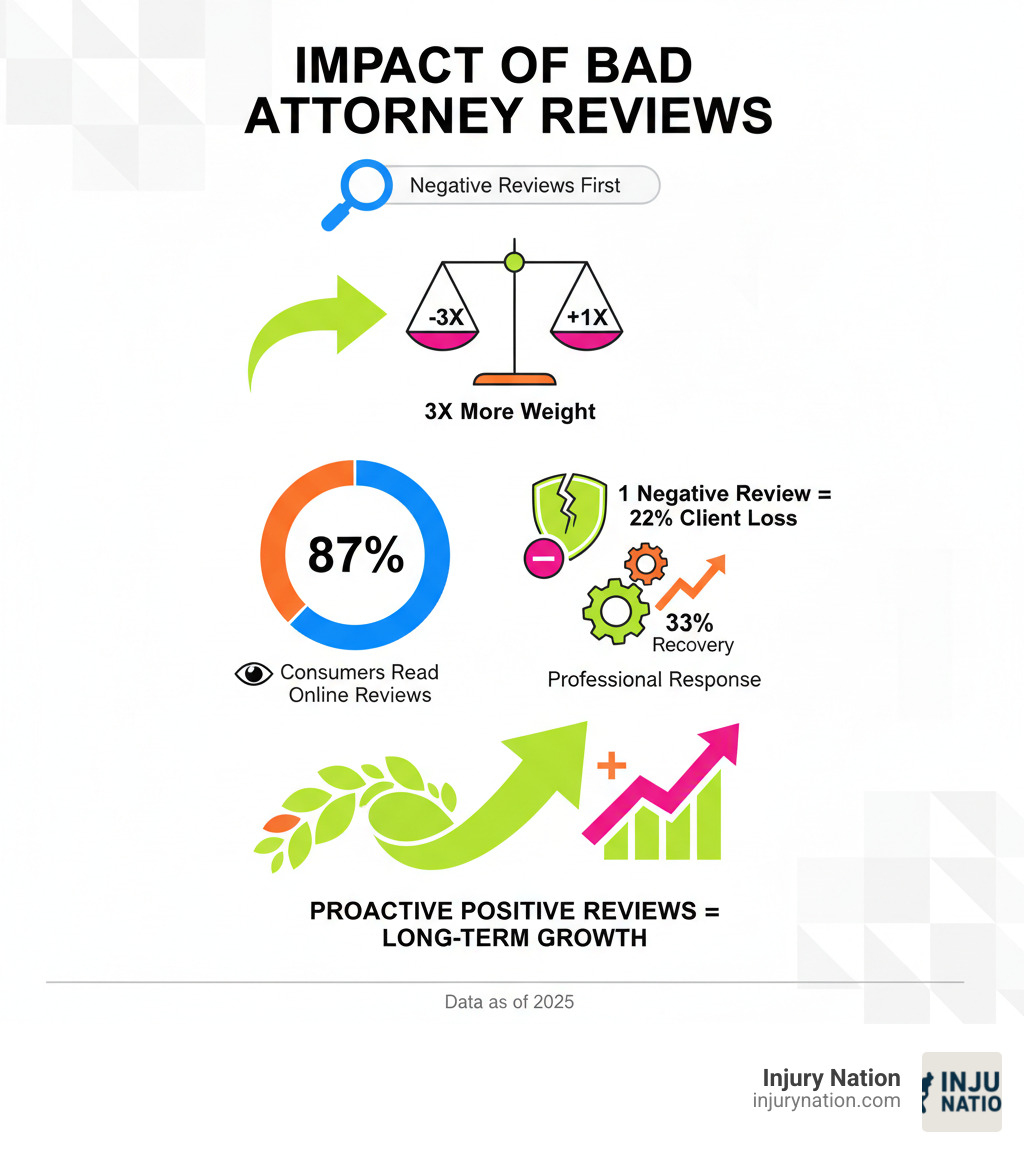
Bad attorney reviews are the modern word-of-mouth, capable of derailing a law firm’s ability to attract new clients. When potential clients search for you online, negative feedback often carries more weight than positive, making it a critical business threat.
Managing negative reviews requires a careful strategy. You must avoid impulsive, emotional responses that can amplify the problem through the “Streisand Effect” and violate ethical standards. Instead, first assess if the review is legitimate or fake. Always protect client confidentiality, as ethics opinions like ABA Formal Opinion 496 prohibit revealing sensitive information, even in self-defense. The best approach is a brief, professional response that invites an offline discussion, coupled with a proactive effort to encourage positive reviews from satisfied clients.
It’s impossible to prevent all bad reviews. The internet gives a platform to everyone, from disgruntled parties to competitors. However, an unanswered negative review leads potential clients to assume the worst. Your response must balance reputation management with the strict ethical duty of confidentiality.
The stakes are high. Attorneys have faced disciplinary action for fabricating reviews or inadvertently disclosing confidential information while defending themselves. This guide provides the ethical and practical framework for managing negative reviews, helping you protect both your reputation and your license.
The Initial Impact: Why Your First Reaction Shouldn’t Be Your Final One
Seeing a negative review with your name on it is jarring. The first instinct is often to defend yourself immediately. But when it comes to bad attorney reviews, that first impulse is almost always the wrong move.

A moment of pause before you respond can be the difference between damage control and disaster. A hasty, emotional response might feel satisfying for a moment, but it can haunt you for years. You risk appearing unprofessional to potential clients and, worse, you might violate ethical standards, leading to disciplinary action.
Your goal isn’t to win an argument with a reviewer; it’s to show prospective clients that you handle difficult situations with grace and professionalism. Your reputation and ethical obligations are paramount.
Understanding the “Streisand Effect”
Trying to aggressively suppress something online often backfires spectacularly. This is the Streisand Effect. When you respond confrontationally to bad attorney reviews or try to censor legitimate criticism, you draw more attention to the issue. What was a single negative comment can become a widely shared drama.
ABA Formal Opinion 496 warns attorneys about this. A defensive, heated response tells potential clients more about your temperament than about the complaint’s validity, damaging your reputation far more than the original review.
Assessing the Damage
Before acting, understand the threat. One negative review among dozens of positive ones is manageable. Most consumers understand you can’t please everyone and look to see how you handle criticism.
However, an unanswered negative review is a different story. Silence allows potential clients to fill in the blanks, and they rarely do so in your favor. It can look like you don’t care or that the complaint is valid.
Studies show negative reviews carry about three times the psychological weight of positive ones. A single bad review can deter clients. The good news is that a thoughtful, professional response can recover a significant portion of that lost trust.
You need a clear, ethical response formula for addressing criticism that demonstrates professionalism without compromising your integrity or client confidentiality. You can’t prevent all bad attorney reviews, but you can control your response and use these moments to showcase the qualities that make you a good attorney: thoughtfulness, professionalism, and respect for ethics.
Investigation and Triage: How to Handle Inappropriate or Fake Reviews
Before responding to a negative review, investigate. Not all bad attorney reviews are legitimate. Some are feedback from clients, while others are fabrications from non-clients, competitors, or trolls. Your first step is to determine the source and legitimacy of the review, as this will guide your entire strategy.

Identifying the Source of the Bad Attorney Review
First, ask: who wrote this and why? Check your client records to see if you recognize the reviewer’s name. The answer will determine your next steps.
- Former Client: A genuine bad experience, while painful, provides real feedback you can use to improve your practice.
- Mistaken Identity: Reviews are often left for the wrong law firm or business. A polite check can sometimes resolve this.
- Malicious Intent: The legal field is competitive. A review might come from a competitor, an opposing party, or someone you declined to represent.
- Internet Trolls: Some people simply have an axe to grind or too much time on their hands. The internet gives everyone a platform, even those who have never been your client.
If you can’t match the reviewer to a case file, the review may be fake, which changes how you should handle it.
Navigating Review Platform Dispute Processes
If a review is fake or violates a platform’s guidelines, you may be able to have it removed. Each platform has its own policies and dispute process, with varying success rates.
Most major review platforms have policies against prohibited content like fake reviews, harassment, hate speech, and conflicts of interest. You can typically “flag” or “report” a review that violates these terms of service. For example, Google is a common place for reviews, and you can flag a review directly from Google Maps or through their Reviews Management Tool. Google will remove reviews for specific violations, and if your initial report is denied, you usually get one chance to appeal.
Other platforms, like Facebook, also allow you to report recommendations that violate their Community Standards, which is useful for catching spam or fake profiles.
Platforms will not remove a review simply because you disagree with the client’s opinion. The review must violate a specific policy. If the review is from a real client sharing their honest (though negative) experience, it will likely remain. In cases of simple mistakes, like a review meant for another business, a polite, direct message to the reviewer can sometimes be the quickest way to get it corrected.
The Ethical Tightrope: Responding to Bad Attorney Reviews Without Breaching Confidentiality
Responding to an unfair bad attorney review is tempting, but for attorneys, it’s a high-wire act. You must balance defending your reputation with the sacred duty of client confidentiality. One misstep can lead to ethics complaints far more damaging than the review itself.
While the desire to defend yourself is human, our professional duties are non-negotiable, even online.
The Cardinal Rule: Upholding Client Confidentiality
Model Rule of Professional Conduct 1.6 strictly prohibits lawyers from disclosing information related to a client’s representation. This rule is the bedrock of the attorney-client relationship. Most ethics opinions, including the influential ABA Formal Opinion 496, clarify that you cannot reveal confidential information to defend yourself in a public forum.
Even information that is part of the public record can still be considered confidential if it relates to the representation, as noted in ABA Formal Ethics Opinion 480. A simple statement like “that’s not accurate” could inadvertently confirm an attorney-client relationship existed, which itself may be a breach of confidentiality.
While a minority of jurisdictions allow a broader “self-defense” exception, the prevailing view is restrictive. For instance, ethical guidance in Michigan advises that responses should not go beyond a simple apology or an invitation to talk privately. When in doubt, prioritize confidentiality—your license is worth more than winning an online argument.
Crafting a Safe and Professional Response
So, how do you respond without crossing ethical lines? Be restrained, professional, and sincere. The most effective and safest approach is to invite an offline discussion. A response like, “We are sorry to hear about your experience. Please contact our office directly so we can discuss your concerns,” shows you are responsive and professional without disclosing any confidential details.
If you are certain the reviewer was never a client, you could say: “Our firm is committed to our clients and their confidentiality. As our records show you were not a client of our firm, we invite you to contact us directly to clarify your concerns.”
ABA Formal Opinion 496 also suggests a response like: “Professional obligations do not allow me to respond as I would wish.” While ethically sound, this can feel cold. A warmer invitation to connect offline is often better.
Before posting any response, have at least two uninvolved people review it for content and tone. Fresh eyes can spot potential ethical issues you might miss. For complex situations, consider seeking expert guidance. You can Find a Lawyer through our directory who specializes in legal ethics.
From Defense to Offense: Proactively Building a 5-Star Reputation
While managing bad attorney reviews is necessary, the best long-term strategy is to build a strong foundation of positive feedback. A fortress of goodwill from satisfied clients is your best defense against the occasional negative comment.

You can’t prevent every bad attorney review, but you can control the quality of service you provide. When you consistently deliver excellent results, communicate openly, and care about your clients, positive reviews will follow.
Best Practices for Encouraging Positive Reviews
Most satisfied clients are willing to share their experiences; they just need a gentle nudge. The key is to make it easy and natural.
The best time to ask is after a positive outcome. When a client thanks you for a successful result, their gratitude is fresh. A simple, “I’m so glad we could help. If you’re comfortable sharing your experience online, it would help other people find the right attorney,” is very effective.
Make the process painless. Send a follow-up email with direct links to one or two review platforms. Suggest they write a few sentences about what they appreciated, whether it was your communication, expertise, or support.
However, there are ethical lines you cannot cross. As outlined in opinions like NC State Bar Formal Ethics Opinion 1, you cannot offer incentives, refunds, or discounts in exchange for positive reviews or the removal of negative ones. This is unethical and undermines the credibility of the review system.
Use legitimate negative feedback as a roadmap for improvement. If a review highlights a real issue, address it internally to prevent it from happening again.
Signs of a Good Attorney-Client Relationship
The foundation of positive reviews is being an attorney people want to recommend. This is built on trust, transparency, and competence.
- Communication is everything. Keep clients informed about their case status. Prompt responses to questions build trust and reduce anxiety.
- Competence isn’t optional. Stay current with legal developments and best practices. Incompetent representation leads to bad reviews and can irreparably harm a client’s case.
- Be upfront about fees. Agree on fees early, put it in writing, and provide clear, itemized bills. Transparency about money is crucial for trust.
- Live your ethical obligations. Clients feel it when you put their interests first. Confidentiality, loyalty, and avoiding conflicts of interest are the cornerstones of a strong attorney-client relationship. In Nevada, for example, attorneys have a strict duty to protect client confidences and must disclose and manage any potential conflicts immediately.
When you excel in these areas, positive reviews become a natural result of your work. For more insights, check out More on finding a good lawyer on our Blog.
Frequently Asked Questions about Managing Online Attorney Reviews
Can I sue a client for a false negative review?
Technically, you can sue for defamation, but it is almost never a good idea. The legal maxim “truth is a complete defense” is misleading. It doesn’t stop a lawsuit from being filed, and it won’t save you from months of expensive and stressful litigation. Defamation lawsuits are lengthy, often taking over a year to resolve, and the financial burden on both parties can be immense.
More importantly, suing a reviewer often triggers the Streisand Effect, drawing far more attention to the negative review than it would have received otherwise. The financial cost, emotional toll, and potential for greater reputational damage almost always outweigh any satisfaction from a legal “win.” It’s a fight most parties regret.
What are the consequences for a lawyer who unethically responds to a negative review?
The consequences are severe. The most significant risk is violating client confidentiality (Model Rule 1.6), which can lead to disciplinary action from your state bar, including reprimands, suspension, or even disbarment. Ethics committees have also disciplined attorneys for fabricating positive reviews or posting negative ones about competitors, citing dishonesty and misrepresentation.
Beyond formal sanctions, an unethical response shatters your professional reputation. Potential clients will see it, and current clients will question their trust in you. Breaching ethical standards in public suggests your ego is more important than your professional obligations, causing irreparable damage to the fragile trust that is the foundation of the attorney-client relationship.
What should a consumer know before posting bad attorney reviews?
If you are a consumer considering posting a negative review, pause and consider the risks. While your feelings of frustration are valid, posting bad attorney reviews can expose you to a costly defamation lawsuit. Even if you believe you are telling the truth, proving it in court can be difficult and expensive. The litigation process can be financially and emotionally devastating, with legal bills potentially reaching tens of thousands of dollars.
A safer and often more effective path is to use the formal complaint process. You can report unethical or unprofessional behavior to the State Bar of Nevada (or the equivalent in your state). This process is designed to address attorney misconduct without exposing you to personal legal risk. You can also try discussing your concerns directly with the attorney or seeking mediation. These avenues are designed to provide resolution without the risks of a public online battle.
Conclusion
Bad attorney reviews are an unavoidable part of practicing law in the digital age. The key is not to avoid them, but to handle them with a strategy rooted in professionalism and ethics. This guide has shown that your strongest shield is your conduct.
By pausing before reacting, understanding the risks of amplifying negativity, and always protecting client confidentiality, you are not just performing damage control—you are reinforcing your professional integrity. The most successful attorneys don’t just react to negative feedback; they proactively build a strong reputation through excellent service, open communication, and consistent ethical practice. This proactive approach is what separates thriving firms from struggling ones.
Every client interaction is a chance to demonstrate the trust and professionalism that define great legal representation. Building that trust is the only real protection against the challenges of the internet era.
If you are an injury victim searching for legal representation you can trust, we are here to help. Find a qualified and trustworthy attorney in our directory who will fight for the settlement you deserve. At Injury Nation, we connect you with top-rated personal injury lawyers who understand that your case—and your trust—matter.