

Why Workplace Falls Are More Dangerous Than You Think
Slip and fall injuries in the workplace are among the most common and costly accidents affecting American workers. Here’s what you need to know:
Key Facts About Workplace Falls:
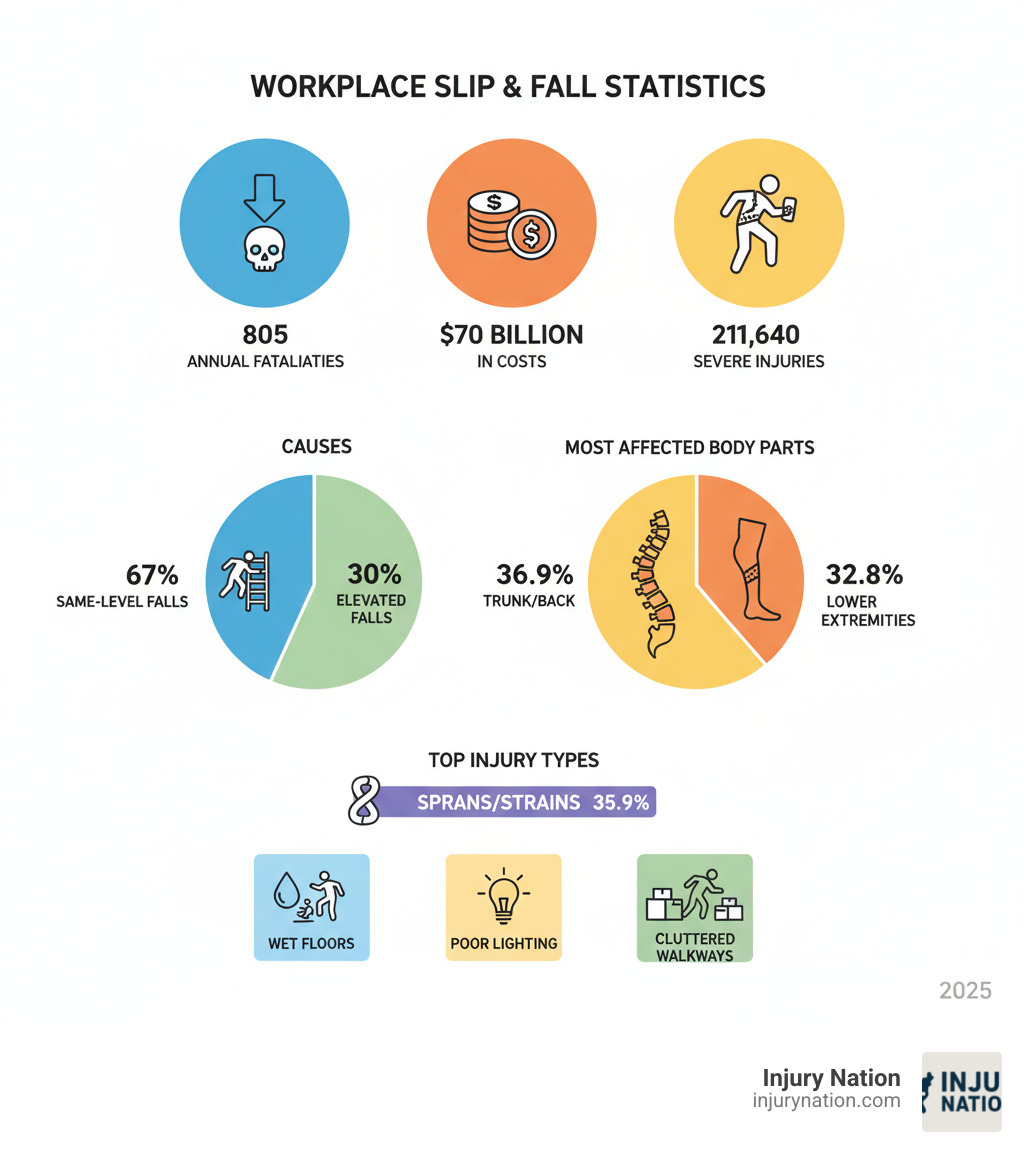
- 805 workers died from falls in 2020 alone
- 211,640 workers suffered severe injuries requiring days away from work
- $70 billion annually in workers’ compensation and medical costs
- 67% of falls happen on the same level from slips and trips
- 15% of all workplace deaths are caused by falls
While many imagine dramatic workplace accidents, the reality is that slips, trips, and falls are the second-most common cause of workplace injury in the United States.
These aren’t just minor tumbles. More than 1.1 million workers sustain injuries requiring missed work due to slip and fall accidents each year. That’s roughly 18% of all work-related injury accidents.
The financial impact is staggering, with each incident costing an average of $30,000 to $40,000 in medical bills. Workers miss an average of 11 days of work, and victims can face chronic pain, permanent disability, and long-term financial hardship.
What makes these statistics troubling is that most workplace falls are preventable. Poor housekeeping, wet surfaces, and cluttered walkways create unnecessary risks.
If you’ve been injured in a workplace fall, you’re not alone, and you have rights. Understanding these dangers and your legal options is the first step toward getting the compensation you deserve.
Glossary for slip and fall injuries in the workplace:
The Alarming Statistics and Causes of Slip and Fall Injuries in the Workplace
Understanding the different types of slip and fall injuries in the workplace is key to prevention. Slips happen from a loss of traction, while trips occur when your foot hits an object. Both can lead to a fall. These accidents are categorized as:
- Same-level falls: Making up 67% of incidents, these happen from slips or trips on a walking surface.
- Falls from height: Accounting for 30%, these involve falling from one level to another (e.g., ladders, stairs) and often cause more severe injuries.
The financial impact is staggering, costing an estimated $70 billion annually in workers’ compensation and medical expenses. The human cost is even more sobering. In 2020, 805 workers died from falls, and 211,640 suffered severe injuries requiring time off work. These nonfatal occupational injuries associated with slips and falls in the United States represent a widespread crisis.
Common Causes of Workplace Falls
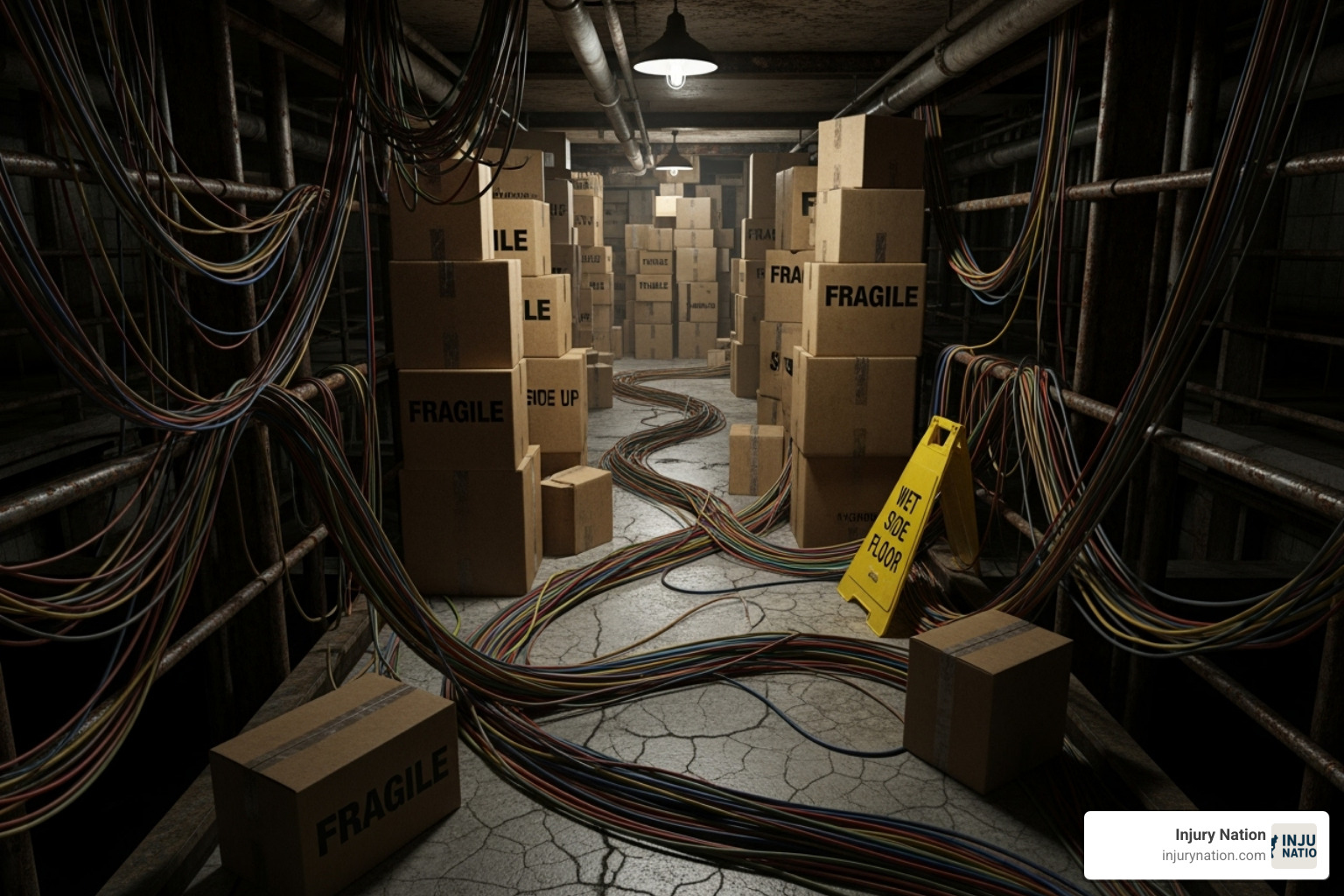
Most slip and fall injuries in the workplace are preventable. Common hazards include:
- Poor housekeeping: Disorganized, messy work areas are a primary cause of falls.
- Spills and wet surfaces: Water, oil, or even freshly waxed floors reduce traction.
- Clutter and obstructions: Boxes, tools, uncovered cables, or loose rugs create trip hazards.
- Uneven flooring: Damaged carpets, cracks in concrete, or small changes in floor level can cause trips.
- Poor lighting: Dark areas can conceal any of the hazards listed above.
- Inappropriate footwear: Shoes with worn soles or inadequate traction increase fall risk.
Understanding these causes is essential for preventing workplace trip hazards.
Industries and Workers Most at Risk
While falls can happen anywhere, some workers face higher risks:
- Construction: Leads in fall-related deaths, especially from heights.
- Healthcare and social assistance: Experiences the highest number of nonfatal, same-level falls.
- Transportation and public utilities: Workers face high rates of both same-level falls and slips.
- Building maintenance: Workers encounter risks from slippery floors and cluttered areas.
- Younger male workers: This group is most frequently injured in fall accidents.
- Older workers (over 55): Slips and falls are the leading cause of workplace injuries for this age group.
Recognizing these patterns helps focus workplace safety considerations where they’re needed most.
The Impact of Workplace Falls: Injuries, Costs, and Long-Term Effects
A workplace fall is more than a momentary accident; it can lead to a cascade of physical, financial, and emotional challenges. The impact of slip and fall injuries in the workplace is often severe and long-lasting.
Common injuries include:
- Sprains and strains: Affecting 35.9% of victims, these often target ankles, wrists, and the back.
- Fractures: Falls cause 95% of all hip fractures, a devastating injury, especially for older workers.
- Head injuries: Falls are a leading cause of traumatic brain injuries (TBIs) in the workplace, which can have lifelong cognitive effects.
- Spinal cord injuries: Damage to the spine can result in chronic pain or even paralysis.
The back, shoulders, and trunk are the most affected body parts (36.9%), followed by the lower extremities (32.8%). With severe injuries occurring in 20-30% of cases, these are far from minor incidents.

Long-Term Consequences for Workers and Employers
The ripple effects of slip and fall injuries in the workplace extend far beyond the initial injury.
For workers, consequences include:
- Chronic pain and a reduced quality of life.
- Permanent disability, potentially preventing a return to their previous job.
- Financial hardship from lost wages. The average worker misses 11 days, but absences can be much longer.
- Emotional distress, including anxiety, depression, and PTSD.
For employers, consequences include:
- Decreased productivity and increased workloads for other staff.
- Higher insurance premiums and workers’ compensation costs.
- Legal costs from claims and potential lawsuits.
- Reputational damage that can affect hiring and client relationships.
These extensive workplace accident impacts highlight why prevention is critical for both employees and businesses.
Legal Responsibilities and Regulations
Employers have a legal “duty of care” to protect workers from slip and fall injuries in the workplace. This means they must proactively identify and fix hazards before accidents occur, not just react to them.
This duty includes providing a safe environment, conducting regular hazard identification, and offering comprehensive safety training. The Occupational Safety and Health Administration enforces these responsibilities through its General Duty Clause, which mandates a workplace “free from recognized hazards.”
Employer’s Legal Obligations
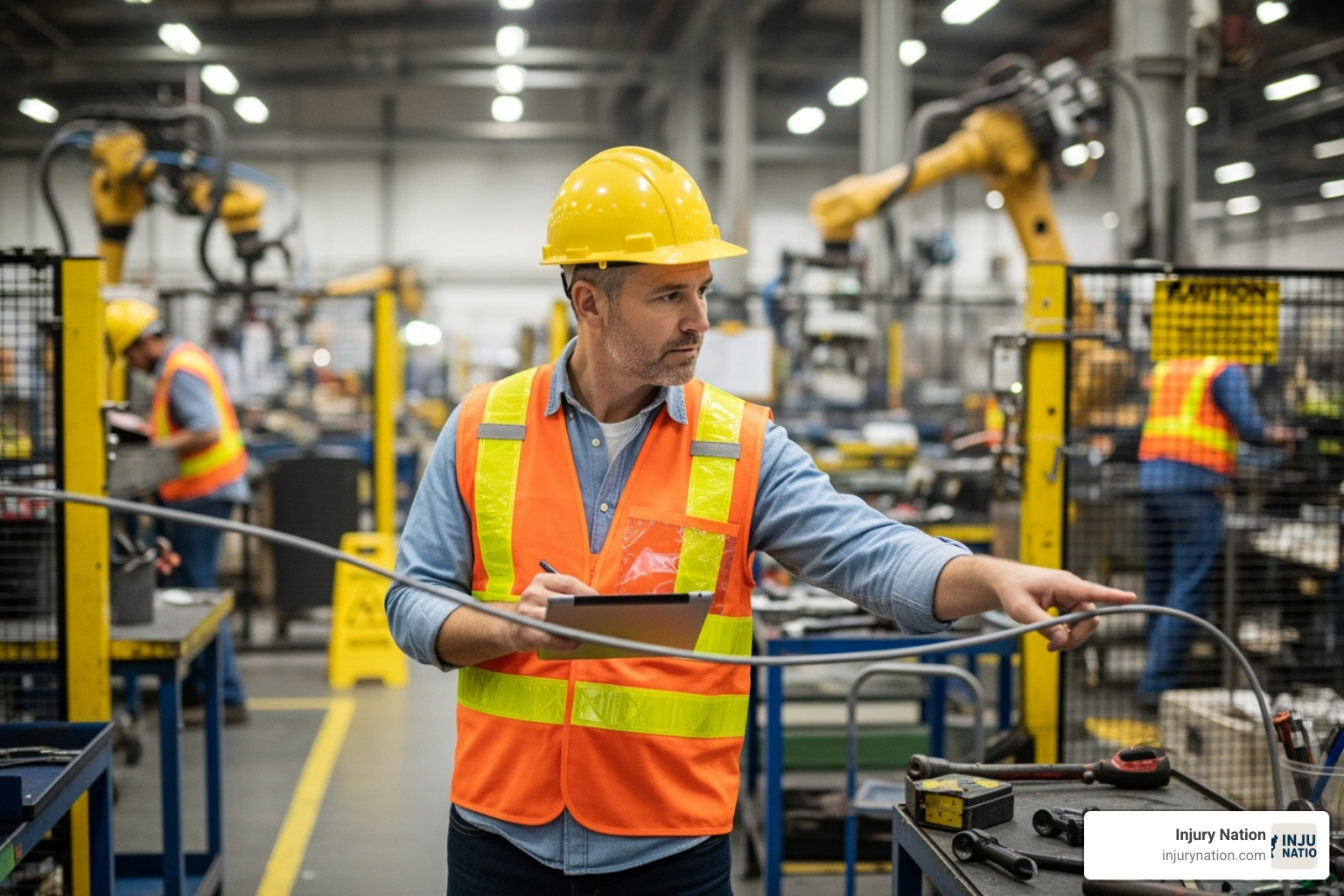
To prevent slip and fall injuries in the workplace, employers have several concrete legal obligations:
- Correct hazards promptly: Once a danger is known, it must be fixed quickly.
- Provide safety equipment: This includes slip-resistant shoes or safety harnesses when hazards cannot be eliminated.
- Investigate incidents: Thorough investigations help prevent future accidents.
- Inform workers of risks: Clear communication through safety meetings and warnings is essential.
Failure to meet these obligations can lead to OSHA penalties and lawsuits under premises liability laws.
The Role of OSHA and Safety Standards
OSHA provides detailed standards to prevent falls:
- The Walking-Working Surfaces standard sets requirements for keeping floors clean, dry, and well-lit. It specifies that any change in floor level of ¼ inch or more is a trip hazard.
- Fall protection standards mandate specific equipment and procedures for those working at heights, common in industries like construction.
- Means of egress regulations ensure emergency exits are kept clear, preventing trips during evacuations.
- Reporting requirements hold employers accountable by mandating that serious injuries be reported to OSHA and state agencies within strict timeframes.
These regulations make preventing slip and fall injuries in the workplace a legal requirement, not an option.
Your Rights and Path to Compensation After a Fall
After a workplace fall, it’s normal to worry about your health and finances. Fortunately, you have rights and clear paths to compensation for slip and fall injuries in the workplace.
As an injured worker, you have the right to report your injury without fear of retaliation, receive proper medical care, and file a claim for benefits. The primary path for this is workers’ compensation, a “no-fault” system. This means you can receive benefits even if you were partially at fault, as long as the injury occurred while you were doing your job.
In some cases, a third party (someone other than your employer) may be responsible. If a delivery company left a hazard in a walkway or faulty equipment caused your fall, you may have a third-party liability case and could file a separate negligence lawsuit.
Navigating Compensation for Slip and Fall Injuries in the Workplace
Workers’ compensation is your financial safety net. Benefits typically include:
- Medical expense coverage: All reasonable and necessary medical care related to the injury is covered, from doctor visits to physical therapy.
- Wage replacement: If you cannot work, you’ll typically receive about two-thirds of your average weekly wages to help cover living expenses.
- Permanent disability benefits: If your injury results in a permanent impairment, you may receive a lump-sum payment or ongoing benefits.
- Other assistance: This can include help with household tasks, modifications to your home or car, and travel expenses for medical appointments.
When Can You File a Personal Injury Lawsuit?
While workers’ comp is the standard route, a personal injury lawsuit may be possible in certain situations, potentially leading to fuller compensation.
- Third-party negligence: This is the most common reason for a lawsuit. If a negligent contractor, vendor, or equipment manufacturer caused your injury, they can be held liable. For example, if a cleaning crew failed to put up a “wet floor” sign or a defective ladder collapsed.
- Suing your employer directly: This is rare due to workers’ comp rules, but it can happen. Exceptions include situations where your employer intentionally caused your injury or failed to carry the required workers’ compensation insurance.
Understanding the difference between workers’ compensation and personal injury claims is crucial, as they are distinct legal paths. An experienced attorney can help you explore all your options.
Frequently Asked Questions about Workplace Slip and Fall Claims
When dealing with the aftermath of slip and fall injuries in the workplace, you likely have many questions. Here are answers to some of the most common concerns.
Can I get compensation if the fall was my fault?
Yes. Workers’ compensation is a “no-fault” system, meaning blame is not the primary issue. As long as your injury arose “out of and in the course of employment,” you are generally eligible for benefits. It doesn’t matter if you were distracted or took a shortcut.
The focus is on whether the injury is work-related. Benefits are typically only denied in narrow circumstances, such as intoxication, illegal drug use, or willful intent to injure yourself. Don’t assume you’re ineligible; focus on reporting the incident accurately and filing your claim.
How long do I have to report a workplace fall?
Time is critical. The clock starts ticking the moment you fall, and deadlines are strict. State-specific deadlines vary dramatically, from just a few days to 30 days or more. Missing this deadline can result in an automatic denial of your claim.
Prompt reporting is crucial. It creates a clear record connecting your injury to the workplace accident and prevents insurance companies from questioning the claim’s legitimacy. You should report even minor falls, as some injuries like concussions or soft tissue damage can take hours or days to appear. Document the scene with photos and witness information if possible.
What should I do if my workers’ comp claim is denied?
A denial letter is disheartening, but it’s not the end of the road. Claim denials are common, and many workers who appeal are ultimately successful.
Insurers often deny claims by disputing that the injury was work-related, blaming a pre-existing condition, or citing a missed deadline. You have the right to appeal this decision. The appeals process may involve mediation, hearings, and presenting additional medical evidence.
Because the appeals process can be complex, it is highly advisable to seek legal advice for workplace injuries if your claim is denied. An experienced attorney understands the system and can significantly improve your chances of turning a denial into the benefits you deserve.
Conclusion
Slip and fall injuries in the workplace are a serious, overlooked danger, causing hundreds of deaths, hundreds of thousands of severe injuries, and costing the economy $70 billion annually. These are not minor mishaps; they are life-altering events.
The good news is that most of these accidents are preventable. When employers follow OSHA standards and maintain a safe environment, risks are dramatically reduced. However, accidents can still happen.
If you are injured, the workers’ compensation system is there to provide medical care and wage replacement. But navigating the system can be overwhelming. Insurance companies may deny valid claims, and deadlines can be confusing. This is where having the right legal guidance is critical. An experienced attorney can help you steer the process, appeal a denial, and explore all avenues for compensation, including potential third-party claims.
At Injury Nation, our network connects injured workers with skilled attorneys who can fight for the benefits you deserve. If you’ve been hurt in a workplace fall, don’t wait to seek help. Your health and financial security may depend on the actions you take today.