

When Property Damage Meets Insurance Pushback
A homeowners insurance claim lawyer specializes in helping property owners steer disputes with their insurance companies when claims are denied, delayed, or undervalued. These attorneys understand insurance law and policy language, and they can negotiate directly with insurers or file lawsuits to secure fair compensation for covered damages.
Key roles of homeowners insurance claim lawyers:
- Policy interpretation – Explain complex insurance language and coverage limits
- Claim negotiation – Counter lowball offers and fight for maximum settlements
- Evidence gathering – Work with experts to document damage and prove claim value
- Legal action – File bad faith lawsuits when insurers act unreasonably
- Fee structure – Most work on contingency (20-45% of settlement) with no upfront costs
When disaster strikes your home, the last thing you expect is a battle with your own insurance company. Yet, many homeowners find that filing a claim is just the beginning of a complex and frustrating process.
Insurance companies have teams of adjusters and lawyers working to minimize payouts. You deserve the same level of professional advocacy when your financial security and family’s shelter are at stake.
Whether you’re dealing with fire, water, or storm damage, understanding when to work with a legal professional can mean the difference between a fair settlement and financial hardship.
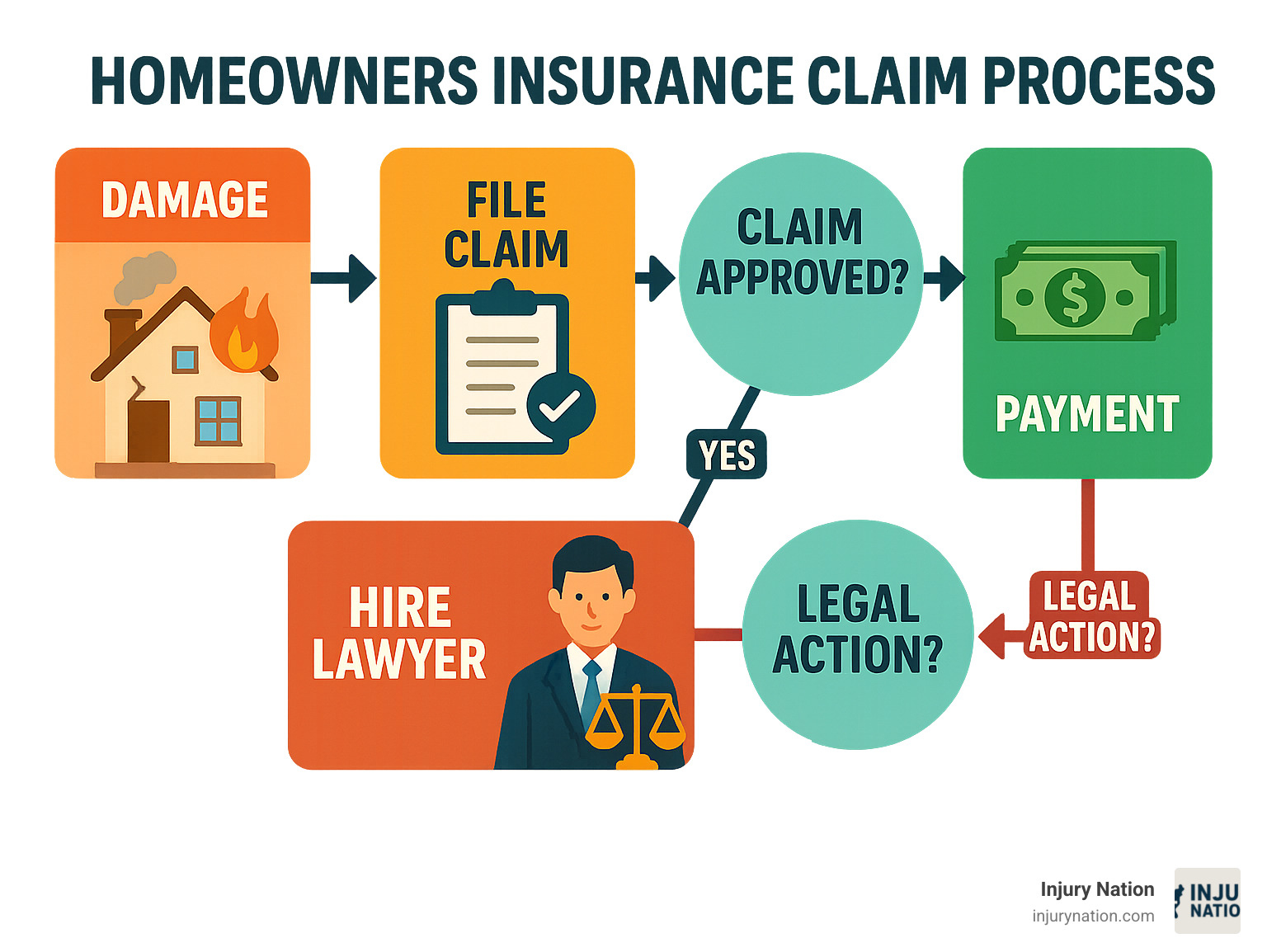
Recognizing When You Need a Legal Advocate
Imagine your basement floods after a pipe bursts. You call your insurer, but weeks pass with no clear answers, or they make a lowball offer that won’t cover the repairs. This frustrating scenario is common, as customer satisfaction with home insurance claims has hit a five-year low.
The truth is, insurance companies have entire teams working to minimize what they pay out. When your family’s financial security is on the line, shouldn’t you have someone equally skilled fighting for your interests?
You don’t need a homeowners insurance claim lawyer for every minor issue. Simple claims often resolve smoothly. But when red flags appear, legal help can make the difference between getting what you deserve and settling for less. For detailed statistics on homeowners insurance trends, check out the Insurance Information Institute.
Signs Your Claim is Being Handled Unfairly
How do you know when your insurer is playing games? Several warning signs should prompt you to consider legal backup.
- Unreasonable delays: State laws dictate response times. If your claim languishes without a good reason, the insurer may be hoping you’ll accept less out of frustration.
- Pressure to accept lowball offers: An adjuster might push you to sign a low offer immediately. This high-pressure tactic is designed to save the company money at your expense.
- Misinterpreting your policy: Insurers may conveniently “misunderstand” confusing policy language to deny or reduce your claim.
- Refusal to provide written explanations: You have a right to a clear, written explanation for any denial or reduction. Vague or verbal-only excuses are a major red flag.
- Excessive paperwork requests: Demanding irrelevant or excessive documentation is a tactic used to overwhelm you into giving up.
- Blaming you for the damage: The insurer might try to shift blame by claiming the damage was due to poor maintenance, even when a covered event was the clear cause.
When the Damage is Catastrophic or Complex
Sometimes the sheer scale of destruction demands expert help from day one. Major disasters create insurance nightmares that require professional navigation.
- Multiple causes of damage: When a storm damages your roof, leading to water damage and then mold, insurers love to argue about which cause is covered. A lawyer can untangle these complex scenarios.
- Severe structural damage or total loss: When your home needs rebuilding, disputes over replacement costs, building codes, and property values can cost you tens of thousands. The difference between actual cash value and replacement cost coverage becomes critical.
- Third-party liability: If someone was injured on your property during the incident, or your property damaged a neighbor’s, liability coverage adds another layer of complexity to your claim.
These situations require experienced legal minds. Our network includes lawyers skilled at handling complex cases where property damage intersects with personal injury claims. Don’t face the insurance company’s army of adjusters and lawyers alone.
The Role and Benefits of a Homeowners Insurance Claim Lawyer
When your insurance company plays hardball, a homeowners insurance claim lawyer becomes your secret weapon. Insurance companies have teams of lawyers and adjusters protecting their bottom line. A lawyer levels that playing field, using their insider knowledge of how these companies operate to your advantage.

The peace of mind alone is worth considering legal help. Instead of sleepless nights, you can focus on rebuilding your life while your lawyer handles the fight.
| Aspect | Handling Claim Alone | Handling Claim with a Lawyer |
|---|---|---|
| Policy Knowledge | Relies on own interpretation, may miss crucial details. | Expert interpretation, identifies all applicable coverage. |
| Negotiation Power | Limited, prone to accepting low offers. | Strong, experienced negotiation for maximum settlement. |
| Time & Stress | High time commitment, significant emotional stress. | Lawyer handles communications, reducing your burden. |
| Evidence Gathering | May overlook critical documentation or expert opinions. | Uses experts (engineers, contractors) for comprehensive assessment. |
| Legal Recourse | Unaware of legal options, difficult to pursue lawsuits. | Can file lawsuits, including for bad faith, if necessary. |
| Outcome | Risk of underpaid or denied claim. | Higher likelihood of fair and timely compensation. |
Navigating Your Insurance Policy and the Law
Homeowners insurance policies are dense with legal jargon. A homeowners insurance claim lawyer translates this complex language into a clear strategy for your claim.
- Policy Interpretation: Lawyers understand the critical difference between replacement cost coverage (rebuilding with new materials) and actual cash value (which pays less due to depreciation). This distinction alone can be worth thousands.
- Coverage Limits and Exclusions: They identify hidden complexities in your deductibles and coverage limits. They also know when to challenge an insurer’s incorrect application of policy exclusions.
- State-Specific Laws: A local lawyer uses state laws governing claim handling and deadlines to your advantage.
- Strategic Documentation: Your lawyer helps you create a comprehensive schedule of loss that documents the true value of every damaged item, ensuring your evidence is compelling. Understanding how well protected you are becomes much clearer with professional guidance.
Championing Your Claim Through Negotiation
This is where a lawyer really pays off. Insurance adjusters are professional negotiators trained to minimize payouts. When a lawyer handles these conversations, the dynamic changes.
Your lawyer manages all communication with your insurer, shielding you from pressure tactics. They present your evidence strategically, often bringing in independent experts like engineers to counter the insurer’s low estimates.
An experienced lawyer knows the true cost of repairs and can spot when an insurer is using unrealistic estimates. The goal is to secure a fair settlement that covers all your losses, through negotiation or, if necessary, litigation. Insurance companies know that lawyers mean business and often negotiate more seriously when one is involved.
The Practicalities: Hiring and Paying for Your Lawyer
When you’re dealing with property damage, the thought of hiring a lawyer can feel overwhelming. But most homeowners insurance attorneys understand you’re facing financial pressure and have made legal help accessible.

Steps to Take Before Hiring an Attorney
Before calling a lawyer, taking these steps can strengthen your position.
- Document Everything: Immediately take photos and videos of all damage. Keep a detailed log of every conversation with your insurer, including dates, names, and what was said.
- Organize Your Paperwork: Keep a dedicated folder for all claim-related documents: your policy, emails, estimates, receipts, and correspondence.
- Review Your Policy: Try to understand your basic coverage limits, deductibles, and exclusions. This helps you spot potential issues early.
- Attempt to Resolve Directly: For simple claims, communicate professionally with your adjuster. Provide requested documents promptly and don’t be afraid to counter a low offer with your own evidence.
- Contact Your State’s Insurance Department: If you face unreasonable delays or unfair treatment, your state’s insurance department can often provide free assistance and mediation.
- Prepare for a Consultation: If you decide to seek legal help, gather all your documentation. This includes your policy, photos, estimates, and all communication with the insurer. Being prepared makes the free consultation more productive.
What to Look for When Choosing a Homeowners Insurance Claim Lawyer
You need an attorney who specializes in insurance disputes. Here’s what to look for:
- Specialized Experience: Ask what percentage of their cases involve homeowners insurance disputes. Experience with cases like yours is crucial.
- Reputation: Read online reviews and ask for references from past clients. Check with your state bar association to ensure they are in good standing. The American Bar Association’s directories can help.
- Clear Communication: During the consultation, do they explain things in plain English? You need someone you can communicate with easily during a stressful time.
- Fee Transparency: A good lawyer provides a written fee agreement that clearly explains their fee structure with no surprises.
- Trust Your Gut: You should feel confident that this person will fight for you and is genuinely interested in your case.
What is the typical cost for a homeowners insurance claim lawyer?
The good news is that legal help is more affordable than you might think. Most homeowners insurance claim lawyers work on a contingency fee basis.
This “no win, no fee” approach means your lawyer only gets paid if they successfully recover money for you. Their interests are aligned with yours: the bigger your settlement, the more they earn. If they don’t win, you owe no attorney fees.
When you win, the lawyer’s fee is typically between 20% and 45% of your settlement. The exact percentage depends on the case’s complexity. For example, on a $100,000 settlement with a 33% fee, the lawyer receives $33,000.
In many states, the insurance company may have to pay your attorney fees if you win a lawsuit. In successful cases, this means the lawyer’s fees don’t come out of your settlement at all. Some lawyers also offer hourly rates for limited services, like a policy review.
Always get the fee arrangement in a written contract. Even after paying attorney fees, most people find they end up with significantly more money than they would have received on their own.
If you’re ready to explore your options, you can find qualified attorneys who specialize in insurance claims in your area.
Advanced Scenarios: Bad Faith and Reopening Claims
Sometimes an insurance dispute crosses the line into something more serious: bad faith. In other cases, you might find new damage after a claim is closed. These complex situations require a homeowners insurance claim lawyer who understands the legal intricacies involved.
The law provides protections for homeowners, and an experienced lawyer knows how to use them. For general guidance, resources like the Residential Property Claims Guide can provide helpful background.
What Constitutes Insurance Bad Faith?
Your insurance company has a legal duty to treat you fairly. When they violate this duty through deliberate misconduct or unreasonable behavior, it’s known as “bad faith.” This can result in serious legal consequences for them and additional compensation for you.
Bad faith isn’t just a disagreement over value. It includes actions like:
- Deceiving a policyholder: Deliberately misrepresenting policy language or lying about the law to avoid payment.
- Failing to investigate properly: Conducting a biased or incomplete investigation that ignores key evidence.
- Unreasonably denying benefits: Rejecting a valid claim without a legitimate, fact-based reason.
- Intentionally delaying payment: Dragging out the claims process without cause, hoping you’ll accept a low offer out of frustration.
- Making threatening statements: Using intimidation to discourage you from pursuing your claim or hiring an attorney.
When insurers are found guilty of bad faith, they may face punitive damages. A lawyer can identify these practices and hold your insurer accountable.
Can a Lawyer Help Reopen a Previously Denied Claim?
Yes. A denied or undervalued claim is not always the final word. An experienced lawyer can often reopen your case, whether it was wrongfully denied or new damage has surfaced.
- Appealing a Denial: A lawyer will analyze the denial letter, identify weaknesses in the insurer’s reasoning, and craft a compelling appeal with new evidence or stronger legal arguments.
- Submitting New Evidence: If you find additional damage not part of the original claim (like mold growth after a water leak), a lawyer can help present this to reopen your case.
- Proving Wrongful Denial: This involves showing the insurer made a mistake, such as misinterpreting your policy or failing to investigate thoroughly.
- Meeting Deadlines: States have strict time limits (statutes of limitations) for reopening claims. A lawyer ensures all actions are filed on time so you don’t lose your rights.
If the insurer still refuses to pay, your lawyer can file a lawsuit. The key is to act quickly if you suspect a problem with your claim.
Frequently Asked Questions about Homeowners Insurance Lawyers
When you’re dealing with property damage and considering legal help, it’s natural to have questions. Here are the answers to some of the most common ones.
What is the difference between a public adjuster and a homeowners insurance claim lawyer?
This is an important distinction. Both professionals can help, but they serve different functions.
A public adjuster is an expert in damage assessment. They document your loss and negotiate the value of your claim with the insurer. They focus on the “what” and “how much” of your damage.
A homeowners insurance claim lawyer provides legal expertise. They interpret policy language, challenge unfair denials, and can file a lawsuit if the insurer acts in bad faith or refuses a fair settlement. Crucially, only a lawyer can provide legal advice and take your case to court. If your dispute requires legal action or the threat of it, you need a lawyer.
How long does a homeowners insurance lawsuit take?
There’s no simple answer, as every case is different. The timeline depends on the complexity of your claim and your state’s laws.
A simple dispute might be resolved through negotiation in a few months. A more complex case involving a lawsuit and a “findy” period (where both sides exchange evidence) can take longer.
However, most cases settle before reaching a courtroom. Having a homeowners insurance claim lawyer often encourages insurers to take the claim more seriously, which can lead to a faster and fairer resolution.
Will my insurance company cancel my policy if I hire a lawyer?
This is a common fear, but it is illegal for an insurance company to cancel your policy or retaliate against you simply for hiring a lawyer. You have a right to legal representation to protect your interests.
An insurer can choose not to renew a policy for other legitimate reasons, such as multiple claims over time that make a property seem high-risk. However, this is separate from exercising your right to hire an attorney.
In practice, having a lawyer often improves the process. When insurers know you have professional representation, they tend to handle the claim more professionally. They deal with lawyers every day; it’s a normal part of their business.
Conclusion
Navigating property damage is challenging enough without fighting your insurance company. A homeowners insurance claim lawyer is your advocate, interpreter, and champion. They use their expertise in policy language, negotiation, and state laws to secure the fair compensation you’re owed.
We believe that no homeowner should face an insurance corporation’s resources alone. When your home and financial security are at stake, expert legal advocacy can turn a stressful battle into a successful resolution.
If you’re in Las Vegas, Nevada, or anywhere across America, and are struggling with a denied, delayed, or undervalued homeowners insurance claim, don’t hesitate to seek professional help. Your home is your sanctuary, and you deserve to have it restored.
Let us help you find the right legal partner. Visit our directory to find a qualified personal injury lawyer in your area who can assist with your homeowners insurance claim.