

Understanding Your Options When Insurance Falls Short
When your home is damaged and your insurance company denies your claim or offers a low settlement, a homeowners insurance lawyer becomes your advocate. These specialized attorneys understand complex policy language and fight for fair compensation when insurers act in bad faith.
Consider hiring a lawyer in these situations:
- Unfair claim denial
- Settlement offer is too low
- Complex or high-value claims (fire, major water damage)
- Insurer is unresponsive or provides unclear explanations
- Unreasonable delays in the claims process
- Bad faith practices, like misrepresenting policy terms
The numbers are concerning. Customer satisfaction with home insurance claims hit a five-year low in J.D. Power’s 2022 study. With the average claim around $15,100 between 2017 and 2021, many homeowners struggle when their insurer doesn’t deliver.
Insurance companies have teams of lawyers working to minimize payouts. You deserve someone fighting for your interests.
The reality is stark: after Hurricane Irma, over 260,000 claims in Florida remained unpaid or denied. This highlights a system where insurance companies often prioritize profits over policyholders.
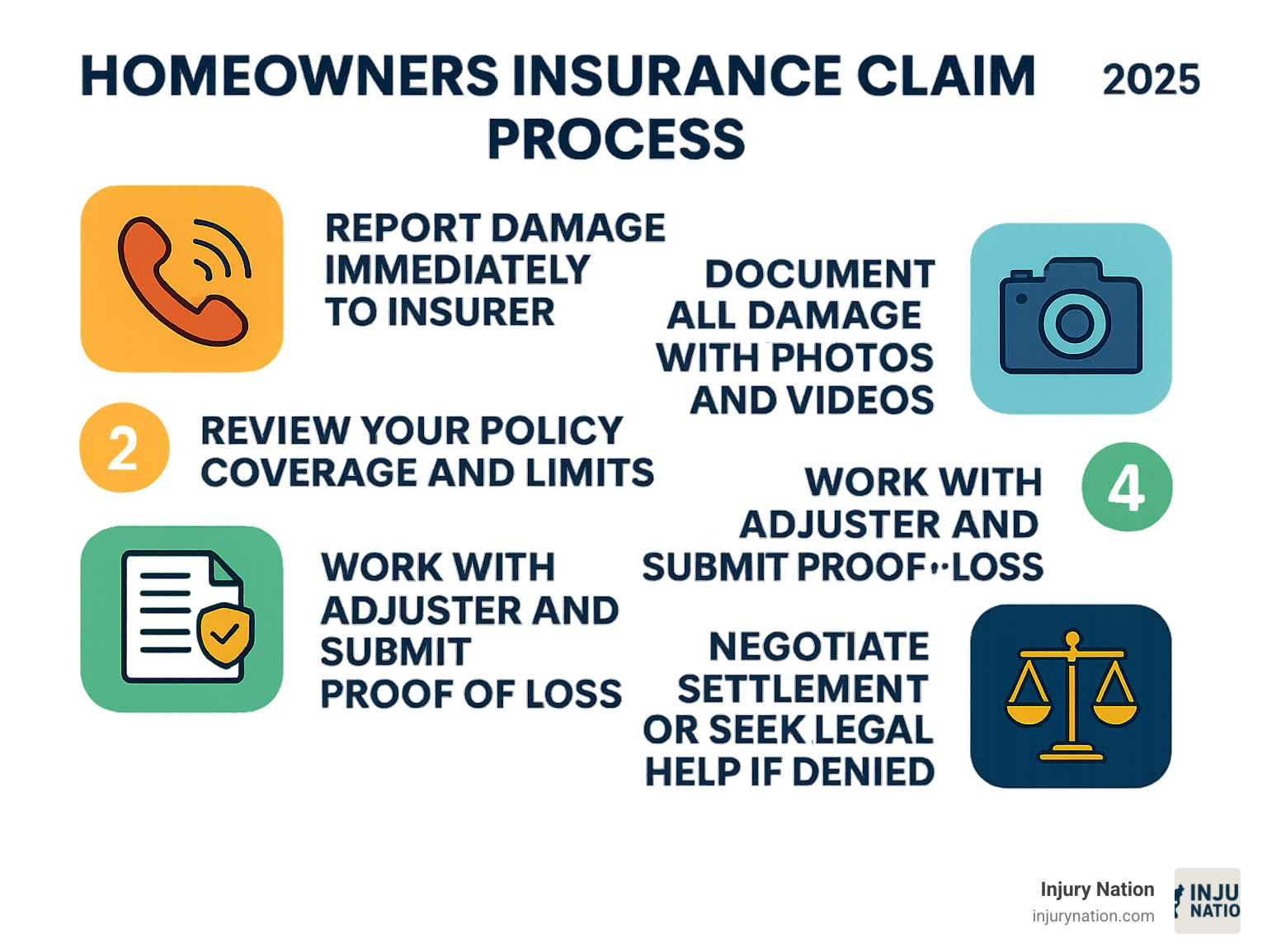
What is a Homeowners Insurance Lawyer and What Do They Do?
When your insurance company plays hardball after your home is damaged, a homeowners insurance lawyer becomes your champion. These legal professionals specialize in ensuring homeowners get the full compensation they deserve when an insurer tries to deny or underpay a claim.
Your insurance policy is a legal contract. When you file a claim, you’re holding the insurer to their promise. However, insurance companies have legal teams dedicated to minimizing payouts. A homeowners insurance lawyer levels the playing field by bringing legal expertise to decode your policy, negotiate with adjusters, gather proper documentation, and, if necessary, take your case to court. Their goal is to maximize your settlement and protect your rights.
Decoding Your Policy
Understanding your policy is key to a fair settlement, but the language is often confusing.

A lawyer can clarify critical terms that insurers may use against you:
- Deductibles: The amount you pay before insurance kicks in. An attorney ensures this is applied correctly. Learn more about deductibles and what you pay out of pocket.
- Coverage Limits & Exclusions: These define the maximum payout and what isn’t covered. Insurers often misapply exclusions to deny valid claims.
- Replacement Cost vs. Actual Cash Value (ACV): This distinction can cost you thousands. Replacement Cost covers new items, while ACV pays less due to depreciation.
While understanding your policy details is a good start, a lawyer ensures nothing is misinterpreted.
Fighting for Your Claim
If your claim is denied or underpaid, a lawyer takes action. They handle crucial tasks like:
- Evidence Gathering: Coordinating with experts to document the full extent of your losses with professional assessments and repair estimates.
- Communicating with the Insurer: Managing all correspondence, so you don’t have to deal with confusing jargon or delays.
- Filing Appeals: Crafting compelling appeals that force insurers to reconsider unfair denials.
- Representing You in Court: Litigating your case if the insurer refuses to settle fairly.
- Pursuing Bad Faith Claims: Seeking additional damages if the insurer acted dishonestly or unreasonably.
When Should You Hire a Lawyer for Your Insurance Claim?
While dealing with property damage, hiring a lawyer might be the smartest move you can make. The question isn’t if you can handle a claim alone, but if you should, especially when facing an insurer’s legal team.

Here are clear signals it’s time to seek professional help:
- Your claim was denied: A lawyer can challenge an unfair denial.
- The settlement offer is too low: An attorney knows the true value of your damages and can fight a lowball offer.
- The damage is significant or complex: For claims involving fire, flooding, or structural issues, a mistake could cost you thousands.
- Communication has broken down: If your insurer is unresponsive or vague, let a lawyer take over.
- The claim is dragging on: Attorneys can enforce legal deadlines that insurers must follow.
- Liability is disputed: If the insurer blames you for the damage, you need an advocate to investigate and present evidence.
Steps to Take Before You Hire an Attorney
Before calling a lawyer, take these steps to strengthen your position:
- Review the denial letter or settlement offer: Understand the specific reasons for the insurer’s decision.
- Organize your documentation: Gather your policy, claim number, all correspondence, photos, repair estimates, and receipts.
- Communicate in writing: Follow up phone calls with a summary email to create a paper trail.
- Contact your state’s department of insurance: These agencies can sometimes resolve disputes for free. You can contact your state’s department of insurance for assistance.
These actions will put you in a stronger position, whether you resolve the issue yourself or hire legal help.
Why Claims Get Denied or Underpaid
After faithfully paying premiums, it’s infuriating when your insurer denies or underpays your claim. Understanding the common reasons can help you spot problems early and know when to call a homeowners insurance lawyer.
Insurers often use these tactics:
- Policy Exclusions: They may point to policy language that excludes your type of damage, sometimes misapplying the exclusion to your situation.
- Insufficient Documentation: A lack of photos, receipts, or detailed records of your losses can be used to justify a denial or low offer.
- Disputed Cause of Damage: They might argue the damage resulted from a pre-existing issue (like a slow leak) rather than a sudden, covered event (like a pipe burst).
- Missed Deadlines: Policies have strict deadlines for reporting damage and submitting paperwork. Missing one can jeopardize your entire claim.
- Wear and Tear vs. Sudden Damage: Insurance covers sudden, accidental damage, not gradual deterioration. Insurers may argue your damage is due to poor maintenance.
- Outdated Cost Estimates: With construction costs soaring, insurers may base payouts on lowball estimates, leaving you to cover the difference.
Signs Your Insurance Company is Acting in Bad Faith
Insurers have a legal duty to treat you fairly. When they don’t, it’s called “bad faith.” Watch for these warning signs:
- Unreasonable delays without a clear explanation.
- Failing to conduct a thorough investigation before denying a claim.
- Misrepresenting policy terms to avoid paying.
- Refusing to explain a denial with specific policy language.
- Making a lowball offer that is significantly less than your documented losses.
- Using intimidation tactics to pressure you into accepting a low settlement.
If you recognize these behaviors, an attorney can help you fight back. Your insurer has a team of lawyers; you deserve an advocate fighting just as hard for you.
How a Homeowners Insurance Lawyer Can Maximize Your Claim
When you’re dealing with the stress of home damage, fighting your insurer is the last thing you need. A homeowners insurance lawyer is your strongest ally, working to maximize your claim. Insurers have teams of experts to protect their bottom line; a lawyer levels the playing field.
| Task | Handling a Claim Alone | With a Lawyer |
|---|---|---|
| Policy Analysis | May misunderstand complex clauses, leading to missed coverage or missteps. | Expertly interprets every clause, identifies all potential coverage, and challenges insurer misinterpretations. |
| Damage Assessment | Relies on adjuster’s assessment, potentially missing hidden damage or underestimating costs. | Works with independent experts (adjusters, contractors, engineers) to ensure a comprehensive and accurate assessment. |
| Negotiation | May accept lowball offers due to lack of experience, time, or legal leverage. | Possesses strong negotiation skills, legal leverage, and knowledge of tactics to secure a fair settlement. |
| Legal Deadlines | May miss critical deadlines for filing, appeals, or lawsuits, jeopardizing the claim. | Carefully tracks and adheres to all statutory and policy deadlines, protecting your right to pursue the claim. |
| Final Settlement | Often results in underpaid claims or denials due to lack of advocacy. | Aims for full and fair compensation, often leading to significantly higher payouts. |
An attorney brings expert negotiation skills to the table, countering the tactics of seasoned adjusters. They manage all legal deadlines, which vary by state, and ensure every aspect of your loss is calculated—from structural damage and personal property to additional living expenses.
The Benefits of Professional Representation
Hiring a lawyer offers more than just a higher settlement. The key benefits include:
- Reduced Stress: Your lawyer handles the complex communications and legal work, freeing you to focus on recovery.
- Higher Settlement Amounts: Policyholders with legal help typically receive more compensation because lawyers properly value claims and negotiate from a position of strength.
- Faster Resolution: Insurers often take claims more seriously when an attorney is involved, reducing delays.
- Avoiding Costly Mistakes: A lawyer helps you avoid errors like saying the wrong thing in a recorded statement or signing a document you don’t understand.
- Access to Expert Networks: Attorneys work with trusted independent adjusters, contractors, and engineers to build a credible case.
- Peace of Mind: Knowing an experienced advocate is fighting for you is invaluable.
For more insights, explore our legal blog to understand your rights.
Finding and Affording the Right Legal Partner
Finding the right homeowners insurance lawyer doesn’t have to be overwhelming. Start with referrals from friends or family. You can also use your state bar association’s directory or online legal directories with client reviews. Always take advantage of free consultations to discuss your case and see if the lawyer is a good fit.
What to Look for When Choosing a Homeowners Insurance Lawyer
When making your choice, prioritize these qualities:
- Specialization in Insurance Law: Don’t hire a general practice lawyer. You need an expert in property insurance claims.
- Verifiable Track Record: Ask about their experience with cases similar to yours and their success rates.
- Clear Communication: Your lawyer should explain complex legal terms simply and keep you updated on your case.
- Positive Client Reviews: Look for consistent feedback on communication, support, and successful outcomes.
You can also check credentials with the American Bar Association to ensure any lawyer you consider is in good standing.
Typical Costs of Hiring a Homeowners Insurance Lawyer
The good news is that most homeowners insurance lawyers work on a contingency fee basis. This “no fees unless you win” model means you pay nothing upfront. The lawyer’s fee is a percentage (typically 20-45%) of the settlement they recover for you. This arrangement makes legal help accessible and motivates your attorney to get the best possible result.
Some lawyers may offer hourly rates for smaller tasks. While many consultations are free, some may charge a flat fee for a detailed case review, so always ask upfront. Before signing anything, ensure you fully understand the fee structure, including any additional costs like court filing fees or expert witness expenses.
Frequently Asked Questions about Homeowners Insurance Lawyers
When facing a denied claim or unfair settlement, it’s natural to have questions. Here are answers to some common concerns.
Can I sue my insurance company for denying my claim?
Yes, you can sue your insurer, but it’s typically a last resort. A homeowners insurance lawyer will first evaluate if you have a case for breach of contract (the insurer didn’t honor your policy) or bad faith (the insurer acted unfairly). Before filing a lawsuit, your attorney will usually attempt to resolve the dispute through negotiation and formal appeals, which is often faster. Litigation becomes necessary only when the insurer refuses to be fair.
How much is the average homeowners insurance claim?
The average claim was about $15,100 between 2017 and 2021, according to the Insurance Information Institute. However, this figure varies widely. A minor repair might cost a few thousand dollars, while a major fire can result in losses in the hundreds of thousands. What matters is that your specific losses are fully documented and compensated, not what the “average” claim is.
How long does an insurer have to settle a claim?
Timelines for settling a claim vary significantly by state. For example, Florida law requires insurers to pay approved claims within 60 days, while Texas requires payment within five days of approval. A skilled homeowners insurance lawyer knows your state’s specific deadlines and will hold your insurer accountable for unreasonable delays, forcing them to comply with the law.
Don’t Face Your Insurer Alone
Dealing with property damage is stressful enough without battling an insurance company that is protecting its bottom line. You don’t have to face this challenge alone.

If your claim was denied, underpaid, or delayed, you have options. A qualified homeowners insurance lawyer can level the playing field, fighting for the full compensation you deserve. Beyond a higher settlement, a lawyer provides peace of mind, handling the complex legal work so you can focus on rebuilding.
Taking action isn’t being unreasonable; it’s holding your insurer accountable for the coverage you paid for. Too many homeowners accept low settlements because they don’t know their rights. Don’t let that be your story.
Injury Nation connects people like you with experienced legal professionals who can help you win a larger settlement. Ready to explore your options? Find top-rated personal injury lawyers in your area with experience in homeowners insurance disputes. Many offer free consultations, so you can understand your rights at no cost.
Your insurer isn’t looking out for you. With the right legal advocate, you can ensure your interests are protected.