What Is “Lawyer Brain” and Why Does It Matter?
Lawyer brain is the tendency of legal professionals to analyze everything through a legal lens, constantly spotting issues, risks, and hypotheticals in everyday life. This phenomenon isn’t just about thinking like a lawyer at work—it’s about being unable to turn off that analytical mindset when you’re watching TV, talking with friends, or making simple decisions.
Quick Answer: Understanding Lawyer Brain
- What it is: A condition where lawyers and law students automatically analyze daily situations as legal problems or hypotheticals
- How it manifests: Constant skepticism, issue-spotting in casual conversations, difficulty relaxing, seeing contracts in everyday interactions
- Why it happens: Legal training rewires the brain through neuroplasticity, creating dominant neural pathways for analytical thinking
- The impact: High rates of anxiety, depression, burnout, and strained personal relationships
- Can you turn it off?: Yes, through neural self-hacking, mindfulness, exercise, and conscious boundary-setting
Whether you’ve just started law school or you have been practicing for years, you probably recognize this pattern. You’re watching a TV show and suddenly you’re analyzing whether a character’s actions constitute negligence. You’re at dinner with friends and you can’t help but point out the liability issues in their stories. You simply can’t stop thinking about the law.
This constant analysis comes at a cost. Law students and lawyers suffer from high rates of anxiety, depression, burnout, substance misuse, and suicide risk—at levels triple that of the general population. The very skills that make you excellent at your job can damage your personal relationships, mental health, and overall well-being.
The good news? Your brain has two superpowers: neuroplasticity (the ability to rewire itself) and neurogenesis (the creation of new brain cells). This means you’re not stuck with lawyer brain forever. You can learn to manage it, set boundaries, and protect your cognitive health while still excelling in your legal career.
Understanding the “Lawyer Brain” Phenomenon
The lawyer brain isn’t something you’re born with—it’s created by the legal profession. From day one of law school, your mind is reshaped to spot issues, think steps ahead, and anticipate what could go wrong. This “trained pessimism” becomes second nature.
Initially, this mindset is confined to work. But it gradually seeps into everything. You start mentally drafting liability waivers while watching movies or analyzing a friend’s non-compete clause during a casual chat. You’ve become an issue-spotter in a world that doesn’t need issues spotted. This constant analysis can turn simple human connection into another opportunity to critique and find problems, straining relationships with those closest to you.
If this sounds familiar, you’re not alone. Scientific research on the lawyer’s brain shows this is a widespread phenomenon. The question is how much it’s affecting your life outside the office.
The Neurological and Psychological Underpinnings
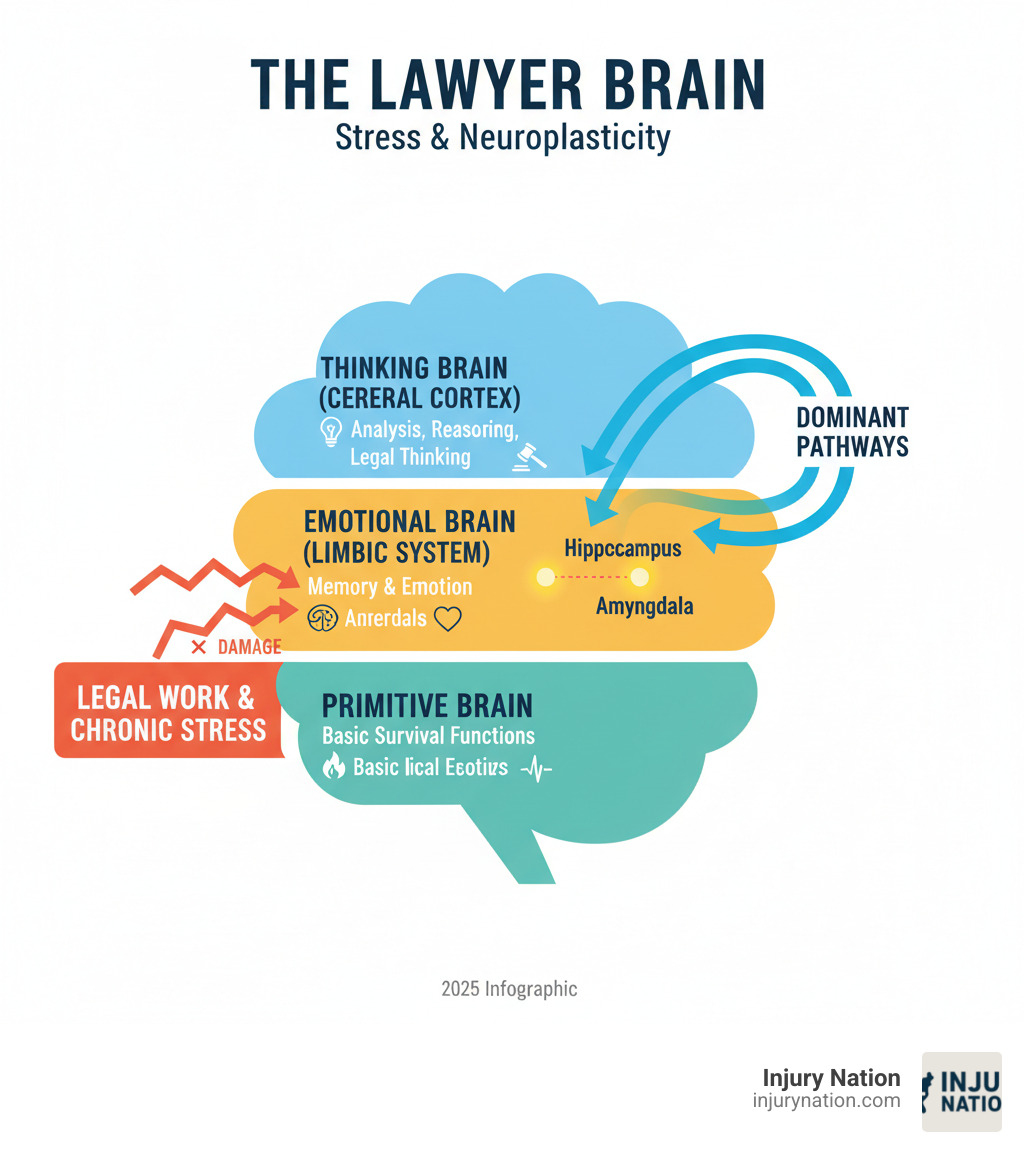
Your brain is rewiring itself through neuroplasticity. Every time you engage in legal analysis, you strengthen that neural pathway, making it a superhighway. This builds your connectome—your brain’s network of connections—into a machine that’s incredibly efficient at analytical reasoning.
Legal training puts your thinking brain (cerebral cortex) in the driver’s seat, sidelining your emotional brain (limbic system). This dominance of analytical thinking explains why you can argue a case brilliantly but struggle to connect emotionally. You spot flaws in logic but miss the emotional subtext.
Personality research confirms this. Dr. Larry Richard found that lawyers show measurably different traits from the general population: higher skepticism and urgency, lower resilience and sociability, and reduced cognitive empathy. These aren’t character flaws; they’re the result of what the profession demands and rewards.

How Legal Culture Shapes the Lawyer Brain
It’s not just the work; it’s the culture. The legal profession’s grind culture creates chronic stress. Demanding clients, tight deadlines, and the pressure of billable hours take a mental toll. When your value is measured in six-minute increments, your entire life can feel like an opportunity cost calculation.
Perfectionism is rampant. In law, mistakes have serious consequences, so anything less than perfect feels like failure, fueling imposter syndrome. The adversarial nature of the work also contributes. You’re trained to find weaknesses and never take things at face value. This professional skepticism serves you well in court but can make you exhausting to be around, making friends feel like they’re being cross-examined.
All of this—the stress, overwork, perfectionism, and adversarial mindset—physically changes your brain, reinforcing the analytical pathways and making it harder to switch off the lawyer brain. The culture may tell you this is admirable, but your brain and your life are paying the price.
The Impact on a Lawyer’s Well-being and Personal Life
It’s hard to be present with loved ones when your mind is mentally drafting a motion or identifying legal issues in a friend’s story. This is the lawyer brain bleeding into your personal life, and the cost is high.
The statistics are alarming. Lawyers experience depression at three times the rate of the general population. Anxiety, burnout, substance misuse, and suicide risk are all tragically common. These aren’t just numbers; they’re your colleagues and classmates.
The analytical mindset follows you home, making your partner feel like they’re living with a risk assessment tool. Simple decisions become exhausting exercises in weighing worst-case scenarios. This constant vigilance leads to isolation, as you feel you can’t turn it off and others don’t understand why you can’t just relax. The quality of your relationships suffers because the lawyer brain has become your default setting.

The Toll on Mental and Physical Health
The damage isn’t just psychological; it’s physical. Constant stress from billable hours, difficult clients, and long nights keeps your body in fight-or-flight mode. This creates allostatic load—the cumulative wear and tear on your body from chronic stress.
Your body is flooded with cortisol and adrenaline. While helpful in short bursts, constant exposure to these stress hormones is damaging. Research shows chronic stress can shrink your hippocampus, the part of your brain for memory and learning. The very skills you need as a lawyer—sharp memory and creative problem-solving—are eroded by the profession’s demands. You may notice forgetfulness or a decline in concentration.
Sleep deprivation becomes the norm, further deteriorating cognitive function and emotional regulation. To cope, many lawyers turn to substance use, which can quickly spiral from self-medication into a serious problem. The profession’s mental health crisis is real. If you’re struggling, know you’re not alone and resources are available.
For more information and support, visit More info about local legal guides.
A Practical Guide to Managing Your Lawyer Brain
Your lawyer brain isn’t a life sentence. You can learn to manage it through “neural self-hacking”—using your brain’s neuroplasticity to create healthier patterns. If legal training built your analytical pathways, you can intentionally build new ones.
The key is learning to control your analytical skills instead of letting them control you. This requires a commitment to cognitive wellness, stress management, and setting boundaries to reclaim your life outside the courtroom.
For a deeper dive into the science behind stress and cognitive performance, check out this neuroscience research on stress and cognitive performance.
Strategies to Prevent Burnout and Protect Mental Health
Here are practical strategies for managing your lawyer brain:
- Prioritize Physical Health. Your brain needs a healthy body. Aim for at least 30 minutes of aerobic exercise 2-3 times a week to improve blood flow to the brain and promote new cell growth.
- Get Enough Sleep. Sleep is non-negotiable for cognitive function. Aim for seven to nine hours per night to allow your brain’s memory and decision-making centers to work properly.
- Feed Your Brain. A healthy diet supports brain health. Foods rich in Omega-3s (like DHA) and curcumin (in turmeric) can boost factors that support the growth of new neurons.
- Build Mental Resilience. Practices like mindfulness and meditation calm your brain’s alarm center. Even five minutes of focused breathing can activate your “rest-and-digest” nervous system. Yoga and gratitude practices are also effective maintenance for your mind.
- Manage Your Time. Overwhelm from deadlines and tasks keeps your stress response activated. Effective prioritization and time management can dramatically reduce chronic anxiety.
- Set Real Boundaries. Actively engage in non-analytical hobbies like painting, music, or gardening. This creates new neural pathways that have nothing to do with issue-spotting.
- Protect Personal Relationships. When with friends and family, practice being present instead of turning conversations into legal hypotheticals.
- Take Real Breaks. Detach completely from your analytical brain. Short breaks throughout the day and longer vacations are essential for cognitive restoration and preventing burnout.
Managing your lawyer brain is an ongoing practice. Every small step builds new neural pathways, making it easier over time to find balance.
Leveraging Your Unique Cognitive Traits for Success
Here’s something most people don’t tell you: that lawyer brain that keeps you up at night analyzing hypotheticals? It’s actually your secret weapon.
Yes, the same traits that make you exhausted at dinner parties—the constant analysis, the skepticism, the need to spot every possible risk—are exactly what make you invaluable to your clients. The challenge isn’t getting rid of these traits. It’s learning to channel them strategically instead of letting them run wild 24/7.
Think about it. Your ability to think strategically, anticipate problems before they happen, and dissect complex situations into manageable pieces isn’t just useful—it’s rare. Most people can’t do what you do. They can’t see three steps ahead or identify the hidden risks in a seemingly simple situation. That’s your superpower.
The real question isn’t whether you have these cognitive strengths. It’s whether you’re using them in a way that brings you career satisfaction rather than just stress.
Dr. Larry Richard’s research on lawyer personality types reveals something fascinating: the best predictor of job satisfaction isn’t your salary or your firm’s prestige. It’s whether your work actually fits who you are as a person. When lawyers find the right match between their natural cognitive style and their practice area, everything changes. Suddenly, those analytical skills that felt like a burden become sources of deep professional fulfillment.
This is where positive psychology meets legal practice. When you’re doing work that aligns with your cognitive strengths—whether that’s problem-solving for clients, developing deep expertise in a specialized area, or taking on leadership roles that let you shape a healthier legal culture—you stop feeling like you’re fighting against yourself.

If you’re looking to connect with lawyers who have mastered this balance, find experienced lawyers in your area who can help with your case.
Turning Analytical Skills into Strengths
Your analytical brain isn’t the enemy. It’s just been working overtime without a break.
When you consciously direct these cognitive traits toward meaningful work, they transform into genuine strengths. Your risk assessment abilities mean you can protect clients from dangers they’d never see coming. Your tendency toward skepticism becomes thorough due diligence that saves people from bad decisions. That habit of spotting issues everywhere? In the right context, it’s called being exceptionally prepared.
Your strategic thinking allows you to map out legal approaches that others miss entirely. You can anticipate opposing counsel’s arguments before they make them. You can identify the weak points in a case and shore them up before they become problems. This kind of foresight is what turns good lawyers into exceptional ones.
The problem-solving capacity that comes with your trained legal mind means you can break down impossibly complex situations into clear, actionable steps. When clients come to you overwhelmed and confused, you can see the path forward. That’s not just a skill—it’s a form of service that genuinely helps people.
And when it comes to client advocacy, your meticulous preparation and ability to think through every angle means you’re building the strongest possible case. You’re not just going through the motions. You’re using every cognitive tool at your disposal to fight for the best outcome.
The key is finding your career fit. Maybe that means developing expertise in an area of law that genuinely fascinates you. Maybe it means moving into a role where your analytical strengths shine without burning you out. Maybe it means taking on leadership positions where you can help create a more sustainable legal culture for everyone.
Your lawyer brain isn’t something to fix. It’s something to understand, manage, and ultimately leverage for both professional success and personal well-being. When you get this balance right, those cognitive traits that once felt like a curse become exactly what they should be: your greatest professional assets.
Frequently Asked Questions about the Lawyer Brain
What are the key personality differences between lawyers and the general population?
Research by Dr. Larry Richard shows that lawyers are wired differently. Compared to the general population, they tend to score much higher in skepticism (questioning everything) and urgency (a drive to get things done now). Conversely, lawyers often score lower in resilience (bouncing back from setbacks), sociability (enjoying social interaction), and cognitive empathy (sharing others’ feelings). These traits, which are amplified by legal training, make for excellent advocates but can complicate personal relationships.
How can law firms foster a healthier, ‘neuro-intelligent’ culture?
Firms hold significant power to improve lawyers’ cognitive health. A “neuro-intelligent” culture starts with leadership prioritizing well-being as a core value. Key actions include:
- Reducing chronic stress and overwork by challenging the “grind culture” and promoting reasonable workloads.
- Creating psychological safety where lawyers can admit mistakes and seek help without fear of career repercussions.
- Minimizing excessive internal competition and rewarding collaboration and mentorship.
- Leveraging cognitive diversity by matching lawyers to roles that suit their natural strengths and personality types, which improves both job satisfaction and performance.
What is the role of neuroplasticity in a lawyer’s cognitive health?
Neuroplasticity is the brain’s ability to rewire itself based on thoughts and experiences. It’s how the analytical lawyer brain developed in the first place—through the repetition of legal thinking. The good news is that this same principle can be used for healing. By consistently practicing new habits like mindfulness, exercise, or setting boundaries, you can consciously build new, healthier neural pathways. This process, sometimes called “neural self-hacking,” allows you to counteract the negative effects of stress and develop a more balanced brain. Neuroplasticity is your most powerful tool for managing the lawyer brain phenomenon.
Conclusion: Achieving Balance and Career Satisfaction
Your lawyer brain isn’t your enemy. It’s a remarkable tool that’s been sharpened through years of training and practice. The analytical skills, attention to detail, and strategic thinking that define how you approach problems are what make you exceptional at what you do.
But here’s the truth we’ve explored together: when that analytical mindset runs on autopilot 24/7, it extracts a heavy price. The constant issue-spotting, the inability to turn off the skepticism, the trained pessimism bleeding into every conversation—these patterns can drain the joy from your personal life and put your mental health at serious risk.
The good news? You’re not stuck with an “always on” brain. Thanks to neuroplasticity, you can actively reshape how your mind works. The strategies we’ve covered—prioritizing sleep and exercise, practicing mindfulness, setting firm boundaries between work and life, engaging in hobbies that use different parts of your brain—aren’t just nice ideas. They’re practical tools for neural self-hacking that actually work.
When you take care of your cognitive health, everything improves. Your relationships become richer because you’re present instead of analyzing. Your creativity returns because your brain has space to breathe. Your career satisfaction deepens because you’re leveraging your strengths strategically rather than being controlled by them. And perhaps most importantly, you’re protecting yourself from burnout, depression, and the other mental health challenges that plague our profession.
A healthy lawyer brain also makes you better at serving your clients. When you’re well-rested, mentally balanced, and emotionally regulated, you bring clearer thinking and more effective advocacy to every case. This matters especially when you’re working with clients facing life-changing situations.
If you’re a lawyer reading this, start small. Pick one strategy and commit to it for a month. If you’re someone who needs legal help, know that the best attorneys are those who’ve learned to balance their powerful analytical minds with genuine human connection.
For anyone facing serious injuries that require experienced legal representation, finding an attorney who combines sharp intellect with empathy is crucial. You can find a catastrophic injury attorney to help manage your case through Injury Nation, where we connect people with lawyers who truly understand both the legal complexities and the human impact of catastrophic injuries.
Your brain is capable of remarkable things. It can analyze complex legal issues, advocate for justice, and solve problems that seem impossible. It can also learn to rest, to play, and to simply be present in the moment. That balance isn’t just possible—it’s essential for a fulfilling career and a life worth living.