

Why Dog Bite Victims Need to Understand Their Legal Rights
A dog bite accident lawyer specializes in helping victims steer the legal process after a dog attack, securing compensation for medical bills, lost wages, pain and suffering, and other damages. In Arizona, where strict liability laws apply, these attorneys are crucial for understanding your rights and maximizing your settlement.
Quick answers for dog bite victims:
- When to hire: Immediately after a dog bite, especially if injuries are serious, the owner disputes liability, or insurance offers seem low
- What they do: Investigate the incident, gather evidence, calculate damages, negotiate with insurers, and file lawsuits if necessary
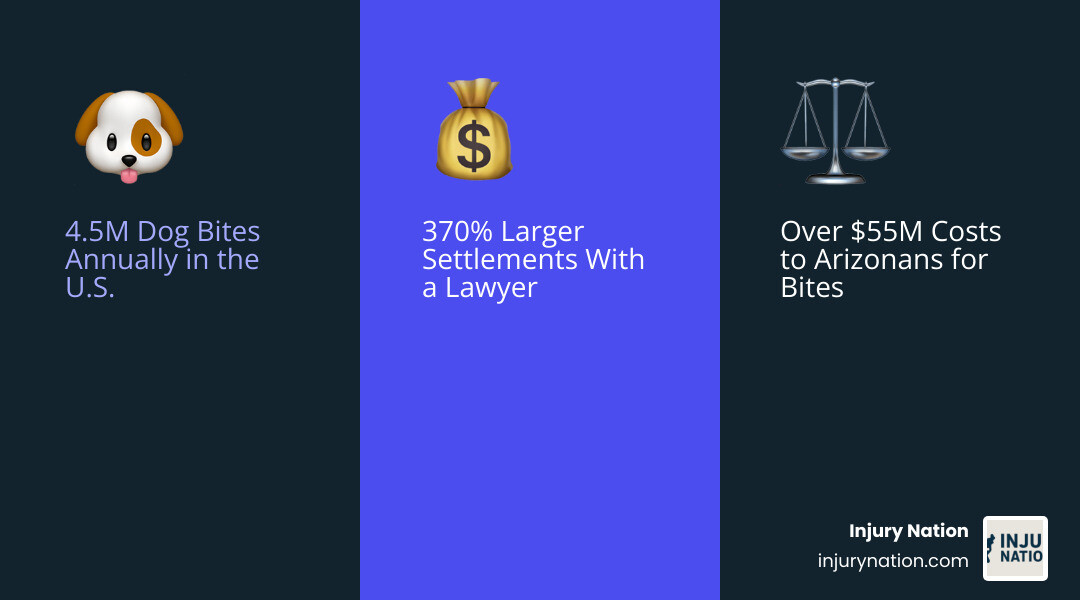
- Why you need one: Studies show victims receive settlements up to 370% larger when represented by qualified attorneys
- Arizona’s law: Strict liability applies—owners are responsible even if the dog has never bitten before
- Time limit: You have only one year from the bite date to file a strict liability claim in Arizona
Dog bites are more common—and costly—than most people realize. Over 4.5 million Americans are bitten by dogs each year, with approximately half of those victims being children. In Arizona alone, more than 30,000 people visited emergency rooms for dog bite injuries over a five-year period, costing Arizonans over $55 million.
The aftermath of a dog attack can be overwhelming. You’re dealing with painful injuries, mounting medical bills, and potentially lasting emotional trauma. Meanwhile, insurance companies are already working to minimize what they’ll pay you.
This is not the time to go it alone.
Arizona’s dog bite laws are unique. The state operates under a strict liability statute, meaning dog owners can be held responsible regardless of whether their dog has ever shown aggression before. But there are critical exceptions, tight deadlines, and legal nuances that can make or break your case.
Understanding when and how to hire a dog bite accident lawyer can mean the difference between a fair settlement that covers all your damages and a lowball offer that leaves you struggling to pay for ongoing care.
Related content about Dog bite accident lawyer:
First Steps to Take After a Dog Bite in Arizona
Being bitten by a dog can be a terrifying and painful experience. Your immediate actions can significantly impact your health and any potential legal claim. We urge you to prioritize your safety and well-being, then follow these crucial steps:
1. Seek Immediate Medical Attention: Your health is paramount. Even if a bite seems minor, dog bites carry a high risk of infection, including rabies and tetanus. Puncture wounds can be deeper than they appear, leading to nerve damage, muscle damage, or even bone fractures. Seeking medical care promptly ensures proper wound cleaning, assessment for infection, and necessary vaccinations. This also creates an official medical record of your injuries, which is vital for any future legal claim.
2. Report the Incident: In Arizona, reporting a dog bite is not just a good idea—it’s often a legal requirement. According to Arizona Revised Statute 11-1014, “any person having direct knowledge” of a dog bite must report it to the authorities. In areas like Phoenix, this would typically involve Maricopa County Animal Care & Control (MCACC) or your local police department. Reporting the incident creates an official record, helps establish the facts, and can protect others from a potentially dangerous animal. The MCACC website provides important information for dog bite victims.
3. Document Everything: The more information you can gather immediately after the incident, the stronger your case will be.
- Photos: Take pictures of your injuries, the dog, the location where the bite occurred, and any damaged clothing or property. Continue to take photos of your injuries as they heal (or don’t heal).
- Witness Information: If anyone saw the incident, get their names, phone numbers, and email addresses. Witness testimonies can be incredibly valuable.
- Owner Information: Obtain the dog owner’s name, address, phone number, and, if possible, their homeowner’s or renter’s insurance information. This insurance policy is usually what will cover your damages.
- Preserve Evidence: Do not wash any clothing that was torn or bloody during the attack. Place it in a plastic bag as evidence.
4. Avoid Speaking to Insurers (Without Legal Counsel): The dog owner’s insurance company may contact you shortly after the incident. Be polite, but do not provide detailed statements, sign any documents, or accept any settlement offers without first consulting with a dog bite accident lawyer. Insurance adjusters work for the insurance company, not for you, and their primary goal is to minimize payouts. Anything you say can be used against your claim.
What to Do If a Dog Is Actively Attacking
While the focus is usually on the aftermath, knowing how to react during an active dog attack can be life-saving. Your safety is the priority.
- Do Not Physically Intervene: It’s instinctive to want to break up a dog fight or pull an attacking dog off a person, but this can put you at severe risk of serious injury. The American Kennel Club (AKC) advises against physically getting involved.
- Distraction Techniques: The safest way to break up a dog fight or stop an attack is often through distraction. Make a loud noise (scream, clap loudly), spray water from a hose, or throw a blanket or jacket over the dogs. The AKC suggests there are safe ways to break up a fight without becoming physically involved.
- Use a Barrier: If possible, place an object between you and the dog, like a backpack, purse, or even a piece of furniture if indoors.
- Protect Your Face and Neck: If you fall or are knocked down, curl into a ball, covering your head and neck with your arms and hands. This protects vital areas.
Common Injuries Resulting from Dog Bites
Dog bites are not just superficial wounds. They can lead to a wide range of physical and psychological injuries, some of which can be life-altering.
- Puncture Wounds: These are deep holes caused by the dog’s teeth. They can damage underlying tissues, muscles, nerves, and even bones. They are also highly prone to infection because bacteria can be driven deep into the tissue.
- Lacerations: These are jagged tears in the skin, often requiring stitches and leaving noticeable scars.
- Nerve Damage: A dog’s powerful jaws can crush or sever nerves, leading to numbness, weakness, or loss of function in the affected area.
- Infections: Dog saliva contains numerous bacteria. Common infections include cellulitis, pasteurellosis, and staph infections. Rabies is also a concern if the dog’s vaccination status is unknown.
- Scarring and Disfigurement: Many dog bites result in permanent scarring, especially on visible areas like the face, hands, and arms. This can require extensive reconstructive surgery.
- Emotional Trauma: The psychological impact can be as severe as the physical. Victims, especially children, may develop Post-Traumatic Stress Disorder (PTSD), phobias (cynophobia, or fear of dogs), anxiety, depression, and changes in social behavior. Children aged 1–5 are at the highest risk of pediatric dog bite injuries, with injury to the head and neck occurring in more than 60% of cases. These emotional scars often require counseling or therapy.
- Crushing Injuries and Fractures: Larger dogs can exert immense bite force, leading to crushing injuries or even broken bones. Being knocked down by a dog can also cause fractures.
Understanding Arizona’s Strict Dog Bite Liability Laws

When it comes to holding dog owners accountable for bites, states typically fall into one of two categories: “one-bite rule” states or “strict liability” states. Arizona, thankfully for victims, is a strict liability state. This means the legal burden to prove fault is significantly lower for the victim.
Arizona’s Strict Liability: The “One-Bite Rule” Doesn’t Apply
Under Arizona law, specifically Arizona Revised Statute 11-1025, the owner of a dog is liable for damages suffered by a person bitten when the person is in or on a public place or lawfully in or on a private place, including the property of the owner of the dog.
What does this mean in plain English?
- No “One-Bite Rule”: Unlike some other states where an owner is only liable if they knew their dog had a history of aggression (the “one-bite rule”), Arizona’s law provides that the owner is liable even if the dog has never bitten anyone before. The dog owner does not need to have prior knowledge of the dog’s viciousness.
- Owner is Liable: The law focuses on the fact of the bite, not the owner’s knowledge or the dog’s history. This makes it easier for victims to pursue compensation.
- Lawful Presence: The victim must have been lawfully present where the bite occurred. This includes public places (parks, sidewalks) and private property where they were invited or had a legal right to be (e.g., a guest, mail carrier, or utility worker).
This strict liability approach is a significant protection for dog bite victims in Arizona. As affirmed in cases like Murdock v. Balle, dog owners in Arizona may face both strict liability and common law liability for dog bite injuries. While strict liability removes the need to prove prior viciousness, common law negligence claims might still be pursued, for example, if the owner was careless in controlling their dog in a way that led to the bite.
Defenses for the Dog Owner: Provocation and Trespassing
While Arizona’s strict liability law is beneficial for victims, there are limited defenses an owner can use to avoid liability. These defenses are typically narrowly defined:
| Valid Defenses in Arizona | Invalid Defenses in Arizona |
|---|---|
| Provocation: The victim intentionally provoked the dog. | Owner claims they didn’t know the dog was aggressive. |
| Trespassing: The victim was unlawfully on the owner’s property. | Dog has never bitten anyone before. |
| Owner claims the dog was usually friendly. | |
| Owner claims they weren’t negligent (unless the victim was trespassing or provoked). |
- Provocation Defense: This defense applies if the dog owner can prove that the injured person provoked the dog. According to Arizona Revised Statute 11-1027, proof of provocation of the dog by the person bitten is a complete defense to liability. What constitutes “provocation” can be debated, but generally, it refers to actions that would reasonably incite a dog to bite.
- Trespassing Defense: If the victim was unlawfully on the owner’s property at the time of the bite, the owner may not be held liable under the strict liability statute. ARS 11-1026 defines lawful presence as being “an invitee or guest” or performing “a duty imposed upon him by law of the state or United States, or by ordinances of a municipality in which such property is located.” This means someone breaking into a home or present without permission would generally be considered a trespasser.
Common law defenses like contributory negligence (where the victim was partially at fault) or assumption of risk (where the victim knew the risk but proceeded anyway) have largely been superseded by Arizona’s strict liability statute for dog bites.
The Clock is Ticking: Arizona’s Statute of Limitations
Time is of the essence when pursuing a dog bite claim in Arizona. There are strict deadlines, known as statutes of limitations, for filing a lawsuit. Missing these deadlines can result in losing your right to seek compensation forever.
- Strict Liability Claim Deadline: For claims based on Arizona’s strict liability dog bite statute, you generally have one year from the date of the bite to file a lawsuit or settle a claim. This is specified in Arizona Revised Statute 12-541, which states that actions upon a liability created by statute must be commenced within one year. This is a much shorter period than for many other personal injury claims.
- Negligence Claim Deadline: If your case also involves a common law negligence claim (e.g., the owner was careless in controlling their dog), the statute of limitations for such personal injury claims in Arizona is generally two years.
- Claims Against Public Entities: If the dog owner is a public entity, a claim must be made within 180 days from the date of the accident.
- Special Rules for Minors: When a child is bitten by a dog, they have an extended period to file a claim. According to ARS 12-502, a child has 1–2 years from the date they turn 18 to make a claim. However, it is almost always advisable for parents to pursue a claim on the child’s behalf much sooner to ensure evidence is fresh and medical needs are addressed.
Given these tight deadlines and varying rules, consulting with an experienced dog bite accident lawyer immediately after an incident is critical to ensure your rights are protected and your claim is filed within the appropriate timeframe.
Why You Need a Dog Bite Accident Lawyer for Your Arizona Claim

While the legal framework in Arizona favors dog bite victims, navigating the aftermath of an attack is rarely simple. This is where a skilled dog bite accident lawyer becomes an invaluable ally. We understand the complexities of these cases and are dedicated to ensuring you receive the compensation you deserve.
How a Dog Bite Accident Lawyer Builds Your Case
A comprehensive legal strategy is essential to a successful dog bite claim. Here’s how we can help build your case:
- Investigating the Incident: We will thoroughly investigate the circumstances of the bite, gathering evidence such as police reports, animal control records, witness statements, and any photographic or video evidence. We’ll determine if local leash laws or other ordinances were violated, which can strengthen your claim.
- Gathering Medical Records: We work with your medical providers to obtain all necessary records, bills, and prognoses. This includes documenting current and future medical needs, therapy, and any potential long-term care.
- Calculating Total Damages: Beyond immediate medical bills, we carefully calculate all your damages, including lost wages, future earning capacity, pain and suffering, emotional distress, and other non-economic losses.
- Consulting with Experts: In complex cases, we may consult with medical experts, psychologists, or vocational experts to fully assess the extent of your injuries and their long-term impact.
- Drafting a Demand Letter: Once your injuries are stable and your damages are fully calculated, we will prepare and send a detailed demand letter to the dog owner’s insurance company, outlining your claim and demanding appropriate compensation.
- Negotiating a Settlement: We handle all communications and negotiations with the insurance adjusters. Our experience allows us to counter their lowball offers and fight for a fair settlement that reflects the true value of your claim.
- Filing a Lawsuit if Necessary: If a fair settlement cannot be reached through negotiation, we are prepared to file a lawsuit and represent you in court, advocating fiercely for your rights before a judge and jury.
Types of Damages You Can Claim in Arizona
Dog bite victims in Arizona can claim a variety of damages to compensate for their losses. These generally fall into two categories:
- Economic Damages: These are quantifiable financial losses directly resulting from the dog bite.
- Medical Bills: Covers all past and future medical expenses, including emergency room visits, doctor appointments, surgeries, medications, physical therapy, and counseling.
- Lost Wages: Compensation for income lost due to time off work for recovery or appointments.
- Loss of Earning Capacity: If your injuries prevent you from returning to your previous job or reduce your ability to earn income in the future, you can claim compensation for this long-term financial impact.
- Property Damage: Cost to repair or replace any personal property damaged during the attack (e.g., torn clothing, broken glasses).
- Non-Economic Damages: These are non-monetary losses that compensate for the personal impact of your injuries.
- Pain and Suffering: Compensation for the physical pain and discomfort endured due to the bite and its recovery process.
- Emotional Distress: Covers psychological trauma, such as anxiety, fear, depression, or PTSD, especially common after violent attacks or for child victims.
- Scarring and Disfigurement: Compensation for permanent scars, disfigurement, or physical deformities caused by the bite, which can also include the emotional impact of such changes.
- Loss of Enjoyment of Life: If your injuries prevent you from participating in activities you once enjoyed, you can claim damages for this reduction in your quality of life.
Navigating Insurance Negotiations with a Dog Bite Accident Lawyer
The role of insurance in dog bite cases in Arizona is significant. Typically, the dog owner’s homeowner’s or renter’s insurance policy will cover the damages resulting from a dog bite. However, dealing with insurance companies can be challenging.
- Insurance Company Tactics: Insurance adjusters are trained to minimize payouts. They might question the severity of your injuries, suggest you were at fault, or offer a quick, low settlement hoping you’ll accept before understanding the full extent of your damages.
- Importance of Legal Representation: Studies have shown that accident victims who hire a personal injury attorney can receive settlements up to 3.5 times larger than if they went it alone. For dog bite victims in Arizona specifically, average settlements can be 370% more with qualified attorneys. We understand insurance company tactics and can effectively negotiate on your behalf, ensuring you don’t accept less than you deserve.
- Breed Exclusions: Be aware that some insurance policies have breed-specific exclusions, meaning they might not cover bites from certain dog breeds. An experienced dog bite accident lawyer can investigate the policy details and explore other avenues for compensation if needed.
Frequently Asked Questions about Arizona Dog Bite Cases
We understand you have many questions during this difficult time. Here are some common inquiries we receive regarding dog bite cases in Arizona:
Can I sue if a dog knocked me down but didn’t bite me?
Yes, you can absolutely sue if a dog knocked you down and caused injuries, even if it didn’t bite you. However, such a claim would typically fall under a negligence claim, not the strict liability statute for dog bites. To succeed, you would need to prove that the dog owner was careless or negligent in controlling their dog, and that this negligence directly caused your injuries. For instance, if a dog ran releaseed and knocked you over, causing a broken bone, you could argue the owner was negligent by violating leash laws or failing to control their animal. The statute of limitations for a negligence claim in Arizona is generally two years.
What happens if the dog’s owner has no insurance?
This can present a challenge, but it doesn’t mean you have no recourse. You can still sue the owner directly for your damages. However, collecting payment can be difficult if the owner has limited assets. A skilled dog bite accident lawyer can investigate the owner’s financial situation and assets to determine the feasibility of pursuing a lawsuit. In rare cases, your own uninsured/underinsured motorist coverage (if the incident involved a vehicle) or medical payments coverage might provide some relief, but this is less common for pure dog bite incidents.
Do local leash laws affect my case?
Yes, local leash laws can significantly affect your case, especially if you are pursuing a negligence claim in addition to, or instead of, a strict liability claim. If a dog owner violates a local leash law, and that violation leads to an injury, it can be considered negligence per se. This means the owner’s violation of the law is considered automatic proof of negligence. For example, Phoenix City Code § 8-14 prohibits dog owners from letting their animals run at large and includes rules for securing dogs on private property and controlling them with a leash in public. Similarly, Tucson and Phoenix require that dogs be kept in a fenced yard on private property. If a dog bite occurs because an owner failed to follow these rules, it can strengthen your claim.
Conclusion: Find the Right Legal Help for Your Recovery
Being the victim of a dog bite in Arizona can be a physically, emotionally, and financially devastating experience. While Arizona’s strict liability laws offer significant protection, navigating the legal process, understanding deadlines, and dealing with insurance companies can be overwhelming.
We’ve seen how quickly dog bites can escalate, leading to serious injuries, mounting medical bills, and lasting trauma. We’ve also learned that victims who seek legal representation often receive substantially higher settlements, allowing them to fully recover and move forward with their lives.
Don’t let the complexities of the legal system deter you from seeking the justice and compensation you deserve. Acting quickly to consult with an experienced dog bite accident lawyer is your best strategy. They can protect your rights, investigate your claim, and fight on your behalf while you focus on healing.
Injury Nation is dedicated to connecting victims like you with qualified, top-rated personal injury lawyers who specialize in dog bite cases. If you or a loved one has been injured by a dog in Arizona, don’t hesitate. Take the first step towards recovery and a fair settlement. Let us help you find a top-rated personal injury lawyer near you today.