

Why Legal Help is Essential for Disability Claims
Disability insurance claims attorneys are specialized lawyers who help people secure benefits when insurance companies deny or delay their claims. If you’re struggling with the claims process or have been denied, you don’t have to fight this battle alone.
Disability insurance claims attorneys can:
- Analyze your policy and denial letter
- Gather critical medical evidence
- Manage all communication with the insurer
- File appeals before strict deadlines
- Litigate in court when necessary
- Work on a contingency fee basis (no upfront costs)
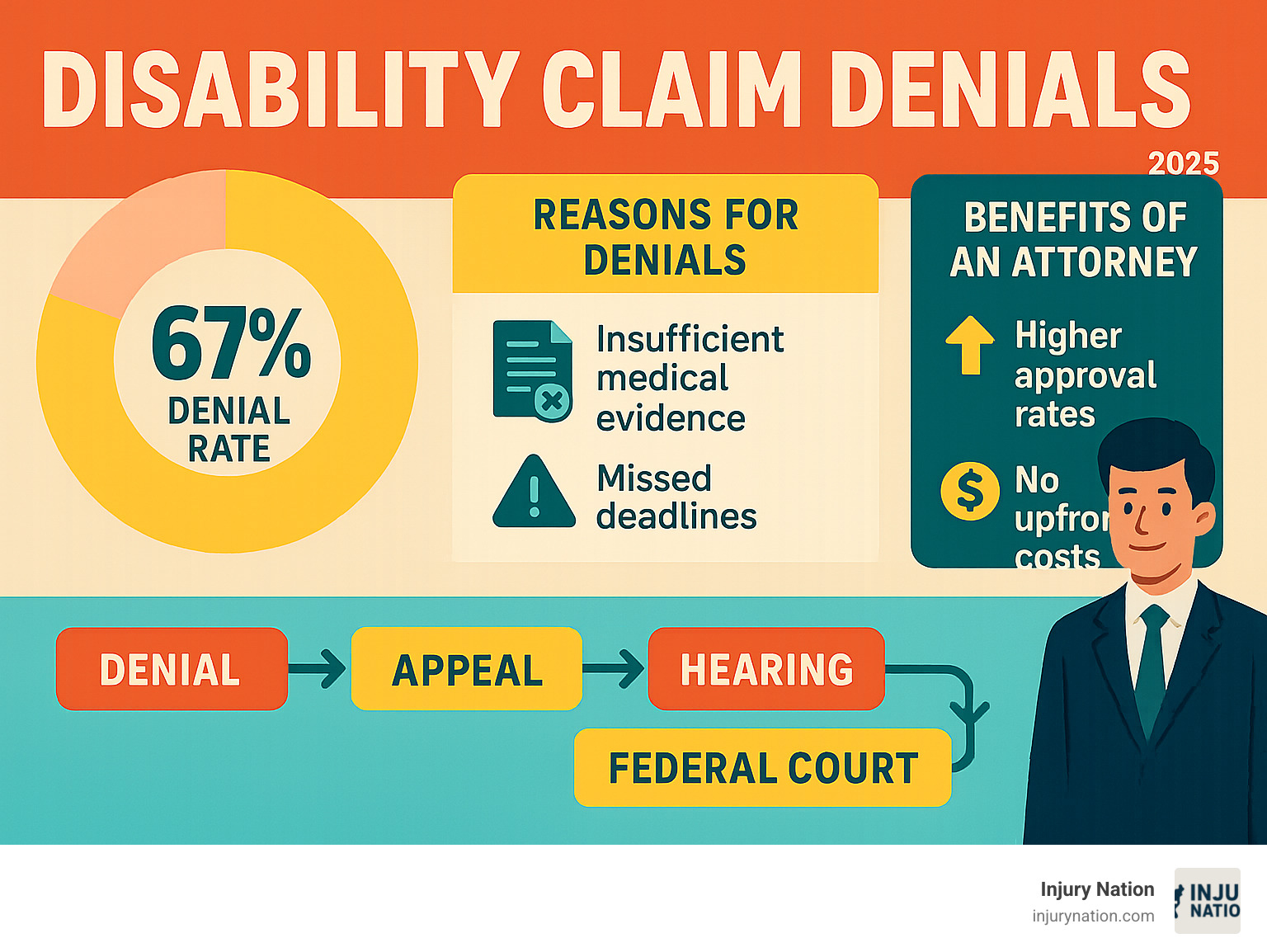
The statistics are sobering: more than 67% of initial long-term disability claims are denied. This isn’t because the claims lack merit; it’s because insurance companies are for-profit businesses that benefit from denying valid claims.
When a serious illness or injury prevents you from working, a denial letter can be devastating. You’re already facing medical bills and lost income. However, most denials can be successfully appealed with proper legal representation. Disability attorneys understand how to steer complex policy language, gather compelling evidence, and counter the tactics insurers use to avoid paying.
This guide will show you how disability insurance claims attorneys can help you win your benefits, what to expect from the process, and how to choose the right lawyer for your case.
Understanding Your Disability Insurance Policy

When illness or injury stops you from working, disability insurance is a financial lifeline. But not all policies are the same, and understanding yours is key to getting the benefits you deserve.
Long-term disability insurance provides monthly income, typically 60-70% of your previous earnings, when you can’t work for an extended period. Short-term disability insurance covers shorter periods, usually a few weeks to a year, bridging the gap until long-term benefits begin or you recover.
The most important part of your policy is its definition of “disability.”
- “Own occupation” policies consider you disabled if you can’t perform your specific job. This definition is more generous and common in individual policies or the first two years of a group plan.
- “Any occupation” is stricter, defining disability as being unable to work in any job that fits your education and experience. Most group policies switch to this definition after 24 months.
Your policy’s elimination period (the waiting time before benefits start) and benefit percentage directly impact your finances. For help decoding your policy, more info about our legal services is available from our experienced attorneys.
ERISA vs. Private Disability Policies: Know Your Rights
The type of policy you have dramatically affects your legal rights when fighting a denial.
ERISA policies are group plans provided through an employer. The Employee Retirement Income Security Act (ERISA) offers some protections but also limits your rights. Under ERISA, you generally cannot have a jury trial, and your recovery is limited to unpaid benefits and attorney’s fees. You cannot receive punitive damages for an insurer’s bad behavior. The U.S. Dept. of Labor on ERISA explains these federal rules, which require you to complete a strict internal appeal process before you can sue in federal court.
Private disability policies, which you buy yourself, are governed by state law and offer stronger protections. You have the right to a jury trial, and if the insurance company acts in bad faith, you can potentially recover punitive damages in addition to your benefits. This gives insurers a powerful incentive to handle claims fairly.
| Feature | ERISA-Governed Policies | Private Disability Policies |
|---|---|---|
| Governing Law | Federal law (ERISA) | State law |
| Right to Jury Trial | Generally no | Yes |
| Available Damages | Limited to unpaid benefits, attorney’s fees | Unpaid benefits, attorney’s fees, emotional distress, punitive damages |
| Appeal Process | Mandatory administrative appeals before litigation | May proceed directly to litigation, though appeals often pursued |
Understanding your policy type is critical. Disability insurance claims attorneys know that ERISA cases require building a perfect administrative record, as new evidence is rarely allowed in court. Private policies offer more flexibility and leverage against insurers.
Navigating the Disability Claim and Appeal Process
Filing a disability claim is a complex process, and insurance companies have teams dedicated to finding reasons to deny claims. Understanding the common pitfalls can help you build a stronger case from the start.
Most denials are not because a disability is fraudulent, but due to technicalities. The most common reasons for denial include:
- Insufficient medical evidence: Your medical records must clearly document your diagnosis, symptoms, and, most importantly, your specific functional restrictions and limitations.
- Application mistakes: Vague answers or incomplete forms can give an insurer a reason to deny.
- Missed deadlines: The claims and appeals process has strict time limits. Missing a deadline can permanently bar you from receiving benefits.
Insurers may also use surveillance, including monitoring social media, to find activity inconsistent with your claimed disability.

To improve your chances, understand your policy, gather comprehensive medical evidence, and be detailed and accurate on your application. Consulting with disability insurance claims attorneys before you file can help you avoid these common mistakes.
If your claim is denied, don’t give up. The denial letter is a roadmap that explains why the claim was rejected, showing you what evidence is needed for an appeal. Act quickly, as appeal deadlines are non-negotiable. This is when an experienced attorney becomes essential to analyze the denial and build a winning appeal.
The Key Stages from Filing to Final Decision
The disability claims process generally follows these steps:
- Initial Application: You submit your claim with information about your medical condition and job duties.
- Insurer Review: A claims adjuster reviews your medical records, may contact your doctors, and evaluates your claim.
- Decision: The insurer approves or denies your claim. A denial must include a written explanation.
- Administrative Appeal: This is your critical opportunity to challenge a denial by submitting new evidence and arguments. For ERISA claims, this is often your last chance to add evidence to the record.
- Litigation: If the appeal is denied, your final option is to file a lawsuit. ERISA cases go to federal court, while private policy cases are typically heard in state court.
The process can take months or even years. For more strategies, check out our blog for more tips.
The Critical Role of Disability Insurance Claims Attorneys
When you’re dealing with a health crisis, facing an insurance company’s legal team alone is an unfair fight. Disability insurance claims attorneys exist to level the playing field.

Insurance companies use proven tactics to protect their profits, including:
- Delaying claims for months, hoping you’ll give up or accept a low settlement.
- Cherry-picking medical records, ignoring evidence that supports your disability.
- Using biased medical examiners who often find claimants are not truly disabled.
- Conducting surveillance or monitoring social media to challenge your claim.
A skilled attorney knows these tactics and how to counter them. They protect you from tricky questions, force insurers to meet deadlines, and challenge biased opinions with strong evidence from your own doctors.
Sometimes, an insurer’s conduct crosses the line into bad faith, which is an unreasonable denial or delay of a valid claim. With private policies, this can lead to significant legal consequences for the insurer, including punitive damages designed to punish their behavior. This is a powerful tool that attorneys can use to hold companies accountable.
How an Attorney Secures Your Benefits
Claimants with legal representation have significantly higher success rates. An attorney will:
- Conduct a comprehensive claim review: They analyze your policy, medical records, and the insurer’s denial to build a strategy.
- Build bulletproof evidence: They work with your doctors to get the detailed documentation needed and may arrange for vocational or medical experts to strengthen your case. This is vital for ERISA claims, where the appeal record is often the only evidence a judge can review.
- Manage all communication: All contact goes through your lawyer, preventing insurers from using your words against you.
- Craft a compelling appeal: They systematically dismantle the insurer’s reasons for denial with evidence and legal arguments.
- Litigate and negotiate: If necessary, they will file a lawsuit and represent you in court or in settlement negotiations to maximize your compensation.
Choosing the Right Attorney
Look for a lawyer with these key qualities:
- Specialization in disability law: You need an expert in ERISA and state insurance laws, not a general practitioner.
- A proven track record: Ask about their experience with cases like yours and against your specific insurance company.
- Transparent contingency fees: Reputable attorneys only get paid if you win. Ensure you get a clear, written fee agreement.
- Strong communication: Your lawyer should explain things clearly and keep you informed.
If you have long-term disability coverage, as noted by the U.S. Bureau of Labor Statistics on disability insurance, it’s a valuable asset worth fighting for. To connect with a qualified lawyer, Find skilled Disability Insurance Claims Attorneys or Find a lawyer in your Location to start your search.
Building an Unbeatable Claim: Evidence and Strategy
Proving your disability to an insurance company requires more than just saying “I can’t work.” You must build a case with undeniable evidence that shows how your medical condition prevents you from performing your job.

The foundation of a winning claim is a solid evidence file. A diagnosis alone is not enough; you must connect that diagnosis to your inability to work. This involves gathering objective proof and expert opinions to create a complete picture of your limitations.
Your treating physicians are your most important advocates. They must provide detailed statements explaining your specific restrictions and limitations. For example, a note stating “patient cannot sit for more than 30 minutes or lift more than 10 pounds” is far more powerful than one simply saying “patient has back pain.”
Other experts can provide critical support. Vocational experts can analyze your job duties and provide an opinion on whether your medical restrictions prevent you from working. A Functional Capacity Evaluation (FCE) is a comprehensive test that provides objective data on your physical and cognitive abilities, making it difficult for an insurer to dispute your limitations.
Crucial Evidence Your Claim Needs
An unbeatable claim is supported by a wide range of evidence. Every strong claim should include:
- Comprehensive medical records: All doctor’s notes, hospital records, specialist reports, and diagnostic test results.
- Physician statements: Detailed letters from your doctors outlining your diagnosis, prognosis, and specific functional limitations.
- Objective test results: MRIs, CT scans, X-rays, nerve studies, and lab work that provide concrete proof of your condition.
- Prescription history: A list of your medications, dosages, and any side effects that impact your ability to function.
- Vocational expert reports: An analysis of how your limitations prevent you from performing your specific job duties.
- Personal statements: A detailed account of your symptoms and how they affect your daily life.
- Witness testimony: Statements from family, friends, or former colleagues who can corroborate your limitations.
Frequently Asked Questions about Disability Claims
When facing a disability claim, many questions arise. Here are answers to some of the most common ones.
What should I do if my long-term disability claim is denied?
A denial is not the final word. Insurance companies deny a high percentage of initial claims, counting on people to give up. Don’t.
- Review the denial letter to understand the exact reason for the denial.
- Note the appeal deadline immediately. Missing this deadline can permanently end your claim.
- Contact an experienced disability insurance claims attorney. Do not try to handle the appeal alone. An attorney can analyze the denial, gather the necessary evidence, and build a strong appeal to fight the insurer’s decision.
How much does a disability insurance lawyer cost?
Most disability insurance claims attorneys work on a contingency fee basis. This means you pay no upfront fees or out-of-pocket costs. The attorney only gets paid if they win your case, receiving a percentage of the back-pay or settlement they recover for you. This fee structure makes expert legal help accessible to everyone, regardless of their financial situation.
Can I sue my insurance company for denying my claim?
Yes. If your insurance company wrongfully denied your claim, you have the right to sue. The process depends on your policy type:
- ERISA Policies (from an employer): You must first complete the insurer’s internal appeal process. After that, you can file a lawsuit in federal court. The judge’s review is typically limited to the evidence in your administrative appeal file, which is why a professionally prepared appeal is critical.
- Private Policies (bought individually): You can sue in state court. If the insurer acted in “bad faith” by unreasonably denying your claim, you may be able to recover not only your unpaid benefits but also damages for emotional distress and even punitive damages.
An experienced attorney can determine the best legal strategy for your specific case.
Conclusion
When a disability turns your world upside down, a battle with your insurance company is the last thing you need. While denial rates are high—over 67% for initial claims—this is a fight that is absolutely winnable with the right help.
As this guide has shown, legal expertise is crucial. Insurance companies have teams of professionals working to protect their bottom line. Disability insurance claims attorneys level the playing field. They understand complex ERISA and state laws, know how to build a case with compelling evidence, and can counter the tactics insurers use to deny valid claims.
Your disability benefits are not a handout; they are a contractual right you’ve paid for. You deserve to have an expert in your corner who knows how to win.
Don’t let a denial letter or an insurer’s delay tactics determine your financial future. The path forward may seem difficult, but you do not have to walk it alone.
If you’re ready to secure the benefits you’ve earned, take the next step. Find top-rated personal injury lawyers to handle your disability claim and start building the strong case you need to win.