

When Medical Care Goes Wrong: Recognizing the Signs
Being a victim of malpractice is more common than many people realize. A 2017 survey found that 55% of physicians have been sued at least once for medical malpractice. While some errors are obvious, like operating on the wrong limb, many cases are more subtle, involving misdiagnosis, medication errors, or a failure to act on warning signs.
The key question is: Would another reasonable medical provider have acted the same way under the same circumstances? If the answer is no, you may have a valid claim.
This guide will walk you through identifying medical malpractice, understanding your legal rights, and taking the necessary steps to seek justice. We’ll explain the difference between a bad outcome and actual negligence, outline the legal elements you need to prove, and provide a clear action plan for victims.
Understanding Medical Malpractice vs. a Bad Outcome
Not every unfavorable medical outcome is malpractice. There’s a crucial distinction between an unavoidable complication and true medical negligence, which occurs when a healthcare professional’s actions fall below the accepted “standard of care” and cause harm.
The core concept is the “standard of care,” which is the level of care a reasonably competent professional would provide in similar circumstances. If a provider fails to meet this standard and causes harm, it may be a breach of duty, forming the basis of a malpractice claim. An undesirable result isn’t automatically malpractice. If a surgeon follows all protocols and a complication occurs, it’s likely not malpractice. However, if a mistake that fell below the standard of care caused the poor outcome, you might have a claim.

As Cornell Law defines it, “Malpractice, or professional negligence, is a tort committed when a professional breaches their duty to a client.” This breach results in injury or loss. You can read more about this definition here.
What Constitutes Medical Malpractice?
Medical malpractice occurs when a healthcare provider’s actions (negligent action) or inactions (negligent omission) deviate from the accepted standard of care, directly leading to patient injury. In Nevada, this is defined as the failure of a provider to use the reasonable care, skill, or knowledge ordinarily used under similar circumstances (NRS 41A.009).
The Critical Role of “Standard of Care”
The “standard of care” is the benchmark for any malpractice claim. It’s the level of care a reasonably competent professional with similar training would have provided. It’s not about perfection, but about reasonable skill. This standard is determined by medical community consensus, published guidelines, and expert witness testimony. In Nevada, an “Affidavit of Merit” from a medical expert is required to start a malpractice claim. Specialists are held to a higher standard of care than general practitioners.
Common Signs You Might Be a Victim of Malpractice
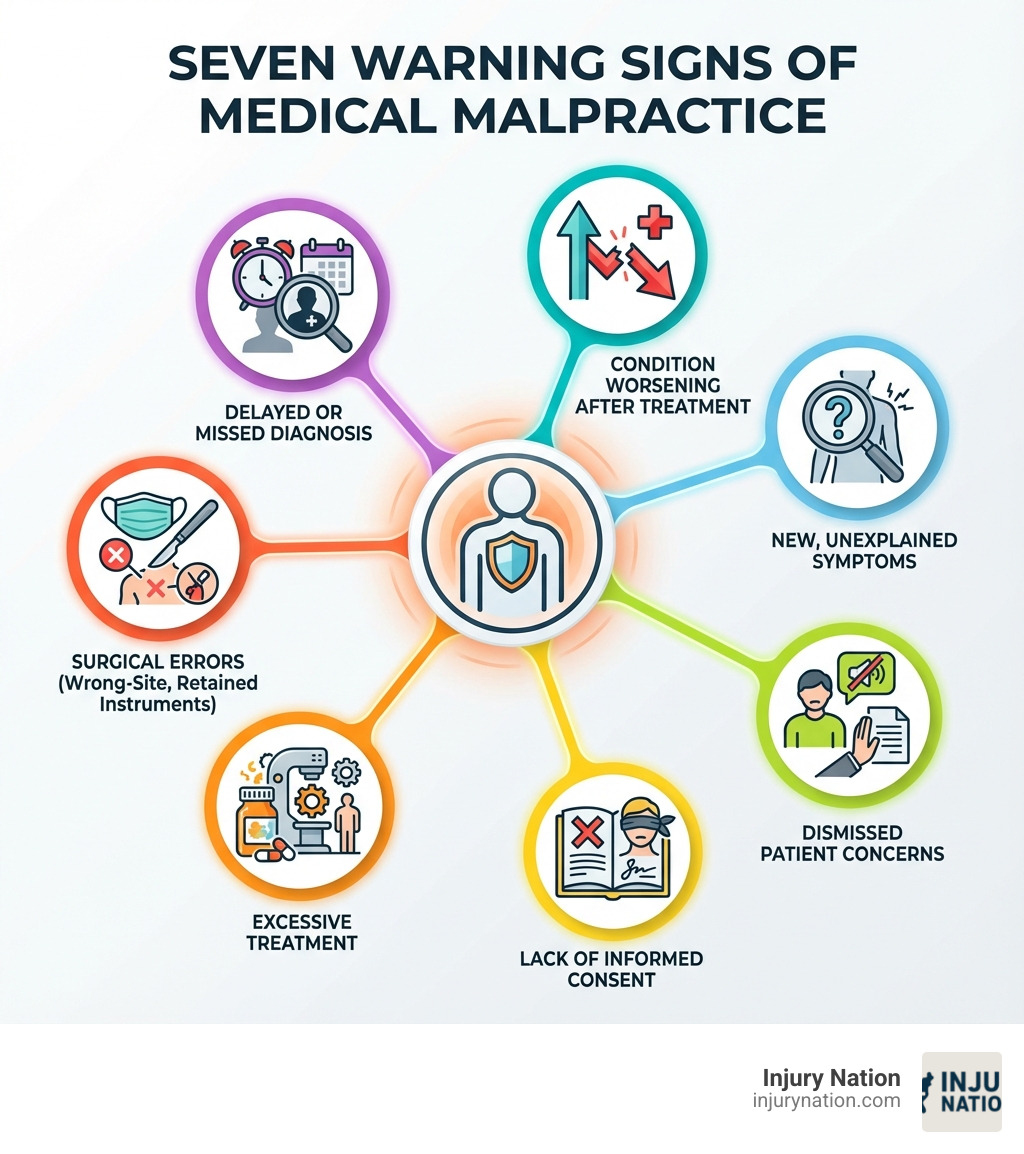
While some medical errors are obvious, others are subtle. Recognizing these signs is the first step toward determining if you are a victim of malpractice. Common indicators include your condition worsening unexpectedly, new or unexplained symptoms, ineffective treatment, or your doctor dismissing your concerns.

These issues can stem from several types of medical errors:
- Failure to Diagnose or Misdiagnosis: A delayed diagnosis allows an illness to progress, while an incorrect diagnosis can lead to harmful, unnecessary treatments. If you suspect a failure to diagnose has impacted your health, we have more information available here.
- Surgical and Procedural Errors: These are often catastrophic and include wrong-site surgery, performing the wrong procedure, anesthesia errors, leaving instruments inside a patient, or causing preventable post-operative infections.
- Birth Injuries: Negligence during prenatal care, labor, or delivery can cause lifelong injuries to a newborn or mother, such as Cerebral Palsy or Erb’s Palsy.
- Medication Errors: These common mistakes include prescribing the wrong medication, an incorrect dosage, or failing to check for dangerous drug interactions.
The 4 Legal Elements of a Medical Malpractice Claim
To successfully pursue a medical malpractice claim, you must prove four specific legal elements. These are the fundamental requirements that must be established by a “preponderance of evidence,” meaning it’s more likely than not that each element is true.
For a deeper dive into these elements, you can refer to “A Primer to Understanding the Elements of Medical Malpractice” here.
Here’s a simple breakdown of the four elements:
| Element | Explanation |
|---|---|
| Duty of Care | The healthcare provider, whether it’s a doctor, nurse, or hospital, had a professional responsibility to provide you with a certain standard of care. This is usually established by a doctor-patient relationship. |
| Breach of Duty | The healthcare provider failed to meet the accepted standard of care. Their actions, or lack of action, fell below what a reasonably competent and skilled professional would have done in the same situation. This is the core of the negligence claim. |
| Causation | This connects the breach of duty directly to your injury. You must prove that the provider’s negligence was a direct cause of your harm. In other words, “but for” their mistake, you would not have been injured. |
| Damages | You must have suffered actual harm as a result of the negligence. This can include physical pain, emotional distress, additional medical bills, lost wages, and other financial losses. Without demonstrable damages, there is no basis for a lawsuit, even if the provider was negligent. |
1. Duty of Care
The first step in a malpractice claim is proving a “duty of care” existed. This legal obligation is created when a healthcare provider agrees to treat you, establishing a formal patient-provider relationship. From that point, they are responsible for providing competent medical care.
2. Breach of Duty
Next, you must show the healthcare provider breached their duty by failing to meet the accepted “standard of care.” This means their actions, or lack thereof, were not what a reasonably skilled professional would have done in a similar situation. Proving this breach often requires testimony from medical experts who can confirm the provider’s negligence. In Nevada, this requires an “Affidavit of Merit” from a qualified expert to even start a claim.
3. Causation
It’s not enough to show a mistake was made; you must also prove “causation.” This means the provider’s negligence was the direct cause of your injury. This is often called the “but-for” test: “but for” the provider’s error, you would not have been harmed. This link must be clear and is typically established through medical records and expert analysis.
4. Damages
Finally, a successful claim requires proof of “damages”—actual harm resulting from the negligence. If an error caused no injury, there is no case. Damages can be:
- Economic Damages: Tangible financial losses like medical bills and lost wages.
- Non-Economic Damages: Intangible harm such as pain, suffering, and emotional distress. In Nevada, these are capped at $350,000.
In rare cases of extreme misconduct, punitive damages may also be awarded, though these are also capped in Nevada.
Your Step-by-Step Action Plan
If you suspect you’ve been a victim of malpractice, acting quickly is crucial, as strict time limits can affect your ability to file a claim.
Step 1: Document Everything and Obtain Medical Records
Keep a detailed journal of your symptoms, treatments, and conversations with medical staff. Include dates, names, and what was said or done. You have a legal right to your medical records. Request a complete copy from the healthcare facility, including all notes, test results, imaging, and reports. This documentation is vital evidence.
Step 2: Seek a Second Medical Opinion
Consult an independent physician who is not affiliated with the provider you suspect of negligence. This new doctor can review your diagnosis and treatment to see if it aligns with accepted medical standards and help determine the extent of your injury.
Step 3: Understand the Statute of Limitations for a Victim of Malpractice
Time is of the essence. In Nevada, the statute of limitations for medical malpractice is generally three years from the date of the injury or one year from the date you finded, or reasonably should have finded, the injury, whichever occurs first. Missing this deadline can prevent you from ever seeking compensation. This is sometimes called a “findy rule” because it acknowledges that some injuries aren’t immediately apparent, but it’s still crucial to act fast.
Step 4: Consult with a Specialist Attorney
Medical malpractice law is incredibly complex. An experienced attorney can assess your case, work with medical experts, and negotiate with insurance companies. Most work on a contingency fee basis, meaning you don’t pay attorney fees unless they win your case.
For expert legal guidance, we recommend consulting our Medical Malpractice Lawyers Las Vegas Guide.
Navigating the Legal Process and Seeking Compensation
Once you’ve taken the initial steps, the legal process begins. With the right legal team, you can steer this complex journey to secure the compensation you deserve.
Understanding Your Rights as a Victim of Malpractice
A key patient right is informed consent. Your doctor must explain the risks, benefits, and alternatives for any procedure. A consent form does not protect a provider from negligence if you were not properly informed. You always have the right to ask questions and receive clear answers.
What Compensation Can You Recover?
If your claim is successful, you may be entitled to compensation for:
- Medical expenses: All past and future costs for treatment and rehabilitation.
- Lost income: Wages lost and future earning potential if your injury affects your ability to work.
- Pain, suffering, and emotional distress: Compensation for the physical and emotional toll. In Nevada, these non-economic damages are capped at $350,000.
- Loss of consortium: For the impact on your relationship with your spouse.
- Punitive damages: Awarded in rare cases to punish egregious conduct, also capped in Nevada.
Who Can Be Held Liable in a Medical Malpractice Case?
Liability isn’t always limited to a single doctor. Other responsible parties can include nurses, hospitals, clinics, and manufacturers of defective medical devices. If malpractice results in a fatality, surviving family members may file a wrongful death lawsuit.
Settlement vs. Trial
Most malpractice cases are resolved through a settlement with the provider’s insurance company to avoid a lengthy trial. However, if a fair settlement isn’t offered, a skilled attorney will be prepared to take your case to court.
Frequently Asked Questions about Medical Malpractice Claims
Can I still have a malpractice case if I signed a consent form?
Yes. A consent form is not a waiver of your right to competent care. If the provider was negligent, or if you were not fully informed of the risks, benefits, and alternatives before signing, you may still have a valid claim.
How long do I have to file a medical malpractice claim?
In Nevada, the statute of limitations is generally three years from the date of the injury or one year from the date you finded, or reasonably should have finded, the injury, whichever occurs first. Because there are exceptions, consult an attorney immediately to protect your rights.
What is the difference between a medical error and medical malpractice?
A medical error is a mistake that may or may not cause harm. It becomes medical malpractice only when the error results from negligence (a breach of the standard of care) and directly causes you significant injury or damages.
Conclusion
Being a victim of malpractice is a devastating experience, but you have rights. Understanding the signs of negligence, the legal elements of a claim, and the necessary steps to take is the first move toward securing justice.
These cases are complex and require a deep understanding of both medicine and law. Navigating them alone against hospitals and insurance companies is incredibly difficult.
Our goal at Injury Nation is to empower you with information and connect you with top-rated personal injury lawyers who specialize in medical malpractice. If you suspect you or a loved one has been a victim of malpractice, don’t wait. Protect your rights and seek expert guidance.
Find a personal injury lawyer in Las Vegas to help with your case