

Why Garbage Truck Accidents Are More Dangerous Than You Think
Garbage truck accident incidents represent some of the most devastating collisions on our roads, combining massive vehicle weight with unique operational hazards that put everyone at risk.
Key Facts About Garbage Truck Accidents:
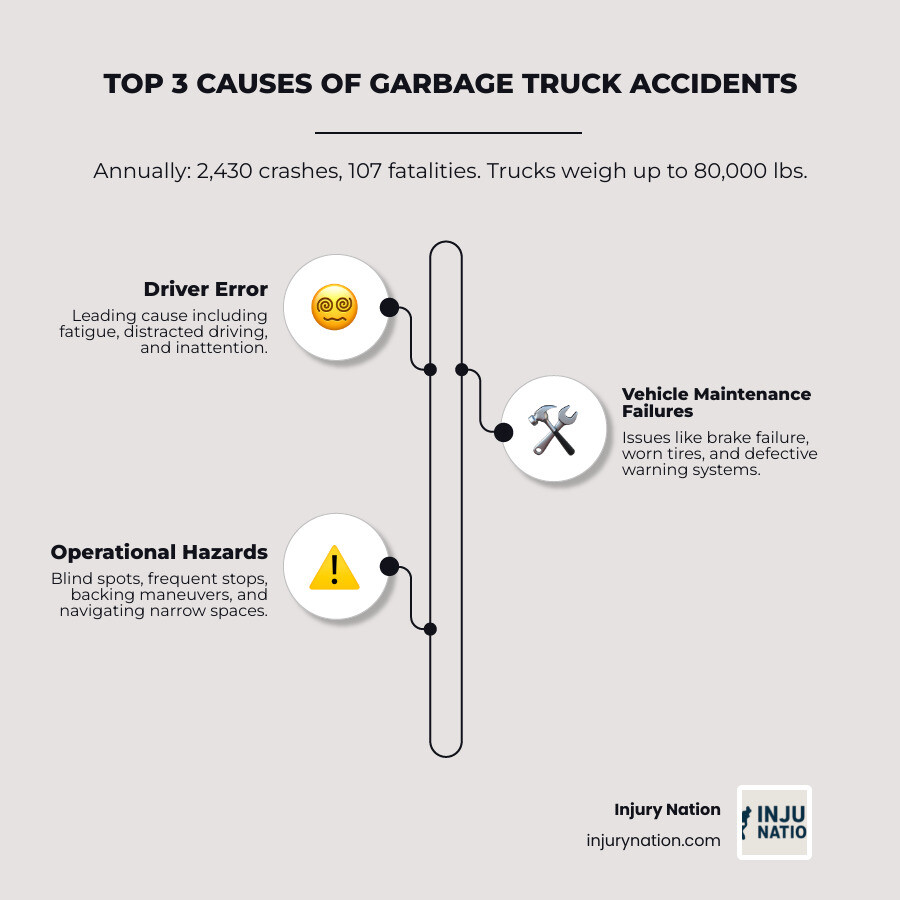
- 2,430 crashes involving garbage trucks occur annually according to FMCSA data
- 107 fatalities and 1,427 injuries result from these accidents each year
- Weight difference: Garbage trucks (up to 80,000 lbs) vs. passenger cars (3,000-4,000 lbs)
- Common causes: Driver fatigue, brake failure, blind spots, and frequent stops
- High-risk areas: Residential streets, narrow alleys, and backing situations
Unlike regular vehicle accidents, garbage truck collisions involve unique dangers that make them particularly catastrophic. These massive vehicles operate on residential routes where families live and children play. They make frequent stops, steer tight spaces, and use heavy lifting machinery – all while weighing as much as 40 times more than a typical car.
The aftermath often leaves victims facing severe injuries, overwhelming medical bills, and complex legal battles against large waste management companies. In Nevada alone, 791 large trucks were involved in accidents in 2023, resulting in 400 injuries and 40 deaths.
If you or a loved one has been injured in a garbage truck accident, understanding your rights and the complex factors involved is crucial. This guide will walk you through everything you need to know about causes, consequences, and your legal options for recovery.
Why Do Garbage Truck Accidents Happen? Common Causes and Contributing Factors
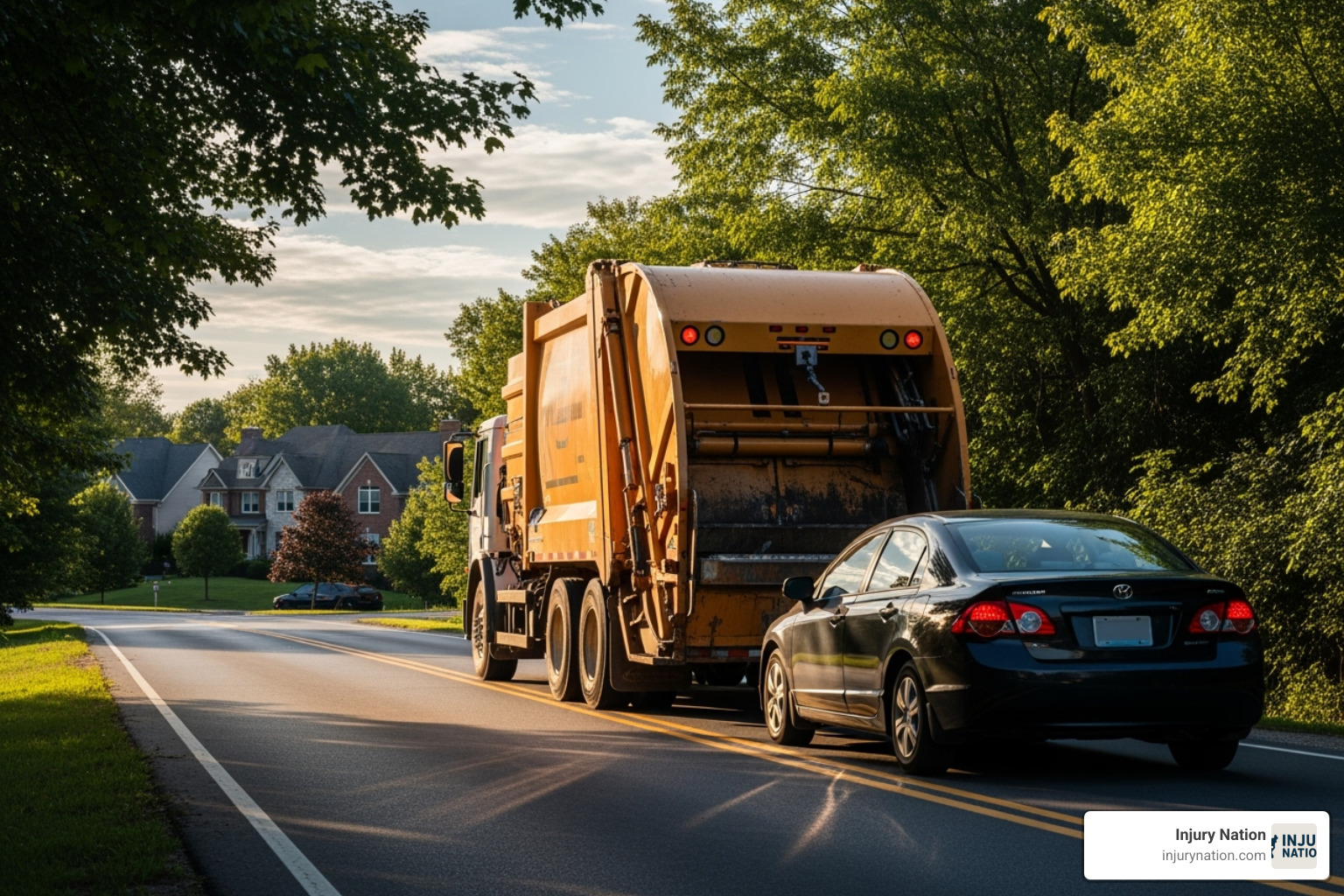
When you see a garbage truck accident on the news, it’s natural to wonder how something so devastating could happen. The truth is, these massive vehicles face a perfect storm of challenges that most drivers never have to deal with. Understanding what goes wrong can help us all stay safer on the road.
Driver Error
Even the most experienced drivers can make mistakes, but when you’re behind the wheel of an 80,000-pound vehicle, those mistakes become catastrophic. Distracted driving happens more than we’d like to admit – a quick glance at a phone or GPS can mean missing a child on a bicycle or a car pulling out of a driveway.
Inattention and improper lookout are especially dangerous for garbage truck drivers. These vehicles have massive blind spots, and drivers must constantly check mirrors and scan for pedestrians. Even trucks designed with right-hand driver seats for better visibility still have significant blind spots that can hide entire cars.
The demanding nature of garbage collection routes often leads to fatigued driving. While the FMCSA hours-of-service rules exist to prevent exhaustion, drivers sometimes work overtime shifts that push them beyond safe limits. When you’re tired, reaction times slow and judgment suffers – a deadly combination with heavy machinery.
Inadequate training creates another layer of risk. Operating a garbage truck isn’t like driving a regular vehicle. Drivers need specialized knowledge about hydraulic systems, backing procedures, and safety protocols. Without proper training, a driver might accidentally activate the wrong controls or fail to follow critical safety steps.
Vehicle & Maintenance Failures
A garbage truck is only as safe as its maintenance record. When brake failure occurs on a vehicle this heavy, the results are terrifying. We’ve seen cases where runaway garbage trucks slam into multiple vehicles because their braking systems failed due to poor maintenance or mechanical defects.
Worn tires pose another serious threat. When tires blow out or lose traction, controlling an 80,000-pound vehicle becomes nearly impossible. The stopping distance increases dramatically, and the risk of rollover accidents skyrockets.
Modern garbage trucks should have defective warning systems to alert drivers when something’s wrong – like when the garbage container is still raised. When these systems fail or don’t exist, drivers might unknowingly drive under overpasses with their equipment extended, causing devastating crashes.
Poor maintenance records often reveal a pattern of neglect that companies try to hide. When routine inspections are skipped or problems are ignored, small issues become major safety hazards. Companies have a duty to inspect vehicles regularly, but enforcement isn’t always consistent.
Operational Pressures
The waste collection industry creates unique pressures that can lead to dangerous decisions. Aggressive route planning forces drivers to rush through their routes, leading to speeding, running stop signs, or failing to yield right-of-way. When companies prioritize speed over safety, accidents become inevitable.
Frequent stops and starts throughout residential neighborhoods create hundreds of opportunities for something to go wrong. Each stop means interacting with traffic, pedestrians, and parked cars in tight spaces.
Backing up incidents are particularly dangerous because garbage trucks must reverse into narrow driveways and alleys where visibility is limited. These maneuvers are inherently risky, especially when children or pedestrians are present.
Environmental Conditions
The places where garbage trucks operate make their job even more challenging. Narrow alleys in older neighborhoods leave almost no margin for error. A slight miscalculation can result in crushing a parked car or worse.
Sharp turns become major obstacles when you’re driving a vehicle with a long wheelbase and limited maneuverability. What seems like a simple corner for a car can be a complex, multi-point turn for a garbage truck.
All these factors work together to make garbage truck accidents some of the most complex and devastating crashes on our roads. Understanding these causes helps explain why victims often face such serious injuries and why legal cases involving these accidents require specialized knowledge and experience.
The Devastating Aftermath: Common Injuries and Damages
When a garbage truck accident happens, the results are almost always heartbreaking. The physics are simple but brutal – a massive truck weighing up to 80,000 pounds colliding with anything in its path creates forces that human bodies and passenger vehicles simply can’t withstand.
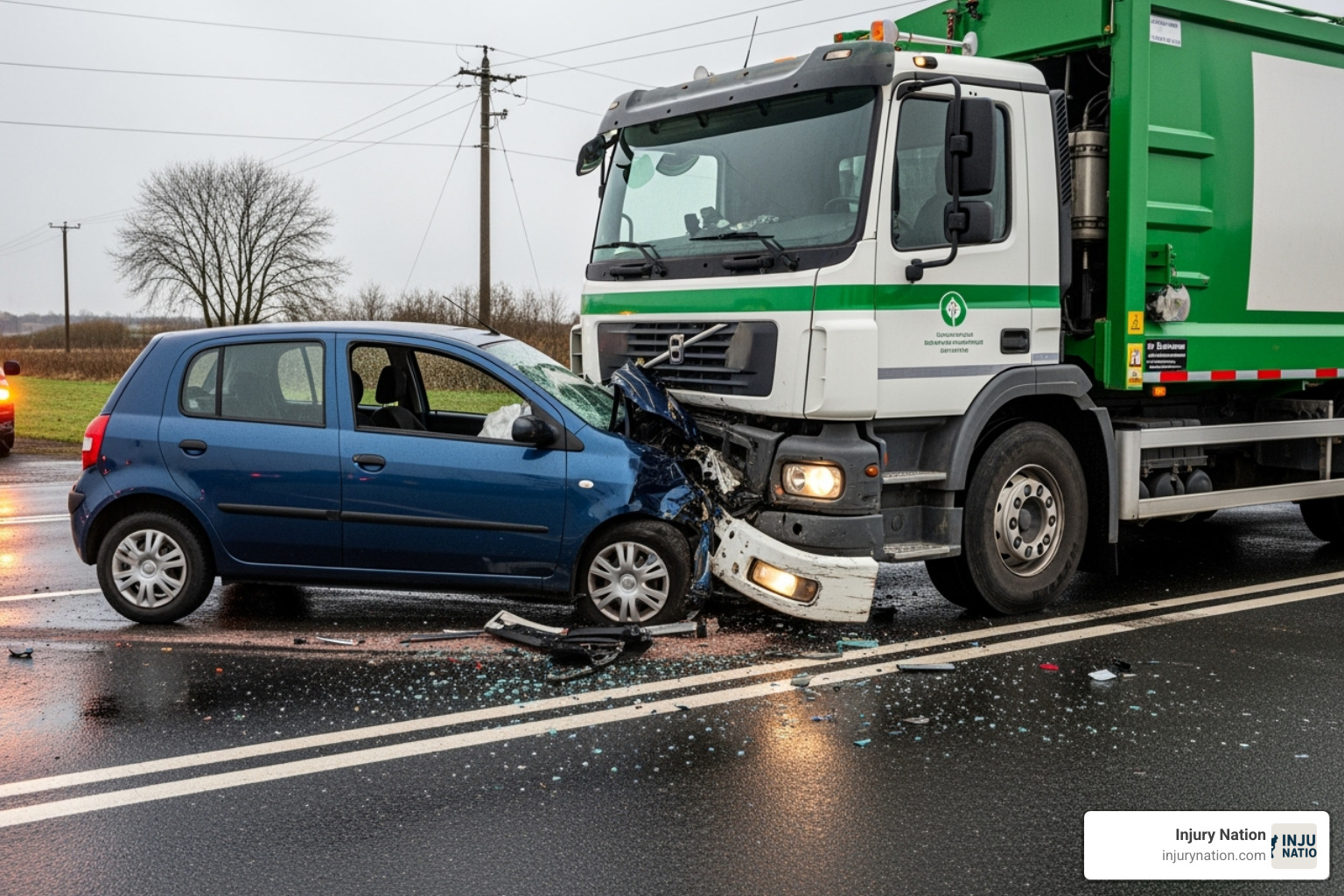
The weight difference tells the whole story. Your average car weighs between 3,000 and 4,000 pounds. A fully loaded garbage truck can weigh 20 times that amount. When these two forces meet, the smaller vehicle – and everyone inside it – bears the devastating impact.
Pedestrians and cyclists face even greater danger. They have no protective metal frame around them, no airbags, no crumple zones. We’ve seen tragic cases like the woman killed in Calgary during what should have been a routine, slow-speed garbage collection. Or the motorcyclist who was airlifted to a trauma center after being pinned beneath a trash truck. If you’ve been injured while cycling, a Bike Crash Attorney understands the unique challenges these cases present.
The property damage alone can be staggering. When a runaway garbage truck loses control, it doesn’t just hit one car – it can plow through an entire row of parked vehicles, leaving a trail of twisted metal and shattered glass.
Typical Injuries in a Garbage Truck Accident
The injuries from these accidents often change lives forever. Many victims face catastrophic injuries that require years of treatment and care.
Traumatic brain injuries are frighteningly common. Even with modern safety features, the violent forces involved can cause everything from concussions to severe brain damage. These injuries don’t just affect thinking – they can change personality, memory, and the ability to perform basic daily tasks.
Spinal cord injuries represent another devastating possibility. When the spine is damaged, partial or complete paralysis can result. Suddenly, victims who were walking and independent find themselves facing a lifetime of wheelchairs, accessibility modifications, and round-the-clock care.
The crushing weight of these massive vehicles can cause amputations and severe crush injuries. Bones, muscles, and nerves get compressed beyond repair. Sometimes surgeons have no choice but to remove damaged limbs to save the victim’s life.
Internal injuries are particularly dangerous because they’re not always immediately obvious. The blunt force trauma can damage organs, cause internal bleeding, and create life-threatening complications that don’t show up until hours or days later.
Too many garbage truck accident cases end in wrongful death. We remember the driver killed in Hurst and the multi-vehicle crash in Phoenix that took one life and injured several others, including a child. These tragedies leave families not just grieving, but often struggling financially without their loved one’s income.
Even the “less severe” injuries like broken bones, lacerations, and soft tissue damage can require multiple surgeries, months of physical therapy, and leave victims with chronic pain that affects every aspect of their daily lives.
What Compensation Can Victims Pursue?
If you’ve been hurt in a garbage truck accident, you’re probably facing medical bills that seem to grow by the day, lost paychecks from missing work, and pain that makes everything harder. You shouldn’t have to bear this burden alone, especially when someone else’s negligence caused your suffering.
The law recognizes two main types of damages you can pursue.
Economic damages cover the financial hits you can calculate. Your medical bills – from the ambulance ride to ongoing rehabilitation – should be covered. If you can’t work, you deserve compensation for lost wages. If your injuries prevent you from returning to your old job or earning the same income, future earning capacity compensation addresses those long-term losses.
Don’t forget about rehabilitation costs – physical therapy, occupational therapy, and specialized treatments that help you regain function. Your damaged vehicle and other property should be replaced or repaired at the responsible party’s expense.
Non-economic damages address the harder-to-measure impacts on your life. The physical pain you endure and the emotional distress that often follows traumatic accidents deserve recognition. Many victims experience anxiety, depression, or PTSD long after their physical wounds heal.
If your injuries prevent you from enjoying activities you once loved – playing with your kids, pursuing hobbies, or simply living without constant discomfort – loss of enjoyment of life damages can provide some measure of justice.
While money can’t undo what happened to you, fair compensation can lift the financial pressure and provide resources for the best possible care and recovery. You deserve to focus on healing, not worrying about how you’ll pay the bills.
Navigating the Legal Maze: Steps to Take After a Garbage Truck Accident
The moments right after a garbage truck accident can feel overwhelming and chaotic. Your heart is racing, you might be injured, and you’re facing the aftermath of a collision with a vehicle that could weigh 40 times more than your car. But what you do in these critical first minutes and hours can make all the difference in protecting your rights and securing fair compensation.

Immediate actions
Your safety comes first, always. Once you’ve ensured everyone is out of immediate danger, these steps can protect both your health and your legal rights.
Call 911 immediately, even if the accident seems minor. With garbage trucks, what looks like a small fender-bender can involve hidden damage or delayed-onset injuries. The police report becomes an official record that insurance companies and courts take seriously. In many states, including Nevada, you’re legally required to report accidents involving injuries or significant property damage.
Seek medical care right away, even if you feel fine. Adrenaline can mask serious injuries, and some conditions like concussions or internal bleeding don’t show symptoms immediately. Having medical documentation that links your injuries directly to the accident is crucial for any future claim.
Document everything you can safely capture. Take photos and videos of the vehicles, the street, any skid marks, traffic signs, and damage from multiple angles. The weather, time of day, and lighting conditions all matter. Your phone becomes your most important tool here – use it to preserve the scene before tow trucks arrive and evidence disappears.
Exchange information with the garbage truck driver, but remember you’re dealing with a commercial vehicle. Get the driver’s name, license number, and insurance details, but also note the waste management company name, the truck’s license plate, and any unit numbers visible on the vehicle. This information becomes vital when determining who’s responsible for your damages.
Avoid admitting fault or apologizing, even if you think you might have contributed to the accident. Phrases like “I’m sorry” or “I didn’t see you” can be twisted later. Stick to basic facts about what happened without speculating about causes or blame.
Crucial Evidence for Proving Fault
Proving who’s at fault in a garbage truck accident requires detective-level investigation. Unlike regular car crashes, these cases involve complex evidence that can make or break your claim.
The truck’s “black box” data is often the smoking gun in these cases. Modern garbage trucks have Electronic Control Modules that record everything from the driver’s speed and braking patterns to how long they’d been driving. This data can prove whether the driver was speeding, failed to brake in time, or violated federal hours-of-service rules.
Maintenance logs and company records tell the story of whether the truck was properly cared for. A garbage truck with worn brakes or faulty warning systems is a disaster waiting to happen. These records can reveal patterns of neglect that point directly to company negligence.
Driver employment files can expose inadequate training, a history of violations, or past incidents that should have been red flags. If a company kept a dangerous driver on the road, that’s powerful evidence of negligence.
The police accident report provides an official account, but don’t stop there. Witness testimony from people who saw what happened can be incredibly valuable – they have no stake in the outcome and can provide unbiased accounts of the collision.
Surveillance footage from nearby businesses, traffic cameras, or home security systems can capture the accident as it unfolds. The Large Truck Crash Causation Study – Analysis Brief shows how crucial this type of evidence is for understanding exactly what went wrong.
How Garbage Truck Accidents Differ from Regular Car Crashes
Many people assume a truck accident is just a bigger version of a car crash, but that’s far from the truth. Garbage truck accident cases are in a league of their own when it comes to complexity.
Multiple parties can be liable for your injuries, which means potentially multiple sources of compensation. The driver might have been distracted or fatigued. The waste management company might have failed to properly train their drivers or maintain their vehicles. If it’s a city-operated truck, the municipality could bear responsibility. Maintenance contractors who skipped important repairs, vehicle manufacturers with defective parts, or even loading companies that improperly balanced the truck’s cargo could all share blame.
Complex federal regulations govern garbage trucks that don’t apply to regular cars. The Federal Motor Carrier Safety Administration has strict rules about driver qualifications, vehicle maintenance, and hours of service. State traffic laws add another layer of requirements. Violations of these regulations can provide clear evidence of negligence, but you need legal expertise to identify and prove these violations.
The severe damage potential changes everything about these cases. When an 80,000-pound garbage truck hits a 3,000-pound car, the physics are brutal. A fully loaded truck traveling at highway speeds needs the length of two football fields to stop. The resulting injuries are often catastrophic, leading to medical bills that can reach hundreds of thousands or even millions of dollars. The stakes are simply much higher than in typical car accidents.
These differences explain why garbage truck cases require specialized legal knowledge and resources. The companies and insurers involved know these complexities and will use them to their advantage. Having experienced legal representation levels the playing field and ensures you’re not taken advantage of during the most difficult time in your life.
Holding Parties Accountable: Liability and Safety Regulations
When a garbage truck accident occurs, figuring out who’s responsible isn’t always straightforward. Unlike a typical fender-bender between two cars, these cases often involve multiple parties and a web of regulations that can make your head spin. The good news? This complexity also means there are often multiple avenues for securing the compensation you deserve.
Determining liability
The first place investigators look is usually driver negligence. Was the garbage truck driver speeding through your neighborhood? Were they texting while navigating that tight corner? Maybe they were exhausted after working overtime shifts, or they failed to check their massive blind spots before backing up. We’ve seen tragic cases where drivers mishandled vehicle controls or simply weren’t paying attention when disaster struck.
But here’s where things get interesting – and potentially more favorable for victims. Even when the driver made the mistake, the waste management company often shares responsibility through something called vicarious liability. Think of it this way: if someone is doing their job and causes harm while doing it, their employer is typically on the hook too.
The company’s liability can run much deeper than just their driver’s actions. Negligent hiring happens when companies put drivers behind the wheel without properly checking their driving records or ensuring they have the right experience. Inadequate training is another major issue – operating an 80,000-pound vehicle with hydraulic lifts and compactors isn’t something you figure out as you go.
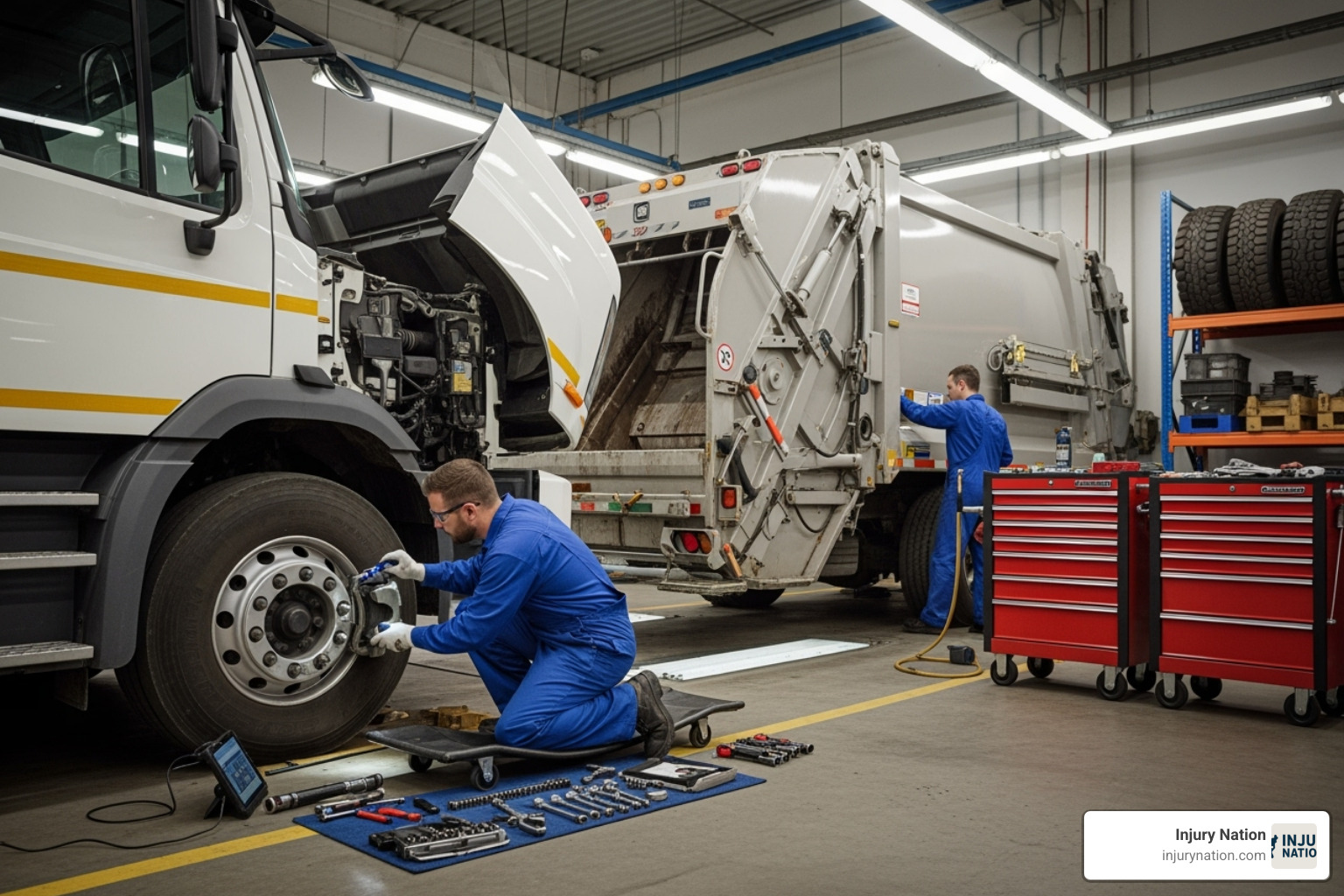
Perhaps most concerning is when companies fail to inspect and maintain their vehicles properly. The company duty to inspect vehicles isn’t just a suggestion – it’s a legal requirement. When we see reports of runaway trucks with failed brakes or vehicles lacking proper warning systems, it often points directly back to maintenance failures that should have been caught during routine inspections.
Sometimes third-party fault comes into play. If a defective part like faulty brakes or a malfunctioning safety system contributed to your accident, the manufacturer might share liability. Improper loading by a separate company can also cause accidents – an unbalanced or overloaded truck becomes a dangerous weapon on wheels.
The reality is that private garbage companies sometimes face intense pressure to complete routes quickly, which can lead to cutting corners on safety. This pressure-cooker environment often creates the perfect storm for accidents.
Safety Regulations in Place for Garbage Trucks and Their Drivers
You might wonder: “If these accidents are so dangerous, what’s being done to prevent them?” The truth is, there are extensive safety regulations in place – the problem often lies in following them consistently.
Every garbage truck driver must hold a Commercial Driver’s License (CDL), which requires specialized training and testing far beyond what you need for a regular driver’s license. These drivers are held to higher safety standards because they’re operating vehicles that can cause catastrophic damage.
The Federal Motor Carrier Safety Administration (FMCSA) has created comprehensive rules covering everything from hours-of-service limits (to prevent fatigue) to drug and alcohol testing protocols. Their vehicle inspection and maintenance standards are designed to catch mechanical problems before they cause accidents.
ANSI standards require specific safety features on garbage truck equipment. For example, trucks should have audible or visual alarms warning drivers when components like the garbage box are raised – a critical safety feature highlighted by tragic overpass accidents where trucks struck bridges with raised equipment.
Companies are also encouraged to follow route planning best practices, like minimizing dangerous left turns and carefully considering the challenges of narrow residential streets. These might seem like small details, but they can mean the difference between a safe collection route and a disaster waiting to happen.
Despite all these regulations, garbage truck accident cases still occur with alarming frequency. Often, it’s because someone failed to follow the rules or enforcement was lacking. When companies or drivers ignore these safety standards, victims have every right to hold them accountable – and the complex web of regulations actually works in your favor by providing multiple ways to prove negligence.
The key is having experienced legal professionals who understand these regulations inside and out. They know where to look for violations and how to build a strong case that ensures all responsible parties are held accountable for their actions.
Conclusion: Your Path to Recovery and Justice
If you’ve made it this far, you now understand that garbage truck accident cases are far from simple. We’ve walked through the devastating statistics – those 2,430 crashes and 107 fatalities each year – and explored why these accidents happen so frequently. From driver fatigue and mechanical failures to the unique challenges of operating 80,000-pound vehicles in residential neighborhoods, the causes are complex and often preventable.
The injuries we’ve discussed are life-changing. Traumatic brain injuries, spinal cord damage, and wrongful death cases don’t just affect victims – they impact entire families for years to come. The financial burden can be overwhelming, especially when you’re facing medical bills that stretch into hundreds of thousands of dollars while you’re unable to work.
Here’s what we want you to remember: These accidents are complex, but victims have real rights under the law. The evidence we’ve outlined – from black box data to maintenance records – is absolutely critical to building a strong case. Time is of the essence because this evidence can disappear quickly.
You might be feeling overwhelmed right now, and that’s completely understandable. Going up against large waste management companies and their teams of lawyers can feel impossible when you’re dealing with serious injuries and mounting bills. But here’s the truth – you don’t have to face these powerful companies alone.
At Injury Nation, we’ve built our reputation on connecting accident victims with experienced legal professionals who know how to handle these challenging cases. Our network includes attorneys who understand the federal regulations governing commercial trucks, know how to investigate complex accident scenes, and have successfully fought for millions in compensation for their clients.
The lawyers in our network don’t just understand the law – they understand what you’re going through. They’ve helped families steer insurance company tactics, gathered crucial evidence before it disappears, and held negligent companies accountable for their actions.
Your recovery matters. Your family’s financial security matters. And getting the justice you deserve matters. Taking that first step toward legal representation isn’t just about getting compensation – it’s about holding negligent parties accountable so fewer families have to go through what you’re experiencing.
If you or someone you love has been injured in a garbage truck accident, don’t wait. Evidence disappears, witnesses’ memories fade, and there are legal deadlines you must meet.
Find a top-rated personal injury lawyer near you today. Let us help you connect with an attorney who will fight for your rights and guide you toward the recovery and justice you deserve.