What You Need to Know About Spinal Cord Injury Help
Spinal cord injury help begins with understanding the injury and knowing where to turn. A spinal cord injury (SCI) damages the bundle of nerves that sends signals between your brain and body, potentially causing permanent changes in strength, sensation, and function below the injury site.
If you or a loved one is facing an SCI, here’s what’s important:
- Immediate Medical Care: Emergency treatment is critical to prevent further damage.
- Types of Help: This includes surgery, rehabilitation, physical therapy, and ongoing medical management.
- Emotional Support: Counseling and support groups are vital for coping with life changes.
- Financial Aid: Grants, disability benefits, and legal compensation can help cover costs.
- Legal Options: If negligence caused your injury, you may be entitled to compensation for medical bills, lost wages, and future care.
- Available Resources: Organizations like the United Spinal Association and the Christopher & Dana Reeve Foundation provide guidance.
As a saying among people with SCIs goes: “Before your injury, you could do 10,000 things. Now you can do 9,000. So are you going to worry about the 1,000 things you can’t do or focus on the 9,000 things you can do?”
This perspective takes time. With about 18,000 new cases annually in the U.S., the journey to adaptation requires medical, emotional, financial, and sometimes legal help. The good news is that medical research is advancing, rehab is more effective, and a support network exists to guide you from the ER to long-term independence.
This guide covers everything you need to know about getting help after an SCI, from diagnosis and medical care to managing complications and securing financial resources.
Understanding Spinal Cord Injuries: Causes and Types
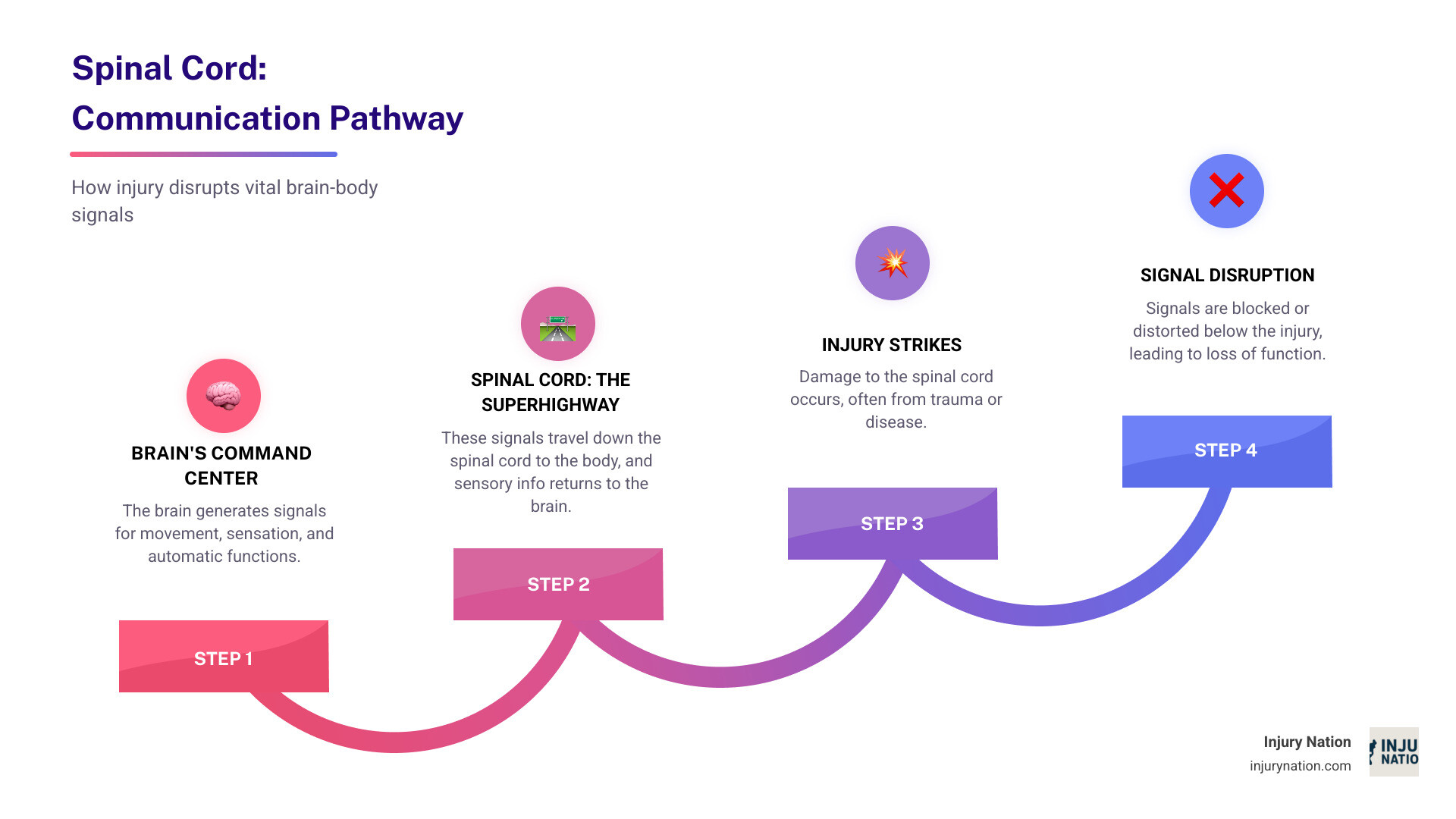
Your spinal cord is the body’s main communication cable, a bundle of nerves running from your brain down your spine. When this connection is damaged, messages can’t get through, affecting movement and sensation. Understanding the cause and type of injury is key to getting the right spinal cord injury help.
Common Causes and Risk Factors
Spinal cord injuries can be traumatic (from a sudden event like a crash or fall) or non-traumatic (developing over time from diseases like cancer or arthritis).
Motor vehicle accidents are the leading cause, accounting for over 37% of cases. Falls are second at 31%, posing a particular risk to adults over 65. Acts of violence, like gunshot wounds, cause about 15% of SCIs, while sports and recreational activities are responsible for 8%. For more details, see our Spinal Cord Injury Causes page.
Certain groups face higher risks. Young adults (16-30) and people over 65 are most vulnerable. Men account for about 78% of cases, and alcohol is a factor in roughly 25% of traumatic SCIs. Pre-existing conditions like osteoporosis can also increase susceptibility. Our Spinal Cord Injury Statistics page offers a more comprehensive look.
The Different Types of Spinal Cord Injuries
The location of your injury determines its effect on your body. The spine has four regions, each controlling different functions.
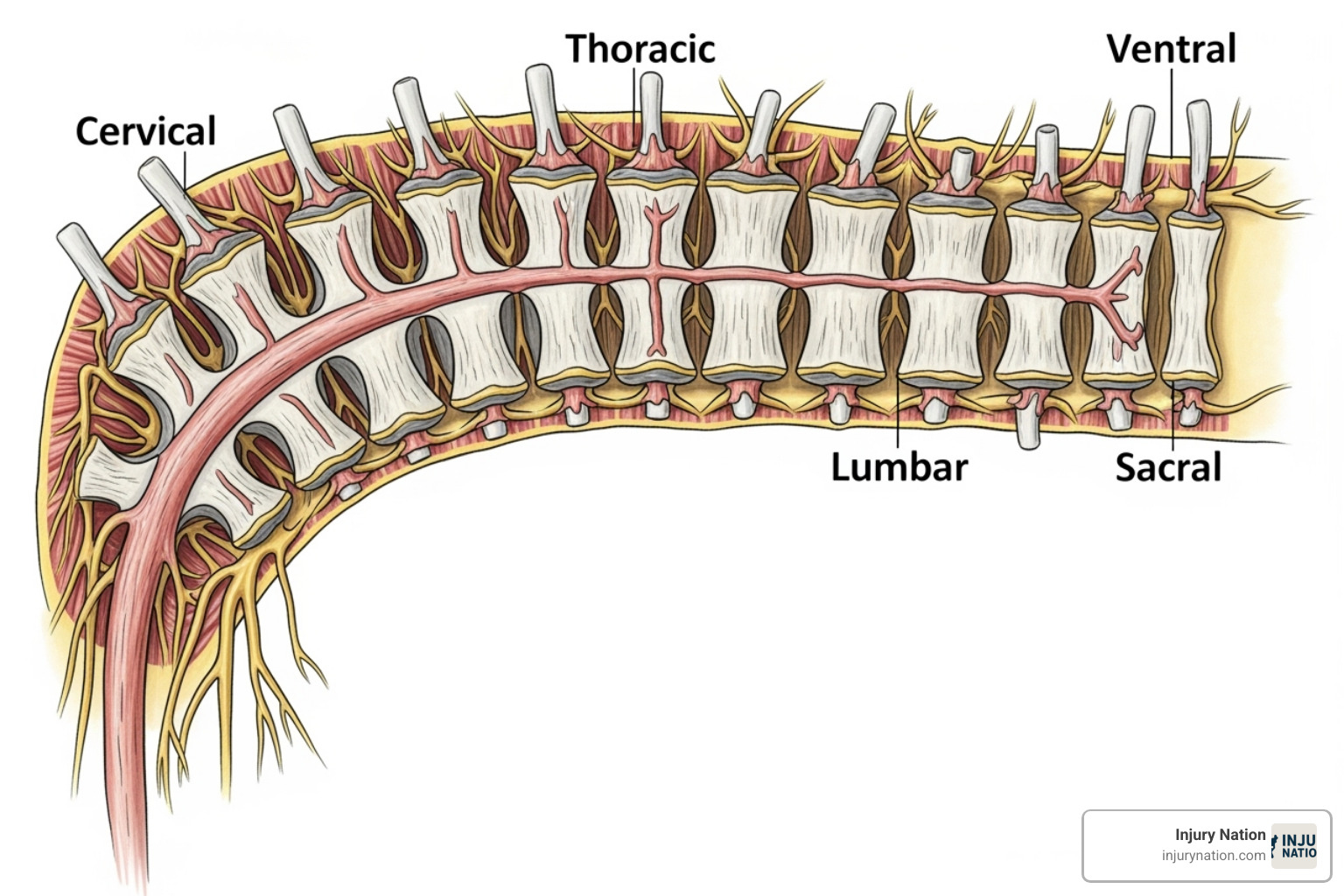
- Cervical Spine (C1-C7): Neck-level injuries are the most serious, potentially affecting arms, hands, trunk, legs, and breathing. High cervical injuries often result in quadriplegia (paralysis of all four limbs).
- Thoracic Spine (T1-T12): Upper and mid-back injuries typically affect the chest, abdomen, and legs, leading to paraplegia (paralysis of the lower body) while leaving arm and hand function intact.
- Lumbar Spine (L1-L5): Lower back injuries affect the hips and legs. Many people with lumbar injuries use wheelchairs or braces.
- Sacral Spine (S1-S5): Injuries at the base of the spine can affect hips, groin, and some leg muscles, as well as bladder, bowel, and sexual function. Walking may still be possible.
Injury severity is also critical. A complete injury means a total loss of feeling and movement below the injury site. An incomplete injury means some nerve function remains, allowing for some sensation or movement. Incomplete injuries generally have a better prognosis for recovery.
The terms quadriplegia (or tetraplegia) and paraplegia describe the extent of paralysis. Understanding your specific injury helps your medical team create the right treatment plan. For a detailed breakdown, visit our page on Types of Spinal Cord Injuries.
Recognizing Symptoms and Getting a Diagnosis
Recognizing the signs of a spinal cord injury (SCI) and getting a swift diagnosis can significantly impact outcomes. Knowing what to watch for is a critical part of getting spinal cord injury help.
Immediate and Long-Term Symptoms
After a fall, accident, or violent impact, treat any suspected head or neck injury as a potential SCI until cleared by medical professionals.
Urgent warning signs requiring immediate medical attention include:
- Extreme back pain or intense pressure in the neck, head, or back
- Weakness, loss of coordination, or sudden paralysis
- Numbness, tingling, or loss of feeling in hands, fingers, feet, or toes
- Loss of bladder or bowel control
- Difficulty breathing
- An oddly positioned or twisted neck or back
Paralysis may not be immediate; it can develop over hours or days due to swelling and bleeding (secondary damage). This is why emergency care is vital even if someone seems okay after an accident. For a complete list, see our Full list of Spinal Cord Injury Symptoms.
Long-term challenges vary by injury location and severity. Many people experience sensory changes like chronic pain (including neuropathic pain, which feels like burning or stinging), tingling, or a complete lack of feeling. Motor function changes can include weakness, complete paralysis, and spasticity (involuntary muscle spasms). An SCI can also disrupt the autonomic nervous system, affecting automatic functions like heart rate, blood pressure, and bladder/bowel control, which requires ongoing medical management.
How Doctors Diagnose an SCI
The diagnostic process starts at the scene, where emergency responders immobilize the neck and spine to prevent further damage.
In the emergency room, a team performs a comprehensive evaluation. This includes a physical exam to check for trauma and a detailed neurological exam to test sensory function (touch, pain) and motor function (muscle strength, reflexes). These tests help pinpoint the location and extent of the damage.
Imaging tests provide a complete picture:
- X-rays quickly reveal fractures or dislocations in the vertebrae.
- A Computerized Tomography (CT) scan offers more detailed images, showing subtle fractures or bone fragments pressing on the cord.
- Magnetic Resonance Imaging (MRI) is the best tool for visualizing the spinal cord itself, revealing bleeding, swelling, or compression.
This combination of exams and imaging allows doctors to determine the neurological level and completeness (complete vs. incomplete) of the injury. A precise diagnosis is the foundation for the treatment plan and all the spinal cord injury help that follows. For more on what comes next, explore our Overview of Spinal Cord Injury Treatment.
Medical Spinal Cord Injury Help: From Emergency Care to Rehabilitation
Getting the right spinal cord injury help at the right time is crucial. The medical journey involves two key phases: immediate emergency care and long-term rehabilitation.
Immediate Medical Treatment for Spinal Cord Injuries
The moment an SCI occurs, the clock starts ticking. Emergency responders will immobilize your spine with a rigid neck collar and backboard to prevent further damage during transport.
At the hospital, the emergency team acts fast. A primary concern is breathing, especially with upper neck injuries; about one-third of people with SCIs need temporary breathing support. The team also works to stabilize blood pressure and prevent shock to ensure adequate blood flow to the spinal cord and other organs. Many patients are treated in an Intensive Care Unit (ICU) for round-the-clock monitoring.
Surgery is often necessary within the first few days to decompress the spinal cord by removing bone fragments or herniated discs. Surgeons may also use metal rods and plates to stabilize the spine, preventing future pain and deformity. Medications are used to manage pain and other complications. The goal of this emergency phase is to stabilize your condition and protect the spinal cord from more damage, creating the best foundation for recovery. Our Overview of Spinal Cord Injury Treatment explores these interventions in more detail.
Long-Term Rehabilitation and Therapies
Once your condition stabilizes, rehabilitation begins. This is where you learn to adapt, regain function, and rebuild your independence with the help of a multidisciplinary team.

Your team is led by a physiatrist (a rehab doctor) and includes:
- Physical therapists to improve strength and mobility.
- Occupational therapists to teach daily living skills like dressing and cooking.
- Vocational counselors to explore career options.
- Rehabilitation nurses, psychologists, social workers, and dietitians to manage your health and connect you with resources.
Your rehab program is customized to your needs. You’ll learn to use adaptive equipment, such as advanced wheelchairs or braces, and explore assistive technologies like voice-recognition software or functional electrical stimulation (FES) systems to improve your independence.
Education is a powerful tool. Your team will teach you how to manage your condition and prevent complications, empowering you to take control of your life. Specialized rehabilitation centers and networks, like the NeuroRecovery Network, offer advanced techniques to improve function. Rehabilitation requires patience and hard work, but with a dedicated team, the goal is to help you live the fullest, most independent life possible.
Life After an SCI: Managing Complications and Finding Support
A spinal cord injury doesn’t just change your body—it reshapes your entire world. The spinal cord injury help you’ll need extends far beyond the hospital walls and rehabilitation center. You’re learning to live in a body that works differently now, and that journey involves staying ahead of health complications while building the emotional, financial, and social foundation you need to thrive.
Navigating Potential Health Complications
Because an SCI disrupts communication between your brain and body, you must be proactive about potential health issues. Key areas to manage include:
- Bladder and Bowel Management: Since your body may no longer signal the need to empty, a scheduled program (e.g., catheterization, a high-fiber diet, a consistent bowel routine) is essential to prevent infections and accidents.
- Pressure Sores: Lack of sensation and mobility increases the risk of skin breakdown. Prevention is key: shift your weight frequently, use specialized cushions, and check your skin daily for any signs of sores.
- Autonomic Dysreflexia (AD): For injuries at T6 or above, this is a life-threatening emergency. The body overreacts to an irritant below the injury level (like a full bladder), causing a dangerous spike in blood pressure, a pounding headache, and sweating. If this occurs, sit up immediately and seek medical help.
- Chronic Pain: Many people experience neuropathic (nerve) pain or musculoskeletal pain. Management often involves a mix of medications, physical therapy, and alternative therapies.
- Spasticity: Involuntary muscle spasms are common. While some spasticity can be beneficial, severe cases can be managed with physical therapy, stretching, and medication.
- Respiratory Health: Weakened breathing muscles increase your risk of pneumonia, especially with higher-level injuries. Deep breathing exercises, assisted coughing, and avoiding smoking are critical. For more guidance, the Living With a Spinal Cord Injury guide from HealthLink BC also offers extensive practical advice.
Emotional, Financial, and Social Spinal Cord Injury Help
Your body isn’t the only thing healing—your heart and mind need care too. The emotional weight of an SCI can feel crushing some days. You’re grieving the life you had while trying to build a new one. That’s not weakness—that’s being human.
Depression is common after SCI, and there’s no shame in struggling. Grief, anger, frustration, and sadness are all normal responses. What’s important is not getting stuck there. Talking to a psychologist or counselor who understands SCI can make an enormous difference. Mental health support isn’t optional—it’s essential spinal cord injury help.
Connecting with others who truly understand can be life-changing. Peer support groups bring together people living with SCI who share strategies, frustrations, and hope. The United Spinal Association offers extensive resources and support groups. The Christopher & Dana Reeve Foundation provides information specialists who can answer your questions. The Craig H. Neilsen Foundation offers grants, while the Miami Project to Cure Paralysis advances research and provides resources.
The financial reality of living with an SCI is daunting. Medical care, equipment, and home modifications add up quickly. But financial help exists. Social Security Disability (SSDI/SSI), non-profit grants, and insurance benefits can cover significant costs. Keeping receipts for all disability-related expenses can also yield substantial tax deductions.
Adapting your home with ramps, wider doorways, and accessible bathrooms restores independence. Smart home technology can dramatically increase your autonomy.
If someone else’s negligence caused your injury—whether through a car accident, workplace incident, or medical malpractice—you have legal rights. A personal injury claim can cover your past and future medical expenses, lost wages, and the lifetime cost of care. This is about securing your financial future so you can focus on healing. Our guide on Understanding Spinal Cord Injury Compensation explains the legal process. The right legal support can make the difference between struggling financially and having the resources to live with dignity and independence.
The Future of SCI Treatment and Prevention
When you’re living with a spinal cord injury, or caring for someone who is, it’s natural to wonder what tomorrow holds. The truth is, while we don’t have all the answers yet, the future of spinal cord injury help is brighter than ever before. Researchers are making real progress, and prevention efforts are becoming more effective.
Latest Research and Advancements
Scientists are actively working on treatments that seemed impossible just a decade ago. Key areas of research include:
- Neuroprotection: Protecting the spinal cord from secondary damage (swelling, inflammation) in the critical hours after injury.
- Neuroregeneration: Finding ways to encourage damaged nerve fibers to regrow, a primary goal of SCI research.
- Cell-Based Therapies: Using stem cells and other specialized cells to replace damaged tissue and promote regrowth. Clinical studies are ongoing.

- Neuroplasticity: Using intensive, targeted rehabilitation to help the brain reorganize and form new neural pathways to regain function.
- Technology: Advancements like Brain-Computer Interfaces (BCIs) translate brain signals into commands for external devices, while Functional Electrical Stimulation (FES) activates paralyzed muscles to create movement. Exoskeletons (robotic suits) are also helping people with paralysis to stand and walk.
Major research initiatives are accelerating progress. To learn about cutting-edge treatments, you can explore ongoing SCI clinical trials. Resources like NIH RePORTER and PubMed offer detailed information on current research.
How to Prevent Spinal Cord Injuries
Prevention is the most powerful tool against SCIs. Most are preventable with simple precautions:
- Drive Safely: Always wear a seatbelt, ensure children are in proper car seats, and avoid distracted driving.
- Prevent Falls: Secure loose rugs, install handrails, improve lighting, and use non-slip mats in bathrooms, especially in the homes of older adults.
- Use Safety Gear: Always wear recommended safety equipment, like helmets, during sports.
- Never Dive into Shallow Water: Always check that water is at least 9 feet deep before diving. If unsure, enter feet first.
- Avoid Impaired Driving: Never drive under the influence of alcohol or drugs, as impaired judgment leads to risky decisions.
These simple habits can prevent life-altering injuries.
Frequently Asked Questions about Spinal Cord Injuries
When you or someone you love faces a spinal cord injury, questions flood your mind. We’ve gathered the most common concerns to provide straightforward spinal cord injury help and honest answers.
What is the difference between a complete and incomplete spinal cord injury?
A complete spinal cord injury means all communication lines are down. There’s a total loss of both movement and feeling below the injury site. Your brain can’t send signals to those parts of your body, and those body parts can’t send messages back.
An incomplete spinal cord injury means some of those lines are still functioning. You might have some sensation, some movement, or both below the injury level. The amount of remaining function varies dramatically, but incomplete injuries generally offer more potential for recovery.
Can you recover from a spinal cord injury?
Recovery from a spinal cord injury varies greatly depending on the severity of the injury, its location, your age, overall health, and your commitment to rehabilitation. Most recovery happens within the first six months, but progress can continue for years.
While we don’t yet have a complete cure, today’s medical treatments and rehabilitation programs are more effective than ever. Many individuals regain significant function and achieve remarkable levels of independence. Research is advancing rapidly, and each year brings new hope. Recovery focuses on maximizing the abilities you have and adapting to new ways of living.
What is autonomic dysreflexia?
Autonomic dysreflexia—often shortened to AD—is a medical emergency for people with a spinal cord injury at or above the T6 level. It’s an exaggerated response by your body’s involuntary nervous system to something painful or irritating below your injury level, most commonly a full bladder.
The symptoms come on fast: a severe, pounding headache, a dangerous spike in blood pressure, flushed skin, and sweating above the injury level. If you experience these symptoms, sit up immediately (to help lower blood pressure) and seek emergency medical help. Once you and your caregivers learn to recognize the signs and common triggers, AD can be managed and often prevented through good bladder, bowel, and skin care.
Conclusion
A spinal cord injury changes everything in an instant. We understand that the physical challenges are immense, but the emotional and financial problems can feel just as overwhelming. Yet here’s what we want you to hold onto: you are not alone, and help is available.
Throughout this guide, we’ve walked through every dimension of spinal cord injury help – from those first critical moments in the emergency room to the long journey of rehabilitation and adaptation. We’ve covered the medical terminology you need to understand, the complications you might face, and the support systems that can carry you through the hardest days.
The truth is that life after an SCI looks different. But different doesn’t mean hopeless. Every day, researchers are making breakthroughs, and thousands of people with spinal cord injuries are living full, meaningful lives.
Your recovery journey will be uniquely yours. You’ll need a team around you – medical professionals, therapists, family, and peer support groups. Organizations like the Christopher & Dana Reeve Foundation and United Spinal Association stand ready to connect you with resources and remind you that this path has been walked before.
The financial reality of an SCI can be staggering. If your injury happened because someone else was negligent – whether through a car accident, workplace incident, or another preventable situation – you have legal rights. Pursuing fair compensation is about securing the resources you need for quality care, independence, and peace of mind.
At Injury Nation, our directory is built to help people like you find experienced legal advocates who understand the complexities of catastrophic injuries. These attorneys know how to fight for the compensation you deserve for medical expenses, lost income, and future care needs.
Moving forward after a spinal cord injury takes tremendous courage. But with the right medical care, emotional support, and financial resources, you can rebuild a life worth living. Find out how a catastrophic injury attorney can help you secure the compensation you deserve and take that critical first step toward protecting your future.