

What to Do in the First Hour After a Serious Accident in Huntsville
A serious accident can leave you shocked, distracted, and unsure what to do next. In the first hour, small decisions can affect your health, your insurance claim, and any future legal case. If you are in North Alabama and searching for a first hour after accident huntsville lawyer resource, the most important thing to know is this: focus first on safety and medical help, then protect key evidence, then get informed legal guidance before avoidable mistakes start causing problems.
This guide explains what to do in the first hour after a serious accident in Huntsville, including the order of priorities, the evidence that disappears fastest, when 24/7 legal help can make a difference, and how family members can step in if the injured person is too shaken or hospitalized to manage the situation alone.
The First Hour Matters More Than Most People Realize
The first hour after a crash, fall, truck collision, rideshare incident, pedestrian accident, or other serious injury event is usually chaotic. People are trying to understand what happened. Phones are ringing. Insurance information may be exchanged too early or too casually. Witnesses start leaving. Vehicles get moved. Surveillance footage may be recorded over later. Pain sometimes gets worse only after the initial shock wears off.
That first hour is not about building a lawsuit at the scene. It is about doing the right things in the right order:
- Protect immediate safety
- Call 911 and cooperate with emergency responders
- Get medical care
- Preserve basic evidence if it can be done safely
- Give necessary notice to the right people without saying too much
- Reach out for legal help if there are serious injuries, disputed facts, or pressure from insurers
In Huntsville, those steps can be especially important because accidents may happen on fast-moving roads, heavy commuter routes, construction corridors, parking lots, highways feeding into the city, or near busy shopping and employment areas where witnesses and evidence can disappear quickly.
Step One: Put Safety First
Your first priority is always physical safety. Nothing about insurance, photos, or legal rights is more urgent than getting out of immediate danger.
If You Are in a Vehicle Collision
If the vehicles can be moved and emergency responders have not instructed otherwise, get to a safer location when possible. If the crash is in an active lane of traffic, on a shoulder with poor visibility, or at an intersection where another impact is possible, staying in the wrong spot can create a second emergency. Turn on hazard lights if you can do so safely.
If the vehicles cannot be moved, or if moving would create more risk, stay as safe as possible and wait for first responders. Do not stand in traffic to inspect damage. If there is smoke, fire risk, or another immediate danger, create distance if you can do so safely.
If You Are a Pedestrian, Cyclist, or Motorcycle Rider
If you are conscious and able to move, try to get out of the roadway and into a safe area without worsening an injury. If movement causes significant pain, dizziness, or instability, wait for medical responders unless there is immediate danger.
If It Is a Slip and Fall or Premises Incident
For falls in a store, apartment complex, restaurant, parking lot, or workplace-adjacent area, do not rush to stand up if you feel disoriented, weak, or in severe pain. Ask for medical help immediately. If a hazard is still present, warn others nearby if you can.
Do Not Ignore Signs of Serious Injury
Even if you feel “mostly okay,” certain warning signs mean you should treat the situation as urgent:
- Head pain, confusion, dizziness, or loss of consciousness
- Neck or back pain
- Trouble breathing
- Chest pain
- Heavy bleeding
- Numbness or weakness
- Visible deformity or inability to bear weight
- Disorientation, vomiting, or unusual behavior after impact
Shock can mask pain. A person may insist they are fine and then worsen quickly. That is one reason the first hour should be handled carefully.
Step Two: Call 911 as Soon as Possible
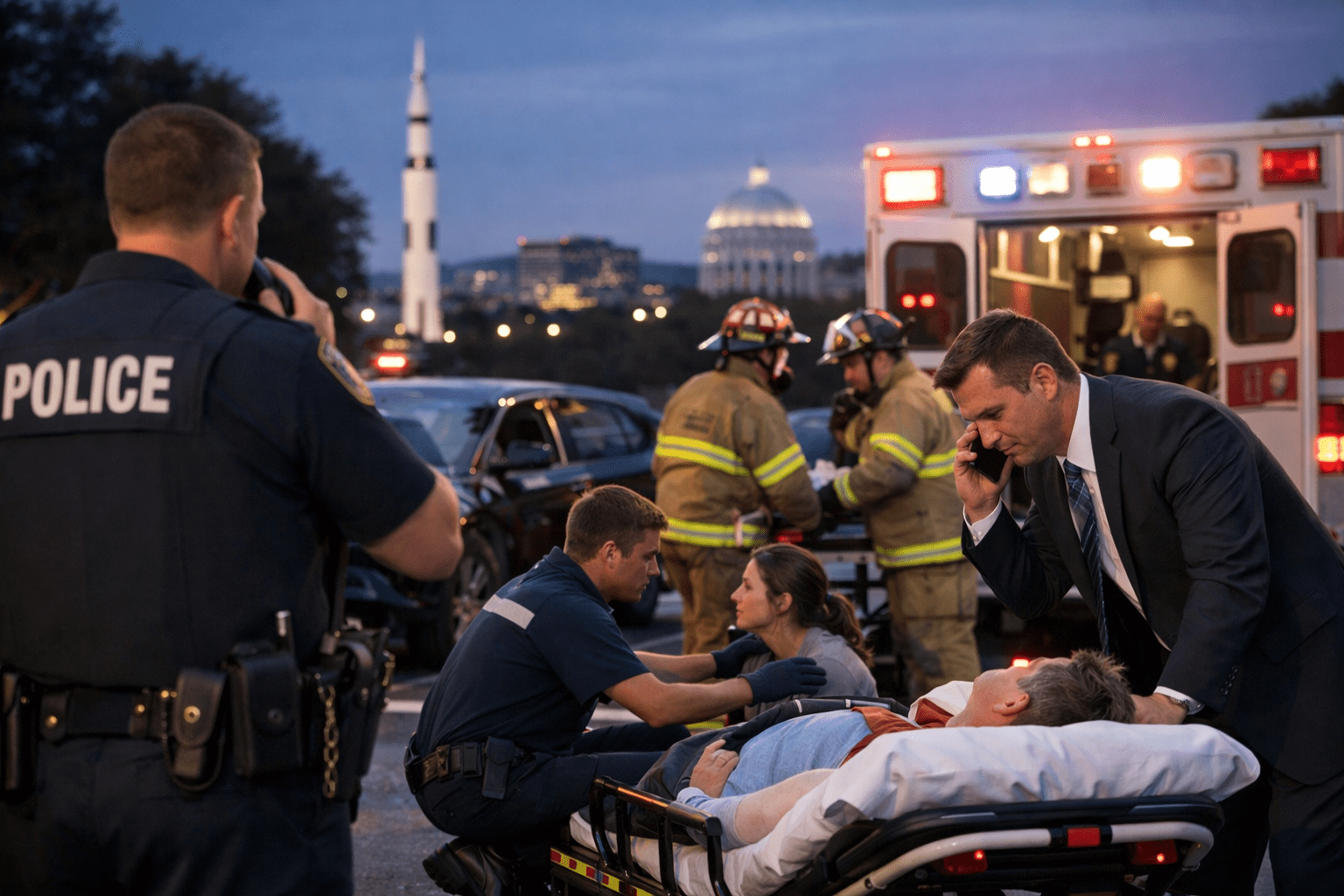
After immediate safety concerns, calling 911 is usually the next critical step. A serious accident needs an official response. In Huntsville, first responders, police, and emergency medical personnel can help secure the scene, assess injuries, arrange transport, and create an initial incident record that may later matter for insurance and legal purposes.
Why the 911 Call Matters
- It brings medical help to the scene
- It creates a time-stamped emergency record
- It helps document where and when the event happened
- It may lead to a police report or incident report
- It can preserve observations made before stories start changing
What to Say During the 911 Call
Keep it simple and accurate:
- Your location as precisely as possible
- Whether anyone appears injured
- Whether traffic is blocked or there is ongoing danger
- Whether a vehicle is leaking fluids, smoking, or creating another hazard
- Any obvious urgent medical concern
You do not need to give a detailed theory of fault. The goal is to get help there quickly and accurately.
What If Someone Else Already Called?
If you know for certain emergency services are on the way, you may not need to place a duplicate call. But if there is any doubt, make the call. It is better to confirm help is coming than assume someone else handled it.
Step Three: Accept Medical Evaluation and Get Care Promptly
Once emergency responders arrive, follow their instructions. If they advise evaluation or transport, take that recommendation seriously. Refusing medical assessment can create two problems at once: it can put your health at risk, and it can later allow insurance companies to argue that your injuries were minor or unrelated.
Why Immediate Medical Attention Is So Important
Some injuries do not fully show themselves at the scene. People commonly underestimate:
- Concussions and other head injuries
- Soft tissue injuries
- Internal injuries
- Neck and spinal trauma
- Pain masked by adrenaline
Getting medical care early is not about exaggerating an injury. It is about documenting symptoms honestly and making sure hidden injuries are not missed.
If You Are Not Taken by Ambulance
If responders do not transport you, or if you are medically cleared at the scene but still feel symptoms later, seek prompt follow-up care. Do not assume that soreness tomorrow means nothing today. The first hour often sets the tone for whether you take your condition seriously and whether your medical timeline will later make sense.
What to Tell Medical Providers
Be accurate and complete. Mention:
- Where the pain is
- Whether you hit your head
- Whether you lost consciousness or felt confused
- Any numbness, tingling, dizziness, or weakness
- Whether symptoms appeared immediately or shortly after the accident
Do not minimize symptoms to seem tough. Do not guess if you are unsure. Just describe what you know.
Step Four: Preserve Basic Evidence if It Can Be Done Safely
After safety, 911, and immediate medical needs, documentation becomes important. The key phrase is if it can be done safely. You should never interfere with emergency responders or put yourself in danger to get photos.
What Evidence Is Easiest to Lose in the First Hour
The first hour is when some of the most valuable evidence is still available. It can disappear fast. Examples include:
- Vehicle positions before towing or movement
- Debris patterns on the roadway
- Skid marks or fluid leaks
- Weather and lighting conditions
- Visible damage before temporary fixes or removal
- The condition of a floor, stairway, entrance, parking lot, or hazard area
- Nearby surveillance camera locations
- Witness names and contact information before people leave
- Rideshare or delivery driver app details displayed during the event
- Time-sensitive business records or incident logs
In Huntsville, where accidents may occur on busy roads, in retail zones, near industrial properties, or around high-traffic commuter areas, witnesses and scene conditions can change quickly. Rain can wash away marks. Traffic can scatter debris. Businesses may clean spills. Tow trucks remove vehicles. Camera systems may later overwrite footage.
What Photos and Notes Help Most
If you or someone helping you can document the scene safely, focus on practical details:
- Wide-angle shots showing the overall scene
- Photos of vehicle positions from multiple angles
- Close-ups of damage
- Road signs, lane markings, traffic signals, and intersections
- Weather conditions, standing water, ice, glare, or visibility issues
- Any hazard involved in a fall or premises incident
- Your visible injuries, if appropriate
- License plates and company markings on commercial vehicles
- The other driver’s insurance card and driver’s license, if exchanged lawfully and safely
Take brief notes while your memory is fresh. A few details can matter later:
- Time of the accident
- Direction each vehicle was traveling
- What you remember just before impact
- What the other person said, if anything significant was said
- Names of responding officers
- Badge numbers if available
- Names and contact information of witnesses
What If You Are Too Injured to Document Anything?
That happens often in serious accidents. Do not worry if your health prevents you from taking photos or collecting information. Family members, trusted friends, or legal representatives may later be able to help locate reports, preserve video requests, and identify witnesses. Your first responsibility is your safety and medical care.
Step Five: Exchange Necessary Information, but Keep Conversation Limited
At the scene, there is a difference between exchanging needed information and having a long conversation about fault. The first is usually necessary. The second can create problems.
What Information to Exchange
When applicable, gather or provide basic identifying information such as:
- Name
- Phone number
- Address
- Insurance information
- Vehicle make, model, and plate number
If it is a commercial vehicle, also note the company name and any unit number visible on the truck or van.
What Not to Say
Avoid statements like:
- “I’m sorry, this was my fault.”
- “I’m fine.”
- “I didn’t see you.”
- “Let’s keep insurance out of this.”
- “I probably don’t need a doctor.”
People often say these things out of politeness, confusion, or stress. Later, they can be misunderstood or used against you. Be respectful, but keep your comments factual and minimal.
If the Other Person Becomes Argumentative
Do not argue at the scene. Do not accuse. Do not escalate. Wait for law enforcement and provide your information calmly. Heated conversations are unhelpful and can create safety issues.
Step Six: Make the Right Notice Calls Without Oversharing
In the first hour or soon after, there are often several notice steps to think about. These can include notifying family, an employer if necessary, your insurer, or a property manager depending on the type of accident. The key is to notify the right parties without giving recorded or detailed statements before you understand your injuries and rights.
Who You May Need to Notify
- A close family member or emergency contact
- Your auto insurer if a vehicle was involved
- A rideshare or delivery platform if the incident involved app-based driving
- A property owner, store manager, or business if the injury happened on premises
- Your employer if the accident affects your ability to report to work
What Notice Should Sound Like
A basic notice call can be simple:
“I was involved in an accident in Huntsville. I’m getting medical attention. I will provide more information when I can.”
That gives notice without locking you into details before the facts are clear.
Be Careful With Recorded Statements
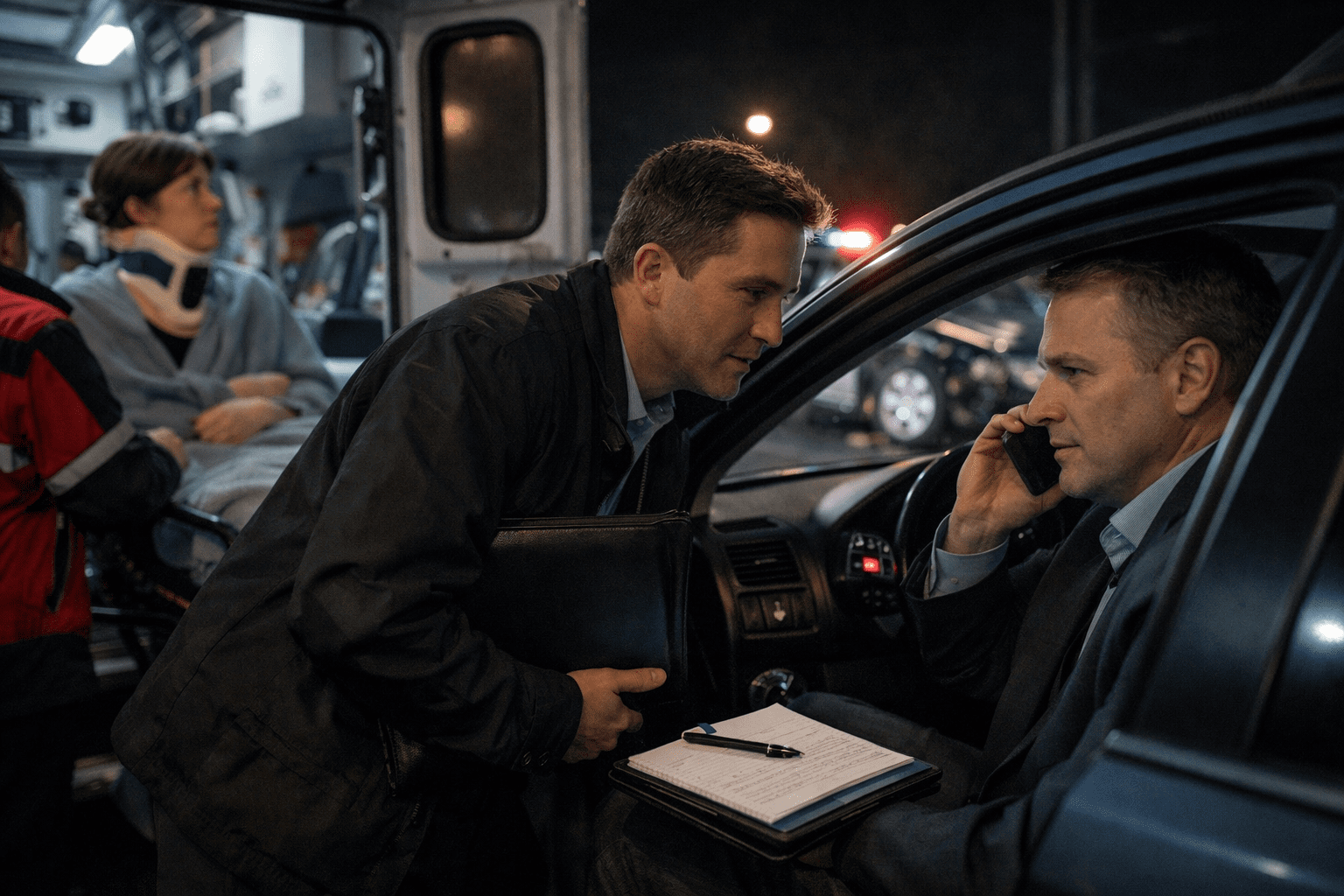
Insurance companies may move quickly, especially when there is a serious crash. In some cases, giving a recorded statement too early can lead to avoidable mistakes. You may still be shaken, medicated, missing facts, or unaware of the full extent of your injuries. This is one of the moments when contacting legal help can be valuable.
When Calling a Lawyer in the First Hour Can Help
Many people assume legal help is only for later, after medical treatment or after an insurance denial. In reality, there are situations where speaking with a lawyer early can help you avoid errors that are hard to fix later.
Early Legal Guidance Is Often Helpful If:
- There are serious injuries
- Someone was taken to the hospital
- Fault is disputed
- Multiple vehicles are involved
- A commercial truck, company vehicle, rideshare, or delivery vehicle was involved
- A pedestrian or cyclist was hit
- The crash involved a hit and run or possible uninsured driver
- A loved one cannot manage calls due to hospitalization or shock
- You are already receiving pressure from insurance representatives
- There may be surveillance footage or scene evidence that should be preserved quickly
How a Huntsville Legal Resource Can Help in the First Hour or Shortly After
A lawyer or legal intake team is not there to interfere with emergency treatment. Medical care comes first. But once urgent safety needs are addressed, legal guidance may help with:
- Explaining what information to preserve
- Advising you not to give damaging early statements
- Identifying what insurance coverage may apply
- Helping family members organize next steps
- Moving quickly to request or preserve time-sensitive evidence
- Reducing confusion while you focus on treatment
This is where 24/7 emergency legal help can be especially useful. Serious accidents do not happen only during business hours. Evening crashes, overnight collisions, weekend incidents, and holiday accidents can all raise urgent questions before a normal office opens.
How Family Members Can Help If the Victim Is Shaken or Hospitalized
In a serious accident, the injured person may be disoriented, in pain, or unable to handle logistics. Family members can play an important role without interfering with care.
Practical Ways Family Members Can Assist
- Confirm where the victim is being treated
- Bring identification, insurance cards, or basic necessities to the hospital
- Help keep track of medical providers and locations
- Save photos, texts, and call logs related to the accident
- Write down the names of officers, tow companies, or witnesses if available
- Contact a local personal injury lawyer for guidance
- Help notify the victim’s employer or family members
- Prevent the victim from posting online or giving rushed statements
What Family Members Should Ask Early
- Which hospital or urgent care is handling treatment?
- Was a police report made, and if so, by which agency?
- Where was the vehicle taken if it was towed?
- Did anyone get witness names or photos?
- Has any insurer already called?
- Are there businesses or homes nearby that may have cameras?
If the Injured Person Cannot Speak for Themselves Right Away
Family can still gather basic logistical information and seek legal guidance about preserving the claim. They should avoid guessing about facts they do not know. It is better to say, “We are still confirming details” than to provide a rushed version of events that later turns out to be incomplete.
A Practical First-Hour Checklist for Huntsville Accident Victims
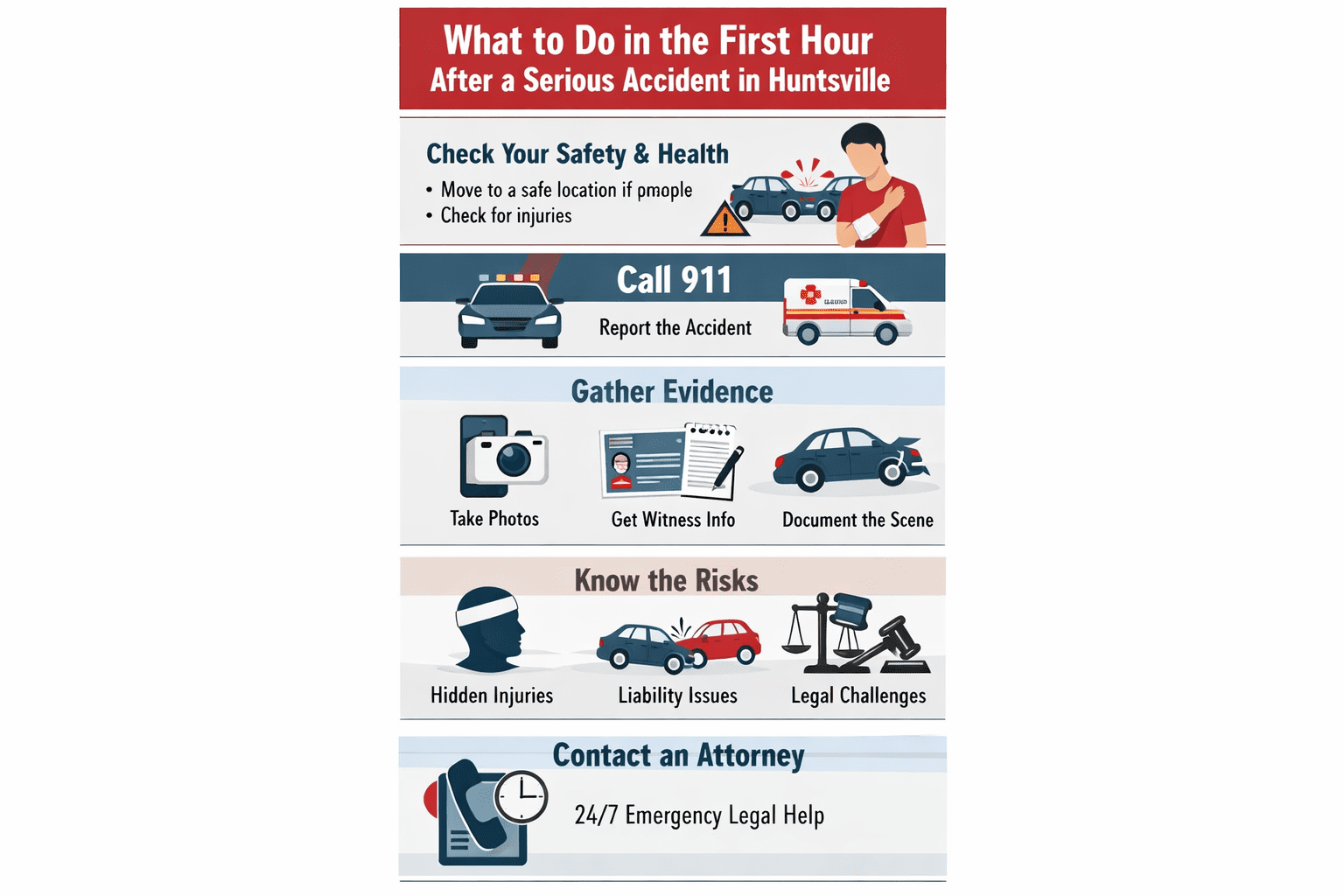
When people are under stress, checklists help. Here is a simple order of priorities to remember:
- Get to safety if possible
- Call 911 or confirm emergency help is on the way
- Accept medical evaluation and follow responder instructions
- Document the scene only if it is safe to do so
- Exchange necessary information without discussing fault
- Notify family and any necessary insurer or property contact
- Keep statements short until facts and injuries are clearer
- Contact legal help if there are serious injuries, confusion, or pressure from insurers
Common Mistakes to Avoid at the Scene and Right After
The wrong move in the first hour does not always destroy a claim, but it can make recovery more difficult. Here are common mistakes to avoid.
At the Scene
- Leaving before authorities arrive when you should remain
- Refusing medical evaluation despite obvious symptoms
- Arguing with the other driver or property owner
- Admitting fault or speculating about what happened
- Failing to get witness contact information when possible
- Ignoring nearby camera locations
- Standing in unsafe traffic areas to inspect damage
- Accepting cash or informal side deals to avoid reporting
Shortly After the Scene
- Giving a recorded statement while still shaken or medicated
- Posting photos or opinions about the accident on social media
- Saying you are “fine” before you know your condition
- Throwing away damaged property, clothing, or gear
- Skipping follow-up medical care
- Waiting too long to ask for legal guidance in a serious case
Why Huntsville Accident Cases Can Become Complicated Quickly
Huntsville is a growing city with a mix of local traffic, commuter traffic, commercial vehicles, construction activity, and visitors moving through the area. That can create accident situations that are not as simple as they first appear.
Examples of Complications That May Arise
- Multi-vehicle crashes where drivers blame each other
- Commercial delivery vehicles with employer and insurer issues
- Out-of-state drivers passing through North Alabama
- Accidents near retail centers with surveillance footage that may need to be preserved
- Premises injuries where the dangerous condition is corrected quickly after the incident
- Truck or company vehicle cases involving log, maintenance, or employment questions
These are exactly the types of cases where early organization can help protect the claim. Even if a lawyer is not retained immediately, getting informed guidance early can help prevent accidental missteps.
What to Expect in the Hours After the First Hour
Once the immediate emergency passes, most injury victims move into a second phase: treatment, reporting, and sorting out practical details. Knowing what comes next can reduce stress.
Likely Next Steps
- Emergency room, urgent care, or follow-up doctor visits
- Police report availability later, not always immediately
- Towing and vehicle storage questions
- Insurance claim opening
- Calls from adjusters
- Questions about missed work, transportation, and bills
What You Should Start Saving
- All medical records and discharge papers
- Prescriptions and treatment instructions
- Repair estimates and towing receipts
- Photos of injuries as they develop
- Communication from insurers
- Receipts for out-of-pocket expenses
- Work absence documentation
Special Considerations for Different Types of Serious Accidents
Car Accidents
Car accident victims should be especially careful about early insurer contact, hidden injuries, and preserving photos before repairs begin. If airbags deployed, a vehicle was totaled, or anyone went to the hospital, early legal guidance may be especially useful.
Truck or Commercial Vehicle Accidents
Commercial cases can involve more than one insurance policy and more than one responsible party. Company representatives and insurers may begin investigating immediately. That can make early legal help especially important.
Motorcycle Accidents
Motorcyclists often face unfair assumptions about fault. Scene evidence, road conditions, and witness accounts can matter a great deal in correcting those assumptions.
Pedestrian and Bicycle Accidents
These cases often involve serious injuries and disputed visibility or right-of-way issues. Documentation of the exact location, signals, crosswalks, lighting, and vehicle position can be important.
Slip and Fall or Premises Incidents
The dangerous condition may be cleaned, repaired, or removed quickly. Incident reports, photos, witness names, and notice to management can all become important soon after the event.
Signs You Should Reach Out for 24/7 Emergency Legal Help Right Away
Not every incident requires immediate attorney involvement. But certain facts should make you strongly consider calling for help as soon as your urgent medical needs are stabilized.
- You or a loved one has been admitted to the hospital
- There is uncertainty about who caused the accident
- The other party is uninsured, underinsured, or fled the scene
- A commercial vehicle or employer-owned vehicle was involved
- An insurance adjuster is pushing for a quick statement
- Important footage or evidence may disappear soon
- The injured person cannot manage calls and paperwork
- There are fatalities or life-changing injuries involved
In these situations, getting answers early can help you avoid saying the wrong thing, missing key records, or losing track of what needs to happen next.
What a First Call With a Lawyer or Legal Intake Team Usually Covers
If you contact a local personal injury lawyer for a free consultation, the first call is usually about orientation, not pressure. You can expect practical questions such as:
- When and where did the accident happen?
- What type of accident was it?
- Did police or emergency responders come?
- Did anyone go to the hospital?
- Do you have photos, witness names, or insurance information?
- Has any insurer contacted you yet?
- Are there time-sensitive concerns like surveillance footage?
That kind of conversation can help you understand what to do next without guessing.
Simple Example Scenarios
Example 1: Evening Crash on a Busy Huntsville Road
A driver is rear-ended and pushed into another lane during evening traffic. They feel shaky but say they are okay. Within 20 minutes, neck pain and dizziness begin. They call 911, accept medical evaluation, and a family member photographs vehicle positions and road conditions before towing. Because the driver later goes to the hospital and an insurer calls that night, the family reaches out for legal guidance before any recorded statement is given. That early decision helps them avoid guessing about injuries or fault.
Example 2: Slip and Fall in a Store
A shopper falls near a store entrance. Staff members seem eager to clean the area immediately. The injured person is embarrassed and wants to leave, but a companion asks for emergency help because of head and back pain. Photos of the floor, footwear, and surrounding area are taken safely before conditions change. Store management is notified, and the injured person gets treatment. Early documentation preserves facts that may otherwise have disappeared.
Example 3: Hospitalized Victim Cannot Handle Calls
After a serious crash, the injured person is admitted for evaluation and cannot manage phone calls. A family member keeps track of the hospital, responding agency, tow location, and insurer contacts. They avoid giving detailed opinions and instead ask for a free consultation to understand what should be preserved. That prevents confusion while the patient focuses on care.
Frequently Asked Questions
Should I call a lawyer before talking to insurance?
If the accident is serious, injuries are significant, or fault is disputed, that is often a smart idea. Early legal guidance can help you understand what information should be shared and what should wait until you are medically stable and better informed.
What if I did not feel hurt until later?
That is common. Seek medical attention as soon as symptoms appear and document when they began. Many injuries become more noticeable after the initial shock wears off.
Do I need photos if the police came?
Police reports are important, but your own photos can still help show damage, road conditions, hazards, and scene details that may not be fully captured elsewhere.
What if I was too shaken to collect witness names?
Do not blame yourself. Serious accidents are overwhelming. If possible, a family member or lawyer may later help identify the report, location, nearby businesses, or other sources of information.
Can a family member contact a lawyer for me?
Yes, especially if you are hospitalized, medicated, or too overwhelmed to manage the situation. A family member can often help start the process and gather basic information.
Should I post about the accident online to ask for witness help?
Be cautious. Public posts can create problems if details are incomplete or if insurers monitor them later. It is usually better to get guidance first in serious cases.
What if the other driver asks me not to report the accident?
Do not rely on private promises after a serious accident. Follow proper reporting and medical steps. Informal agreements often break down later.
How quickly does evidence disappear?
Sometimes within minutes. Vehicles get moved, hazards get cleaned, debris is removed, and witnesses leave. Surveillance footage may not be preserved unless someone acts promptly.
How to Stay Calm When Everything Feels Fast
A serious accident can make every next step feel urgent and confusing. A useful way to stay grounded is to ask only five questions in order:
- Am I safe right now?
- Has 911 been called?
- Do I or someone else need medical help immediately?
- Can basic evidence be preserved safely?
- Who needs to be notified, and should I get legal guidance before saying more?
That sequence keeps your attention where it belongs. It also helps family members support you without creating extra confusion.
The Bottom Line on the First Hour After a Serious Accident in Huntsville
The first hour after a serious accident in Huntsville is not about doing everything. It is about doing the most important things in the right order. Start with safety. Call 911. Accept medical care. Preserve evidence if it can be done safely. Make necessary notice calls without oversharing. If the accident is serious, confusing, or already attracting insurer attention, getting legal guidance early may help prevent avoidable mistakes.
If you or a loved one has been injured and you need help understanding the next steps, Injury Nation can help you connect with a local personal injury lawyer. Contact a local personal injury lawyer for a free consultation today and get clear guidance on what to do after a serious Huntsville accident.