

Why Motorcycle Wreck Attorneys Are Essential After a Crash
Motorcycle wreck attorneys specialize in helping injured riders steer the complex legal and insurance challenges that follow a crash, fighting to secure maximum compensation for medical bills, lost wages, pain and suffering, and other damages while you focus on recovery.
What Motorcycle Wreck Attorneys Do:
- Investigate accidents – Gather evidence, interview witnesses, and reconstruct crash scenes to prove fault
- Handle insurance companies – Negotiate with adjusters who often try to minimize payouts or deny claims
- Prove liability – Identify all responsible parties, including negligent drivers, municipalities, or manufacturers
- Calculate full damages – Account for current and future medical costs, lost income, and non-economic losses
- Overcome bias – Combat negative stereotypes about motorcyclists that can affect case outcomes
- Steer state laws – Understand New York’s comparative negligence rules, no-fault exceptions, and three-year statute of limitations
If you’ve been injured in a motorcycle crash, you’re facing more than just physical recovery. Between 2023 and 2024, motorcyclist injuries in New York City increased by 33 percent. Fatal motorcycle crashes statewide jumped 52 percent between 2019 and 2023, rising from 132 to 201 deaths.
These numbers tell a stark story: motorcyclists are 26 times more likely to die in a crash than passenger car occupants. When accidents happen, the injuries are often severe—traumatic brain injuries, spinal cord damage, broken bones, road rash, and worse.
The aftermath brings overwhelming challenges. Medical bills pile up. Insurance companies call constantly, pressuring you to accept low settlements. You’re in pain, missing work, and trying to figure out who will pay for it all. Meanwhile, you may face unfair assumptions that you caused the accident simply because you were on a motorcycle.
This is where specialized legal help becomes critical. Motorcycle wreck attorneys understand the unique vulnerabilities riders face on the road and in the courtroom. They know how to counter insurance company tactics, gather the evidence needed to prove fault, and fight for compensation that truly covers your losses—not just today, but for your future recovery too.
Quick motorcycle wreck attorneys definitions:
The First 72 Hours: Critical Steps After a Motorcycle Accident
When you’ve been in a motorcycle accident, the moments immediately following the crash can be chaotic and frightening. However, what you do (or don’t do) in these crucial first hours and days can significantly impact your health, your legal rights, and your ability to secure fair compensation. Our experience with accident victims has shown us that taking swift, decisive action is vital.
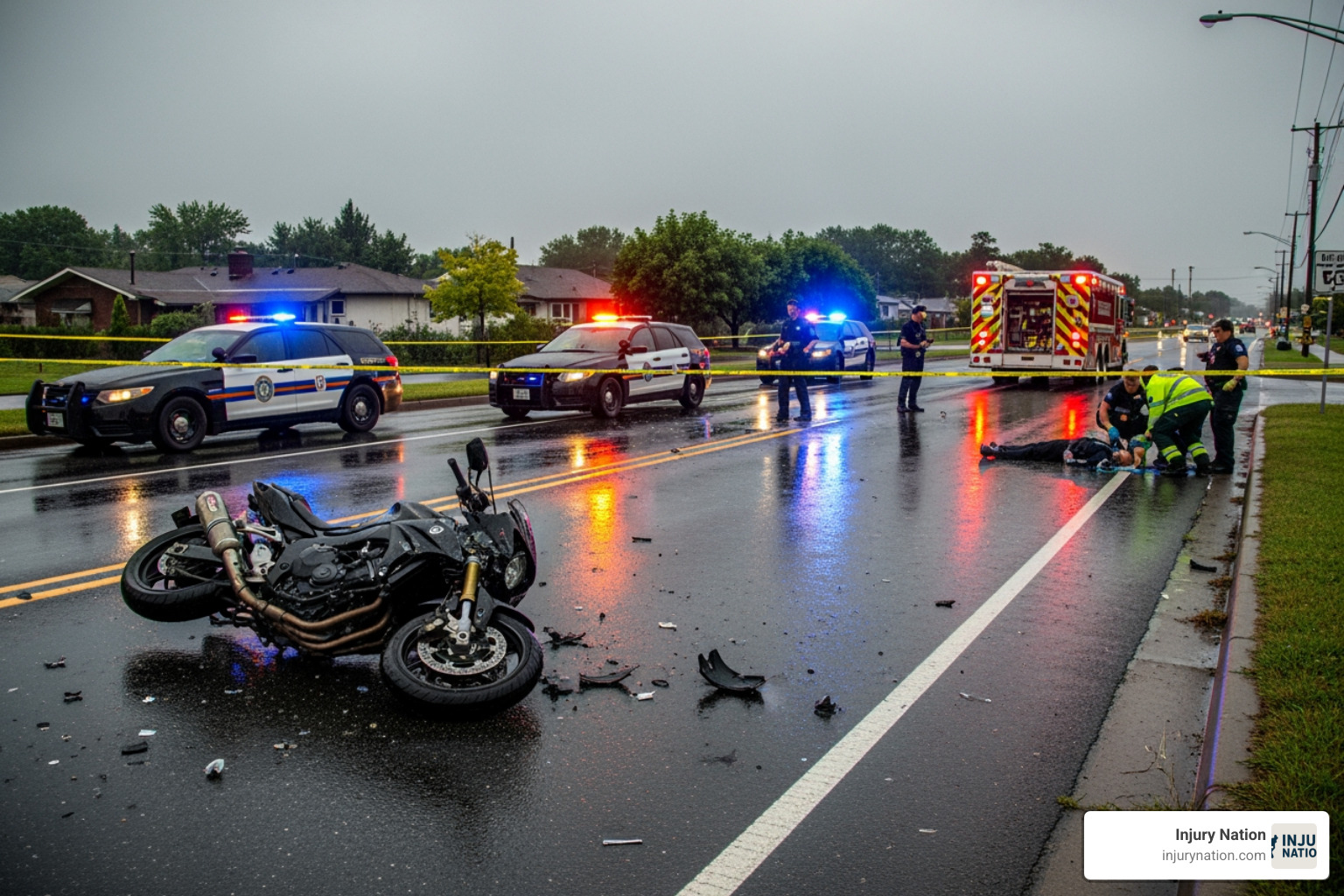
First and foremost, your safety and well-being are paramount.
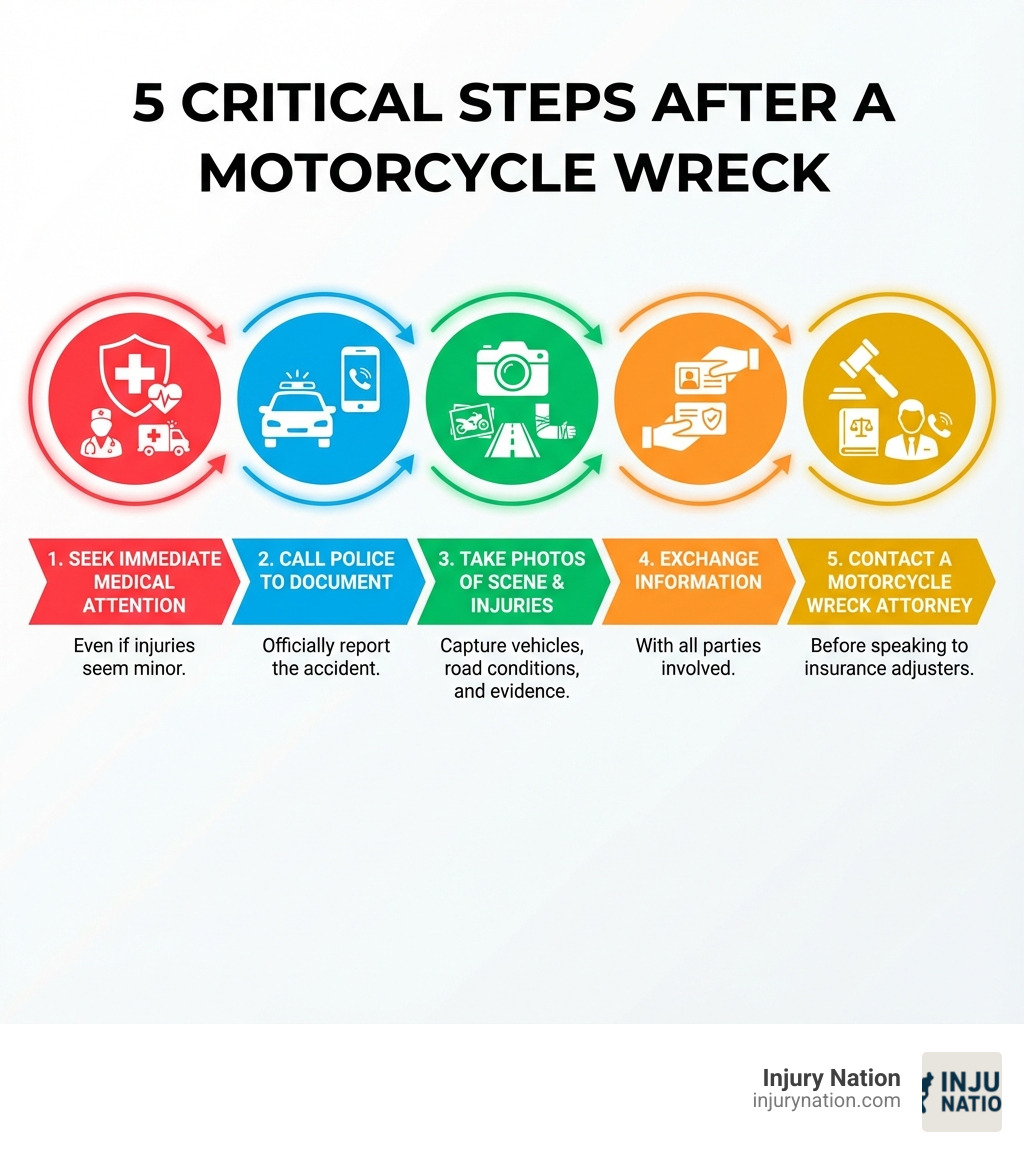
- Seek Medical Attention Immediately: Even if you feel “fine,” the adrenaline rush from an accident can mask serious injuries. Conditions like traumatic brain injury (TBI) may not be immediately apparent, only surfacing hours or even days later. Getting prompt medical care is not just crucial for your health, but it also creates an official record of your injuries, linking them directly to the accident. If emergency services are on the scene, allow them to assess you. If not, get to an urgent care clinic or hospital as soon as possible.
- Report the Accident to the Police: It’s essential to have an official record of the incident. In New York, you must report any crash involving injury or significant property damage, and leaving the scene is a serious traffic offense under the New York State Vehicle and Traffic Law. The police report is a key piece of evidence your motorcycle wreck attorneys will use.
- Document the Scene (If Safe and Able): If your injuries permit, and it’s safe to do so, try to gather as much information as possible at the scene.
- Exchange Information: Get the names, contact details, and insurance information from all other drivers involved.
- Witness Information: Collect names and phone numbers of any witnesses who saw the crash. Their impartial accounts can be incredibly valuable.
- Photographs: Use your phone to take pictures of everything – the accident scene from multiple angles, damage to all vehicles, road conditions (e.g., potholes, debris, skid marks), traffic signs, weather conditions, and your injuries.
- Avoid Admitting Fault: Do not apologize or make any statements that could be interpreted as admitting fault, even to the police or other drivers. Stick to the facts. Let your motorcycle wreck attorneys handle communications regarding liability.
- Preserve Evidence: Once you’re safe, preserving physical evidence is key.
- Keep your damaged motorcycle as-is until your attorney advises otherwise.
- Keep all medical records, bills, and receipts related to your injuries and treatment.
- Save any clothing or gear you were wearing at the time of the crash.
Leaving the scene of an accident without exchanging information is against the law in New York and can result in fines, license consequences, or even criminal charges. Protect your rights and your claim by following these steps.
Navigating Nevada’s Complex Motorcycle Laws
Riding a motorcycle in Nevada offers incredible freedom, but it also comes with specific legal responsibilities and unique challenges. Understanding Nevada’s motorcycle laws and how they apply to accident claims is crucial for any rider. We are here to help you steer these complexities.

Rider Rights and Responsibilities in Nevada
In Nevada, motorcyclists have the same rights and responsibilities as drivers of passenger vehicles. This means you have an equal right to use the roads. However, there are specific requirements for motorcyclists:
- Helmet Law: In Nevada, motorcycle riders are required to wear a helmet. This is a critical safety measure, and while it doesn’t prevent all injuries, helmets significantly reduce the risk of fatal head injuries.
- Protective Eyewear: While not explicitly detailed in our Nevada-specific research, it’s generally a best practice and often required in many states to wear protective eyewear, even if your motorcycle has a windshield. This protects against debris, wind, and insects.
- Equipment Requirements: Motorcycles must be properly maintained and equipped with essentials like working headlights, taillights, brake lights, turn signals, and mirrors.
Adhering to these laws is not just about avoiding tickets; it helps protect you on the road and can play a role in your legal claim if an accident occurs.
Nevada’s Insurance Laws and Exceptions
Unlike some states, Nevada is an “at-fault” state for car accidents. This means that the person who causes the accident is generally responsible for paying for the damages. This is a crucial distinction, as it means there’s no “no-fault” insurance system where your own insurance pays for medical bills regardless of who was at fault.
- At-Fault System: After a motorcycle accident in Nevada, you will typically seek compensation from the at-fault driver’s liability insurance. This makes proving liability even more critical.
- No PIP Exclusion: Since Nevada is an at-fault state, the concept of Personal Injury Protection (PIP) insurance (which is common in no-fault states) doesn’t apply in the same way. Motorcyclists in Nevada do not receive PIP benefits, which would usually cover medical bills and lost wages regardless of fault. Instead, your recovery is tied to proving the other party’s negligence.
- UM/UIM Coverage: Nevada law allows policyholders to purchase uninsured/underinsured motorist (UM/UIM) coverage, and insurers that offer motor vehicle liability policies must also offer UM/UIM coverage up to the bodily injury liability limits. This is incredibly important for motorcyclists. If the at-fault driver has no insurance or not enough insurance to cover your severe injuries, your UM/UIM policy can step in to provide compensation. We always recommend discussing robust UM/UIM coverage with your insurance professional.
The Statute of Limitations in Nevada
Time is of the essence after a motorcycle accident. In Nevada, you have a limited amount of time to file a personal injury lawsuit.
- Two-Year Deadline: Under Nevada law, the statute of limitations for most personal injury lawsuits arising from a motorcycle accident is two years from the date of the accident. This two-year clock is critical. If you miss this deadline, you will likely lose your right to pursue compensation, no matter how strong your case.
- Findy Rule: In some cases, the statute of limitations may begin when an injury is finded or reasonably should have been finded, rather than the exact date of the accident. However, this is rare and complex, and it’s always safest to act quickly.
- Importance of Acting Quickly: This tight timeframe is why we strongly advise contacting motorcycle wreck attorneys as soon as possible after you’ve received medical attention. Your legal team needs time to thoroughly investigate, gather evidence, and prepare your claim to ensure all deadlines are met.
The Critical Role of Motorcycle Wreck Attorneys in Your Recovery
When you’re recovering from a motorcycle accident, the last thing you want to deal with is legal paperwork, insurance adjusters, and the stress of proving your case. This is where dedicated motorcycle wreck attorneys become your greatest allies. Our team steps in to handle the complexities, allowing you to focus on healing.
Why You Need Specialized Motorcycle Wreck Attorneys
Motorcycle accidents are often more complex than typical car accidents. Riders face unique challenges that demand specialized legal expertise:
- Public Bias Against Motorcyclists: Unfortunately, a common challenge many motorcyclists face is public bias. Some people unfairly stereotype riders as reckless thrill-seekers, which can subtly influence police reports, witness statements, and even jury perceptions. Our motorcycle wreck attorneys are keenly aware of this bias and work diligently to present you as a responsible, law-abiding individual, ensuring your case is judged on facts, not stereotypes.
- Complex Legal Nuances: As discussed, Nevada’s at-fault system, comparative negligence laws, and specific insurance issues (such as UM/UIM coverage) add layers of complexity. An experienced attorney understands these nuances and how to apply them to your advantage.
- Insurance Company Tactics: Insurance companies are businesses, and their goal is to minimize payouts. They are notorious for making low initial settlement offers, hoping you’ll accept due to financial stress. They may also try to twist your statements, deny claims due to lack of a police report, or mislead you about policy limits. Our motorcycle wreck attorneys know these tactics inside and out and will aggressively negotiate on your behalf.
- Maximizing Claim Value: Without legal representation, you might not realize the full extent of damages you’re entitled to. We ensure all current and future costs—from medical bills and lost wages to pain and suffering—are thoroughly accounted for.
- Protecting Your Rights: We stand as your advocate, ensuring your rights are protected at every stage of the legal process.
How Motorcycle Wreck Attorneys Prove Liability
Proving who was at fault is the cornerstone of any personal injury claim in an at-fault state like Nevada. Our motorcycle wreck attorneys carefully build your case by establishing the four elements of negligence:
- Duty of Care: The at-fault party owed you a legal duty to act reasonably (e.g., all drivers have a duty to follow traffic laws).
- Breach of Duty: The at-fault party failed to uphold that duty (e.g., they were speeding, distracted, or failed to yield).
- Causation: Their breach of duty directly caused your accident and injuries.
- Damages: You suffered actual harm (injuries, financial losses).
To prove these elements, your legal team conducts a thorough investigation:
- Evidence Collection: This includes gathering police reports, medical records, crash scene data, video footage (from traffic cameras, dashcams, or nearby businesses), and eyewitness statements.
- Accident Reconstruction: In complex cases, attorneys may work with accident reconstruction experts. These specialists can analyze physical evidence, vehicle damage, and other data to determine exactly how the accident occurred and who was responsible.
- Defective Road Conditions: Sometimes, the fault lies not just with another driver, but with hazardous road conditions. Potholes, debris, uneven pavement, or inadequate road design can all contribute to motorcycle accidents. Attorneys investigate if a municipality or other entity is liable for failing to maintain safe roadways.
- Defective Vehicle Parts: In some cases, a motorcycle accident can be caused by a defect in the motorcycle itself or another vehicle involved. If a faulty brake, tire, or other component contributed to the crash, your lawyer may pursue a product liability claim against the manufacturer.
- Witness Interviews: Lawyers question witnesses to gather their perspectives, which can often corroborate your account or shed light on the other driver’s actions.
Navigating Comparative Negligence
Nevada operates under a “modified comparative negligence” rule with a 51% bar to recovery. This is a critical point for motorcyclists:
- Shared Fault Cases: It’s common for insurance companies or defense attorneys to try and assign some blame to the motorcyclist, even if the other driver was primarily at fault.
- Partial Fault Recovery: Under Nevada law, you can still recover damages even if you were partially at fault for the accident, as long as your percentage of fault is not 51% or greater.
- Proportional Reduction of Damages: If you are found to be partially at fault (e.g., 20% responsible), your total compensation award will be reduced by that percentage. For example, if your damages are assessed at $100,000, but you are 20% at fault, you would receive $80,000.
- The 51% Bar: If, however, you are found to be 51% or more at fault for the accident, you lose the right to recover any compensation from the other party.
This system makes the role of motorcycle wreck attorneys invaluable. They work to minimize any fault attributed to you and maximize your recovery.
Maximizing Your Compensation: What Your Claim is Worth
After a motorcycle accident, you’re not just dealing with a physical pain; you’re also facing financial burdens. Our goal is to ensure you receive comprehensive compensation that covers all your losses, both immediate and long-term. Your claim isn’t just about what you’ve lost so far, but also about what you might lose in the future due to your injuries.
Economic Damages
These are tangible, quantifiable losses that have a clear monetary value:
- Medical Expenses: This includes emergency room visits, ambulance fees, hospital stays, surgeries, doctor’s appointments, prescription medications, medical devices, and rehabilitation costs (physical therapy, occupational therapy). We account for both past and projected future medical needs.
- Lost Wages: If your injuries prevented you from working, you can claim compensation for the income you’ve already lost.
- Future Earning Capacity: If your injuries lead to a permanent disability or significantly reduce your ability to earn at your previous level, you can claim compensation for this long-term loss of earning potential.
- Property Damage: The cost to repair or replace your damaged motorcycle and any other personal property (like helmets, gear, or electronics) that was destroyed in the crash.
- Out-of-Pocket Expenses: Any other costs directly related to the accident, such as transportation to medical appointments, home modifications for accessibility, or assistive devices.
Non-Economic Damages
These are more subjective losses that don’t have a direct dollar amount but significantly impact your quality of life:
- Pain and Suffering: This compensates you for the physical pain and discomfort you’ve endured and will continue to endure due to your injuries.
- Emotional Distress: The psychological impact of the accident, including anxiety, fear, depression, post-traumatic stress disorder (PTSD), and embarrassment, can be profound.
- Loss of Enjoyment of Life: If your injuries prevent you from participating in hobbies, sports, or other activities you once enjoyed, you can seek compensation for this diminished quality of life.
- Permanent Disability/Disfigurement: Compensation for lasting physical impairments, scarring, or disfigurement that impacts your appearance or physical function.
- Loss of Consortium: If your injuries affect your relationship with your spouse, they may be able to claim damages for the loss of companionship, affection, and support.
In rare cases, if a defendant’s actions were intentional or especially shocking, punitive damages may also be awarded. These are designed to punish the at-fault party and deter similar behavior in the future.
Common Motorcycle Accident Injuries
Due to the lack of protective enclosure, motorcyclists are incredibly vulnerable in a crash. This often leads to severe, life-altering injuries:
- Traumatic Brain Injury (TBI): Even with a helmet, the force of impact can cause concussions, contusions, or more severe brain damage, leading to cognitive, emotional, and physical impairments.
- Spinal Cord Injuries: These can result in partial or complete paralysis, significantly altering a person’s life and requiring extensive long-term care.
- Road Rash: This is an abrasion caused by skin scraping against the pavement. While it might sound minor, severe road rash can cause deep tissue damage, infection, permanent scarring, and may require skin grafts.
- Broken Bones (Fractures): Common in the arms, legs, pelvis, and ribs, these can be complex and require multiple surgeries and lengthy rehabilitation. Scientific research indicates that the lower extremities are among the most commonly impacted bones in motorcycle accidents.
- Amputations: In the most tragic cases, limbs can be severed or so severely damaged that amputation is necessary.
- Internal Injuries: Trauma to organs like the spleen, liver, or kidneys can lead to internal bleeding and life-threatening complications.
Such severe injuries mean higher medical bills, longer recovery times, and a greater need for comprehensive compensation. Our motorcycle wreck attorneys work with medical experts and life care planners to accurately assess the full scope of your injuries and their long-term impact.
Frequently Asked Questions about Motorcycle Wreck Claims
We understand you likely have many questions after a motorcycle accident. Here are answers to some of the most common ones we hear from victims in Las Vegas and across Nevada.
What are the most common causes of motorcycle accidents in Nevada?
Motorcycle accidents in Nevada, particularly in urban areas like Las Vegas, are often caused by the negligence of other drivers. While motorcyclists are sometimes unfairly blamed, statistics and investigations frequently point to other motorists failing to see or yield to bikes. Common causes include:
- Driver Inattention/Distracted Driving: Drivers using cell phones, adjusting radios, or simply not paying attention can fail to notice motorcycles, especially when changing lanes or turning.
- Failure to Yield: This is a leading cause. Drivers turning left often misjudge the speed or distance of an oncoming motorcycle, turning directly into its path.
- Speeding: Excessive speed by either the motorcyclist or another driver significantly reduces reaction time and increases accident severity.
- Aggressive Driving/Improper Passing: Drivers weaving through traffic, tailgating, or making unsafe passes can easily endanger motorcyclists.
- Driving Under the Influence (DUI): Impaired drivers have slowed reaction times and impaired judgment, drastically increasing accident risk.
- Road Hazards: Potholes, debris, uneven pavement, or poorly maintained roads can be far more dangerous for a two-wheeled vehicle than a car, potentially causing a rider to lose control.
- Negligent Maintenance or Safety Equipment: Less common, but sometimes a defect in a vehicle’s parts can contribute to an accident.
Recent statistics for Nevada highlight the danger: motorcyclists are 28 times more likely to be killed in a car accident than occupants in passenger vehicles. In Nevada, motorcyclists account for approximately 19.2% of all traffic fatalities, with about 76% of these accidents occurring in urban areas like Las Vegas. Between 2019 and 2020, 112 motorcyclists were killed in Nevada, with Clark County (where Las Vegas is located) reporting the highest numbers. These numbers underscore the constant vigilance required on Nevada roads.
Can I still recover damages if I wasn’t wearing a helmet?
This is a very common question, and the answer in Nevada is nuanced. Yes, you can still recover damages even if you weren’t wearing a helmet, but your compensation might be affected.
- Helmet Law Violations: Nevada law requires motorcyclists to wear helmets. If you were not wearing one, you were technically violating the law.
- Impact on Head Injury Claims: If you sustained a head injury, the defense (and their insurance company) will likely argue that your injuries would have been less severe, or even avoided, had you been wearing a helmet.
- Comparative Fault Arguments: This falls under Nevada’s modified comparative negligence rule. A judge or jury might assign a percentage of fault to you for not wearing a helmet if it’s determined that your injuries were exacerbated by this choice. Your total compensation would then be reduced by that percentage. For example, if you’re awarded $100,000 but found 20% at fault for your head injuries due to not wearing a helmet, you’d only receive $80,000.
Not wearing a helmet does not automatically make you at fault for causing the accident itself. The focus of this argument is typically on the severity of your injuries, not the cause of the collision. Our motorcycle wreck attorneys are skilled at navigating these complex arguments to protect your right to compensation.
How much does it cost to hire a motorcycle wreck attorney?
We believe that everyone deserves access to justice, especially after a devastating motorcycle accident. That’s why we operate on a contingency fee basis.
- No Upfront Costs: You won’t pay us any fees out-of-pocket or upfront to start your case.
- Payment Only Upon Winning: Our fee is contingent upon us successfully recovering compensation for you, either through a settlement or a court verdict. If we don’t win your case, you don’t pay us a fee.
- “The Fee is Free®” Model: This model ensures that you can pursue your legal claim without adding to your financial stress during a difficult time. Our payment comes as a percentage of the compensation we secure for you.
- Free Consultation: We offer a completely free, no-obligation consultation. This allows you to discuss your case with us, understand your legal options, and learn how we can help, all without any financial commitment.
This fee structure ensures that our interests are aligned with yours: we are motivated to achieve the maximum possible compensation for your injuries and losses.
Conclusion: Your Path to Justice and Recovery
Navigating the aftermath of a motorcycle accident can feel like an impossible journey. From the physical pain and emotional distress to the mounting medical bills and the daunting prospect of battling insurance companies, the challenges are immense. Motorcyclists face unique vulnerabilities on the road and specific legal problems, including potential public bias and complex negligence and insurance laws that vary from state to state.
But you don’t have to face these challenges alone. Experienced motorcycle wreck attorneys can serve as your unwavering advocates. They understand the intricacies of state law, the tactics of insurance adjusters, and the best strategies to prove liability and maximize your compensation. They handle the complex legal heavy lifting—investigating your accident, gathering crucial evidence, negotiating with insurers, and fighting for your rights in court if necessary—all while you focus on what truly matters: your healing and recovery.
Your path to justice and full recovery begins with informed action. Do not let legal deadlines pass, or accept a lowball offer from an insurance company that doesn’t have your best interests at heart.
If you or a loved one has been injured in a motorcycle accident, reach out for legal help today. Let a qualified attorney help you understand your rights and fight for the compensation you deserve.
Find experienced personal injury lawyers in your area through the Injury Nation directory: Find experienced personal injury lawyers in your area