

What to Save From Your Repair Shop if You Have an Injury Claim in San Antonio
If you were hurt in a crash in San Antonio, your vehicle repair file may matter more than you realize. Many people focus on medical records first, which makes sense, but repair shop paperwork can also help show what happened, when damage was identified, how the vehicle was handled, and whether the damage estimate changed over time. That information can support parts of a personal injury claim, especially when there are questions about timing, impact, property damage, or how the collision unfolded.
This FAQ explains the key san antonio injury claim repair shop documents to save, why they matter, how repair records fit into a car accident claim, and what to do whether your car is repaired or declared a total loss. If you need help understanding how your crash-related records fit together, Injury Nation can help you connect with a local personal injury lawyer for a free consultation today.
FAQ: San Antonio Injury Claim Repair Shop Documents
Why do repair shop documents matter in a San Antonio injury claim?
Repair shop documents matter because they can help create a clearer record of what happened after your crash. In a personal injury claim, the goal is often to present a consistent, documented timeline of the incident and its effects. Medical records address your physical injuries. Repair records address what happened to the vehicle, when the damage was observed, what parts were affected, whether hidden damage was later found, and what the shop needed to do.
These records do not automatically prove that you were seriously injured, and they should not be treated as a substitute for medical evidence. But they can still be useful in several ways:
- They help establish the date and sequence of post-crash events.
- They may show the location and extent of visible and later-discovered damage.
- They can support your account if there is a dispute about how the impact occurred.
- They may explain why your vehicle was unavailable for a period of time.
- They can help your attorney compare repair records with photos, police reports, and insurance communications.
In San Antonio, where crashes on roads like Loop 410, I-10, I-35, US-281, and city arterials can range from moderate fender-benders to major collisions, documentation often becomes important quickly. Even a crash that seems straightforward at the scene can turn into a dispute later if the insurer questions damage severity, timing, or whether all claimed losses relate to the same event.
What repair shop documents should I save after a car accident?
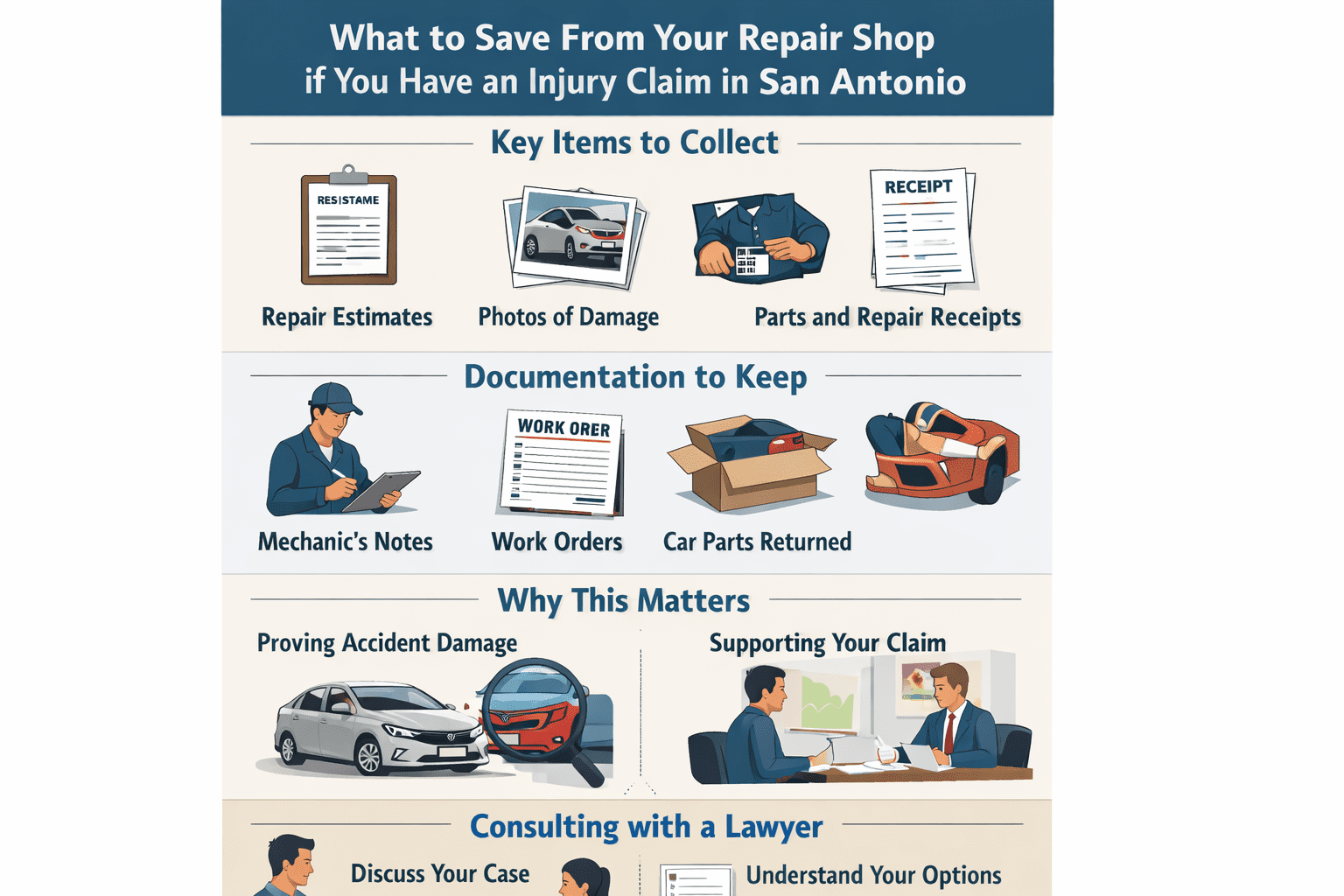
You should save every repair-related record you receive, even if it seems minor or repetitive. The most important categories include:
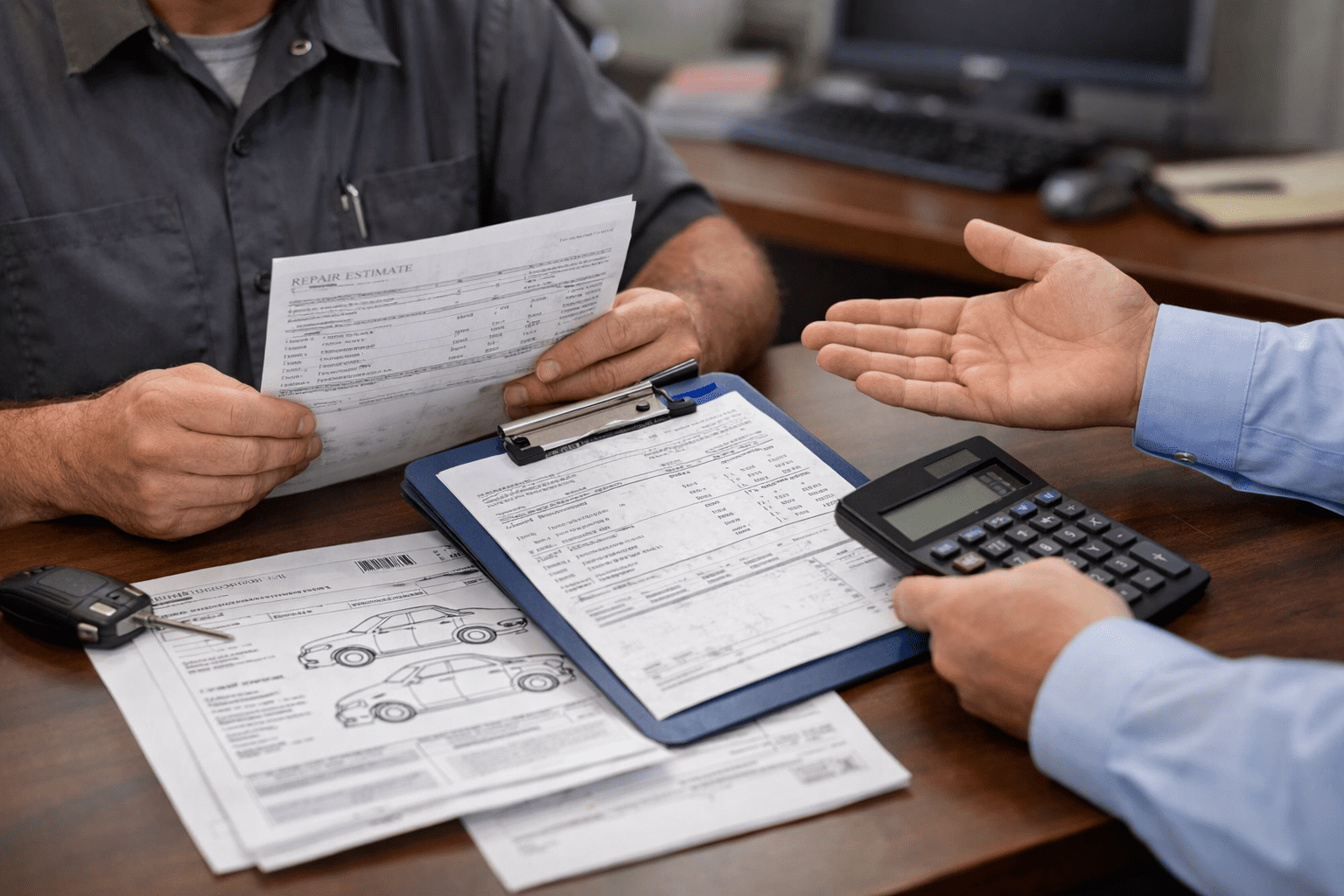
- Repair estimates
- Final invoices
- Vehicle photos
- Supplement estimates or supplements
- Rental car records
- Written communications with the repair shop, insurance company, and adjusters
You should also keep:
- Tow bills and storage invoices
- Parts lists
- Paint and labor breakdowns
- Total loss valuation documents if the vehicle is not repaired
- Shop intake forms and damage check-in sheets
- Text messages and emails about delays or revised damage findings
A good rule is simple: if it came from the body shop, insurer, towing company, rental company, or appraiser and relates to the vehicle after the crash, save it.
Should I save the first repair estimate, even if it changes later?
Yes. Save the first estimate and every updated version after that. The first estimate often captures the earliest documented view of crash damage. It may not be complete, especially if the shop later discovers hidden damage after disassembly, but it still has value.
The first estimate can help show:
- When the vehicle was first inspected
- What damage was immediately visible
- What parts or repair areas were initially identified
- What the vehicle condition appeared to be before more detailed teardown work
Later versions matter just as much. If a repair shop finds additional structural, suspension, sensor, or internal damage after taking the vehicle apart, those later documents can help explain why the original estimate was revised. In many claims, questions arise because the damage assessment changes over time. That is exactly why you should keep every version instead of only the final total.
What is a supplement, and why is it important?
A supplement is an additional repair estimate or revised line-item document prepared after the initial estimate. Supplements are common in collision repairs because some damage is hidden behind body panels or not visible until the shop starts work.
Supplements matter because they can help explain:
- Why the final repair cost was higher than the original estimate
- When hidden damage was discovered
- Whether more serious internal damage appeared after teardown
- Why repairs took longer than expected
If your damage assessment changes, share those updates with your attorney or legal representative promptly. Waiting too long can create avoidable confusion. A lawyer reviewing your file may be comparing the repair record with insurance adjuster notes, crash photos, property damage evaluations, and other claim materials. The sooner updated supplements are added to the file, the easier it is to maintain a clear timeline.
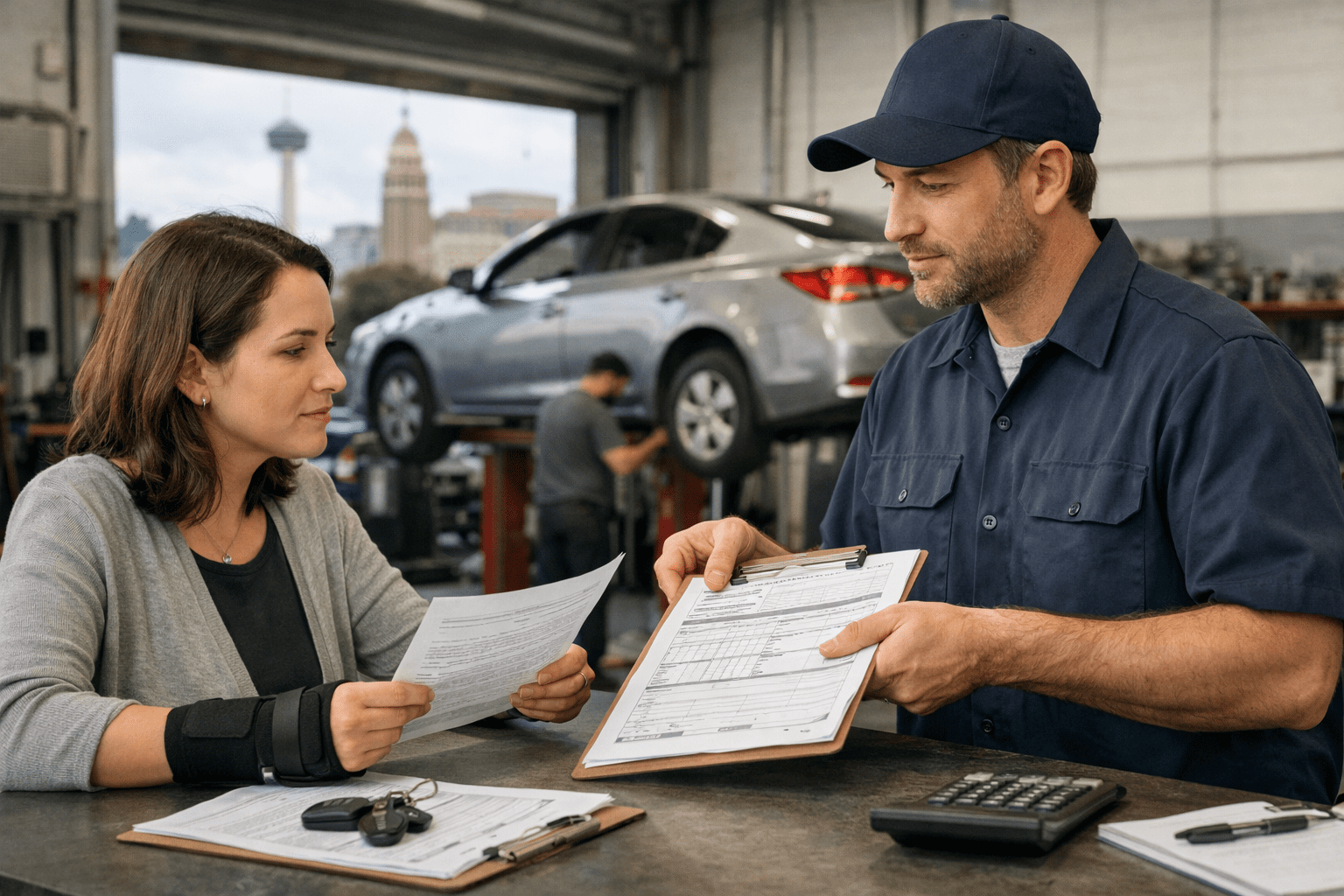
Do final invoices matter if I already have an estimate?
Yes. An estimate is not the same as a final invoice. The estimate shows projected work. The invoice shows what was actually done, what parts were used, and what charges were billed at the end.
Your final invoice may include:
- Completed labor operations
- Parts replaced
- Paint and materials
- Sublet services
- Calibration or diagnostic charges
- Storage or administrative fees
- Repair completion date
This can be useful in a claim because it shows the actual repair path, not just the predicted one. If the repair duration becomes relevant, the final invoice may also help confirm when the vehicle entered and left the shop.
What kind of photos should I keep from the repair shop?
Keep every crash-related vehicle photo you can get. This includes photos you took yourself, photos taken by the tow yard, photos taken by the insurance appraiser, and photos taken by the repair facility.
Useful images often include:
- Wide shots showing the whole vehicle
- Close-ups of impact points
- Interior photos if airbags deployed or cabin damage occurred
- Photos taken before teardown
- Photos taken after parts were removed
- Photos showing frame, undercarriage, wheel, trunk, or engine compartment damage
- Photos with timestamps if available
Why do these matter? Photos can support the progression of the damage evaluation. For example, a vehicle may look modestly damaged from the outside but show additional internal damage after teardown. Keeping both sets of photos can help explain the change in repair estimates without relying on memory alone.
Back up these digital files in more than one place. Save them to your phone, email them to yourself, upload them to secure cloud storage, and organize them in a folder labeled with the crash date. If a photo only lives in a text thread or one device, it is easier to lose.
Should I keep rental car records too?
Yes. Save rental agreements, receipts, extension notices, return confirmations, and any messages about delays caused by ongoing repair work. Rental records can help document how long your vehicle was out of service and may support parts of your property damage claim.
Rental records can also help reinforce timeline issues, including:
- When the vehicle became unusable
- How long the repair or evaluation process took
- Whether supplements or parts delays extended the repair time
- Whether a total loss decision changed the timeline
If you paid out of pocket for all or part of the rental, keep proof of payment. If insurance covered it directly, keep the rental company paperwork anyway.
What communications should I save from the shop or insurer?
Save all meaningful communications, including emails, texts, portal screenshots, letters, voicemail summaries, and app messages. These communications may show when you were notified of new damage findings, when the insurer approved part of the work, when delays occurred, or when the vehicle was moved toward a total loss decision.
Examples include:
- “Your vehicle is ready for teardown” messages
- Notices that more damage was discovered
- Approval or denial messages from insurance
- Parts delay notifications
- Total loss review notices
- Requests for you to authorize additional work
- Messages about pickup, transfer, or storage
If a conversation happens by phone, consider making a short written note right after the call. Include the date, time, name of the person, and what was said. This can help preserve details that might otherwise fade.
How can repair paperwork support timeline issues in a personal injury claim?
Repair paperwork can be useful when there are disputes about timing. In many injury claims, one of the basic but important tasks is showing a reliable sequence of events after the crash. Repair shop records may help fill in gaps between the accident date and other milestones in your claim.
For example, the paperwork may help show:
- When the vehicle was first inspected
- When visible damage was documented
- When hidden damage was discovered
- When the insurer approved repairs
- When your car became drivable or undrivable
- When the vehicle was deemed a total loss instead of repairable
This can matter if an insurer questions whether later vehicle findings relate back to the original crash. A dated paper trail often helps your legal team organize the sequence in a more persuasive, understandable way.
How can repair paperwork help with damage issues?
Repair documents may help clarify damage-related questions, especially when the physical condition of the vehicle is relevant to the claim. They can show where damage was found, whether that damage expanded beyond what was initially visible, and how the repair shop categorized the work.
Examples of damage-related support include:
- Showing that the impact involved more than cosmetic damage
- Documenting hidden damage discovered after disassembly
- Confirming replacement of certain parts after inspection
- Providing visual and written support if the crash mechanics are disputed
- Distinguishing repairable damage from damage leading to a total loss conclusion
Again, this does not mean repair records alone prove the severity of your bodily injuries. Injury claims typically rely on medical records, treatment notes, imaging, physician opinions, and related evidence for that issue. But vehicle damage records can still be relevant supporting material in the broader claim file.
What is different if my car is declared a total loss?
If your car is declared a total loss, you may have fewer traditional repair invoices because the vehicle is not fully repaired. But you should still save all available documents related to the evaluation and disposition of the vehicle.
In a total loss situation, important records often include:
- Initial damage estimate
- Total loss notice from the insurer
- Valuation report
- Settlement offer documents
- Photos from the insurer or salvage yard
- Tow and storage bills
- Vehicle transfer or release paperwork
- Any communications about when the total loss determination was made
Total loss files can still support a timeline and document the damage evaluation process. They can also show how quickly the vehicle moved from inspection to non-repair status. If there was an initial repair estimate before the total loss determination, save that too. It may help show the path the property damage claim took before the insurer made its final decision.
What is different if my car is repaired instead of totaled?
If your car is repaired, your file is usually more document-heavy. That means you may have more opportunities to preserve useful evidence, but it also means more chances to lose something important if you do not stay organized.
In a repair scenario, try to collect and organize:
- Initial estimate
- Supplement(s)
- Photo sets
- Repair authorizations
- Parts and labor breakdowns
- Final invoice
- Pickup documentation
- Rental records covering the repair period
- Texts or emails about repair delays or added damage
The key difference is that a repair scenario often generates a more detailed chronology. That chronology can be valuable if there are later questions about what the shop found and when it found it.
Should I give repair documents to my San Antonio personal injury lawyer?
Yes. If you have hired a lawyer or are planning a free consultation, bring or send your repair-related documents along with your medical records, crash report information, insurance correspondence, and accident photos. A local San Antonio personal injury lawyer can assess how those records fit into your broader case.
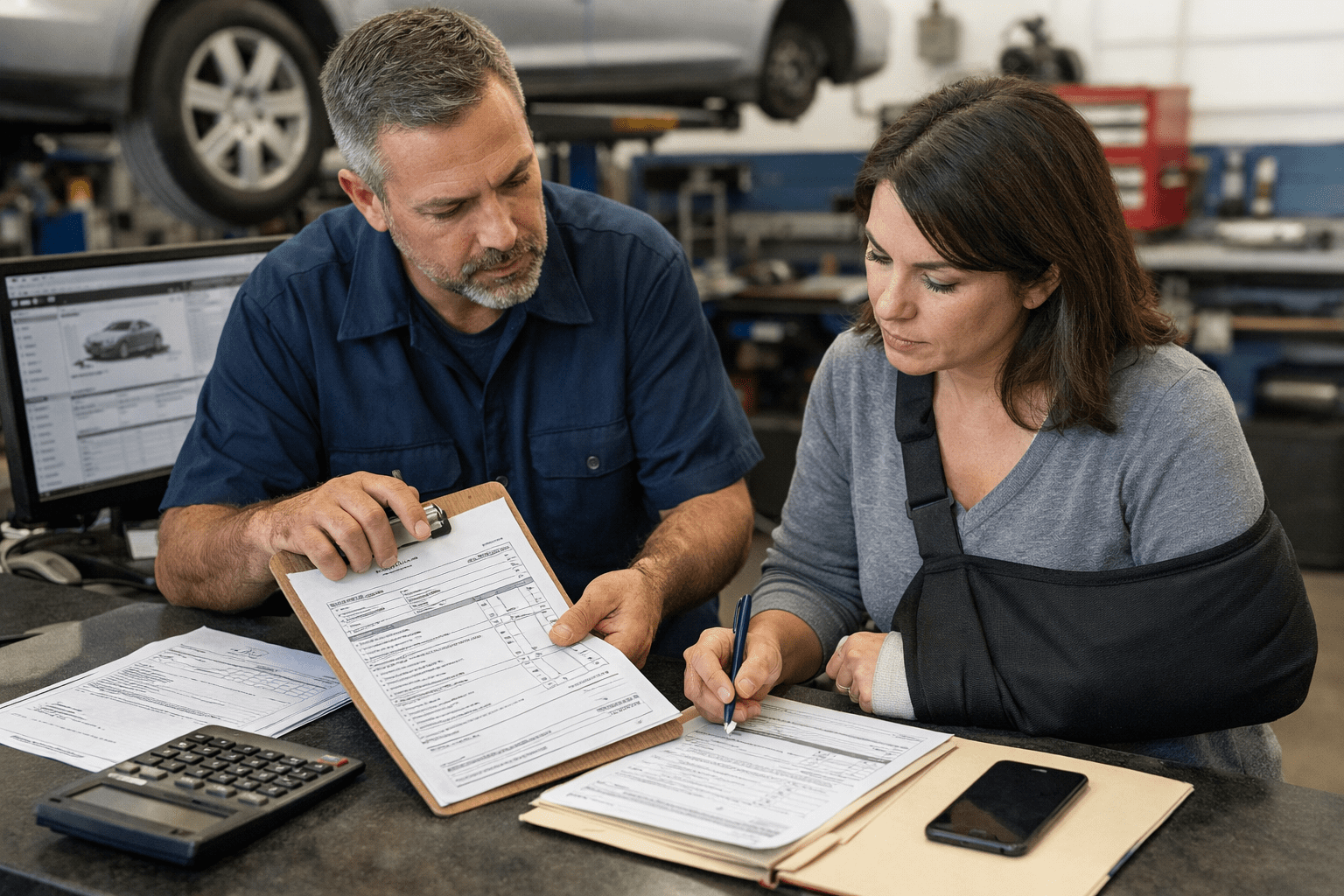
Even if the attorney decides some repair documents are more relevant to the property damage side than the bodily injury side, it is better to provide too much documentation than too little. Legal teams can sort out what is central, what is supplemental, and what may become important later if a dispute develops.
If the damage assessment changes after you first speak with a lawyer, send the update. For example:
- A new supplement increases the repair scope
- The insurer changes from repair to total loss
- The shop finds previously hidden structural damage
- The repair timeline extends significantly
These updates can affect how your attorney understands the case timeline and property damage narrative.
How should I organize my repair shop documents?
You do not need a complicated system, but you do need a consistent one. A simple approach works well:
- Create one folder labeled with the date of the crash and “San Antonio accident.”
- Make subfolders for estimates, supplements, invoices, photos, rental records, towing/storage, and communications.
- Name files with dates whenever possible, such as “2026-03-04 initial estimate” or “2026-03-10 supplement 1.”
- Save both PDFs and screenshots if an online portal may change later.
- Back up everything in at least two places.
If you prefer paper, keep a binder or envelope system. If you prefer digital, cloud storage plus email backup is often enough for basic preservation. The key is to avoid scattering important records across texts, inboxes, glove compartments, and random downloads folders.
Why is backing up digital files so important?
Because repair-related records often arrive digitally, and digital records are easy to lose. People change phones, delete text threads, lose portal access, or accidentally overwrite files. A missing supplement or missing photo set can create unnecessary problems later.
Good backup habits include:
- Emailing documents to yourself
- Saving files to a cloud drive
- Downloading insurer portal documents instead of assuming they will remain available
- Taking screenshots of key messages
- Keeping original-resolution photos whenever possible
Do not rely on a single source. If your only copy of a repair estimate is an app notification or a text attachment, preserve it somewhere safer.
What if the repair shop keeps sending revised paperwork?
That is common. Do not delete earlier versions. Keep every revision and note the date received. A revised damage assessment is not unusual after a collision, especially when hidden damage is uncovered. What matters is preserving the progression.
When revised paperwork comes in:
- Save the new document immediately.
- Rename it with the date.
- Compare it briefly to the prior version.
- Forward it to your attorney or legal contact if you have one.
- Keep related emails or texts explaining why it changed.
This helps prevent confusion later when someone asks why the numbers or repair scope increased.
Can repair records help if the insurer minimizes the crash damage?
They can help support the documented property damage picture, especially if the insurer or another party tries to characterize the vehicle damage too narrowly. Photos, estimates, supplements, and final invoices may show that the initial surface appearance did not tell the full story.
That said, repair records are just one category of evidence. If there is a serious dispute in your case, your attorney may need to consider multiple sources together, such as:
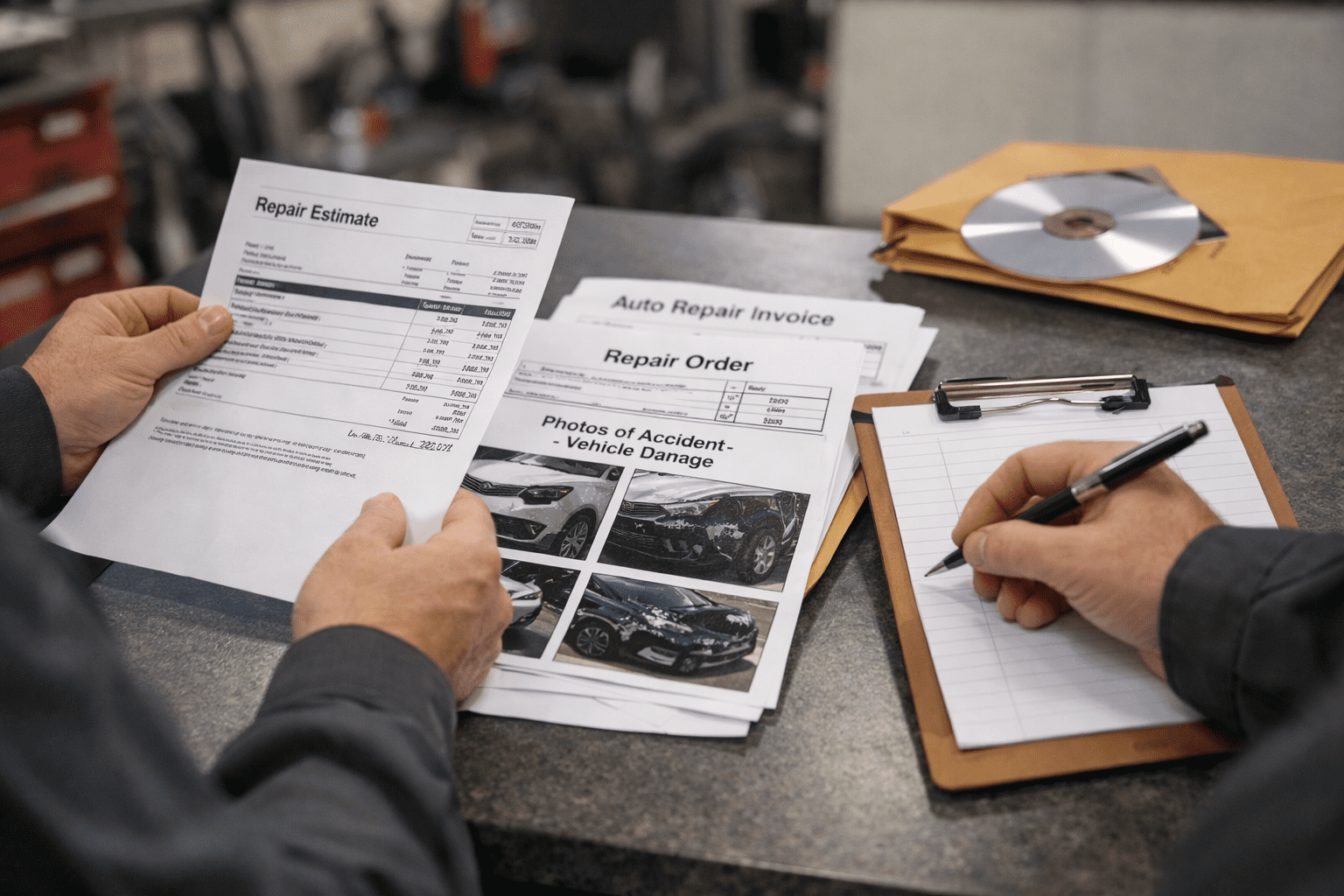
- Crash scene photos
- Police report details
- Vehicle inspection records
- Repair documentation
- Medical records
- Witness statements
The best approach is not to assume one document will carry the entire case. Instead, preserve all relevant records so your legal team can build the strongest overall presentation.
What are common mistakes people make with repair shop records?
Several mistakes come up often after car accidents in San Antonio and elsewhere:
- Throwing away the first estimate because it was later revised
- Keeping only the bill total and not the line-item paperwork
- Failing to save supplements when hidden damage is discovered
- Losing digital records stored only in one phone or portal
- Not keeping rental paperwork
- Ignoring communications that explain delays or estimate changes
- Not updating their lawyer when the vehicle damage assessment changes
- Mixing unrelated car records from older repairs into the crash file without labeling them
A little organization early can prevent major confusion later.
What warning signs suggest I should be especially careful with documentation?
You should be extra careful about saving repair shop records if any of the following apply:
- The insurer disputes how the crash happened
- The visible damage seemed minor, but the shop later found more extensive damage
- The repair estimate increased significantly after teardown
- Your vehicle was switched from repair status to total loss
- There are delays, parts issues, or multiple shop transfers
- You are receiving conflicting messages from the shop and insurer
- The other side argues that the collision was too minor to matter
- You expect to pursue a personal injury claim in addition to property damage
These situations do not automatically mean your case will become highly contested, but they do mean documentation becomes more important.
What should I expect from a body shop file in a typical San Antonio crash claim?
Every case is different, but many body shop files include a mix of formal documents and informal communications. You might receive some of the following from a San Antonio area repair shop or insurer handling collision damage:
- A preliminary estimate shortly after intake
- Photo uploads or a link to view images
- An authorization form to begin work
- One or more supplements after teardown
- Status messages about parts and progress
- A repair completion notice or total loss notice
- A final invoice or valuation packet
Some local shops are highly digital and rely on text and portal updates. Others still print paperwork. Because the format varies, it is smart to save both paper and electronic records whenever available.
If my car was towed from the scene in San Antonio, should I keep tow yard and storage paperwork too?
Yes. Tow and storage documents are part of the larger post-accident vehicle record. They may help establish where the vehicle went, when it was moved, how long it remained in storage, and when it reached the repair facility or total loss inspection location.
Keep:
- Tow receipt
- Storage invoices
- Vehicle release forms
- Any photos taken at the tow yard
- Communications about vehicle transfer
In some cases, these documents help bridge the gap between the crash date and the repair evaluation date.
Do I need to save communications if they seem routine?
Usually yes, at least until the claim is fully resolved. A routine message today may become important later if there is a disagreement about timing, approval, or what the shop discovered. For example, a short text saying “found additional rear structural damage during teardown” could matter much more later than it seems in the moment.
If you want to avoid saving everything forever, keep all routine communications until you have spoken with a lawyer and your case has progressed enough to understand what may matter most. When in doubt, preserve first and sort later.
Can repair paperwork help if I changed shops?
Yes. If your vehicle was moved from one shop to another, or from a tow yard to a shop and then to a total loss inspection location, preserve records from each step. Transfers can complicate the timeline, so the paperwork becomes even more useful.
Try to keep:
- Original intake documents from the first shop
- Transfer or release paperwork
- New estimates from the second location
- Messages explaining why the vehicle was moved
- Any photos taken before and after transfer
This can help avoid questions about when damage was documented and by whom.
What if I already lost some repair records?
Do not panic. You may still be able to recover part of the file. Contact the repair shop, rental company, insurer, tow company, or appraisal service and ask for copies. Many businesses can resend estimates, invoices, and emails. If records were shared through a portal, check whether you can still log in and download them.
Also search:
- Email inboxes and spam folders
- Text threads
- Cloud photo backups
- Insurance app message history
- Download folders on your phone or computer
If you are working with a lawyer, let them know what is missing and what you are trying to retrieve. Partial recovery is often better than none.
How do these documents fit into the bigger picture of maintaining my legal case?
Repair records are one part of case maintenance. They help preserve the vehicle side of the story while medical records preserve the treatment side. A well-maintained injury claim file often includes:
- Accident report details
- Scene and vehicle photos
- Medical records and bills
- Repair shop documents
- Insurance claim correspondence
- Rental and tow records
- Notes about missed work or disruption
When these records are organized, it becomes easier for your attorney to understand the sequence of events, identify missing pieces, and respond to disputes more efficiently.
Practical Step-by-Step Checklist for San Antonio Drivers
Right after the crash
- Take photos of the vehicle if you can do so safely.
- Save the tow receipt and location of the vehicle.
- Start one digital folder for all crash-related records.
When the car reaches the shop
- Request a copy of the initial estimate.
- Ask whether the shop takes intake photos and request copies if available.
- Save any intake forms or authorization paperwork.
During the repair or evaluation process
- Save every supplement and revised estimate.
- Keep texts and emails about additional damage or delays.
- Save rental extensions and receipts.
- Notify your lawyer if the damage assessment changes.
At the end of the process
- Get the final invoice if repaired.
- Get the valuation and total loss documents if totaled.
- Store all records in backed-up digital form.
- Provide the full set to your attorney.
Local Relevance: Why This Matters in San Antonio
San Antonio drivers deal with a mix of heavy interstate traffic, neighborhood collisions, construction zones, commercial vehicles, and fast-moving commuter routes. Crashes can happen downtown, on the far north side, near the Medical Center, around major interchange areas, or on crowded local roads. No matter where the crash happened, the aftermath often involves multiple parties: tow operators, repair shops, insurers, rental providers, and medical providers.
That is exactly why records matter. The more moving parts there are, the easier it is for the timeline to get messy. If you were injured in a San Antonio crash, keeping a strong repair file can help your legal team understand the property damage side clearly while they evaluate the injury claim as a whole.
Conclusion
If you have an injury claim after a San Antonio car accident, do not underestimate the value of your repair paperwork. Save your estimates, invoices, photos, supplements, rental records, tow paperwork, and communications. Keep records in both repair and total loss situations. Back up your digital files. And if the damage assessment changes, share those updates quickly with your attorney.
These documents may not prove injury severity by themselves, but they can support important timeline and damage issues in your case. When your file is organized, it is easier to explain what happened and easier for your legal team to protect your claim.
If you were hurt in a crash and need help understanding what records to keep, contact a local personal injury lawyer for a free consultation today. Injury Nation helps connect injured people with local legal resources and car accident claims assistance when they need clear next steps.