Why Accident Legal Advice Matters After a Collision
Accident legal advice is guidance from qualified attorneys who help injury victims understand their rights, handle insurance claims, and pursue fair compensation for damages such as medical bills, lost wages, and pain and suffering.
Quick Answer: What You Need to Know About Accident Legal Advice
- Get it early: Consult a lawyer before accepting any settlement offers or giving recorded statements to insurance companies.
- It’s often free: Most personal injury attorneys offer free consultations and work on contingency fees (no upfront costs, payment only if you win).
- It protects your rights: Lawyers help you avoid common mistakes like admitting fault, posting on social media, or accepting lowball offers.
- It can increase compensation: Research and industry data indicate that people who work with personal injury lawyers often receive significantly more compensation than those who don’t.
- Time limits apply: In Nevada, you generally have two years from the accident date to file a personal injury claim.
The moments after an accident are overwhelming. You may be dealing with injuries, property damage, medical bills, and insurance companies that seem more interested in protecting their bottom line than helping you recover.
The legal and insurance processes are complicated and can feel intimidating. Insurance adjusters know the system inside and out, and they may use that knowledge to minimize what they pay you.
That is where accident legal advice becomes critical. Whether you have been injured in a car crash, truck accident, or another type of collision, understanding your legal options helps you make informed decisions during one of the most stressful times in your life.
In recent years, Nevada has seen hundreds of traffic deaths and thousands of injuries from motor vehicle accidents. Clark County, home to Las Vegas, accounts for a large share of these incidents. These are not just statistics; they represent real people who often need guidance navigating the aftermath.
This guide walks you through key points: immediate steps to take after an accident, where to find free legal help, how lawyers work to maximize your compensation, and what Nevada law means for your claim.
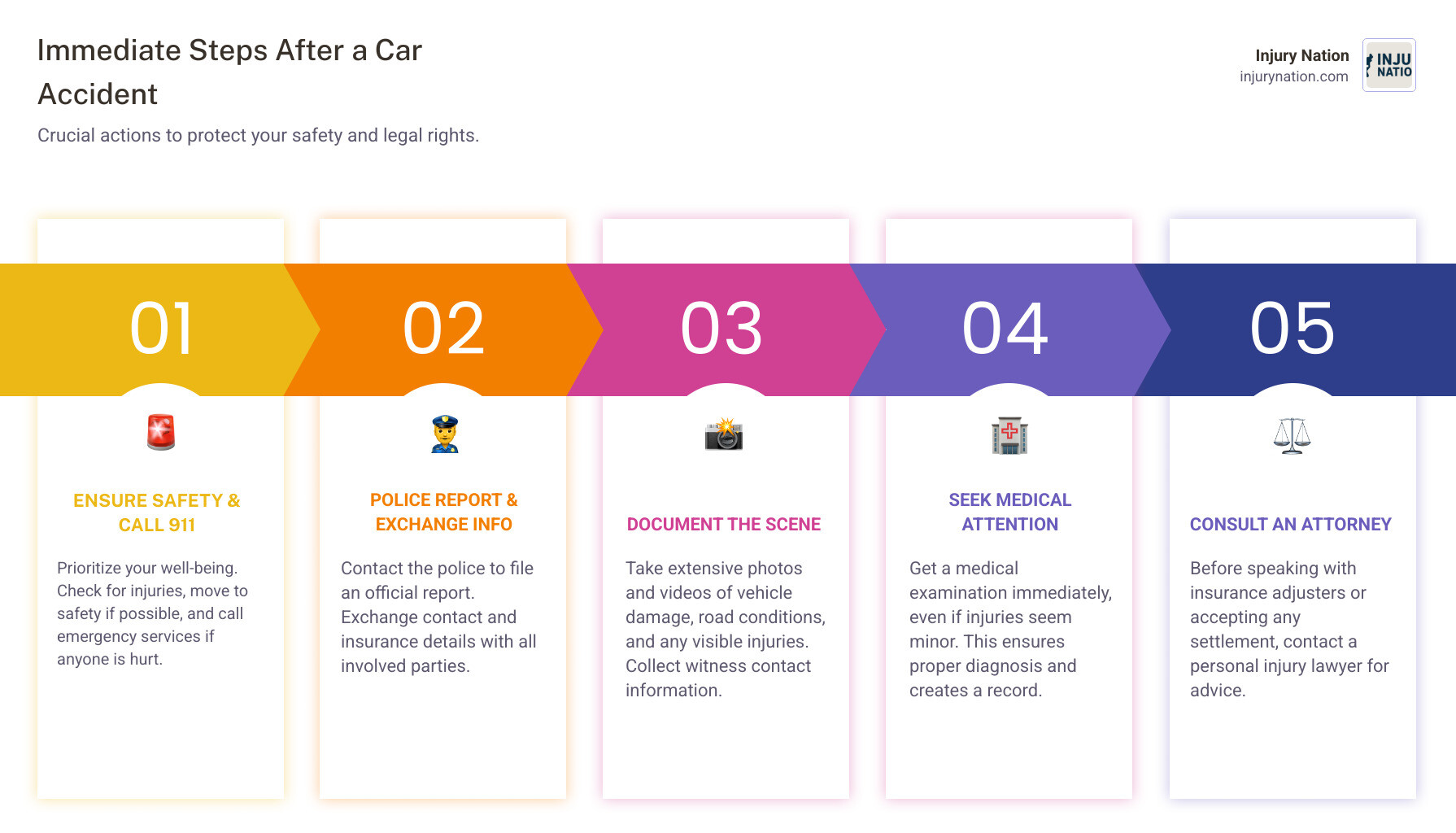
First Steps: What to Do Immediately After an Accident
The chaos following an accident can make it hard to think clearly, but what you do in these crucial moments can significantly impact your health, your finances, and any future legal claim. Your safety and well-being come first, followed by protecting your rights and documenting what happened.

Here is a checklist of immediate actions to take:
- Ensure Safety: Check if everyone involved is okay. If it is safe to do so, move your vehicle out of traffic to prevent further collisions. If anyone is unresponsive or severely injured, call 911 immediately.
- Call the Police: In Nevada, you must call the police for crashes that cause death, injury, or significant property damage. Even if no one seems injured, it is often wise to call the police so an official report is filed. This police report can be a vital piece of evidence for your insurance claim.
- Exchange Information: With the other driver(s) involved, exchange names, contact details, insurance information, driver license numbers, and license plate numbers. If there are passengers or witnesses, gather their contact information as well.
- Document the Scene: If you are able, take photos and videos of everything: vehicle damage, the accident scene from various angles, skid marks, road and weather conditions, traffic signs or signals, and any visible injuries. The more clear, dated evidence you collect, the stronger your case will be.
- Seek Medical Attention: Even if you do not feel hurt, get a medical evaluation as soon as possible. Adrenaline can mask pain, and some injuries, like whiplash or soft tissue damage, may not appear until days later. Prompt medical care creates a record linking the accident to your injuries, which is crucial for any claim. Clinics often offer free consultations for new injury patients.
- Notify Your Insurer: Inform your own insurance company about the accident promptly and stick to the basic facts. However, be cautious about what you say, especially to the other driver’s insurer. Do not speculate about fault or downplay your injuries.
After these first steps, consider speaking with a personal injury attorney before providing detailed statements or accepting any settlement offers.
Where to Find Free or Affordable Accident Legal Advice
Navigating the aftermath of an accident can be financially daunting, but quality accident legal advice does not always have to come with a hefty price tag upfront. Injury Nation believes everyone deserves to understand their rights, regardless of their financial situation.

Free Consultations from Personal Injury Law Firms
One of the most common and effective ways to get initial accident legal advice is through free consultations offered by personal injury law firms. Many reputable firms, including those in the Injury Nation directory, provide these no-obligation meetings. During this initial case review, you can:
- Discuss Accident Details: Share what happened, your injuries, and any evidence you have collected.
- Ask Questions: Get answers about your rights, potential compensation, and the legal process.
- Evaluate Case Merits: An attorney will assess the strength of your claim and explain your legal options.
- Understand Fee Structures: They will typically explain how contingency fees work, meaning you pay nothing upfront, and they only get paid if they win your case. This “no win, no fee” arrangement can make legal representation accessible.
This is often your best first step to determine if you need a lawyer.
Community Resources and Outreach
For those seeking general legal information or facing financial hardship, various community-based resources can offer support:
- Legal Aid Organizations: Non-profit organizations and legal aid clinics, often supported by entities like the Legal Services Corporation, provide free or low-cost legal services to individuals who cannot afford an attorney. You can often find local legal aid organizations through their website.
- Community Workshops: Some community organizations and non-profits host free legal workshops or seminars. These can be valuable for understanding basic legal rights and procedures after an accident.
Resources like Injury Nation’s Personal Injury Attorney Complete Guide can also help you understand what to expect before you speak with a lawyer.
Referral Services
If you are unsure where to start looking for a lawyer, referral services can be helpful in connecting you with specialized attorneys:
- Bar Association Referral Services: State and local bar associations often operate referral services. These services can connect you with attorneys who focus on personal injury law, helping you find a professional suited to your specific needs.
- Law School Clinics: Many law schools offer free or low-cost legal services to the public through clinics. These clinics are typically staffed by law students under the supervision of licensed attorneys, providing valuable assistance while also giving students practical experience. You can check directories like the American Bar Association’s directory for law schools offering public interest programs.
In addition to these options, Injury Nation’s directory can help you locate top-rated personal injury lawyers who offer the types of consultations and fee arrangements discussed here.
Understanding Your Claim in Nevada
When an accident happens in or around Las Vegas, understanding Nevada’s specific laws is crucial for protecting your rights and pursuing fair compensation. The legal landscape in Nevada has features that directly affect how your claim is handled and what you may recover.
Understanding Nevada Law: Key Accident Legal Advice
- Statute of Limitations: In Nevada, you generally have two years from the date of the accident to file a personal injury lawsuit. Missing this deadline can mean losing your right to seek compensation. This strict timeframe underscores the importance of seeking accident legal advice as soon as possible.
- Fault-Based Insurance: Nevada operates under a fault-based auto insurance system. This means that the driver determined to be at fault for the accident is typically responsible for covering the losses incurred by the other involved parties through their liability insurance.
- Modified Comparative Negligence: Nevada follows a modified comparative negligence rule (often called the “51% rule”). You can still recover damages even if you were partially at fault for the accident, as long as your fault is not greater than the fault of the person or persons you are seeking recovery from. If you are found to be 50% or less at fault, your compensation is reduced by your percentage of fault. If you are found to be 51% or more at fault, you cannot recover damages.
- Uninsured Drivers: Some drivers on the road do not carry adequate insurance, or any insurance at all. If an uninsured or underinsured driver hits you, your options for recovery often depend on your own uninsured/underinsured motorist (UM/UIM) coverage. An attorney can help you steer these claims to maximize your recovery.
For more information on your rights after serious injuries, you can also review Injury Nation resources such as the Brain Injury Attorney Complete Guide and Wrongful Death Law Firm.
Types of Damages You Can Recover
When pursuing a car accident claim in Nevada, you may seek compensation for various losses, often categorized as economic, non-economic, and in some cases punitive damages:
- Economic Damages: These are quantifiable financial losses directly resulting from the accident. They can include:
- Medical Bills: Past and future costs for hospital stays, doctor visits, surgeries, medications, physical therapy, and other treatments.
- Lost Wages: Income you have lost due to being unable to work, including past and potential future lost earning capacity.
- Property Damage: Costs to repair or replace your vehicle and any other personal property damaged in the accident.
- Non-Economic Damages: These are more subjective, non-monetary losses that impact your quality of life, such as:
- Pain and Suffering: Physical pain, discomfort, and emotional distress related to your injuries.
- Emotional Distress: Anxiety, depression, PTSD, or other psychological effects.
- Loss of Enjoyment of Life: Inability to participate in hobbies, activities, or daily routines you once enjoyed.
- Punitive Damages: In limited cases, punitive damages (also known as exemplary damages) may be awarded. These are not meant to compensate you for your losses but to punish especially reckless, malicious, or grossly negligent behavior (for example, extreme drunk driving or intentional misconduct) and to deter similar actions in the future.
Factors That Influence Your Claim’s Value
The value of your car accident claim is not a fixed number; it is influenced by many factors, including:
- Injury Severity: The more severe and long-lasting your injuries, the higher the potential value of your claim. This includes the need for extensive medical treatment, surgeries, long-term rehabilitation, or if your injuries result in permanent disability or disfigurement.
- Medical Treatment Consistency: Gaps in your medical treatment or failing to follow your doctor’s orders can significantly reduce your claim’s value. Consistent, documented medical care helps support the seriousness of your injuries and their direct link to the accident.
- Insurance Policy Limits: The maximum amount you can recover from the at-fault driver’s insurance is typically capped by their policy limits. If your damages exceed these limits, an attorney can explore other avenues, such as your own UM/UIM coverage or, in some situations, pursuing personal assets of the at-fault party.
- Property Damage Extent: While separate from personal injury, the extent of property damage can sometimes serve as indirect evidence of the force of impact and, by extension, the likelihood and severity of personal injuries.
- Percentage of Fault: Under Nevada’s modified comparative negligence rule, your assigned percentage of fault directly reduces your potential compensation.
- Evidence Quality: Strong, well-documented evidence (police reports, medical records, witness statements, accident reconstruction, photos and videos) can significantly strengthen your claim.
Working with a lawyer listed in the Injury Nation directory can help you understand how these factors apply to your specific situation.
Understanding Your Claim in Nevada
When an accident happens in or around Las Vegas, understanding Nevada’s specific laws is crucial for protecting your rights and pursuing fair compensation. The legal landscape in Nevada has features that directly affect how your claim is handled and what you may recover.
Understanding Nevada Law: Key Accident Legal Advice
- Statute of Limitations: In Nevada, you generally have two years from the date of the accident to file a personal injury lawsuit. Missing this deadline can mean losing your right to seek compensation. This strict timeframe underscores the importance of seeking accident legal advice as soon as possible.
- Fault-Based Insurance: Nevada operates under a fault-based auto insurance system. This means that the driver determined to be at fault for the accident is typically responsible for covering the losses incurred by the other involved parties through their liability insurance.
- Modified Comparative Negligence: Nevada follows a modified comparative negligence rule (often called the “51% rule”). You can still recover damages even if you were partially at fault for the accident, as long as your fault is not greater than the fault of the person or persons you are seeking recovery from. If you are found to be 50% or less at fault, your compensation is reduced by your percentage of fault. If you are found to be 51% or more at fault, you cannot recover damages.
- Uninsured Drivers: Some drivers on the road do not carry adequate insurance, or any insurance at all. If an uninsured or underinsured driver hits you, your options for recovery often depend on your own uninsured/underinsured motorist (UM/UIM) coverage. An attorney can help you steer these claims to maximize your recovery.
For more information on your rights after serious injuries, you can also review Injury Nation resources such as the Brain Injury Attorney Complete Guide and Wrongful Death Law Firm.
Types of Damages You Can Recover
When pursuing a car accident claim in Nevada, you may seek compensation for various losses, often categorized as economic, non-economic, and in some cases punitive damages:
- Economic Damages: These are quantifiable financial losses directly resulting from the accident. They can include:
- Medical Bills: Past and future costs for hospital stays, doctor visits, surgeries, medications, physical therapy, and other treatments.
- Lost Wages: Income you have lost due to being unable to work, including past and potential future lost earning capacity.
- Property Damage: Costs to repair or replace your vehicle and any other personal property damaged in the accident.
- Non-Economic Damages: These are more subjective, non-monetary losses that impact your quality of life, such as:
- Pain and Suffering: Physical pain, discomfort, and emotional distress related to your injuries.
- Emotional Distress: Anxiety, depression, PTSD, or other psychological effects.
- Loss of Enjoyment of Life: Inability to participate in hobbies, activities, or daily routines you once enjoyed.
- Punitive Damages: In limited cases, punitive damages (also known as exemplary damages) may be awarded. These are not meant to compensate you for your losses but to punish especially reckless, malicious, or grossly negligent behavior (for example, extreme drunk driving or intentional misconduct) and to deter similar actions in the future.
Factors That Influence Your Claim’s Value
The value of your car accident claim is not a fixed number; it is influenced by many factors, including:
- Injury Severity: The more severe and long-lasting your injuries, the higher the potential value of your claim. This includes the need for extensive medical treatment, surgeries, long-term rehabilitation, or if your injuries result in permanent disability or disfigurement.
- Medical Treatment Consistency: Gaps in your medical treatment or failing to follow your doctor’s orders can significantly reduce your claim’s value. Consistent, documented medical care helps support the seriousness of your injuries and their direct link to the accident.
- Insurance Policy Limits: The maximum amount you can recover from the at-fault driver’s insurance is typically capped by their policy limits. If your damages exceed these limits, an attorney can explore other avenues, such as your own UM/UIM coverage or, in some situations, pursuing personal assets of the at-fault party.
- Property Damage Extent: While separate from personal injury, the extent of property damage can sometimes serve as indirect evidence of the force of impact and, by extension, the likelihood and severity of personal injuries.
- Percentage of Fault: Under Nevada’s modified comparative negligence rule, your assigned percentage of fault directly reduces your potential compensation.
- Evidence Quality: Strong, well-documented evidence (police reports, medical records, witness statements, accident reconstruction, photos and videos) can significantly strengthen your claim.
Working with a lawyer listed in the Injury Nation directory can help you understand how these factors apply to your specific situation.
Frequently Asked Questions about Accident Claims
Here are answers to some of the most common questions people have about accident claims and accident legal advice.
How does a contingency fee arrangement work?
One of the biggest concerns for accident victims is the cost of legal representation. Most personal injury lawyers, including many listed with Injury Nation, work on a contingency fee basis. This means:
- No Upfront Costs: You do not pay legal fees out-of-pocket when you hire the attorney.
- “No Win, No Fee”: The lawyer only gets paid if they successfully recover compensation for you, either through a settlement or a court verdict.
- Percentage of Recovery: If your case is successful, the lawyer’s fee is a pre-agreed percentage of the final settlement or judgment, often in the range of about 33% to 40%, depending on the complexity of the case and when it resolves.
This arrangement aligns the lawyer’s interest with yours, because their compensation depends on recovering money for you.
How is fault determined in a car accident?
Determining fault is a critical step in any car accident claim, especially in fault-based states such as Nevada. A lawyer can help establish liability by:
- Reviewing Police Reports: These reports often contain initial assessments of fault, witness statements, and details of the accident scene.
- Gathering Witness Statements: Eyewitness accounts can provide important perspectives on how the accident occurred.
- Analyzing Traffic Laws: Understanding and applying traffic laws (for example, speeding, distracted driving, or failure to yield) helps identify violations that led to the crash.
- Examining Photos and Video Evidence: Visual evidence from the scene, dash cams, or surveillance cameras can be invaluable in reconstructing the accident.
- Expert Analysis: In complex cases, accident reconstruction experts can be brought in to analyze the sequence of events and impact dynamics.
What should I expect during a free legal consultation?
A free legal consultation is your opportunity to get professional accident legal advice without any financial commitment. During this meeting, you can expect:
- Discussion of Accident Details: The attorney will ask you to describe the accident, your injuries, and the timeline of events.
- Review of Documents: Bring any relevant documents you have, such as police reports, medical records, photos, and insurance information.
- Opportunity to Ask Questions: You can ask about the legal process, potential compensation, and how a lawyer can assist with your situation.
- Case Evaluation: The attorney will provide an initial assessment of your case’s merits and potential value and outline possible legal strategies.
- Explanation of Legal Process and Fees: They will explain the general steps involved in a personal injury claim and describe their fee structure, typically a contingency fee arrangement.
You can use the Injury Nation directory to find attorneys who offer these consultations and compare your options before deciding whom to hire.
Conclusion
Navigating the aftermath of an accident is challenging, but you do not have to face it alone. From taking the right immediate steps at the scene to understanding state-specific laws and negotiating with insurance companies, professional accident legal advice can make a major difference in your outcome.
This guide has highlighted the importance of getting legal guidance early, even for seemingly minor incidents, to avoid costly mistakes and respond to insurance company tactics. It also outlined key Nevada rules, including its fault-based system and modified comparative negligence standard, and described the types of damages that may be available.
Having an experienced advocate on your side helps protect your rights and can improve your chances of securing fair compensation for medical expenses, lost income, and the impact on your daily life.
If you or a loved one has been injured in an accident, consider speaking with an attorney about your options.
Find a top-rated personal injury lawyer in your area to get the help you deserve