Understanding No-Fault Insurance: What It Means for Your Accident Claim
No fault state laws change how you handle a car accident claim. Instead of proving who caused the crash, you simply file with your own insurance company to get your medical bills and lost wages covered right away.
Quick Answer: What is a No-Fault State?
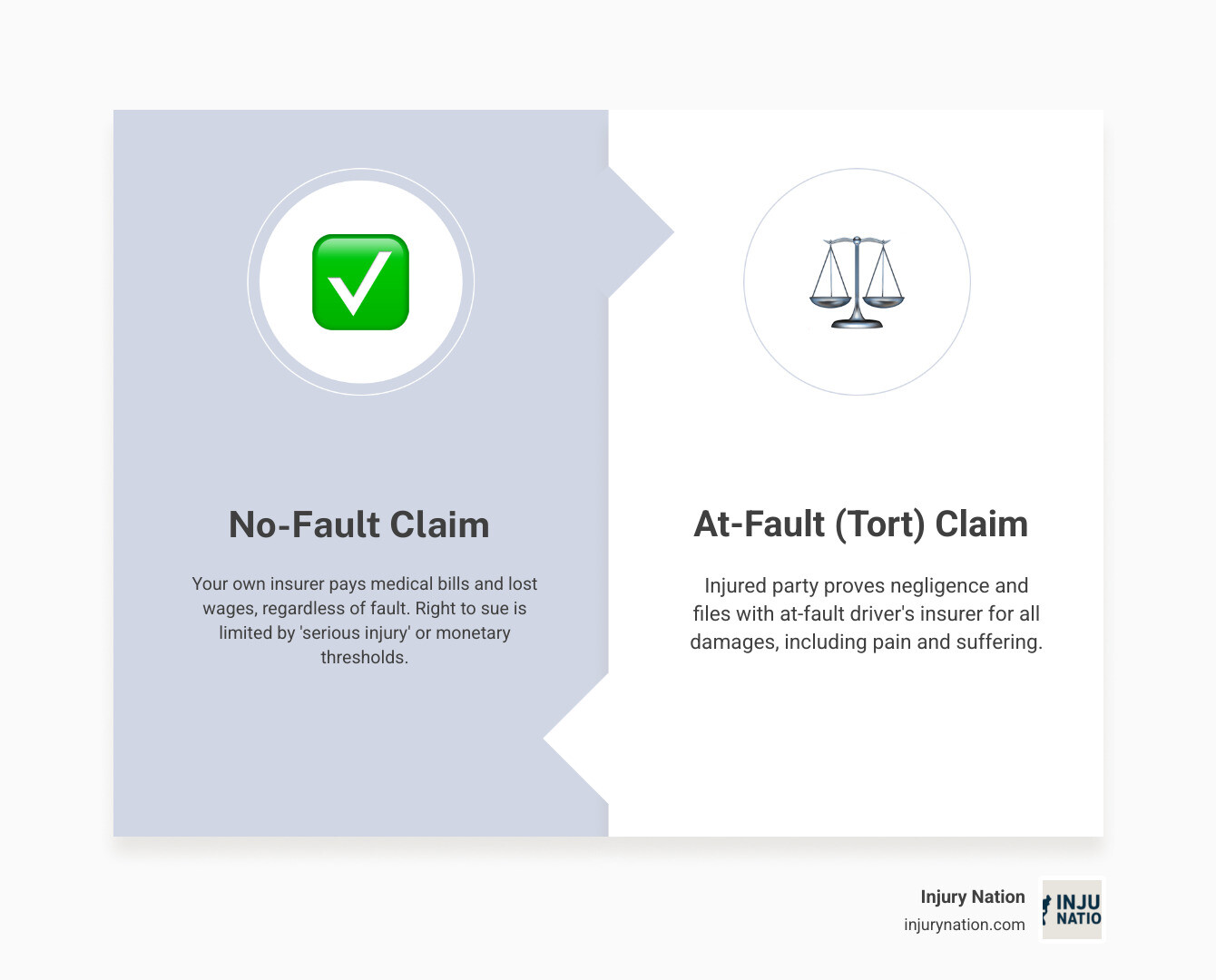
A no-fault state requires drivers to carry Personal Injury Protection (PIP) insurance. After an accident, you file a claim with your own insurer for medical expenses and lost income, regardless of who caused the crash. Your right to sue the at-fault driver is limited unless your injuries meet specific “serious injury” or monetary thresholds.
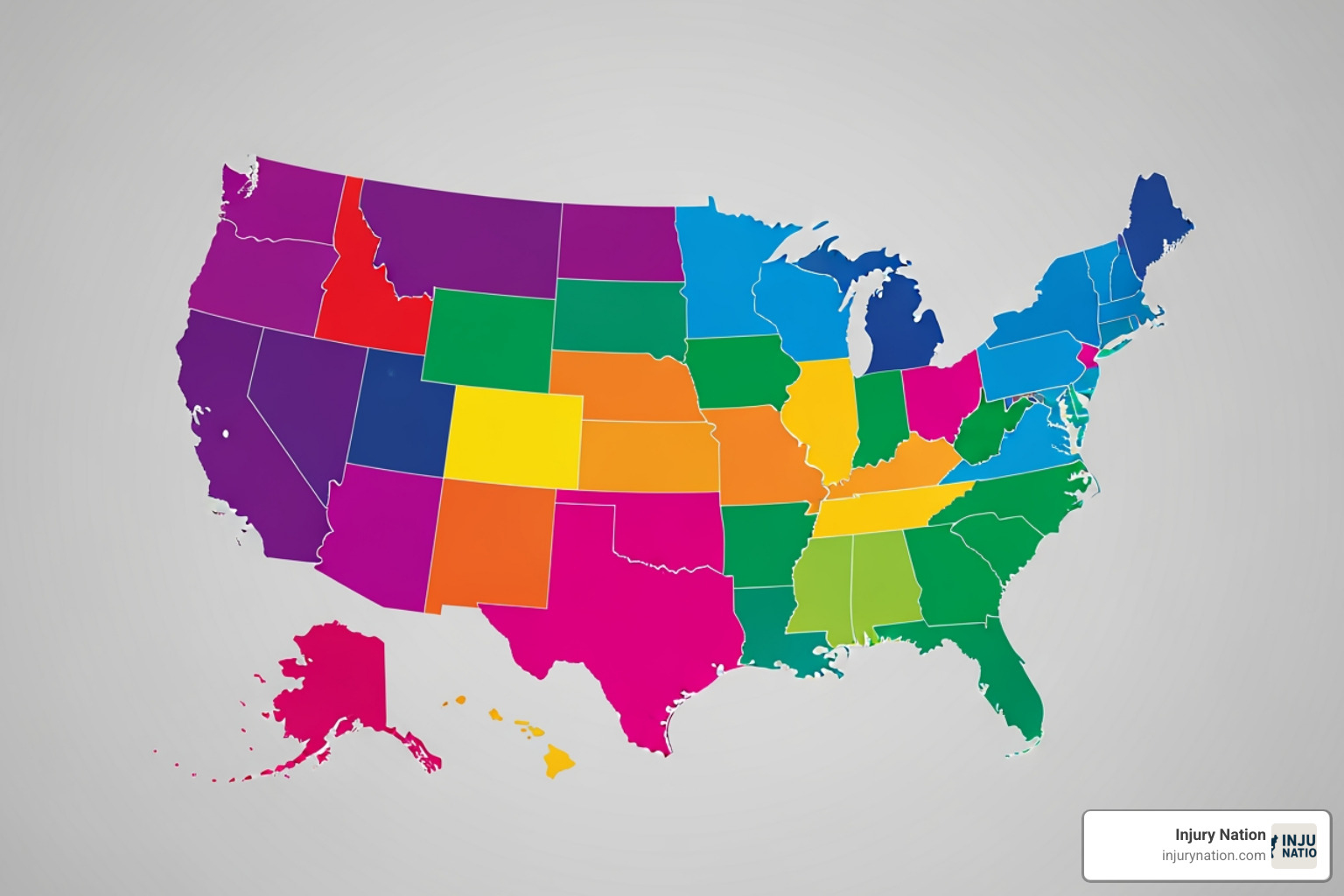
Currently, 12 states use a pure no-fault system: Florida, Hawaii, Kansas, Kentucky, Massachusetts, Michigan, Minnesota, New Jersey, New York, North Dakota, Pennsylvania, and Utah.
If you’ve been in a car accident, the insurance rules in your state determine how you’ll get compensated. The confusion is real. You might be wondering why you can’t just sue the driver who hit you, or why your own insurance company is handling everything.
The no-fault system was designed to speed up claim payments and reduce court cases. Instead of spending months or years fighting over who was at fault, you get immediate help with medical bills through your own insurance. But there’s a trade-off: your ability to sue for pain and suffering is restricted.
This system works differently than the traditional “at-fault” or tort liability approach used in most states. Understanding these differences matters because it affects how much compensation you can receive and what steps you need to take after a crash.
In this guide, we’ll break down exactly how no-fault insurance works, which states use it, when you can still sue the at-fault driver, and what all of this means for your recovery—both physical and financial.
No fault state word roundup:
- Accident settlement amount
- car accident lawyer
- how to negotiate a car accident settlement without a lawyer
What is No-Fault Insurance and How Does It Work?
In its broadest sense, no-fault insurance is an insurance contract where your own insurance company indemnifies you for losses, regardless of who caused the accident. This system is most commonly used in automobile insurance laws in the United States, but you might also encounter it in other contexts, such as workers’ compensation funds, which typically run as no-fault systems.
When we talk about a no-fault state in the context of car accidents, it means that if you’re injured in a collision, your own insurance policy is the primary source for covering your medical expenses and other related costs. This happens irrespective of who was actually at fault for the crash. The goal is to provide quick payments for injuries and reduce the need for lengthy and expensive lawsuits over fault determination.
However, it’s crucial to understand that not all states operate this way. Most states, including Nevada where we are based, use a traditional “at-fault” or tort liability system. In an at-fault state, the driver who caused the accident is held responsible for all damages, including medical bills, lost wages, and pain and suffering. This means the injured party would typically file a claim against the at-fault driver’s liability insurance.
The table below illustrates the fundamental differences between these two systems:
| Feature | No-Fault Insurance (e.g., Florida, New York) | Traditional Tort Liability Insurance (e.g., Nevada) |
|---|---|---|
| Who Pays for Injuries? | Your own insurance (Personal Injury Protection – PIP) | At-fault driver’s bodily injury liability insurance |
| Proof of Fault? | Not required for initial injury claims | Required to claim damages from the other party |
| Right to Sue? | Restricted, only if injuries meet “serious injury” or monetary thresholds | Generally unrestricted, can sue for all damages if other driver is at fault |
| Coverage for Pain & Suffering? | Generally excluded, unless thresholds are met | Typically included in lawsuits against the at-fault driver |
| Primary Goal | Quick payment for injuries, reduce litigation | Hold negligent party accountable, full compensation for victims |
Understanding Personal Injury Protection (PIP)
The cornerstone of any no-fault state system is Personal Injury Protection (PIP), often simply called “no-fault insurance.” PIP is a mandatory coverage that drivers in these states must carry. It provides what are known as “first-party benefits,” meaning your own insurance company pays you directly for certain losses resulting from an automobile accident.
These first-party benefits typically include:
- Medical Expenses: Coverage for reasonable and necessary medical and rehabilitation expenses related to the accident.
- Lost Wages: Reimbursement for a percentage of income lost due to being unable to work after the accident.
- Replacement Services: Coverage for essential services you can no longer perform, such as household chores or childcare.
- Funeral Expenses: Benefits to cover burial or cremation costs in the tragic event of a fatality.
The specific PIP coverage limits and what exactly is covered can vary significantly from one no-fault state to another. For example, some states might have a cap on lost wages or a time limit for replacement services.
When an accident occurs in a no-fault state, you would file a claim with your own insurance company under your PIP coverage. Your insurer would then pay for your medical bills and other covered expenses up to your policy limits, regardless of who caused the accident. This streamlined process is designed to get you the care you need without waiting for fault to be determined.
However, remember that this system is not universal. In Nevada, an at-fault state, PIP is not a mandatory coverage. Instead, the at-fault driver’s bodily injury liability insurance is intended to cover the injured party’s medical expenses and lost wages. If you are injured in Nevada, your own health insurance would typically cover your medical bills initially, and you would then seek reimbursement from the at-fault driver’s insurance, potentially through a personal injury claim or lawsuit.
For more detailed information on the legal definition and components of no-fault insurance, you can refer to this resource: More info about no-fault insurance.
How is Vehicle Damage Handled?
While the term “no-fault state” primarily refers to how bodily injuries are handled, it’s important to clarify that property damage (damage to vehicles or other property) generally operates under a different principle, even in no-fault states. In most scenarios, vehicle damage claims are still based on fault.
Here’s how it typically works:
- Property Damage Liability: The at-fault driver’s property damage liability insurance is usually responsible for repairing or replacing the other driver’s damaged vehicle.
- Collision Coverage: If you have collision coverage on your own policy, you can use it to cover the repair costs for your vehicle, regardless of fault. Your insurance company will then likely seek reimbursement from the at-fault driver’s insurer through a process called subrogation.
- Comprehensive Coverage: This covers damage to your vehicle from non-collision events like theft, vandalism, fire, or natural disasters, and is unrelated to fault in an accident.
In Nevada, an at-fault state, vehicle damage works similarly to how bodily injury is handled: the at-fault driver’s property damage liability insurance is responsible for repairing or replacing the other driver’s vehicle. If you’re involved in an accident in Las Vegas and the other driver is at fault, their insurance should cover your car’s repairs. If the other driver is uninsured or underinsured, or if you want to get your repairs done quickly, you can use your own collision coverage (if you have it). Your insurer would then pursue the at-fault party for reimbursement.
The Landscape of No-Fault Laws Across the U.S.
The concept of no-fault state laws isn’t new; it emerged in the 1970s as a response to criticisms of the traditional tort liability system, which was often seen as expensive and slow due to lengthy litigation over fault. Between 1970 and 1975, 24 states originally enacted some form of no-fault laws. However, the system has proven controversial, and several states have since repealed their no-fault laws over time.
A notable example of a state that repealed its no-fault law is Nevada. Our state originally had a no-fault system but transitioned back to an at-fault system in 1980. This means that for decades, drivers in Las Vegas and across Nevada have operated under a tort liability framework where proving fault is central to accident claims.
Today, the landscape of auto insurance laws across the U.S. remains varied, with states falling into different categories regarding how they handle accident claims.
Pure No-Fault States
These are the states that most strictly adhere to the no-fault principle. In a pure no-fault state, drivers must carry PIP coverage, and their ability to sue the at-fault driver for non-economic damages (like pain and suffering) is significantly restricted unless certain thresholds are met.
As of recent data, the following 12 U.S. states and the Commonwealth territory of Puerto Rico require policyholders to operate under a “no-fault” scheme:
- Florida
- Hawaii
- Kansas
- Kentucky
- Massachusetts
- Michigan
- Minnesota
- New Jersey
- New York
- North Dakota
- Pennsylvania
- Utah
- Puerto Rico
It’s important to reiterate that Nevada is not on this list. We are an at-fault state, and our legal system allows for a different approach to seeking compensation after an accident.
Choice and Add-On No-Fault Systems
Beyond the pure no-fault state model, there are variations that offer a blend of no-fault and traditional tort liability principles:
- Choice No-Fault Systems: In these states, policyholders have the option to choose between a no-fault policy (with its limited right to sue) and a traditional tort liability policy (which allows for lawsuits for pain and suffering). This provides flexibility but also requires drivers to understand the implications of their choice. Three states currently follow this “choice no-fault” or “hybrid” system: District of Columbia, New Jersey, and Pennsylvania. Kentucky also offers a choice no-fault system.
- Add-On No-Fault Systems: These systems provide no-fault benefits (like PIP) to injured parties, similar to pure no-fault states. However, a key difference is that they do not restrict the insured party’s right to sue the at-fault driver for non-economic damages. Essentially, you get the quick benefits of PIP plus the ability to pursue a traditional tort claim. An additional eight states have an “add-on” system. A handful of states, including Delaware and Oregon, require no-fault coverage as an add-on to your car insurance policy.
These variations aim to strike a balance between the benefits of immediate medical coverage and the desire to retain the right to sue for full compensation. However, none of these specific systems apply to drivers in Nevada, where the at-fault system dictates how claims are handled.
The Pros and Cons of No-Fault Insurance
The debate over no-fault state systems versus at-fault systems is ongoing, with proponents and critics highlighting various advantages and disadvantages. Understanding these points helps clarify why some states adopt no-fault while others, like Nevada, maintain a tort liability system.

Benefits of No-Fault Insurance (Pros)
- Faster Claim Payments: One of the primary goals of no-fault insurance is to expedite the compensation process for accident victims. Because your own insurer pays your medical bills regardless of fault, you don’t have to wait for a lengthy investigation or legal battle to determine who caused the crash. This can be a huge relief when facing immediate medical expenses and lost income.
- Reduced Litigation: By limiting the ability to sue for minor injuries, no-fault systems aim to reduce the number of personal injury lawsuits clogging up the courts. This can save judicial resources and potentially reduce legal fees for individuals.
- Lower Court Costs: Fewer lawsuits generally translate to lower costs for the court system and less burden on taxpayers.
Drawbacks of No-Fault Insurance (Cons)
- Potentially Higher Premiums: While the intention of no-fault was often to lower insurance costs, studies have shown mixed results. A 2012 RAND Corporation study, for instance, found that costs were higher in no-fault systems. This can be due to mandatory PIP coverage, which can be more comprehensive than basic liability, and other factors.
- Limited Compensation for Pain and Suffering: This is one of the most significant drawbacks for accident victims. In a no-fault state, you generally cannot sue for non-economic damages like pain and suffering, emotional distress, or loss of enjoyment of life, unless your injuries meet specific “serious injury” or monetary thresholds. This can leave seriously injured individuals feeling undercompensated.
- Insurance Fraud: Critics argue that no-fault systems, particularly those with easily met monetary thresholds, can be more susceptible to fraud. The incentive to inflate medical bills to meet a threshold or engage in unnecessary treatments can drive up costs for everyone. Fraudulent claims involving phony pain clinics, corrupt medical providers, and exaggerated injuries have been a persistent issue in some no-fault jurisdictions.
In Nevada, an at-fault state, our system aims to allow full compensation for victims, including pain and suffering, by holding the negligent party accountable. While this can sometimes lead to longer claim resolution times due to the need to prove fault, it ensures that victims with significant non-economic damages have the right to seek comprehensive recovery.
Can You Sue in a No-Fault State?
The short answer is: sometimes, but with significant restrictions. In a pure no-fault state, your right to sue the at-fault driver is limited. This is a fundamental trade-off for the promise of quicker medical payments through your own PIP coverage.
However, these restrictions aren’t absolute. You can still step outside the no-fault system and file a lawsuit against the at-fault driver under specific circumstances, usually when your injuries are deemed severe enough. This is where “thresholds” come into play.
In Nevada, an at-fault state, suing the at-fault driver is a primary mechanism for recovering damages, especially for significant injuries. There are no PIP limits or “serious injury” thresholds that restrict your right to sue; you can pursue compensation for all your losses, including medical bills, lost wages, and pain and suffering, if the other driver is at fault. Our state operates under a modified comparative negligence rule, meaning you can recover damages as long as you are not more than 50% at fault for the accident. If you are found to be 20% at fault, for example, your total compensation would be reduced by 20%.
While the mechanisms differ, the ultimate goal in both systems is to ensure accident victims receive fair compensation. Navigating these complexities, especially when dealing with injuries, often requires expert legal assistance. If you’re involved in an accident, understanding your rights and options is paramount. For general information on personal injury law, including how different systems might impact a claim, resources like No Fault State can be helpful.
The “Serious Injury” or Verbal Threshold
Many no-fault state laws include a “verbal threshold” that defines what constitutes a “serious injury.” If your injuries meet this definition, you are allowed to bypass the no-fault restrictions and sue the at-fault driver for non-economic damages like pain and suffering.
The exact definition of “serious injury” varies by state, but it commonly includes:
- Significant disfigurement (e.g., severe scarring)
- Bone fracture
- Permanent limitation of use of a body organ or member
- Significant limitation of use of a body function or system
- Substantially full disability for a certain period (e.g., 90 days)
- Death
For example, in a no-fault state like Massachusetts, a “serious injury” might include permanent and serious disfigurement, a fractured bone, or a substantial loss of hearing or sight. In New York, the definition includes significant disfigurement, bone fracture, permanent limitation of use of a body organ or member, or significant limitation of use of a body function or system.
In Nevada, which is an at-fault state, these “serious injury” or verbal thresholds do not apply. If you are injured due to another driver’s negligence, you generally have the right to pursue compensation for all your damages, including pain and suffering, regardless of the severity of your injury, as long as you can prove the other driver’s fault. The focus in Nevada is on the extent of your actual losses and the impact the injury has had on your life, rather than meeting a pre-defined “serious” category.
The Monetary Threshold in a no fault state
Another common type of threshold in a no-fault state is the “monetary threshold.” This allows you to sue the at-fault driver for pain and suffering if your medical expenses (and sometimes other economic losses) exceed a specific dollar amount set by state law.
For example, a state might have a monetary threshold of $2,000 or $5,000. If your accident-related medical bills surpass this statutory limit, you gain the right to file a personal injury lawsuit against the at-fault driver. This threshold is intended to filter out minor claims and allow only more significant cases to proceed to litigation.
Historically, specific monetary thresholds for lawsuits in no-fault states have included figures like $2,000 in Kansas, $1,000 in Kentucky, $2,000 in Massachusetts, $4,000 in Minnesota, $2,500 in North Dakota, and $3,000 in Utah. However, these amounts can change, and their effectiveness is often debated, with some arguing they encourage inflated medical billing to meet the threshold.
Similar to verbal thresholds, monetary thresholds are not a factor in Nevada’s at-fault system. Your ability to sue for damages is not contingent on reaching a specific dollar amount of medical expenses. Instead, the focus is on proving the other driver’s negligence and the full extent of your actual losses, which can include medical bills, lost income, property damage, and non-economic damages like pain and suffering. In Nevada, if you’re involved in an accident, your primary concern is documenting your injuries and damages and establishing the other driver’s fault.
Frequently Asked Questions about No-Fault States
We understand that the intricacies of insurance laws can be confusing, especially when comparing different state systems. Here, we address some common questions about no-fault state systems and how they contrast with an at-fault state like Nevada.
Who pays for my car’s damage in a no-fault state?
In a no-fault state, the no-fault rules primarily apply to bodily injuries, not property damage. This means that even in a no-fault system, vehicle damage claims are typically handled based on fault.
Therefore, the at-fault driver (or their property damage liability insurance) is usually responsible for the repair costs of the other driver’s vehicle. You can also use your own collision coverage to get your car repaired, and your insurer would then likely seek reimbursement from the at-fault party’s insurance.
In Nevada, an at-fault state, the at-fault driver’s property damage liability insurance is responsible for your vehicle damage. If the other driver is uninsured or underinsured, or if you prefer to get repairs quickly, you can use your own collision coverage, and your insurer will likely seek reimbursement from the at-fault party. In Nevada, you have the right to pursue the at-fault driver for all damages to your vehicle.
Are insurance rates always higher in no-fault states?
The question of whether insurance rates are higher in no-fault state systems compared to at-fault systems is complex and has been a subject of debate and studies. While some research, like the 2012 RAND Corporation study, found that costs were higher in no-fault systems, the reality is nuanced.
Factors that can contribute to potentially higher rates in no-fault states include:
- Mandatory PIP Coverage: Drivers are required to carry PIP, which covers initial medical expenses regardless of fault. This broader mandatory coverage can increase the baseline cost of policies.
- Potential for Fraud: As mentioned earlier, some no-fault systems have been criticized for creating incentives for insurance fraud, which drives up costs for all policyholders.
- Lack of Deterrent: Critics argue that by shielding negligent drivers from financial consequences for minor injuries, no-fault systems may not sufficiently deter reckless driving, potentially leading to more accidents and claims.
However, the goal of no-fault was to lower costs by reducing litigation expenses. Whether this goal is achieved varies.
In an at-fault state like Nevada, insurance rates are influenced by a different set of factors, including the frequency and severity of accidents, population density, the cost of medical care, and the prevalence of uninsured motorists. Nevada law (NRS 687B.385) also offers some protection, stipulating that your own insurance company may not increase your premium or cancel your policy due to a claim if you were not at fault for the accident. This can help keep rates stable for safe drivers in our state.
Conclusion
Navigating the aftermath of a car accident is never easy, and the rules of the road—or rather, the rules of insurance—can make it even more perplexing. Understanding whether you’re in a no-fault state or an at-fault state like Nevada is the first critical step in knowing your rights and options.
For those in a no-fault state, the system aims to simplify minor injury claims by ensuring quick access to medical benefits through your own PIP coverage. However, your ability to sue for pain and suffering is restricted by “serious injury” or monetary thresholds.
For us here in Las Vegas, Nevada, our state operates under an at-fault system. This means proving the other driver’s negligence is key to recovering all your damages, including medical bills, lost wages, property damage, and crucial non-economic damages like pain and suffering. We don’t have the same thresholds that limit lawsuits, but we do operate under modified comparative negligence, meaning your share of fault can impact your compensation.
Regardless of your state’s system, accident claims can be complex. Insurance companies, whether your own or the other driver’s, are businesses with a goal to minimize payouts. Securing full and fair compensation often requires expert legal guidance to properly document your losses, establish fault, and negotiate effectively.
At Injury Nation, we connect victims with experienced personal injury lawyers who can help you steer the system, understand your rights, and fight for the settlement you deserve.