Why Truck Accident Legal Advice Can Make or Break Your Case
Truck accident legal advice is critical because these crashes are fundamentally different from regular car accidents—they involve federal regulations, multiple liable parties, catastrophic injuries, and aggressive insurance companies with teams of lawyers protecting their interests.
If you’ve been in a truck accident, here’s what you need to know right now:
- Seek immediate medical attention – even if you feel fine (adrenaline masks pain)
- Document everything – photos, witness info, driver details, trucking company name
- Don’t talk to insurance adjusters without a lawyer present
- Contact a truck accident attorney within 72 hours – evidence disappears fast
- Know your deadlines – most states give you 2 years to file, but some requirements kick in within days
- Understand you’re up against professionals – trucking companies have legal teams working immediately
The statistics paint a grim picture. Nearly 2,000 Canadians die each year in heavy truck accidents, with another 10,000 seriously injured. In the U.S., large truck crashes accounted for 5,604 deaths in 2021 alone, and another 19,000 injuries. Most shocking? In 2020, 97% of vehicle occupants killed in two-vehicle crashes involving a passenger car and large truck were riding in the car.
When a fully-loaded commercial truck weighing 80,000 pounds collides with your 4,000-pound car, the physics are brutal. But the legal aftermath can be just as overwhelming. You’re facing mounting medical bills, lost wages, and insurance companies whose primary goal is paying you as little as possible—all while you’re trying to heal.
This isn’t a regular fender-bender. Truck accidents involve complex federal regulations, multiple insurance policies “layered” on top of each other, and potentially liable parties you’ve never even heard of. Without proper legal guidance, you risk accepting a settlement that covers a fraction of your actual damages.
The First 72 Hours: Critical Steps to Protect Your Rights
The moments immediately following a truck accident can be chaotic and frightening. However, the actions you take (or don’t take) in these critical first hours and days can significantly impact your ability to recover compensation for your injuries. Our first priority is always your safety and well-being, but we also want to ensure you’re equipped to protect your legal rights.

What to Do Immediately After a Truck Accident
After the initial shock, here’s a clear roadmap for what to do:
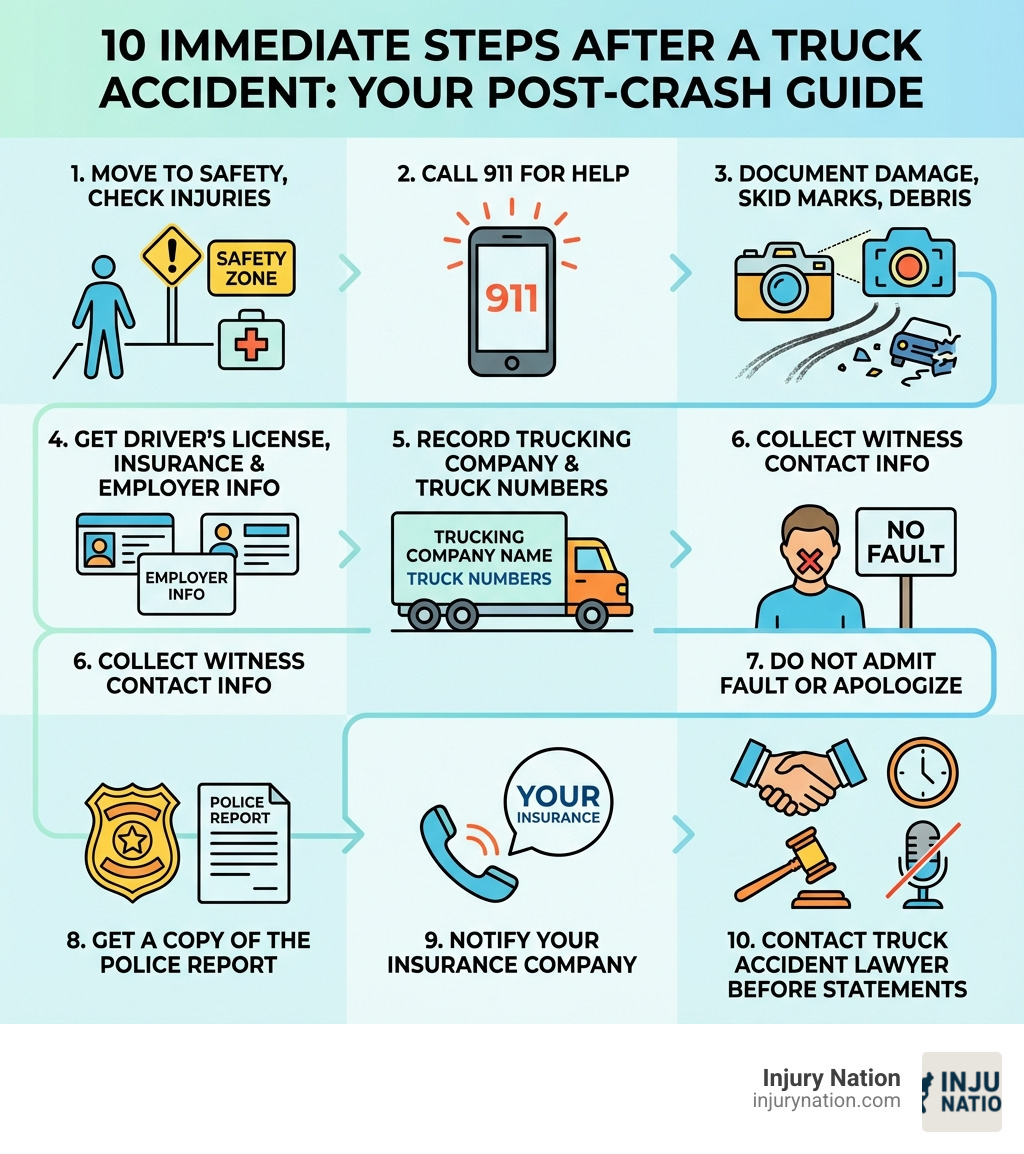
- Prioritize Safety and Seek Medical Attention: First, check yourself and any passengers for injuries. If it’s safe to do so, move your vehicle to the side of the road, away from traffic. Many accident-related injuries, such as whiplash or mild concussions, may not be immediately apparent due to adrenaline. Seek emergency medical attention if needed, and always follow up with a doctor, even if you feel fine. This not only ensures your health but also creates crucial medical documentation for your claim.
- Call 911/Police: Report the accident to the police immediately. They will create an official police report, which is a vital piece of evidence. This report typically includes details about the accident, involved parties, and initial assessments.
- Document the Scene Thoroughly: If you’re able, take photos and videos of everything. This includes damage to all vehicles involved, the position of the vehicles, skid marks, debris, road conditions, traffic signs, and any visible injuries. The more visual evidence you have, the better. Photos are often far more powerful than testimony in court.
- Exchange Information: Get the truck driver’s name, address, phone number, driver’s license number, and insurance information. Crucially, also get the name of the trucking company, their contact information, and any numbers on the truck (e.g., DOT number, license plate). If there are witnesses, get their contact details as well.
- Do Not Admit Fault: This is paramount. Do not apologize or make any statements that could be interpreted as admitting fault, even to the other driver, police, or your own insurance company. Stick to the facts.
- Notify Your Insurer: Contact your insurance company as soon as possible to report the accident. While you must cooperate with your own insurer, be cautious about speaking with the other party’s insurance adjuster without legal representation. Their goal is often to minimize payouts.
Preserving Evidence for Your Claim
Truck accidents are complex, and gathering evidence is an ongoing process. Many pieces of evidence are unique to commercial vehicles and require immediate action to preserve.
- Truck’s Black Box (Event Data Recorder – EDR): Commercial trucks are equipped with EDRs that record vital data such as vehicle speed, braking, steering, and other operational information leading up to and during a crash. This data is invaluable for proving negligence.
- Driver’s Logs and Electronic Logging Devices (ELDs): Federal Motor Carrier Safety Administration (FMCSA) regulations dictate strict Hours-of-Service (HOS) rules for truck drivers. Their logs (now often digital via ELDs) show their driving hours, rest breaks, and on-duty time. Violations can indicate driver fatigue.
- Maintenance Records: The truck’s maintenance history can reveal if mechanical failures contributed to the accident. Poorly maintained brakes, tires, or other systems can be a direct cause.
- Cargo Manifests: Improperly loaded or overweight cargo can lead to instability, rollovers, or brake failure. Cargo manifests detail the weight and type of goods being transported.
- Police Accident Report: This official document provides an objective account of the accident, including diagrams, witness statements, and citations issued.
- Medical Records: All documentation of your injuries, treatments, and prognosis is critical. This helps establish the link between the accident and your injuries and quantifies your damages.
An experienced truck accident lawyer will know exactly how to secure this evidence before it can be lost, altered, or destroyed.
Why Truck Accidents Are a Different Beast: Understanding the Complexities
If you’ve been in a collision with a big rig, you quickly realize things are far more complicated than a typical car accident. The sheer size and weight of commercial trucks, combined with the intricate web of regulations and powerful corporate interests, create a unique legal challenge.
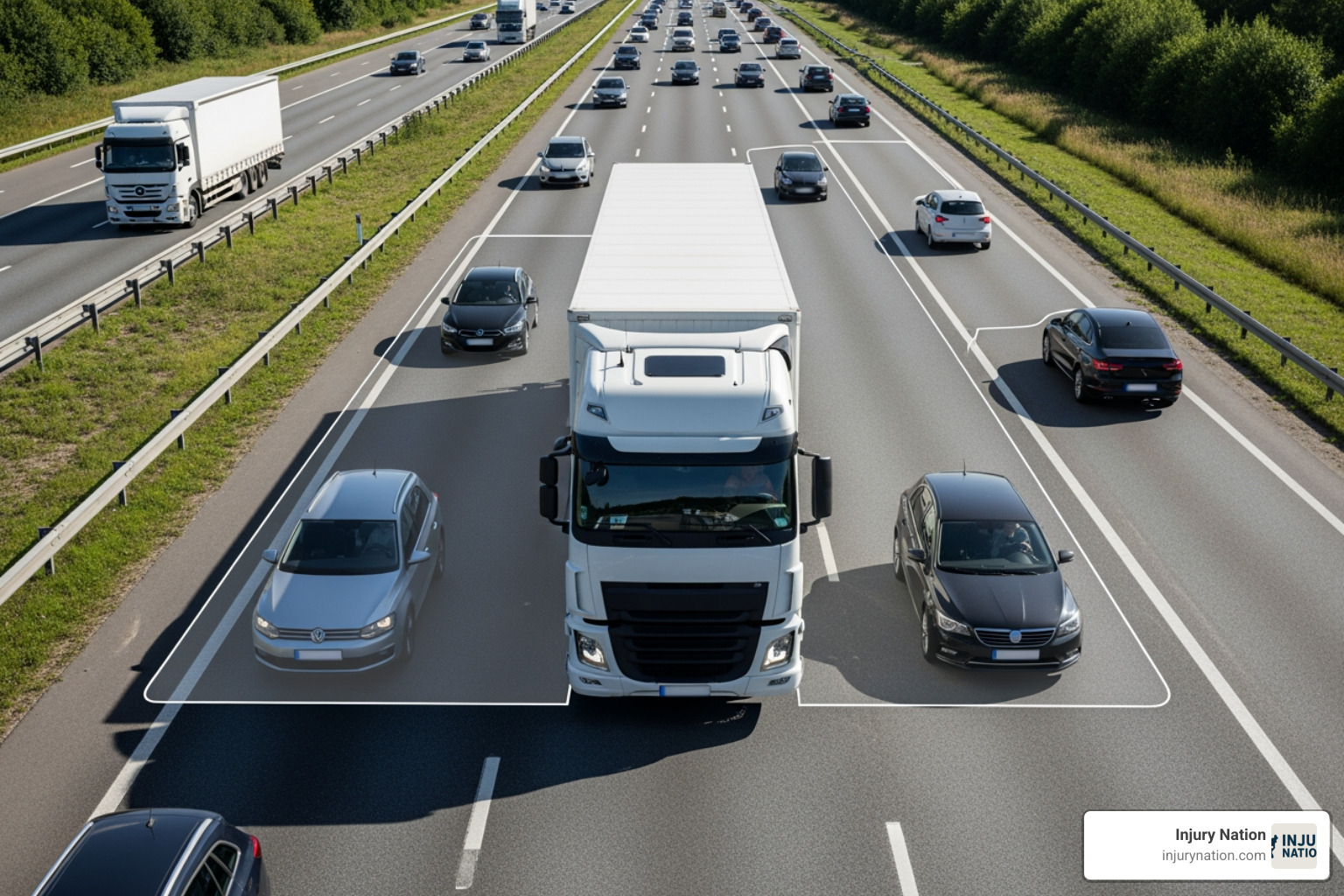
To understand why these cases are so complex, it helps to know some basics about how the trucking industry is regulated. For example, most interstate carriers in the U.S. must comply with safety rules issued by the Federal Motor Carrier Safety Administration (FMCSA). These rules govern everything from driver rest breaks to vehicle inspections.
Identifying All Liable Parties
In a standard car accident, fault often lies with one or both drivers. In a truck accident, the list of potentially liable parties can be extensive:
- Truck Driver: Of course, the driver can be negligent due to fatigue, distracted driving, speeding, DUI, or other errors.
- Trucking Company: Under the legal doctrine of ‘respondeat superior,’ the trucking company can be held responsible for the actions of its employee drivers if they were acting within the scope of their employment. They can also be directly liable for negligent hiring, training, supervision, or maintenance practices.
- Cargo Loaders: If the cargo was improperly loaded or exceeded weight limits, leading to an accident (e.g., a rollover due to an unbalanced load), the company responsible for loading could be held liable.
- Maintenance Companies: If a third-party company was contracted to maintain the truck and failed to do so adequately, leading to mechanical failure, they could be at fault.
- Parts Manufacturer: A defective part (e.g., faulty brakes, tires) that caused the accident could make the manufacturer liable.
- Government Entities: In rare cases, poor road design or inadequate signage by a government agency could contribute to an accident.
Identifying all these parties is crucial for maximizing your chances of recovery, as each may carry separate insurance policies.
Navigating Federal and State Trucking Regulations
The trucking industry is heavily regulated at both federal and state levels. These regulations are designed to prevent accidents, and violations can often be a direct cause of a crash.
- Federal Motor Carrier Safety Administration (FMCSA): The FMCSA sets comprehensive rules for commercial truck drivers and trucking companies in the U.S. These cover everything from driver qualifications and safety procedures to vehicle maintenance and insurance requirements.
- Hours-of-Service (HOS) Rules: These FMCSA regulations limit how many hours a truck driver can operate a vehicle without rest. For instance, drivers of property-carrying commercial vehicles can work a maximum of 14 consecutive hours, driving for a maximum of 11 straight hours, and must be off-duty for ten consecutive hours before starting a new shift. Violations are a common cause of driver fatigue-related accidents.
- Drug and Alcohol Testing: Commercial drivers are subject to strict drug and alcohol testing protocols.
- Vehicle Maintenance Standards: Trucks must undergo regular inspections and maintenance to ensure they are safe to operate.
- Weight Limits: Trucks have strict limits on how much weight they can carry. Overloaded trucks are harder to stop and maneuver.
When a truck safety law or regulation is violated, it can be considered ‘negligence per se’ in some states, meaning the violation itself establishes a breach of duty, simplifying the process of proving fault.
Common Causes of Truck Accidents
While driver error is often a factor, many issues can contribute to these devastating collisions:
- Driver Fatigue: Despite HOS regulations, drivers often push limits, leading to drowsiness and impaired judgment.
- Distracted Driving: Cell phone use, eating, or other distractions can be deadly in a large truck.
- Speeding: Driving too fast for conditions or exceeding speed limits reduces a truck’s already long stopping distance.
- Driving Under the Influence (DUI): Alcohol or drug impairment significantly increases accident risk.
- Inadequate Driver Training: Poorly trained drivers may not know how to handle adverse conditions or specific maneuvers.
- Improper Cargo Loading: Unbalanced or unsecured loads can cause trucks to tip, roll over, or lose control.
- Equipment Failure: Defective brakes, tires, steering, or other mechanical issues can lead to catastrophic accidents.
- Poor Vehicle Maintenance: Neglecting routine maintenance can exacerbate equipment problems.
- Interruption of Traffic Flow: Sudden stops or changes in traffic can be challenging for large trucks to react to.
- Lack of Familiarity with Roadway: Unfamiliar routes can lead to errors.
The Road to Recovery: Your Claim and Potential Compensation
The aftermath of a a truck accident is rarely just about vehicle damage. The sheer force of these collisions often results in severe, life-altering injuries that demand extensive medical care and can have long-term consequences on your life and livelihood.
Common Injuries and Long-Term Consequences
Due to the immense size and weight difference, injuries from truck accidents are typically far more severe than those from car accidents:
- Back and Neck Injuries: Whiplash, herniated discs, and spinal cord damage are common, often leading to chronic pain, mobility issues, and even paralysis.
- Traumatic Brain Injury (TBI): From mild concussions to severe brain damage, TBIs can result in cognitive impairments, memory loss, personality changes, and lifelong disabilities.
- Spinal Cord Injury: These are among the most devastating injuries, often causing partial or complete paralysis, requiring extensive long-term care.
- Internal Bleeding and Organ Damage: The force of impact can cause hidden internal injuries that are life-threatening if not diagnosed and treated promptly.
- Broken Bones and Fractures: Multiple fractures are common, often requiring surgery, prolonged recovery, and potentially leading to permanent impairment.
- Facial Disfigurement and Burn Injuries: Collisions can cause severe facial trauma or burns, particularly if fuel is involved, leading to extensive reconstructive surgeries and psychological distress.
- Amputations: In the most severe cases, limbs may be crushed, requiring amputation.
- Psychological Trauma: Beyond physical injuries, victims often suffer from Post-Traumatic Stress Disorder (PTSD), anxiety, depression, and other mental health challenges that require therapy and support.
These injuries can lead to a permanent loss of functioning, impacting your ability to work, enjoy hobbies, and live independently.
What Compensation Can I Expect with the Right Truck accident legal advice?
When you or a loved one is severely injured in a truck accident, you can demand compensation for a wide range of damages. Our goal is to ensure you receive full and fair compensation for all your losses.
- Economic Damages: These are quantifiable financial losses.
- Medical Expenses: This includes emergency care, hospital stays, surgeries, medications, rehabilitation, physical therapy, and future medical care costs.
- Lost Income: Compensation for wages lost due to time off work for recovery, as well as loss of future earning capacity if your injuries prevent you from returning to your previous job or working at all.
- Property Damage: Costs to repair or replace your vehicle and any other damaged personal property.
- Non-Economic Damages: These are subjective, non-financial losses that profoundly impact your quality of life.
- Pain and Suffering: Compensation for the physical pain and emotional distress caused by your injuries.
- Emotional Distress: Covering mental anguish, anxiety, depression, and PTSD.
- Loss of Enjoyment of Life: If your injuries prevent you from engaging in activities, hobbies, or relationships you once enjoyed.
- Punitive Damages: In rare cases, if the at-fault party’s conduct was particularly egregious, reckless, or malicious, a court might award punitive damages. These are not meant to compensate you but to punish the wrongdoer and deter similar conduct in the future.
No-Fault Benefits vs. A Tort Claim
Nevada operates under an “at-fault” system for car accidents. This means that the person who is determined to be at fault for causing the accident is responsible for the damages. Unlike “no-fault” states, you generally pursue compensation directly from the at-fault driver’s insurance company through a tort claim.
| Feature | No-Fault System | Tort System (At-Fault) |
|---|---|---|
| Who Pays First? | Your own insurance company pays for your initial medical bills and lost wages, regardless of who caused the accident, through Personal Injury Protection (PIP) coverage. | The at-fault party’s insurance company is responsible for paying for your damages. You must file a claim against them. |
| Right to Sue | Your right to sue the at-fault driver for pain and suffering is often limited. You can typically only sue if your injuries meet a certain “threshold” (e.g., serious or permanent injury). | You can sue the at-fault driver for all damages, including medical bills, lost wages, and pain and suffering, without needing to meet a specific injury threshold. |
| Nevada’s System | Nevada is not a no-fault state. | Nevada operates under a traditional at-fault (tort) system. This means you must prove the other party was negligent to recover compensation from their insurance. |
Why You Need Truck Accident Legal Advice: The Role of a Lawyer
The complexity of truck accident cases, the severity of injuries, and the aggressive tactics of trucking companies and their insurers make hiring an experienced personal injury attorney not just beneficial, but often essential. A lawyer acts as your advocate, navigating the legal maze so you can focus on healing.
How a Lawyer Steers the Legal Process
From the moment you engage us, we begin building your case, ensuring no stone is left unturned.
- Initial Consultation: We start with a free, no-obligation consultation to understand the specifics of your accident, evaluate your potential claim, and answer your immediate questions. We can even meet you at your home or hospital if your injuries prevent you from coming to us.
- Case Investigation: Our team immediately begins a thorough investigation. This includes securing all available evidence, such as police reports, accident scene photos, witness statements, and requesting specific documents unique to truck accidents like driver’s logs, ELD data, maintenance records, and the truck’s black box (EDR) data. We may also work with accident reconstruction experts to determine precisely how the accident occurred.
- Identifying Liable Parties: We’ll identify all potentially at-fault parties, which, as we’ve discussed, can extend beyond the truck driver to include the trucking company, cargo loader, maintenance provider, or even the manufacturer of a defective part.
- Filing the Claim and Demand Letter: Once we have a comprehensive understanding of your damages and liability, we’ll file the necessary claims and often issue a formal demand letter to the at-fault parties’ insurance providers, outlining your losses and seeking compensation.
- Findy Process: If a fair settlement isn’t reached through negotiation, we’ll proceed to litigation. The findy phase involves exchanging information with the opposing side through interrogatories (written questions), requests for documents, and depositions (out-of-court sworn testimonies). This is where expert witnesses, such as medical professionals or trucking industry specialists, may provide crucial testimony.
- Settlement Negotiations: The vast majority of truck accident claims are settled out of court. We’ll aggressively negotiate with insurance companies on your behalf, leveraging our investigation and evidence to secure the maximum possible compensation.
- Going to Trial: While rare, we prepare every case as if it’s going to trial. If a fair settlement cannot be achieved, we are ready to present your case to a jury to fight for the justice you deserve.
Battling Trucking Companies and Their Insurers
Trucking companies and their insurance providers are formidable opponents. They have extensive legal resources and their primary goal is to minimize their payouts.
- Insurance Adjuster Tactics: Adjusters may contact you soon after the accident, offering a quick, lowball settlement or attempting to get you to make recorded statements that could harm your case. They are not on your side.
- Protecting Your Rights: A lawyer acts as a shield, handling all communications with these aggressive entities. We ensure you don’t inadvertently say or do anything that could jeopardize your claim.
- Leveling the Playing Field: With an experienced attorney by your side, you gain the expertise, resources, and negotiating power to stand up to these giants. We know their tactics and how to counter them.
- Maximizing Compensation: We understand the true value of your claim, including future medical costs, lost earning potential, and long-term pain and suffering. We fight to ensure your settlement reflects the full extent of your damages, not just their initial low offer.
Key Steps for Getting Truck Accident Legal Advice
Choosing the right legal partner is a crucial decision for your recovery.
- Statute of Limitations: In Nevada, you generally have two years from the date of the accident to file a personal injury lawsuit. However, important steps and deadlines (like notifying your own insurance) kick in much sooner. Delaying can result in lost evidence and even the inability to file a claim. Contact a Las Vegas truck accident lawyer as soon as possible to protect your rights.
- Contingency Fees: Most reputable truck accident lawyers, including those found through Injury Nation, work on a contingency fee basis. This means you pay no upfront costs for legal fees. The lawyer’s fee is a percentage of the final settlement or verdict they win for you. If they don’t win, you don’t pay. This allows you to pursue justice without financial burden.
- Free Consultation: We offer a free, no-obligation consultation to evaluate your case. This is your opportunity to ask questions, understand your options, and decide if we’re the right fit for you. When interviewing lawyers, ask them if they have handled truck accident cases before, as this specialized area requires unique expertise.
Frequently Asked Questions about Truck Accident Claims
How is liability determined in a complex truck accident case?
Liability in a complex truck accident case is determined through a meticulous investigation of all available evidence. This includes the official police report, witness statements, photographs and videos from the scene, the truck driver’s logs (ELD data), the trucking company’s maintenance records, and crucial data from the truck’s Event Data Recorder (EDR), often referred to as the “black box.” Experts like accident reconstructionists may also be employed. Because multiple parties can be at fault—such as the truck driver, the trucking company, the cargo loading company, the vehicle manufacturer, or even a maintenance provider—a thorough investigation is essential to identify everyone who contributed to the accident and maximize your potential compensation. In Nevada, which is a “fault state,” you can pursue a tort claim against the at-fault parties.
What is the statute of limitations for filing a truck accident claim?
The statute of limitations for filing a truck accident claim varies by state. In Nevada, you generally have two (2) years from the date of the accident to file a personal injury lawsuit. While two years might seem like a long time, it’s crucial to contact a lawyer as soon as possible. Evidence can disappear, witnesses’ memories can fade, and strict legal deadlines for certain actions (like notifying your own insurance or specific entities) can be much shorter. Missing the statute of limitations means losing your right to sue for damages.
How much does it cost to hire a truck accident lawyer?
Most truck accident lawyers, especially those specializing in personal injury, work on a contingency fee basis. This means you pay no upfront costs for their legal services. Instead, the lawyer’s fee is a percentage of the final settlement or verdict they successfully win for you. If they don’t recover compensation for you, you typically don’t owe them attorney fees. This arrangement allows victims to pursue justice without the added financial burden during a time of recovery.
Conclusion: Find the Right Legal Partner for Your Recovery
Being involved in a truck accident is a harrowing experience, often leaving victims with severe injuries, mounting medical bills, and an overwhelming sense of uncertainty. The legal complexities, aggressive insurance tactics, and the sheer power disparity between a commercial trucking company and an individual can feel impossible.
However, you don’t have to face this battle alone. With the right truck accident legal advice, you can protect your rights, steer the intricate legal landscape, and secure the compensation you need to rebuild your life. Acting quickly to preserve evidence and seek expert legal guidance is the most crucial step you can take.
At Injury Nation, we connect victims with top-rated personal injury lawyers who specialize in truck accident cases. These attorneys understand the unique challenges, regulations, and investigative demands of these claims. They are dedicated to holding negligent parties accountable and fighting for the maximum settlement you deserve.
Don’t get rolled by insurance companies or overwhelmed by the legal process. Take the first step towards justice and a full recovery.
Find top-rated personal injury lawyers in your area.
For more detailed information, explore our specialized guides: