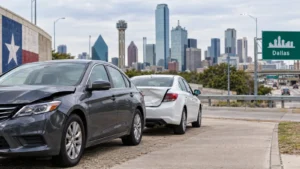

The Devastating Reality of Truck Accidents and the Path to Justice
Truck driver negligence is the primary cause of serious accidents involving large commercial vehicles. When a truck driver fails to exercise reasonable care—through fatigue, distraction, speeding, or violating federal safety regulations—they breach their duty of care to others on the road. According to the Federal Motor Carrier Safety Administration (FMCSA), driver error or negligence accounts for 83 percent of large truck accidents annually.
What You Need to Know About Truck Driver Negligence:
- Duty of Care: Truck drivers have a heightened legal responsibility to drive safely.
- Common Violations: Fatigue, distracted driving, speeding, DUI, and Hours of Service violations.
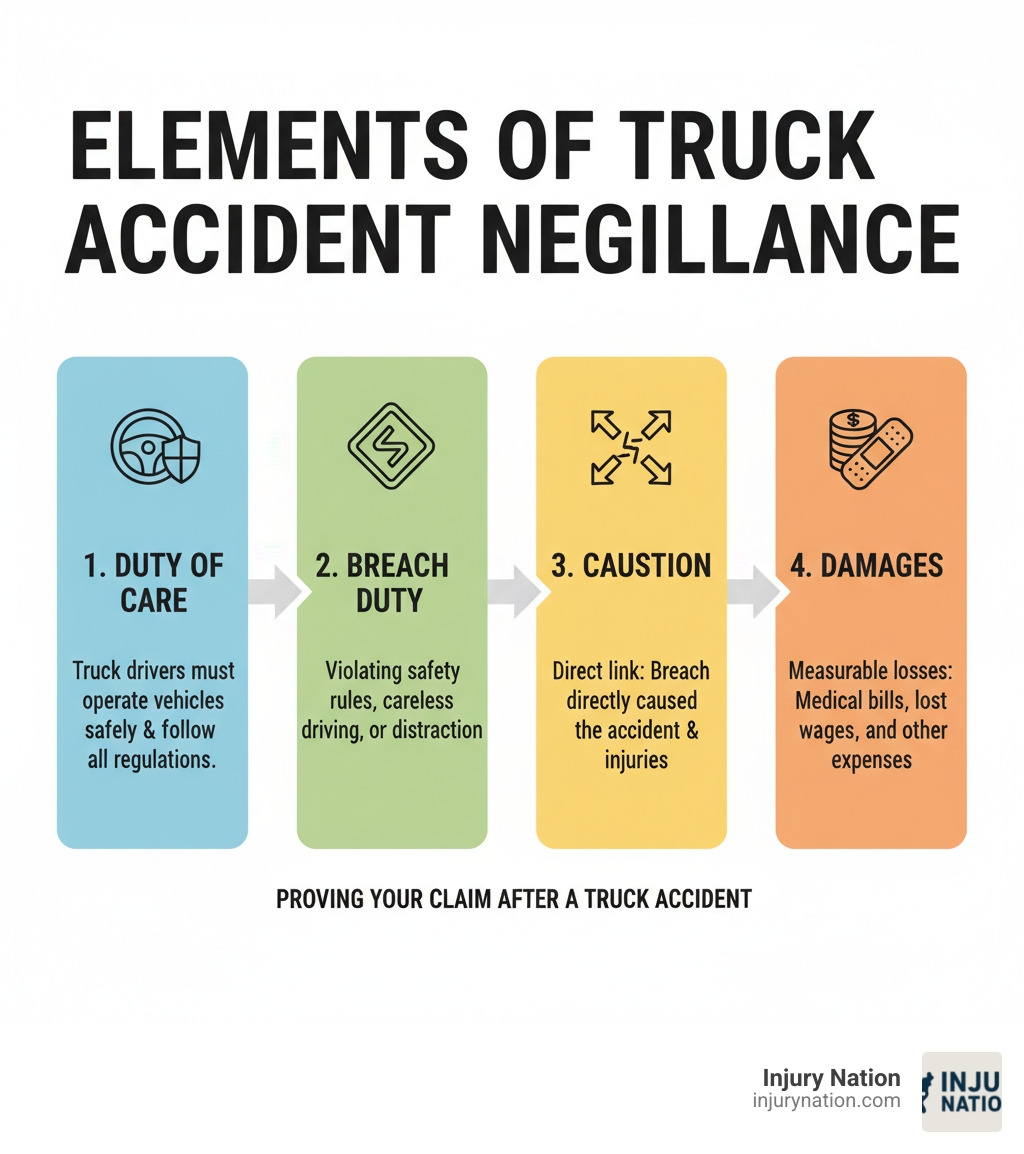
- Proving Negligence: Requires establishing duty, breach, causation, and damages.
- Key Evidence: Police reports, driver logbooks, black box data, and eyewitness testimony.
- Legal Standards: Commercial drivers must meet strict federal (FMCSA) and state regulations.
If you’ve been injured in a truck accident, understanding negligence is the first step toward holding the responsible party accountable. The consequences of a collision with a commercial truck weighing up to 80,000 pounds are often catastrophic. While vehicle malfunctions cause some collisions, the overwhelming majority stem from preventable driver actions.
Proving that a truck driver breached their duty of care is essential to your case and requires specific evidence and an understanding of both federal trucking regulations and state negligence laws. This guide explains how to prove truck driver negligence, the evidence you’ll need, and why an experienced attorney is crucial for a successful claim.
What Constitutes Truck Driver Negligence?
Truck driver negligence occurs when a commercial driver fails to exercise the level of care reasonably expected of them, resulting in injury. Given that these vehicles can weigh up to 80,000 pounds, truck drivers have a much higher responsibility than average motorists. In fact, driver error or negligence causes 83 percent of large truck accidents—an overwhelming majority of preventable crashes.
Common types of negligent behavior include fatigue, impairment, distraction, speeding, and improper maneuvers. Understanding these forms of truck driver negligence is crucial for recognizing what went wrong and what evidence is needed to prove your case.
Driver Fatigue and Hours of Service (HOS) Violations
Drowsy driving is a leading cause of serious truck accidents. When a driver is exhausted, their reaction time slows and their judgment suffers. To combat this, the federal government established strict Hours of Service (HOS) regulations that limit driving time and mandate rest breaks. However, some drivers falsify logbooks or face pressure from employers with unrealistic delivery schedules, prioritizing profits over safety. If you’ve been injured by a fatigued driver, more info about trucking accident lawyers can help you understand your options.
Driving Under the Influence (DUI)
Operating an 80,000-pound truck while impaired by alcohol or drugs is inexcusable. An impaired driver’s slower reaction time and poor judgment turn their vehicle into a deadly weapon. The law reflects this danger, holding commercial drivers to a much stricter BAC limit of 0.04 percent. The trucking industry also has a significant drug problem; in 2021, over 80,000 drivers were placed in prohibited status for drug violations.
Distracted Driving
Distracted driving occurs when a driver’s attention shifts from the road to another task, such as texting, using a cell phone, eating, or programming a GPS. The FMCSA found that over 70 percent of commercial truck driving accidents happen while the driver is doing something other than driving. A few seconds of inattention in a vehicle that takes the length of a football field to stop can be deadly.
Speeding and Reckless Driving
When a commercial driver speeds or drives too fast for conditions (like rain or fog), they endanger everyone. Due to their massive weight, trucks need 20 to 40 percent more distance to stop than cars, and speeding dramatically increases that distance. Reckless driving also includes aggressive behaviors like tailgating and unsafe lane changes, which leave no margin for error.
Improper Maneuvers and Awareness
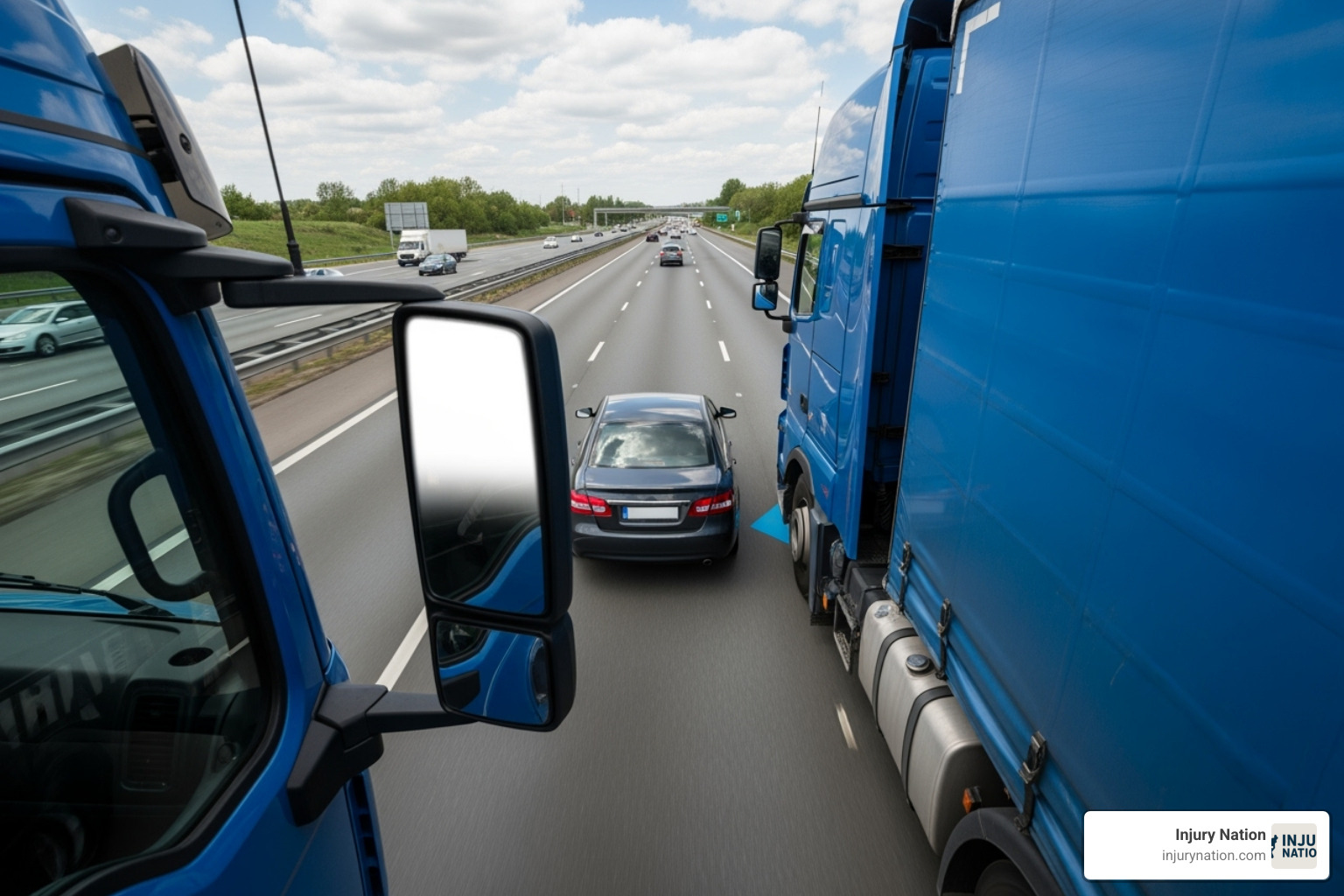
Large trucks have massive blind spots, or “no-zones,” on all four sides. An unsafe lane change without properly checking these blind spots can cause a smaller vehicle to be sideswiped. Improper turns are also hazardous, as trucks need extra room to maneuver. These errors often stem from poor judgment, lack of awareness, or being in too much of a hurry to drive safely. All of these behaviors are clear examples of preventable truck driver negligence.
The Legal Framework: Regulations and a Higher Duty of Care
To understand truck driver negligence, you must know the specific laws that govern the industry. Commercial trucking is heavily regulated by federal and state governments to ensure public safety. These rules cover everything from how long a driver can be on the road to the qualifications needed for a Commercial Driver’s License (CDL). These legally binding standards establish a higher duty of care for professional truck drivers.
How FMCSA Violations Establish Truck Driver Negligence
The Federal Motor Carrier Safety Administration (FMCSA) creates and enforces national safety rules for commercial trucks. The FMCSA truck regulations govern nearly every aspect of trucking, including:
- Hours of Service (HOS) limits to prevent driver fatigue.
- Drug and alcohol testing programs.
- Vehicle maintenance and inspection requirements.
- Driver qualifications and CDL standards.
- Cargo loading and securement rules.
When a truck driver or company violates an FMCSA regulation and that violation causes an accident, it is powerful evidence of negligence. This is often called “negligence per se,” meaning negligence is presumed because a safety law was broken, which simplifies proving fault. For example, if a truck’s brakes failed and maintenance records show the company skipped federally required inspections, that violation can significantly strengthen your claim. Our auto and truck accident attorney guide explores how these regulations impact liability.
The Higher Standard for Commercial Drivers
Beyond specific rules, the law holds professional truck drivers to a higher standard of care than regular motorists. Obtaining a CDL requires extensive training and rigorous testing under Federal CDL standards. This professional training, combined with the inherent danger of operating an 80,000-pound vehicle, creates a greater public safety responsibility.
Because the consequences of their mistakes are so severe, the legal system expects more from professional drivers. They must follow strict regulations, maintain detailed logs, submit to drug testing, and exercise extraordinary caution at all times. Even a seemingly minor error, like glancing at a phone or failing to check a blind spot, can be a breach of their professional duty of care. When that breach causes an accident, they can be held liable for truck driver negligence.
Building Your Case: Essential Evidence to Prove Negligence
Proving truck driver negligence requires solid evidence showing the driver’s actions caused your injuries. The stronger your evidence, the better your chance of receiving fair compensation. Acting quickly to preserve this evidence is critical, as it can disappear over time.
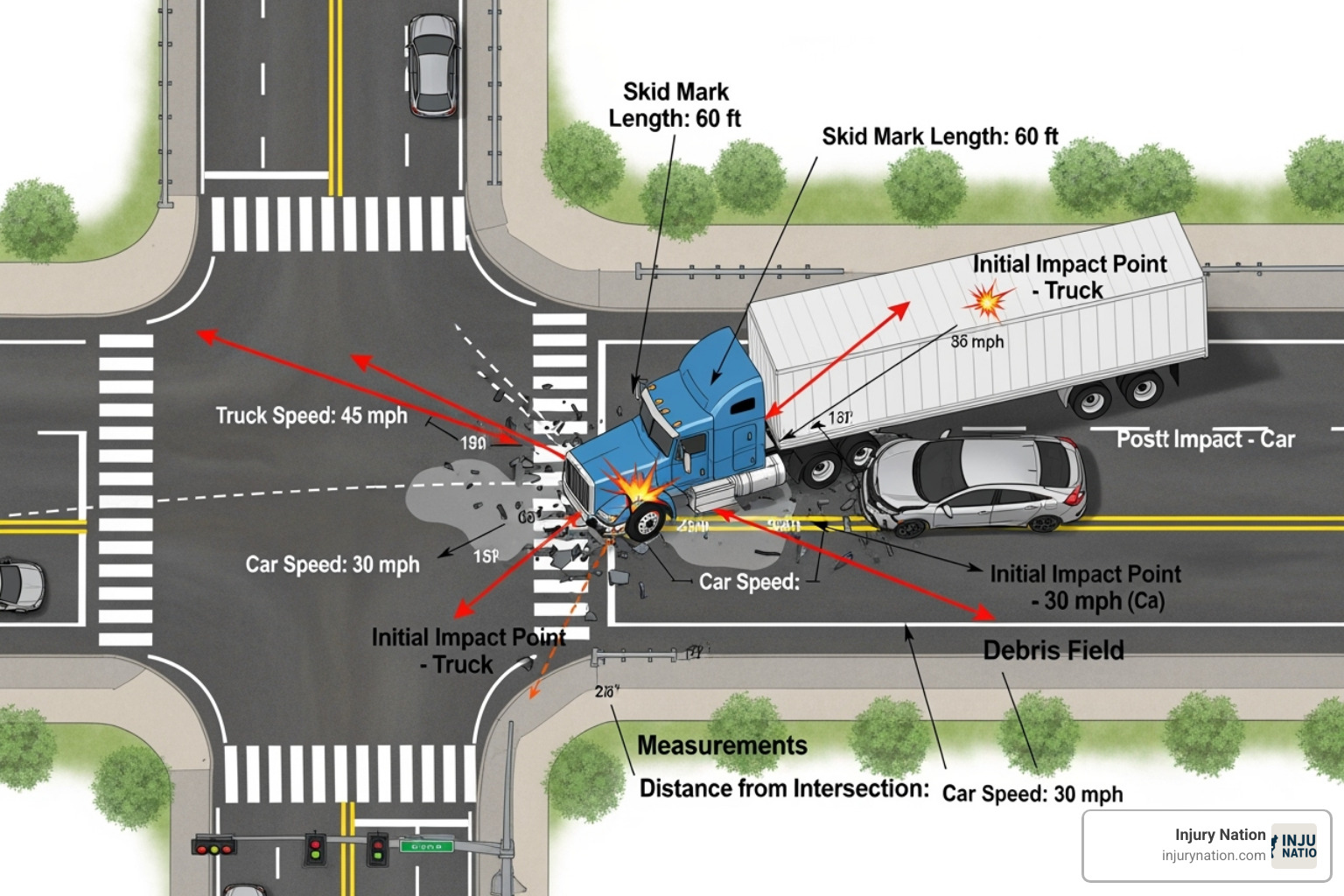
Key Evidence in a Truck Accident Claim
Certain evidence is foundational for establishing fault and building your claim.
- Police reports provide an official account of the accident scene, driver information, road conditions, witness statements, and sometimes an initial assessment of fault.
- Eyewitness testimony from unbiased observers who saw the accident can provide powerful, independent accounts that support your version of events.
- Photos and videos of vehicle damage, skid marks, traffic signals, and road debris create a vivid picture of what happened. Dashcam footage can be particularly compelling.
- Medical records document the extent of your injuries, treatments, and ongoing care. They directly link your injuries to the accident and are essential for calculating damages.
Uncovering Crucial Trucking-Specific Evidence
Unlike car accidents, commercial truck crashes involve unique evidence that can provide a “smoking gun” to prove truck driver negligence.
- Black boxes (ECMs/EDRs) record critical data like speed, braking, and steering in the moments surrounding a crash, providing objective evidence that can confirm or contradict a driver’s story.
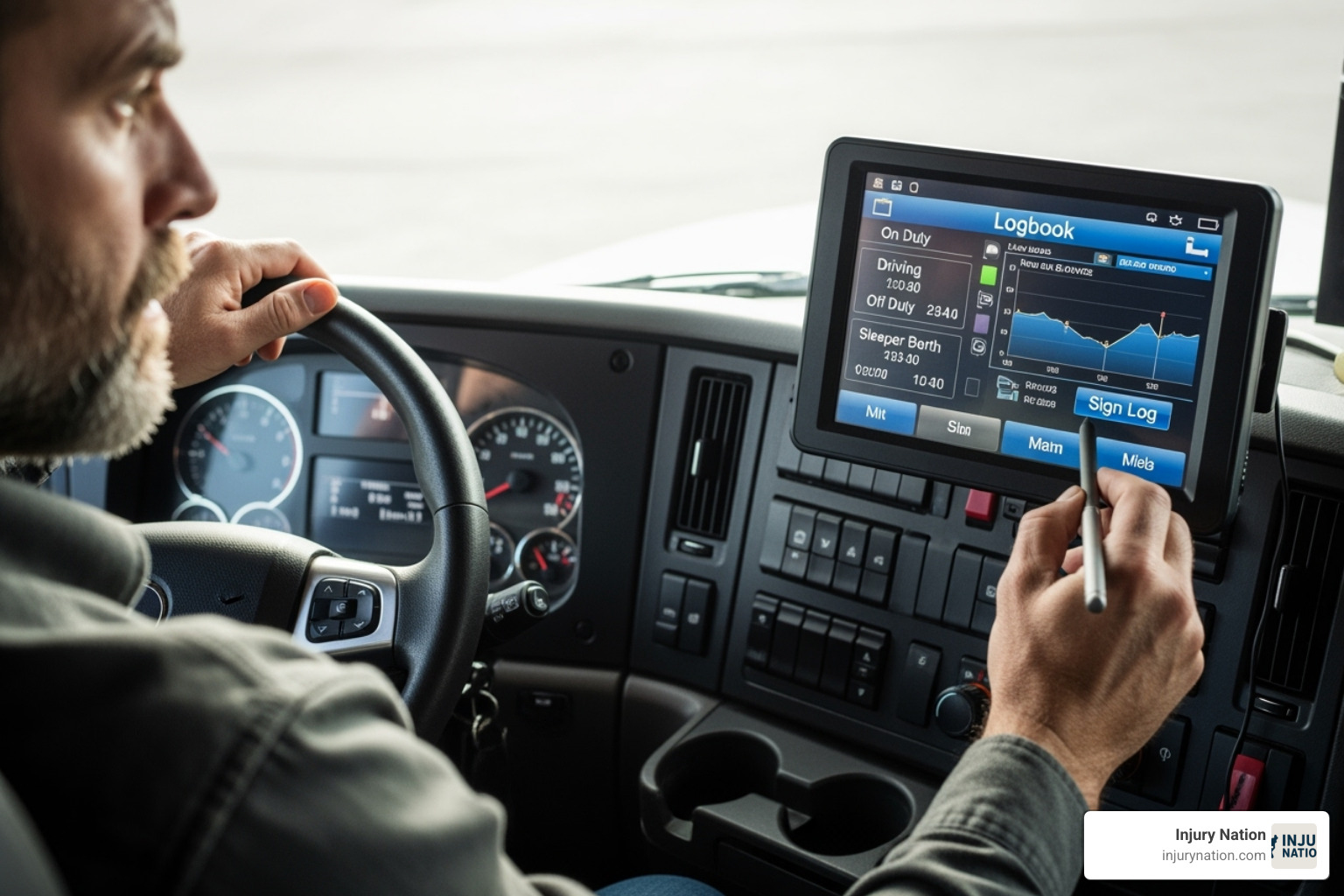
- Driver’s logbooks, now typically Electronic Logging Devices (ELDs), track driving and rest hours. They are a goldmine for proving driver fatigue and Hours of Service violations.
- Maintenance and inspection records reveal whether the truck was safe. If brake failure caused the crash and records show the company skipped required inspections, that is clear negligence.
- The driver qualification file contains the driver’s employment history, driving record, medical certifications, and drug test results. It can expose a history of violations or negligent hiring by the trucking company.
- Cargo loading documents show whether an overloaded or improperly secured load contributed to the accident by causing a tire blowout or making the truck unstable.
The Federal Motor Carrier Safety Administration’s Large Truck Crash Causation Study highlights the complexity of these investigations. Because this evidence can be overwritten or lost, it is urgent to begin the preservation process as soon as possible after an accident.
Frequently Asked Questions about Truck Driver Negligence
After a truck accident, victims often have many questions about truck driver negligence and what it means for their claim. Here are answers to the most common concerns.
What is the difference between truck driver negligence and trucking company negligence?
This is a crucial distinction that can significantly impact your compensation.
- Truck driver negligence refers to the individual driver’s actions or failures, such as speeding, texting while driving, or driving while fatigued.
- Trucking company negligence occurs when the company itself is at fault. This can include negligent hiring (hiring a driver with a poor safety record), providing inadequate training, failing to maintain vehicles, or creating unsafe company policies that pressure drivers to violate safety rules.
Even if the company wasn’t directly negligent, it can still be held responsible for its driver’s actions through a legal principle called vicarious liability (or respondeat superior). If the driver was on the clock, the company typically shares responsibility. This is important because trucking companies carry much larger insurance policies, which are often necessary to cover the catastrophic damages from a serious truck accident.
Can I still get compensation if I was partially at fault?
In most cases, yes, but your compensation may be reduced. Most states use comparative negligence rules, which allow you to recover damages even if you were partially to blame. Your total compensation is simply reduced by your percentage of fault. For example, if you were found 20% at fault in an accident with $100,000 in damages, you could still recover $80,000.
Some states have a “modified” rule that bars recovery if your fault is 50% or 51% or more. A few states use a harsh contributory negligence rule where being even 1% at fault prevents you from recovering anything. Don’t assume you have no case; an investigation often reveals your share of fault was minimal.
How long do I have to file a truck accident claim?
There is a strict deadline, known as the statute of limitations, for filing a lawsuit. This time limit varies by state, typically ranging from one to three years from the date of the accident. If you miss this deadline, you lose your right to seek compensation in court, no matter how strong your case is.
Waiting is a poor strategy. Evidence like black box data, surveillance footage, and company records can be lost or destroyed. Witnesses may forget key details. Starting the legal process early allows your attorney to preserve crucial evidence while you focus on your recovery. Act quickly and contact an attorney as soon as possible to protect your legal rights.
How a Lawyer Helps You Win Your Case
After a truck accident, you face a difficult legal battle against large trucking corporations and their insurers. An experienced truck accident lawyer brings the legal expertise, investigation resources, and proven strategies needed to prove liability and maximize your compensation. Without professional support, you are at a significant disadvantage.
Navigating the Complexities of a Claim
Truck accident claims are far more complex than typical car accident cases. You’re up against corporate legal teams and insurers skilled at minimizing payouts. An attorney is invaluable for handling these challenges.
Your lawyer will manage all communications with insurance companies, protecting you from tactics designed to weaken your claim, such as pressuring you for a recorded statement or offering a lowball settlement. They will also accurately calculate your total damages, including future medical expenses, lost earning capacity, and pain and suffering, often working with economic and medical experts to do so.
Proving truck driver negligence frequently requires expert testimony. Your lawyer will hire accident reconstructionists, medical specialists, and trucking industry consultants to provide credible evidence that juries and insurance companies can’t ignore. If a fair settlement isn’t reached, your attorney will be prepared to take your case to court. Our complete guide for vehicle injury attorneys offers more insight into this process.
Why You Need an Attorney for a Truck Accident
Without a lawyer, a truck accident case is not a fair fight. Proving truck driver negligence requires specialized knowledge of complex FMCSA regulations, black box data analysis, and HOS logbook violations. Trucking companies count on you not knowing these details.
An attorney levels the playing field. They know what evidence to find, how to preserve it, and how to use it to build an ironclad case. Your lawyer will also identify all potentially liable parties—from the driver and trucking company to the cargo loader—to pursue every available source of compensation.
At Injury Nation, we connect accident victims with top-rated personal injury lawyers who specialize in these complex cases. We know it’s critical to find an attorney with a track record of standing up to powerful trucking companies.
You’ve been through enough. The trucking company has lawyers protecting their interests from day one—you deserve the same. Find a top-rated truck accident lawyer near you who will fight for your rights and work to secure the maximum compensation you’re entitled to. Your future may depend on it.