
What Evidence Helps Prove Fault After a Car Accident in St Louis?
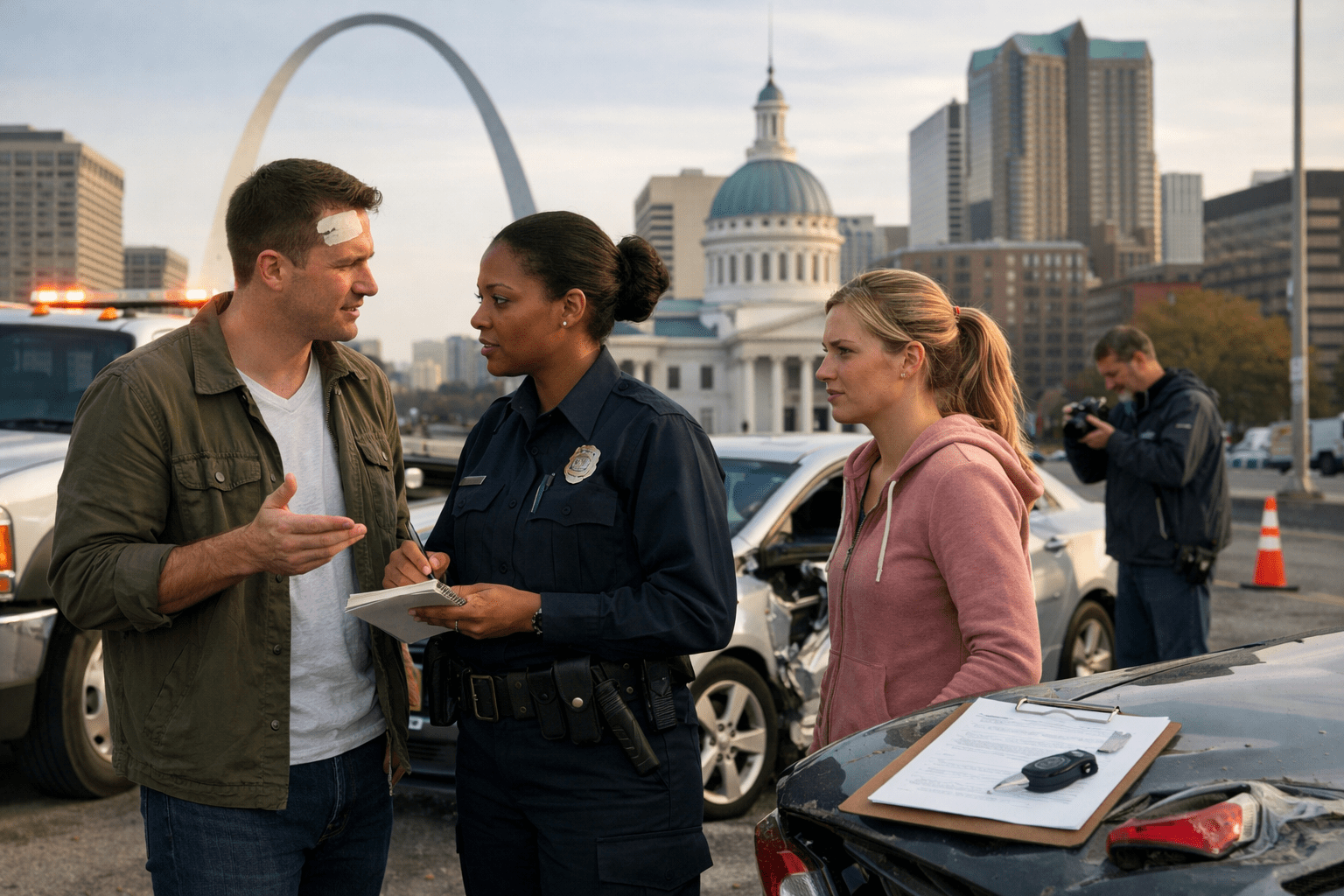
If you were hurt in a crash and now need to prove fault car accident St Louis claims often turn on one issue: evidence. After a collision, each driver may tell a different story. An insurance company may question what really happened. A police officer may only see the aftermath, not the impact itself. That is why the details collected in the minutes, hours, and days after a crash can make a major difference.
In St Louis, proving fault is rarely about one single piece of proof. It is usually about building a clear picture from several sources, including the police report, witness statements, photographs, vehicle damage, medical records, video footage, and the timeline of treatment and repair. The stronger and more consistent that picture is, the harder it becomes for an insurer to minimize or deny the claim.
This guide explains what evidence matters most after a St Louis car accident, why scene documentation is so important when stories conflict, how injuries get tied back to the crash, and how a lawyer can use the evidence to answer insurer pushback. If you are unsure what to collect or what your next step should be, speaking with a local personal injury lawyer can help you protect the claim before important evidence disappears.
Why Fault Evidence Matters So Much in a St Louis Car Accident Claim
After a crash, many people assume the truth will be obvious. Sometimes it is. A rear-end collision at a stoplight, a left-turn crash with multiple witnesses, or an intersection collision with clear camera footage may seem straightforward. But even in cases that feel simple, insurance companies still review whether their driver was actually at fault, whether the injured person shares part of the blame, and whether the claimed injuries match the impact.
That means evidence does more than show that a crash happened. It helps answer key questions such as:
- Which driver had the right of way?
- Where did the vehicles make contact?
- How fast were the vehicles moving?
- Did one driver fail to yield, follow too closely, drift lanes, or run a light?
- Were road, traffic, or visibility conditions a factor?
- Did the crash cause the injuries now being claimed?
- Did the injured person act reasonably after the collision?
In St Louis, these issues can come up on downtown streets, interstates such as I-64, I-70, I-44, and I-55, major roads like Kingshighway or Grand, and neighborhood intersections where visibility, traffic patterns, construction, or signal timing complicate events. The physical location of the crash often affects what evidence may exist. A crash near a business corridor may have surveillance footage. A highway crash may involve towing records, officer diagrams, or statements from multiple drivers. A collision in a residential area may depend heavily on witness recollection and scene photographs.
When fault is disputed, the side with better documentation usually starts in a stronger position. That does not guarantee a result, but it often shapes how seriously the insurer takes the claim, how quickly it responds, and whether it tries to shift blame.
The Main Types of Evidence That Help Prove Fault
Most successful car accident claims rely on a combination of evidence rather than one dramatic piece of proof. Each source fills in part of the story. Together, they can support a consistent and credible account of what happened.
Police Reports
A police report often becomes one of the first documents insurers review. It may include:
- The date, time, and location of the crash
- Names of drivers, passengers, and witnesses
- Insurance and vehicle information
- A diagram of the collision
- The officer’s observations about road conditions, traffic control devices, and visible damage
- Statements made at the scene
- Whether a citation was issued
Even though a police report is not the final word on fault in every case, it can carry real weight. If the report notes that one driver admitted not seeing the other car, failed to yield, or was cited for following too closely, that may support the claim. If the report documents the point of impact and matches the visible vehicle damage, it can strengthen credibility.
Witness Statements
Independent witnesses can be extremely helpful, especially when the drivers disagree. A neutral third party who saw the crash may have no reason to favor either side. Witnesses may confirm:
- Who entered the intersection first
- Whether a driver ran a red light or stop sign
- Whether one vehicle was speeding, swerving, or tailgating
- Whether the injured driver was stopped, signaling, or driving normally
- How the impact occurred
Witnesses are often strongest when their version matches the physical evidence, photos, and vehicle damage. A witness who says one vehicle changed lanes into another becomes more credible if the side-panel damage lines up with that description.
Photographs and Video
Photos taken at the scene can preserve important facts before vehicles are moved and debris is cleared. Useful images may include:
- Vehicle positions after impact
- Damage to all cars involved
- Skid marks or debris fields
- Traffic lights, stop signs, lane markings, and road signs
- Weather, lighting, and visibility conditions
- Broken glass, fluid leaks, or damaged guardrails
- Any visible injuries
Video footage can be even stronger because it may show the crash directly or capture the seconds immediately before impact. That can include dashcam video, business surveillance, traffic cameras where available, or footage from nearby homes.
Vehicle Damage
The damage itself can say a lot. The location, depth, and pattern of impact may support or undermine a driver’s story. For example:
- Rear damage to one vehicle and front damage to another may support a rear-end impact sequence
- Driver-side door damage may suggest a failure to yield or unsafe turn
- Corner damage may show an angle impact at an intersection
- Scrape patterns may indicate a sideswipe or lane-merge collision
Repair estimates, inspection photos, and total-loss evaluations can all become part of the evidence file.
Medical Records
Medical records are not only for proving damages. They also help connect your injuries to the crash itself. Early treatment records may document:
- What symptoms appeared right after the collision
- Whether the force of impact was consistent with the injuries reported
- How soon you sought medical care
- Whether you told providers the injuries began after the crash
- How your condition developed over time
If an insurer argues that your pain is unrelated, delayed records and inconsistent treatment can become points of attack. Clear, prompt, and complete medical documentation can help close those gaps.
Electronic and Digital Evidence
Modern claims sometimes involve digital sources, including:
- Dashcam footage
- Cell phone photos with timestamps
- Text records or app activity relevant to distraction claims
- Vehicle event data in some cases
- GPS or fleet records for commercial vehicles
Not every case will involve this type of evidence, but when it exists, it can be important.
How Police Reports Support a Fault Determination
People often ask whether the police report “proves” fault. The more accurate answer is that it can strongly support a fault argument, but it is only one part of the evidence. Insurance companies read these reports closely because they provide an early, neutral snapshot of the event.
In a St Louis crash claim, a police report may be especially useful when it contains:
- A detailed officer narrative rather than just basic information
- A diagram that matches the physical damage
- A listed contributing factor such as failure to yield, improper lane change, or following too closely
- A noted citation issued to the other driver
- Recorded witness names and statements
That said, police reports can also have mistakes. The officer may have misunderstood a statement, left out a witness, or drafted a simplified diagram that does not reflect every detail. If there is an error, it is important to address it quickly and carefully. Do not assume the insurance company will overlook it. A lawyer can review the report, compare it to photos and witness accounts, and determine whether a correction, supplemental material, or clarifying evidence may help.
What if the Report Seems Neutral?
Some reports do not clearly assign blame. That does not mean your claim is weak. It may simply mean the officer did not witness the crash and recorded only what could be confirmed at the scene. In that situation, other evidence becomes even more important. Photos, statements, damage patterns, medical documentation, and video may carry the case forward.
What if No Police Report Was Made?
Claims can still proceed, but they often become harder. Without a police report, insurers may question whether the crash happened as described, whether there were witnesses, or whether vehicle positions were later changed. If you do not have a report, try to preserve everything else carefully, including photos, medical records, estimates, and names of anyone who saw what happened.
Why Witness Statements Matter When Drivers Tell Different Stories
Conflicting stories are common after a collision. One driver may say the light was green. The other may say it was red. One may insist the lane change was complete before impact. The other may say the lane was never clear. In those moments, independent witnesses can become one of the most persuasive forms of evidence.
A strong witness is usually someone who:
- Had a clear view of the collision
- Was not a passenger in either car
- Does not know either driver personally
- Provides a consistent, specific account
- Can describe the sequence before impact, not just the aftermath
Witnesses can disappear quickly after a St Louis crash, especially on busy roads or downtown corridors where people are commuting, working, or passing through. If possible, get names and contact information at the scene. If you are too injured or shaken to do that, ask someone with you, or request that the responding officer collect the information.
What Makes a Witness Statement More Useful?
Insurers tend to value statements more when they include concrete observations rather than opinions. Compare these two examples:
- Less useful: “I think the blue car caused it.”
- More useful: “The blue car turned left after the light changed and the white SUV was already entering the intersection on green.”
Details matter. Timing matters. The position of the witness matters too. Someone waiting at the same intersection may have a better vantage point than someone half a block away who only heard the impact.
Why Immediate Identification Matters
Memories fade fast. A witness who seemed certain on the day of the crash may remember much less two months later. That is why immediate contact information is so important. If a lawyer gets involved early, that attorney may be able to obtain statements before memories fade further and before insurers try to shape the narrative around incomplete facts.
How Photos From the Scene Can Help Prove Fault
Photos are often the fastest and easiest way to preserve facts before they disappear. Tow trucks arrive. Traffic resumes. Rain washes debris away. Vehicles get repaired or totaled. A photo taken within minutes of impact can preserve details that later become central to the claim.
If you are physically able, useful scene photos include:
- Wide shots showing the entire scene
- Close-ups of each damaged area on every vehicle
- License plates and vehicle positions
- The intersection or roadway from multiple angles
- Traffic signals, stop signs, lane arrows, and merge points
- Skid marks, gouges, debris, and broken parts
- Weather conditions, standing water, or obstructed views
- Nearby businesses, homes, or buildings that may have cameras
Try not to take only close-up damage pictures. Those matter, but they do not show context. A claims adjuster reviewing the file will also want to understand roadway layout, signal placement, traffic flow, and the direction each car was traveling.
Why Scene Documentation Matters When Stories Conflict
Scene documentation can break a deadlock when both drivers blame each other. Suppose both sides claim they had the right of way. Photos may reveal:
- The exact lane each vehicle likely occupied
- Whether one car was turning across traffic
- Whether construction cones or blocked lanes may have contributed
- Whether visibility was limited by a parked truck, overgrown area, or curve
- Whether one vehicle came to rest in a location consistent with one version and not the other
This is especially helpful in intersection and lane-change cases, where small details can decide whose story fits the physical evidence. Scene documentation can also help challenge broad insurer arguments like “there is no proof our driver entered the wrong lane” or “the damage does not show how the crash occurred.”
Do Photos Need to Be Perfect?
No. Even ordinary cell phone photos can be valuable. The goal is not artistic quality. The goal is preservation. Blurry or incomplete images may still show lane markings, impact points, weather conditions, or nearby cameras. The sooner the photos are taken, the more likely they are to reflect the scene accurately.
How Vehicle Damage Helps Reconstruct What Happened
Vehicle damage is more than a repair issue. It is physical evidence. The shape and location of the damage may support one explanation of the crash and contradict another.
Consider how damage patterns may relate to common crash types:
Rear-End Collisions
Rear bumper and trunk damage on one vehicle with corresponding front-end damage on the other may support a rear-end sequence. But damage still needs context. A driver may claim the lead vehicle reversed unexpectedly. Photos, statements, and roadway conditions become important in testing that claim.
Intersection Crashes
T-bone or angle damage often raises questions about right of way, light sequence, and turning movement. If the front of one vehicle strikes the side of another, the exact impact point can matter. Side damage near the front quarter panel may suggest a different sequence than side damage at the center door.
Sideswipes and Lane Changes
Long scrape marks, mirror damage, and side-panel contact can indicate parallel movement, unsafe merging, or drifting across lanes. These cases are often hotly disputed because both drivers may claim they stayed in their lane.
Turning Collisions
Damage to the front corner of one vehicle and the side of another may support a failure-to-yield scenario. Again, the roadway layout and witness accounts help explain whether a turn was safe and complete.
Lawyers and insurers may compare vehicle photos, repair estimates, police diagrams, and witness descriptions to evaluate whether all the evidence points in the same direction. If it does, fault becomes easier to argue. If not, the insurer may press harder on inconsistencies.
How Medical Records Connect Your Injuries to the Crash
Fault and injury are related but separate issues. Even if the other driver caused the crash, the insurer may still argue that your injuries were not caused by the collision, were preexisting, or were made worse by delay in treatment. That is why medical records play such an important role.
When treatment begins soon after the accident, records often establish:
- The date symptoms began
- What body parts were affected
- How the injury happened according to the patient history
- What pain levels, mobility issues, or neurological symptoms were present
- Whether imaging, testing, or follow-up care supported the complaints
If you say your neck, back, shoulder, or head pain started after the crash, and that same information appears in emergency room, urgent care, primary care, physical therapy, or specialist records, the claim usually becomes harder to dismiss as unrelated.
Why Delayed Treatment Creates Problems
Many people try to “wait it out” after a collision. That is understandable. Adrenaline can mask symptoms. Some injuries do not fully develop until hours or days later. Some people worry about cost, work, or inconvenience. But from a claim perspective, long delays can create openings for insurer pushback.
An adjuster may argue:
- If the injury were serious, you would have sought care sooner
- The pain came from some later event
- The symptoms are exaggerated because there was a treatment gap
- The crash was minor and could not have caused the condition claimed
These arguments are not always fair, but they are common. Prompt evaluation and consistent follow-up can help reduce them.
What if You Had a Prior Injury?
A prior neck, back, shoulder, or knee condition does not automatically defeat a claim. But it does mean documentation matters even more. Medical records may need to show the difference between your pre-crash condition and your post-crash symptoms. If the crash worsened an existing problem, that still may be relevant to your claim, but the proof needs to be specific and medically supported.
What To Do if Surveillance or Dashcam Footage May Exist
Video footage can be some of the strongest evidence in a St Louis car accident case, but it often disappears quickly. Many businesses record over footage within days or weeks. Private systems may not save video for long. Dashcam footage may be overwritten if the owner keeps driving without backing it up.
If you think footage may exist, act as quickly as possible.

Possible Video Sources After a St Louis Crash
- Dashcams from your car or another driver’s car
- Nearby gas stations, restaurants, stores, banks, or office buildings
- Apartment or condominium security systems
- Home doorbell cameras facing the street
- Commercial fleet vehicles or buses
- Parking garage cameras
- Construction site security cameras
Immediate Steps to Take
- Write down the names and addresses of nearby businesses or properties
- Take photos showing camera locations if visible
- Save your own dashcam footage immediately in more than one place
- Do not assume footage will be kept automatically
- Tell your lawyer as soon as possible that video may exist
Why Early Legal Help Matters for Video Evidence
A lawyer may be able to send preservation requests to businesses or other parties before footage is erased. That does not guarantee the video will be obtained, but it can improve the chances. Waiting too long often means the footage is gone before anyone asks for it.
What if You Only Learn About Cameras Later?
Still raise the issue. Even if footage from one source is gone, another source may remain. A nearby property, a different angle, or a commercial vehicle may have captured enough of the sequence to support your claim.
Common Insurer Arguments About Fault and How Evidence Answers Them
Insurance companies do not always deny claims outright. Often, they challenge parts of the story, question credibility, or argue that fault is unclear. Understanding those arguments can help you see why evidence collection matters.
“There Is No Independent Proof”
This usually means the insurer sees only opposing driver statements and incomplete documentation. Witnesses, video, scene photos, and physical damage can answer this problem.
“Your Version Does Not Match the Damage”
This is where repair photos, diagrams, impact location, and expert review may matter. Sometimes the insurer is overstating the inconsistency. Sometimes more explanation is needed to show how the crash sequence produced the damage pattern.
“The Police Report Is Inconclusive”
If the report is neutral, other evidence can still support fault. Insurers often use a neutral report as leverage even when the rest of the evidence favors the injured driver.
“You Share Some Blame”
An insurer may argue you were speeding, distracted, failed to brake, or were otherwise partly responsible. Photos, witness statements, scene measurements, timing details, and vehicle positions can help evaluate whether that claim has support or is simply a negotiation tactic.
“The Injuries Don’t Match the Accident”
Medical records, prompt complaints, diagnostic testing, and consistent treatment may answer this challenge. The insurer may still dispute severity, but a documented medical timeline can make it harder to disconnect the injuries from the crash.
“You Waited Too Long to Report Key Facts”
This is why early documentation matters. A late-emerging witness, late photo submission, or unexplained treatment gap may invite extra scrutiny. The earlier the evidence is preserved, the stronger the response usually is.
How a Lawyer Uses Evidence To Respond to Insurer Pushback
One reason injured people contact a lawyer is that they are tired of hearing the insurer question obvious facts. A lawyer does not just submit a demand and wait. In many cases, the lawyer organizes the evidence into a coherent, documented explanation that addresses the insurer’s objections directly.
Building a Clear Timeline
A lawyer may create a timeline beginning before the crash and continuing through treatment and claim handling. That timeline may include:
- Where the collision occurred
- What each driver was doing before impact
- When police arrived
- What witnesses said
- When medical treatment began
- How injuries developed over time
- When repair or total-loss documentation was completed
A clear timeline can reduce confusion and highlight consistencies that support fault.
Comparing Evidence Sources for Consistency
Insurers often look for gaps. Lawyers look for overlap. When the police report, witness account, vehicle damage, and scene photos all point in the same direction, that consistency can be powerful. A lawyer may emphasize those connections in written communications or negotiations.
Preserving Evidence Before It Is Lost
If camera footage, black box data, commercial records, or photographs may disappear, a lawyer can take steps to request preservation. Early action can make a real difference, especially in cases involving businesses or multiple vehicles.
Addressing Weak Spots Before the Insurer Uses Them
No claim is perfect. Maybe you did not photograph every angle. Maybe the police report left out a witness. Maybe treatment did not begin until the next day. A lawyer can often identify those issues early and gather supporting information before the insurer turns them into major obstacles.
Using Documentation To Push Back on Blame Shifting
Insurers may reduce offers by arguing shared responsibility. A lawyer can use the evidence file to explain why that argument does not fit the facts or why the insurer is overstating it. The goal is not to make unsupported legal claims. It is to show how the available evidence supports your position more strongly than the insurer’s version.
Step-by-Step: What You Should Do After a St Louis Car Accident if Fault May Be Disputed
If you are dealing with a new crash, these steps can help protect evidence and reduce later disputes. Safety and medical needs come first, but if you are able to act, documentation matters.
1. Call 911 and Seek Medical Help if Needed
Emergency response creates an early official record. If anyone may be injured, do not try to sort it out privately on the roadside.
2. Exchange Basic Information
Get names, contact information, insurance details, and vehicle information. Stay calm and avoid arguing about fault at the scene.
3. Photograph Everything You Can
Take wide and close-up shots. Include roadway layout, damage, signs, signals, debris, and the area around the crash.
4. Get Witness Contact Information
Do not rely on memory. Get names and phone numbers if possible.
5. Look for Cameras
Notice nearby businesses, homes, parking lots, intersections, and fleet vehicles that may have recorded the crash.
6. Get Medical Evaluation Promptly
Even if symptoms seem manageable, documented evaluation helps connect injuries to the crash.
7. Save Records and Receipts
Keep towing records, repair estimates, medical paperwork, discharge instructions, prescriptions, and appointment notes.
8. Be Careful With Statements to Insurers
Report the crash, but do not guess or speculate. If you do not know something, say so. Avoid minimizing symptoms just to sound tough or polite.
9. Do Not Delay if Fault Is Being Challenged
If the insurer is already questioning liability, it may be time to speak with a lawyer before more evidence disappears.

St Louis-Specific Realities That Can Affect Fault Evidence
Local driving conditions can shape both how collisions happen and what evidence is available afterward. In and around St Louis, certain practical factors often matter:
- Busy interstates and merges: Crashes on I-64, I-70, I-44, I-55, and connecting routes can involve fast-changing traffic, multiple witnesses, and complicated lane-position questions.
- Downtown and urban intersections: In denser parts of St Louis, nearby businesses or parking facilities may have cameras, but video retention may be short.
- Construction zones: Temporary lane shifts, barriers, and cones can affect visibility and create confusion about vehicle positions.
- Weather: Rain, ice, fog, and seasonal road conditions can affect braking distance and visibility, making scene photos especially important.
- High-traffic corridors: Areas with heavy commuting or event traffic may produce more witnesses, but also more fast-moving scenes where people leave quickly.
Local knowledge can help identify where to look for evidence, what scene details matter, and which facts insurers may try to overemphasize.
Warning Signs Your Fault Claim May Be Harder Than It Looks
Some car accident cases seem straightforward at first but become difficult when the insurer starts digging into details. Watch for these warning signs:
- The other driver changed their story after the crash
- No witness information was collected
- The police report contains errors or leaves out important facts
- The insurer says liability is still “under investigation” long after basic records were submitted
- The insurer asks repeated questions about your speed, phone use, or lane position
- The damage pattern is being used to challenge your account
- You discovered potential camera footage but do not know how to secure it
- You delayed treatment and now the insurer is using that against you
- There were multiple vehicles or chain-reaction impacts
- The crash happened in a complicated intersection, merge, or turn lane area
These signs do not mean your claim will fail. They do mean documentation and legal guidance may be especially important.
Examples of How Evidence Can Strengthen a Fault Argument
Here are a few fact-based examples showing how different types of evidence work together. These are general illustrations, not promises or outcomes.
Example 1: The Rear-End Crash With a Sudden-Blame Defense
A driver is hit from behind at a light near a busy St Louis corridor. The other driver later claims the lead vehicle stopped suddenly for no reason. Scene photos show a standard traffic queue at the light. The police report notes rear-end damage and no evasive lane issue. A witness confirms traffic was stopped normally. Together, that evidence may weaken the “sudden stop” argument.
Example 2: The Intersection Collision With Conflicting Light Claims
Both drivers say they had a green light. A nearby store camera captures one vehicle entering after the opposing direction had already moved. Witness statements and the side-impact damage pattern match the footage. That combination can transform a disputed claim into a much clearer fault picture.
Example 3: The Lane-Change Crash Without Immediate Clarity
Two vehicles collide on a multi-lane roadway. Each driver says the other drifted. Side-scrape damage alone is not enough. But a dashcam from a third vehicle shows one car crossing the lane line. Even a short clip may resolve what would otherwise stay disputed.
Example 4: The Injury Connection Problem
A person feels soreness after a crash but does not seek care until two days later when pain worsens. The insurer argues the injury was unrelated. Medical records documenting crash-related symptoms, follow-up treatment, and provider notes connecting the complaints to the collision may help answer that challenge.
Frequently Asked Questions About How To Prove Fault After a Car Accident in St Louis
Is a police report enough by itself to prove fault?
Sometimes it helps significantly, but it is rarely the only evidence that matters. Reports can be incomplete, neutral, or mistaken. The strongest claims usually include supporting photos, witness information, damage documentation, and medical records.
What if I did not take pictures at the scene?
Your claim is not automatically lost. You may still have a police report, vehicle inspections, medical records, witness statements, tow yard photos, body shop photos, or video footage from nearby sources. But missing scene photos can make fault disputes harder.
Can vehicle damage really show who caused the crash?
It can support a version of events, especially when combined with other evidence. Damage location and pattern often help explain angle, direction, and movement, but damage alone may not answer every question.
How quickly should I look for surveillance footage?
Immediately. Some systems overwrite video in a matter of days. If you suspect nearby cameras may have recorded the collision, identify the location fast and speak with a lawyer as soon as possible.
Do medical records matter if fault is the main issue?
Yes. Medical records help show that the crash caused actual injuries and that your complaints began after the collision. Insurers often challenge both fault and causation, so treatment records remain important.
What if the other driver got a ticket?
A citation can support your claim, but it does not end the investigation by itself. Insurers may still review all surrounding facts, including statements, photos, and damage.
What if there were no witnesses?
You may still prove fault through photos, police documentation, roadway evidence, vehicle damage, video, and consistent statements. Witnesses help, but they are not the only way to support a claim.
Should I talk to the other driver’s insurance company?
You may need to report basic facts, but be careful. Do not guess, speculate, or downplay injuries. If fault is being disputed or you feel pressured, getting legal guidance first may help.
What if the insurer says the crash was too minor to cause injury?
That is a common argument. Medical records, symptom progression, provider findings, imaging where appropriate, and consistent treatment may help answer it. The seriousness of injuries cannot be judged solely by visible vehicle damage.
When should I contact a lawyer?
As soon as possible if fault is disputed, the police report is unclear or wrong, you believe video footage may exist, you have significant injuries, or the insurer is already pushing back on your claim.
What To Expect When You Speak With a Lawyer About a Fault Dispute
If you contact a local personal injury lawyer after a St Louis collision, the first conversation will often focus on evidence. Be prepared to discuss:
- Where the crash happened
- How the collision occurred
- What the other driver said at the scene
- Whether police responded
- Whether there were witnesses
- What photos or video you have
- What treatment you have received so far
- Whether any insurer has already challenged fault
You may also be asked to provide copies of:
- The crash report
- Scene photographs
- Insurance communications
- Medical discharge papers and bills
- Repair estimates or total-loss documents
- Witness names and contact information
The goal is usually to identify what proof already exists, what may still be obtainable, where the weak spots are, and how to respond before the insurer frames the claim on its own terms.
Final Thoughts: Strong Evidence Can Make the Difference in a St Louis Fault Dispute
To prove fault car accident St Louis claims need more than a basic accusation. They need facts that hold together. Police reports, witness statements, scene photos, vehicle damage, medical records, and video footage each add part of the story. When those pieces are preserved early and used well, they can make it much harder for an insurer to shift blame, dismiss injuries, or drag out the claim based on uncertainty.
If you were injured in a St Louis crash and fault is being questioned, do not assume the truth will speak for itself. Important evidence can disappear quickly, especially camera footage and witness memory. The sooner you act, the better your chances of protecting the facts that support your claim.
Contact a local personal injury lawyer for a free consultation today. Injury Nation helps connect accident victims with local personal injury lawyer resources, car accident claims assistance, and 24/7 emergency legal help when clear guidance matters most.