How Can You Afford a Lawyer After an Accident?
When you’re facing medical bills, lost wages, and mounting expenses after an accident, a contingency fee lawyer offers a solution: you only pay if you win your case.
What You Need to Know About Contingency Fee Lawyers:
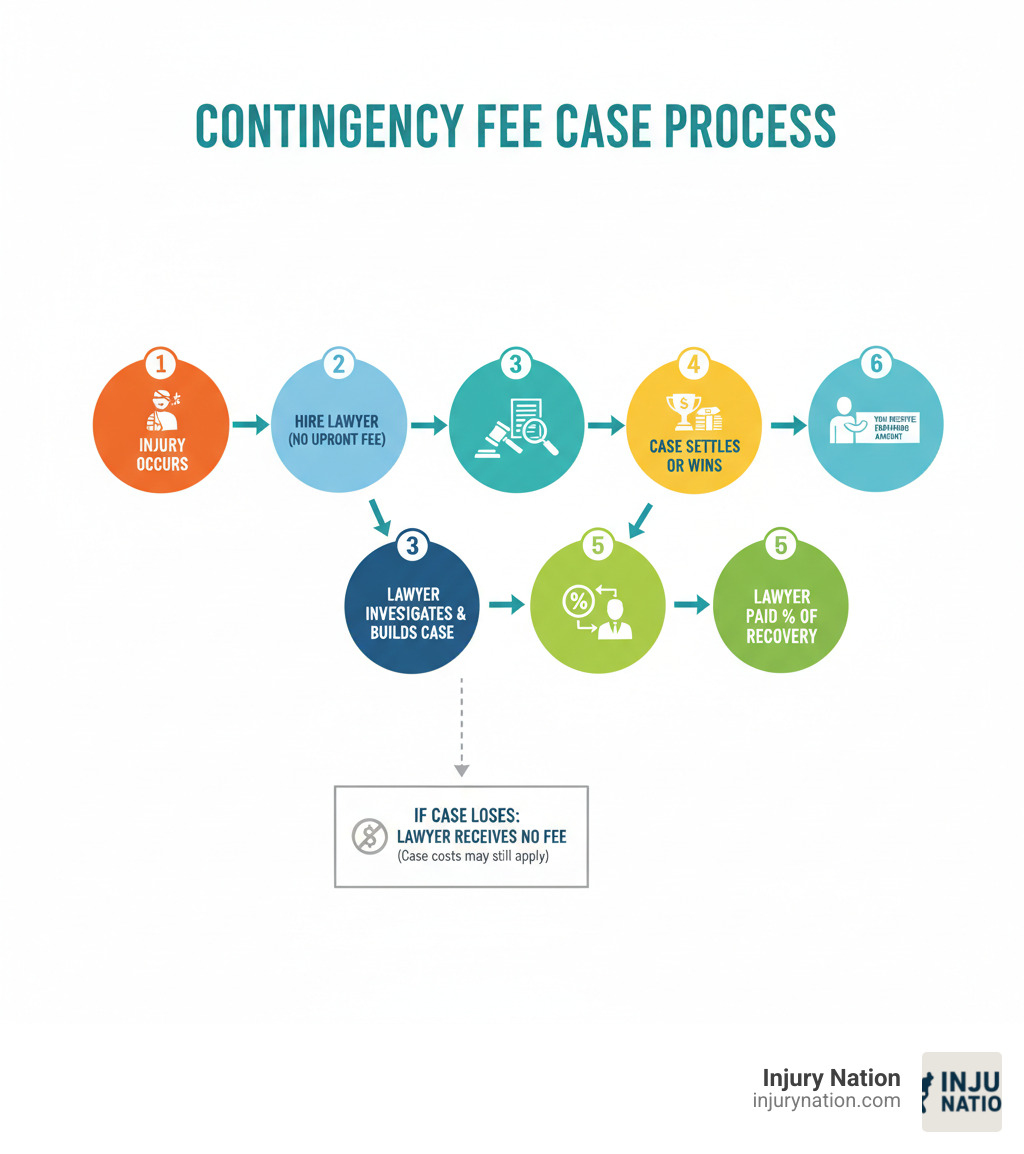
- No upfront payment required – You don’t pay legal fees to hire the lawyer
- Payment only if you win – The lawyer takes a percentage (typically 33%) of your settlement or award
- If you lose, you owe no legal fees – You may still be responsible for case costs like filing fees or expert witnesses, depending on your agreement
- Common in personal injury cases – Car accidents, slip and falls, medical malpractice, and wrongful death claims
- Written agreement required – All terms must be clearly spelled out and signed
After an accident, costs pile up fast. Between medical treatment, time off work, and the stress of recovery, the last thing you need is to worry about paying a lawyer. This is where the contingency fee model provides a crucial solution. Instead of paying a lawyer by the hour or with a large upfront retainer, you can hire experienced legal representation with no money out of pocket. Your lawyer only gets paid if they successfully recover money for you.
For many accident victims, this isn’t just convenient—it’s the only way to access justice and challenge powerful insurance companies. However, the details can be confusing. This guide will clearly explain how much a lawyer takes, what “case costs” are, and what you need to know before you sign an agreement.
What Is a Contingency Fee and How Is It Different?
A contingency fee means your lawyer’s payment is “contingent” on—or depends on—winning your case. Simply put: your lawyer only gets paid if you get paid. If they win a settlement or trial award for you, they take a percentage as their fee. If you don’t receive any compensation, you owe no legal fees for their time. This “no win, no fee” model provides access to justice for those who couldn’t otherwise afford to hire a lawyer.

To understand why this matters, let’s compare contingency fees to other common payment arrangements.
With hourly rates, you pay for every hour your lawyer works and often must pay a large upfront deposit, called a retainer. You pay regardless of whether you win or lose, putting all the financial risk on you.
Flat fees are a set price for a specific service, paid upfront. This works for predictable tasks but not for accident cases where the amount of work required is uncertain.
Contingency fees flip the script. Your lawyer takes on the financial risk, investing their time and resources with the bet that they can win your case. This aligns your interests perfectly—the better your outcome, the better their payment.
| Fee Arrangement | Upfront Cost | Total Cost Predictability | Risk to Client |
|---|---|---|---|
| Contingency Fee | None for legal fees | Variable (percentage of recovery) | Low (no legal fees if lost) |
| Hourly Rate | Potentially high (retainer) | Low (hard to predict total hours) | High (pay regardless of outcome) |
| Flat Fee | Fixed amount | High (known upfront) | Moderate (pay regardless of outcome, but fixed) |
Don’t confuse a contingency fee agreement with a traditional retainer. While you sign a “retainer agreement” to hire the lawyer, you are not paying a large deposit for them to start work, which is common with hourly billing.
This model also motivates your lawyer to fight for the best possible outcome, as their payment is tied to your success. It levels the playing field, allowing you to take on large insurance companies with experienced legal help, as noted by legal authorities like the New York City Bar.
How a Contingency Fee Agreement Works
When you hire a contingency fee lawyer, you enter into a formal, legally binding contract that outlines exactly how your case will work and how your lawyer gets paid. This written agreement is required by state bar rules to protect you, ensuring all financial details are transparent before you commit.

How Are Contingency Fees Calculated?
The most common fee is 33.3%, or one-third of your recovery. However, this can range from 20% to 50% based on several factors:
- Case Complexity: A simple car accident case may have a lower fee than a complex medical malpractice claim.
- Case Risk: If liability is unclear, the lawyer is taking a bigger gamble, which may mean a higher percentage.
- Likelihood of Trial: Many lawyers use a tiered fee: a lower percentage (e.g., 33%) if the case settles, and a higher one (e.g., 40%) if it goes to trial, reflecting the extra work.
- Sliding Scale Fees: Some states or lawyers use a scale where the percentage decreases as the recovery amount increases. For example, a lawyer might take 40% of the first $50,000, 33% of the next $50,000, and so on.
What Are ‘Fees and Disbursements’ in a Case?
It’s crucial to distinguish between your lawyer’s contingency fee (their payment) and case costs (out-of-pocket expenses). Your lawyer typically advances these costs, but you are usually responsible for repaying them from your settlement. If you lose, your agreement will state whether you must still pay these costs. Common expenses include:
- Court filing fees
- Expert witness fees
- Deposition and transcript costs
- Medical records costs
- Investigator and process server fees
The agreement must also specify how costs are deducted. This is the gross versus net calculation. For a $100,000 settlement with a 30% fee and $15,000 in costs:
- Fee on Net: ($100,000 – $15,000) x 30% = $25,500 fee. You get $59,500.
- Fee on Gross: $100,000 x 30% = $30,000 fee. You get $55,000.
Always clarify which method is used, as it significantly impacts your final amount.
What Makes a Contingency Fee Agreement Legally Valid?
Based on guidelines like the American Bar Association’s Model Rule 1.5(c), a valid agreement must:
- Be in writing and signed by you.
- Clearly state the fee calculation method, including the percentage(s).
- Detail all expenses you will be responsible for, and what happens if you lose.
Upon conclusion, your lawyer must provide a written statement showing the final outcome, the fee, all costs, and your net recovery. Before signing, read everything and ask questions. A trustworthy lawyer will provide clear answers.
The Pros and Cons of Hiring a Contingency Fee Lawyer
The contingency fee lawyer model has helped millions, but it’s important to understand both its advantages and potential drawbacks to decide if it’s right for you.

What Are the Advantages for Accident Victims?
- Access to Justice: You can hire an experienced attorney even if you don’t have thousands of dollars for upfront fees. It gives everyone a chance to stand up for their rights.
- No Financial Risk for Fees: You owe no attorney fees unless you win. This removes a huge financial burden during a stressful time.
- Shared Motivation: Your lawyer is motivated to win and maximize your recovery because their payment depends on it. Your interests are aligned.
- Case Vetting: Reputable lawyers only take cases they believe have merit, which gives you confidence in your claim.
- Levels the Playing Field: It allows you to hire skilled representation to challenge large insurance companies and their legal teams.
If you’re in a major city like New York, finding the right legal help can feel daunting. Many attorneys in these areas work on contingency specifically to help accident victims get representation. You can Find a Personal Injury Lawyer in New York who understands this payment structure and can evaluate your case.
What Are the Potential Disadvantages or Criticisms?
- Higher Cost in Simple Cases: For a straightforward case that settles quickly, a percentage-based fee might be more expensive than paying an hourly rate.
- Incentive for Faster Settlements: While most lawyers are ethical, the model could theoretically create pressure to settle a case for a good amount rather than fighting for a great amount if it requires significantly more work.
- Lawyer Selectivity: Because lawyers take on the financial risk, they may decline cases with low potential damages or unclear liability, leaving some victims without representation.
- Confusion Around Costs: Clients are sometimes surprised that case costs (for experts, filing fees, etc.) are deducted from the settlement in addition to the lawyer’s fee, reducing their net recovery.
In areas like Los Angeles where legal costs run high, understanding exactly what you’ll pay and what you’ll receive is crucial. You can Find a Personal Injury Lawyer in Los Angeles who will explain these details clearly before you sign anything.
Legal and Ethical Rules for Contingency Fees
A contingency fee lawyer relationship is governed by strict ethical standards and legal rules designed to protect you. These regulations ensure your lawyer acts with integrity and always puts your interests first.
What Types of Cases Use a contingency fee lawyer?
The contingency model is standard in cases where a person seeks financial compensation for harm. This includes:
- Personal Injury: The most common area, including car accidents and slip and fall incidents.
- Medical Malpractice: These complex, expensive cases are often only feasible for patients on a contingency basis.
- Workers’ Compensation: Attorneys for on-the-job injuries typically work on contingency, with fees often regulated by the state.
- Wrongful Death Claims: Allows families to seek justice without upfront legal costs.
- Product Liability: Helps individuals take on large manufacturers of defective or dangerous products.
If you’re in Houston and need representation after an accident, you can Find a Personal Injury Lawyer in Houston who understands how contingency fees work and can fight for the compensation you deserve.
Are There Cases Where Contingency Fees Are Banned?
Yes. To prevent conflicts of interest and protect public policy, contingency fees are prohibited in certain legal areas, as outlined in rules like the ABA Rule 1.5(d) Prohibitions.
- Criminal Defense: A lawyer’s fee cannot depend on the outcome of a criminal case. The focus must be on due process and constitutional rights, not a financial win.
- Family Law: Fees generally cannot be contingent on securing a divorce or on the amount of alimony or child support awarded. This prevents lawyers from having a financial incentive to escalate family conflict. An exception is often made for collecting past-due support payments.
These prohibitions are carefully designed to protect vulnerable people and ensure that lawyers’ financial interests don’t interfere with justice.
What Are the Ethical Duties of a contingency fee lawyer?
Your lawyer has several core ethical duties:
- Reasonable Fees: The percentage must be reasonable for the work and risk involved.
- Client Communication: They must keep you informed about your case and promptly respond to questions. You have the final say on any settlement offer.
- Full Disclosure & Transparency: Your lawyer must be upfront about costs and provide a detailed written statement at the end showing how every dollar of your settlement is distributed.
- Avoiding Conflicts of Interest: Your interests must always come first.
These duties are mandatory and form the foundation of trust in your attorney-client relationship.
Frequently Asked Questions about Contingency Fee Lawyers
Here are quick answers to the most common questions about working with a contingency fee lawyer.
What percentage does a contingency lawyer usually take?
The industry standard is 33.3%, or one-third of the recovery. However, this is not set in stone and can range from 25% to 40%. The final percentage depends on your case’s complexity, its risk, and whether it goes to trial. Some lawyers also use a sliding scale where the percentage decreases as the settlement amount increases.
Do I have to pay for case expenses if I lose?
This is a critical point to clarify in your agreement. While you won’t owe legal fees if you lose, you may still be responsible for repaying the case costs that your lawyer advanced. These are out-of-pocket expenses like filing fees and expert witness payments. Some lawyers waive these costs if the case is lost, but not all do. Your written agreement must state exactly what your responsibility is.
Can I negotiate the contingency fee percentage with a lawyer?
Yes, you can often negotiate the fee. You have more leverage if your case is strong, liability is clear, and the potential damages are high, as this reduces the lawyer’s risk. Don’t be afraid to have an open conversation about the fee. A reputable lawyer will be transparent about their reasoning, but also understand that their fee reflects the significant financial risk they are taking on your behalf.
Find the Right Representation for Your Accident Claim
You now understand how a contingency fee lawyer can level the playing field. This model provides access to justice, allowing you to hire an expert attorney with no upfront costs. Your lawyer invests their own time and resources, and they only get paid if you win—a true partnership focused on your success.
This knowledge empowers you to choose the right lawyer with confidence. You know what questions to ask and what to look for in a fee agreement.
At Injury Nation, our mission is to connect accident victims like you with experienced personal injury lawyers who work on contingency. We’ve seen how the right representation can help people recover the compensation they need for medical bills, lost wages, and their pain and suffering.
Ready to take the next step? Whether you were hurt in a car crash, slip and fall, or need specialized help from a bicycle accident lawyer near you, our directory can help you find a vetted attorney. Your consultation is free, and you pay no legal fees unless you win. Don’t wait to get the help you deserve.