

Why Understanding Slip and Fall Lawsuits Can Protect Your Rights
Slip and fall lawsuit cases are a common type of personal injury claim. If you’ve been injured in such an accident, understanding your legal rights is crucial for securing fair compensation and avoiding financial hardship.
Quick Overview of Slip and Fall Lawsuit Cases:
- Legal Basis: Premises liability law holds property owners responsible for maintaining safe conditions.
- Key Requirement: You must prove the property owner knew or should have known about the dangerous condition.
- Common Locations: Grocery stores, restaurants, hotels, sidewalks, and office buildings.
- Typical Timeline: 2-3 years to file a claim (varies by state).
- Settlement Range: From thousands to millions of dollars depending on injury severity.
- Success Rate: About 97% of civil cases settle without going to trial.
A slip and fall lawsuit arises from an injury caused by unsafe conditions on someone else’s property. The legal foundation is premises liability, which requires property owners to keep their premises reasonably safe for visitors. These accidents can happen anywhere, from a wet grocery store floor to an icy sidewalk. The key legal issue is whether the property owner failed in their duty of care.
The stakes are high. A Las Vegas slip and fall victim who fractured her skull on wet concrete testified: “My head was just killing me. It was the worst pain I’ve ever felt, and I just, was so confused.” Her case resulted in a $16.4 million verdict.
However, winning isn’t guaranteed. You must prove negligence, gather evidence, and negotiate with insurance companies that want to minimize your claim. The process can be overwhelming, especially while recovering from injuries.
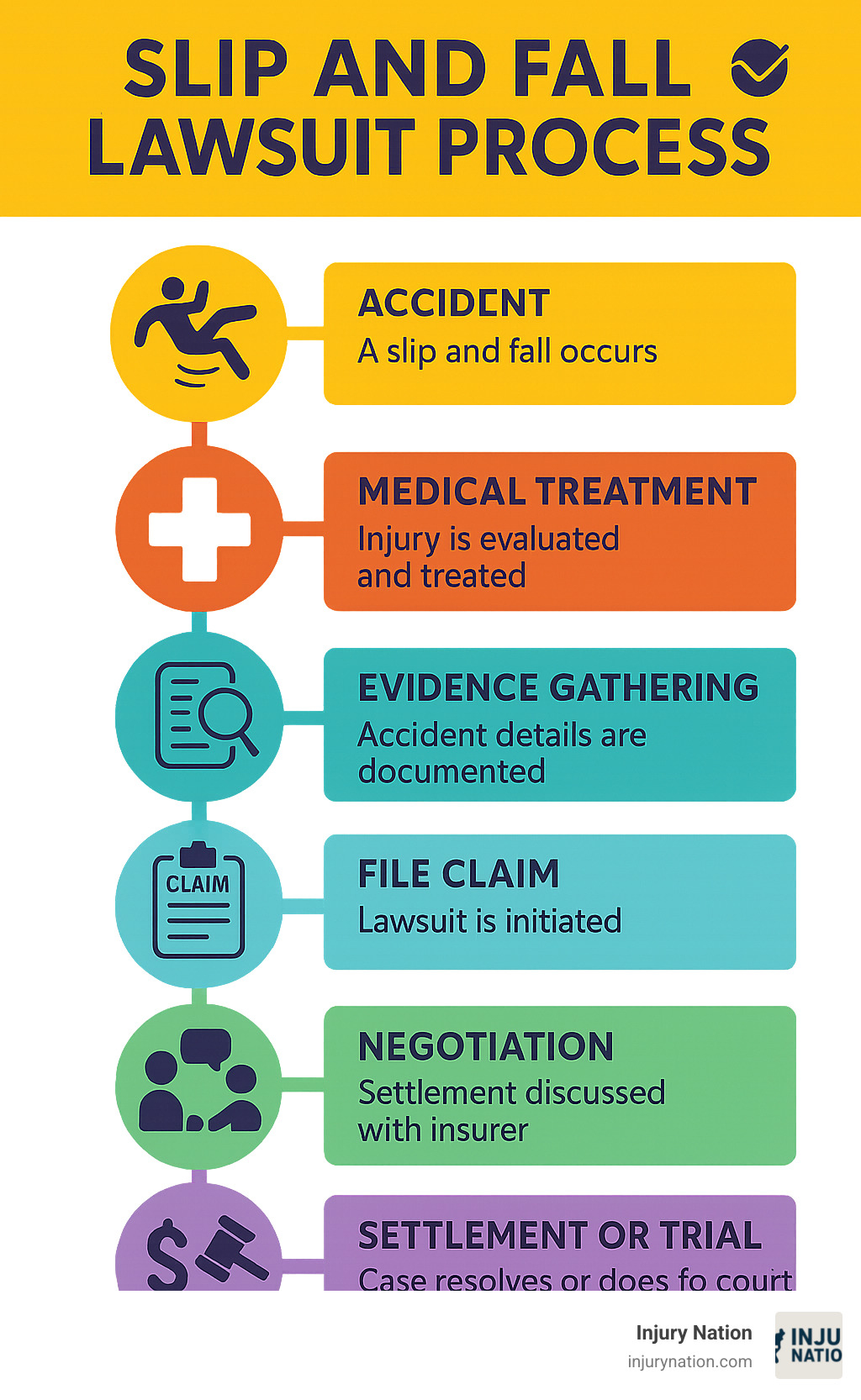
Understanding the Legal Foundation of a Slip and Fall

The legal foundation for slip and fall lawsuit cases is premises liability law. This area of law holds property owners responsible for taking reasonable steps to prevent foreseeable accidents and keep visitors safe.
The core of any case is proving negligence. To win, you must establish four key elements:
- Duty of Care: The property owner had a responsibility to maintain a safe environment. This duty is highest for customers in a business.
- Breach of Duty: The owner failed to meet that responsibility, such as not fixing a known hazard.
- Causation: The owner’s failure directly caused your fall and injuries.
- Damages: You suffered actual losses, such as medical bills, lost wages, or pain and suffering.
What Constitutes a Valid Case?
A valid lawsuit requires an unsafe condition on someone else’s property that the owner could have prevented. Common causes include:
- Wet or slippery floors
- Icy sidewalks and entrances
- Poor lighting
- Uneven surfaces like cracked pavement or torn carpeting
- Cluttered walkways
These conditions can lead to injuries ranging from sprains and fractures to severe traumatic brain injuries and spinal cord damage. The CDC reports that falls are a leading cause of injury-related death for adults over 65, highlighting the seriousness of these accidents.
Key Elements to Prove in Slip and Fall Lawsuit Cases
Winning a slip and fall case requires proving that the property owner knew or should have known about the hazard. This can be shown through:
- Actual knowledge: The owner was directly informed of the problem.
- Constructive knowledge: The hazard existed long enough that a reasonable owner should have finded it through regular inspection.
You must also prove the owner failed to act by not fixing the issue or providing adequate warning. Finally, you must establish a direct link between the hazardous condition, your fall, and your injuries. Remember the statute of limitations—the deadline for filing a claim, which is typically two to three years but varies by state. Missing this deadline can bar you from recovering compensation.
Common Defenses and Challenges
Property owners and their insurers use several common defenses to fight claims:
- Comparative Fault: They will argue you were partially to blame for the accident (e.g., you were distracted or wearing improper shoes). In most states, this reduces your compensation by your percentage of fault.
- Obvious Hazard: They may claim the danger was so apparent that a reasonable person would have avoided it.
- Lack of Evidence: Without photos, witness statements, or an incident report, it becomes your word against theirs.
- Disputing Injury Severity: Insurers often claim your injuries are not as severe as you state or were caused by a pre-existing condition.
Proving the owner’s knowledge of the hazard is often the biggest challenge. An experienced attorney can help you gather the necessary evidence to overcome these defenses.
Building a Strong Claim: Evidence and Documentation
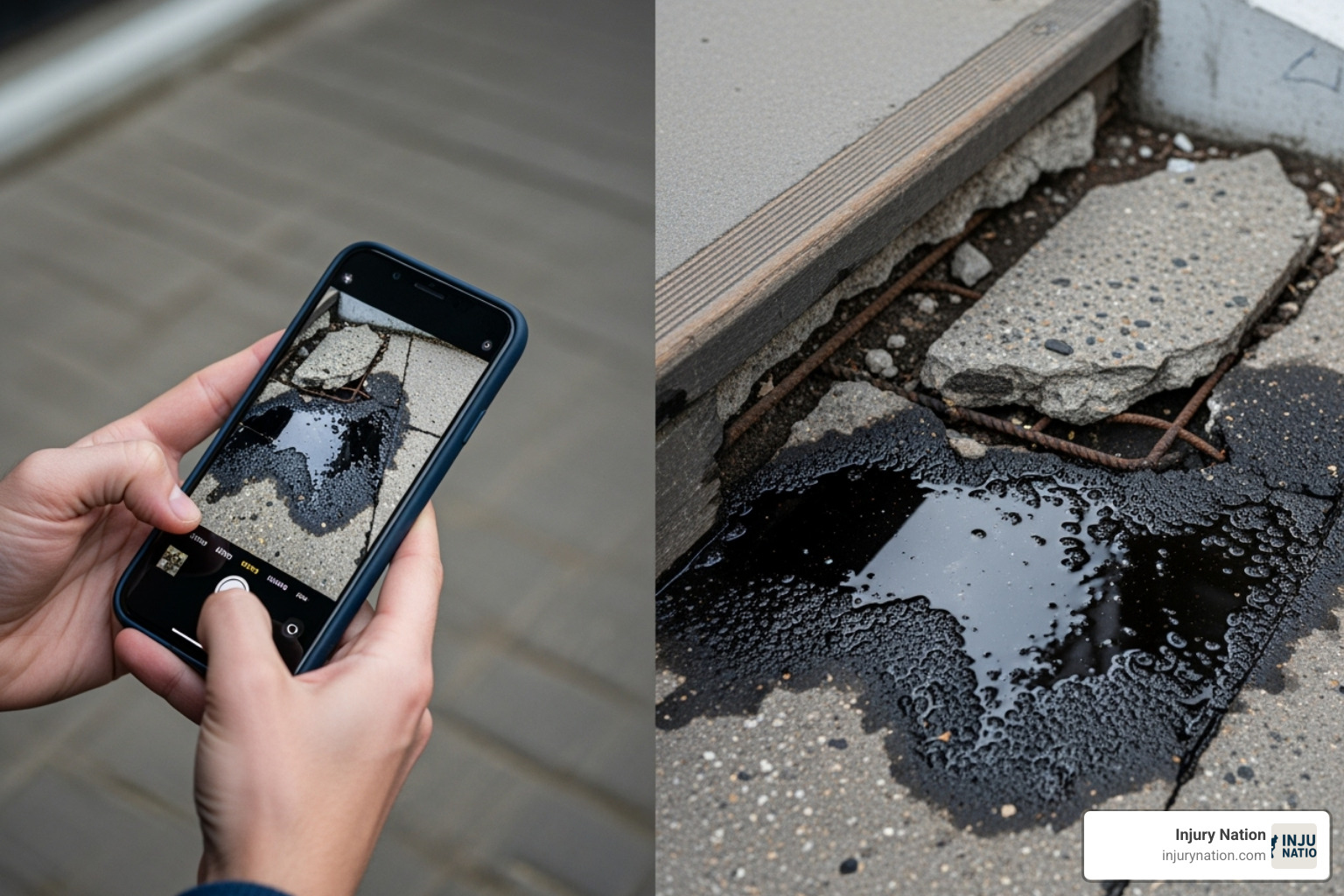
What you do in the hours and days after a fall can make or break your slip and fall lawsuit case. Strong evidence is your best tool against insurance companies whose goal is to pay as little as possible. Documenting everything helps protect your rights and builds a foundation for a fair settlement.
The First 24 Hours: Critical Steps to Take
Your actions immediately following a fall are crucial. Even if you feel embarrassed or your injuries seem minor, take these steps:
- Get medical help immediately. Some serious injuries, like concussions, aren’t immediately apparent. A medical visit creates an official record linking your injuries to the fall.
- Report the incident to the property owner or manager. Ask for a copy of the official incident report before you leave.
- Take photos and videos. Document the hazard that caused your fall from multiple angles. Capture the surrounding area, the lack of warning signs, and any visible injuries.
- Get witness information. Ask anyone who saw the fall for their name and phone number. Their testimony can be invaluable.
- Preserve your clothing and shoes. Do not wash or discard them, as they can serve as evidence.
Gathering Crucial Evidence for Your Claim
Building a strong case requires thorough evidence collection. Key pieces of evidence include:
- Medical Records and Bills: These documents create a timeline of your injuries, treatment, and costs. They are essential for proving your economic damages and pain and suffering. Following your doctor’s treatment plan is vital; failing to do so can be used against you by the insurance company.
- Incident Reports: The official report filed with the property owner is a key piece of documentation.
- Surveillance Footage: Many businesses have security cameras that may have recorded the accident or the pre-existing hazard. An attorney can send a preservation letter to ensure this footage is not deleted.
- Maintenance Logs: These records can show whether the property owner was negligent in their inspection and safety procedures.
- Expert Witness Testimony: In complex cases, safety engineers or medical experts can provide testimony to strengthen your claim.
Your medical records are particularly important as they document not just physical injuries but also your pain levels, emotional distress, and limitations on daily activities. This information is critical for calculating the full value of your claim, including compensation for future medical needs.
Damages, Settlements, and Real-World Slip and Fall Lawsuit Cases

Understanding the potential compensation in slip and fall lawsuit cases is key. The financial recovery depends on many factors unique to your situation and is designed to cover both tangible and intangible losses.
What Compensation Can You Recover?
Compensation, or damages, aims to restore you to your pre-accident condition. It is divided into two categories:
- Economic Damages: These are verifiable financial losses with receipts and bills. They include medical expenses (past and future), lost wages, and reduced future earning capacity if you cannot return to your previous job.
- Non-Economic Damages: These compensate for non-financial losses that are harder to quantify. They include pain and suffering, emotional distress (like anxiety or depression), and loss of enjoyment of life (the inability to pursue hobbies or activities). For catastrophic injuries, these damages can be substantial.
Some states place caps on non-economic damages, but many do not, especially in cases of severe injury and clear negligence.
Settlement vs. Trial: What to Expect
According to the American Bar Association, about 97% of civil cases settle before trial. Most slip and fall lawsuit cases end in a negotiated settlement.
Settlement is often preferred because it is faster, less costly, and provides a certain outcome. You know exactly how much compensation you will receive. Trial becomes necessary when an insurance company refuses to offer a fair settlement. While riskier and more time-consuming, a trial can sometimes result in a larger award. An experienced attorney can advise whether to accept an offer or proceed to court.
Notable Case Examples and Verdicts
Real-world verdicts show that juries take these cases seriously when negligence causes severe harm. High-value settlements and verdicts often share common factors: severe, life-altering injuries, clear negligence by the property owner, and the need for permanent care.
- A $20 million+ settlement was awarded to an elderly woman severely injured on a wet hotel lobby floor.
- An $18 million verdict went to a man who fell into an unmarked manhole, suffering head, neck, and back injuries.
- In Las Vegas, a woman received $13 million after a slip in a retail store caused a skull fracture and brain hemorrhage.
- A Virginia convenience store customer recovered $12.2 million for a fall-related brain injury that caused ongoing seizures.
- A $10 million award was given to a woman who suffered broken bones and facial fractures after slipping on a wet grocery store floor.
While not every case is worth millions, these examples show that the legal system can provide substantial compensation for victims of negligence.
The Importance of Expert Legal Representation

Navigating the complexities of slip and fall lawsuit cases while recovering from an injury is a significant challenge. Insurance companies have teams of lawyers dedicated to minimizing payouts. Hiring an experienced personal injury attorney levels the playing field and protects your rights.
How an Experienced Lawyer Can Help Your Case
An attorney provides critical support throughout the legal process. They will:
- Evaluate your case: A lawyer can quickly assess the strength of your claim and its potential value during a free consultation.
- Gather evidence: They know what evidence is needed and how to obtain it, such as by subpoenaing maintenance records or sending preservation letters for surveillance footage.
- Negotiate with insurers: Attorneys understand insurance company tactics and can effectively negotiate for a fair settlement, preventing you from accepting a lowball offer.
- Calculate your claim’s true value: They will account for all current and future damages, including medical care, lost earning capacity, and pain and suffering.
- Represent you in court: If a fair settlement cannot be reached, a trial-ready lawyer signals to the insurer that you are serious about your claim.
Common Challenges in Proving Slip and Fall Lawsuit Cases
An attorney is essential for overcoming the many challenges victims face:
- Insurance Company Tactics: Insurers often delay claims or use your statements against you to deny or reduce your compensation.
- Lowball Settlement Offers: The initial offer is almost always far below the true value of your claim, preying on your financial pressure.
- Proving Owner’s Knowledge: Establishing that the owner knew or should have known about the hazard is a complex legal hurdle.
- Shifting Blame: The defense will try to argue you were at fault to reduce their liability under comparative negligence rules.
At Injury Nation, we connect victims with experienced attorneys who specialize in premises liability. For more information, check out our blog or find qualified Personal Injury Lawyers in your area to fight for you.
Frequently Asked Questions about Slip and Fall Lawsuits
It’s natural to have questions after a slip and fall injury. Here are straightforward answers to some of the most common concerns.
What is the average settlement for a slip and fall?
There is no standard “average” settlement for slip and fall lawsuit cases. The value of a claim depends entirely on the specifics of your case. A minor sprain might result in a few thousand dollars, while a fall causing a traumatic brain injury could be worth millions.
The final amount is determined by your specific damages, including:
- Severity of the injury: A permanent disability is valued much higher than a temporary injury.
- Total medical costs: This includes all past and future treatment.
- Amount of lost income: Both past wages and future earning capacity are considered.
- Clarity of fault: A stronger case of negligence by the property owner typically leads to a higher settlement.
How long do I have to file a slip and fall lawsuit?
Every state has a statute of limitations, which is a strict deadline for filing a lawsuit. This deadline varies by state but is typically 2-3 years from the date of the accident. In some cases, especially when suing a government entity, the initial notice period can be as short as 30 to 90 days.
It is crucial to act quickly. If you miss the deadline, you will almost certainly lose your right to seek compensation, regardless of how strong your case is. The clock starts on the date of the accident, so it is vital to seek legal advice early.
Can I still sue if I was partially at fault?
Yes, in most states, you can still recover compensation even if you were partially at fault for your accident. The majority of states use a comparative negligence system.
Under this rule, your total compensation is reduced by your percentage of fault. For example, if your damages are calculated at $100,000 but you are found to be 20% at fault, your award would be reduced by 20% to $80,000.
Defense lawyers will work hard to shift as much blame as possible onto you to reduce the payout. However, being partially at fault does not excuse the property owner’s negligence in maintaining a safe environment. An experienced attorney can help protect your interests and counter these arguments.
Conclusion: Taking the Next Step Towards Justice
Navigating the aftermath of a slip and fall accident is challenging. You are likely dealing with injuries, medical bills, and an intimidating legal system. The most important thing to remember is that you have rights, and you don’t have to face this alone.
As we’ve discussed, the key to a successful claim is acting promptly to preserve evidence and prove the property owner’s negligence. The legal process is complex, and insurance companies have teams of lawyers working to protect their own interests. That is why you need an expert fighting just as hard for yours.
Time is critical. State laws on the statute of limitations are strict, and every day that passes is a day closer to potentially losing your right to compensation. Don’t let the opportunity slip away because you waited too long.
At Injury Nation, our mission is to ensure every accident victim has access to experienced legal representation. An attorney can handle the evidence gathering, negotiate with insurers, and, if necessary, take your case to court.
Your next step is simple but crucial: reach out for a free consultation. Most personal injury lawyers offer them for slip and fall lawsuit cases, so you have nothing to lose. They can evaluate your case and explain your options.
Find top-rated Personal Injury Lawyers in your area and take the first step toward the justice and compensation you deserve.