

Why Emergency Room Errors Matter
Emergency room errors affect millions of patients every year, and understanding what can go wrong could protect you or someone you love. When you’re rushed to the ER, you expect competent care—but mistakes happen more often than most people realize.
Common ER errors include:
- Misdiagnosis or delayed diagnosis (especially for strokes, heart attacks, and infections)
- Medication mistakes (wrong drug, incorrect dosage, or dangerous interactions)
- Triage errors (being assigned the wrong priority level)
- Testing failures (lost samples, misread results, or wrong tests ordered)
- Treatment delays (waiting too long for critical care)
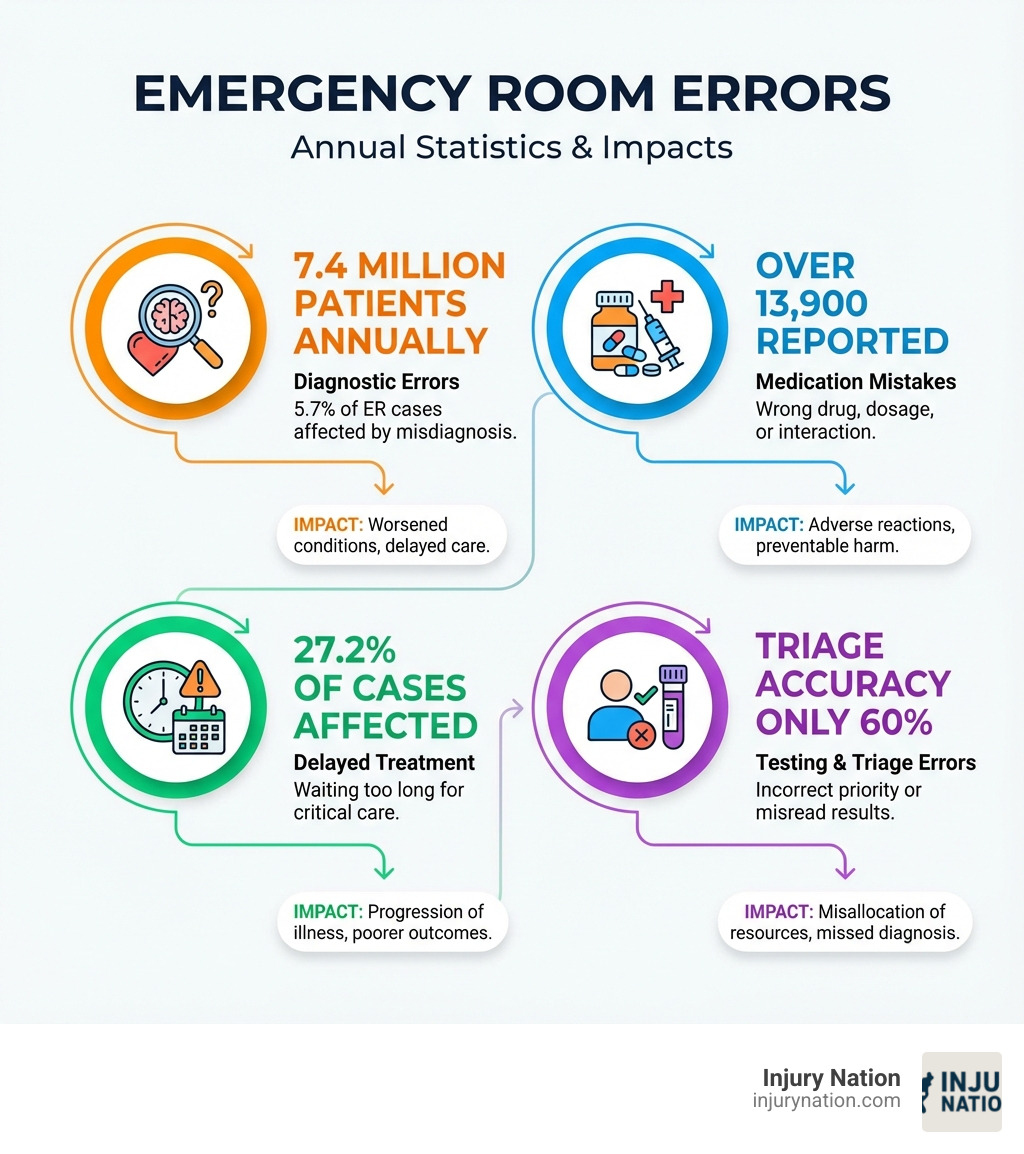
An estimated 7.4 million patients (5.7%) in the U.S. experience diagnostic errors annually in ERs. These aren’t just statistics—they represent real people who trusted the system and were let down.
The emergency department is a high-pressure environment where doctors and nurses make life-or-death decisions in seconds. But pressure doesn’t excuse negligence. When medical professionals fail to meet the standard of care, patients suffer preventable harm. Some walk away with worsened conditions. Others face permanent disability or death.
If you’ve been harmed by an ER error, you’re not alone. You have rights, and understanding what went wrong is the first step toward justice.
A Breakdown of Common Emergency Room Errors
When we talk about Emergency room errors, we’re not just discussing minor slip-ups. These are often critical mistakes with life-altering consequences. The emergency room is a place of rapid assessment and intervention, but this fast pace can sometimes lead to devastating oversights. Let’s dig into the most frequent types of mistakes we see and understand their impact.
Misdiagnosis and Diagnostic Errors
Imagine rushing to the ER with excruciating chest pain, only to be told it’s just indigestion. Or experiencing a sudden, severe headache, and being sent home with pain relievers, unknowingly suffering a stroke. These scenarios highlight the critical issue of diagnostic errors. Misdiagnosis, delayed diagnosis, or a complete failure to diagnose can have dire consequences, especially when dealing with time-sensitive conditions.
The pressure in the ER means doctors must make quick decisions with limited information. Unfortunately, this can lead to conditions like stroke, heart attack, or aortic aneurysm being missed or mistaken for less serious ailments. According to a CNN report, the top five misdiagnosed conditions often include vascular events like stroke and heart attack, infections, and certain cancers. When these serious conditions are missed, precious time for effective treatment is lost, leading to worse outcomes, permanent disability, or even death.
Consider these symptoms, which, if dismissed, could point to a severe underlying issue:
- Chest pain: Often linked to heart attack, but can be mistaken for heartburn, anxiety, or musculoskeletal pain.
- Severe headache: Could indicate a stroke, aneurysm, or meningitis, but sometimes dismissed as a migraine or tension headache.
- Abdominal pain: While common, it can signal appendicitis, ectopic pregnancy, or an aortic aneurysm.
- Shortness of breath: Beyond asthma or bronchitis, this could be a symptom of a pulmonary embolism or heart failure.
- Weakness or numbness on one side of the body: A classic sign of stroke, but might be attributed to fatigue or a pinched nerve.
Early and accurate diagnosis is paramount. When it doesn’t happen, the consequences can be catastrophic for patients and their families.
Medication and Prescription Mistakes
Medication errors are another significant category of Emergency room errors. In the , often chaotic environment of an ER, administering medications requires meticulous attention to detail. A single mistake can have severe repercussions, from adverse drug interactions to life-threatening allergic reactions.
These errors can manifest in several ways:
- Wrong medication: A patient might receive a drug intended for someone else, or a medication that is inappropriate for their condition.
- Incorrect dosage: Administering too much or too little of a prescribed drug can be ineffective or dangerous.
- Adverse drug interactions: Failing to check a patient’s current medications for potential harmful interactions.
- Allergic reactions: Administering a drug to which a patient is known to be allergic, often due to inadequate review of their medical history or miscommunication.
The numbers are sobering. One study reported over 13,900 medication errors, highlighting the pervasive nature of this problem in healthcare settings. These errors often stem from communication breakdowns, fatigue, or a lack of proper checks and balances in the medication administration process. For instance, a doctor’s illegible handwriting on a prescription, a nurse misinterpreting an order, or a pharmacist dispensing the wrong drug can all lead to severe patient harm.
Triage and Treatment Delays
The triage process in an emergency room is designed to prioritize patients based on the severity of their condition. However, when triage goes wrong, it becomes a critical Emergency room error that can delay life-saving treatment. Undertriage—where a severely ill patient is assigned a lower priority than their condition warrants—can have devastating consequences.
Think about it: A patient arrives with subtle signs of a serious infection, but because their symptoms aren’t immediately dramatic, they’re categorized as “less urgent.” While they wait, their condition can rapidly worsen, turning a treatable illness into a medical emergency. Studies have shown that triage accuracy is often far from perfect, with some research indicating it was only approximately 60%. This means nearly half of patients might not be accurately prioritized upon arrival.
Once triaged, patients can still face significant treatment delays. Staffing shortages, overcrowded ERs, and inefficient internal processes can all contribute to patients waiting hours for a doctor, a diagnostic test, or an intervention. One study found that delayed treatment affected 27.2% of cases, leading to increased morbidity and mortality. For conditions like sepsis, stroke, or heart attack, every minute counts. A delay of just an hour can significantly reduce the chances of a positive outcome. These delays aren’t just an inconvenience; they can be the difference between recovery and permanent injury or even death.
Testing and Laboratory Errors
Diagnostic testing is a cornerstone of modern emergency medicine, providing crucial information to guide treatment decisions. However, a range of Emergency room errors can occur in the testing and laboratory process, leading to incorrect diagnoses or delayed care.

These errors can include:
- Misread results: X-rays, CT scans, MRIs, or lab reports can be misinterpreted by fatigued or inexperienced staff, leading to a missed diagnosis or an incorrect one.
- Lost samples: Blood, urine, or tissue samples can be misplaced, requiring re-collection and delaying critical diagnostic information.
- Incorrect tests ordered: A doctor might order the wrong test for a patient’s symptoms, failing to identify the actual problem.
- Contaminated samples: Samples can be contaminated during collection or handling, leading to inaccurate results and potentially false diagnoses.
- Radiology errors: Mistakes in interpreting imaging results, such as missing a fracture, a tumor, or an internal bleed.
The consequences of these testing errors can be profound. A missed fracture might lead to improper healing and long-term pain. A delayed diagnosis of internal bleeding could be fatal. When we rely on these tests for definitive answers, any error in the process can set a patient on a dangerous path, highlighting the need for vigilance at every step.
Why Mistakes Happen: The Root Causes of ER Errors
Understanding that Emergency room errors occur is one thing; comprehending why they happen is another. It’s rarely a single point of failure but rather a complex interplay of systemic issues, human factors, and environmental pressures. Exploring these root causes helps us see the bigger picture beyond individual mistakes.
Communication Breakdowns
Effective communication is the lifeblood of any successful team, and in the high-stakes environment of the emergency room, it’s absolutely critical. Yet, communication breakdowns are a leading cause of Emergency room errors.
Consider these common scenarios:
- Patient-doctor communication: Patients, often in pain or distress, may struggle to articulate their symptoms clearly. Doctors, under pressure, might rush through questions or fail to listen actively, missing crucial details.
- Staff handoffs: When shifts change, critical information about a patient’s condition, test results, or treatment plan can be lost or misinterpreted during the handoff from one healthcare provider to another.
- Interruptions: The ER is a symphony of alarms, calls, and urgent requests. Physicians, for example, dedicate about 10% of their time to multiple conversations, meaning they’re constantly being pulled in different directions. These interruptions can lead to missed details or errors in judgment.
- Incomplete information: A lack of access to a patient’s full medical history, allergies, or current medications can lead to dangerous errors.
- Electronic Health Record (EHR) issues: While EHRs are designed to improve communication, poorly designed systems, data entry errors, or alert fatigue can create their own set of problems, leading to overlooked warnings or incorrect information.
These communication gaps can lead to misdiagnosis, medication errors, and treatment delays, ultimately jeopardizing patient safety.
System, Staffing, and Equipment Failures
Beyond human communication, broader systemic issues significantly contribute to Emergency room errors. The very structure and resources of an ER can set the stage for mistakes.
- Overcrowding: ERs are often stretched beyond their capacity. Too many patients and too few beds mean longer wait times, rushed care, and increased stress for staff. This can lead to patients being overlooked or receiving suboptimal attention.
- Staff burnout: The demanding nature of ER work, with long shifts and constant high-stress situations, leads to high rates of burnout among doctors and nurses. Exhausted staff are more prone to making mistakes.
- Inadequate training: While medical professionals undergo extensive training, specific protocols or new equipment might not always be thoroughly covered, leading to errors.
- High turnover: A constant cycle of new staff means a loss of institutional knowledge and experience, placing additional strain on existing teams.
- Malfunctioning equipment: From IV pumps to defibrillators, faulty or poorly maintained medical equipment can directly harm patients or hinder effective treatment.
- Insufficient resources: A lack of necessary supplies, diagnostic tools, or support staff can impede timely and effective care.
It’s a stark reality that emergency physicians face immense pressure, with 75% of United States emergency physicians are named in malpractice cases at some point in their careers. This statistic underscores the challenging environment and the potential for errors even among highly skilled professionals.
How to Identify Potential Emergency Room Errors
Recognizing an Emergency room error can be challenging, especially when you’re in a vulnerable state or advocating for a loved one. However, being aware of certain red flags can empower you to question care and seek further evaluation.
Keep an eye out for these indicators:
- Worsening condition after discharge: You were sent home, but your symptoms are getting worse instead of better, or new, concerning symptoms appear. This could suggest a missed diagnosis or inadequate treatment.
- Conflicting information from staff: Different doctors or nurses providing contradictory diagnoses, prognoses, or treatment plans.
- Diagnosis doesn’t match symptoms: If your “gut feeling” tells you the diagnosis doesn’t align with what you’re experiencing, or if a specific symptom wasn’t adequately addressed.
- Intuition or “gut feeling”: Sometimes, a patient or family member simply senses that something isn’t right. Don’t dismiss this intuition; it often stems from observing inconsistencies or subtle cues.
- Lack of follow-up instructions: Being discharged without clear, comprehensive instructions for home care, medication, or when to seek further medical attention.
- Unexplained complications: Developing new health problems or complications that weren’t present before your ER visit and cannot be easily explained by your initial condition.
If you observe any of these signs, it’s crucial to speak up, ask questions, and potentially seek a second opinion. Your proactive approach could prevent further harm.
From Error to Lawsuit: Navigating the Legal Aftermath
When Emergency room errors lead to harm, the path forward can be daunting. Understanding your legal rights is the first step toward seeking justice and compensation for the harm caused by medical negligence. It’s about holding those responsible accountable and ensuring that such mistakes are not repeated.
Defining Medical Malpractice in the ER
Medical malpractice occurs when a healthcare professional deviates from the accepted standard of care, resulting in injury to a patient. In the context of an ER, establishing medical malpractice involves proving four key elements:
- Duty: The healthcare provider (doctor, nurse, hospital) owed you a duty of care. This is generally established once a patient-provider relationship exists, which it does when you seek care in an ER.
- Breach of Duty: The provider breached that duty by failing to meet the accepted “standard of care.” This means they acted negligently, doing something a reasonably prudent medical professional would not have done, or failing to do something a reasonably prudent professional would have done, under similar circumstances in Las Vegas, Nevada.
- Causation: The breach of duty directly caused your injury. This is often the most challenging element to prove, requiring expert medical testimony to link the error to the harm suffered.
- Damages: You suffered actual damages (e.g., medical expenses, lost wages, pain and suffering) as a result of the injury.
The standard of care in an ER can differ from other medical settings due to the urgent, high-pressure nature of the environment. However, this doesn’t excuse negligence. While ER doctors must make rapid decisions, they are still expected to exercise reasonable skill and care, consistent with what a peer in the same specialty would do under similar emergency circumstances.
Who Can Be Held Liable?
When an Emergency room error occurs, determining who is responsible can be complex. Liability can extend beyond the individual doctor or nurse directly involved.
Potential parties who can be held liable include:
- Doctors: For misdiagnosis, surgical errors, medication mistakes, or failure to order appropriate tests.
- Nurses: For medication errors, failure to monitor a patient’s condition, or improper administration of care.
- Hospitals: For systemic issues such as understaffing, inadequate training, faulty equipment, or negligent credentialing of staff.
- Technicians: For errors in performing tests (e.g., X-ray techs, lab techs) or misinterpreting results.
- Hospital administrators: If their policies or lack of resources directly contributed to the error.
- Pharmaceutical companies: In cases where a defective drug or misleading information about a drug contributed to the harm.
Understanding who can be held responsible is crucial for pursuing a successful medical malpractice claim. For more detailed information on the types of compensation you might be able to recover, our guide on Medical Malpractice Damages provides a complete overview.
The Importance of Federal Laws like EMTALA
The Emergency Medical Treatment and Labor Act (EMTALA) is a vital federal law that plays a significant role in protecting patients in emergency settings, particularly against a practice once known as “patient dumping.” This law ensures that anyone who comes to a hospital emergency department seeking treatment for a medical condition must be given a medical screening examination, regardless of their ability to pay or their insurance status.
Key aspects of EMTALA include:
- Right to treatment: Hospitals are required to treat anyone who presents with an emergency medical condition.
- Stabilizing treatment: If an emergency medical condition exists, the hospital must provide treatment to stabilize the patient’s condition before transferring them or discharging them.
- Patient dumping: EMTALA was enacted to prevent hospitals from refusing to treat indigent or uninsured patients or transferring them to other hospitals before their condition was stable.
While EMTALA primarily focuses on access to care and stabilization, violations of this act can sometimes be intertwined with Emergency room errors. For instance, if a hospital prematurely discharges a patient who is not yet stable, and that patient suffers harm, it could be a violation of EMTALA and potentially contribute to a medical malpractice claim. The Centers for Medicare & Medicaid Services (CMS) provides guidance on these requirements, emphasizing that hospital emergency departments are indeed required to treat anyone in need. This law serves as a critical safeguard, ensuring that even in the most chaotic ERs, a basic level of care and stabilization is provided to all.
What to Do if You Suspect an ER Error Harmed You
Finding that you or a loved one has been harmed by an Emergency room error can be a distressing and overwhelming experience. Taking prompt and correct action, however, can protect your health, preserve your legal rights, and lay the groundwork for seeking justice.
Step 1: Seek Immediate Medical Attention
Your health is the absolute priority. If you suspect an ER error has occurred, or if your condition is worsening after an ER visit, do not hesitate.
- Get a second opinion: Consult with a different doctor, or visit another hospital or specialist. This new medical evaluation can help identify the error, correct the diagnosis, or provide the proper treatment that was initially missed.
- Correct the medical issue: Focus on getting the necessary medical care to address the harm caused by the error. This might involve new medications, procedures, or even surgery.
- Document new diagnoses: Ensure that any new diagnoses or changes in treatment are thoroughly documented in your new medical records. These records will be crucial evidence later on.
Acting quickly can not only mitigate further harm but also provide vital documentation for any potential legal action.
Step 2: Gather and Preserve Evidence
Medical malpractice cases, especially those involving Emergency room errors, heavily rely on detailed documentation. The more evidence you can gather, the stronger your potential claim will be.
- Request all medical records: Obtain a complete copy of your medical records from the ER visit, including doctor’s notes, nurses’ charts, test results (labs, imaging), medication administration records, and discharge summaries. Be thorough; sometimes crucial details are found in unexpected places.
- Keep a detailed journal: Document your symptoms, pain levels, emotional state, and any conversations you have with medical staff. Include dates, times, and the names of individuals involved. This journal can serve as a powerful personal account of your experience.
- Save bills and receipts: Keep records of all medical bills, prescription costs, and any other expenses incurred as a direct result of the ER error. Also, document lost wages or income if you were unable to work.
- Take photos of injuries: If the error resulted in visible injuries (e.g., surgical scars, bedsores, physical deformities), take clear, dated photographs.
This evidence will be invaluable for your legal team as they build your case.
Step 3: Understand the Legal Process
Navigating the legal landscape after an Emergency room error can be complex, but understanding the basic steps can help you feel more prepared.
- Statute of limitations: Be aware that there are strict time limits (statutes of limitations) for filing medical malpractice lawsuits. These vary by state, so it’s crucial to act quickly. In Nevada, for example, there are specific deadlines that must be met.
- Filing a claim: This involves formally initiating a lawsuit against the negligent parties. Your attorney will handle the intricate paperwork and legal filings.
- Findy process: Both sides will exchange information, including medical records, witness testimonies, and expert opinions, to build their respective cases.
- Settlement negotiations: Many medical malpractice cases are resolved through negotiations outside of court. Your attorney will advocate for a fair settlement that covers your damages.
- The role of a medical malpractice attorney: An experienced attorney specializing in medical malpractice will guide you through every step, evaluate your claim, gather evidence, consult with medical experts, and represent your interests. They understand the nuances of these complex cases and are essential for maximizing your chances of a successful outcome.
Frequently Asked Questions about Emergency Room Errors
What is the most common type of error in the emergency room?
Diagnostic errors, including misdiagnosis, delayed diagnosis, and failure to diagnose, are the most common type of Emergency room errors. Studies show that an estimated 5.7 percent of all ED visits will have at least one diagnostic error, affecting millions of patients annually. These errors often occur with conditions like stroke, heart attack, and infections, where quick and accurate identification is crucial.
Can I sue if I was discharged too early from the ER?
Yes, if being discharged prematurely caused your condition to worsen or led to further injury, you may have a case for medical malpractice. This falls under “improper discharge” and requires proving that the decision to discharge you was negligent and fell below the accepted standard of care. For instance, if you were discharged while unstable or without proper instructions for a serious condition, and that led to harm, you likely have grounds for a claim.
How do I prove my injury was caused by an ER error?
Proving causation involves demonstrating a direct link between the healthcare provider’s negligence and the harm you suffered. This typically requires a thorough review of your medical records and expert testimony from another medical professional. This expert will need to state that, more likely than not, the ER error (the breach of the standard of care) directly led to your injury or worsened your condition, and that a different outcome would have occurred had the error not happened.
Finding the Right Legal Help for Your Claim
If you or a loved one has suffered due to a mistake in the emergency room, the consequences can be overwhelming. Navigating the complex medical and legal systems requires expertise and dedication. The attorneys listed in the Injury Nation directory specialize in holding negligent parties accountable and fighting for the compensation victims deserve. To find an experienced lawyer in your area and understand your options, explore our network of trusted professionals. We connect individuals in Las Vegas, Nevada, and across America, with legal experts who understand the unique challenges of hospital injury claims. Our goal is to help you find the right advocate to secure a larger settlement and help you move forward. Find help for your hospital injury claim today.