

When Life Changes in an Instance: Understanding Your Legal Rights
A Catastrophic injury attorney is a specialized personal injury lawyer who handles cases involving severe, life-altering injuries that result in permanent disability, extensive medical treatment, and significant long-term impact on a victim’s ability to work and live independently. These attorneys focus specifically on securing maximum compensation for victims facing devastating injuries like traumatic brain injuries, spinal cord damage, severe burns, and amputations.
What You Need to Know About Catastrophic Injury Attorneys:
- Specialization: They focus exclusively on severe, life-changing injuries requiring extensive future care
- Fee Structure: Most work on contingency—you pay nothing unless they win your case
- Case Value: Catastrophic injury settlements are typically much higher than standard personal injury claims due to lifetime care needs
- Expertise Required: These cases demand attorneys with access to medical experts, life care planners, and economic specialists
- Time Sensitivity: Nevada law gives you two years from the date of injury to file a claim
When a severe accident results in life-changing injuries, the path to recovery becomes long, challenging, and fraught with legal complexity. About 190 Americans die from TBI-related injuries each day, and approximately 17,900 new spinal cord injuries occur annually in the United States. These devastating statistics represent real people—individuals whose lives changed in an instant, along with the families who now face overwhelming medical bills, lost income, and an uncertain future.
The physical consequences are only part of the story. Catastrophic injuries often require lifelong medical care, extensive rehabilitation, home modifications, and specialized equipment. Many victims can never return to their previous employment or live independently again. The financial burden can easily reach millions of dollars over a lifetime.
Insurance companies know the stakes are high in these cases. They often pressure victims to settle quickly for far less than they deserve, hoping to close the case before the full extent of damages becomes clear. This is where specialized legal representation becomes critical—not just helpful, but essential to protecting your rights and securing the compensation needed for your future care.
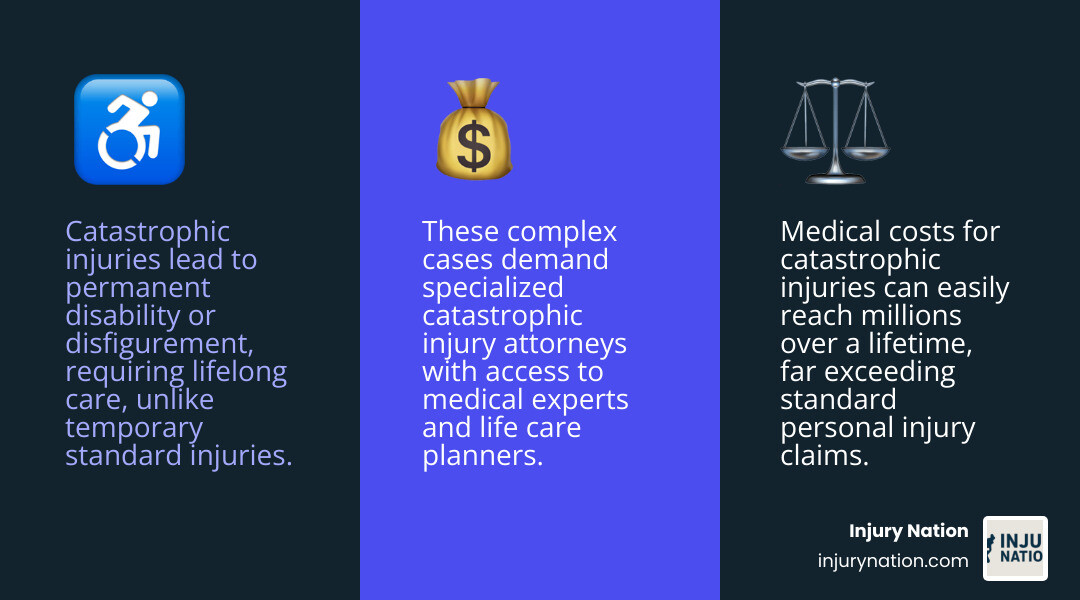
Catastrophic injury attorney definitions:
Understanding Catastrophic Injuries: Definition, Types, and Causes
When we talk about catastrophic injuries, we’re not just discussing a broken bone or a sprained ankle. These are injuries that fundamentally alter a person’s life, demanding extensive medical intervention, long-term care, and often, a complete rethinking of their future. Understanding what constitutes such an injury is the first step toward getting the help you need.
What Is a Catastrophic Injury?
Legally and medically, a catastrophic injury is an injury of extreme severity that has profound and lasting consequences. While there isn’t a single, universally accepted definition, the core idea revolves around permanence and life-altering impact.
Federal law, specifically 34 U.S. Code § 10284, defines a “catastrophic injury” as one that “proximately results in a person being unable to perform work, including sedentary work.” This means the injury directly and immediately prevents an individual from engaging in meaningful employment. In simpler terms, if an injury leaves you permanently unable to work or significantly diminishes your quality of life, it’s likely considered catastrophic.
In Nevada, while there isn’t a specific statute defining “catastrophic injury” as a distinct legal category, the courts recognize severe injuries based on their consequences. These can include:
- Loss of eyesight or hearing
- Amputation
- Partial or complete paralysis
- Head injuries causing severe cognitive impairment
- Severe burns on a significant portion of the body
- Loss of the ability to speak
- Coma or vegetative state
- Failure of a vital organ system
- Mangling or crushing of a body part
Such injuries result in permanent disability or long-term impairment, often necessitating lifelong medical care and assistance. The impact on daily life is profound, affecting everything from personal care and mobility to relationships and mental well-being.
Common Types of Catastrophic Injuries
Catastrophic injuries encompass a range of devastating physical traumas, each with its own set of challenges and long-term implications. These are not merely injuries; they are life sentences that require dedicated support and resources.
Here’s a list of the most common types of catastrophic injuries we see:
- Traumatic Brain Injuries (TBI): A severe blow or jolt to the head can cause complex and debilitating brain damage. TBIs often result in cognitive impairments, personality changes, physical disabilities, and emotional difficulties that forever change a person’s life. Tragically, about 190 Americans die from TBI-related injuries each day according to the CDC.
- Spinal Cord Injuries (SCI): Damage to the spinal cord can cause partial or total paralysis, respiratory issues, loss of sensation and motor function, and other devastating impacts. There are about 17,900 new spinal cord injuries annually in the United States alone. Common outcomes include paraplegia (paralysis of the legs) and quadriplegia (paralysis of all four limbs).
- Severe Burns: Catastrophic burn injuries involve damage to multiple layers of skin and underlying tissue. Severe burns are incredibly painful, pose a high risk of complications like infection, and usually require skin grafts and extensive treatment. Permanent scarring and disfigurement are common consequences. Approximately 40,000 burn injury hospitalizations occur annually in the U.S.
- Amputations: Losing a limb is an immensely challenging experience with lifelong ramifications. Traumatic amputations from accidents and surgical amputations due to medical negligence both have far-reaching physical and psychological impacts. The Amputee Coalition estimates that 45% of amputations are due to trauma.
- Organ Damage: Injuries leading to vital organ failure or severe damage can be catastrophic. For example, medication errors cause at least one death every day and injure approximately 1.3 million people annually in the U.S., often leading to organ damage.
- Vision Loss: Complete or significant partial blindness can drastically alter a person’s independence and ability to perform daily tasks.
- Hearing Loss: Profound hearing loss can impede communication, affecting social interaction and employment opportunities.
What Causes These Devastating Injuries?
Catastrophic injuries can arise from a wide array of circumstances, but they almost always stem from someone else’s negligence or reckless actions. In Las Vegas, as in other busy areas, certain incidents are more likely to lead to these severe outcomes.

Common causes include:
- Motor Vehicle Accidents: Car accidents, truck accidents, motorcycle crashes, bus accidents, and pedestrian accidents are frequent causes. The sheer force involved in high-speed collisions can lead to traumatic brain injuries, spinal cord damage, and multiple fractures.
- Workplace Accidents: Construction sites, in particular, are notorious for serious injuries due to falls, falling objects, equipment malfunctions, or chemical exposures. Nevada’s busy construction industry means these types of accidents are a significant concern.
- Medical Malpractice: Errors by medical professionals, such as misdiagnosis, surgical mistakes, or medication errors, can lead to catastrophic consequences like organ damage, brain injury due to lack of oxygen, or severe infections.
- Defective Products: Malfunctioning machinery, unsafe vehicles, or hazardous consumer products can directly cause severe injury. For example, a defective car design might lead to a catastrophic injury in a rollover accident.
- Premises Liability: Property owners have a responsibility to maintain safe environments. Slip and fall accidents, swimming pool accidents, or inadequate security leading to acts of violence can result in catastrophic injuries.
- Acts of Violence: Assaults or other violent acts can inflict severe injuries, including brain trauma, spinal cord damage, or internal organ damage.
Unintentional injuries are a leading cause of death for Americans ages 1-44 and result in nearly 40 million emergency room visits annually. These statistics highlight the prevalence and devastating impact of catastrophic injuries, often caused by negligence that could have been prevented.
The Lifelong Impact and Complexities of a Claim
A catastrophic injury doesn’t just affect the victim; it reverberates through their entire family and community. The long-term consequences are profound, creating a complex web of medical, financial, and emotional challenges that demand specialized legal attention.
The Long-Term Effects on Victims and Families
When we represent someone who has suffered a catastrophic injury, we understand that we are not just handling a legal case; we are helping a person rebuild their life. The effects are multifaceted:
- Physical Consequences: These injuries often lead to permanent loss of function, chronic pain, debilitating disfigurement, and the need for assistive devices like wheelchairs or prosthetics. Many require ongoing surgeries, rehabilitation, and medication for the rest of their lives.
- Financial Burden: The costs associated with catastrophic injuries are staggering. They include emergency medical care, multiple surgeries, extensive rehabilitation and physical therapy, adaptive equipment, home and vehicle modifications, and lifelong medication. Beyond direct medical costs, victims often face lost wages and a significant reduction or complete loss of future earning capacity.
- Emotional Trauma and Psychological Damage: Living with a catastrophic injury is incredibly difficult. Victims often experience severe emotional distress, depression, anxiety, and post-traumatic stress disorder (PTSD). The psychological toll can be as profound as the physical one.
- Impact on Family: Family members often become primary caregivers, leading to their own emotional and financial strain. A spouse might need to leave their job to provide full-time care, further compounding the financial burden. The “loss of consortium” refers to the loss of companionship, affection, and support a family member experiences due to the injury of their loved one.

These injuries don’t just heal; they require ongoing management and adaptation. We strive to ensure that every aspect of this lifelong impact is accounted for in a claim.
What Compensation Can Be Recovered?
When pursuing a catastrophic injury claim, our goal is to secure comprehensive compensation that covers all losses, both immediate and long-term. In Las Vegas, Nevada, victims can seek various types of damages:
-
Economic Damages: These are quantifiable financial losses and can include:
- Medical Bills: Past, current, and future costs for emergency care, surgeries, hospital stays, doctor visits, medications, and specialized treatments.
- Lost Wages: Income lost from being unable to work since the injury.
- Future Care Costs and Rehabilitation: This is a critical component for catastrophic injuries. It covers ongoing physical therapy, occupational therapy, speech therapy, behavioral therapy, vocational rehabilitation, nursing care, home health aides, and specialized medical equipment. We work with “lifecare planners” to project these expenses over a lifetime.
- Home and Vehicle Modifications: Costs associated with making a home wheelchair-accessible, installing ramps, or modifying a vehicle for adaptive driving.
- Loss of Earning Capacity: Compensation for the reduction or complete inability to earn income in the future due to the injury.
-
Non-Economic Damages: These are intangible losses that significantly impact quality of life:
- Pain and Suffering: Compensation for physical pain, discomfort, and agony endured.
- Emotional Distress and Mental Anguish: Acknowledges the psychological impact, including anxiety, depression, fear, and PTSD.
- Loss of Enjoyment of Life: Accounts for the inability to participate in hobbies, activities, and daily pleasures enjoyed before the injury.
- Loss of Consortium: Addresses the negative impact on marital and family relationships.
- Disfigurement: Compensation for permanent scarring or altered appearance.
-
Punitive Damages: In some rare cases, if the defendant’s actions were particularly egregious, demonstrating oppression, fraud, or malice, punitive damages may be awarded. These are intended to punish the wrongdoer and deter similar conduct. In Nevada, punitive damages have specific caps: typically, three times the economic and non-economic damages (if $100,000 or more), or $300,000 (if less than $100,000), though exceptions exist.
The value of a catastrophic injury case is unique to each circumstance, but it is often significant due to the high medical bills and lifelong needs. We work with experts to perform thorough lifecare planning and medical needs assessments to ensure all current and future expenses are accounted for.
Building a Strong Case: Evidence and Proof
To successfully secure the compensation you deserve, we must build an irrefutable case backed by compelling evidence. This process is meticulous and requires a deep understanding of both medical and legal complexities.
Key pieces of evidence include:
- Medical Records: Comprehensive documentation of all treatments, diagnoses, prognoses, medications, and therapy sessions. This is crucial for proving the extent and long-term impact of the injury.
- Medical Expert Testimony: We often consult with and retain medical specialists—neurologists, orthopedists, rehabilitation specialists, and others—who can provide expert opinions on the nature of the injury, its future course, and the necessary lifelong care.
- Accident Reports: Police reports, incident reports, and workplace accident reports provide official documentation of how the injury occurred and often identify initial parties at fault.
- Witness Statements: Accounts from individuals who saw the accident or can attest to the victim’s condition before and after the injury.
- Photos and Videos: Visual evidence from the accident scene, of the injuries sustained, and property damage can be incredibly powerful.
- “Day in the Life” Videos: These unique visual aids demonstrate the profound impact of the injury on the victim’s daily routine. We film what life is like for our clients, showcasing the challenges they face, the assistance they require, and how their lives have fundamentally changed. This helps insurance companies and juries truly grasp the human cost of the injury.
- Lost Wage Documentation: Pay stubs, tax returns, and employment records to prove lost income and future earning capacity.
- Records of Modifications: Documentation of any home or vehicle modifications made due to the injury.
- Economic Expert Testimony: Economists can project future lost earnings and the total financial cost of lifelong care.
For more information about how experienced legal professionals approach these complex claims, you can explore resources on catastrophic injury attorneys.
The Crucial Role of a Catastrophic Injury Attorney
Given the immense stakes and intricate nature of these cases, having a specialized catastrophic injury attorney by your side is not just beneficial—it’s essential. We bring the expertise, resources, and dedication needed to fight for your future.
Why You Need a Specialized Catastrophic Injury Attorney
Catastrophic injury cases are far more complex than typical personal injury claims. The sheer volume of evidence, the need for expert testimony, and the projection of lifelong costs demand a level of specialization that general attorneys may not possess.
Here’s why a specialized catastrophic injury attorney is critical:
- Complex Cases, High Financial Stakes: These cases involve potentially millions of dollars in damages over a lifetime. This means insurance companies will fight aggressively to minimize payouts. We have the experience to counter their tactics.
- Access to Resources: Building a strong catastrophic injury claim requires significant financial resources to hire medical experts, lifecare planners, vocational rehabilitation specialists, and accident reconstructionists. We have these resources at our disposal.
- Thorough Investigation: We conduct comprehensive investigations to establish liability, identify all responsible parties, and gather every piece of crucial evidence.
- Accurate Case Valuation: Accurately calculating the true cost of a catastrophic injury, including all future medical needs and lost earning potential, requires specialized knowledge and expert input. We ensure your claim reflects the full value of your losses.
- Proactive Approach: We are proactive with deadlines and documentation, presenting a complete, well-documented case from the start. This sends a strong message to insurers about the case’s worth and makes it harder for them to justify delays or lowball offers.
Navigating the Legal System and Insurance Companies
Dealing with a catastrophic injury is overwhelming enough without the added stress of legal battles. Our role is to shoulder that burden, allowing you to focus on your recovery.
We help by:
- Handling Communication: We act as your primary point of contact with insurance adjusters. This protects you from saying anything that could inadvertently compromise your claim. Insurance companies do not have your best interests in mind and will attempt to mitigate their losses.
- Protecting Victims from Adjusters: Insurance adjusters often try to pressure victims into quick, low settlements or obtain statements that can be used against them. We shield you from these tactics.
- Negotiating Settlements: We leverage our expertise and the strength of your evidence to negotiate aggressively for a fair settlement. We understand that it is far better to take more time to resolve a catastrophic injury case fairly than to accept an offer quickly and not have the money needed to cover future medical care and expenses.
- Maximizing Compensation: Our deep understanding of catastrophic injury law and experience in Las Vegas courts allows us to pursue maximum compensation for all economic and non-economic damages.
- Litigation Experience and Trial-Ready Strategy: While many cases settle out of court, we prepare every case as if it will go to trial. This “trial-ready” approach gives us significant leverage in negotiations and ensures we are fully prepared to fight for you in court if necessary.
- Understanding Relevant Laws: We are well-versed in Nevada’s personal injury laws, including Nevada Revised Statutes 41.141, which codifies the modified comparative negligence system. This law states that you can only be financially compensated if a court finds you to be less than 50 percent at fault for the accident, and your award will be reduced by your percentage of fault.
- Statute of Limitations: We ensure all legal deadlines are met. In Nevada, the statute of limitations for most personal injury cases, including catastrophic injury claims, is two years from the date of the accident or findy of the injury. Missing this deadline can mean losing your right to file a claim forever.
When Should You Hire a Catastrophic Injury Attorney?
The answer is simple: as soon as possible after the injury. The immediacy of seeking legal counsel can significantly impact the outcome of your case.
- Immediately After the Accident: Contacting an attorney early allows us to begin investigating while evidence is fresh, witnesses’ memories are clear, and accident scenes can be properly documented.
- Before Giving Statements to Insurers: Never give a recorded statement or accept a settlement offer from an insurance company without consulting a catastrophic injury attorney. Their initial offers are almost always far less than what your claim is truly worth.
- Preserving Crucial Evidence: An attorney can take immediate steps to preserve evidence that might otherwise be lost or destroyed.
- Meeting Legal Deadlines: We ensure all critical deadlines, especially the statute of limitations in Nevada, are met, protecting your right to pursue compensation.
Frequently Asked Questions about Catastrophic Injury Claims
Navigating the aftermath of a catastrophic injury inevitably brings a host of questions. Here, we address some of the most common concerns we hear from victims and their families.
How much does a catastrophic injury attorney cost?
We understand that financial concerns are paramount after a devastating injury. That’s why most catastrophic injury attorneys, including us, work on a contingency fee basis. This means:
- No Upfront Costs: You pay nothing out of pocket to hire us.
- “No Win, No Fee”: We only get paid if we win your case, either through a settlement or a court verdict. Our fee is a percentage of the compensation we recover for you.
- Free Initial Consultation: We offer a free, no-obligation consultation to discuss your case, assess its viability, and explain your legal options. This allows you to understand your situation without any financial commitment.
This fee structure ensures that everyone, regardless of their financial situation, has access to expert legal representation for complex catastrophic injury claims.
How long will my catastrophic injury case take?
The timeline for a catastrophic injury case can vary significantly. Unlike minor injury claims, these cases are rarely resolved quickly due to their complexity and high value.
- Complex Process: Catastrophic injury claims often involve extensive investigations, gathering medical records, consulting numerous experts, and meticulous negotiations. This process takes time.
- Months or Years: It’s common for these cases to take months, or even several years, to reach a resolution, especially if they proceed to litigation. The duration often depends on the cooperation of the at-fault party and the number of other parties involved.
- Importance of a Fair Settlement over a Quick One: We believe it’s crucial to prioritize a fair and comprehensive settlement that covers all your lifelong needs, rather than rushing into a quick, inadequate offer. A fast settlement almost always means a lower settlement.
- Attorney’s Role in Expediting the Process: While we advocate for thoroughness, we also work diligently to move your case forward efficiently. Our proactive approach, including meeting deadlines and presenting a strong, well-documented case, can help counter insurance company delay tactics and encourage a timely, favorable resolution.
What’s the difference between a personal injury and a catastrophic injury claim?
While a catastrophic injury is technically a type of personal injury, there are crucial distinctions that impact how the claim is handled:
- Severity and Permanence:
- Personal Injury: Typically involves injuries that are temporary, and the victim is expected to make a full recovery, even if it requires significant medical treatment.
- Catastrophic Injury: Characterized by permanent disability, disfigurement, or loss of bodily function. These injuries fundamentally alter the victim’s life forever.
- Scope of Damages:
- Personal Injury: Damages primarily cover current medical bills, lost wages during recovery, and some pain and suffering for a limited period.
- Catastrophic Injury: Damages are far more extensive, including lifelong medical care, future lost earning capacity, extensive home modifications, long-term rehabilitation, and severe, ongoing pain and suffering. The total value is often exponentially higher.
- Future Care Needs:
- Personal Injury: Future care needs are generally minimal or non-existent once recovery is complete.
- Catastrophic Injury: Future care is a central component, requiring detailed lifecare plans, projections from economic experts, and ongoing medical management.
- Level of Legal Expertise Required:
- Personal Injury: Can sometimes be handled by a general personal injury attorney.
- Catastrophic Injury: Demands a specialized catastrophic injury attorney with a deep understanding of complex medical and financial projections, extensive resources, and significant litigation experience to challenge well-funded insurance companies.
A catastrophic injury claim requires a more sophisticated and resource-intensive legal approach due to the profound and lasting impact on the victim’s life.
Finding the Right Legal Support and Taking the Next Step
Enduring a catastrophic injury is one of the most challenging experiences a person can face. The physical pain, emotional trauma, and overwhelming financial burdens can feel impossible. However, you are not alone in this journey.
We are here to help you steer these turbulent waters, providing not just legal representation, but also compassionate support and clear guidance every step of the way. Our mission is to ensure that you receive the maximum compensation necessary to cover your past, present, and future needs, allowing you to focus on healing and rebuilding your life.
If you or a loved one has suffered a catastrophic injury in Las Vegas, Nevada, don’t delay. The legal process is complex, and time is of the essence. Let us put our experience and resources to work for you.
Connect with a top-rated catastrophic injury attorney through Injury Nation today to schedule a free consultation and take the first step toward securing your future.