

Why Lawyer Reviews Matter When You Need Legal Help
Lawyer reviews are testimonials from past clients sharing their experiences with attorneys. They help you evaluate communication, professionalism, and case outcomes before hiring legal representation.
Key ways lawyer reviews help you evaluate attorneys:
- Client Satisfaction Scores – See ratings for communication, responsiveness, quality of service, and value
- Real Experience Feedback – Read detailed accounts of how lawyers handled cases similar to yours
- Pattern Recognition – Identify consistent strengths or concerns across multiple reviews
- Professional Credentials – Compare client feedback with peer ratings and awards (like AV Preeminent or Best Lawyers recognition)
- Red Flag Detection – Spot warning signs like poor communication or negative outcomes
When injured and overwhelmed, finding the right lawyer feels impossible. You’re in pain, worried about medical bills, and now must sort through hundreds of attorneys.
That’s where reviews become your most powerful tool.
Over 1 million lawyer reviews exist across major legal directories, offering real experiences from those who’ve walked this path. These platforms attract 65+ million annual visitors searching for legal help.
Not all reviews tell the whole story. Some lawyers have hundreds of glowing testimonials, others just a few. Some showcase peer recognition from the 3% of lawyers awarded globally by organizations like Best Lawyers. Others reveal concerning patterns, saving you from costly mistakes.
The good news? You don’t need to be a legal expert to evaluate lawyers effectively. You just need to know what to look for, where to find reliable information, and how to separate genuine insight from marketing noise.
This guide shows you how to use reviews and ratings to find an attorney who will treat you like a person, not a case number—someone with the experience, compassion, and track record to fight for the settlement you deserve.
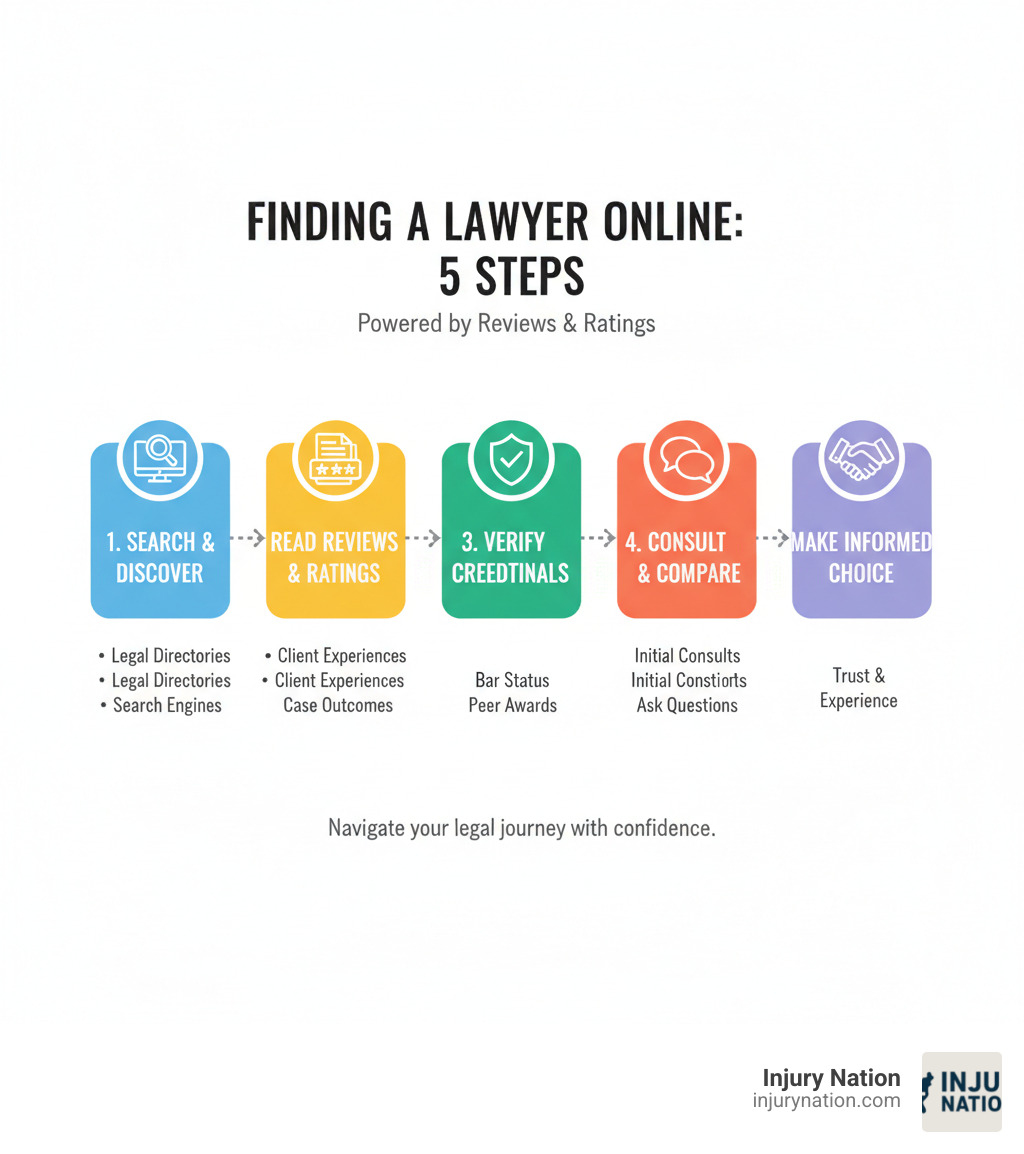
Decoding Lawyer Reviews: What to Look For and Where to Find Them

You’ve been injured. You need help. And now you’re staring at dozens of lawyer profiles, each one promising to fight for you. How do you know who’s actually good at what they do?
This is where lawyer reviews become your secret weapon.
Think of reviews as conversations with people who’ve already walked the path you’re on. They’ve hired these lawyers, worked with them for months, and know exactly what it’s like. With over 1 million lawyer reviews available online, you’re not going in blind anymore.
Client feedback shows you things a fancy website never will. You’ll learn how quickly a lawyer returns calls. Whether they explain things in plain English or legal jargon. If they truly care about your case or just see you as another file number. These are the details that matter when you’re trusting someone with your future.
The best part? Most lawyer directories now include 95% of all US lawyers, which means you can compare attorneys in your area side by side. You can filter by practice area, read what past clients said, and even see what other lawyers think of them.
And that’s an important distinction: peer endorsements versus client testimonials. Your reviews come from real people who hired the lawyer. Peer endorsements come from other attorneys who can judge legal skills, ethics, and reputation within the profession. You need both perspectives to see the complete picture.
How to analyze lawyer reviews for genuine insight
Reading lawyer reviews isn’t like scrolling through restaurant ratings. You need to dig deeper than five-star scores.
Start by looking for patterns. If three different people mention that a lawyer “never returned my calls,” that’s not bad luckthat’s how they operate. On the flip side, if multiple reviews praise someone’s compassion during a difficult time, you’ve found an attorney who treats clients like people, not case numbers.
Pay attention to both the praise and the criticism. A lawyer might have mostly positive reviews but a few complaints about being “too direct” or “all business.” That’s not necessarily badit just tells you their communication style. Some people want a hand-holder; others want someone who cuts straight to the point. Neither is wrong, but you need to know which one fits you.
Watch out for fake reviews. They’re usually vague and generic: “Best lawyer ever! Highly recommend!” without any actual details. Real reviews mention specific situations, like “She explained every step of the settlement process” or “He got my medical bills reduced by half.” The more specific, the more trustworthy.
Here’s something many people miss: how a lawyer responds to negative feedback tells you everything. A professional response that acknowledges concerns and explains their side? That’s someone who handles conflict maturely. A defensive, angry reply? Run.
When you’re reading reviews, you’re really asking yourself: “Would I want this person representing me?” For more detailed insights into law firms that have been thoroughly vetted, check out Injury Nation’s featured law firms.
Top platforms for finding lawyer reviews and ratings
So where do you actually find these reviews?
Online legal directories are your best starting point. These platforms gather everything you need in one place, making it easy to compare lawyers without jumping between a dozen websites.
When you pull up a lawyer profile on Injury Nation, you’ll see information organized to help you make a smart decision quickly. The practice areas section shows you immediately if they handle your type of casepersonal injury, car accidents, workplace injuries, whatever you’re dealing with. There’s no point reading fifty reviews for a divorce lawyer when you need someone who knows slip-and-fall cases.
The ratings usually combine different factors. Some platforms use algorithms that look at experience, professional achievements, and peer recognition. Others show client satisfaction scores for specific things like communication, responsiveness, and results. Both matter, but they measure different things.
You’ll also find information about awards and recognition. Only about 3% of lawyers globally receive prestigious awards like “Best Lawyers” recognition, which comes from peer evaluations. These awards don’t guarantee anything, but they do show that other legal professionals respect this person’s work.
One piece of information you absolutely must check: disciplinary history. Has this lawyer ever been suspended, disbarred, or formally reprimanded? Most directories link directly to state bar records, or you can look it up yourself. For Nevada, you can verify an attorney’s status directly via the State Bar of Nevada’s public resources. An attorney in good standing with the bar is non-negotiable. You can learn more about this crucial step at Researching Attorney Credentials and Standing.
The beauty of using these platforms is that everything’s in one place. You’re not piecing together information from random websites and hoping you didn’t miss something important. You can see the full picture, compare your options, and make a confident choice about who will fight for your settlement.
Beyond Reviews: A 360-Degree Vetting Process for Your Attorney

You’ve sifted through lawyer reviews and found promising candidates. While online reviews are a great starting point, they’re just that – a start. Like buying a car, you wouldn’t purchase it without a test drive. Finding the right lawyer requires a comprehensive, 360-degree vetting process to ensure the best fit.
Often, the best recommendations come from trusted sources. Personal recommendations from friends, family, or professionals offer valuable insights online reviews might miss. Local community organizations or public interest groups, especially in areas like Las Vegas, Nevada, can also point you to legal aid or trusted attorneys. Additionally, employer or union legal service plans might provide access to vetted lawyers at reduced costs.
Evaluating a lawyer’s expertise and specialization
When dealing with a legal mess, you need a lawyer who understands your specific situation. It’s about finding your lawyer. First, understand your legal issue—car accident, slip and fall, etc. Knowing your case helps you find the right expert. For more on legal issues, check out View all Legal Research Areas.
Once you know what kind of legal help you need, you can then match the lawyer’s practice area to your case. Imagine you need heart surgery. You wouldn’t go to a foot doctor, right? It’s the same with law. A personal injury lawyer, for example, will know all the ins and outs of Nevada’s specific laws about negligence, damages, and insurance claims. A general lawyer might not have that same deep knowledge, and that specialized expertise can really make a difference in your case’s outcome.
Some lawyers go above and beyond by becoming certified specialists in certain legal fields. This means they’ve proven they have advanced knowledge and experience in that specific area. While these certifications can vary by state, it’s always a good idea to check with your state’s bar association (like the Nevada State Bar) to see if a lawyer has any special certifications relevant to your case.
And then there are the awards and recognitions. Seeing a lawyer named “Lawyer of the Year” or included in “Best Lawyers” isn’t just for show. These accolades often come from extensive peer-review processes, where other lawyers evaluate their colleagues. For instance, Best Lawyers uses 13 million+ evaluations from peers across 151 practice areas worldwide, and only about 3% of lawyers globally receive such honors. These awards don’t replace what clients say, but they add a powerful layer of professional credibility. For more on these highly-rated attorneys, including those recognized for their excellence, visit More info about Injury Nation’s top-rated attorneys.
Assessing costs, communication, and red flags
Let’s talk money. Understanding legal service costs is crucial. You’ll encounter different fee structures. For personal injury, a contingency fee is common: your lawyer gets paid only if you win, taking a percentage of your settlement. Other cases may use hourly rates or flat fees. Always get a clear idea of the estimated total cost and duration of services upfront to avoid surprises.
To help you get a handle on the different ways lawyers charge, here’s a quick comparison:
| Fee Structure | Description | Pros | Cons |
|---|---|---|---|
| Contingency | Lawyer receives a percentage of the settlement or award. Common in personal injury. | No upfront costs; lawyer is motivated to win. | Lawyer takes a percentage of recovery; may not be suitable for all case types. |
| Hourly Rate | Lawyer charges a set rate per hour for all work performed. | Clear billing for time spent; suitable for complex cases with unpredictable hours. | Costs can escalate quickly; requires careful monitoring of hours. |
| Flat Fee | A fixed amount for a specific legal service (e.g., drafting a will). | Predictable cost; clear understanding of total expense. | Only suitable for well-defined cases; may not cover unexpected complexities. |
| Retainer | Upfront payment as a deposit against future hourly fees. | Secures lawyer’s services; shows commitment. | Can be a significant upfront cost; requires replenishment if depleted. |
| Statutory Fee | Fees set by statute or court rule, for specific case types. | Predictable and regulated; ensures fair compensation. | Less flexibility; may not fully reflect complexity of work. |
Now, let’s talk about red flags. You need to be aware of ethical considerations for lawyers when soliciting clients. While lawyers can advertise, there are strict rules against certain types of direct approaches. So, if an attorney approaches you out of the blue – whether in person, by phone, or through social media – that’s a big red flag. This kind of aggressive, unsolicited contact can be a sign of unethical practices. A reputable lawyer waits for clients to come to them, not the other way around (see the ABA Model Rule 7.3 on Solicitation of Clients).
Another massive red flag is any promise of guaranteed outcomes or specific settlement amounts. Run the other way if a lawyer tells you they guarantee you’ll win or get a certain amount of money. Legal cases are complicated and unpredictable. No ethical, honest lawyer can promise a win or an exact figure. A good attorney will talk about possibilities, potential challenges, and realistic expectations. They’ll be transparent and honest, not make unrealistic promises just to get your business. You deserve an advocate who tells you the truth, not just what you want to hear.
From Research to Representation: Taking the Next Steps
After diligently researching lawyer reviews and vetting potential candidates, the next crucial step is the initial consultation. This is our opportunity to connect with a lawyer, discuss our case in detail, and assess if they are the right fit. Many lawyers, especially in personal injury, offer free initial consultations, making this a low-risk way to gather more information. Booking a consultation online has become increasingly common and convenient, allowing us to schedule appointments that fit our busy lives.
Technology, including artificial intelligence (AI), is also playing an evolving role in the legal field, not just for lawyers themselves but also in helping us find and evaluate them. While AI might not replace human judgment, it can assist in streamlining searches, analyzing large volumes of data, and even generating initial legal guidance. These tools are designed to make the process more efficient, but we should always prioritize direct human interaction for personal legal matters.
Preparing for your first meeting
To make the most of our initial consultation, preparation is key. We should come armed with questions and relevant documents. This demonstrates our seriousness and helps the lawyer quickly grasp the nuances of our case.
Here’s a list of essential questions to ask a potential lawyer:
- What is your experience with cases like mine? (Specifically, personal injury cases in Las Vegas, Nevada)
- What is your success rate with similar cases? (While no guarantees, past performance can be indicative)
- What is your fee structure, and how will costs be managed?
- Who will be handling my case day-to-day (the attorney, a paralegal, etc.)?
- What is your communication style, and how often can I expect updates?
- What are the potential outcomes for my case, both best and worst-case scenarios?
- What are the next steps if I decide to hire you?
Gathering relevant documents, such as medical records, police reports, insurance policy details, and any correspondence related to our injury, will also be immensely helpful. This allows the lawyer to provide a more accurate assessment during the consultation.
Before the meeting, we should also define our goals for the case. Are we seeking compensation for medical bills, lost wages, pain and suffering, or a combination? Clearly articulating our objectives will help the lawyer understand our priorities. During the consultation, we should pay close attention to the lawyer’s communication style and overall rapport. Do they listen attentively? Do they explain complex legal terms in a way we can understand? Do we feel comfortable and confident entrusting them with our case? Trust and communication are paramount in the attorney-client relationship.
Considering alternatives to hiring a lawyer
While hiring a lawyer is often the best course of action for personal injury cases, it’s worth knowing that alternatives exist for other types of legal disputes. Dispute resolution programs, such as mediation, offer an alternative for resolving civil disputes without the need for traditional litigation. Mediation involves a neutral third party helping both sides reach a mutually agreeable solution. For example, the California Department of Consumer Affairs provides a list of local mediation programs, and similar resources exist within Nevada for various civil matters. This can be a less confrontational and often more cost-effective approach than going to court.
Online Q&A forums, found on many legal websites, can also provide initial legal guidance. With 17+ million legal questions answered across various platforms, these forums allow us to post anonymous questions and receive input from multiple lawyers. While these answers are general in nature and don’t constitute an attorney-client relationship, they can help us understand our legal options and whether our issue warrants hiring a lawyer.
Finally, for those accused of a crime who cannot afford legal representation, a public defender is an important consideration. If we qualify based on income, a public defender can be appointed to represent us free of charge. This ensures that everyone has access to legal counsel, regardless of their financial situation. However, for personal injury cases, where compensation is sought, public defenders are not typically an option.
Frequently Asked Questions About Evaluating Lawyers
What’s the difference between a lawyer review and a lawyer rating?
This is a really common question, and getting clear on the difference can make all the difference in your search! Think of it this way: a lawyer review is like a personal story. It’s a subjective, first-hand account from a past client, sharing their actual experience with an attorney or law firm. These reviews give you the juicy details – how well the lawyer communicated, how responsive they were, what their demeanor was like, and how they handled the case’s outcome. They offer invaluable qualitative insights into what it’s really like to work with that particular legal professional.
On the other hand, a lawyer rating is more like a report card score. It’s an objective number, often calculated by a platform’s special algorithm or based on very specific criteria. Some ratings consider a lawyer’s background, years in practice, professional achievements, and even any disciplinary history. Other ratings are unique because they’re based on “peer reviews” – meaning other lawyers evaluate a colleague’s legal knowledge, ethical standards, and professional abilities.
So, reviews tell a story, giving you a client’s perspective. Ratings offer a more distilled, often numerical, assessment. Both types of input, whether it’s from clients or fellow legal professionals, work together to paint a complete picture. They offer different, but equally valuable, insights into a lawyer’s competence and commitment to their clients.
How much weight should I give to awards and recognitions?
Awards and recognitions, like being named “Lawyer of the Year” or included in “Best Lawyers,” definitely catch our eye! They can be a strong influence when we’re choosing legal help. However, it’s best to see them as one piece of the puzzle, not the whole picture. These accolades often signal that a lawyer is highly respected by their peers and has a proven track record of success within the legal community. For instance, a “Lawyer of the Year” title from Best Lawyers means other attorneys in that specific practice area and region truly hold them in high regard, based on extensive surveys.
But here’s a little secret: it’s important to understand how these rankings are decided. Many are based on evaluations from other lawyers. This reflects a lawyer’s stellar reputation among colleagues, which is fantastic! However, it doesn’t always tell you about their direct client experience, how quickly they return calls, or even how affordable they might be for your specific situation.
So, while awards highlight a lawyer’s professional standing and expertise, they don’t always capture the day-to-day nuances of client communication or responsiveness that matter so much to you. Think of them as a great starting point for your investigation, a strong indicator of professional excellence. Always combine this information with detailed lawyer reviews from clients and your own thorough personal vetting process. To explore some of these top-rated law firms and attorneys, including those with impressive recognitions, we encourage you to check out Spotlighting top-rated law firms on Injury Nation.
How do I verify a lawyer’s credentials and disciplinary history?
Verifying a lawyer’s credentials and making sure they have a clean disciplinary history is a step you simply cannot skip in your vetting process. It’s your personal safeguard, ensuring you’re considering a legitimate, ethical, and truly competent legal professional. The absolute best place to start is your state’s bar association website. If you’re in Las Vegas, Nevada, for example, you’d head straight to the State Bar of Nevada’s website.
Every licensed attorney in the state will have a profile there. This profile will clearly show their admission to the bar, confirm they are in current good standing, and—crucially—list any disciplinary actions ever taken against them. This information is public and surprisingly easy to access.
Many reliable online legal directories also do a great job of integrating this information directly into their lawyer profiles. They often pull data straight from state bar associations, which is super convenient. Even so, it’s always a smart move to double-check with the official State Bar website. That way, you’re getting the most current and authoritative information available.
We really can’t stress enough how important it is to ensure a lawyer is in good standing before you even think about hiring them. A clean disciplinary record means the lawyer has consistently upheld professional ethics and standards. This vital step protects you from potential fraud and ensures you’re entrusting your case to someone who truly respects and upholds the integrity of the legal profession. Always take that extra moment to verify; it’s a small investment of your time that can save you a mountain of trouble down the line.
Conclusion: Find Your Advocate with Confidence
Finding the right lawyer after an injury can feel like a huge mountain to climb. It’s natural to feel overwhelmed. But guess what? You’ve just learned how to turn that mountain into a manageable path. With the right tools and a little know-how, you can confidently find the legal help you need.
Throughout this guide, we’ve seen how lawyer reviews are like gold. They offer real-world stories about how attorneys perform, how they talk to clients, and how much they truly care. But it’s not just about what clients say. We also looked at how professional ratings, endorsements from other lawyers, and a careful vetting process all fit together. This complete picture helps you truly understand any potential legal advocate.
The real strength comes from mixing those online reviews with your own personal checks. Don’t just glance at star ratings. Instead, dive into those client stories. Think about what professional awards and certifications really mean. And always, always make sure to check credentials, understand how fees work, and listen to your gut during that first meeting.
This is your choice. You need a lawyer who not only knows their stuff but also talks clearly, shows real empathy, and makes you feel secure. It’s about finding someone who will tirelessly fight for your rights and help you get the settlement you deserve.
At Injury Nation, we truly believe everyone deserves a dedicated advocate. That’s why we’re committed to connecting you with top-rated, carefully vetted attorneys. These are lawyers who really understand the unique legal world, especially in places like Las Vegas, Nevada.
We hope this guide has given you the power to make a smart choice and find your advocate with confidence. You’ve got this!
Ready to take the next step? Find a top-rated personal injury lawyer in your area.