

When Every Step Counts: Understanding Your Rights After a Pedestrian Accident
A pedestrian accident claim is your legal right to seek compensation if you’ve been injured by a vehicle. Understanding this process is crucial for securing a fair settlement instead of facing overwhelming medical bills alone.
Key things to remember are that you have rights even if you’re partially at fault, time to file is limited, and evidence is critical. Insurance companies will aim to minimize your payout, but a personal injury lawyer can fight for you on a contingency basis, meaning you pay nothing unless you win.
Being hit by a car is a traumatic event. In 2020, 6,516 pedestrians were killed in U.S. traffic accidents, a stark reminder of the vulnerability of walkers. Victims often face severe injuries, lost wages, and lifelong pain while insurers work to pay as little as possible.
This guide will walk you through the entire claim process, from the moments after the accident to negotiating a settlement. We’ll cover the steps to take, mistakes to avoid, and how to protect your right to compensation, regardless of the circumstances of your accident.
First Steps After a Pedestrian Accident: Protecting Your Rights and Health
The moments after being hit by a car are a blur, but what you do next is critical for your health and your pedestrian accident claim.
What to Do Immediately After Being Hit
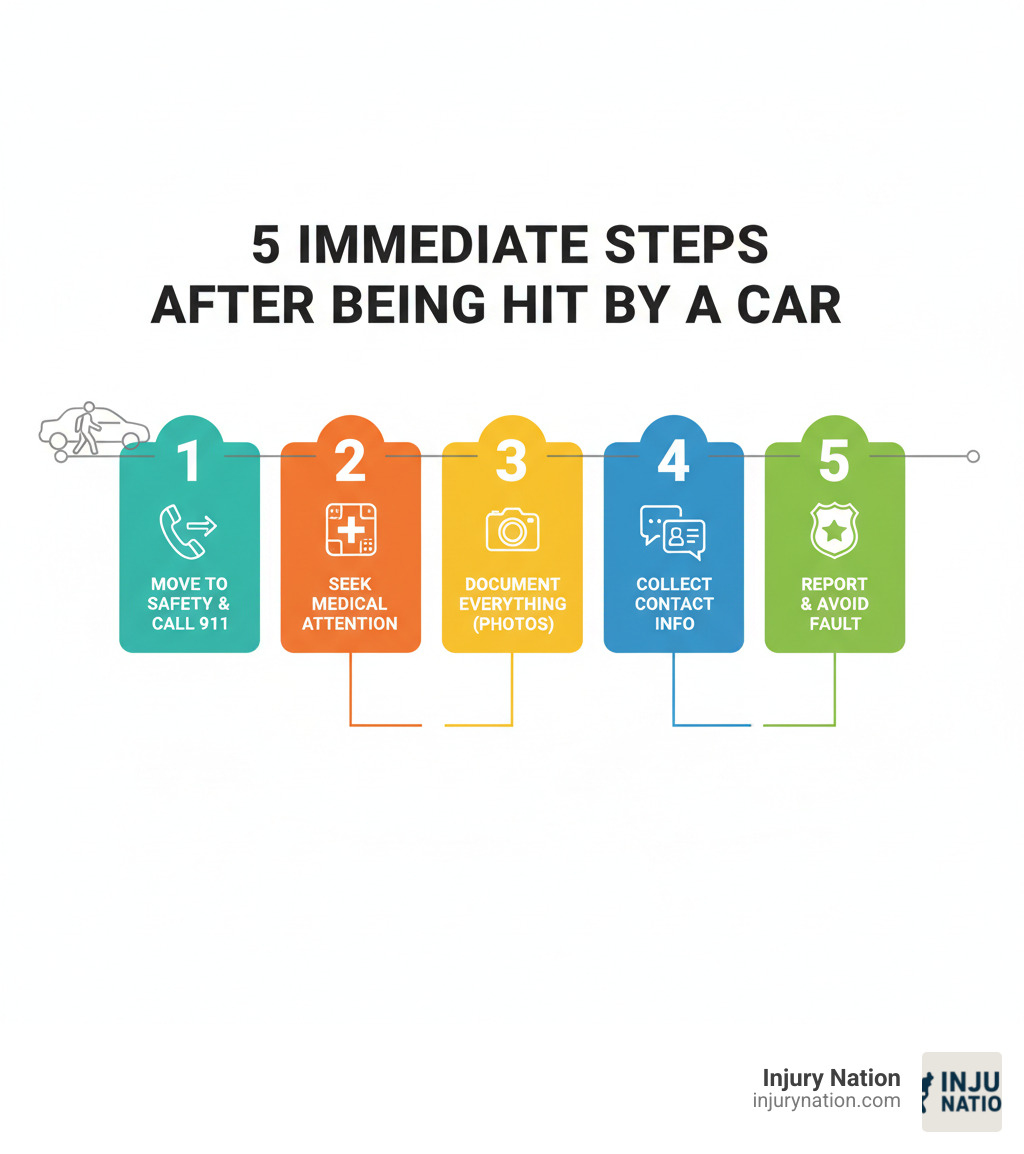
Your health comes first. Call 911 immediately, even if you feel okay. Adrenaline can mask serious injuries like internal bleeding or concussions. Seeking immediate medical care also creates an official record linking your injuries to the accident, which is vital for your claim.
Ensure police are dispatched to the scene. An official police report is one of the most important pieces of evidence, documenting the scene and often including an initial assessment of fault. Get the officer’s name, badge number, and the report number.
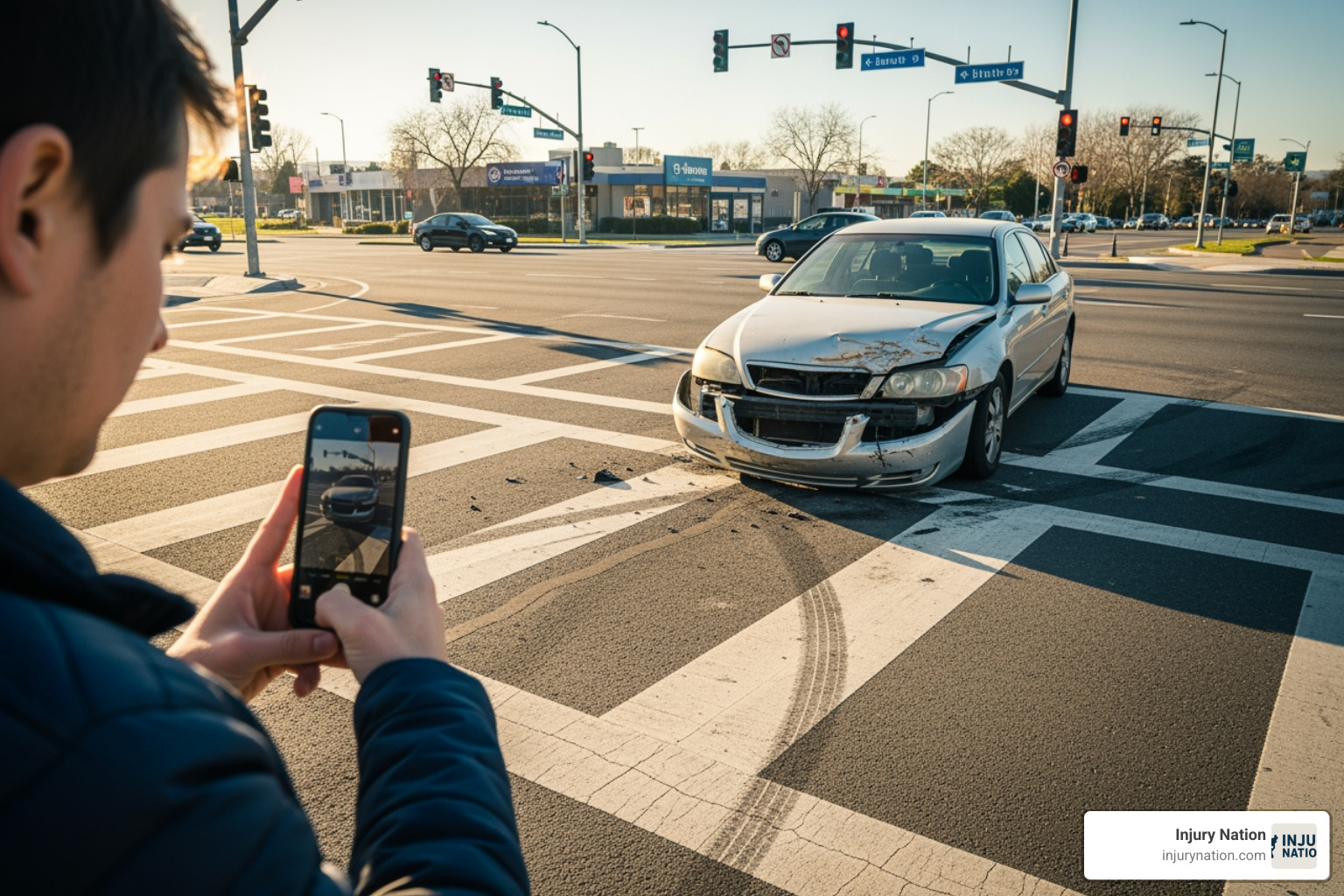
If you are physically able, start documenting everything with your phone. Take photos and videos of the vehicle, the scene, any skid marks, traffic signals, and your injuries. Look for witnesses; politely get their name and contact information. Their testimony can be incredibly powerful.
Finally, exchange information with the driver. You’ll need the following before you leave the scene:
- Driver’s full name, address, and contact information
- Driver’s insurance company and policy number
- Vehicle make, model, color, and license plate number
- Names and contact information of all witnesses
- Photos of the scene, vehicles, and your injuries
- Date, time, and exact location of the accident
- Responding officer’s name, badge number, and police report number
Common Mistakes to Avoid at the Scene
In the chaos, avoid these common mistakes that can damage your claim.
Never admit fault or apologize. Even a simple “I’m sorry” can be used against you. Let the investigation determine fault.
Don’t say you’re “fine” or downplay your injuries. Adrenaline can hide pain, and these statements will be used by the insurance company to minimize your claim. Let a doctor assess your condition.
Be wary of the at-fault driver’s insurance adjuster. They will call and sound friendly, but their goal is to get you to make a recorded statement that hurts your case. You are not required to give one. Politely decline and speak to a lawyer first.
Stay off social media. Investigators will search your profiles for any posts or photos they can use to argue that your injuries aren’t serious. The safest bet is to avoid posting until your claim is settled.
Understanding Fault and Liability in Pedestrian Accidents
Figuring out who is responsible for a pedestrian accident is key to a successful pedestrian accident claim. While drivers often hold the primary responsibility, liability can sometimes be shared.

The Driver’s Duty of Care and Common Causes
Every driver has a legal duty of care to operate their vehicle safely and watch for pedestrians. This includes yielding the right-of-way, obeying traffic laws, and staying alert. Unfortunately, drivers often breach this duty through negligence.
Common causes of pedestrian accidents include:
- Distracted driving (texting, etc.)
- Speeding, which reduces reaction time
- Impaired driving (alcohol or drugs)
- Failure to yield in crosswalks or at turns
- Aggressive driving
- Backover accidents in parking lots or driveways
According to the National Highway Traffic Safety Administration (NHTSA), many fatal pedestrian accidents occur outside of intersections, meaning drivers have a duty to be cautious everywhere.
When the Pedestrian May Be Partially at Fault
Pedestrians can sometimes be found partially at fault, which can affect a claim. This might happen by jaywalking, crossing against a signal, darting into traffic, or being distracted. However, even if you were partially at fault, you can likely still recover compensation.
Most states, including Nevada, use a modified comparative negligence rule. This means you can recover damages as long as you are found to be 50% or less at fault. Your compensation is simply reduced by your percentage of fault. For example, if your damages are $100,000 and you are 20% at fault, you would receive $80,000.
In some cases, third-party liability may exist. A government entity could be liable for unsafe road design, or a property owner for a hazardous sidewalk. Proving fault can be complex, making legal guidance essential.
Navigating the Pedestrian Accident Claim Process
After the initial shock, you face the challenge of getting compensation. The pedestrian accident claim process can be long, but understanding the stages helps you protect your rights and avoid costly mistakes.

The Insurance Claim: What to Expect
The formal process begins by filing a claim with the at-fault driver’s insurance company. An adjuster will be assigned to your case, but remember: they work for the insurance company, not you. Their goal is to minimize the payout.
Expect common tactics like:
- Lowball offers: Their first offer is almost never fair and is designed to see if you’ll accept a fraction of your claim’s worth.
- Requests for recorded statements: You are not required to give a statement to the other driver’s insurer. They use these to find inconsistencies or admissions of fault.
- Delay tactics: They may drag out the process, hoping you’ll get frustrated and settle for less.
- Claim denials: They might deny the claim outright, blaming you or arguing your injuries aren’t related to the accident.
When to Escalate to a Lawsuit for Your Pedestrian Accident Claim
While many claims settle, filing a lawsuit is sometimes necessary. Consider this step if the insurance company makes an unsatisfactory settlement offer, refuses to negotiate fairly, or if there is a dispute over liability. A lawsuit is also often required for cases involving severe, long-term injuries to ensure you receive full compensation.
Filing a suit initiates the findy process, where both sides exchange evidence through depositions (sworn testimony) and document requests. Even after a lawsuit is filed, most cases settle before trial. The threat of a jury verdict often motivates insurers to make a fair offer.
Understanding the Statute of Limitations for a Pedestrian Accident Claim
You must be aware of the statute of limitations, a strict legal deadline for filing a lawsuit. In Nevada, you have two years from the date of the accident to file your pedestrian accident claim in court.
If you miss this deadline, you will lose your right to seek compensation permanently, regardless of the severity of your injuries. While there are rare exceptions (e.g., for minors), you should never rely on them. This deadline is a critical reason to contact a personal injury attorney promptly after your accident to ensure your rights are protected.
Maximizing Your Compensation: Damages and Legal Support
Fair compensation for a pedestrian accident goes beyond just medical bills. It’s about recovering for every way the accident has impacted your life. Understanding what you can claim and having the right legal support are key to a successful pedestrian accident claim.

What Damages Can You Recover?
In a legal claim, “damages” refer to the total compensation you can recover for your losses. These are divided into two main categories.
Economic damages are tangible financial losses, including:
- Medical bills (past and future)
- Lost wages from time off work
- Loss of future earning capacity if you cannot return to your previous job
Non-economic damages compensate for intangible suffering:
- Pain and suffering for your physical pain
- Emotional distress, such as anxiety, depression, or PTSD
- Loss of enjoyment of life if you can no longer do activities you once loved
- Scarring or disfigurement
In cases of extreme recklessness, like a drunk driver, you may also be awarded punitive damages, which are meant to punish the defendant.
The Role of an Attorney and Expert Witnesses
Handling a claim alone while recovering is incredibly difficult. A personal injury attorney is your advocate. They will conduct a thorough investigation, handle all communication and negotiation with the insurance company, and protect you from their tactics.
Most work on contingency fees, meaning you pay nothing unless they win your case. This gives you access to top legal help without upfront costs.
For complex cases, your attorney may hire expert witnesses. Accident reconstruction specialists can prove how the crash happened. Medical experts can testify to the extent of your injuries and future needs. Economists can calculate your long-term financial losses. While most claims settle, a good attorney is always prepared to take your case to trial to secure the compensation you deserve.
Frequently Asked Questions about Pedestrian Accident Claims
It’s normal to have questions when facing the legal system after a traumatic event. Here are answers to some common concerns about pursuing a pedestrian accident claim.
How long does it take to settle a pedestrian accident claim?
There is no set timeline; a settlement can take a few months or over a year. The key factors are the severity of your injuries (it’s wise to wait until you reach Maximum Medical Improvement or MMI), disputes over fault, and the insurance company’s cooperation. Complex claims involving future damages also take longer to document and negotiate. Rushing the process can mean settling for less than you deserve.
Can I still get compensation if I was partially at fault for the accident?
Yes. In Nevada, which uses a modified comparative negligence rule, you can recover damages as long as you are 50% or less at fault. Your total compensation is simply reduced by your percentage of fault. For example, if you have $100,000 in damages but are found 20% at fault, you would receive $80,000. Insurance companies will try to maximize your fault to pay less, which is why having an attorney is crucial.
What happens if the at-fault driver is uninsured or fled the scene?
If you are hit by an uninsured driver or are the victim of a hit-and-run, you are not out of options. You can file a claim under your own Uninsured/Underinsured Motorist (UM/UIM) coverage, which is part of your auto insurance policy. This coverage is designed for these exact situations. For a hit-and-run, it is critical to call 911 immediately and get a police report to document the incident. Your attorney can help investigate to try and find the driver, but even if they are never identified, you can still pursue a pedestrian accident claim through your UM/UIM coverage.
Find the Right Legal Support for Your Claim
A pedestrian accident claim is complex and stressful, and you shouldn’t face it alone. Insurance companies have teams of professionals working to pay you as little as possible. They know the system and will use tactics like lowball offers and delay strategies to protect their profits.
Having an experienced personal injury attorney levels the playing field. Your lawyer will handle the investigation, negotiations, and legal deadlines, fighting for the full value of your claim while you focus on healing. Most work on a contingency fee basis, so there’s no upfront cost to you.
We at Injury Nation connect victims with top-rated personal injury lawyers who have a proven track record of winning for their clients. You’ve taken the first step by learning your rights. Now, take the next one.
Find a top-rated personal injury lawyer near you and get the justice and compensation you deserve.