Why Understanding Property Owner Responsibility is Critical for Your Safety and Protection
Property owner responsibility encompasses a wide range of legal duties that extend far beyond making mortgage payments or collecting rent. Whether you own a single-family home, manage rental units, or oversee commercial property, you have legal obligations to maintain safe conditions, comply with local regulations, and protect anyone who enters your property from foreseeable harm.
Key Areas of Property Owner Responsibility:
- Premises Safety – Maintaining property in a reasonably safe condition to prevent injuries like slip and falls, structural failures, or hazards
- Tenant Management (for landlords) – Providing habitable living conditions, making necessary repairs, ensuring peaceful enjoyment, and maintaining common areas
- Public Space Maintenance – Caring for sidewalks, removing snow and ice, maintaining street trees, and keeping adjacent public rights-of-way safe
- Legal Compliance – Following building codes, housing standards, zoning ordinances, and registration requirements
The stakes are significant. In 2022 alone, injuries from falls sent over 8.5 million people to emergency rooms across the United States, with total medical costs reaching $1.8 billion in 2023. Property owners found negligent in these incidents can face substantial lawsuits, financial burdens, and even wrongful death claims.
Understanding these responsibilities isn’t just about avoiding liability—it’s about creating safe environments for your family, tenants, guests, and the broader community. The law holds property owners to a high standard of care precisely because they control the conditions that can prevent or cause serious harm.
This guide breaks down exactly what the law requires of property owners, from the landlord-tenant relationship to homeowner duties for public sidewalks, so you can protect both the people on your property and your own legal and financial interests.
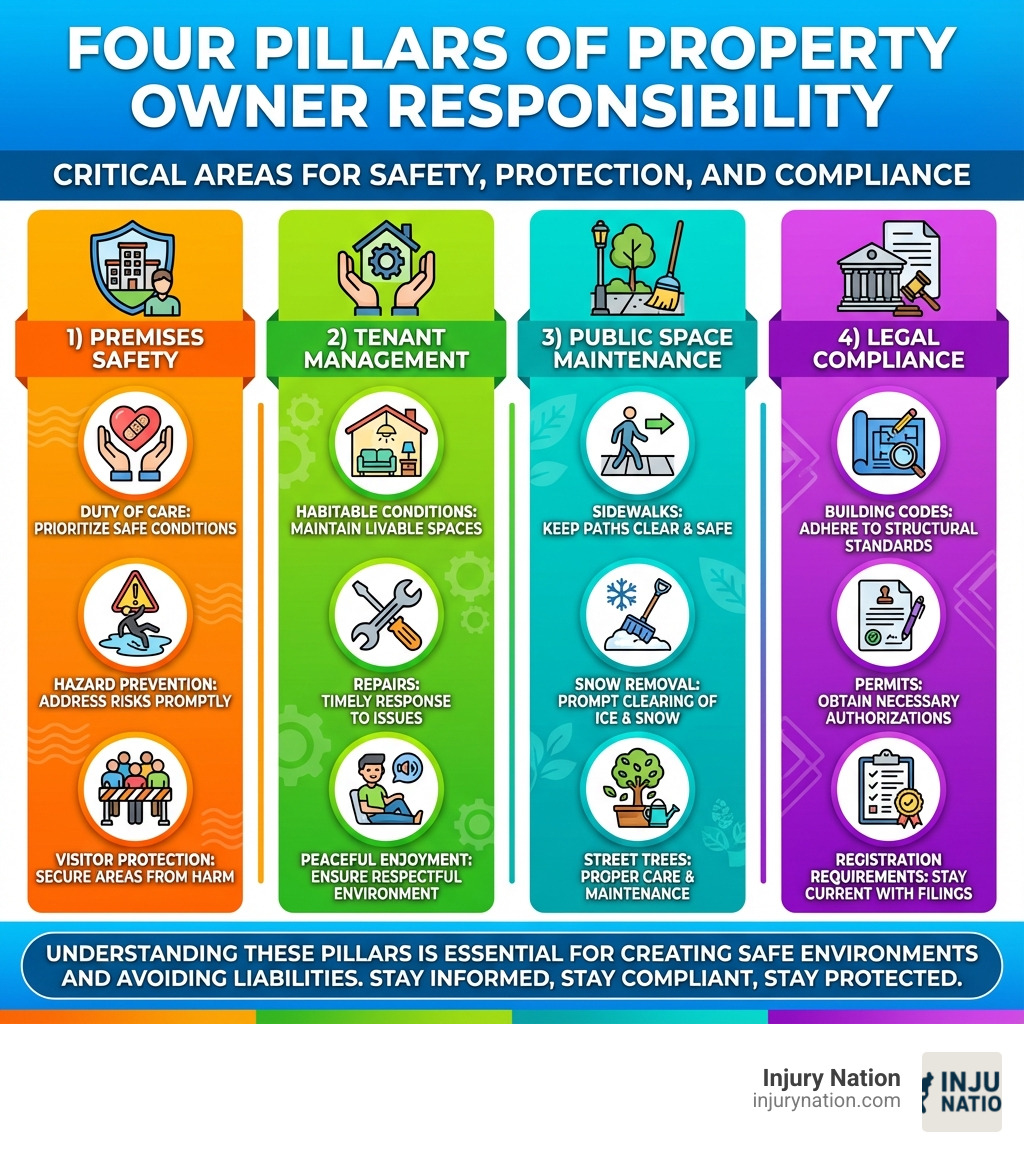
Know your Property owner responsibility terms:
Understanding Premises Liability and Your Duty of Care
Owning property in Nevada, especially in a busy city like Las Vegas, comes with a fundamental legal obligation: the duty of care. This concept is the cornerstone of premises liability law, which dictates that property owners are responsible for injuries that occur on their property due to their negligence. Our primary goal as property owners is to prevent accidents by maintaining a safe environment. This means regular upkeep and repairs to avoid common incidents such as slip and falls, which accounted for a staggering 56.2% of traumatic injuries in Nevada, with 8,381 reported in 2022 and 210 fatalities. In 2023, slip-and-fall accidents were responsible for 19% of workplace fatalities in Nevada, highlighting the serious consequences of neglecting this duty.
Premises liability cases can arise from various hazards, including wet floors, icy pathways, broken stairs, inadequate lighting leading to criminal activity, dog bites, or falling objects from poorly maintained structures. Any of these can lead to serious injuries, and if negligence is proven, the financial and legal ramifications for the property owner can be severe. If you or someone you know has been injured due to a property owner’s negligence, understanding your rights is crucial. Our network includes expert attorney for slip and fall cases who can help steer these complex situations. For more information on specific types of incidents, you can also refer to resources on slip and fall lawsuit cases.
Visitor Status and the Owner’s Duty
Not all visitors to your property are treated equally under Nevada law when it comes to the duty of care. The level of responsibility you owe depends on the visitor’s status:
- Invitees: These are individuals invited onto your property for your commercial benefit (e.g., customers in a store) or for public benefit (e.g., visitors to a public park). As an owner, you owe invitees the highest duty of care. This means you must actively inspect your property for hazards, fix any dangers you find, and warn invitees of non-obvious risks. For example, a store owner must ensure aisles are clear and wet floors are marked.
- Licensees: These are individuals on your property with your permission but for their own benefit, not yours (e.g., social guests, solicitors). For licensees, you have a lesser duty of care. You must warn them of any known dangers that are not obvious, but you are generally not required to inspect your property for hidden hazards.
- Trespassers: These individuals are on your property without permission. Generally, you owe trespassers the lowest duty of care—you cannot intentionally harm them. However, there’s a significant exception known as the “Attractive Nuisance” doctrine.
The “Attractive Nuisance” doctrine is a critical aspect of property owner responsibility, particularly when children are involved. If your property has features that might entice children (like an unfenced swimming pool, a trampoline, or construction equipment), you have a higher duty to protect them, even if they are technically trespassing. This is because children may not understand the dangers these features pose. Failing to secure such attractions can lead to severe liability if a child is injured.
The High Cost of Negligence
The financial and personal costs of negligence can be staggering. As mentioned, fall-related injuries are a significant concern. In 2023, the average cost of care for an unintentional fall in the US was $38,348 per person, leading to medical costs of $1.8 billion nationwide. These figures don’t even account for the emotional distress, lost wages, and long-term disability that often accompany serious injuries.
If a property owner’s negligence leads to an injury, they could face:
- Lawsuits: Victims can sue for economic damages (medical bills, lost wages, rehabilitation) and non-economic damages (pain and suffering, emotional distress, loss of enjoyment of life).
- Wrongful Death Claims: In tragic cases where negligence leads to a fatality, the victim’s family can file a wrongful death claim, seeking compensation for funeral expenses, loss of income, and emotional suffering.
- Reputational Damage: Beyond legal and financial penalties, a reputation for unsafe property can deter tenants, customers, and even potential buyers.
The potential for severe injuries or deaths from falls is significant. In 2023, 57 people in Nevada died in workplace accidents, with slip-and-fall accidents accounting for 19% of those fatalities. This underscores why proactive property management and adherence to safety standards are not just legal requirements but moral imperatives.
Essential Documentation and Insurance
To protect your property ownership rights and mitigate risks, meticulous documentation and appropriate insurance are indispensable.

- Title Deeds and Ownership Verification: Your title deed is the official document proving your legal ownership. It’s crucial for verifying ownership and should be registered with the appropriate government authority to establish public notice. Property tax records also link properties to their current owners and can be used for verification.
- Property Ownership Documentation: Beyond the deed, maintain a comprehensive filing system for all ownership documents. This includes purchase agreements, mortgage documents, permits for renovations, and records of major repairs. Keep both digital copies (securely backed up and encrypted) and physical copies (in a fireproof safe or safety deposit box).
- Insurance Considerations:
- Homeowner’s Insurance: This is a fundamental type of coverage that protects against structural damage, personal belongings, and liability issues. It’s often a requirement by lenders. Your policy should include liability coverage, which protects you if someone is injured on your property and you are found negligent.
- Title Insurance: This protects against potential ownership disputes, unfinded claims, or errors in previous title transfers. It’s a one-time purchase usually made during the property acquisition.
- Umbrella Liability Insurance: For extended protection beyond your standard homeowner’s policy, an umbrella policy provides additional liability coverage, especially useful for landlords or those with significant assets.
- Flood Insurance: Standard homeowner’s policies typically exclude flood damage. If your property is in a flood-prone area, separate flood insurance is crucial.
Understanding your insurance coverage is vital. In the event of a personal injury claim, your homeowner’s insurance lawyer can be an invaluable asset. Our network includes experienced homeowners insurance lawyer who can help ensure you have adequate coverage and guide you through any claims process.
The Landlord-Tenant Relationship: A Deep Dive into Responsibilities
If you own rental property in Nevada, your property owner responsibility takes on an additional layer of complexity as you enter into a landlord-tenant relationship. The Nevada Revised Statutes (NRS) Chapter 118A outlines specific legal obligations for both parties, ensuring fair housing practices and habitable living conditions. These laws are designed to protect both landlords and tenants, making clarity in rental agreements and leases paramount. We aim for a harmonious relationship with our tenants, but understanding these legal frameworks is essential for preventing disputes and ensuring everyone’s safety and peace of mind.

One crucial aspect of this relationship is ensuring “peaceful enjoyment” for your tenants. This means not only that you, as the landlord, don’t disturb them, but also that you take reasonable steps to prevent other tenants or external factors within your control from causing undue disturbance. While you can’t control every neighbor, if you’re notified of ongoing issues, you have a responsibility to address them.
Property managers often play a key role in rental properties, handling day-to-day operations like rental pricing, tenant screening, and maintenance. While a property manager can file property taxes or arrange for repairs, the ultimate financial and legal responsibility for the property still rests with the owner. It’s crucial for owners to provide clear direction to managers regarding restrictions (e.g., on pets or vehicles) but avoid dictating tenant preferences that could violate Fair Housing Laws.
Defining a Landlord’s Property Owner Responsibility
As a landlord in Nevada, your primary duties revolve around providing and maintaining a safe, clean, and habitable rental unit. According to Nevada law (NRS 118A), these responsibilities include:
- Habitable Condition: The rental unit must be clean and in good, livable condition at the start of the tenancy and throughout its term. This includes functioning plumbing, electrical systems, and structural integrity.
- Health and Safety Standards: Ensuring the property meets all local housing codes and health standards. This means providing and maintaining security measures related to health and safety.
- Making Necessary Repairs: Landlords are generally responsible for all necessary repairs to the property, except for minor maintenance repairs that fall to the tenant. This includes major repairs like roof replacement, plumbing issues, or structural damage. If you fail to make necessary repairs, a tenant may have recourse, including potentially withholding rent for minor issues after proper notice, or performing repairs and deducting costs for urgent, essential services if the landlord neglects them.
- Heating and Utilities: You must ensure the proper functioning of heating systems and that the tenant enjoys an adequate ambient temperature year-round. While the specific temperature isn’t defined, it must be reasonable for the climate. Providing essential services like water and electricity is also a core responsibility.
- Pest Control: While tenants are responsible for general cleanliness that prevents pests, the owner is often responsible for rat-proofing the building and maintaining that condition. For multi-family dwellings, if a pest infestation affects more than one unit, the landlord typically bears the responsibility for extermination.
- Common Area Maintenance: If your property has shared spaces like hallways, stairwells, lobbies, or laundry rooms, you must maintain these areas in a safe, clean, and well-lit condition. This is a critical area for premises liability.
- Security Measures: Providing and maintaining adequate locks on exterior doors and windows, and ensuring common areas are reasonably secure.
- Legal Compliance: Registering the property with local authorities if required, complying with all building codes, and following all state and local landlord-tenant laws. This includes only renting legal residential spaces.
Tenant Obligations and Rights
Tenants, in turn, also have significant responsibilities under a rental agreement in Nevada:
- Paying Rent: This is the tenant’s principal obligation. Rent must be paid in full on the agreed-upon day.
- Minor Maintenance: Tenants are generally responsible for minor maintenance repairs and keeping their unit clean and sanitary. This includes tasks like replacing light bulbs within their unit or routine cleaning.
- Reporting Hazards: Tenants have a responsibility to report any needed repairs or hazardous conditions to the landlord promptly. Failure to do so might impact their ability to claim damages if an injury occurs later.
- Cleanliness and Sanitary Standards: Maintaining reasonable health, cleanliness, and sanitary standards throughout their rental unit.
- Not Disturbing Others: Tenants must conduct themselves in a manner that does not disturb the peaceful enjoyment of other tenants or neighbors.
- Not Causing Damage: Tenants are responsible for damages caused by their deliberate actions or neglect, or by their guests. This goes beyond “reasonable wear and tear.”
If a landlord neglects their responsibilities, tenants in Nevada have various recourse options, which may include applying for rent reduction, lease cancellation, or seeking compensation through the appropriate legal channels, such as a local housing authority or court.
Comparing Landlord vs. Tenant Maintenance Duties
To help clarify typical responsibilities, here’s a table outlining common maintenance duties for rental units:
| Item | Landlord Responsibility | Tenant Responsibility |
|---|---|---|
| Carpets | Provide clean at move-in; Replace at end of life. | Routine vacuuming; Professional cleaning at move-out (if pets/smoking or excessive dirt). |
| Painting | Paint at reasonable intervals (e.g., every 3-5 years). | Clean scuffs; Repair damage beyond normal wear and tear (e.g., large holes). |
| Smoke Detectors | Install, test annually, replace batteries. | Report malfunctions; Do not disable. |
| Appliances | Repair appliances provided with the unit (unless tenant-caused damage). | Clean appliances; Report issues promptly; Use appliances as intended. |
| Light Bulbs | Ensure working at move-in; Replace in common areas. | Replace bulbs within the rental unit. |
| Windows | Ensure proper functioning; Repair structural damage. | Clean inside windows and tracks; Report damage. |
| Heating System | Ensure proper functioning and adequate ambient temperature. | Report malfunctions; Do not tamper with controls beyond normal use. |
| Pest Control | Rat-proofing building; Extermination for widespread infestations. | Maintain cleanliness to prevent pests; Extermination for unit-specific infestations caused by tenant negligence. |
| Plumbing | Repair leaks, clogs (unless tenant-caused), and system failures. | Avoid flushing inappropriate items; Report leaks/clogs promptly. |
Homeowner Duties: Your Property and Beyond the Property Line
Beyond the specific dynamics of landlord-tenant relationships, every homeowner in Las Vegas and throughout Nevada bears a broad set of property owner responsibility. These duties extend past simply paying your mortgage; they involve ongoing maintenance, financial foresight, and adherence to local regulations. It’s not just about keeping your house pretty; it’s about safeguarding your investment and ensuring the safety and well-being of your community.
Homeowners are responsible for regular maintenance and repairs, from minor upkeep like landscaping to major overhauls such as replacing the roof, improving electrical systems, or upgrading plumbing. These tasks are crucial for keeping your property in good condition, preventing further damage, and maintaining its value. On the financial side, homeowners are responsible for property taxes, which fund essential community services like schools and infrastructure. If you live in a community with a Homeowners Association (HOA), you’ll also have HOA fees that contribute to maintaining shared amenities and common areas. Finally, compliance with local regulations, building codes, and zoning ordinances is non-negotiable to avoid unnecessary complications and potential penalties.
Maintaining Your Private Property
Your private property is your castle, but it’s also your responsibility. This includes:
- Landscaping: Keeping your yard tidy, mowing the lawn, and maintaining plants. Owners must keep grass, weeds, or plant growth below 8 inches and remove all noxious weeds. This isn’t just for aesthetics; overgrown vegetation can harbor pests or become a fire hazard.
- Structural Maintenance: This encompasses your roof, foundation, walls, and exterior. Major repairs and renovations, such as replacing a worn-out roof or addressing structural issues, are solely your responsibility. Neglecting these can lead to costly damages and safety hazards.
- Internal Systems: Ensuring your plumbing, electrical systems, and HVAC are in good working order. Regular inspections and timely repairs prevent breakdowns and potential dangers.
- Weeds and Debris Removal: You are responsible for managing weeds, debris, and garbage on your property. This means preventing the accumulation of rubbish, garbage, or waste material that could attract pests or pose a fire risk.
- Garbage Management: Arranging for proper trash storage and ensuring receptacles are placed for collection according to local ordinances. This helps maintain neighborhood cleanliness and prevents pest issues.
A Homeowner’s Property Owner Responsibility for Adjacent Public Areas
Your duties don’t always end at your property line. In many areas, including parts of Las Vegas, homeowners have responsibilities for the public right-of-way adjacent to their property. While specific regulations can vary by municipality, common responsibilities often include:
-
Sidewalk Maintenance: Property owners are frequently responsible for maintaining the sidewalks adjacent to their property. This means ensuring they are free of hazards like snow, ice, or excessive cracks that could cause slip-and-fall accidents. Repairing damaged sections of the sidewalk is also often a homeowner’s duty.
-
Snow and Ice Removal: During winter months, homeowners are often required to clear snow and ice from sidewalks within a certain timeframe after a snowfall to ensure pedestrian safety. Failure to do so can result in liability if someone is injured.
- Driveways: Property owners are responsible for providing driveways that prevent vehicles from driving over sidewalks or planting strips. Construction of driveways may require specific permits to meet city standards.
- Unpaved Alleys: If you have an unpaved alley next to your property, you might be responsible for its maintenance, especially if the city does not perform preventative maintenance on such alleys.
- Street Trees: While the city may maintain street trees planted by the municipality, property owners are often responsible for trimming other street trees adjacent to their property. This includes ensuring adequate clearance (e.g., 8 feet above sidewalks and 14 feet above roadways) for vehicles and pedestrians. Trimming or removal may require permits.
- Drainage Pipes and Side Sewers: Property owners are generally responsible for constructing and repairing their side sewers and drainage pipes, often under specific city codes. Work within a public street area typically requires a registered contractor and permits.
These responsibilities are crucial not only for public safety but also for avoiding potential fines or liability claims.
Frequently Asked Questions about Property Owner Responsibility
We know that understanding all the nuances of property owner responsibility can be a lot to take in. Here are some of the most common questions we encounter:
What is the most fundamental legal obligation of a property owner?
The most fundamental obligation is the “duty of care”—the responsibility to maintain a reasonably safe environment to prevent foreseeable harm to visitors, tenants, and even passersby. This is the core principle of premises liability law. In Nevada, this duty requires property owners to take reasonable steps to ensure their property does not pose a risk to others. This means regularly inspecting the property, promptly addressing hazards, and warning visitors of any known dangers that aren’t obvious. Neglecting this duty can lead to serious legal and financial consequences if someone is injured.
Who is responsible for an injury in a common area of a rental property?
Generally, the landlord or property owner is responsible for injuries that occur in common areas like hallways, stairwells, parking lots, and lobbies. This is because the owner retains control over these spaces and is expected to maintain them in a safe condition. Landlords have a high legal duty to keep these areas safe and free from hazards. If a tenant, guest, or delivery person is injured in a common area due to the landlord’s negligence (e.g., a broken handrail, inadequate lighting, or an unmarked wet floor), the landlord can be held liable.
Can a property owner be responsible for trimming trees on the sidewalk?
Yes, in many municipalities, property owners are responsible for maintaining street trees adjacent to their property. This includes trimming branches to ensure clearance for pedestrians (typically 8 feet) and vehicles (typically 14 feet) and removing hazardous limbs. While the city may handle trees it planted, other trees often fall under the adjacent property owner’s purview. It’s important to check your local Las Vegas or Nevada municipal codes regarding street tree maintenance, as neglecting this duty could lead to liability if a falling branch causes injury or property damage. Permits are often required for significant trimming or removal.
Protecting Your Rights and Assets
Understanding your property owner responsibility is not just about avoiding trouble; it’s about being a responsible member of your community and protecting your significant investment. By diligently maintaining your property, adhering to legal requirements, and ensuring proper insurance coverage, you create a safer environment for everyone and safeguard your financial well-being.
The consequences of negligence can be severe, leading to costly lawsuits, substantial financial burdens, and emotional distress. Proactive maintenance, clear documentation, and appropriate insurance are your best defenses. Always ensure your homeowner’s and liability insurance policies are up-to-date and adequately cover potential risks.
If you find yourself facing a complex situation involving property liability, an injury on your property, or if you’ve been injured due to another property owner’s negligence, don’t hesitate to seek professional legal advice. Navigating premises liability law, especially in Nevada, can be intricate, and an experienced attorney can provide invaluable guidance.
We at Injury Nation are dedicated to helping victims understand their rights and connect with top-rated personal injury lawyers. If you need to find a lawyer who can help you, we encourage you to use our resources. Find a personal injury lawyer near you today to ensure your rights and assets are protected.