

Why Finding a Ride Share Negligence Lawyer Matters After Your Accident
A ride share negligence lawyer is a legal specialist who handles injury claims involving services like Uber and Lyft. When a rideshare driver’s negligence causes an accident, these attorneys steer the complex insurance and liability issues that are unique to this industry.
A skilled lawyer can help you:
- Determine Applicable Insurance: Identify which of the three rideshare insurance periods applies to your accident.
- Identify Liable Parties: Pursue claims against the driver, the rideshare company, or other at-fault parties.
- Maximize Your Compensation: Fight to recover costs for medical bills, lost income, and pain and suffering.
- Handle Insurers: Negotiate with insurance companies to counter lowball offers and secure a fair settlement.
- Meet Deadlines: Ensure your claim is filed within the legal time limits, known as the statute of limitations.
With millions of rideshare trips daily, accidents are inevitable. Victims often face challenges not present in typical car accident cases. Rideshare companies classify their drivers as independent contractors, a legal distinction they use to avoid liability. Furthermore, insurance coverage shifts depending on the driver’s status in the app.
If you were injured in a rideshare accident, you need an expert who understands this complicated legal landscape. Insurance companies have legal teams dedicated to minimizing payouts; you deserve the same level of expert protection.
What Constitutes Rideshare Driver Negligence?
Negligence in a rideshare context means the driver failed to operate their vehicle with reasonable care, leading to harm. To build a successful negligence claim in Nevada, four elements must be proven:
- Duty of Care: The driver had a legal obligation to drive safely. This duty is heightened for professional drivers responsible for passengers.
- Breach of Duty: The driver violated that duty through a careless or reckless act, such as speeding or texting.
- Causation: The driver’s breach of duty directly caused the accident and your injuries.
- Damages: You suffered actual losses, such as medical bills, lost wages, or physical pain.
Rideshare companies complicate matters by classifying drivers as independent contractors to sidestep liability. An experienced ride share negligence lawyer knows how to challenge this defense and hold the responsible parties accountable.

Common Forms of Negligent Behavior
Rideshare drivers face unique pressures that can lead to dangerous driving. Common examples of negligence include:
- Distracted Driving: Using the rideshare app, GPS, or messaging passengers diverts a driver’s attention from the road.
- Speeding and Reckless Driving: Drivers may speed or drive aggressively to complete more trips and maximize earnings.
- Driving Under the Influence (DUI): Operating a vehicle while impaired by alcohol or drugs is a severe form of negligence.
- Driver Fatigue: Long hours behind the wheel can impair a driver’s reaction time and judgment, similar to driving while intoxicated.
- Failure to Follow Traffic Laws: Running red lights, ignoring stop signs, or making illegal turns are clear breaches of the duty of care.
- Inadequate Vehicle Maintenance: Neglecting vehicle upkeep, such as maintaining brakes and tires, can lead to mechanical failures and accidents.
Studies show that ridesharing has contributed to a 2-3% increase in traffic deaths in the U.S., highlighting the real-world impact of these risks.
Immediate Steps After a Rideshare Accident
The moments after an accident are chaotic, but the steps you take are crucial for your health and any future legal claim.
1. Prioritize Safety and Call 911: Check for injuries and move to a safe location if possible. Immediately call 911 to request police and medical assistance. An official police report is a critical piece of evidence.
2. Seek Medical Attention: Get a medical evaluation right away, even if you feel fine. Adrenaline can mask serious injuries like whiplash or concussions. In Nevada, seeking prompt medical care is also important for insurance purposes.
3. Be Careful What You Say: Avoid apologizing or admitting any fault. Statements like “I’m sorry” can be used against you by insurance adjusters. Stick to the facts when speaking with the police.
Documenting the Incident
Gather as much evidence as you can at the scene. This information will be invaluable for your ride share negligence lawyer.
- Gather Information: Collect names, contact details, and insurance information from all drivers involved. Get contact information from any witnesses.
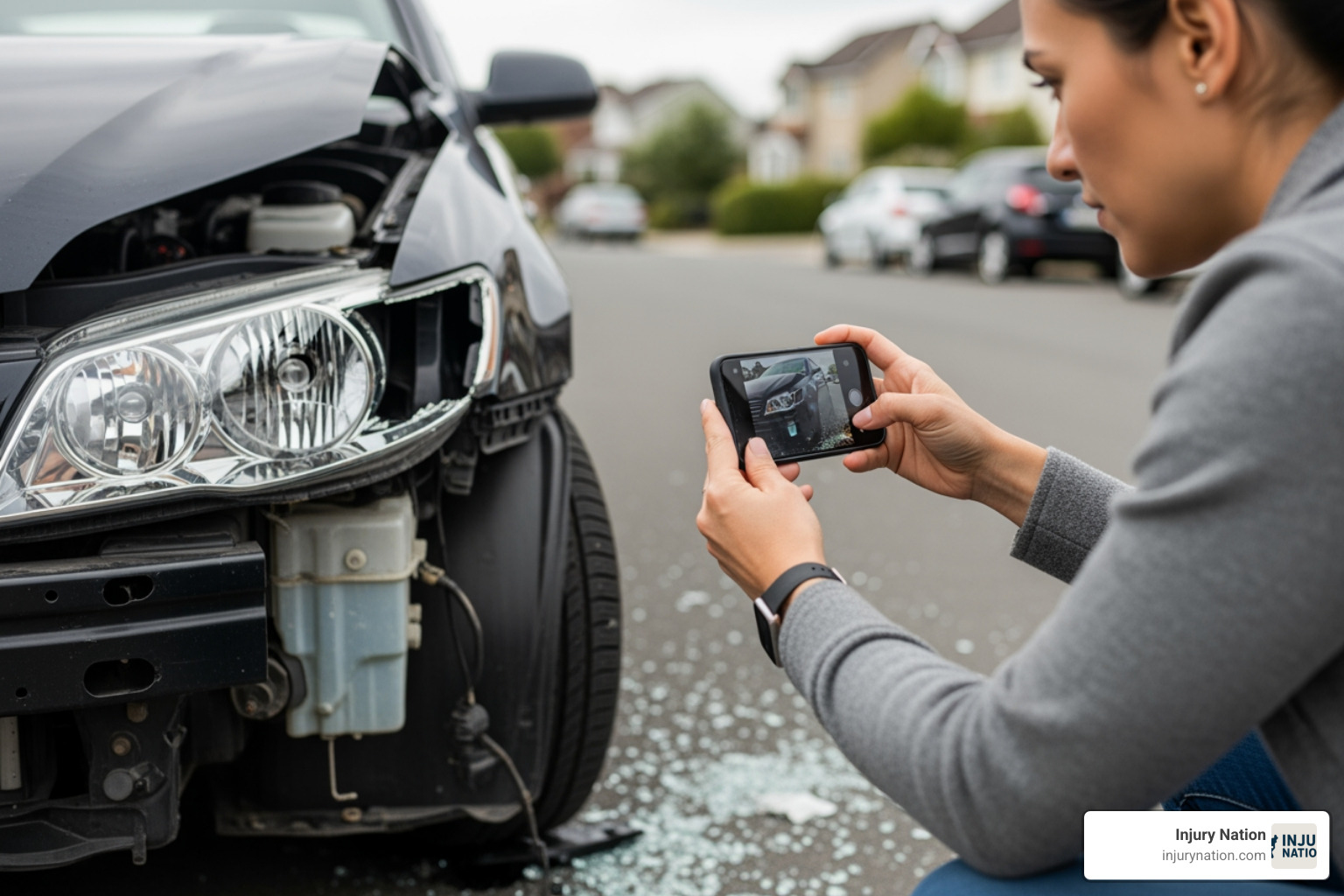
- Take Photos and Videos: Use your phone to document everything: damage to all vehicles, the accident scene, skid marks, traffic signs, road conditions, and any visible injuries.
- Report the Accident in the App: Use the Uber or Lyft app to report the crash as soon as possible. This creates an official record with the company.
- Keep All Records: Save everything related to the accident, including medical bills, repair estimates, and receipts. Write down your own account of what happened and how your injuries are affecting your daily life.
Solving Liability: Insurance and Suing the Company
Determining who pays for damages after a rideshare accident in Nevada is complex. As an “at-fault” state, the responsible party’s insurance is liable. However, with rideshare accidents, multiple policies could be in play. The available coverage depends on the driver’s status in the app at the time of the crash.
How Rideshare Insurance Coverage Works
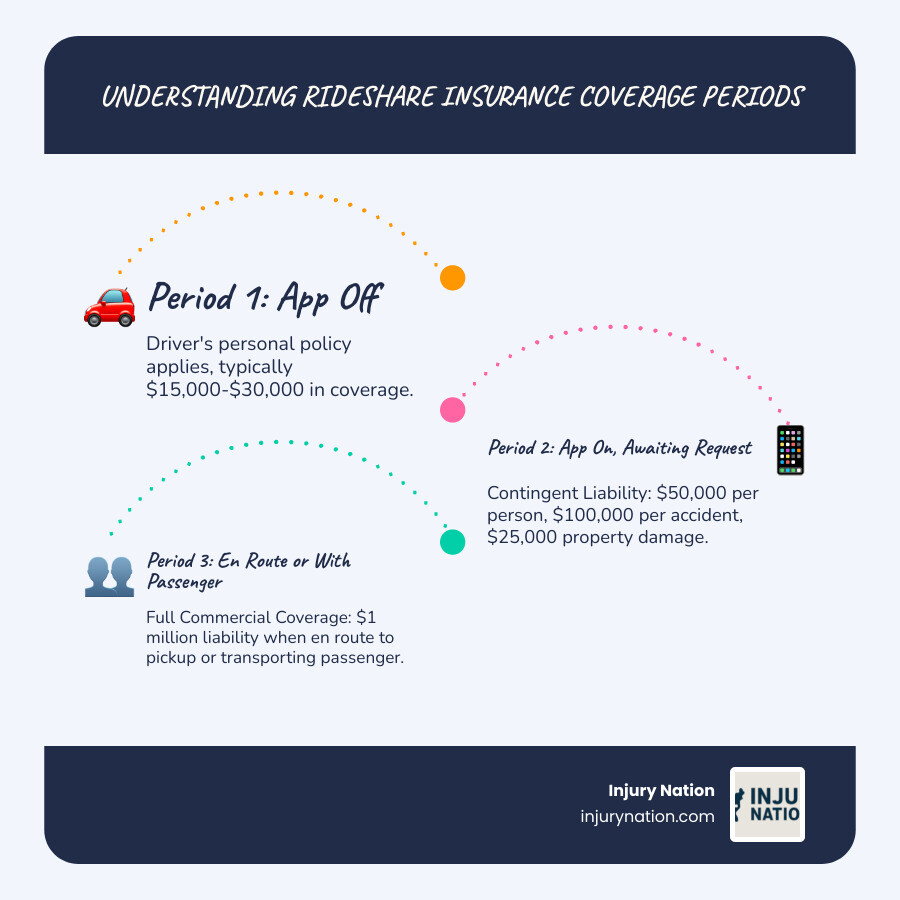
Rideshare insurance in Nevada is divided into three periods:
| Period | Driver Status | Insurance Coverage |
|---|---|---|
| Period 1 | App off | Personal Policy Only – Driver’s personal insurance applies, typically $15,000-$30,000 coverage |
| Period 2 | App on, awaiting request | Contingent Liability – $50,000 per person, $100,000 per accident, $25,000 property damage |
| Period 3 | En route or with passenger | Full Commercial Coverage – $1 million liability when en route to pickup or transporting passenger |
A ride share negligence lawyer is essential to investigate which period applies and ensure you can access the maximum available coverage. Insurance companies will not make this process easy.
Can You Sue the Rideshare Company Directly?
While rideshare companies use the “independent contractor” status of drivers to avoid liability, it is possible to sue them directly in certain circumstances. A claim against the company may be possible for:
- Negligent Hiring: If the company failed to conduct a proper background check on a driver with a poor driving record.
- Inadequate Training: If the company’s lack of driver training contributed to the accident.
- Company Policies: If the app’s design or company policies encourage unsafe driving, such as by pressuring drivers to accept rides quickly.
Rideshare companies face hundreds of lawsuits annually for negligence and personal injuries. These corporations have powerful legal teams, making it critical for victims to have experienced representation. An attorney can help you steer these complexities and explore all avenues for compensation, including car accident claims.
What Constitutes Rideshare Driver Negligence?
Negligence is a failure to use reasonable care that causes harm. In a Las Vegas, Nevada rideshare case, it means a driver fell short of the care expected of motorists, especially when transporting passengers. Nevada Revised Statutes Chapter 706A defines transportation network companies (TNCs) like Uber and Lyft and imposes certain requirements, reflecting duties on both drivers and the platforms.
To prove negligence, four elements are required:
- Duty of Care: The driver had a legal obligation to drive safely and responsibly.
- Breach of Duty: The driver violated that duty (for example, speeding or driving distracted).
- Causation: The breach directly led to the crash and your injuries.
- Damages: You suffered actual losses (medical bills, lost wages, pain and suffering).
Rideshare companies often argue drivers are independent contractors to limit their own liability. An experienced ride share negligence lawyer knows how to challenge this and pursue all responsible parties.
Common Forms of Negligent Behavior
- Distracted/App Use: Looking at the app or GPS instead of the road.
- Speeding or Aggressive Driving: Rushing to complete more rides.
- Driving Under the Influence (DUI): Alcohol or drug impairment.
- Driver Fatigue: Long shifts that slow reaction time and judgment.
- Traffic Violations: Running red lights, illegal turns, failure to yield.
- Poor Vehicle Maintenance: Worn brakes or tires leading to mechanical failures.
Immediate Steps After a Rideshare Accident
Being in a rideshare crash is stressful, but the right moves protect your health and your claim.
- Prioritize Safety and Call 911: Move to a safe spot if possible and request police and medical help. A police report is key evidence.
- Seek Medical Attention: Get evaluated promptly, even if you feel fine; some injuries surface later and early records support your claim.
- Do Not Admit Fault: Stick to the facts with police and others. Avoid apologies or statements that could be used against you.
Documenting the Incident
- Gather Information: Names, contacts, driver’s license and insurance for all drivers; witness contact details.
- Take Photos/Videos: Vehicle damage, the scene, traffic signals, skid marks, road conditions, visible injuries; if you were a passenger, capture the app screen.
- Note Conditions: Weather, lighting, construction, or hazards that may have contributed.
- Report in the App: Use the Uber or Lyft app to report the crash promptly to create an official record.
- Keep Records: Save medical bills, receipts, repair estimates, and keep a journal of symptoms and how injuries affect daily life.
Solving Liability: Insurance and Suing the Company
Liability after a rideshare crash in Nevada can involve multiple insurers and policies. Nevada is an “at-fault” state, so the party who caused the crash pays—but a rideshare accident often means layered coverage and finger-pointing.
How Rideshare Insurance Coverage Works
- Period 1: App Off (Personal Policy)
- Only the driver’s personal auto insurance applies.
- Period 2: App On, Awaiting Request (Contingent Liability)
- If personal insurance denies coverage due to “for-hire” use, the rideshare company’s contingent policy typically provides up to $50,000 per person, $100,000 per accident, and $25,000 property damage.
- Period 3: En Route or With Passenger (Commercial Coverage)
- The rideshare company’s policy usually provides up to $1,000,000 in third-party liability coverage.
A ride share negligence lawyer can determine which period applied and pursue all available coverage while countering insurer tactics.
Can You Sue the Rideshare Company Directly?
You may have a direct claim against Uber or Lyft for:
- Negligent Hiring: Allowing unsafe drivers on the platform.
- Inadequate Background Checks: Failure to screen for red flags.
- Failure to Train/Supervise: Policies or practices that ignore safety.
- Unsafe Company Policies: App design or pressures that encourage risky driving.
These corporations have robust legal teams. Having experienced counsel levels the playing field and ensures all avenues for compensation are explored.
Why You Need a Ride Share Negligence Lawyer
After a rideshare accident, you face medical bills, lost income, and the stress of dealing with a complex legal system. Trying to fight a multi-billion dollar corporation like Uber or Lyft alone is a daunting task. A dedicated ride share negligence lawyer in Las Vegas is your essential advocate.

An experienced attorney is crucial for navigating the legal complexities of rideshare law, fighting insurance companies that want to minimize your claim, and ensuring you meet critical deadlines like Nevada’s two-year statute of limitations for personal injury claims.
How a Ride Share Negligence Lawyer Builds Your Case
A lawyer strengthens your claim by:
- Collecting Evidence: Gathering police reports, medical records, witness statements, and app data.
- Investigating the Accident: Working with experts to reconstruct the crash and establish fault.
- Negotiating with Insurers: Handling all communication to secure a fair settlement.
- Calculating Damages: Accurately assessing all your current and future losses.
- Litigating if Necessary: Filing a lawsuit and representing you in court if a fair settlement isn’t offered.
What Types of Damages Can You Recover?
In a Nevada rideshare negligence case, you can seek compensation for various losses:
- Economic Damages: Tangible financial losses, including current and future medical expenses, lost wages, reduced earning capacity, and property damage.
- Non-Economic Damages: Compensation for non-monetary losses like pain and suffering, emotional distress, and loss of enjoyment of life.
- Punitive Damages: In cases of extreme negligence (like a DUI), these may be awarded to punish the at-fault party.
Nevada’s comparative negligence rule means your compensation may be reduced if you are found partially at fault. An attorney can help protect you from unfair blame. To get the help you need, find a personal injury lawyer in our directory.
Frequently Asked Questions about Rideshare Negligence Claims
Here are answers to common questions about rideshare accident claims in Las Vegas, Nevada.
How long do I have to file a rideshare negligence claim?
In Nevada, the statute of limitations for personal injury claims is generally two years from the date of the accident. It is critical to contact a lawyer well before this deadline. Acting quickly helps preserve evidence and gives your attorney time to build a strong case. If you miss this deadline, you lose your right to sue for compensation.
What should I look for in a ride share negligence lawyer?
Choose a lawyer with:
- Specific Experience: A proven track record with rideshare accident cases in Nevada.
- Contingency Fee Basis: They should only get paid if you win your case.
- Strong Communication: You need an attorney who is responsive and explains things clearly.
- Positive Client Reviews: Look for testimonials that speak to the firm’s success and client satisfaction.
How much does it cost to hire a lawyer for my case?
Most rideshare negligence lawyers work on a contingency fee basis. This means you pay no upfront fees. The lawyer’s fee is a percentage of the final settlement or award they recover for you. If you don’t win, you don’t owe them a fee. This arrangement allows anyone to afford expert legal representation.
Find Your Advocate After a Rideshare Accident
The path to recovery after a rideshare accident is challenging. You shouldn’t have to face complex insurance policies and corporate legal teams alone. An experienced ride share negligence lawyer is your advocate, fighting to secure the compensation you deserve so you can focus on healing.
Don’t let the complexity of the law prevent you from seeking justice. Injury Nation’s directory connects victims with top-rated personal injury lawyers specializing in rideshare accidents in Las Vegas, Nevada.
Find experienced rideshare accident attorneys near you and take the first step toward recovery today.