Why Understanding Concussion from Fall Matters
A concussion from fall is a common but frequently misunderstood injury. Falls are the #1 cause of concussions, surpassing sports and car accidents, yet many people don’t seek medical care, believing their symptoms aren’t severe enough.
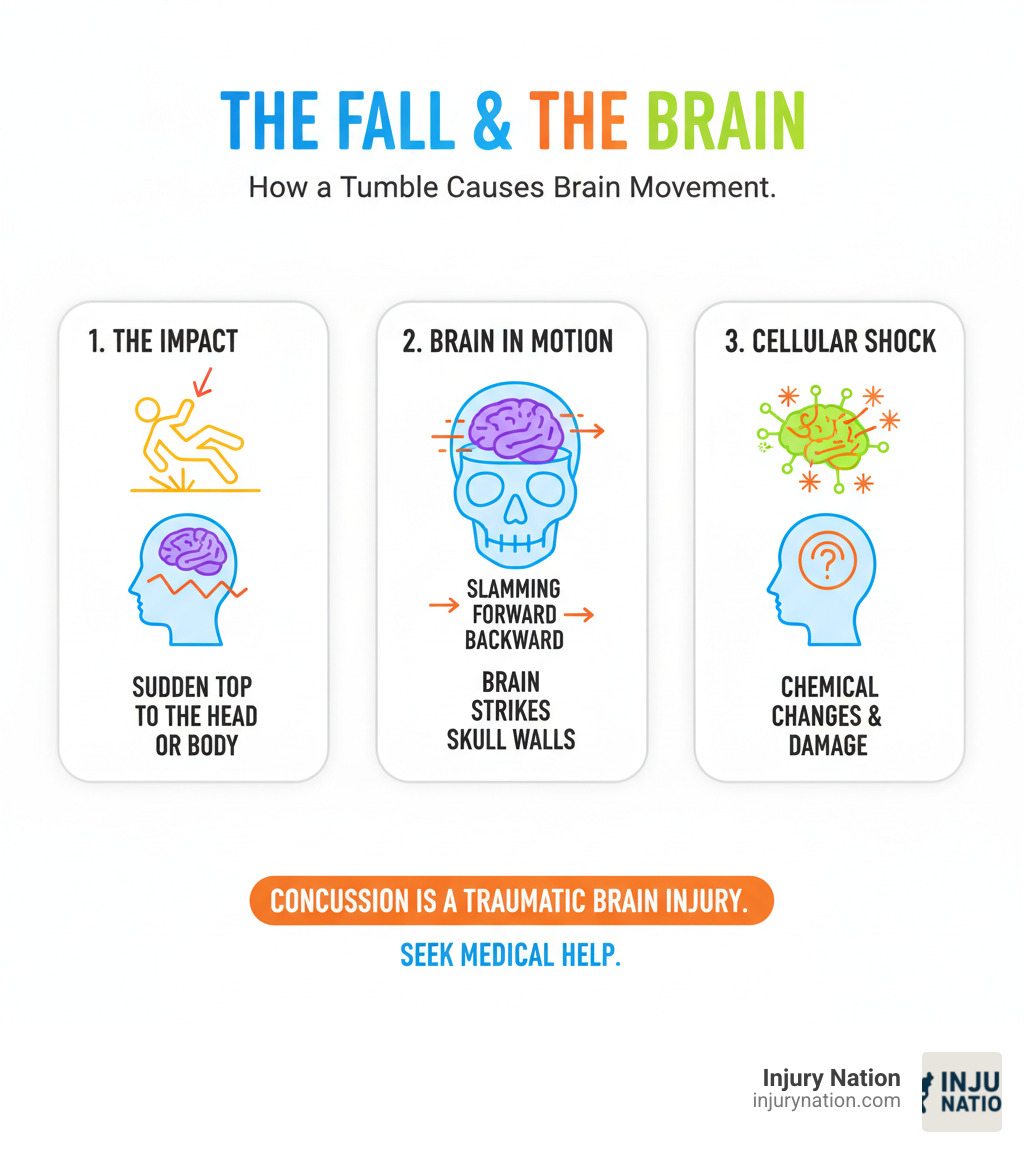
A concussion is a traumatic brain injury (TBI) caused by the brain moving inside the skull. Key things to remember are:
- A direct head impact is not necessary; a jolt to the body can be enough.
- Most concussions (90%) occur without loss of consciousness.
- Symptoms can be delayed, sometimes appearing 24-48 hours after the fall.
- Anyone, from toddlers to the elderly, can get a concussion from a fall.
Understanding that a concussion is a serious chemical injury to the brain—not just “getting your bell rung”—is the first step to recovery. The injury is invisible, and you might feel fine initially, only to develop headaches, confusion, or dizziness hours or days later. Recognizing these signs early is critical for a safe recovery.
Find more about Concussion from fall:
The Mechanics: What is a Concussion and How Does a Fall Cause It?
A concussion from fall is an invisible injury that’s easy to dismiss. Your soft brain floats in fluid inside your hard skull. When you fall, your body stops abruptly, but your brain keeps moving, striking the inside of your skull. This impact, known as acceleration-deceleration forces, scrambles brain cells, disrupts normal function, and can damage nerve fibers.
Crucially, you don’t need to hit your head or lose consciousness to get a concussion. A hard jolt to the body is enough, and about 90% of concussions happen while the person is awake. This is why they are called functional injuries. Standard imaging like CT scans or MRIs often look normal because they detect structural damage (like bleeding or fractures), not the microscopic disruption a concussion causes. Your brain looks fine, but it isn’t working fine. To learn more about the full range of concussion symptoms and what causes them, the Mayo Clinic offers excellent information: More about concussion symptoms and causes.
Why Falls Are So Common
Falls are the leading cause of concussions because they happen so easily. Older adults are at high risk due to changes in balance, vision, and reflexes. Young children (ages 0-4) are also vulnerable as they learn to walk and explore without a sense of danger. Workplace falls affect all ages, especially in construction, but even office environments have hazards like wet floors or poor lighting. The most common culprits are everyday hazards at home: uneven sidewalks, loose rugs, poor lighting, and cluttered hallways.
Immediate Symptoms of a Concussion from a Fall
Symptoms can appear immediately or be delayed for hours or even a day or two. Be vigilant for these initial warning signs:
- Headache: Can range from mild pressure to a severe, sudden pain.
- Confusion: Feeling dazed, disoriented, or thinking through a fog.
- Dizziness and Balance Problems: Feeling lightheaded, unsteady, or experiencing vertigo (a spinning sensation).
- Nausea or Vomiting: A common reaction to the brain injury.
- Vision Changes: Blurred or double vision, or “seeing stars.”
- Amnesia: Trouble remembering events just before or after the fall.
- Sluggishness: Slurred speech, slow responses, or delayed movements.
Even if these symptoms seem mild, they are your brain’s way of signaling an injury. Pay close attention to any changes in the hours and days following a fall.
Spotting the Injury: Concussion Symptoms in Adults vs. Children

Spotting a concussion from fall can be difficult because symptoms may not appear for hours or even a day later. It’s also important to know that symptoms present differently in adults and children. You must distinguish between symptoms (what the person feels, like a headache) and signs (what you can observe, like unsteadiness). For young children, observing signs is critical.
Concussion Symptoms in Adults
Adults can usually describe how they feel, but they often downplay their symptoms. Watch for these issues in the hours and days after a fall:
- Physical: Headache, sensitivity to light or noise, ringing in the ears (tinnitus), neck pain, fatigue, or changes in taste or smell.
- Cognitive: Feeling like you’re in a “brain fog,” difficulty concentrating, memory problems, and trouble processing new information.
- Emotional: Increased irritability, anxiety, sadness, or mood swings that feel out of character.
- Sleep: Sleeping much more or less than usual, difficulty falling asleep, or feeling exhausted even after a full night’s rest.
These symptoms can fluctuate, making it hard to track your recovery.
How Symptoms Differ in Children and Toddlers
Spotting a concussion in a child is harder because they may not be able to communicate their symptoms. Your observation is key.
School-aged children may complain of a headache but might also appear dazed, confused, or clumsy. They might respond to questions slowly or have trouble remembering recent events. Watch for unusual irritability or emotional behavior.
Infants and toddlers cannot tell you what’s wrong, so you must watch for behavioral changes:
- Unusual Crying: Crying that is inconsolable and doesn’t respond to normal comfort.
- Changes in Eating/Sleeping: Suddenly refusing to nurse or eat, or a major disruption to their sleep schedule.
- Loss of Interest in Play: Apathy towards favorite toys or activities.
- Appearing Dazed: Staring blankly or seeming unresponsive.
- Balance Issues: Stumbling or falling more than is normal for their age.
- Vomiting: Especially if it happens more than once.
Trust your instincts. If your child seems “off” after a fall, it’s always best to seek medical attention.
Emergency Red Flags: When to Seek Immediate Medical Help

While most concussions are classified as “mild” traumatic brain injuries, no brain injury is minor. Certain symptoms indicate a potentially life-threatening condition, like bleeding or swelling in the brain. These are red flags that require a trip to the emergency room or a 911 call immediately. Knowing these signs can save a life.
Danger Signs in Adults
After a fall, seek immediate medical help if an adult shows any of these signs:
- A headache that gets progressively worse and doesn’t respond to pain medication.
- Repeated vomiting.
- Any seizure or convulsion.
- Loss of consciousness, or increasing drowsiness and difficulty being woken up.
- Weakness, numbness, or tingling, especially on one side of the body.
- Slurred speech or difficulty understanding others.
- Significant confusion, restlessness, or agitation.
- One pupil larger than the other.
- Clear fluid or blood draining from the nose or ears.
Danger Signs in Infants and Toddlers
Young children can’t describe their symptoms, so observation is critical. Go to the ER immediately if a child exhibits:
- Inconsolable crying that cannot be soothed.
- Refusal to eat or nurse.
- Any large bump, swelling, or deep bruise on the head, especially in an infant.
- Increased drowsiness or being unusually difficult to wake up.
- Any of the adult danger signs, such as vomiting or seizures.
When in doubt, err on the side of caution. It’s always better to have a false alarm than to delay care for a serious brain injury.
The Road to Recovery After a Concussion from a Fall

Recovering from a concussion from fall requires time and patience, as your brain needs to heal. The timeline is different for everyone, influenced by age, overall health, and injury severity. Some people feel better in a week or two, while others may need months.
Immediate Steps to Take
The first 24-48 hours are critical. During this time, you should not be alone. Have someone stay with you to monitor for any danger signs. The most important steps are:
- Physical and Cognitive Rest: Avoid all strenuous physical activity. Also, give your brain a break from tasks that require concentration, such as reading, computer work, or video games.
- Avoid Screens: The light and information from phones, TVs, and computers can tax an injured brain and worsen symptoms. Rest in a quiet, dimly lit room.
- Pain Management: Use acetaminophen (Tylenol) for headaches. Avoid NSAIDs like ibuprofen or aspirin in the first few days unless a doctor approves, as they can increase bleeding risk.
- Avoid Alcohol: Alcohol interferes with brain healing and can mask worsening symptoms.
The Gradual Return to Activity
After the initial rest period, slowly reintroduce activities. This is known as a Graduated Return to Activity and Sport (GRAS). The key is to pace yourself.
Start with light activity, like a short walk. If symptoms like headaches or dizziness return, you’ve done too much. Scale back, rest, and try again later. Listen to your body and manage your daily “energy battery” carefully.
Returning to work or school should also be gradual. Consider starting with half-days or a reduced workload. Students may need accommodations like extra time on tests. Do not resume driving until you are completely symptom-free and have been cleared by your doctor, as your reaction time and concentration must be fully restored. For a structured guide, you can review protocols like this one: Read more about gradual return to activity.
Recovery is about giving your brain the space it needs to heal, not pushing through the pain.
Long-Term Effects and Preventing Future Falls
Each concussion from fall makes you more vulnerable to future injuries, with the risk of a second concussion being three to six times higher. Subsequent concussions often take longer to heal. Repeated head trauma is linked to serious conditions like Second Impact Syndrome (a rare but potentially fatal brain swelling that occurs when a second concussion happens before the first has healed) and Chronic Traumatic Encephalopathy (CTE), a degenerative brain disease.
Potential Long-Term Complications of a Concussion from a Fall
When symptoms last longer than a month, it’s often called Post-Concussion Syndrome (PCS). These symptoms can linger for months or even years and may include:
- Persistent headaches or vertigo (dizziness).
- Long-term memory or concentration problems.
- An increased risk of depression, anxiety, and other mood disorders.
If you experience these ongoing issues, it’s important to work with your healthcare provider for management strategies.
How to Reduce the Risk of Falls
Since falls are the #1 cause of concussions, prevention is key. Making your environment safer is a powerful way to protect yourself and your family.

- Install Handrails and Grab Bars: Place sturdy handrails on both sides of stairways and grab bars in bathrooms near the toilet and in the shower.
- Remove Tripping Hazards: Secure or remove throw rugs. Keep floors clear of clutter, cords, and shoes.
- Improve Lighting: Ensure all areas, especially stairs and hallways, are well-lit. Use nightlights in bedrooms and bathrooms.
- Exercise for Balance: Activities like walking or tai chi can strengthen leg muscles and improve coordination. Check with a doctor before starting a new routine.
- Wear Appropriate Footwear: Choose shoes with good traction and support. Avoid walking in slippery socks or ill-fitting slippers.
Frequently Asked Questions about Fall-Related Concussions
Dealing with a concussion from fall can be confusing. Here are answers to some common questions.
How long does it take to recover from a concussion from a fall?
Most people feel significantly better within a couple of weeks. However, there is no universal timeline. Recovery speed depends on your age, the severity of your symptoms, and whether you’ve had previous concussions. If symptoms last longer than four weeks, it may be Post-Concussion Syndrome (PCS), which can persist for months or longer. Following a doctor’s guidance is crucial.
Can you sleep after a fall and a suspected concussion?
Yes. The old myth about waking someone up every hour is outdated. Sleep is one of the most important things your brain needs to heal. However, there is a critical exception: if the person is showing any emergency danger signs (like a worsening headache, repeated vomiting, or extreme confusion), you must seek immediate medical care before letting them go to sleep. If no danger signs are present, rest is beneficial.
Do helmets prevent concussions from falls?
No, helmets do not prevent concussions, but they are still essential. A helmet is designed to protect your skull from fracture and can save your life by absorbing the force of a direct impact. A concussion, however, is caused by the brain moving and twisting inside the skull, which a helmet cannot stop. Always wear a properly-fitted helmet for activities like cycling, skateboarding, or contact sports. It may not prevent a concussion, but it can prevent a far more catastrophic brain injury.
Conclusion: Your Next Steps After a Fall-Related Injury
A concussion from fall is a serious brain injury that requires proper medical attention and rest. Falls are the leading cause of concussions, symptoms can be delayed, and recognizing emergency red flags is critical. Most people recover fully, but it takes patience and following a doctor’s guidance.
While many falls are simple accidents, some happen due to negligence: a store that ignored a spill, a landlord who didn’t fix a broken handrail, or a property owner who failed to provide adequate lighting. If your fall was caused by someone else’s failure to maintain a safe environment, you should not have to bear the financial burden of medical bills and lost wages alone.
Dealing with a concussion is overwhelming enough without adding legal complexities. Injury Nation connects victims with top-rated personal injury lawyers who specialize in fall-related injuries. A qualified attorney can handle insurance companies and property owners while you focus on your recovery.
You deserve compensation for your injury, pain, and suffering. Take the first step toward getting the justice and financial support you are entitled to.
Your next step is simple: Find a top-rated personal injury lawyer in your area and begin the process of making things right.