

Why Slip and Fall Accidents Lawsuits Are More Complex Than You Think
Slip and fall accidents lawsuits are claims filed when an injury results from unsafe conditions on someone else’s property. These incidents are a leading cause of emergency room visits, with over 8 million people affected each year.
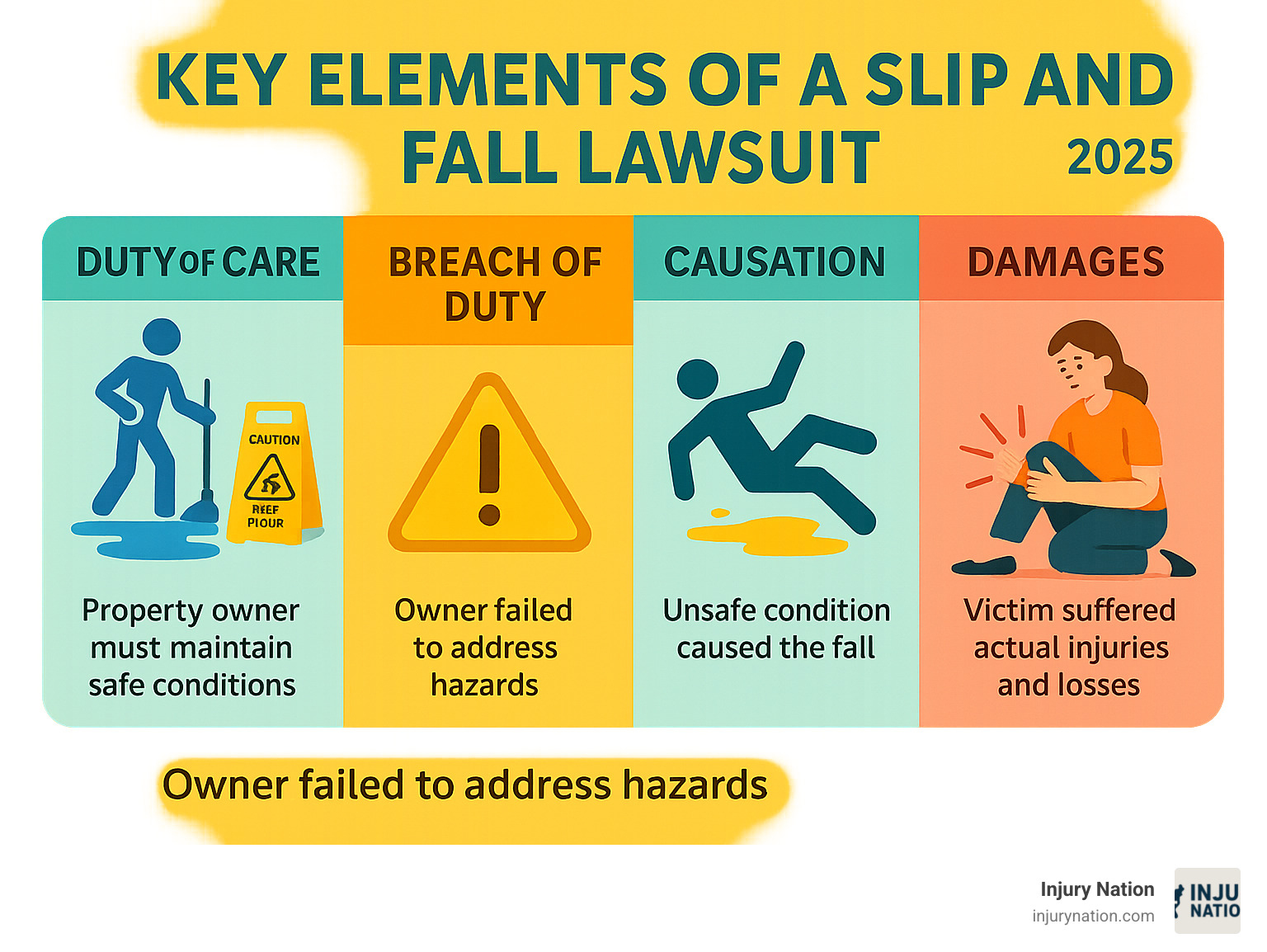
However, a valid lawsuit requires more than just an injury. You must prove the property owner was negligent. This involves four key elements:
- Duty of Care: The owner had a responsibility to keep the property safe.
- Breach of Duty: The owner failed to address or warn about a hazard.
- Causation: The owner’s failure directly caused your fall.
- Damages: You suffered actual injuries and financial losses.
Common hazards include wet floors, uneven surfaces, poor lighting, and ice or snow. But simply getting hurt doesn’t guarantee a successful claim. Proving the owner knew (or should have known) about the danger and did nothing is the central challenge, making these cases surprisingly complex. Understanding your rights is the first step toward securing compensation for medical bills, lost wages, and pain and suffering.
Establishing Fault: The Legal Foundation of a Slip and Fall Claim

Proving who is at fault is the critical first step in any slip and fall accidents lawsuit. It’s not enough to say you fell; you must demonstrate that the property owner’s negligence caused your injuries. Property owners owe visitors a legal duty of care to keep their spaces reasonably safe by checking for hazards, making repairs, and warning of risks. When they fail, and an injury occurs, premises liability law provides a path to compensation.
Common Causes and Resulting Injuries
Everyday hazards are often the culprits in slip and fall accidents. The most frequent causes include:
- Wet or slippery surfaces from spills, mopping, or weather.
- Uneven surfaces like cracked sidewalks, potholes, or loose carpeting.
- Poor lighting, especially in stairwells and parking lots.
- Obstructed pathways with merchandise or materials.
- Weather hazards such as unshoveled snow and untreated ice.
These falls can lead to severe, life-altering injuries. Fractures (hip, wrist, ankle), sprains, and strains are common. More serious outcomes include head injuries, concussions, spinal cord damage, and traumatic brain injuries (TBIs). According to the National Safety Council, falls are a leading cause of injury-related deaths, particularly for adults over 65.
The Four Elements of Negligence
A successful lawsuit must establish four key elements:
- Duty of Care: The property owner had a legal obligation to keep you safe.
- Breach of Duty: The owner failed to meet that obligation. This requires showing the owner had actual knowledge (knew about the hazard) or constructive knowledge (should have known about it through reasonable inspection).
- Causation: The owner’s negligence was the direct cause of your fall and injuries.
- Damages: You suffered measurable harm, such as medical bills, lost wages, and pain and suffering.
If any of these four elements are missing, the case will likely fail.
The Property Owner’s Duty of Care: Visitor Status Matters
The level of care a property owner owes you depends on your legal status as a visitor:
- Invitees: Customers or clients on the property for the owner’s benefit. They are owed the highest duty of care. The owner must actively inspect for, fix, and warn about dangers.
- Licensees: Social guests. The owner must warn of known dangers but doesn’t have a duty to inspect for unknown hazards.
- Trespassers: Individuals on the property without permission. They are owed the lowest duty of care, though an owner cannot intentionally harm them.
Most slip and fall cases involve invitees, where the standard is “reasonable care.”
How Your Own Actions Can Affect Your Claim
Your own behavior can impact your claim. Most states use a comparative negligence rule, where your compensation is reduced by your percentage of fault. For example, if you are found 20% at fault for texting while walking, a $100,000 award would be reduced to $80,000. In many of these states, if you are more than 50% at fault, you receive nothing.
A few states (Alabama, Maryland, North Carolina, Virginia, and D.C.) use the stricter contributory negligence rule, where being even 1% at fault can prevent you from recovering any compensation at all. An experienced lawyer can help steer these rules and argue that the property owner’s negligence was the primary cause of your fall.
The Anatomy of Slip and Fall Accidents Lawsuits
Navigating the aftermath of a slip and fall can feel overwhelming. Understanding the steps in a slip and fall accidents lawsuit can explain the process and empower you to seek justice. From gathering evidence to negotiating with insurers, a structured legal timeline guides the way.
Critical First Steps After an Accident
What you do immediately after a fall can significantly impact your claim.
- Seek Medical Attention: Your health is the priority. A medical evaluation also creates an official record linking your injuries to the accident.
- Report the Incident: Inform the property manager, owner, or landlord. Ask for a copy of the official incident report.
- Document the Scene: Use your phone to take photos and videos of the hazard, the surrounding area, and any lack of warning signs. The owner may quickly fix the issue, so act fast.
- Get Witness Information: Collect names and contact details from anyone who saw you fall.
- Preserve Evidence: Keep the clothes and shoes you were wearing. They may hold evidence.
- Note the Statute of Limitations: Each state has a strict deadline for filing a lawsuit (e.g., often two years for personal injury). Missing it means losing your right to sue.
Key Evidence for Slip and Fall Accidents Lawsuits
A strong case is built on solid evidence. Key items include:
- Photographs and Videos: Visual proof of the hazardous condition.
- Incident Reports: The official acknowledgment that an accident occurred.
- Witness Statements: Unbiased accounts corroborating your story.
- Medical Records: Documentation of your injuries, treatments, and costs.
- Maintenance Logs: Records that may show a lack of proper inspection or a history of similar incidents.
- Expert Testimony: A safety or medical expert can explain how standards were violated and the long-term impact of your injuries.
Navigating the Legal Timeline: From Claim to Courtroom
Most cases follow a general path:
- Filing an Insurance Claim: This opens a dialogue with the property owner’s insurer.
- Investigation: Both your attorney and the insurer will gather evidence.
- Findy Phase: If a lawsuit is filed, both sides formally exchange information through interrogatories (written questions), requests for documents, and depositions (sworn testimony).
- Negotiation: Throughout the process, your attorney will negotiate with the insurer to reach a fair settlement.
- Mediation/Arbitration: A neutral third party may be used to help facilitate a settlement.
- Trial: If a settlement cannot be reached, the case is presented to a judge or jury for a final decision.
To Settle or To Sue? Weighing Your Options
Deciding whether to settle or go to trial involves weighing pros and cons.
Settling offers a faster, guaranteed outcome with more privacy and control. However, the amount might be less than a potential trial verdict.
Going to trial could result in a higher award and public accountability, but it is expensive, time-consuming, stressful, and carries the risk of losing.
According to the American Bar Association, about 97% of civil cases settle before trial, making it the most common path. An attorney can advise you on the best strategy for your specific case.
What’s Your Claim Worth? Damages and Settlements

A pressing question after a fall is, “How much is my claim worth?” The value of slip and fall accidents lawsuits goes beyond medical bills; it encompasses the full impact on your life. Determining this value is complex, involving different types of damages and state laws. An experienced attorney can provide a personalized assessment of your case.
If you’re ready to understand what your claim might be worth, we encourage you to Find a Slip and Fall Attorney at Injury Nation for a professional evaluation.
Understanding Damages in Slip and Fall Accidents Lawsuits
Compensation, or “damages,” falls into several categories:
- Economic Damages: These are tangible, provable costs. They include all medical expenses (past and future), lost wages, lost earning capacity if you cannot return to your previous work, and out-of-pocket costs for things like medication and home modifications.
- Non-Economic Damages: These compensate for intangible losses. This includes pain and suffering (physical discomfort and chronic pain), emotional distress (anxiety, depression, fear), and loss of enjoyment of life if you can no longer participate in hobbies or activities you once loved.
- Punitive Damages: Rarely awarded, these are intended to punish the defendant for extreme recklessness or intentional misconduct.
Factors That Influence Settlement Amounts
There is no “average” settlement, as each case is unique. Key factors include:
- Severity of Injury: A traumatic brain injury will result in a much higher value than a sprained ankle.
- Clarity of Liability: Clear, undeniable proof of the owner’s negligence leads to higher settlements.
- Strength of Evidence: Compelling photos, witness statements, and medical records strengthen your negotiating position.
- Medical Treatment Costs: Higher medical bills provide a concrete basis for a larger settlement.
- Defendant’s Conduct: Blatant disregard for safety can increase settlement demands.
- State Laws: Rules like comparative negligence can reduce your award if you are partially at fault.
Real-World Examples of Slip and Fall Payouts
Actual case outcomes show the potential for significant compensation when negligence is clear and injuries are severe:
- $18 million for a man who fell into an unmarked manhole, causing severe head, neck, and back injuries.
- $15 million for a truck driver paralyzed after a fall at a medical clinic.
- $13 million for a woman who suffered a skull fracture and brain hemorrhage after slipping at a Lowe’s.
- Over $10 million to a woman who slipped in grease at a Walmart, where evidence showed the store knew about the hazard.
- $7.5 million to a Starbucks customer who slipped on a mopped floor with inadequate warning signs.
These examples highlight the importance of injury severity and strong evidence in securing substantial awards.
Frequently Asked Questions about Slip and Fall Lawsuits
If you’ve been injured in a slip and fall, you likely have many questions about your health, finances, and legal options. The process can be intimidating. Here are answers to some of the most common questions we hear about slip and fall accidents lawsuits.
What is the average time it takes to settle a slip and fall case?
There is no simple answer; the timeline can range from a few months to several years. Factors that influence the duration include the complexity of the case, the severity of your injuries (it’s often best to wait until you reach “maximum medical improvement”), the willingness of the insurance company to negotiate, and court backlogs. A straightforward case with minor injuries might settle quickly, while a complex case with severe injuries and a resistant insurer will take much longer.
Can I sue if I fell on public property like a sidewalk?
Yes, but it’s more complicated. Lawsuits against government entities (city, county, or state) are possible but face special rules and protections like “sovereign immunity.” The most critical difference is the strict notice requirement. You may have as little as 30 to 90 days to formally notify the government of your intent to sue. Missing this short deadline will likely end your case. Because the rules are so specific and the deadlines so tight, you should consult a lawyer immediately after a fall on public property.
What if the property owner tries to fix the hazard right after I fall?
This is a common occurrence and highlights why you must document the scene immediately. When an owner removes or repairs a hazard, it’s called “spoliation of evidence.” While this can complicate proving what happened, the act of fixing the problem can also be used to suggest the owner knew it was dangerous (a concept known as “consciousness of guilt”). However, legal rules limit how this “subsequent remedial measure” can be used in court. Immediate photos and videos are your best defense, providing indisputable proof of the hazard before it was altered.
How a Lawyer Can Make or Break Your Case
Slip and fall accidents lawsuits are complex legal battles. Insurance companies have teams of lawyers dedicated to minimizing your payout. Facing them alone is a significant disadvantage. An experienced personal injury lawyer levels the playing field.
Proving the four elements of negligence—duty, breach, causation, and damages—requires legal expertise. A single misstep, like missing a deadline or failing to preserve evidence, can derail your entire case. An attorney steers the legal system for you, handling deadlines, court procedures, and evidence gathering.
The difference in outcome can be substantial. A lawyer’s job is to maximize your compensation by accurately calculating all your damages, including future medical needs and lost earning capacity. They know how to counter insurance company tactics, present compelling medical evidence, and negotiate effectively. You wouldn’t perform your own surgery; you shouldn’t handle your own complex legal case.
At Injury Nation, our mission is to connect you with vetted, experienced attorneys who specialize in slip and fall accidents lawsuits. Your physical and financial recovery is too important to leave to chance. Get the expert legal guidance you need to fight for the compensation you deserve.
Ready to level the playing field? Find top-rated personal injury lawyers near you at Injury Nation.