

When Property Owners’ Negligence Becomes Your Legal Problem
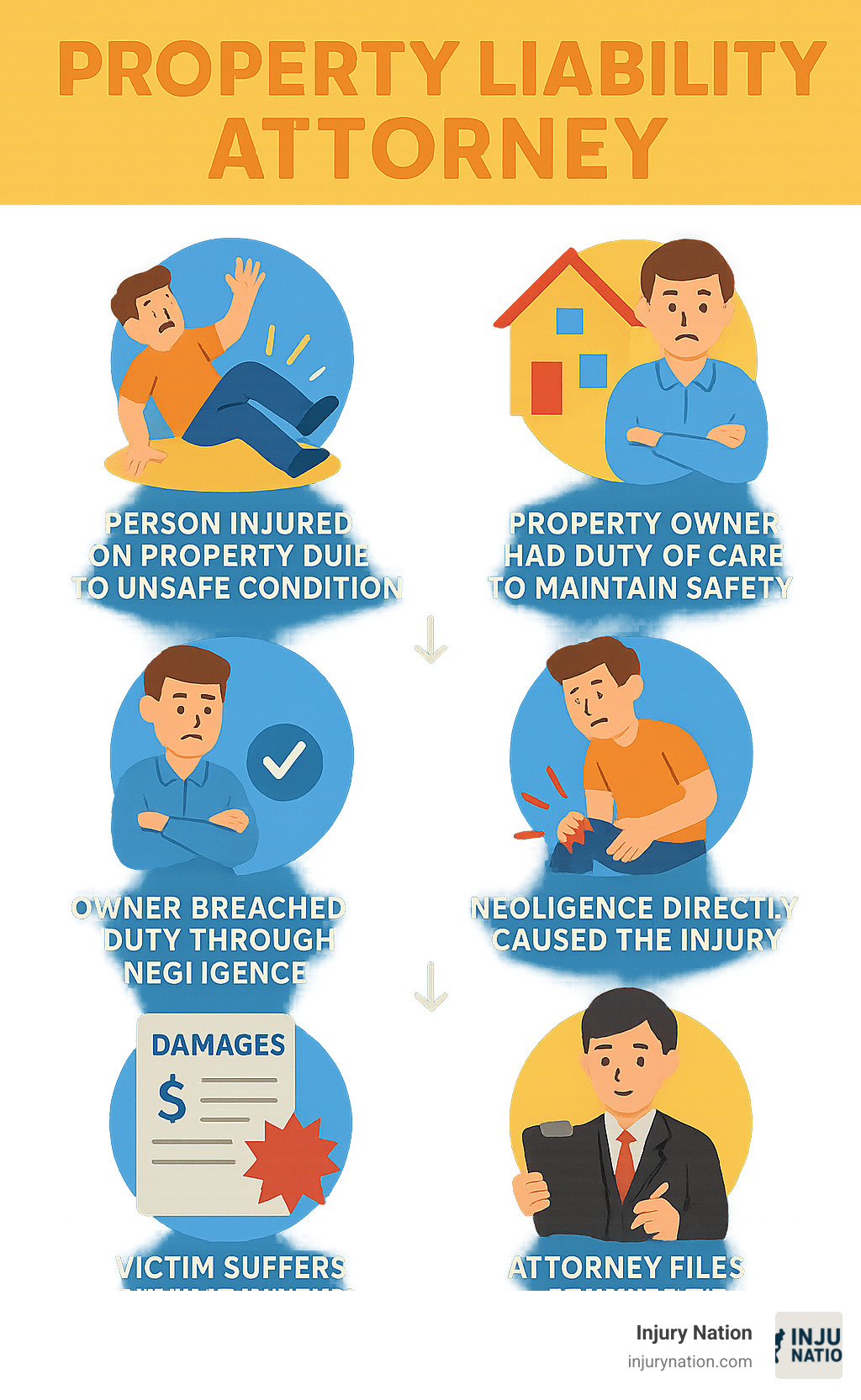
A property liability attorney specializes in cases where people are injured due to unsafe conditions on someone else’s property. These lawyers help victims prove negligence and recover compensation for medical bills, lost wages, and pain and suffering.
Key roles of a property liability attorney include:
- Investigating accidents and gathering evidence of negligence
- Proving the four elements of premises liability (duty, breach, causation, damages)
- Handling insurance companies and their tactics
- Calculating full damages, including future costs
- Filing lawsuits when settlements are unfair
- Navigating state laws like statutes of limitations
Property accidents happen everywhere, from grocery stores with wet floors to apartment buildings with broken stairs. The legal concept is straightforward: property owners have a duty to keep their premises reasonably safe for visitors. When they breach this duty through negligence and someone gets hurt, they may owe compensation. However, the legal process involves complex rules that most injury victims can’t steer alone.
Whether you slipped on an icy sidewalk, were attacked due to poor security, or suffered burns from faulty wiring, understanding when to call a property liability attorney can make the difference between a denied claim and fair compensation.
Understanding Premises Liability Law

If you trip on a broken sidewalk and twist your ankle, who’s responsible? That cracked pavement could be the foundation of a legal case. Premises liability is the legal concept that makes property owners responsible when someone gets hurt on their property due to unsafe conditions.
The heart of this law is the duty of care. This means property owners must take reasonable steps to prevent foreseeable danger to visitors. They don’t have to guarantee safety, but they must act responsibly. If an owner knew (or should have known) about a dangerous condition but didn’t fix it or warn people, they can be held legally responsible for resulting injuries.
This applies to all properties, including private homes, malls, office buildings, and government properties like parks.
The Property Owner’s Responsibilities
What does “reasonable care” mean? Property owners have several duties to keep people safe. They must inspect their property regularly for problems, repair any hazards promptly, and warn people of dangers that can’t be fixed immediately, such as with a “Wet Floor” sign. Maintaining safe conditions is an ongoing job that includes ensuring adequate lighting and keeping walkways clear. Finally, owners must follow building codes and safety regulations, as violations often point directly to negligence.
Visitor Status: Invitee, Licensee, and Trespasser
Not everyone who gets hurt on a property has the same legal rights. The law divides visitors into three categories, which determines the owner’s level of responsibility.
| Visitor Type | Definition | Duty of Care Owed by Property Owner | Examples |
|---|---|---|---|
| Invitee | Someone on the property for the owner’s benefit (commercial) or a public purpose. | Highest duty. Must actively inspect for, repair, and warn of known and findable dangers. | Customers in a store, restaurant patrons, public park visitors. |
| Licensee | Someone on the property for non-commercial reasons with the owner’s permission. | Moderate duty. Must warn of known dangerous conditions not likely to be found by the licensee. | Social guests, friends, neighbors. |
| Trespasser | Someone who enters the property without permission. | Lowest duty. Generally, no duty to keep the premises safe or warn of hazards. | Someone cutting through private property, a burglar. |
Invitees receive the highest level of protection. Licensees (social guests) get less; the owner must only warn of known dangers. Trespassers get minimal protection, but there is a major exception.
Special Cases: The ‘Attractive Nuisance’ Doctrine
Children change the rules. The attractive nuisance doctrine applies to things on a property that are likely to attract children but could harm them, like an unfenced swimming pool or a construction site.
Under this doctrine, property owners can be liable for injuries to child trespassers if they have an attractive nuisance. The law expects owners to take reasonable steps to protect children, such as putting up a fence or securing dangerous equipment. If your child was injured due to an attractive nuisance, a property liability attorney can determine if the property owner failed in their duty to protect young visitors.
Common Premises Liability Cases and Injuries
Most premises liability cases are rooted in negligence—when a property owner fails to keep their space reasonably safe. These preventable accidents can cause devastating injuries, leading to significant medical bills, lost wages, and emotional trauma. Seeking fair compensation through a premises liability claim is often essential for recovery.
Types of Premises Liability Accidents
Property accidents come in many forms, each telling a story of preventable harm.
- Slip and fall accidents are the most common, caused by wet floors, icy sidewalks, or uneven pavement. A Slip and Fall Cases Attorney can help you understand your rights.
- Dog bites and animal attacks occur when owners fail to control their pets.
- Negligent security cases arise when crimes happen due to poor safety measures like broken lighting or faulty locks.
- Swimming pool accidents can lead to drowning or injuries from unsafe conditions like missing safety fences.
- Elevator and escalator malfunctions in buildings can cause sudden, severe injuries if not properly maintained.
- Fires and electrocution from faulty wiring can cause severe burns.
- Falling objects like merchandise from shelves or construction debris can cause head injuries.
- Toxic fumes or chemical exposure can result from poor ventilation or improperly stored substances like carbon monoxide or mold.
- Other accidents include injuries at amusement parks or bike crashes caused by property defects.
Injuries Resulting from Property Accidents
The injuries from these accidents can be life-altering.
- Broken bones, especially fractures of wrists, hips, and ankles, are common.
- Traumatic brain injuries (TBI) can range from concussions to permanent disability.
- Spinal cord injuries from falls can cause chronic pain or paralysis.
- Soft tissue injuries like sprains and torn ligaments can cause months of pain.
- Burns from electrical, fire, or chemical accidents may require multiple surgeries.
- Drowning and near-drowning incidents can cause severe brain damage from lack of oxygen.
- Emotional distress, including anxiety, PTSD, and depression, is an often-overlooked consequence.
When facing these injuries, medical bills pile up as you’re unable to work. A skilled property liability attorney can make a critical difference in your physical and financial recovery.
Navigating Your Claim with a Property Liability Attorney
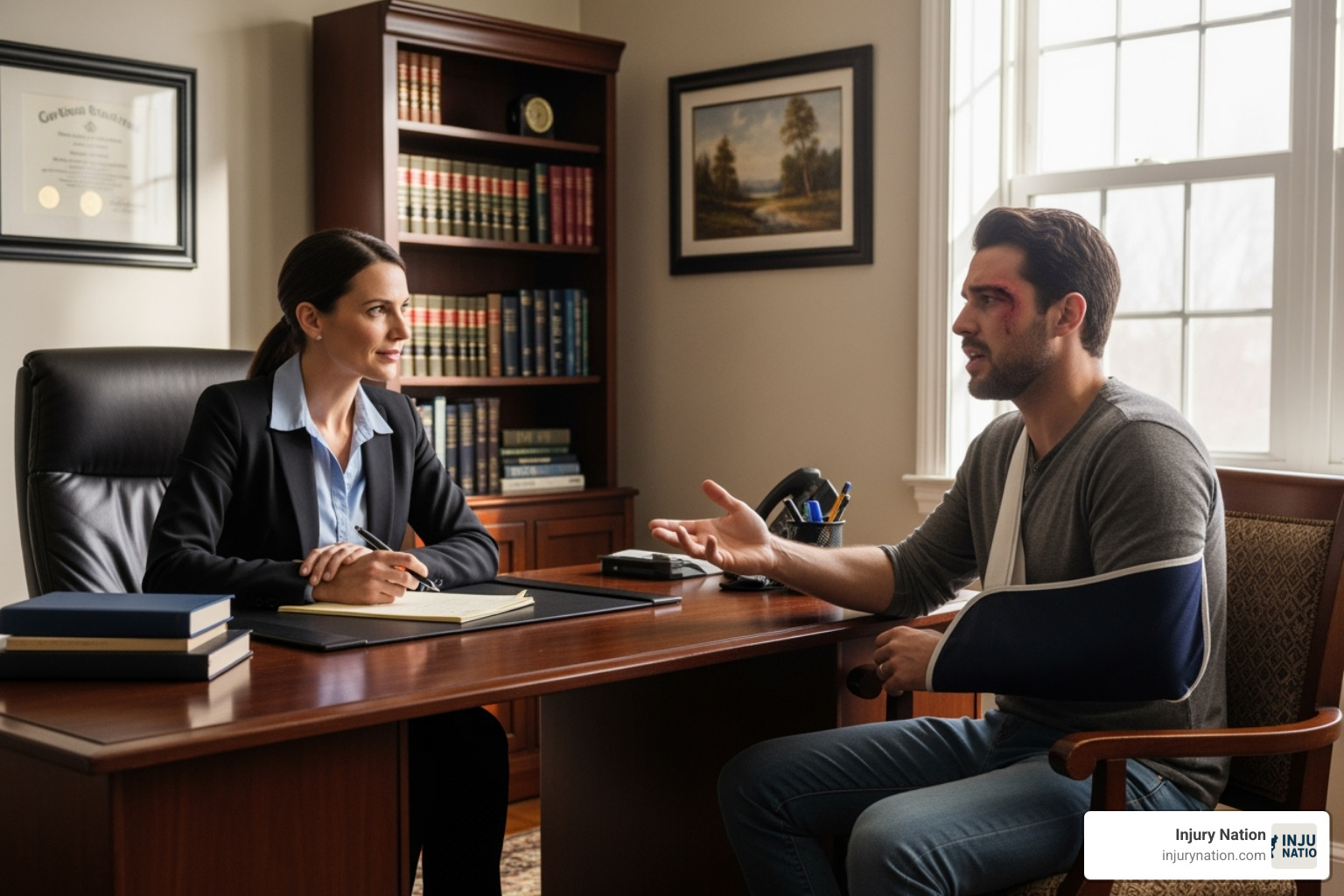
Being injured on someone else’s property is stressful, and the legal process that follows can be overwhelming. Insurance companies have legal teams working to minimize what they pay. A skilled property liability attorney is essential to level the playing field and protect your rights.
What to Do After an Injury on Someone’s Property
The steps you take immediately after an accident can significantly impact your case.
- Seek immediate medical attention. This creates a medical record connecting your injuries to the accident.
- Report the incident to the property owner or manager and ask for a copy of the report.
- Document everything. Take photos of the hazard, the surrounding area, and your injuries.
- Get witness information. Ask for names and phone numbers, as independent witnesses are powerful.
- Preserve evidence. Keep the clothes and shoes you were wearing.
- Avoid giving recorded statements to insurance adjusters. Politely tell them you need to speak with an attorney first.
How a Property Liability Attorney Proves Negligence
Winning a case requires proving the property owner was negligent. Your attorney must establish four elements:
- Duty of care: The owner had a legal responsibility to keep you safe.
- Breach of duty: The owner failed to meet that responsibility.
- Causation: The owner’s failure directly caused your injuries.
- Actual damages: You suffered real losses, like medical bills and lost wages.
Proving this requires gathering evidence like accident reports, surveillance footage, maintenance logs, and witness statements.
Why You Need an Experienced Property Liability Attorney
Handling a claim yourself is risky. An experienced attorney provides crucial services:
- Case evaluation to assess your claim’s strength.
- Investigation to uncover evidence.
- Negotiating with insurance companies to fight lowball offers.
- Calculating full damages, including future medical needs and lost earning capacity.
- Filing a lawsuit and providing trial representation if a fair settlement isn’t reached.
For more information, check out our lawyers directory.
Understanding Timelines: The Statute of Limitations
You cannot wait forever to file a lawsuit. Every state has a statute of limitations that sets a strict deadline. For example, Florida and Nevada both give you two years from the date of the accident to file a premises liability lawsuit. If you miss this deadline, you lose your right to compensation forever. Contact a property liability attorney as soon as possible to ensure all deadlines are met while you focus on recovery.
Determining Compensation and Fault
The goal of a claim is to get you back on your feet financially. While money can’t undo pain, it helps with the practical side of recovery. The value of your claim depends on your specific injuries and how the accident affected your life. A property liability attorney will look at every aspect of your case to ensure nothing gets overlooked.
How Is the Value of a Premises Liability Claim Determined?
There’s no magic formula for calculating a claim’s worth. Instead, your lawyer will add up all the ways the accident has impacted you, both now and in the future.
Key damages include:
- Medical expenses: All costs from the ambulance ride to future physical therapy.
- Lost wages and earning capacity: Income you’ve already missed and will lose in the future.
- Pain and suffering: Compensation for the physical discomfort you’ve endured.
- Emotional distress: For anxiety, depression, or PTSD resulting from the trauma.
- Loss of enjoyment of life: If you can no longer do activities you once loved.
- Property damage: For personal items damaged in the accident.
The severity of your injuries and how clearly the property owner was at fault are major factors in determining the final value.
Can I File a Claim If I Was Partially at Fault?
This question worries many people. What if you were texting when you fell? Does that mean you’re out of luck? The good news is: probably not. Most states, including Florida and Nevada, follow comparative negligence rules.
This means you can still recover compensation even if you share some blame. A jury might decide the property owner was 80% at fault and you were 20% at fault. In that case, your total compensation would be reduced by 20%. In Florida, under its modified comparative negligence law, you can recover damages as long as you’re not more than 50% at fault. Nevada has a similar rule.
Insurance companies love to blame victims to avoid paying what they owe. A skilled property liability attorney knows how to counter these tactics and work to minimize any fault attributed to you. Don’t let worry about partial fault stop you from seeking help.
Frequently Asked Questions about Property Liability Claims
When people are dealing with a potential premises liability claim, they often have similar concerns and questions. Let’s walk through the most common ones we hear to help clear up any confusion you might have.
What is the difference between premises liability and general liability?
Think of general liability as a broad umbrella covering many types of accidents related to a person’s or business’s activities. Premises liability is a specific type of general liability that focuses exclusively on injuries that happen because of dangerous conditions on someone’s property. So, a slippery floor case is a premises liability claim, while a contractor damaging a neighbor’s fence falls under general liability.
What is a strict liability claim in a premises liability case?
Most cases require proving the owner was negligent. However, a special category called strict liability applies to inherently dangerous conditions or activities, like keeping a wild animal or storing explosives. In these rare situations, the owner is responsible for injuries regardless of how careful they were. You only need to show that the dangerous condition existed and caused your injury.
Can I file a claim if I was injured at my workplace?
If you’re injured at work, your first step is usually the workers’ compensation system, which provides benefits but typically prevents you from suing your employer. However, you might have a third-party claim if someone other than your employer or a coworker caused the dangerous condition. This could be the building owner, an outside contractor, or a manufacturer of defective equipment.
For example, if you work in a rented office and slip on a broken tile the building owner failed to fix, you could file for workers’ comp and also sue the building owner for premises liability. A property liability attorney can help you figure out if you have a valid third-party claim, which can allow you to recover damages not covered by workers’ comp, like pain and suffering.
Find the Right Legal Help for Your Injury

If there’s one thing to take away from this guide, it’s that you don’t have to face this battle alone. When you’re injured due to someone else’s negligence, the path forward is challenging.
Property owners have a duty of care to maintain safe conditions. When they fail, they should be held accountable. However, proving this requires strong evidence, which can disappear quickly. Photos, witness statements, and medical records are vital.
Furthermore, time is not on your side. States have strict statutes of limitations—often just two years—that set a hard deadline for filing a lawsuit. Missing this deadline means losing your rights forever.
A skilled property liability attorney is your advocate, leveling the playing field against insurance companies whose goal is to pay as little as possible. They investigate your claim, calculate its true value, and handle all legal complexities.
Don’t delay seeking help. Many personal injury attorneys offer free consultations to discuss your rights and options. The Injury Nation directory is designed to connect you with experienced legal professionals who understand premises liability law. Find top-rated personal injury lawyers in your area to evaluate your case and guide you through the process.
Your recovery should be your top priority. Let a qualified attorney handle the legal fight while you focus on healing.