

Understanding Your Rights After a Fall
Slip and fall accident cases are a common type of personal injury claim, but many victims don’t realize they have legal rights. If a fall on someone else’s property left you with pain, mounting medical bills, and uncertainty, it’s crucial to understand your options.
Here’s what you need to know about slip and fall accident cases:
- What qualifies as a case: You may have a claim if you were injured due to a dangerous condition on someone else’s property (e.g., wet floors, broken stairs, poor lighting).
- Who can be held liable: Property owners, managers, or businesses may be responsible if they knew or should have known about a hazard and failed to address it.
- What you must prove: A successful claim requires showing the property owner was negligent, the dangerous condition caused your fall, and you suffered actual injuries.
- Time limits apply: Most states have a statute of limitations (often 2 years) for filing a lawsuit. Claims against public property can have notice deadlines as short as a few months.
- What you can recover: Compensation may include medical expenses, lost wages, and pain and suffering.
The statistics are sobering: slip and fall accidents account for over 8 million emergency room visits each year, according to the National Floor Safety Institute. For seniors, falls are the leading cause of injury-related deaths, per the CDC.
Many victims mistakenly believe that if they fall on someone else’s property, the owner is automatically responsible. This is not true. Proving a slip and fall case requires demonstrating that the property owner’s negligence in maintaining a safe environment directly caused your injuries. This requires solid evidence, from photos of the hazard to medical records.
The legal process can be daunting, especially while recovering. Insurance companies often use tactics to minimize payouts, like offering low settlements or blaming the victim. Understanding your rights from the start is your best defense.
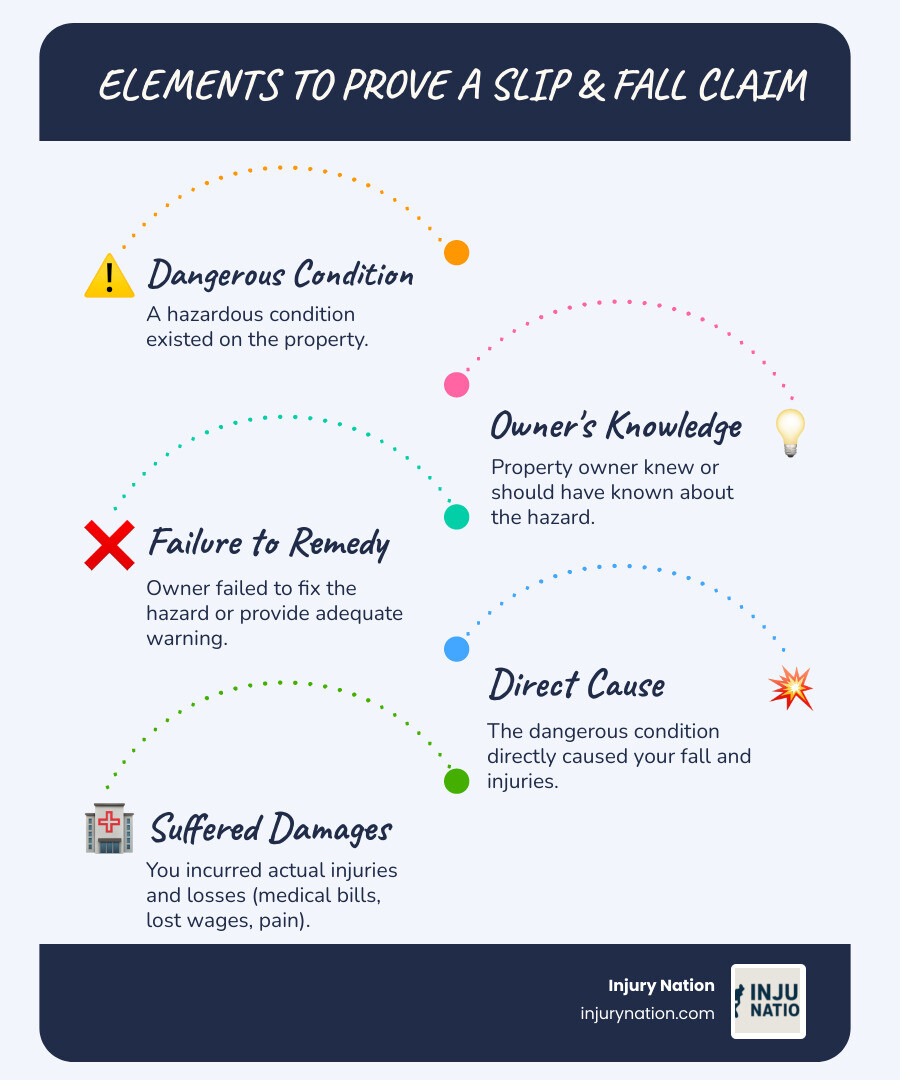
Slip and fall accident cases terms made easy:
The Legal Foundation of a Slip and Fall Claim

Every slip and fall accident case is built on the legal principle of premises liability. This means property owners can be held responsible when someone is hurt on their property due to unsafe conditions. The case isn’t just about your fall; it’s about whether the owner failed in their legal duty of care to keep you safe.
This duty requires property owners to maintain reasonably safe premises. They must inspect their property, fix dangers, and warn visitors of hazards they can’t immediately repair. A failure in this duty is called negligence. The concept of foreseeability is also key—the law expects owners to anticipate and prevent risks that a reasonable person would recognize.
What Causes a Slip and Fall Accident?
Slip and fall accident cases arise from various hazards, some obvious and others hidden.
- Wet or slippery floors: Spills, tracked-in rain or snow, or freshly waxed surfaces without warning signs are classic examples.
- Uneven surfaces: Cracked sidewalks, potholes, loose floorboards, or torn carpeting can easily trip someone.
- Poor lighting: Dark stairwells, dimly lit parking garages, or hallways with burnt-out bulbs conceal hazards.
- Cluttered walkways: Boxes, equipment, cords, or other obstacles in aisles and hallways create an unsafe path.
- Weather-related hazards: Property owners must respond to ice and snow by salting, shoveling, and using mats to prevent slippery conditions.
- Broken stairs or handrails: Wobbly handrails, missing steps, or crumbling concrete are serious safety violations.
In public spaces like stores, spills and cluttered aisles are common. In private residences, dangers often include unrepaired stairs, poor outdoor lighting, or unsecured rugs.

Proving Liability in Slip and Fall Accident Cases
Simply falling on someone’s property doesn’t guarantee compensation. You must prove the owner was negligent. Under premises liability laws, you must show the owner breached their duty of care in one of three ways:
- The owner created the dangerous condition (e.g., an employee mopped a floor but failed to put up a sign).
- The owner knew about the condition but didn’t fix it (e.g., ignoring complaints about a broken stair).
- The owner should have known about the condition. This is called constructive knowledge. The key question is: did the hazard exist long enough that a reasonable owner, through regular inspections, would have found and fixed it?
State laws require property owners to take reasonable steps to keep people safe. The challenge is proving they failed. Property owners will often argue they took reasonable care or that the hazard was so obvious you should have avoided it. Overcoming these defenses requires strong evidence.
How Comparative Negligence Can Affect Your Claim
Even if the property owner was negligent, the insurance company may argue you were also at fault. This is called comparative negligence. If you were texting while walking or not paying attention, a court might find you partially responsible.
When fault is shared, your compensation is reduced by your percentage of fault. For example, if your damages are $100,000 but you are found 20% at fault, your award is reduced to $80,000.
State rules vary. In many states with modified comparative negligence (like Nevada), you can’t recover any damages if you are found 51% or more at fault. A few states use pure comparative negligence, allowing you to recover damages even if you were 99% at fault (you’d get 1% of the award).
Insurance adjusters are trained to find evidence of your fault. Be careful what you say after an accident, and avoid giving a recorded statement without first speaking to a lawyer.
Immediate Steps and Crucial Evidence After an Accident

The moments after a fall are critical for protecting your health and your legal rights in slip and fall accident cases. The evidence you gather can make or break your claim, as hazards are often cleaned up quickly and witnesses disappear. Acting deliberately is key.
What to Do in the Moments After a Fall
- Seek medical attention immediately. Your health is the priority. Adrenaline can mask serious injuries. A medical visit creates an official record linking your injuries to the fall, which is vital for your claim.
- Report the incident. Inform a manager or property owner about your fall. Ask them to create an incident report and request a copy. If they refuse, take a photo of the report with your phone.
- Stick to the facts. Do not apologize or say things like “I’m so clumsy” or “It was my fault.” Such statements can be used against you. Simply explain what happened without admitting blame.
- Document the scene. Use your smartphone to take photos and videos of the exact spot where you fell and the hazard that caused it. Get wide shots of the area and close-ups of the danger. Photograph the absence of warning signs and any visible injuries.
- Get witness information. If anyone saw you fall, ask for their name and contact information. Independent witnesses provide crucial, unbiased testimony about the conditions.
Gathering the Evidence Needed to Win Your Case
Building a strong slip and fall accident case requires compelling evidence.
- Photographs and Videos: This is the most critical evidence, as it preserves the scene before it’s altered. Take more photos than you think you need from multiple angles.
- Medical Records and Bills: This documentation proves the extent of your injuries and their financial cost. Keep every bill, receipt, and record related to your treatment.
- Witness Statements: An unbiased third party can confirm your account of events and counter the property owner’s claims.
- Maintenance and Inspection Logs: These records can reveal if the owner was following proper safety procedures. A lawyer can help obtain these during the legal process.
- Your Own Notes: As soon as possible, write down everything you remember about the accident: the date, time, location, what you were doing, and who you spoke with. For a comprehensive guide, see this resource on evidence collection in accident cases.
The Role of Surveillance Footage and Witness Testimony
In slip and fall accident cases, surveillance footage can be your strongest piece of evidence. It provides an objective record of the fall, the hazard, and how long it was present. It can prove whether employees were negligent or if warning signs were posted.
However, you must act fast. Most surveillance systems delete footage automatically, sometimes within 24-72 hours. A lawyer can send a legal preservation letter, requiring the property owner to save the footage.
Property owners may be uncooperative if the video shows their negligence. An experienced attorney knows how to overcome these roadblocks to obtain the evidence you need.
Witness testimony complements video evidence by providing context. A witness might recall seeing an employee ignore a spill or hearing conversations about the hazard. Together, video and witness accounts create a powerful and undeniable timeline of events that establishes liability.
Navigating the Legal Process for Slip and Fall Accident Cases

Once you’ve gathered initial evidence, your slip and fall accident case enters the formal legal process. This involves strict deadlines, negotiations with insurers, and potentially court proceedings. Understanding the path ahead can reduce anxiety and help you make informed decisions.
Critical Deadlines: Statute of Limitations and Notice Requirements
Time is not on your side in slip and fall accident cases. Missing a legal deadline can mean losing your right to compensation entirely.
The statute of limitations is the time limit for filing a lawsuit. In most states, you have two years from the date of the accident, but this period can be as short as one year or as long as six, depending on the state. The clock starts ticking the moment you fall.
Even more urgent are notice requirements, especially for falls on public property. If you fall on a city sidewalk, in a public park, or at a government building, you may have a very short window to provide formal written notice of your claim. Some jurisdictions require this notice in as little as 60 to 180 days. This notice must include specific details about the date, time, and location of your fall. Missing this deadline can prevent you from ever filing a lawsuit, which is why contacting a lawyer immediately is so important.
Dealing with Insurance Companies
Insurance companies are not your allies. Their goal is to protect their profits by paying out as little as possible. Soon after your accident, an adjuster may call, sound sympathetic, and ask for a recorded statement.
Do not give one. The adjuster is trained to ask questions designed to get you to admit fault or downplay your injuries. Anything you say can be used to deny or reduce your claim.
Insurers use other tactics, too. They may argue the hazard was “open and obvious,” that your injuries are from a pre-existing condition, or they may make a lowball settlement offer. They hope you’ll accept a fraction of what your case is worth out of financial desperation. An experienced lawyer handles all communication with the insurer, protecting you from these traps and fighting for a fair outcome.
What Damages Can Be Recovered in Slip and Fall Accident Cases?
“Damages” is the legal term for the financial compensation you can recover in a slip and fall accident case. The goal is to cover all of your losses.
Economic damages are tangible costs with a clear dollar value:
- Medical Expenses: All costs from the ambulance ride and ER visit to future surgeries, physical therapy, and medications.
- Lost Wages and Earning Capacity: Compensation for missed work and any reduction in your ability to earn income in the future. This is especially critical for victims with catastrophic injuries.
- Out-of-Pocket Expenses: Costs for transportation to appointments, home modifications, and other related expenses.
Non-economic damages compensate for intangible losses:
- Pain and Suffering: Compensation for the physical pain and emotional distress (anxiety, depression, stress) caused by the injury.
- Loss of Enjoyment of Life: For the inability to participate in hobbies, activities, and daily routines that once brought you joy.
- Loss of Consortium: Compensation for the negative impact the injury has had on your relationship with your spouse or family members.
Why Hiring an Experienced Lawyer is Critical

Facing a slip and fall accident case alone means going up against insurance companies with teams of lawyers dedicated to minimizing your claim. You are at a significant disadvantage. An experienced personal injury lawyer levels the playing field and is essential for securing fair compensation.
How a Lawyer Strengthens Your Claim
A lawyer acts as your investigator and advocate. They strengthen your claim by:
- Investigating the Accident: They track down surveillance footage, interview witnesses, and obtain maintenance logs that property owners might otherwise hide.
- Proving Negligence: They understand the legal elements required to prove the owner knew or should have known about the hazard and failed to act.
- Hiring Expert Witnesses: Medical and safety experts can provide testimony that explains the long-term impact of your injuries and why the property was unsafe, adding powerful credibility to your case.
- Calculating Full Damages: Lawyers calculate the true value of your claim, including future medical costs and lost earning potential, which victims often overlook.
- Negotiating with Insurers: They handle all communications, counter lowball offers, and are prepared to go to trial, which motivates insurers to settle fairly.
At Injury Nation, we connect victims with dedicated lawyers who specialize in slip and fall accident cases. You can find a local expert through Injury Nation’s network who understands the laws in your area.
The Likelihood of Winning and Factors That Influence Success
No lawyer can guarantee a win, but several factors strongly influence the success of slip and fall accident cases:
- Strength of Evidence: Clear evidence like photos, surveillance video, and witness testimony is paramount.
- Clarity of Liability: The more obvious the owner’s negligence, the stronger your case.
- Severity of Injuries: Serious injuries like broken bones or spinal damage lead to higher compensation, as the damages are substantial. Insurers take these cases more seriously.
- Your Credibility: Being honest and consistent in your statements is crucial. Exaggerating injuries or changing your story can destroy your claim.
- Your Attorney’s Skill: An experienced slip and fall lawyer knows how to build the most compelling case.
Real case outcomes show this. In Holly Averyt v. Wal-Mart, a victim who slipped in grease was awarded millions because negligence was clear and the injuries were severe. Conversely, cases are lost when victims cannot provide concrete evidence of a hazard or negligence.
TABLE comparing Slip and Fall vs. Trip and Fall
While often used interchangeably, “slip and fall” and “trip and fall” have key differences. Both fall under premises liability, but understanding the distinction helps clarify what happened.
| Feature | Slip and Fall | Trip and Fall |
|---|---|---|
| Cause | Loss of friction (e.g., wet floor, ice, grease) | Foot strikes an object or uneven surface (e.g., torn carpet, pothole) |
| Motion | Feet go out from under you, often backward or sideways | Forward momentum is stopped abruptly, causing a stumble forward |
| Common Injuries | Back, head, hip injuries, tailbone fractures | Forward-facing injuries (face, hands, arms, knees), broken wrists |
| Proof Focus | Proving a slippery substance existed and why it was a hazard | Proving an obstruction or uneven surface existed and was a hazard |
In either scenario, the legal goal is the same: prove a dangerous condition existed, the owner was negligent, and that negligence caused your injuries and damages.
Frequently Asked Questions About Slip and Fall Lawsuits
After a fall, you’re bound to have questions about your slip and fall accident case. Here are concise answers to some of the most common concerns.
How much is the average settlement for a slip and fall?
There is no “average” settlement. Payouts for slip and fall accident cases are unique and can range from a few thousand dollars for minor sprains to millions for catastrophic injuries. The final amount depends on:
- The severity and permanence of your injuries.
- The total of your medical bills and lost wages (past and future).
- The clarity of the property owner’s negligence.
- The quality of your evidence.
- The impact on your quality of life.
Beware of quick, low offers from insurers. An experienced attorney can determine the true value of your claim.
How long does a slip and fall lawsuit take?
The timeline varies from a few months to several years. Simple cases with clear liability and minor injuries may settle in under a year. However, complex cases involving severe injuries or disputed fault take longer. It is often necessary to wait until you reach “maximum medical improvement” to ensure all future costs are included in your claim. While most cases settle out of court, preparing for trial can add time but often motivates the insurer to make a fair offer.
Can I still have a case if I was partially at fault?
Yes, in most states. Under comparative negligence rules, you can still recover damages even if you were partially to blame. Your total compensation will simply be reduced by your percentage of fault. For example, if you are found 20% at fault, you will receive 80% of the total damages.
However, be aware of state-specific thresholds. In modified comparative negligence states like Nevada, you cannot recover any compensation if you are found 51% or more at fault. Insurers will always try to shift blame to you, which is why it’s critical to have a lawyer manage communication and protect your claim.
Find the Right Legal Help for Your Slip and Fall Case
We understand that dealing with a slip and fall accident case is overwhelming. You’re managing physical pain and financial stress while trying to steer a complex legal system. You’re expected to stand up to insurance companies that have entire legal teams working to minimize what you receive.
You don’t have to do this alone.
At Injury Nation, our mission is to connect victims with experienced legal representation to level the playing field. We help people just like you find top-rated personal injury lawyers across America who specialize in slip and fall accident cases. Whether you’re in Las Vegas, Nevada, or anywhere else in the country, we can help you find an attorney with a proven track record of securing fair compensation.
The right lawyer investigates your accident, gathers evidence, handles aggressive insurance adjusters, and calculates the true value of your damages. Most importantly, they allow you to focus on what matters most: your recovery.
Your healing should be your priority. Let an experienced personal injury lawyer handle the legal battle and fight for the compensation you deserve. The journey to justice starts with finding the right advocate.
Find top-rated personal injury lawyers in your area to help with your slip and fall accident cases