

Understanding Your Slip and Fall Concussion Settlement Value
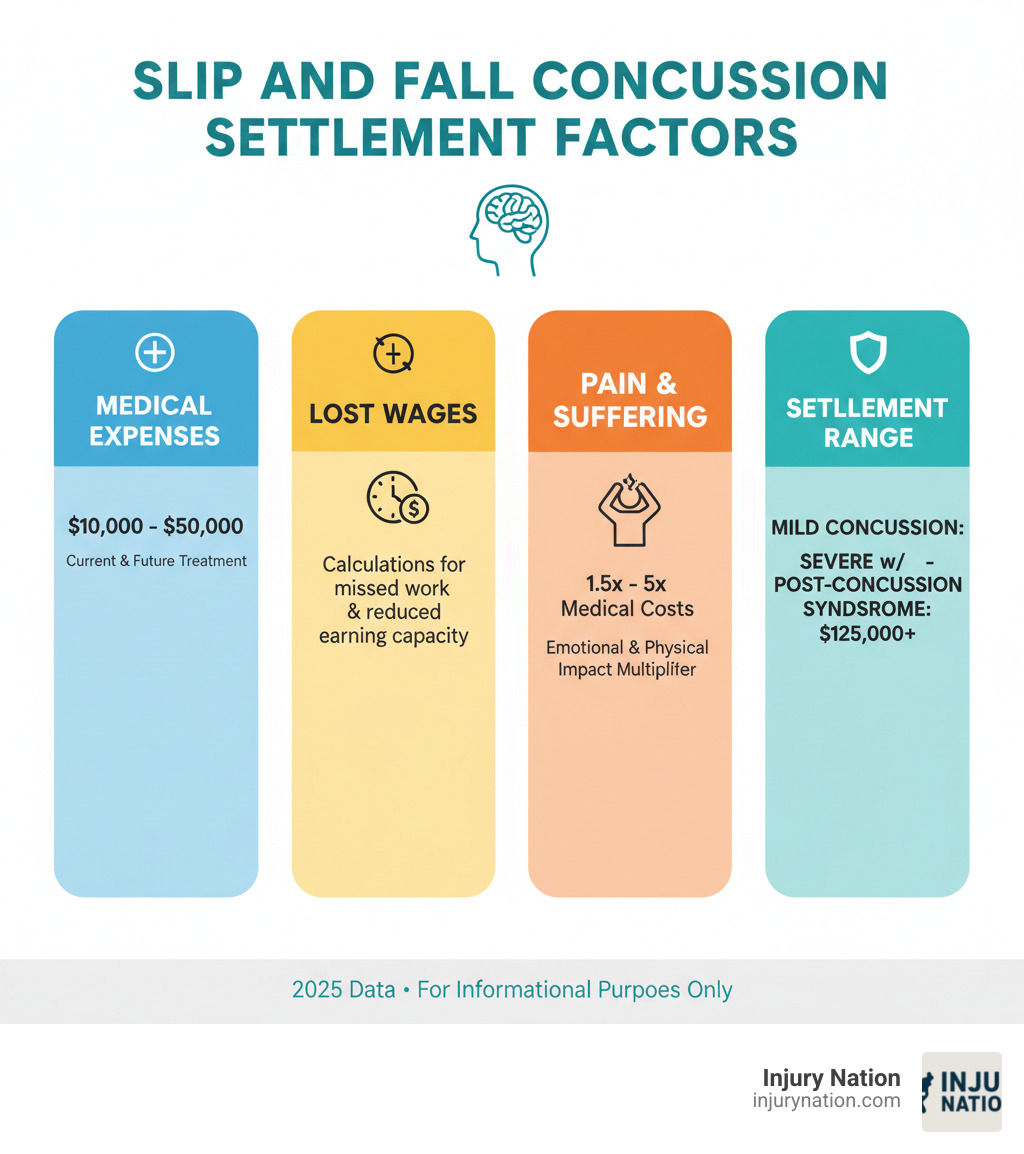
A slip and fall concussion settlement can range from $20,000 to $125,000 or more, depending on the severity of your injuries and their impact on your life. Here’s what determines your settlement value:
Settlement Value Factors:
- Mild concussion: $20,000 – $80,000 average range
- Moderate to severe concussion: $125,000+ potential
- Post-concussion syndrome: Higher settlements for lasting symptoms
- Medical expenses: Current and future treatment costs
- Lost wages: Time off work and reduced earning capacity
- Pain and suffering: Physical and emotional impact
- Property owner negligence: Clear fault increases value
When you slip, fall, and hit your head, the resulting concussion is an “invisible injury” that can change your life. Medical bills pile up, you miss work, and insurance companies often try to minimize your claim.
Courts recognize the serious impact of these injuries. In 2016, a Las Vegas jury awarded Kelly Hendrickson more than $16.4 million for a slip and fall that caused permanent head injuries. While not every case reaches these heights, it shows that your concussion matters. Your symptoms are real, and you deserve fair compensation.
Understanding how settlements work, what evidence you need, and when to seek legal help can make the difference between financial hardship and getting the support you need to recover.
Quick slip and fall concussion settlement definitions:
The Hidden Impact: Understanding Concussions After a Slip and Fall
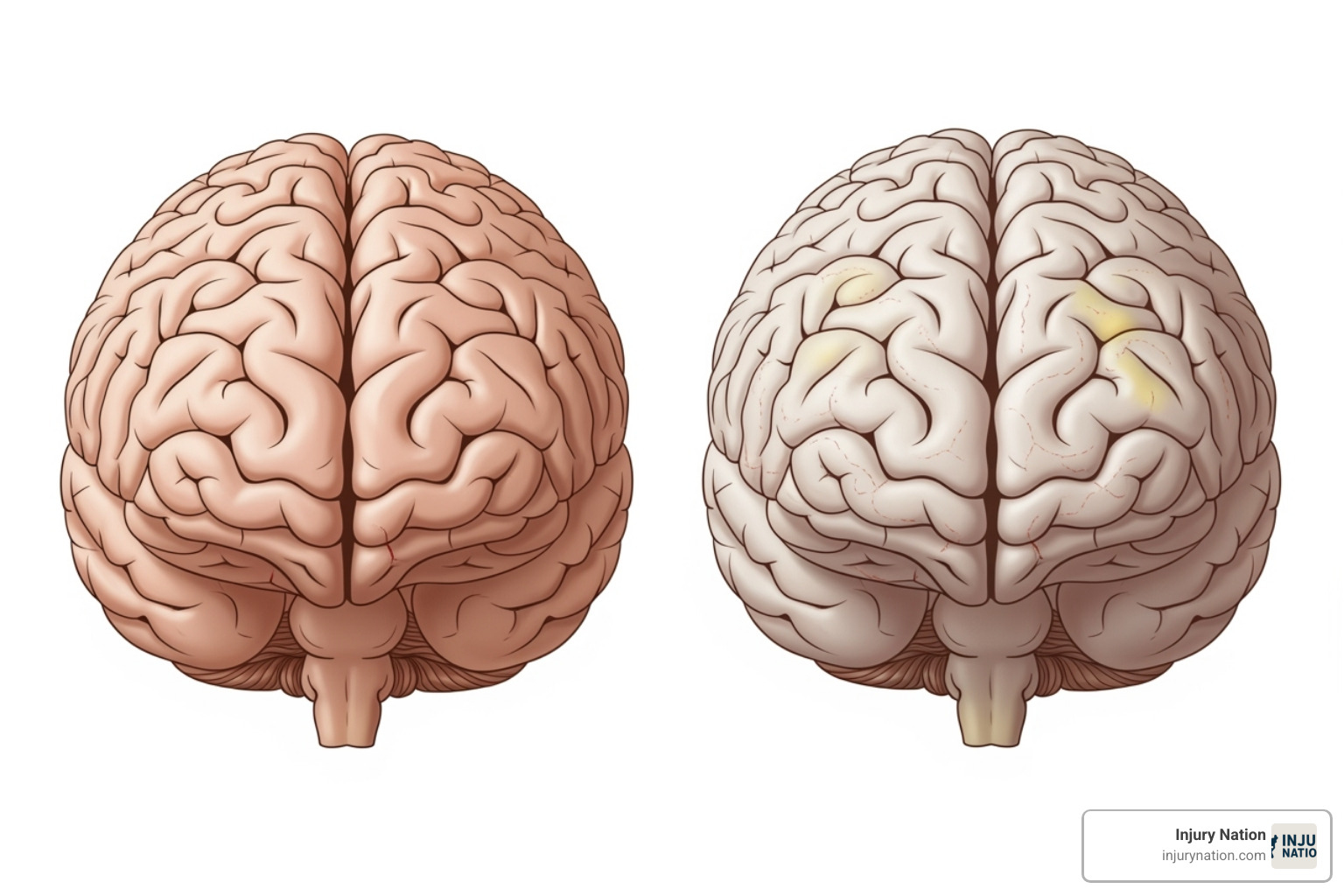
A fall can cause your brain to move violently inside your skull, stretching and damaging brain cells. This is a slip and fall concussion, classified as a Mild Traumatic Brain Injury (TBI). But don’t let the word “mild” fool you; the consequences can be severe.
Concussions are invisible injuries. You won’t have a cast or visible wound, and adrenaline can mask symptoms for hours or days. This makes proving your case for a slip and fall concussion settlement more challenging, as insurance companies often downplay what they can’t see.
While some people recover in weeks, others suffer from post-concussion syndrome for months or years, leading to a permanent change in how their brain works. The effects can touch every part of your life, making work impossible and straining relationships.
More info about Concussion Injuries
Common Concussion Symptoms to Document
Your symptoms are the key to your slip and fall concussion settlement. Document every headache, moment of confusion, and sleepless night, as they may appear hours or days after your fall.
-
Physical symptoms: These often hit first. Look for persistent headaches, dizziness, nausea, and extreme sensitivity to light and noise. You may also experience balance problems, blurred vision, ringing in the ears, and a bone-deep fatigue that sleep doesn’t fix.
-
Cognitive symptoms: These can be the most frightening. You might have memory problems, difficulty concentrating, and a feeling of mental fog that makes simple tasks feel overwhelming.
-
Emotional changes: Many people are blindsided by sudden irritability, anxiety, or feelings of sadness and depression. You may find your emotional responses are unpredictable.
-
Sleep disturbances: A vicious cycle can be created by either being unable to fall asleep or sleeping too much and still feeling exhausted.
Keep a detailed log of your symptoms, noting their severity and duration. This record is powerful evidence for your case.
Scientific research on Concussion Symptoms and Diagnosis
Long-Term Effects and Their Impact on Settlement Value
Concussions can have lifelong consequences. When symptoms don’t resolve, it may be post-concussion syndrome, a condition where you face chronic headaches, persistent cognitive deficits, and mood changes for months or years.
This has a devastating impact on daily life. Hobbies become frustrating, and simple household tasks can be exhausting. Your work capacity often takes the biggest hit. You may be unable to return to your old job or have to accept a lower-paying position due to cognitive challenges.
Research also shows that concussions can increase your risk of future brain conditions. Because of these long-term risks and impacts, slip and fall concussion settlements for lasting effects are significantly higher. Your settlement must account for future medical care, lost earning capacity, and the profound, non-economic cost of a life altered by injury.
What’s Your Claim Worth? Factors Influencing Your Slip and Fall Concussion Settlement
One of the first questions after an injury is, “What is my slip and fall concussion settlement worth?” The answer depends on your unique circumstances, but looking at real cases can help you understand the possibilities.
For post-concussion syndrome cases, settlements often range from $20,000 to $80,000. When concussions are moderate to severe, settlements can climb above $125,000. These figures are just a baseline.
Severe cases can result in much larger awards. A Las Vegas jury awarded Kelly Hendrickson $16.4 million for a slip and fall that caused permanent brain injuries. In another case, a jury awarded $3.24 million to a person who slipped on black ice and suffered a TBI with chronic migraines and cognitive impairments.
What drove these high values? Clear negligence by property owners and well-documented, life-changing injuries. The more severe your concussion and the clearer the owner’s fault, the higher your potential settlement.
More info about Damages in Slip and Fall Cases
The Severity Spectrum: Mild Concussion vs. Severe Traumatic Brain Injury (TBI)
Where your injury falls on the severity spectrum is a major factor in your slip and fall concussion settlement value. The legal system recognizes the vast difference between a temporary setback and a permanent, life-altering injury.
Mild concussions may involve brief confusion, headaches, and dizziness. Even if you develop post-concussion syndrome, these cases often settle in the $20,000 to $80,000 range, covering medical bills, some lost wages, and your suffering.
Severe traumatic brain injuries can involve prolonged unconsciousness, seizures, and permanent cognitive deficits, often requiring lifelong care. Settlements for these injuries can reach millions of dollars.
| Feature | Mild Concussion | Severe TBI |
|---|---|---|
| Recovery Time | Weeks to months, though PCS can extend this | Permanent, lifelong impact |
| Daily Impact | Temporary difficulties with work and activities | Complete inability to work or live independently |
| Medical Needs | Short-term therapy, medication, rehabilitation | Lifelong medical care, assistive devices, round-the-clock care |
| Settlement Range | $20,000-$80,000+ for PCS cases | Often millions of dollars |
The key differentiator is how long your symptoms last and how deeply they affect your life. Your settlement should reflect your future, not just your present condition.
Quantifying Your Losses: Economic and Non-Economic Damages
Your slip and fall concussion settlement is composed of two types of damages: economic and non-economic.
Economic damages are the calculable costs. This includes all medical bills, from the ER visit to ongoing therapy, plus diagnostic tests like CT scans. It also covers lost wages from time off work. Crucially, it includes future costs like projected medical treatments and reduced earning capacity if you can no longer perform your job.
Non-economic damages, or “pain and suffering,” compensate for the intangible impact on your life. This covers the constant headaches, the frustration of not being able to concentrate, and the anxiety about your future. It accounts for the loss of enjoyment in life, such as being unable to pursue hobbies or spend quality time with family due to your symptoms.
In the $16.4 million Hendrickson case, $14.5 million was for pain and suffering, showing how seriously courts take the non-financial impact of brain injuries.

Proving Negligence for a Slip and Fall Concussion Settlement
To get a fair slip and fall concussion settlement, you must prove the property owner was negligent. Under premises liability law, owners have a legal duty to keep their property reasonably safe.
Common hazards that lead to falls include wet floors without warning signs, icy sidewalks, poor lighting, walkway debris, and damaged surfaces. To win your case, you must prove one of the following:
- The property owner created the dangerous condition.
- The owner knew about the hazard but did nothing.
- The owner should have known about the hazard through reasonable inspection.
The standard is reasonableness. Owners are expected to conduct regular inspections, clean up hazards promptly, and use warning signs. Strong evidence of negligence—like security footage or maintenance logs—strengthens your settlement position, making insurance companies more likely to offer a fair amount.
More info about Premises Liability
Building Your Case: Evidence, Documentation, and Legal Strategy
Building a strong case for a slip and fall concussion settlement requires gathering proof and navigating legal complexities. This includes meeting strict deadlines, like the statute of limitations, which is the time limit for filing a claim. For example, states like Nevada have a two-year statute of limitations for personal injury claims. Missing this window means losing your right to compensation.
A personal injury lawyer is invaluable in this process. They help gather evidence, interpret complex documents, and build a compelling narrative to prove the owner’s negligence and the full extent of your damages.
Insurance companies aim to minimize payouts. Their adjusters will challenge your claim and question your injuries. An experienced lawyer counters these tactics, negotiates aggressively, and fights for the fair settlement you deserve.
More info on How to Prove Negligence in a Slip and Fall Case
The Power of Proof: Essential Evidence for Your Claim
The more evidence you have for your slip and fall concussion settlement, the stronger your position. Here is the essential evidence to collect:
- Accident Reports: A copy of the official report filed with the property owner documents the incident.
- Witness Statements: Unbiased accounts from eyewitnesses can corroborate your story and describe the hazard.
- Photographs of the Scene: Immediately capture the specific hazard, the surrounding area, and any visible injuries. Visuals are powerful.
- Surveillance Video: Request any security footage that captured the fall. This can be irrefutable proof of negligence.
- Maintenance Logs: These documents can reveal a history of neglect or show the owner knew about the hazard.
- Clothing and Footwear: Preserve what you were wearing, as it can support your account of the accident.
Collecting this evidence quickly is crucial, as it can be lost or destroyed over time. A lawyer can manage this process for you while you focus on recovery.
More info on What to Do After a Slip and Fall Accident
The Critical Role of Medical Documentation in a Slip and fall concussion settlement
For a slip and fall concussion settlement, medical documentation is absolutely critical. Since concussions are invisible, a robust medical record is the only way to objectively demonstrate the injury’s severity and impact.
- Immediate Medical Attention: Seeking medical care right after the fall creates an official record and links the injury to the incident. Delays can be used by insurers to weaken your claim.
- Doctor’s Notes and Specialist Reports: Notes from every visit and reports from specialists like neurologists provide expert opinions on your concussion, its severity, and its projected long-term impact.
- Diagnostic Imaging (CT/MRI): While these scans often don’t show a concussion, they are important for ruling out more severe injuries like brain bleeds.
- Symptom Journals: A daily journal detailing your symptoms, their severity, and their effect on your life provides a powerful personal account that complements clinical records.
- Establishing Causation: All medical documentation helps establish a clear causal link between the slip and fall and your concussion, which is fundamental to your claim.
Insurance companies will scrutinize your medical records for any gaps or inconsistencies. Thorough and consistent documentation is your best defense and key to securing a fair settlement.

Frequently Asked Questions about Concussion Settlements
After a slip and fall leaves you with a concussion, questions about your case are inevitable. Here are answers to the questions we hear most often about slip and fall concussion settlements.
What is the typical settlement range for a concussion from a slip and fall?
Settlement amounts vary dramatically based on injury severity. For mild concussions with recovery in a few months, settlements might range up to $20,000, covering medical bills and some lost work.
If you develop Post-Concussion Syndrome (PCS), where symptoms persist for months or years, the value increases significantly, often averaging between $20,000 and $80,000. These cases involve longer-term impacts on your ability to work and enjoy life.
For moderate to severe concussions, settlements can be $125,000 or more. Catastrophic injuries can lead to multi-million dollar awards, as seen in cases with clear negligence and devastating, permanent brain damage. The final amount depends on your medical expenses, lost wages, and the extent of your pain and suffering.
Can I still get a settlement if the fall was partially my fault?
Yes, in most states you can still recover compensation even if you were partially at fault. This is based on a legal principle called comparative negligence.
For example, Nevada uses a modified comparative negligence rule. As long as you are found to be 50% or less at fault for the accident, you can still receive compensation. Your total damages would simply be reduced by your percentage of fault. If your case is worth $100,000 and you are found 30% at fault, you would receive $70,000.
However, if you are found 51% or more at fault, you cannot recover anything. An experienced lawyer can help build a case that minimizes your assigned fault and maximizes the property owner’s responsibility.
How long does it take to settle a slip and fall concussion case?
The timeline for a slip and fall concussion settlement can range from a few months to several years. The length depends on several factors:
- Your Recovery: It’s often best to wait until you reach Maximum Medical Improvement (MMI), the point where your condition has stabilized. Settling too early is risky because you can’t ask for more money if your condition worsens.
- Evidence Gathering: Collecting accident reports, witness statements, video footage, and medical records takes time.
- Negotiation: Insurance companies rarely make a fair offer upfront. The negotiation process can involve several rounds of offers and counteroffers over many months.
- Case Complexity: Simple cases with clear fault resolve faster. Complex cases involving severe injuries or disputed fault take longer, especially if a lawsuit is required, which can add one to three years to the process.
Patience is key. Rushing the process usually means accepting less than your case is truly worth.
Take the Next Step: Find Expert Legal Representation
Your slip and fall concussion settlement is about securing your future after an injury turned your life upside down. Your concussion is a serious injury, your symptoms are valid, and you deserve fair compensation for what you have endured.
Maximizing your compensation requires understanding premises liability, gathering compelling evidence, obtaining comprehensive medical documentation, and skillfully negotiating with insurance companies. This is not a battle you should face alone, especially while recovering from a brain injury.
The importance of legal counsel cannot be overstated. A skilled personal injury lawyer acts as your advocate, guiding you through the complex legal process and fighting back when insurers try to minimize your claim.
Injury Nation’s role is to connect you with experienced attorneys who understand exactly what you’re going through. We’ve identified top-rated personal injury lawyers with proven track records in slip and fall concussion cases.
Your initial consultation is free, with no obligation. It’s an opportunity to understand your legal options and learn what your claim might be worth. Don’t let time work against you—legal deadlines are strict and evidence can disappear.
Finding a qualified lawyer who specializes in concussion cases can be the difference between a settlement that barely covers your bills and one that truly compensates you for all your losses. For more guidance on selecting the right attorney, visit: More info about finding a personal injury lawyer.
Take the first step today. Your future self will thank you.