

Why Truck Accident Compensation Matters After a Devastating Crash
Truck accident compensation is financial recovery for injuries and losses suffered in a collision with a commercial truck. If you’ve been in a truck accident, you need to understand what you can recover and how to protect your rights.
Quick Answer: What You Can Recover After a Truck Accident
- Medical expenses – Current and future treatment costs
- Lost wages – Income you’ve missed and future earning capacity
- Pain and suffering – Physical pain and emotional distress
- Property damage – Vehicle repair or replacement costs
- Settlement range – Typically $100,000 to $500,000+, with severe cases reaching millions
The most important part of any truck accident settlement is getting the compensation you actually deserve. Truck accidents are different from regular car crashes. They often cause catastrophic injuries like traumatic brain injuries, spinal cord damage, and permanent disabilities. The trucks themselves weigh 20 to 30 times more than passenger vehicles, and the impact can alter your life forever.
According to the National Safety Council, at least 107,000 tractor-trailers were involved in injury-causing accidents in 2020, with 4,842 deaths caused by large trucks. These aren’t just statistics—they represent real people facing overwhelming medical bills, lost income, and uncertain futures.
The trucking industry is heavily regulated by federal law, and commercial trucks typically carry insurance policies ranging from $750,000 to $5 million. This means the potential for recovery is significant, but so are the challenges. Trucking companies have experienced legal teams working to minimize what they pay you.
Understanding your compensation options isn’t just about money—it’s about getting the resources you need to rebuild your life after a devastating accident.
Basic Truck accident compensation glossary:
What Determines Your Truck Accident Settlement Amount?
A truck accident settlement is a financial agreement reached outside of court between an injured party and the at-fault party (or their insurance provider) to resolve a claim. Instead of going through a lengthy and often unpredictable trial, both sides agree on a sum of money to compensate the victim for their losses. This sum is intended to cover everything from medical bills to lost wages and emotional distress.
While it’s tempting to look for a definitive “average” settlement amount, the truth is that every truck accident case is unique, especially in a place like Las Vegas, Nevada, where specific laws and circumstances apply. National averages can give us a ballpark figure, with some sources reporting figures like $103,654.08, others around $150,000, and some even upwards of $650,000. However, these numbers represent a vast spectrum of cases, from minor fender-benders to catastrophic, life-altering collisions. In particularly serious cases, payouts can easily reach several million dollars.
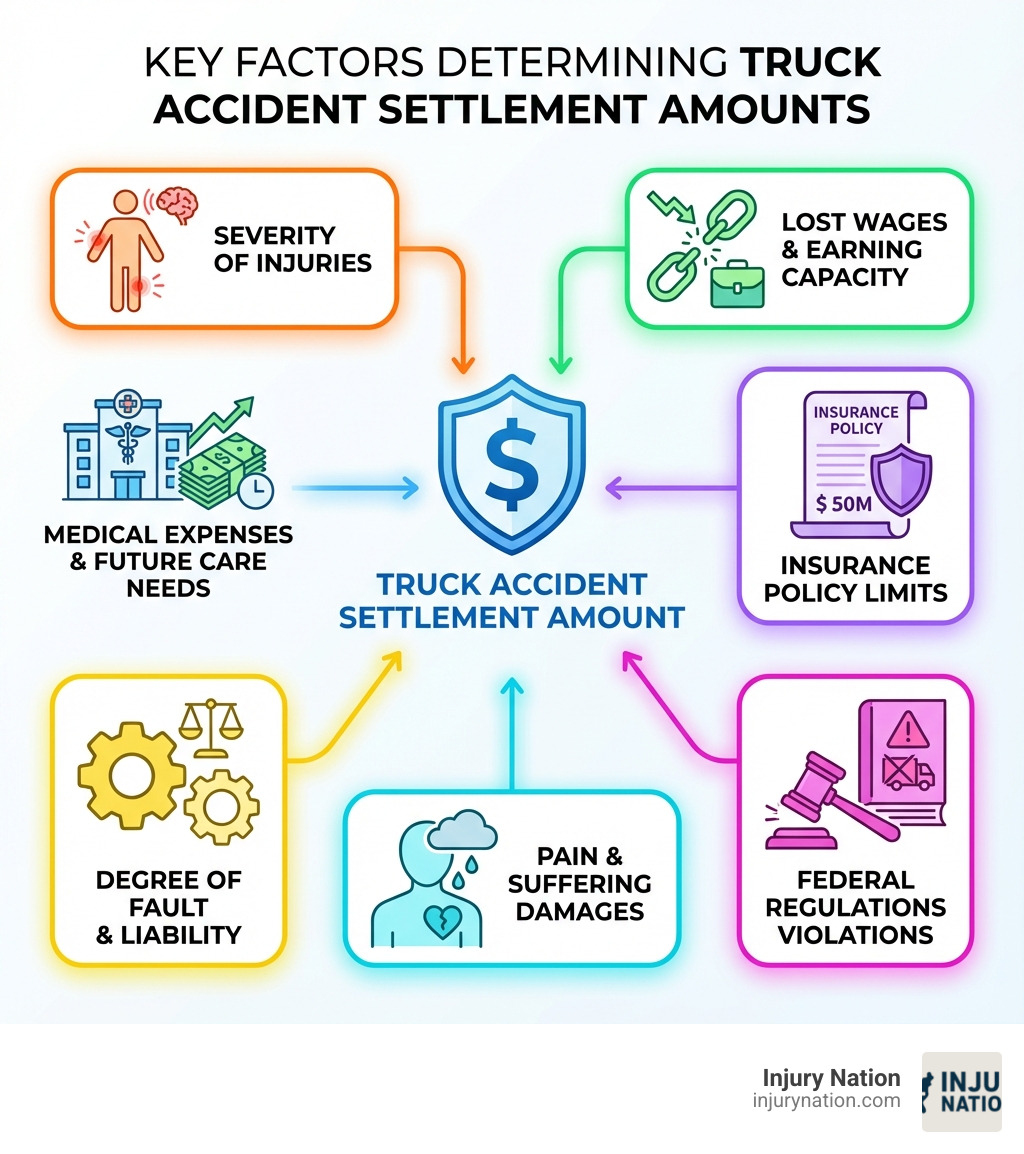
The amount you might receive in truck accident compensation depends on many unique factors. These include the severity of your injuries, the extent of your financial losses, who was at fault, and the insurance coverage available. It’s like trying to put a price on a rainbow – beautiful, but highly variable!

Key Factors Influencing Your Compensation
Several critical elements come into play when calculating the value of your truck accident compensation:
-
Injury Severity: This is often the most significant factor. More severe injuries mean more extensive medical treatment, longer recovery times, and potentially permanent disabilities. Common catastrophic injuries in truck accidents include:
- Traumatic Brain Injuries (TBI): These can be open (penetrating skull) or closed (impact without skull penetration). TBIs can lead to lifelong cognitive, physical, and emotional impairments.
- Spinal Cord Damage: Injuries here can result in partial or complete paralysis, requiring extensive long-term care and significantly impacting quality of life.
- Broken Bones: Fractures, especially complex ones, can require multiple surgeries, physical therapy, and may never fully heal, leading to chronic pain.
- Internal Injuries: Punctured organs, internal bleeding, and other unseen traumas can be life-threatening and require immediate, intensive medical intervention.
- Amputations: The sheer force of a truck accident can lead to the loss of limbs, necessitating prosthetics, rehabilitation, and profound psychological adjustment.
- Psychological Harm: Post-Traumatic Stress Disorder (PTSD), anxiety, and depression are common after such traumatic events and are also compensable.
-
Comparative Fault: In Nevada, our laws follow a modified comparative negligence system (NRS § 41.141). This means if you are found partially responsible for the accident, your truck accident compensation will be reduced by your percentage of fault. For example, if you’re awarded $100,000 but found 20% at fault, you’d receive $80,000. Crucially, if you are found 51% or more at fault, you cannot recover any compensation at all. This makes proving liability paramount.
-
Trucking Company Liability: Unlike standard car accidents, truck accidents often involve multiple parties. The trucking company can be held liable for their driver’s actions (under a legal principle called respondeat superior), or for their own negligence, such as:
- Negligent hiring or training practices.
- Failing to maintain their vehicles properly.
- Pressuring drivers to violate federal regulations.
- Failing to conduct proper background checks or drug screenings.
-
Federal Insurance Requirements: Commercial trucks are mandated by federal law to carry substantial insurance policies. The Federal Motor Carrier Safety Administration (FMCSA) sets these minimums, which vary based on the type of cargo and truck weight:
- $300,000 for trucks under 10,000 lbs carrying non-hazardous cargo.
- $750,000 for trucks over 10,000 lbs carrying non-hazardous cargo.
- $1,000,000 for private tankers carrying oil.
- $5,000,000 for private carriers transporting hazardous cargo.
These Federal insurance requirements mean that there’s typically much more coverage available than in a car accident. However, even with these high policy limits, severe injuries and long-term care can sometimes exceed them.
Examples of Real Truck Accident Settlements
While every case is unique, looking at past settlements can provide an idea of the potential range of truck accident compensation. These examples illustrate the significant financial impact these accidents can have and the substantial awards victims have received:
- A truck crash resulting in a traumatic brain injury settled for $16.6 million.
- A postal worker struck by a commercial truck at a loading dock settled for $1.5 million.
- A high school runner struck by a utility truck reached a settlement of $1 million.
- A truck accident case involving a collision with a tractor trailer settled for $390,000.
- A truck accident settlement after a rear-end collision with a tractor trailer was $333,000.
- A garbage truck collision resulting in a fatality led to a $38,764,623 verdict.
These examples highlight that while the average settlement might seem modest, particularly serious cases involving catastrophic injuries or wrongful death have the potential for multi-million dollar payouts.
The Different Types of Damages You Can Claim
When pursuing truck accident compensation, we seek to recover various “damages” – the legal term for losses suffered due to someone else’s negligence. The goal of compensatory damages is to “make the victim whole” again, as much as money possibly can, by covering both your financial and non-financial losses. It’s crucial to document every single loss you incur.

Economic Damages: Your Financial Losses
Economic damages are the quantifiable financial losses you’ve suffered because of the truck accident. These are relatively straightforward to calculate, as they come with bills, invoices, or pay stubs.
- Medical Expenses: This category covers all costs related to your medical treatment, from the moment of the accident onward. This includes ambulance fees, emergency room visits, hospital stays, doctor’s appointments, surgeries, medications, physical therapy, rehabilitation, and any necessary medical equipment (like crutches or wheelchairs). We also consider future medical care, especially for severe injuries that require ongoing treatment or lifelong care.
- Lost Wages: If your injuries prevented you from working, you can claim compensation for the income you lost from the time of the accident until your case is resolved. This includes your regular salary, commissions, bonuses, and any other employment benefits you missed out on.
- Lost Earning Capacity: For severe injuries that result in permanent disability or significantly reduce your ability to work in the future, we can seek compensation for lost earning capacity. This accounts for the difference between what you would have earned over your lifetime and what you can now earn due to your injuries.
- Property Damage: This covers the cost of repairing or replacing your damaged vehicle or any other personal property (like a laptop or phone) that was destroyed in the accident. You can find more information on Vehicle repair costs.
Non-Economic Damages: The Human Cost
Non-economic damages address the subjective, intangible losses that are harder to put a price tag on but significantly impact your quality of life.
- Pain and Suffering: This includes the physical pain and discomfort you experience from your injuries, surgeries, and recovery process.
- Emotional Distress: The psychological impact of a traumatic accident can be profound. This includes mental anguish, anxiety, depression, fear, humiliation, and even Post-Traumatic Stress Disorder (PTSD).
- Loss of Enjoyment of Life: If your injuries prevent you from participating in hobbies, recreational activities, or daily tasks you once enjoyed, you can claim compensation for this loss.
- Disfigurement: Permanent scarring or disfigurement resulting from the accident can be a source of significant emotional distress and is compensable.
- Loss of Consortium: In cases of severe injury or wrongful death, a spouse or family members may claim for the loss of companionship, affection, guidance, and support.
Punitive Damages: Punishing Gross Negligence
Punitive damages are different from economic and non-economic damages because they are not meant to compensate the victim. Instead, they are designed to punish a defendant for particularly egregious behavior and to deter similar conduct in the future.
- Purpose of Punitive Damages: These damages act as a penalty, sending a strong message that certain malicious or recklessly negligent actions will not be tolerated.
- When They Apply: Punitive damages are rare in personal injury cases, only awarded in situations involving willful misconduct, malice, or fraud. For example, if a trucking company knowingly forced a driver to operate a truck with severely faulty brakes, or if a driver caused an accident while intentionally driving under the influence, punitive damages might be considered. You can learn more about Seeking punitive damages.
- Deterring Future Misconduct: By penalizing extreme negligence, punitive damages aim to prevent similar incidents from happening again. In Nevada, proving the serious misconduct required for punitive damages can be challenging, but it’s an important avenue to explore in appropriate cases.
Your Guide to the Truck Accident Compensation Process
Navigating the aftermath of a truck accident and securing fair truck accident compensation can feel like a daunting journey. Understanding the typical process can help explain it. From the moment the accident occurs, a series of steps unfold, often involving extensive investigation, negotiation, and sometimes litigation.
The settlement timeline for semi-truck accident lawsuits typically ranges between six and 16 months from the date of the accident. This duration depends on various factors, including the complexity of evidence gathering, the length of your medical treatment, and the willingness of all parties to negotiate.
Most truck accident cases, even those involving severe injuries, are settled out of court through negotiations. This negotiation process involves your legal team presenting your case, backed by evidence, to the trucking company’s insurance adjusters and legal representatives. If a fair settlement cannot be reached through negotiation or mediation, the case may proceed to trial.
Establishing Liability: Who Is At Fault?
A crucial step in securing truck accident compensation is clearly establishing who is at fault. Due to the complex nature of the trucking industry, liability can extend beyond just the truck driver.
-
Driver Negligence: This is the most common cause. A truck driver might be negligent due to:
- Driver Fatigue: Truck drivers are subject to strict federal Hours of Service violations (HOS) rules, limiting their driving time and mandating rest periods. Approximately 30-40% of all commercial truck accidents involve fatigue or drowsy driving. Violations of these rules are a strong indicator of negligence.
- Distracted Driving: Using a cell phone, eating, or being otherwise distracted behind the wheel.
- Speeding or Reckless Driving: Driving too fast for conditions or making unsafe maneuvers.
- Driving Under the Influence: Operating a commercial vehicle while impaired by drugs or alcohol.
-
Trucking Company Negligence: Often, the company employing the driver shares responsibility:
- Improper Maintenance: Failing to regularly inspect and maintain the truck’s brakes, tires, lights, or other critical components. A thorough investigation can uncover violations of safety regulations or poor maintenance practices.
- Negligent Hiring or Training: Hiring unqualified drivers, failing to conduct proper background checks, or not providing adequate training.
- Pressuring Drivers: Forcing drivers to violate HOS rules or other safety regulations to meet unrealistic delivery schedules.
-
Manufacturer Defects: A defect in the truck’s design or manufacturing (e.g., faulty brakes, steering system) could contribute to the accident, making the manufacturer liable.
-
Third-Party Maintenance Providers: If an outside company was responsible for maintaining the truck and performed negligently, they could also be held accountable.
How Are Truck Accident Settlements Paid Out?
Once a settlement is agreed upon, you might wonder how the money actually reaches you. It’s a multi-step process designed to ensure all legal and financial obligations are met before you receive your final payout.
- Total Settlement Paid to Attorney First: The total truck accident compensation amount is paid directly to your attorney. This is standard legal practice.
- Attorney’s Trust Account: Your attorney deposits the settlement funds into a special client trust account (IOLTA), keeping them separate from their own operating funds.
- Paying Liens: Before any money is distributed to you, your attorney must settle any outstanding liens against your settlement. A lien is a legal claim for payment against your settlement funds. Common liens include:
- Medical Liens: These can come from health insurance providers, Medicare, or Medicaid, which may have paid for your medical treatment and have a right to be reimbursed from your settlement.
- Child Support Liens: If you owe child support, those payments might be deducted.
- Workers’ Compensation Liens: If you were injured while working, your workers’ compensation insurer might have a lien.
- Attorney Fees and Case Expenses: After liens are paid, your attorney’s fees (typically a contingency fee, meaning they only get paid if you win) and administrative expenses (such as court filing fees, expert witness costs, investigation fees) are deducted from the remaining balance.
- Net Payout to Victim: The remaining balance, after all liens, fees, and expenses are paid, is then disbursed directly to you. Your attorney will provide you with an itemized statement detailing all deductions.
While you might be eager to use the funds, we often advise planning for future losses, such as ongoing medical care or potential lost income, rather than immediate splurges.
Maximizing Your Claim and Navigating the Law
Truck accident cases are inherently more complex than typical car accidents. They involve intricate federal regulations, specific state laws (like those in Nevada), and often require going up against large trucking corporations and their aggressive insurance companies. This is where experienced legal counsel becomes indispensable.
Are Truck Accident Settlements Taxable?
A common question we receive is whether truck accident compensation is taxable. The answer can be nuanced, depending on the specific types of damages you receive.
Generally, under IRS guidance on settlements and U.S. Code Title 26:
- Physical Injury or Sickness: Compensation received for physical injuries or sickness is generally not taxable. This includes medical expenses, pain and suffering directly related to physical injuries, and emotional distress that stems from a physical injury.
- Taxable Damages:
- Punitive Damages: These are almost always taxable, as they are not meant to compensate for a loss but to punish wrongdoing.
- Lost Wages: While compensation for lost income is often part of a personal injury settlement, the IRS typically views this portion as taxable income, similar to regular wages.
- Emotional Distress (without physical injury): If emotional distress is not directly linked to a physical injury, the compensation received for it may be taxable.
It’s always wise to consult with a tax professional regarding your specific settlement to understand your obligations.
How an Experienced Lawyer Maximizes Your Truck Accident Compensation
Dealing with the aftermath of a truck accident is overwhelming enough without having to battle large trucking companies and their insurance providers. An experienced truck accident lawyer acts as your champion, leveling the playing field and working tirelessly to maximize your truck accident compensation.
Here’s how we help:
- Evidence Preservation: Trucking companies often have “black box” event data recorders (EDRs) in their vehicles, driver logs, maintenance records, and other crucial evidence. We act quickly to secure this evidence before it can be lost or altered.
- Expert Witnesses: We work with a network of experts, including accident reconstructionists, medical specialists, vocational rehabilitation experts, and economists. These experts provide critical testimony to explain how the accident happened, the full extent of your injuries, and the long-term financial impact.
- Accident Reconstruction: Specialists can recreate the accident scene using data from the truck’s EDR, witness statements, and physical evidence to definitively prove fault.
- Calculating Total Damages: We carefully calculate all your economic and non-economic damages, ensuring that no potential compensation is overlooked – from future medical care and lost earning capacity to pain, suffering, and emotional distress.
- Negotiating with Adjusters: Insurance companies are notorious for offering lowball settlements. We handle all communications and negotiations, protecting you from manipulative tactics and ensuring your settlement demands are backed by solid evidence and legal precedent.
- Filing a Lawsuit: If a fair settlement cannot be reached, we are prepared to file a lawsuit and take your case to court, advocating fiercely for your rights before a judge and jury.
- Navigating Regulations: We understand the complex federal and state regulations governing the trucking industry, which can be key in establishing liability and increasing your compensation.
Our Injury Nation’s Truck Accident Lawyer Guide highlights our commitment to helping victims like you secure the justice and compensation you deserve.
Frequently Asked Questions about Truck Accident Compensation
How long do I have to file a truck accident claim?
The timeframe for filing a truck accident compensation claim is governed by the “statute of limitations,” which varies by state. In Nevada, this period is generally two years from the date of the accident for personal injury claims. However, there can be exceptions, and certain circumstances (like claims against a government entity) may have much shorter deadlines. It’s crucial to act quickly because evidence can disappear, witnesses’ memories can fade, and the sooner you start, the stronger your case can be. Don’t delay in seeking legal advice to ensure your rights are protected.
What should I do immediately after a truck accident?
Your actions immediately following a truck accident are critical for both your safety and your future truck accident compensation claim:
- Prioritize Safety: Move yourself and your vehicle to a safe location if possible, away from traffic.
- Seek Medical Attention: Even if you feel fine, call 911 or see a doctor as soon as possible. Some injuries, like whiplash or internal bleeding, may not be immediately apparent. Prompt medical documentation is vital for your health and your claim.
- Call the Police: Always report a truck accident to the police so an official accident report can be filed. This report is a crucial piece of evidence.
- Document the Scene: If it’s safe, take photos and videos of the accident scene, vehicle damage, road conditions, traffic signs, and any visible injuries.
- Exchange Information: Get the truck driver’s contact and insurance information, the trucking company’s details, and contact information for any witnesses.
- Avoid Admitting Fault: Never apologize or admit fault at the scene, even if you think you might be partly to blame. This could be used against you later.
- Contact a Lawyer: As soon as possible, contact an experienced truck accident lawyer. They can guide you through the next steps and protect your rights from the start.
Can I still get compensation if I was partially at fault?
Yes, in Nevada, you can still get truck accident compensation even if you were partially at fault, thanks to our modified comparative negligence law (NRS § 41.141).
Here’s how it works:
- Reduced Compensation: If you are found to be partially responsible for the accident, your total compensation amount will be reduced by your percentage of fault. For example, if a jury awards you $100,000 but determines you were 30% at fault, you would receive $70,000.
- 51% Bar Rule: However, if your percentage of fault is determined to be 51% or greater, you are barred from recovering any damages at all. This is a critical threshold to be aware of.
Insurance companies will often try to shift blame to you to reduce their payout or deny your claim entirely. This is why having an experienced truck accident lawyer is so important. We can challenge accusations of partial fault and work to ensure your percentage of responsibility is accurately and fairly assessed.
Conclusion: Taking the Next Step Towards Fair Compensation
Navigating the aftermath of a truck accident can be one of the most challenging experiences of your life. From the severe physical and emotional trauma to the complex legal and financial problems, it’s a journey no one should have to face alone. We’ve explored the various facets of truck accident compensation, from understanding settlement amounts and the different types of damages you can claim to explaining the legal process and the crucial role of an experienced attorney.
The sheer size and weight of commercial trucks mean that accidents often result in catastrophic injuries, leading to substantial medical bills, lost income, and a lifetime of pain and suffering. While national average settlements provide a general idea, your specific compensation will depend on the unique details of your case, especially within the context of Nevada’s laws on liability and comparative fault.
Trucking companies and their insurance providers have vast resources and legal teams dedicated to minimizing payouts. Without experienced legal representation, you risk being taken advantage of and receiving far less than you deserve. Your right to fair compensation is not just about recovering financially; it’s about securing the resources you need to heal, rebuild your life, and hold negligent parties accountable.
The most critical step you can take after a truck accident is to seek legal advice from a qualified personal injury attorney specializing in truck accidents. They can investigate your case, gather crucial evidence, negotiate with insurance companies, and fight for the maximum compensation you are entitled to.
Don’t let the complexity of the legal system or the tactics of insurance companies deter you. Injury Nation is here to connect victims with top-rated, experienced attorneys who understand the intricacies of truck accident claims and are dedicated to achieving the best possible outcome for you.
Find a top-rated personal injury lawyer near you and take the first step towards getting the compensation you deserve.