

Understanding the Foundation of a Wrongful Death Lawsuit
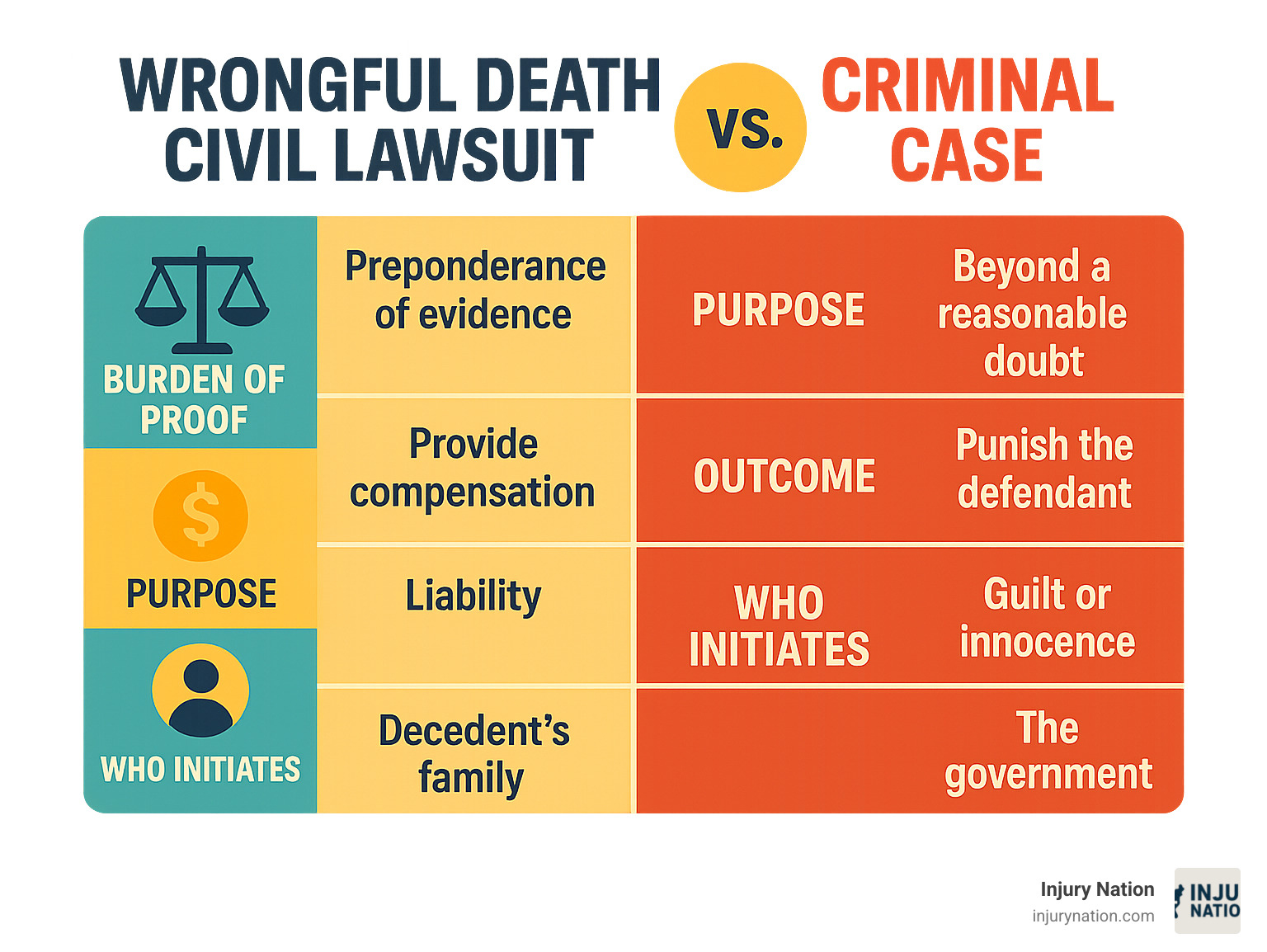
A wrongful death law suit is a civil legal action brought by surviving family members to seek financial compensation when a loved one dies due to another’s negligence or wrongful act. Unlike a criminal case, which seeks to punish the offender, a civil lawsuit aims to provide monetary relief for the family’s devastating losses. The right to sue is essentially transferred from the deceased, who would have had a personal injury claim, to their estate or family.
These cases are decided on a preponderance of the evidence, meaning it must be proven that it was more likely than not (over 50% probable) that the defendant’s actions caused the death. This is a lower standard than the “beyond a reasonable doubt” required in criminal court, allowing families to seek justice even if a criminal case does not result in a conviction.
The loss of a loved one is a tragedy that no amount of money can heal. However, these claims serve a critical purpose: they hold negligent parties accountable and provide financial stability for families who have lost a vital source of income and support.
Common Causes of Wrongful Death
A wrongful death law suit can arise from numerous tragic circumstances where negligence or a deliberate act leads to a fatality. Some of the most common causes include:
- Car Accidents: A leading cause of wrongful death claims, often involving distracted driving, drunk driving, speeding, or other reckless behavior. According to the National Highway Traffic Safety Administration (NHTSA), thousands are killed each year by impaired or distracted drivers.
- Medical Malpractice: Fatal errors by healthcare professionals, such as misdiagnosis, surgical mistakes, or medication errors, can lead to a claim when they deviate from the accepted standard of care.
- Workplace Accidents: Employers have a duty to provide a safe environment. Fatalities from falls, machinery malfunctions, or exposure to hazardous materials can occur when they fail in this duty.
- Defective Products: Manufacturers can be held liable if a design flaw, manufacturing defect, or inadequate warning on a product causes a death.
- Premises Liability: Property owners may be responsible if a death occurs due to unsafe conditions on their property, such as a slip and fall or inadequate security.
- Criminal Acts: A victim’s family can file a civil lawsuit for wrongful death regardless of the outcome of any criminal prosecution. The O.J. Simpson case is a famous example where he was acquitted in criminal court but found liable in civil court.
- Nursing Home Abuse/Neglect: Fatalities can result from neglect, abuse, or inadequate care of vulnerable residents in long-term care facilities.
The Four Essential Elements to Prove a Claim
To win a wrongful death law suit, a plaintiff must prove four key elements. The failure to establish any one of these can cause the case to fail.

- Duty of Care: The defendant owed the deceased a legal duty to act with reasonable care. For example, drivers have a duty to obey traffic laws, and doctors have a duty to provide competent care.
- Breach of Duty: The defendant failed to meet that duty. This means they acted negligently or wrongfully, such as a driver running a red light or a doctor making a surgical error.
- Causation: The defendant’s breach of duty was the direct and proximate cause of the death. The death would not have occurred but for the defendant’s actions.
- Damages: The death resulted in quantifiable harm and losses to the surviving family members or the estate. These can be economic, like lost wages, or non-economic, like loss of companionship.
The Legal Path: Who Can File and Critical Timelines
When dealing with the heartbreak of losing a loved one, legal procedures are the last thing on your mind. However, understanding who can file a wrongful death law suit and the strict deadlines involved is crucial to protecting your family’s rights.
State laws vary, but they are designed to protect those who were closest to the deceased and most affected by their loss, both emotionally and financially.
Who Can File a wrongful death law suit?
In many states, the lawsuit must be filed by the personal representative of the deceased’s estate. This is a person appointed by the court to handle the deceased’s legal affairs, either named as the executor in a will or appointed as an administrator if there is no will. This representative files the suit on behalf of the beneficiaries.
Those who can typically recover damages include:
- Surviving spouses, including common-law spouses in states that recognize them.
- Children, both biological and legally adopted, who have lost parental guidance and support.
- Parents who have lost a child, particularly an unmarried one.
Some states also allow domestic partners or other financially dependent individuals to file a claim. However, the rules can be very specific. For example, Texas law limits claims to spouses, children, and parents, while other states may have broader eligibility. An experienced attorney in your state can clarify who has the legal right to pursue a case.
Understanding the Statute of Limitations
One of the most critical aspects of a wrongful death law suit is the statute of limitations—a strict deadline for filing the claim. If you miss this deadline, you lose your right to seek compensation, no matter how strong your case is.

Most states, including Nevada and Florida, have a two-year statute of limitations, which typically starts on the date of the person’s death. Some states, like Oregon, allow for three years.
In some situations, the “findy rule” may apply. If the cause of death was not immediately apparent (e.g., in cases of medical malpractice or toxic exposure), the clock might start when you finded, or reasonably should have finded, the cause of death.
Courts enforce these deadlines to ensure evidence is fresh and witnesses’ memories are reliable. The most important takeaway is to act quickly. Contact a lawyer as soon as possible to understand the specific deadline in your case and protect your family’s legal rights while you focus on healing.
You can learn more about how we help families find legal support by visiting our Blog.
Navigating the Wrongful Death Law Suit Process
When you’re grieving, the legal system can seem intimidating. Here is a simplified, step-by-step guide to what you can expect in a wrongful death law suit.
-
Initial Consultation and Hiring an Attorney: The process begins with a consultation, which is typically free. You’ll discuss the circumstances of your loved one’s death with an attorney to determine if you have a valid case. Most wrongful death lawyers work on a contingency fee basis, meaning you only pay if they win your case.
-
Investigation: Once hired, your attorney will conduct a thorough investigation. This is a critical phase where they gather all relevant evidence, such as police reports, medical records, witness statements, and expert opinions from accident reconstructionists or medical professionals.
-
Filing the Lawsuit: Your attorney will draft and file a formal complaint with the court. This document outlines the facts of the case, identifies the responsible parties, and states the damages being sought.
-
Findy Phase: After the lawsuit is filed, both sides enter the findy phase, where they exchange information. This involves written questions (interrogatories), requests for documents, and depositions (interviews under oath with witnesses and defendants).
-
Settlement Negotiations: The vast majority of wrongful death law suit cases are resolved through a settlement before ever reaching a trial. Your attorney will negotiate with the defendant’s legal team and insurance company to reach a fair agreement. Sometimes, a neutral third-party mediator is used to help facilitate a resolution.
-
Trial: If a fair settlement cannot be reached, the case will proceed to trial. Both sides will present their evidence and arguments to a jury, which will then deliver a verdict determining liability and the amount of compensation.
Throughout this process, your legal team will guide you, manage the complexities, and fight for the justice your family deserves.
What Damages Can Be Claimed in a wrongful death law suit?
Compensation in a wrongful death lawsuit is intended to cover the wide range of losses a family suffers. These damages are typically categorized as follows:
-
Economic Damages: These are the tangible, calculable financial losses. This includes lost income and financial support the deceased would have provided, medical expenses incurred before death, funeral and burial costs, and the value of lost household services (like childcare or home maintenance).
-
Non-Economic Damages: These compensate for the profound, intangible losses that don’t have a specific price tag. This can include the family’s mental anguish, emotional pain and suffering, and the loss of the deceased’s companionship, guidance, affection, and support.
-
Punitive Damages: In some cases, punitive damages may be awarded. These are not meant to compensate the family but to punish the defendant for particularly reckless, malicious, or egregious conduct and to deter similar behavior in the future. Availability of punitive damages varies significantly by state.
The Role of Insurance Companies
In most wrongful death law suit cases, the fight is not with the at-fault individual but with their insurance company. Insurance companies are for-profit businesses, and their primary goal is to minimize payouts.
Adjusters may contact you quickly with a settlement offer that seems generous but is almost always far less than what your claim is truly worth. They are trained to gather statements that can be used to weaken your case and may use delay tactics to pressure you into accepting a low offer.
For this reason, it is critical to avoid speaking with insurance adjusters without legal representation. Once you hire an attorney, they will handle all communications with the insurance company. Your lawyer understands their tactics, knows how to accurately value your claim by calculating all economic and non-economic losses, and can negotiate from a position of strength to secure the full compensation your family deserves.
Finding experienced legal representation makes all the difference. You can find Personal Injury Lawyers who know how to stand up to insurance companies and fight for your family.
Frequently Asked Questions about Wrongful Death Lawsuits
When considering legal action after the loss of a loved one, many questions and concerns arise. Here are answers to some of the most common questions we hear from families navigating a wrongful death law suit.
How long does a wrongful death law suit take to resolve?
There is no simple answer, as the timeline for a wrongful death law suit can range from several months to a few years. The duration depends heavily on several factors:
- Case Complexity: A straightforward case with clear liability might settle in under a year. A complex case involving multiple defendants or disputed facts, like in some medical malpractice claims, will take much longer.
- Settlement vs. Trial: The vast majority of cases settle out of court, which is a much faster process than going to trial. A trial can add a year or more to the timeline due to court schedules and procedures.
- The Findy Process: The phase where both sides gather evidence and take depositions can be time-consuming, especially in complex cases requiring extensive expert analysis.
While a long wait can be frustrating, a thorough and patient approach often leads to a more just outcome.
Can a lawsuit be filed if there was no criminal conviction?
Yes, absolutely. A wrongful death law suit is a civil action and is completely separate from any criminal case. The two systems have different goals and, most importantly, different standards of proof.
- In a criminal case, the prosecution must prove guilt “beyond a reasonable doubt,” which is a very high standard.
- In a civil case, the plaintiff only needs to prove liability by a “preponderance of the evidence,” meaning it is more likely than not that the defendant is responsible.
The most famous example is the O.J. Simpson case. He was acquitted of murder in criminal court, but the victims’ families later won a civil wrongful death lawsuit against him. The lower burden of proof in the civil trial led to a different outcome, holding him financially responsible for the deaths.
What are common mistakes to avoid when pursuing a claim?
Navigating a wrongful death law suit is challenging, and certain mistakes can jeopardize your family’s ability to recover fair compensation. Here are the most critical pitfalls to avoid:
- Waiting Too Long to File: Every state has a strict statute of limitations. Missing this deadline means you lose your right to sue forever. Contact an attorney as soon as possible.
- Speaking to Insurance Adjusters: Insurance adjusters work for the company, not for you. They are trained to get statements that can be used to devalue or deny your claim. Let your lawyer handle all communications.
- Accepting the First Settlement Offer: Initial offers from insurance companies are almost always lowball figures. They are a starting point for negotiations, not a fair assessment of your claim’s value.
- Posting on Social Media: Defense lawyers and insurance companies will monitor your social media accounts. A photo or comment taken out of context could be used to argue that your suffering is not as great as you claim.
- Handling the Case Yourself: Wrongful death law is incredibly complex. Trying to go it alone against experienced defense attorneys and insurance companies is a recipe for disaster. An experienced lawyer levels the playing field and significantly increases your chances of a successful outcome.
Conclusion: Finding Support and Seeking Justice
The pain of losing a loved one due to someone else’s negligence is profound. While no lawsuit can bring them back, a wrongful death law suit offers a path toward justice, accountability, and the financial stability your family needs to move forward.

Navigating this legal journey involves proving negligence, adhering to strict time limits, and fighting for damages that cover both economic and emotional losses. It is a complex process where insurance companies often work against your best interests, making experienced legal counsel essential.
You do not have to face this alone. A skilled attorney acts as your advocate and shield, handling the legal burdens so you can focus on healing. At Injury Nation, we connect families with top-rated attorneys who can provide the support and guidance needed during one of life’s most difficult chapters.
Taking legal action is about more than money. It’s about holding responsible parties accountable, preventing similar tragedies, and honoring your loved one’s memory by turning pain into purpose.
If you believe your loved one’s death was caused by another’s wrongful actions, do not wait. The statute of limitations is unforgiving. Find an experienced personal injury lawyer to help with your case who will fight for the justice and security your family deserves.