

Understanding Your Rights to Compensation for Slip and Fall Injuries
When you’re hurt in a slip and fall, you’re facing physical pain, mounting medical bills, and lost time from work. The stress can be overwhelming, but you have rights. Compensation for slip and fall injuries can range from thousands to millions of dollars, depending on the specifics of your case.
Here’s what you need to know about slip and fall compensation:
- Average settlements typically range from $15,000 to $45,000.
- Two main types of damages: Economic (medical bills, lost wages) and non-economic (pain and suffering).
- Pain and suffering compensation can range from $2,000 to over $100,000.
- Settlement factors include: injury severity, proof of liability, your age and health, and state laws.
- Cases requiring surgery often settle for $50,000 to $200,000 or more.
Many people don’t realize that property owners have a legal duty to keep their premises safe. When they fail to do so and you get hurt, the law holds them responsible for your damages. The path to fair compensation involves understanding the types of damages you can claim, how insurance companies calculate settlements, and what factors strengthen your case. Knowing these basics puts you in control.
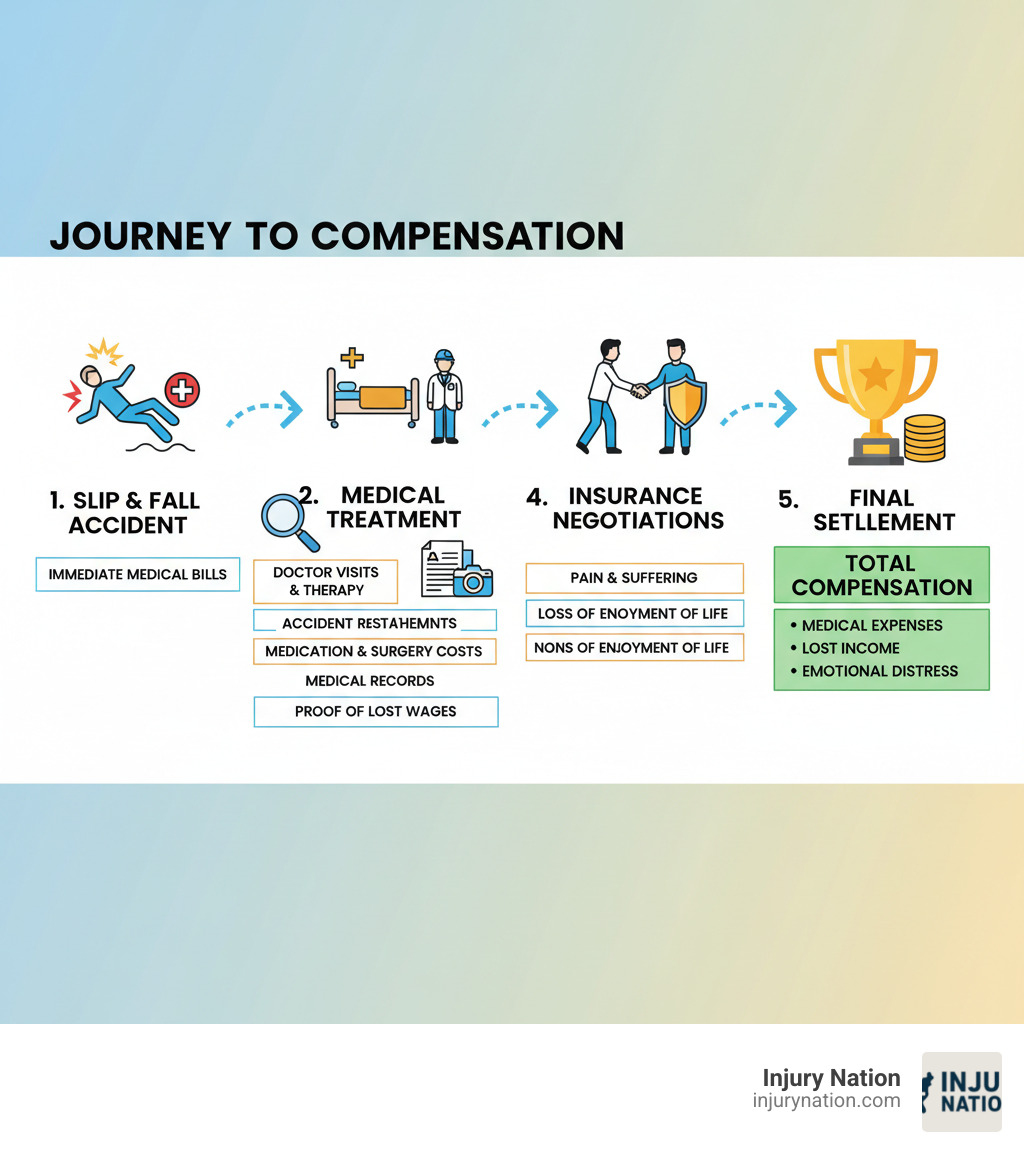
Compensation for slip and fall injuries terms to know:
The Two Pillars of Compensation: Economic vs. Non-Economic Damages
When you’re hurt in a slip and fall, the compensation for slip and fall injuries you can claim falls into two main categories. The legal world calls these economic damages (or “special damages”) and non-economic damages (or “general damages”).

Economic damages cover everything with a clear price tag, like medical bills and lost paychecks. Non-economic damages address the harder-to-measure impacts, such as your physical pain and emotional suffering. Both are critical for a fair settlement, even though insurance companies may try to focus only on your documented expenses.
Economic Damages: The Tangible Costs
These are the straightforward, calculable losses tied to your accident. They include:
- Medical Expenses: This is often the largest part of a claim, covering everything from the initial ER visit and hospital stays to surgeries, prescription drugs, and future medical needs like physical therapy. According to the Centers for Disease Control and Prevention (CDC), medical costs from falls topped $50 billion in 2015, highlighting how expensive these injuries can be.
- Lost Wages: You are entitled to compensation for every dollar you missed from being unable to work, including salary, overtime, bonuses, and benefits.
- Lost Earning Capacity: If your injuries prevent you from returning to your old job or limit your future earning potential, you can claim damages for this long-term financial loss.
- Rehabilitation Costs: Physical therapy, occupational therapy, and chiropractic care are essential for recovery but can be expensive. These costs are included in your economic damages.
- Out-of-Pocket Expenses: Don’t overlook smaller costs like gas for medical appointments, parking fees, crutches, or hiring help for household chores. These add up quickly.
- Property Damage: If your phone, glasses, or other personal items were broken in the fall, the replacement cost is also recoverable.
Non-Economic Damages: The Intangible Impact (“Pain and Suffering”)
This category covers the significant, non-financial ways the accident has changed your life. While they don’t come with a receipt, they are a crucial part of your claim.
- Physical Pain: This includes the pain you’ve already endured and any chronic pain or discomfort you’re expected to face in the future.
- Emotional Distress: Many victims suffer from anxiety, depression, or even PTSD after a serious fall. This emotional toll is a compensable damage.
- Loss of Enjoyment of Life: If your injuries prevent you from participating in hobbies, family activities, or other things that brought you joy, that loss has value.
- Disfigurement and Scarring: Visible scars can impact self-confidence and social interactions, creating both physical and emotional challenges.
- Loss of Consortium: This addresses the negative impact your injuries have on your relationship with your spouse, including loss of companionship and intimacy.
How Is “Pain and Suffering” Valued in a Settlement?
Putting a dollar amount on pain and suffering is more art than science. There’s no official calculator for your pain. Instead, compensation for slip and fall injuries involving pain and suffering is determined through negotiation between your lawyer and the insurance company, based on the unique facts of your case.
While average slip and fall settlements range from $15,000 to $45,000, this figure includes everything from minor bruises to life-altering injuries. Your specific circumstances, not an average, determine your case’s value. The core challenge is assigning a monetary value to experiences like sleepless nights or missing family events, but these losses are real and compensable.
Calculating Your Potential Compensation for Slip and Fall Injuries
Legal professionals use two common methods as starting points for negotiation:
-
The Multiplier Method: This is the most common approach. Your total economic damages (medical bills, lost wages) are multiplied by a number, typically between 1.5 and 5. A minor injury might use a multiplier of 1.5 or 2, while a severe, life-changing injury could warrant a 4 or 5. For example, $20,000 in economic damages with a multiplier of 3 would suggest a pain and suffering value of $60,000.
-
The Per Diem Method: This method assigns a daily dollar amount (a “per diem” rate) to your suffering from the accident date until you reach maximum recovery. For instance, a $150 daily rate for 200 days of suffering would equal $30,000.
Strong evidence is key to justifying either calculation. Medical records, photos of your injuries, and a personal journal detailing your daily struggles are essential.
What’s the Typical Range for Pain and Suffering?
Compensation for slip and fall injuries for pain and suffering alone can range from $2,000 to $100,000 or more, depending entirely on the severity of the injury.
- Minor injuries (like bruises or minor sprains that heal quickly) typically result in awards in the lower thousands.
- Severe injuries (such as broken bones requiring surgery, spinal damage, or traumatic brain injuries) can lead to pain and suffering awards in the tens or hundreds of thousands of dollars. The law recognizes that permanent injuries deserve significant compensation.
Real-world verdicts show this range. A victim with a skull fracture from a fall at a Lowe’s store received $13 million, while another who suffered a brain injury in a convenience store fall was awarded $12.2 million. On the other hand, a case with a minor injury and weak evidence might settle for closer to $10,000. The difference lies in the severity of the injury, the strength of the evidence, and the quality of legal representation.
Key Factors That Influence Your Compensation for Slip and Fall Injuries
Why do some slip and fall cases settle for thousands while others reach millions? Calculating compensation for slip and fall injuries is a complex process where several key factors determine the final value of your claim.

The Severity and Nature of Your Injuries
Your injuries are the core of your claim. Serious, long-lasting injuries lead to higher compensation. Insurers often categorize injuries as either “hard” or “soft.”
- Hard injuries are easily proven with medical imaging (X-rays, MRIs) and include broken bones, traumatic brain injuries (TBIs), and spinal cord damage.
- Soft tissue injuries like muscle sprains and tendon strains or bruises can be very painful but are harder to document, which can lead insurers to undervalue them.
| Hard Injuries | Soft Tissue Injuries |
|---|---|
| Broken bones (fractures) | Muscle sprains and tendon strains |
| Traumatic Brain Injuries (TBI) and concussions | Bruises and contusions |
| Spinal cord damage | Whiplash |
| Dislocations | Minor cuts and scrapes |
| Ligament tears (e.g., ACL, MCL) | |
| Open wounds requiring stitches or surgery |
Permanent injuries and long recovery times dramatically increase a claim’s value. Cases that require surgery often settle for $50,000 to $200,000 or more due to higher costs, longer recovery, and greater pain.
Proving Liability: The Foundation of Your Claim
Even with severe injuries, you must prove the property owner was legally responsible. Under premises liability law, you must show the owner knew or should have known about a dangerous condition (like a spill or broken step) and failed to fix it or warn you. This failure is known as negligence. Strong evidence like photos, witness statements, and incident reports is crucial to proving liability.
The Impact of Shared Fault: Understanding Comparative Negligence
What if you were partially at fault, perhaps by being distracted? Most states use comparative negligence rules, which reduce your compensation by your percentage of fault. If you are awarded $100,000 but found 30% at fault, you would receive $70,000. Some states have stricter rules; a few follow a harsh contributory fault rule where you get nothing if you are even 1% at fault. Insurers will try to maximize your share of the blame to pay less, so fighting these accusations is key.
Your Age, Health, and Recovery Journey
Personal factors also matter. A fall that aggravates a pre-existing condition is compensable for the worsening of that condition. The impact on your daily life—your ability to work, care for family, or enjoy hobbies—is a major component of your pain and suffering damages. A long, difficult recovery with a poor long-term prognosis will also increase your claim’s value.
State Laws and Their Impact on Compensation for Slip and Fall Injuries
Where your accident occurred is critical. Each state has its own laws regarding premises liability, shared fault, and filing deadlines (statutes of limitations). Some states also have damage caps that limit the amount you can receive for pain and suffering, regardless of a jury’s verdict. Missing the filing deadline can bar your claim entirely. This is why local legal expertise, whether you need Personal Injury Lawyers in Jacksonville or elsewhere, is so important.
Building Your Case: Actionable Steps to Maximize Your Claim
After a slip and fall, the steps you take can significantly impact your ability to receive fair compensation for slip and fall injuries. While your first priority is your health, gathering evidence early is crucial for building a strong case.

What to Do Immediately After a Slip and Fall
In the critical hours after your accident, take these steps to protect your rights:
- Report the Incident: Immediately inform the property owner or manager. Insist on filing an official incident report and ask for a copy. This creates a formal record of the event.
- Seek Medical Attention: See a doctor right away, even if you feel fine. Adrenaline can mask injuries, and a medical record creates a direct link between the fall and your injuries.
- Document the Scene: Use your smartphone to take photos and videos of the hazard that caused your fall from multiple angles. Also, photograph your visible injuries.
- Get Witness Information: If anyone saw the fall, get their name and contact information. Their testimony can be powerful evidence.
- Preserve Your Clothing: Don’t wash the clothes or shoes you were wearing. They may hold evidence. Store them in a safe place.
- Watch What You Say: Avoid apologizing or admitting any fault. Stick to the facts when speaking to anyone, especially insurance adjusters.
The Importance of Documentation
Thorough documentation is the foundation of your claim. Keep meticulous records of everything:
- Medical Records: Collect all doctor’s notes, hospital bills, test results, and therapy records.
- All Related Expenses: Save every receipt for medical costs, prescriptions, travel to appointments, and any other out-of-pocket expenses.
- A Pain Journal: Write daily notes about your pain levels, how the injuries affect your life, and your emotional state. This provides powerful proof of your suffering.
- Lost Income: Get a letter from your employer detailing your missed work and lost wages.
The Role of a Slip and Fall Injury Lawyer
Navigating a claim alone while recovering is difficult. An experienced lawyer acts as your advocate and guide.
- They Negotiate with Insurers: Lawyers understand insurance company tactics and fight for a fair settlement, protecting you from lowball offers.
- They Calculate Your True Damages: An attorney ensures all current and future damages, including lost earning capacity and pain and suffering, are included in your claim.
- They Gather Critical Evidence: Lawyers can secure surveillance footage, maintenance logs, and expert testimony to strengthen your case.
- They Increase Your Leverage: Insurance companies take claims more seriously when a lawyer is involved and prepared to go to court.
Most personal injury lawyers work on a contingency fee, meaning you pay nothing unless they win your case. Getting a consultation to understand your rights is risk-free. You can find a lawyer in Las Vegas or your local area to get started.
Frequently Asked Questions about Slip and Fall Compensation
After a slip and fall, it’s normal to have questions about money, timelines, and your legal options. Here are answers to some of the most common questions about compensation for slip and fall injuries.
What is the average payout for a slip and fall that requires surgery?
When an injury requires surgery, the value of a claim increases significantly. While there’s no single average, cases involving surgery typically settle in the range of $50,000 to $200,000 or more. The final amount depends on factors like the type of surgery (e.g., a spinal fusion versus minor arthroscopic surgery), the length of your recovery, the amount of physical therapy needed, and whether you’re left with permanent limitations. Surgery leads to higher medical bills, more time off work, and greater pain and suffering, all of which drive up the settlement value.
How long does it take to settle a slip and fall claim?
The timeline for a slip and fall settlement can range from a few months to several years. There is no set schedule, as it depends on several factors:
- Injury Severity: Minor injuries may lead to quick settlements. Severe injuries require more time to understand the long-term prognosis.
- Maximum Medical Improvement (MMI): It’s wise to wait until you’ve reached MMI—the point where your condition has stabilized—before settling. This ensures all future medical needs are accounted for.
- Case Complexity: If liability is clear, the case may resolve faster. If the property owner disputes fault, it will take longer to gather evidence and negotiate.
- Filing a Lawsuit: Most cases settle without a trial, but if a lawsuit is necessary to get a fair offer, the process can take two to three years.
Can I still get compensation if the property owner claims I was at fault?
Yes, absolutely. It is a standard tactic for property owners and their insurers to try to shift blame onto the victim. However, in most states, being partially at fault does not prevent you from receiving compensation for slip and fall injuries.
Most states follow comparative negligence rules. This means your total compensation is simply reduced by your percentage of fault. For example, if you are found 20% at fault in a $100,000 case, you can still recover $80,000. An experienced attorney can fight back against unfair accusations of fault and protect your right to a fair recovery. Don’t let claims of shared fault discourage you from pursuing your case.
Conclusion: Taking the Next Step Towards Your Settlement
Understanding compensation for slip and fall injuries is the first step toward securing your financial recovery. We’ve covered the key components of a claim, from economic and non-economic damages to the crucial factors that influence your settlement value.
While average settlements range from $15,000 to $45,000, and cases with surgery can reach $200,000 or more, your case is unique. The true value depends on your specific injuries, the evidence of liability, and the long-term impact on your life.
Don’t let an insurance company dictate the value of your suffering. They have professionals working to minimize your claim; you deserve an advocate fighting for you.
Taking action quickly is vital. Evidence can be lost, and strict state deadlines apply. Getting legal guidance allows you to focus on healing while an expert handles the complexities of your case.
At Injury Nation, we connect accident victims with skilled legal representation. Your path to justice starts here. Find experienced personal injury lawyers in your area who can fight for the compensation for slip and fall injuries you deserve.