

Why Understanding Workers’ Compensation Legal Rights Matters After a Workplace Injury
Workers’ compensation legal refers to the system of laws governing benefits for work-related injuries and illnesses. If you’ve been hurt on the job, here’s what you need to know right now:
Quick Answer: Your Core Legal Rights
- No-fault coverage: You’re entitled to benefits regardless of who caused the accident
- Medical care: Your employer must pay for all approved treatment related to your injury
- Wage replacement: You can receive 60-70% of your average weekly wage while recovering
- Job protection: Your employer cannot fire you for filing a workers’ compensation claim
- 90-day filing window: Report your injury immediately, but you typically have up to 90 days to file a formal claim
- Right to appeal: If your claim is denied, you have legal options to challenge the decision
Getting hurt at work is stressful enough without navigating a complex legal system. Workers’ compensation exists as a “grand bargain”: you receive guaranteed benefits without proving fault, and in exchange, you give up the right to sue your employer for negligence.
Workplace injuries are a major cause of disability in the U.S. Whether from a fall, repetitive motion, or toxic exposure, the system is designed to protect you.
But here’s the problem: the system only works if you understand your rights.
Too many injured workers miss filing deadlines, accept lowball offers from insurers, or don’t know they can appeal a denied claim. This guide will walk you through your workers’ compensation legal rights to ensure you get the medical care and financial support you deserve.
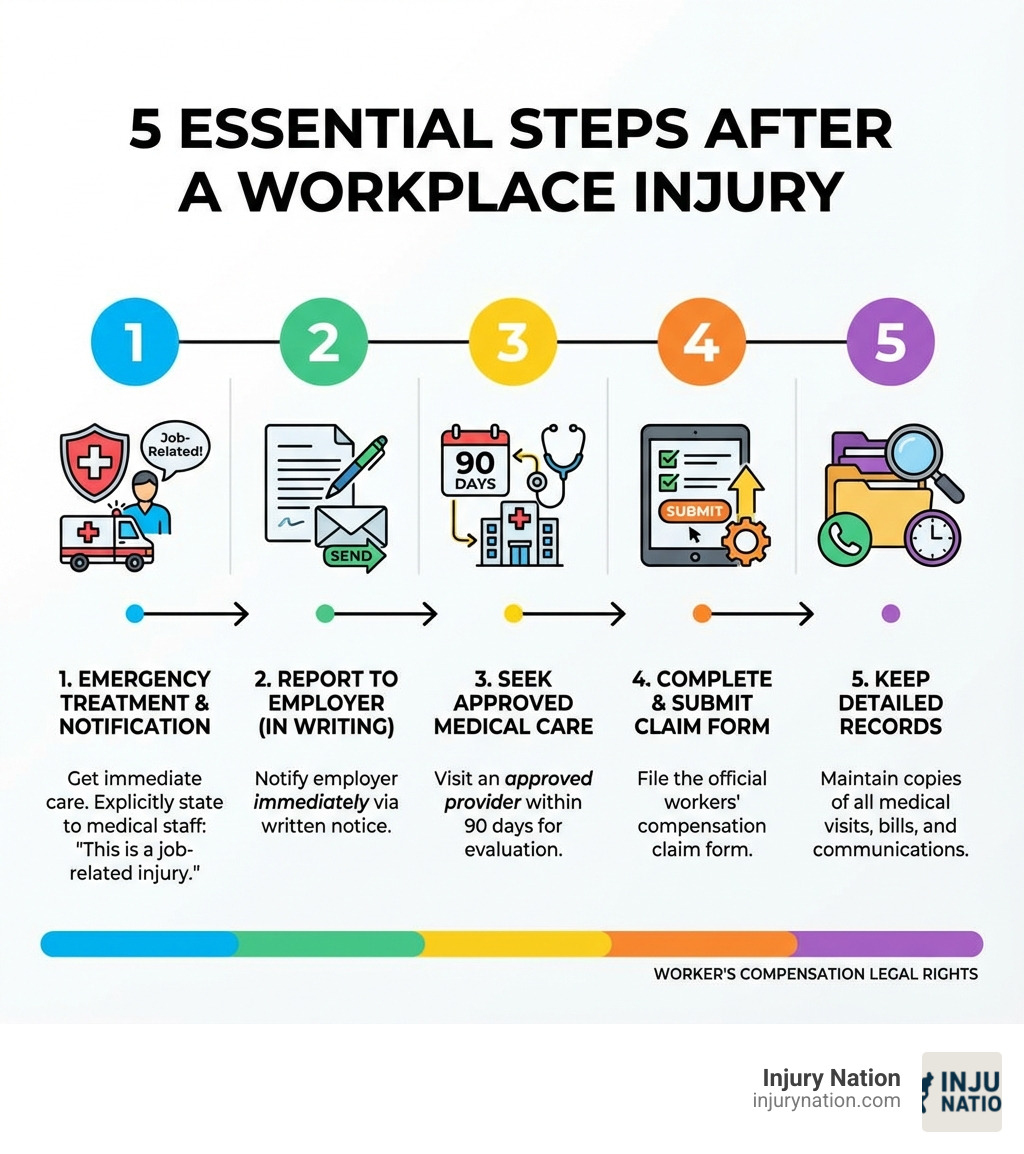
Handy Worker’s compensation legal terms:
The Foundation of Workers’ Compensation
Workers’ compensation laws protect people injured on the job by providing fixed monetary awards, eliminating the need for costly litigation. The system also provides for dependents of workers killed in work-related incidents and protects employers by limiting recovery amounts.
At its core, workers’ compensation operates on a “no-fault” principle. Benefits are generally provided regardless of who was at fault. In exchange for these assured benefits, employees typically give up their right to sue their employer for negligence related to the injury. This is the “grand bargain” that provides a streamlined process for benefits while protecting employers from extensive lawsuits.
The entire system is administered by state agencies, meaning specifics can vary significantly depending on where you work. If you’ve suffered a workplace injury, such as a slip and fall, understanding these foundational elements is your first step toward securing the compensation you deserve.
Understanding the Worker’s Compensation Legal Framework
The Worker’s compensation legal framework is primarily governed by state statutes. In Nevada, for example, all private employers with one or more employees must carry workers’ compensation insurance. This covers full-time, part-time, temporary, seasonal, minor, and undocumented workers. Independent contractors, however, are typically not covered, a distinction that can lead to disputes if a worker is misclassified.
For an injury or illness to be covered, it must “arise out of and in the course of employment.” This means there must be a direct connection between your job duties and the injury or illness you sustained.
Covered Injuries and Illnesses
Worker’s compensation legal protections extend to a wide range of work-related injuries and illnesses:
- Accidental Injuries: These are single-event injuries like a fall, a back strain from lifting, or a chemical burn, where an unexpected event causes direct harm.
- Occupational Diseases: These develop over time from exposure to workplace hazards, such as respiratory illnesses from dust or chemicals. Proving they are work-related can be complex and may require showing it’s “more likely than not” that the job caused or aggravated the illness.
- Cumulative Trauma: These result from repetitive motions or long-term exposure, like carpal tunnel syndrome, hearing loss from noise, or chronic back pain.
- Mental and Psychological Injuries: Some states, including Nevada, cover mental injuries if they result from a physical injury or an extraordinary, sudden work-related stress event. Proving these claims can be difficult.
Benefits are generally denied for self-inflicted injuries, injuries from intoxication, or those resulting from being the aggressor in a fight or engaging in “horseplay.”
Navigating Your Benefits: From Medical Care to Wage Replacement
When you’re injured at work, your health and finances are the priority. The workers’ compensation system is designed to address both through several benefit categories aimed at your recovery.

Worker’s compensation legal benefits are for income protection and medical care; they do not include compensation for “pain and suffering” or punitive damages, which are often associated with personal injury lawsuits.
Key Benefit Categories
The workers’ compensation system provides several types of benefits:
- Medical Care: Your employer’s insurer must pay for all necessary and approved medical care, including doctor visits, hospital stays, prescriptions, and therapy.
- Temporary Total Disability (TTD): Provides a portion of your lost wages if your injury temporarily prevents you from working at all.
- Temporary Partial Disability (TPD): Compensates for the wage difference if you can return to work with restrictions or at a lower-paying job during recovery.
- Permanent Total Disability (PTD): For severe cases where an injury permanently prevents you from any future gainful employment.
- Permanent Partial Disability (PPD): Applies when a work injury causes a permanent impairment (e.g., loss of a limb) that affects your wage-earning ability, even if you can still work.
- Vocational Rehabilitation: Provides job placement assistance or retraining if your injury prevents you from returning to your old job.
- Death Benefits: Provides weekly payments and burial expenses to surviving dependents if a work injury results in death.
How Benefits Are Calculated and Paid
Calculating benefits revolves around your Average Weekly Wage (AWW) before the injury.
- Wage Replacement Calculation: TTD benefits are typically a percentage of your AWW—in Nevada, it’s generally 60%. Payments are subject to state-mandated maximum and minimum weekly amounts.
- Waiting Periods: Most states have a waiting period (e.g., 3-7 days) before wage benefits start. If your disability lasts long enough, you may receive retroactive pay for this period.
- Partial Disability Calculation: TPD benefits are usually a percentage of the difference between your pre-injury and current wages. For example, if you now earn $500 less per week, your benefit might be 60% of that $500 difference.
- Permanent Impairment Benefits: PPD compensation is based on an impairment rating, often determined using American Medical Association guidelines. Your payment is calculated based on this percentage of functional loss.
- Lump-Sum Settlements: Instead of weekly payments, you may agree to a lump-sum settlement. This one-time payment resolves the claim but typically requires approval from a Workers’ Compensation Judge.
The Claims Process: Roles and Responsibilities
Navigating the Worker’s compensation legal process involves clear roles for the employee, employer, and insurance company. Understanding these can significantly impact your claim.

The Employee’s Role: Reporting and Following Through
Your actions immediately following a workplace injury are critical:
- Notify Your Employer Immediately: Report your injury as soon as you realize you’re hurt. Prompt notification is vital.
- Complete Necessary Forms: Fill out and give your employer a “Notice of Injury or Occupational Disease” (Form C-1).
- Seek Medical Care: Get medical attention within 90 days of the injury. Your doctor will complete a Form C-4 to send to the insurer.
- File Your Claim: You have 90 days from the injury date to formally file your claim in Nevada. Missing this deadline can cost you your benefits.
- Follow Treatment Plans: Adhere strictly to your doctor’s recommendations and treatment plans.
- Cooperate with the Insurer: Cooperate with reasonable requests from the insurer, such as attending medical examinations.
- Keep Detailed Records: Document everything: injury reports, conversations, forms, medical visits, and expenses.
The Employer’s Role: Reporting and Compliance
Employers also have specific obligations:
- Provide Claim Forms: Your employer must give you the necessary claim forms (e.g., Form C-1) when you report your injury.
- Report to Insurer: Employers must report your injury to their insurance carrier. In Nevada, they have six days after receiving the medical report (Form C-4) to do so.
- Ensure Medical Care: The employer is required to provide you with medical care for your job-related injury.
- Prohibit Retaliation: It is illegal for your employer to fire or discriminate against you for filing a workers’ compensation claim.
- Penalties for Non-Compliance: Employers who fail to carry insurance or follow rules face large fines and potential criminal charges. Uninsured employers are personally liable for all your medical bills and lost wages.
The Core of Worker’s Compensation Legal Issues
Even in a no-fault system, Worker’s compensation legal disputes are common. Insurers may deny claims, dispute the severity of an injury, or argue about medical treatments. Common conflicts involve whether an injury is work-related, the degree of disability, and when an employee can return to work.
Disputes often arise from “Independent Medical Examinations” (IMEs). The insurer can have you examined by their chosen doctor. If this doctor’s opinion conflicts with your own doctor’s assessment, it can lead to disputes over your diagnosis or ability to work.
All states have strict time limits for filing claims. In Nevada, you generally have 90 days to formally file your claim. Missing this deadline can result in losing your right to benefits.
When to Seek Worker’s Compensation Legal Advice
While the system is designed to be accessible, legal guidance can make a significant difference. Consider seeking advice from a top-rated Injured Worker Attorney if:
- Your claim is denied.
- The insurer disputes your benefits or denies medical treatment.
- Your employer pressures you to return to work too soon.
- Your injury was caused by a third party (e.g., a negligent driver or faulty equipment), allowing for a separate personal injury lawsuit.
- Your injury is severe, complex, or results in permanent disability.
- You face retaliation from your employer for filing a claim.
- The insurer offers a low settlement. An attorney can evaluate the offer and negotiate for a fair amount.
Overlapping Benefits: FMLA, ADA, and Social Security
A work injury can interact with other benefit programs. Understanding how Worker’s compensation legal benefits overlap with other laws is crucial:
- Family and Medical Leave Act (FMLA): You may be entitled to job-protected leave under FMLA at the same time you receive workers’ comp benefits.
- Americans with Disabilities Act (ADA): If your injury results in a disability, the ADA may require your employer to provide “reasonable accommodation” to help you return to work.
- Social Security Disability Insurance (SSDI): You may qualify for SSDI for a long-term disability, but these benefits are often reduced by your workers’ comp payments. An attorney can help maximize your total benefits.
State vs. Federal: Understanding Which Laws Apply to You
Most workers are covered by state-specific laws, but certain employees fall under federal workers’ compensation programs. This distinction determines which rules, agencies, and benefits apply to your claim. For federal employees or those in specific industries like maritime work, federal statutes take precedence.
Federal Workers’ Compensation Programs
The U.S. Department of Labor administers several federal programs distinct from state systems:
- Federal Employees’ Compensation Act (FECA): Provides benefits to non-military federal employees injured on the job. It covers medical expenses, wage loss, and vocational retraining. You can find more information about the Federal Employees’ Compensation Act (FECA) online.
- Longshore and Harbor Workers’ Compensation Act (LHWCA): Covers specified maritime employees injured on or near navigable U.S. waters.
- Black Lung Benefits Act: Compensates coal miners for “black lung” disease caused by coal dust exposure.
- Jones Act (Merchant Marine Act): Allows seamen to sue their employers for injuries caused by negligence, operating differently from a standard workers’ comp claim.
If you fall under one of these categories, consult an attorney specializing in federal cases. For your specific needs, you may want to Find the Best OWCP Attorney for your case.
Finding State-Specific Information and Assistance
Most workers are covered by state laws, administered by a state board or division. In Nevada, this is the Division of Industrial Relations (DIR). You can find state-specific forms, rules, and assistance through your state’s official agency website, like the Nevada Workers’ Compensation – Division of Industrial Relations. These agencies often provide:
- Free information and assistance units.
- Rules for choosing your doctor. In Nevada, the insurer often has a provider network, but you have rights to contest their findings.
- All necessary forms, guides, and FAQs.
Frequently Asked Questions about Workers’ Comp Claims
Here are some common questions from injured workers in jurisdictions like Las Vegas, Nevada:
Can my employer fire me for filing a workers’ compensation claim?
No. It is illegal for an employer to fire, punish, or discriminate against you for filing a workers’ compensation claim. These anti-retaliation laws protect injured workers. If you believe you were fired for this reason, you may have a separate wrongful termination claim and should seek legal advice immediately.
Do I have to be a legal resident to receive benefits?
No. Workers’ compensation laws are designed to protect all employees injured on the job, regardless of their immigration status. In Nevada, undocumented workers are explicitly covered. The system focuses on the work-related injury, not your residency status, to ensure all workers receive necessary care and benefits.
What if my employer doesn’t have workers’ compensation insurance?
Employers are legally required to have workers’ compensation insurance (in Nevada, this applies to all employers with one or more employees). If your employer is uninsured when you get hurt:
- Employer Personal Liability: They become personally responsible for your medical bills and lost wages.
- State Penalties: The employer faces large fines and other penalties from the state.
- Right to Sue: You may be able to sue your employer directly in civil court, which could allow you to recover damages for pain and suffering.
A claim against an uninsured employer is complex, and legal representation is highly recommended to protect your rights.
Conclusion
Understanding your Worker’s compensation legal rights is not just important—it’s essential for your well-being and financial stability after a workplace injury. We’ve explored the foundational principles, the types of benefits available, the claims process, and common legal issues you might encounter. From the “no-fault” system to specific reporting deadlines in Nevada, knowing these details empowers you to steer a complex system that often seems designed to be confusing.
You have fundamental rights: the right to medical care, wage replacement, and protection from employer retaliation. Don’t let the intricacies of the law deter you from seeking what you are rightfully owed. Whether it’s a denied claim, a dispute over medical treatment, or a complex injury, trying to steer these claims alone can leave you shortchanged.
Injury Nation is dedicated to connecting injured workers with top-rated personal injury lawyers who can help you understand your rights and fight for the compensation you deserve. Taking the next step to secure your benefits means being informed and, when necessary, having a powerful advocate by your side.
Don’t hesitate to seek professional legal guidance. Your recovery and future depend on it.
Find a personal injury lawyer in your area to help with your claim.