

Why Understanding Drowning Accident Lawsuits Matters
Drowning accident lawsuits arise when negligence leads to a drowning or near-drowning. Survivors or families of victims can file these lawsuits against responsible parties—such as property owners, businesses, or manufacturers—to recover compensation for medical bills, lost income, and pain and suffering. The legal basis for these claims often involves premises liability, negligence, or wrongful death.
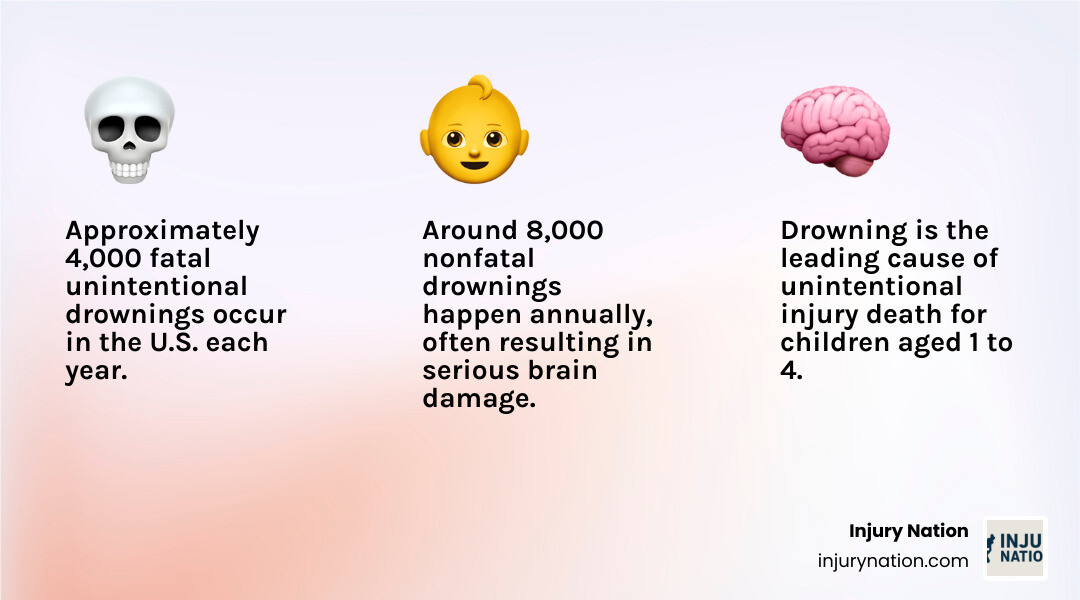
Drowning is a devastating and preventable reality. The Centers for Disease Control and Prevention (CDC) reports that about 4,000 fatal unintentional drownings occur in the U.S. annually. For children aged 1 to 4, drowning is the leading cause of unintentional injury death. Additionally, around 8,000 nonfatal drownings happen each year, many causing lifelong injuries like brain damage.
These tragedies often result from inadequate supervision, a lack of safety barriers like fences, distracted lifeguards, or defective pool equipment. When negligence is a factor, families have legal recourse to seek justice. For example, some states see tragically high rates of these preventable deaths, underscoring the need for accountability when safety failures occur.
If a drowning accident has affected your family, understanding your legal options is the first step toward justice.
Know your Drowning accident lawsuit terms:
Understanding the Legal Foundation of a Drowning Claim

A drowning accident lawsuit is a personal injury claim seeking justice and compensation when a drowning or near-drowning is caused by someone’s negligence. Legally, drowning is respiratory impairment from submersion in liquid. It is often a silent and swift event.
A key distinction exists between a fatal drowning and a near-drowning accident, where the person survives. Survivors of near drowning can suffer severe, lifelong injuries from oxygen deprivation, including brain damage and neurological impairment. The need for emergency medical treatment and extended care can result in astronomical costs, making a lawsuit critical for families.
Common Causes and Legal Theories
Most drowning incidents are preventable and stem from negligence. Common causes include a lack of supervision, inadequate fencing or barriers, absent or poorly trained lifeguards, defective equipment like faulty drains, overcrowding, and hazardous conditions such as murky water or slippery decks.
These causes form the basis for several legal theories in a drowning accident lawsuit:
- Premises Liability: Holds property owners responsible for maintaining a safe environment.
- Negligence: Argues that a party failed to exercise reasonable care, directly causing the incident.
- Wrongful Death: A claim filed by surviving family members after a fatal drowning.
- Product Liability: Holds manufacturers liable for defective products, such as a faulty pool drain or unsafe flotation device, that contributed to the drowning.
Who Can Be Held Liable in a Drowning Accident Lawsuit?
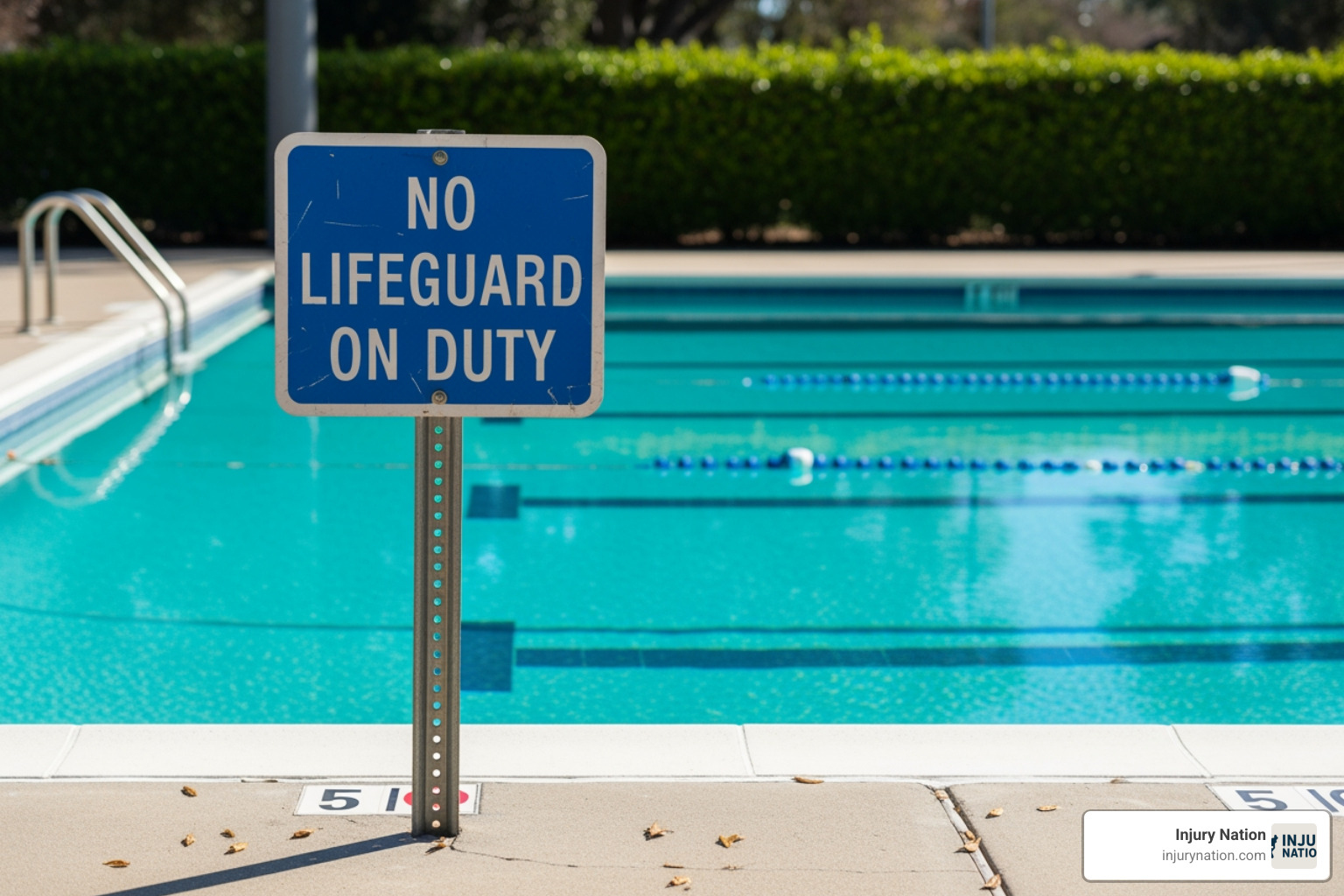
Determining liability in a drowning accident lawsuit means identifying which party breached their duty of care. In Nevada, liability can fall on various individuals, businesses, or government entities depending on the circumstances.
Property Owners and Individuals
Property owners are often held liable for drownings on their premises. This includes:
- Private Pool Owners: Homeowners and apartment complexes must secure pools with proper fencing and gates. In a hot climate like Las Vegas, this duty is especially critical.
- Hotels and Resorts: These businesses have a high duty of care to provide adequate supervision, maintenance, and clear signage.
- Boat Operators: A boat operator can be liable for reckless operation, boating under the influence, or failing to provide life jackets.
- Social Hosts: Hosts of pool parties may be responsible for supervising guests, particularly children.
Commercial and Governmental Entities
Businesses and government bodies can also be held responsible:
- Public Pools and Water Parks: These facilities must have trained lifeguards, maintain equipment, and enforce safety rules.
- Schools and Daycare Centers: These institutions have a heightened duty to supervise children during any water-related activities.
- Equipment Manufacturers: If a defective product like a faulty drain cover causes a drowning, the manufacturer can be held liable.
- Governmental Entities: A city or state may be liable for drownings at public parks or beaches. However, lawsuits against government bodies have unique rules and shorter deadlines, making legal guidance essential.
The ‘Attractive Nuisance’ Doctrine and Child Drownings
Because drowning is a leading cause of death for young children, Nevada law includes the ‘attractive nuisance’ doctrine. This legal concept requires property owners to protect children from dangerous conditions that might attract them, like an unfenced pool, even if the child is trespassing. In Nevada, pools are legally considered “attractive nuisances,” meaning owners must take reasonable steps, such as installing secure fences and gates, to prevent unsupervised access by children. Failure to do so can lead to liability if a child drowns.
Building a Strong Drowning Accident Lawsuit Case
Pursuing a drowning accident lawsuit requires strong evidence and adherence to legal procedures. Building a compelling case is key to securing fair compensation for victims and their families.
Crucial Evidence to Collect
The success of a lawsuit depends on the evidence collected. Key items include:
- Photos and videos of the accident scene, including any hazards or lack of safety features.
- Witness statements and contact information.
- Official police, EMT, and autopsy reports.
- Medical records detailing injuries, treatment, and prognosis.
- Maintenance logs and inspection records for the property.
- Testimony from experts in aquatic safety, medicine, or engineering.
After an accident, it is wise to document the scene, gather witness information, and keep all records. Avoid discussing fault or signing documents from an insurer without first speaking to an attorney.
Key Steps in Pursuing a Drowning Accident Lawsuit
The legal process for a drowning accident lawsuit generally involves several steps. It begins with an initial consultation with an attorney, followed by a thorough investigation. If the case has merit, a formal complaint is filed, initiating the lawsuit. The “findy” phase follows, where both sides exchange information. Many cases are resolved through settlement negotiations, but if a fair agreement isn’t reached, the case may proceed to mediation or a full trial.
What Is the Statute of Limitations?
The “statute of limitations” is a strict deadline for filing a lawsuit. In Nevada, the time limit for most personal injury and wrongful death claims is generally two years from the date of the incident. However, claims against government entities have much shorter deadlines, sometimes requiring a “notice of claim” within months. Exceptions may also apply to minors. Because these deadlines are absolute, it is critical to contact an attorney as soon as possible after a drowning accident. Missing the statute of limitations can permanently prevent you from filing a claim.
Recovering Compensation and Potential Outcomes
The primary goal of a drowning accident lawsuit is to help victims and their families recover compensation for their immense losses, which can be both financial and emotional.
What Damages Can Be Recovered?
Damages in a lawsuit are intended to cover the full impact of the incident. They are typically divided into two categories:
Economic Damages cover quantifiable financial losses, including:
- Current and future medical expenses.
- Lost wages and loss of future earning capacity.
- Funeral and burial costs in wrongful death cases.
Non-Economic Damages compensate for non-quantifiable losses, such as:
- Pain and suffering.
- Emotional trauma and mental anguish.
- Loss of companionship or consortium for surviving family members.
- Loss of enjoyment of life.
In cases of extreme negligence or recklessness, Nevada courts may also award punitive damages. These are intended to punish the at-fault party and deter similar behavior.
Potential Outcomes of a Lawsuit
Most drowning accident lawsuits are resolved through an out-of-court settlement, where both parties agree on a compensation amount. If a settlement cannot be reached through negotiation or mediation, the case may proceed to trial, where a judge or jury will determine liability and damages. While a settlement provides a faster resolution, a trial may be necessary to secure the maximum compensation deserved.
Special Considerations in Drowning Cases
Drowning lawsuits often involve unique factors, from the victim’s vulnerability to the specific location, that can impact the case.
Cases Involving Children and Vulnerable Adults
Cases involving children or vulnerable adults (such as the elderly or disabled) carry a heightened duty of care. Caregivers, schools, and property owners have a special responsibility to protect these individuals from water hazards. A near-drowning can cause lifelong disabilities for a child, leading to substantial claims for future medical care.
How Factors Like Alcohol or Swimming Ability Affect a Case
A victim’s actions can sometimes influence a case. For example, if alcohol consumption contributed to the accident, it may reduce the recoverable damages under Nevada’s modified comparative negligence rule. This rule reduces a victim’s compensation by their percentage of fault. If a victim is found 51% or more at fault, they may be barred from recovering any damages. However, a victim’s intoxication or poor swimming ability does not automatically absolve a property owner of their duty to provide a safe environment.
Nuances in High-Risk Areas like Las Vegas, Nevada
Different regions have unique legal characteristics. Las Vegas, with its countless pools at hotels, resorts, and private homes, is a high-risk environment where pool safety is paramount. Nevada law, including the powerful “attractive nuisance” doctrine, is designed to protect residents and tourists alike by holding negligent property owners accountable. An attorney familiar with these local nuances is essential for navigating a drowning accident lawsuit in this environment.
Frequently Asked Questions about Drowning Lawsuits
We understand that you likely have many questions about pursuing a drowning accident lawsuit. Here are some of the most common inquiries we receive:
Can I sue if I signed a waiver or disclaimer?
It may still be possible to sue even if you signed a waiver. Waivers are not always enforceable, especially in cases involving gross negligence, ambiguous language, or violations of public policy. An experienced attorney can review the waiver and the accident details to determine if a drowning accident lawsuit is viable.
How much does it cost to hire a lawyer for a drowning case?
Most personal injury lawyers who handle drowning accident lawsuits work on a contingency fee basis. This means you pay no upfront fees. The lawyer’s fee is a percentage of the compensation they recover for you, whether through a settlement or a trial verdict. If they do not win the case, you owe them no fee. This arrangement allows families to seek justice without financial risk.
What is the difference between a personal injury and a wrongful death claim?
The distinction depends on the outcome of the accident:
- A Personal Injury Claim is filed by the person who survived a near-drowning accident. It seeks compensation for their own injuries, medical bills, and suffering.
- A Wrongful Death Claim is filed by the surviving family members (e.g., a spouse or children) when an accident results in a fatality. It seeks compensation for the family’s losses, such as funeral costs and loss of companionship.
How an Experienced Attorney Can Help
Navigating the aftermath of a drowning or near-drowning incident is incredibly challenging. The emotional toll, coupled with complex legal procedures, can feel overwhelming. This is where an experienced personal injury attorney becomes an invaluable ally in a drowning accident lawsuit.
An attorney can help by:
- Navigating Legal Complexities: They understand intricate laws like premises liability and negligence and how they apply to your case.
- Proving Negligence: A legal team will investigate the incident, gather evidence, consult with experts, and build a case to prove another party’s fault.
- Maximizing Compensation: Their experience allows them to accurately calculate the full value of your damages, including future medical care, lost income, and pain and suffering.
- Fighting Insurance Companies: An attorney acts as your advocate, handling all negotiations with insurance companies to protect your rights and fight for a fair settlement.
- Providing Support: They offer compassionate guidance, handling the legal burdens so your family can focus on healing.
If you or a loved one has been impacted by a drowning accident, meeting with a lawyer can help you understand your options. Our network of top-rated personal injury lawyers is dedicated to helping victims find the legal support they need. Visit our attorney directory to find a qualified personal injury lawyer who can assist you.