What Can Change the Total Cost of a Car Accident Claim in New York City?
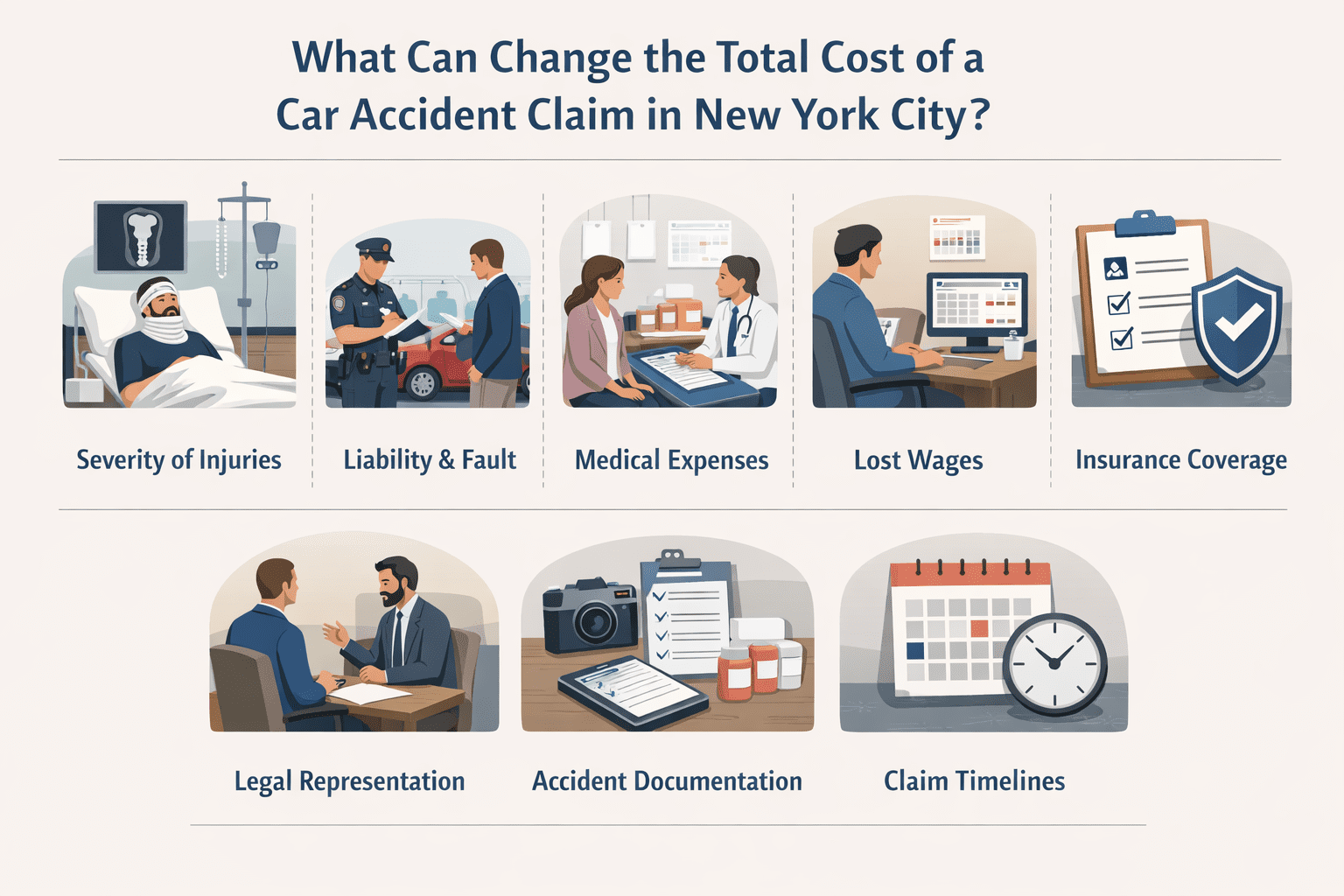
If you were hurt in a crash in New York City, one of the first questions you may have is simple: how much is this going to cost? Unfortunately, the answer usually is not simple at all. The total cost tied to a car accident claim can shift based on the facts of the crash, the seriousness of the injuries, how long treatment lasts, whether fault is disputed, and how much work is required to build the case. In a place as busy and document-heavy as New York City, even claims that seem straightforward at first can become more involved over time.
This guide explains the main car accident lawyer cost New York City factors that can affect what a claim actually costs from start to finish. It also separates attorney fees from case costs, explains why fast quotes can be misleading, and shows what injured people should review before signing a fee agreement. If you are looking for practical guidance after a crash, this article is designed to help you ask better questions and make more informed decisions.
Why the Total Cost of a Car Accident Claim Is Hard to Predict Early
Many people expect a quick estimate after a collision. They want to know whether hiring a lawyer will be expensive, whether the case will need outside experts, and whether the process will become financially overwhelming. That is understandable. After a crash in New York City, you may already be dealing with medical bills, missed time from work, transportation problems, and calls from insurance companies.
But quick estimates can be misleading for one major reason: the total cost of a claim depends on facts that often are not fully known in the first days or weeks after the accident. For example:
- The full scope of your injuries may not be clear yet.
- Liability may seem obvious at first, then become disputed after insurers review statements, photos, or surveillance footage.
- Medical treatment may last longer than expected.
- Additional records may be needed from multiple providers, employers, police agencies, or insurance carriers.
- Experts may become necessary if the other side challenges fault, injury causation, or future losses.
In New York City, these issues can be amplified by dense traffic, multi-vehicle crashes, commercial vehicles, rideshare involvement, pedestrians, cyclists, buses, and an unusually large number of potential information sources. A collision on the FDR, in Midtown, in Brooklyn traffic, or near a busy Queens intersection may involve far more documents and witnesses than a suburban crash with only two drivers and one police report.
Start by Separating Attorney Fees from Case Costs
One of the most important things to understand is that attorney fees and case costs are not the same thing.
Attorney Fees
Attorney fees are the amount charged for the lawyer’s legal work on the case. In many personal injury matters, including many car accident claims, lawyers may use a contingency fee arrangement. That generally means the lawyer is paid from a recovery if there is one, rather than charging an upfront hourly fee. But the exact terms matter, and you should not assume every firm structures fees the same way.
Case Costs
Case costs are out-of-pocket expenses associated with developing and pursuing the claim. These may include:
- Medical record retrieval charges
- Medical bill retrieval costs
- Accident report fees
- Photograph, video, or evidence collection expenses
- Expert review fees
- Deposition-related expenses
- Filing and service expenses if a lawsuit is filed
- Transcript costs
- Investigation expenses
These categories should be reviewed carefully in your fee agreement. Ask whether costs are advanced by the law firm, when they are reimbursed, and whether reimbursement comes out before or after attorney fees are calculated. That level of detail can materially affect your understanding of the claim’s financial structure.
The Main Car Accident Lawyer Cost New York City Factors
When people search for information about legal costs after a crash, they often want one number. The more realistic approach is to look at the factors that commonly drive costs up or down. Below are the most important ones.
1. Case Complexity
Complexity is one of the biggest variables. A relatively simple rear-end collision with clear liability, short-term treatment, and complete records usually takes less work than a claim involving severe injuries, multiple vehicles, commercial insurance policies, conflicting witness accounts, or long-term damages.
Complex cases often require:
- More investigation
- More communication with insurers
- More medical documentation
- More legal analysis
- More follow-up with providers
- Potential litigation
In New York City, complexity can increase quickly in collisions involving delivery vans, taxis, rideshare drivers, municipal vehicles, construction-area traffic patterns, or chain-reaction crashes on major roads and bridges.
2. Liability Disputes
If fault is clear, a claim is often less expensive to pursue than one where the other side argues that you caused or contributed to the crash. Liability disputes can increase costs because they often require more evidence and more time.
Common liability dispute issues include:

- Conflicting driver statements
- Unclear lane-change or turn scenarios
- Disputes about traffic signals
- Pedestrian or cyclist right-of-way issues
- Comparative fault allegations
- Arguments over sudden stops or evasive maneuvers
In NYC, where crashes may happen in congested intersections, near bus lanes, in loading zones, around double-parked vehicles, or in high-foot-traffic areas, liability is not always as straightforward as it first appears. If the insurer contests fault, the claim may require witness interviews, scene review, surveillance requests, black-box or telematics review in some cases, and expert analysis.
3. Length of Medical Treatment
The duration of medical treatment often changes the total cost of a claim more than people realize. Treatment length affects both the value of the case and the amount of work needed to document it.
Longer treatment can mean:
- More providers involved
- More records and bills to gather
- More follow-up requests
- More detailed causation analysis
- Potential disputes over whether all treatment was related to the crash
- Potential need for medical opinions about future care
For example, a claim involving an emergency room visit and several weeks of physical therapy is usually easier to document than one involving orthopedic care, pain management, imaging studies, neurological complaints, extended rehabilitation, and possible future treatment recommendations.
It is also risky to estimate a case too early if treatment is ongoing. A quick estimate may fail to account for later diagnoses, specialist referrals, or the possibility that recovery will take much longer than expected.
4. Need for Experts
Experts are not necessary in every car accident claim, but when they are needed, they can significantly affect case costs. Experts may be used to explain fault, injury causation, medical prognosis, economic losses, or technical accident issues.
Examples may include:
- Accident reconstruction specialists
- Medical experts
- Vocational experts
- Economic loss experts
- Life care planning professionals in serious injury cases
If the defense claims your injuries were preexisting, that the impact was too minor to cause your symptoms, or that your future losses are overstated, expert involvement may become much more likely. That can increase the amount of money needed to prepare the case and can also lengthen the timeline.
Why Dense Urban Crashes Often Generate More Documents
Higher-document-volume cases are common in dense urban areas, and New York City is one of the clearest examples. A claim may involve records and evidence from many sources, such as:
- Police reports and follow-up records
- Emergency medical services records
- Hospital systems
- Urgent care centers
- Primary care physicians
- Specialists and therapists
- Rideshare company data
- Commercial vehicle records
- Employer records for lost wages
- Property damage evaluations
- Traffic camera or nearby video evidence where available
- Witness statements from multiple bystanders
Each source can create delays, retrieval fees, authorization requirements, follow-up work, and review time. This does not mean every New York City claim is unusually expensive. It does mean that city accidents often involve more moving pieces than injured people expect.
For example, a crash near Times Square, Downtown Brooklyn, the Cross Bronx, or a busy Queens corridor may produce overlapping evidence from businesses, transit-adjacent areas, multiple drivers, and several insurers. The resulting record collection process may be much heavier than a case in a quieter setting.
How Liability Disputes Increase Work and Expense
When fault is disputed, the claim stops being just a damages case and becomes an evidence case. That shift often changes total cost.
Common Reasons Fault Gets Disputed
- The other driver changes their story after the crash
- An insurer argues both drivers were partially at fault
- There are no independent witnesses
- The impact happened in a complicated intersection
- The collision involved merging, lane splitting, or turning movements
- Roadway congestion makes sequences harder to reconstruct
What May Be Needed to Address the Dispute
- Detailed scene photographs
- Vehicle damage analysis
- Witness contact and interviews
- Additional report requests
- Surveillance or nearby video review
- Accident reconstruction review in more serious cases
Each of those steps can increase both legal work and out-of-pocket case expenses. This is one reason a law firm should be cautious about giving a confident cost picture before reviewing the facts closely.
Treatment Length Can Change Both Case Value and Claim Cost
Many people focus on settlement value and overlook the cost side of treatment length. But long treatment can affect the economics of the case in several ways.
More Providers Means More Records
If you treat with an ER, an orthopedist, a neurologist, a physical therapist, an imaging center, and a pain management provider, every provider creates records, bills, and possible follow-up requests. The legal team may need to organize those records into a clear timeline to show causation and damages.
Gaps or Changes in Care May Need Explanation
In a long-running claim, insurers often scrutinize missed appointments, treatment gaps, changes in providers, and complaints that evolve over time. That can require more attorney time and sometimes provider clarification.
Future Care Issues Increase Complexity
If there are lasting limitations, future procedures under consideration, or ongoing pain complaints, the claim may require a more developed damages presentation. In some cases, this can lead to expert review or additional documentation from treating doctors.
Maximum Medical Improvement Matters
Trying to estimate the total cost of a claim before your condition stabilizes can be misleading. Until there is a clearer picture of your recovery, any estimate may be based on incomplete assumptions.
Experts: When They Become Necessary and Why That Matters
Experts are one of the clearest examples of how a claim can become more expensive than expected. A case that begins with standard record collection can change if the defense raises technical challenges.
Accident Reconstruction Experts
These experts may become important where the mechanics of the crash are contested. That can happen in multi-vehicle pileups, disputed lane-change crashes, intersection collisions, and cases involving severe injuries where impact forces are being argued about in detail.
Medical Experts
Medical experts may be useful when the defense argues your symptoms were preexisting, exaggerated, unrelated, or expected to resolve much sooner. They may also be needed to discuss permanency, future treatment, or causation.
Economic or Vocational Experts
If your injuries affect your ability to work, especially over a long period, additional analysis may be needed to explain lost earnings or reduced earning capacity. That is more common in significant injury claims than in routine short-treatment cases.
Not every case justifies these expenses. A good legal review should consider whether expert costs are proportionate to the disputed issues and the likely benefit to the case.
Examples of Situations That Can Raise the Total Cost of a Claim
It may help to look at practical examples rather than abstract labels.
Example 1: Straightforward Rear-End Crash
A driver is rear-ended in Manhattan traffic, fault is admitted, the vehicle damage is consistent with the report, and the injured person receives several weeks of treatment for soft tissue injuries before improving. There are limited providers, no major causation dispute, and no lawsuit is needed. In a case like that, the legal work and case-cost burden may be lower than in more contested claims.
Example 2: Multi-Vehicle Crash on a Busy NYC Highway
A driver is injured in a chain-reaction collision on the BQE or FDR. Multiple vehicles are involved. Drivers blame one another. There are different insurance carriers, conflicting witness accounts, and questions about the order of impacts. The injured person has months of treatment and lingering symptoms. This kind of claim is usually more expensive to investigate and manage.
Example 3: Pedestrian Collision in a Dense Intersection
A pedestrian is struck while crossing near a heavily traveled intersection in Queens or the Bronx. The driver says the pedestrian entered unexpectedly. Nearby businesses may have footage, and signal timing becomes important. The injured person needs imaging, specialist care, and extended therapy. A liability dispute plus long treatment can drive up both work and case costs.
Example 4: Rideshare or Commercial Vehicle Involvement
If the at-fault vehicle was working for a delivery service or on a rideshare trip, more parties and insurance questions may enter the picture. That often means more records, more communication, and more legal analysis before the case can be evaluated fully.
Why Quick Estimates Can Be Misleading
People naturally want immediate clarity, but very fast cost estimates often leave out key realities. Here are some reasons they can be unreliable.

The Injury Picture May Still Be Developing
What seems like a short-term strain could later involve imaging findings, specialist referrals, or persistent symptoms. Until treatment progresses, it is hard to know how much documentation and legal work the case may require.
The Defense Position Is Often Unknown Early
At the beginning of a claim, you may not know whether the insurer will accept fault, challenge causation, or argue that treatment was excessive. A cooperative case and a heavily contested case can look very similar on day one.
Case Costs Often Depend on Later Decisions
Experts, depositions, additional investigation, and filing expenses may only become necessary after the defense responds or settlement discussions stall.
Urban Claims Can Expand in Scope
In New York City, what starts as a “simple crash” may turn into a larger file once more records, entities, or witnesses are identified. That is especially true where there are multiple treatment providers or mixed liability facts.
Questions to Ask Before You Sign a Fee Agreement
If you are seeking car accident claims assistance, do not focus only on whether the consultation is free. The more important question is whether you understand the fee agreement clearly.
Ask These Questions Directly
- How are attorney fees calculated?
- What counts as a case cost versus a legal fee?
- Will the firm advance case costs?
- When are advanced costs repaid?
- Are costs deducted before or after attorney fees are calculated?
- What happens if the case does not resolve successfully?
- Who approves major expenses like experts?
- Will I be told before significant costs are incurred?
- If litigation becomes necessary, does the fee structure change?
Review the agreement carefully. Do not rely on assumptions, verbal summaries, or what happened in someone else’s case. A written agreement controls the relationship, and careful review can prevent misunderstandings later.
Warning Signs to Watch for When Discussing Cost
Not every quick answer is a bad sign, but injured people should be cautious if they hear overly certain promises too early.
Be Careful If You Hear:
- Exact cost predictions before your treatment is understood
- Assurances that no experts will ever be needed without reviewing the dispute issues
- Vague answers about who pays case costs
- No explanation of how fees and costs differ
- Pressure to sign without reading the fee agreement
- Dismissal of the importance of records, providers, or liability facts
A trustworthy conversation about claim cost should acknowledge uncertainty where uncertainty exists. That is not evasive; it is realistic.
What to Expect in the Early Stages of a New York City Car Accident Claim
Understanding the early process can help you see why cost questions often remain open at first.
Step 1: Initial Consultation and Fact Review
You explain how the crash happened, what injuries you have, what treatment has started, and whether insurers have contacted you. This is the first chance to identify possible complexity or dispute issues.
Step 2: Insurance and Claim Setup
The legal team may gather policy information, identify carriers, and begin claim notices. If there are multiple vehicles or commercial entities, this can already become more involved.
Step 3: Record Collection
Medical records, bills, police materials, wage records, and other supporting documents are requested. In a city environment, this can mean dealing with multiple hospitals, providers, and administrative systems.
Step 4: Liability Analysis
If fault is disputed, additional investigation may begin. Video, witness outreach, and scene evidence may matter.
Step 5: Treatment Monitoring
The claim cannot be valued intelligently without understanding the medical course. Ongoing treatment often changes both damages and expected case costs.
Step 6: Settlement Demand or Litigation Decision
Once records are organized and the injury picture is clearer, the case may move toward settlement negotiation. If the other side refuses to resolve the claim fairly, filing suit may become the next step, which can add additional costs and legal work.

How Filing a Lawsuit Can Change the Cost Structure
Not every car accident claim becomes a lawsuit. But when one does, the case often becomes more expensive to pursue.
Why Litigation Increases Cost
- Formal filing and service steps are required
- Discovery creates more document work
- Depositions may be scheduled
- Motion practice may occur
- Experts may become more important
- Trial preparation can require substantial time and resources
This does not mean litigation is bad or should be avoided at all costs. In some cases, filing suit is necessary to protect the client’s interests. It simply means that the financial and procedural demands of the claim may change once the dispute enters formal litigation.
Local Relevance: Why New York City Cases Often Feel More Involved
New York City is not just another accident market. The density, traffic patterns, transportation mix, and volume of people can shape how a claim unfolds.
Multiple Vehicle Types on the Same Streets
Drivers in NYC regularly share the road with taxis, buses, rideshare vehicles, cyclists, scooters, delivery trucks, pedestrians, and commercial vans. More vehicle types can mean more legal and factual issues.
Busy Intersections and Congested Traffic
Crashes often occur in conditions where rapid decisions, blocked sightlines, or heavy congestion complicate liability. That can increase the amount of evidence needed.
Large Medical Networks
Injured people may receive care across several hospital systems and specialty providers. That can expand the record collection and review process.
High Volume of Potential Witnesses and Cameras
Dense urban settings sometimes create more sources of proof, but that also means more evidence to identify, request, preserve, and analyze.
Again, the point is not that NYC claims always cost more in some sweeping way. The point is that city claims often involve larger document sets and more layered factual questions, which can influence total case cost.
Decision Factors When Choosing a Lawyer for a New York City Car Accident Claim
Cost matters, but the cheapest-looking option is not always the best choice if the case is serious or contested. Consider these decision factors as well.
Clarity
Does the lawyer explain fees and costs in plain language?
Process
Do they walk you through what happens if liability is disputed or treatment continues for months?
Communication
Will you be updated if case costs begin to increase because more records, experts, or litigation steps become necessary?
Local Awareness
Do they understand how urban crashes, multiple insurers, and high-document-volume files can affect claim handling?
Practical Judgment
Can they explain when spending more on a case is justified and when it may not be proportionate?

How Injured People Can Help Keep a Claim More Organized
You cannot control every cost factor, but you can make the claim easier to develop by staying organized.
Helpful Steps You Can Take
- Get prompt medical attention and follow treatment advice
- Keep a list of all providers you see
- Save discharge papers, bills, and appointment summaries
- Preserve crash photos and vehicle photos
- Keep insurer letters and claim numbers together
- Document time missed from work
- Provide witness information quickly if you have it
- Tell your lawyer about new providers, new symptoms, or changes in work status
Good organization does not eliminate costs, but it can reduce confusion and help your legal team build a cleaner, more efficient file.
Frequently Asked Questions
Does a more serious injury automatically mean a more expensive claim?
Often, but not always. Serious injuries usually involve more treatment, more records, and a greater chance of expert involvement. But the exact impact depends on whether liability is disputed, how many providers are involved, and whether the case settles or proceeds into litigation.
Are attorney fees the same as medical costs?
No. Attorney fees are what the lawyer charges for legal work under the fee agreement. Medical costs are part of your damages and treatment burden. Case costs are something else entirely: they are the expenses of developing and pursuing the legal claim.
Can a claim seem simple at first and then become expensive to pursue?
Yes. That happens when fault becomes disputed, treatment lasts longer than expected, multiple defendants are identified, or experts are needed later in the case.
Why do New York City car accident claims sometimes involve so many records?
Because city crashes often involve multiple providers, multiple vehicles, multiple insurance carriers, and more potential evidence sources. In dense areas, claims can become document-heavy quickly.
Should I trust a very fast estimate of total claim cost?
You should treat early estimates cautiously, especially before treatment is understood and before the insurer’s defense position is known. Early estimates may be incomplete rather than intentionally misleading.
What should I read carefully in a fee agreement?
Focus on how attorney fees are calculated, how case costs are handled, whether costs are advanced, when they are repaid, and what happens if the claim requires litigation or does not resolve successfully.
Do all car accident claims need experts?
No. Many do not. Experts are more likely when there are disputes about fault, injury causation, future treatment, long-term disability, or technical accident details.
If my case settles without filing suit, does that usually reduce costs?
It can. Litigation often adds more procedural steps, discovery work, and potential expenses. But every case is different, and some pre-suit claims still require significant work depending on the facts.
Key Takeaways for Anyone Worried About the Cost of a NYC Car Accident Claim
If you are trying to understand the real car accident lawyer cost New York City factors, focus on the variables that actually change the economics of the claim:
- How complex the facts are
- Whether liability is disputed
- How long treatment lasts
- Whether experts are needed
- How much evidence and documentation must be collected
- Whether the case stays in negotiation or moves into litigation
Most importantly, separate attorney fees from case costs. Those are different categories, and you should understand both before moving forward. In New York City, where collisions can involve dense traffic conditions, multiple parties, and large volumes of records, it is especially important not to rely on oversimplified answers.
Conclusion
The total cost of a car accident claim in New York City can change for many reasons, and the biggest ones usually are not visible on day one. A case may grow more involved because fault is challenged, treatment continues for months, more providers enter the picture, or outside experts become necessary. That is why fast estimates often miss important details. The better approach is to get a careful review of your situation, ask clear questions about fees and case costs, and read the fee agreement closely before signing anything.
If you were injured in a crash and need help understanding what may affect the cost and structure of your claim, contact a local personal injury lawyer for a free consultation today. Injury Nation helps connect injured people with practical legal guidance and local resources so they can make informed decisions after a serious accident.