Uninsured Driver Hits Your Work Vehicle in Colorado Springs: Which Policies Should a Lawyer Review?
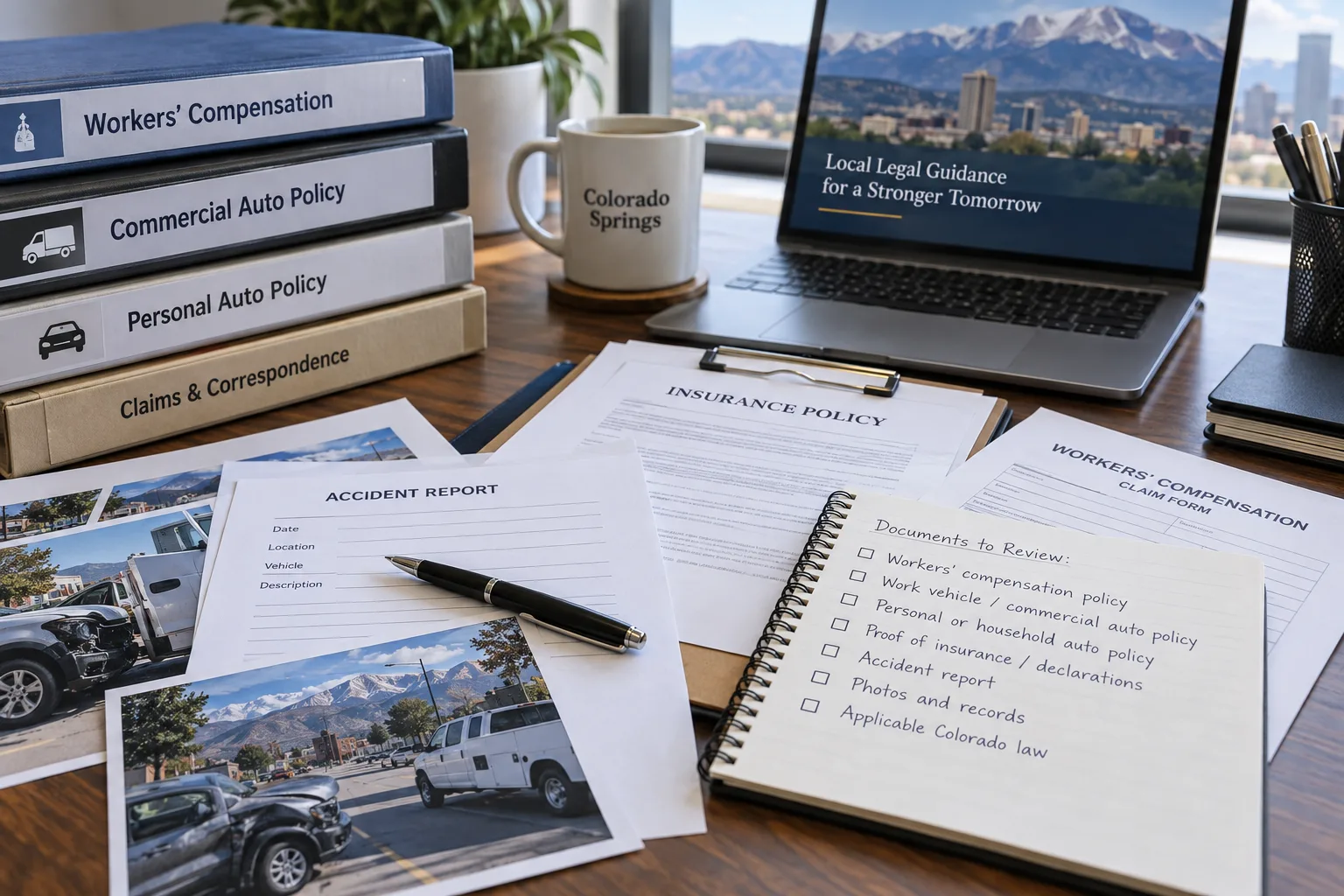
Gather three sets of documents for a lawyer: your employer’s workers’ compensation information, the auto policy covering the vehicle, and any personal or household auto policies that might be relevant. Treat these as candidates for review—not confirmed sources of payment.
Start with the work trip and workers’ compensation file
Bring the employer’s workers’ compensation insurer information, any claim number, and correspondence. Write a short account of why you were traveling, who directed the trip, whether you were driving or riding, and any personal stops or detours.
Ask the attorney to assess whether workers’ compensation applies to that trip, separately from the uninsured motorist coverage review.

Request the policy covering the vehicle on the crash date
Identify who owned or leased the vehicle. Gather the employer commercial auto policy, personal auto policy, or rental insurance documents associated with it. For the review, request more than the insurance card: include the declarations, full coverage forms, endorsements, and any uninsured/underinsured motorist coverage selection or rejection records.
Ask the lawyer to check:
- Whether uninsured motorist coverage was included.
- How the policy defines covered people and vehicles.
- Whether work use, exclusions, or notice requirements affect the analysis.
- Which provisions address bodily injury and which address vehicle damage.
Do not assume that an employer’s auto policy includes uninsured motorist benefits.
Include personal and household auto policies
List these policies even if you were in an employer-owned vehicle. Ask whether any warrants further review based on your insured status, vehicle ownership, work use, policy wording, and applicable Colorado law. Including a policy in the packet does not mean it covers the crash.
Add the correspondence that explains the coverage question
Alongside the insurance documents, bring:
- The employer incident report and your short trip account.
- Crash information and any written basis for believing the other driver was uninsured.
- Insurer decisions, emails, claim numbers, and requests showing response dates.
- Records of benefits or payments already made.
Ask: “Which policies should be evaluated, what notices need attention, and what coordination, reimbursement, or recovery-rights issues need review?” Do not plan on duplicate payment for the same loss. If documents are missing, list what is missing and who may have it; bring what you have to the initial discussion.

Browse the local lawyer guides and ask whether a Colorado Springs lawyer handles both work-injury and uninsured-motorist coverage issues or can coordinate those reviews. Bring available policies and insurer correspondence directly to the attorney. Do not submit confidential case details or sensitive medical information to InjuryNation.
This is general information, not legal advice. Read how InjuryNation approaches legal information.