Table of Contents
- Personal Injury Attorneys Serving Pennsylvania: Key Criteria at a Glance
- Experience With Pennsylvania Injury Claim Rules
- Contingency Fees and Case Cost Arrangements
- Communication and Case Handling Approach
- Red Flags to Watch For When Comparing Attorneys
- Questions to Ask During a Personal Injury Attorney Free Consultation
Personal Injury Attorneys Serving Pennsylvania: Key Criteria at a Glance
Anybody looking at personal injury lawyers serving Pennsylvania ought to focus on the state’s two year filing deadline since PA law under 42 Pa. C.S. §5524 usually grants persons who have been harmed two years from the day they were hurt in order to bring legal action against their attackers. The timeframe may shift due to the discovery rule or tolling provisions as far as minor children or disabled individuals go, but more about that later. personal injury attorneys serving Pennsylvania
We have put together this directory-based list of factors that will help you narrow down your pool of potential Pennsylvania personal injury attorneys to choose from, such as their experience dealing with state law, past results, ability to communicate, fees charged, etc. This website acts simply as a directory connecting people with other sources of local information and attorneys nearby, and using our website does not constitute the creation of any kind of lawyer-client relationship between visitors to the site and the attorney(s) mentioned herein, nor does it imply that we endorse or recommend the lawyer(s) identified on this website. In general, Pennsylvania has a statutory time limit for filing most personal injury cases of two years. There may be exceptions to this based upon various legal doctrines such as the doctrine of discovery.
Key Takeaways
- If you’re looking for a a personal injury lawyer near you in Pennsylvania, then there are certain claim rules that you will need to know.
- In Pennsylvania, personal injury attorneys commonly work on a contingency-fee basis, which means they take a certain percentage of what you get instead of charging you for time spent.
- Now look out for some red flags that go beyond communication gaps when you’re doing background checks on the lawyers who practice personal injury law in Pennsylvania.
- Before going to meet with personal injury attorneys serving Pennsylvania, be ready to ask them some specific, concise questions to assess whether they are a good fit for your case.
- In Pennsylvania, most personal injury attorneys work on a contingency-fee basis, so you typically pay no upfront costs and only a fee if you recover compensation.
Experience With Pennsylvania Injury Claim Rules
If you’re looking for a a personal injury lawyer near you in Pennsylvania, then there are certain claim rules that you will need to know. In PA, if your lawsuit is filed past the two years mandated under 42 Pa. C.S. § 5524 then they won’t be allowed. The discovery rule may delay when the clock starts, and tolling provisions can extend deadlines for minors or incapacitated people, but these exceptions are narrow.
What to Evaluate
Look for a lawyer who cites Pennsylvania’s two-year deadline under 42 Pa. C.S. § 5524 and the modified comparative negligence rule under 42 Pa. C.S. § 7102. These are the sections that will help you understand if there is still time left to file suit, as well as what compensation is allowed.
How to Evaluate
Ask personal injury attorneys about the discovery rule, tolling periods when children are involved, and Pennsylvania’s 51% fault limitation on damages in your cases. Look for common themes in attorneys’ explanations of relevant statutes.
What the Answer Means
Lawyers who have knowledge about injury claims can provide specific answers that are based on Pennsylvania law. If they don’t give specific replies then it may mean they have limited familiarity with state-specific procedures.
Attorney Advertising
Contingency Fees and Case Cost Arrangements
In Pennsylvania, personal injury attorneys commonly work on a contingency-fee basis, which means they take a certain percentage of what you get instead of charging you for time spent. They usually advance case expenses like filing fees, obtaining copies of medical records, and expert witness fees during the case. These costs are reimbursable only out of what you recover in settlement/award. Rule 238 of the Pennsylvania Rules of Civil Procedure can add delay damages to your award if the defendant delays proceedings, calculated at the prime rate plus one percent without compounding. A written motion for these damages must be filed within ten days after a verdict.
Make sure you ask for the lawyer’s written agreement on his fees and clarify what each portion of that charge means in terms of percentages and what phase of the proceedings it covers. Find out whether charges apply before or after he takes his cut.
If a lawyer is reluctant to provide terms in writing, that’s a signal to keep looking. We do not offer legal advice.
Communication and Case Handling Approach
Once the compensation rate and expenses have been agreed upon, the final element that needs to be examined before choosing lawyers in PA is what their daily methods of communicating about and working with your case are like.
What to Evaluate
Make sure you know who will handle the file personally, who will be your point of contact, when they can update you, and how long before they return calls.
How to Evaluate
Inquire at that meeting about who will serve as your main point of contact and how soon you can expect a response to calls or emails. Request that they also give you an overview of what happens during the first 30 days after signing.
- Who will be my primary contact throughout the case?
- How often will I receive updates?
- How quickly are calls and emails typically returned?
What the Answer Means
A solid response that names specific individuals and outlines clear early-action plans signals organized handling. When only general statements were made about the issue, it may mean the matter will be assigned to staff without immediate attorney intervention.
Red Flags to Watch For When Comparing Attorneys
Now look out for some red flags that go beyond communication gaps when you’re doing background checks on the lawyers who practice personal injury law in Pennsylvania. They must be able to clarify to their clients what Pennsylvania’s modified comparative negligence rule entails – particularly, the fact that if your negligence goes overboard the aggregate fault of all involved defendants, then your entitlement to compensation will be denied completely.
Other warning signals might be pressure to rush signing the documents, too brief explanation of fees, or failure to follow through on agreed-to actions. Another signal is whether the lawyer can explain how liability is apportioned in your jurisdiction, because the defendants will usually pay only for their own contribution, assuming there are no other exceptions. During your meeting, make direct inquiries regarding these issues and see if the attorney seems appropriate to handle your case.
Questions to Ask During a Personal Injury Attorney Free Consultation
Before going to meet with personal injury attorneys serving Pennsylvania, be ready to ask them some specific, concise questions to assess whether they are a good fit for your case. For example, one question you may want to ask involves when the two year limitation period as prescribed in Pennsylvania law kicks into play.
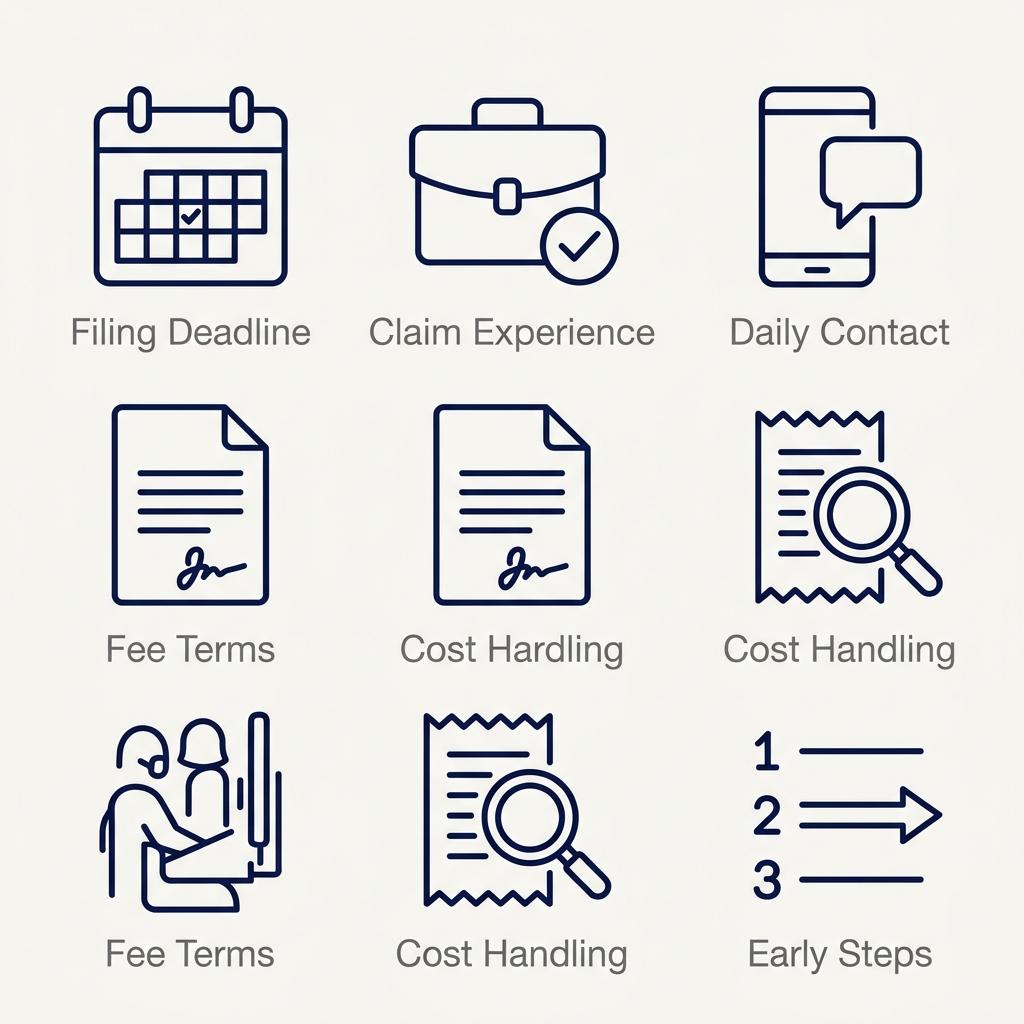
- Ask whether exceptions like the discovery rule or tolling for minors or incapacitated individuals could affect your deadline.
- Inquire about the attorney’s experience handling cases similar to yours.
- Clarify how they communicate about case progress and who will oversee your claim day to day.
- Discuss fee structure and how costs are handled during representation.
Talk to your lawyer about any deadlines or specifics during your appointment.
Cost Expectations for Pennsylvania Injury Claims
In Pennsylvania, most personal injury attorneys work on a contingency-fee basis, so you typically pay no upfront costs and only a fee if you recover compensation. Under Pennsylvania Rule of Civil Procedure 238, delay damages can add to your recovery if a defendant delays settlement, calculated at the prime rate plus one percent without compounding.
We connect you with local personal injury attorneys serving Pennsylvania who offer free consultations so you can explore your options without financial risk. Injury Nation is an attorney directory and does not provide legal advice; results vary by case and are not guaranteed.
Local Considerations in Philadelphia and Pittsburgh
Local personal injury lawyers know the local landscape matters when timing a claim. In Pennsylvania, personal injury claims must generally be filed within two years under 42 Pa. C.S. § 5524, a deadline that applies whether your injury occurred in Philadelphia or Pittsburgh.
Generally speaking, this two-year period will commence upon the occurrence of the injury, though the discovery rule may come into play if harm isn’t immediately apparent. There exist special tolling rules that can increase these time limits on minor children or persons who have been disabled and incapacitated. Tolling provisions can further extend these deadlines for minors or incapacitated individuals, giving claimants additional time to seek help from a personal injury lawyer in Philadelphia or a personal injury lawyer in Pittsburgh.
If you’re considering what to do next, a personal injury attorney in Philadelphia or a personal injury lawyer in Pittsburgh can verify your specific filing deadline and guide next steps.
Your Attorney Selection Checklist
The two year statute of limitations for Pennsylvania personal injury claims mean that you shouldn’t wait on getting legal help. When looking at different personal injury lawyers, keep this information in mind:
- Relevant experience with injury claims in the state
- Familiarity with local courts and procedures
- Clear fee structure, including contingency arrangements
- Responsiveness and communication style
- Availability for an initial consultation
Find a personal injury attorney in your area if you want nearby options.
Frequently Asked Questions About Pennsylvania Injury Claims
How long do I have to file a personal injury claim in Pennsylvania?
Generally speaking Pennsylvania law provides that a claim for personal injury must be filed within two years, see 42 Pa. C.S. §5524. In most cases the statute begins running upon the occurrence of the injury in question but there are circumstances when the discovery rule might delay its commencement. If an individual were a minor or incapacitated, he could have his time extended.
Can I still recover compensation if I was partially at fault for my accident in Pennsylvania?
In the case of Pennsylvania’s modified comparative negligence law (42 Pa. C.S.A § 7102), you can recover damages as long as your fault does not exceed the defendants’ collective fault. The amount you recover is reduced proportionally to your share of responsibility. If a defendant intended to cause harm, or if a defendant is at least 60% responsible, joint and several liability applies.
If you’re trying to decide what course of action to take, talking to a personal injury lawyer in Philadelphia or a personal injury lawyer in Pittsburgh can help clarify how these rules apply to your specific situation.
Frequently Asked Questions About Pennsylvania Personal Injury Claims
What types of compensation can I recover in a Pennsylvania personal injury case?
In a Pennsylvania personal injury case, you may recover compensation for medical expenses, lost wages, and non-economic damages such as pain and suffering. Compensation is reduced proportionally if you share fault under the state’s modified comparative negligence rule.
What is the statute of limitations for personal injury claims in Pennsylvania?
Pennsylvania law requires that personal injury claims be filed within two years of the injury under 42 Pa. C.S. § 5524. The discovery rule or tolling provisions may extend this deadline for minors or incapacitated individuals.
How does Pennsylvania’s modified comparative negligence rule affect my claim?
Pennsylvania’s modified comparative negligence rule allows recovery if your fault does not exceed the defendants’ combined fault. Your compensation is reduced by your percentage of responsibility. If you are more than 50% at fault, you cannot recover damages.
Do personal injury attorneys in Pennsylvania work on a contingency fee basis?
Yes, personal injury attorneys in Pennsylvania commonly work on a contingency fee basis. They typically take a percentage of the settlement or award, usually between 33% and 40%, and only collect if you recover compensation.
How do I choose the right personal injury attorney in Pennsylvania for my case?
Choose a personal injury attorney in Pennsylvania by evaluating their experience with state laws, communication style, fee structure, and responsiveness. Ask about their familiarity with local courts and procedures, and ensure they provide clear explanations of their approach and costs.
Find Personal Injury Lawyers Near You
Pennsylvania’s two-year filing deadline means acting quickly matters. Use Find Personal Injury Lawyers Near You and Local Guides to connect with attorneys in Pennsylvania communities. Contacting a lawyer through the site does not create an attorney–client relationship, and this information is for advertising/informational purposes only.