Table of Contents
Choosing Personal Injury Attorneys in Texas and Oklahoma
Choosing personal injury attorneys in Texas and Oklahoma requires verifying each lawyer’s licensure in both states and confirming they can handle cross-border claims, since recovery outcomes differ by state due to fault rules. Texas imposes a two-year filing deadline for personal injury suits, so confirming deadlines early is essential.
We help you find local counsel in major metros like a personal injury lawyer in Houston, a personal injury lawyer in Dallas, a personal injury lawyer in Austin, and a personal injury lawyer in Oklahoma City. Because laws and filing timeframes differ by state, use our lawyer search tool to find an attorney licensed where your accident occurred.
This means you have to check the bar licensure of the lawyers before hiring them. This will help avoid delays in pursuing recovery.
Key Takeaways
- It may matter that your lawyer be licensed to practice law in both states when your personal injury case takes place in both Texas and Oklahoma.
- State lines decide when you may file a lawsuit, in addition to the way that fault impacts the amount of money awarded.
- This type of law means that your lawyer won’t collect any consulting charges unless he can get compensation for you.
- Beware of red flags when looking for personal injury attorneys in Texas and Oklahoma, like being pressured into signing a contract immediately.
- When meeting with personal injury attorneys in Texas and Oklahoma, the first thing they’ll likely explain is how they get paid for their legal representation.
Multi-State Bar Licensure and Case Coverage
It may matter that your lawyer be licensed to practice law in both states when your personal injury case takes place in both Texas and Oklahoma. This is because if you file your lawsuit in Texas or Oklahoma, whichever is most favorable for your claim, the rules of the state determine how much (or little) you recover. Personal injury attorneys in Texas and Oklahoma
Fault doctrines differ quite drastically from state to state. One third of states have what’s called Pure Comparative Negligence, which allows the plaintiff to recover any amount up until they reach 99%. Other states use Modified Comparative Negligence in which there’s typically either a 50% or 51% bar preventing any recovery once the plaintiff passes that threshold. The remaining states of Alabama, Maryland, North Carolina, Virginia, and Washington DC adhere strictly to Contributory negligence, which can bar all recovery for even 1% fault. That being said, where you practice makes a significant impact on how much money you’ll get. Because of this, many attorneys will elect to hold dual state licenses.
Attorney Advertising
State-Specific Deadlines and Fault Rules
State lines decide when you may file a lawsuit, in addition to the way that fault impacts the amount of money awarded. That is why it is necessary to know about them if you’re filing claims across state borders.
| Factor | Texas | Oklahoma |
|---|---|---|
| Statute of limitations (personal injury) | Two years from the date of injury or death under Texas Civil Practice and Remedies Code Section 16.003 | State-specific deadline; confirm with a licensed attorney |
| Comparative negligence rule | Modified comparative negligence with a 50% bar rule | Modified comparative negligence with a 51% bar rule |
| Claims involving government entities | Special notice requirements apply; shorter deadlines may apply | Special notice requirements apply; shorter deadlines may apply |
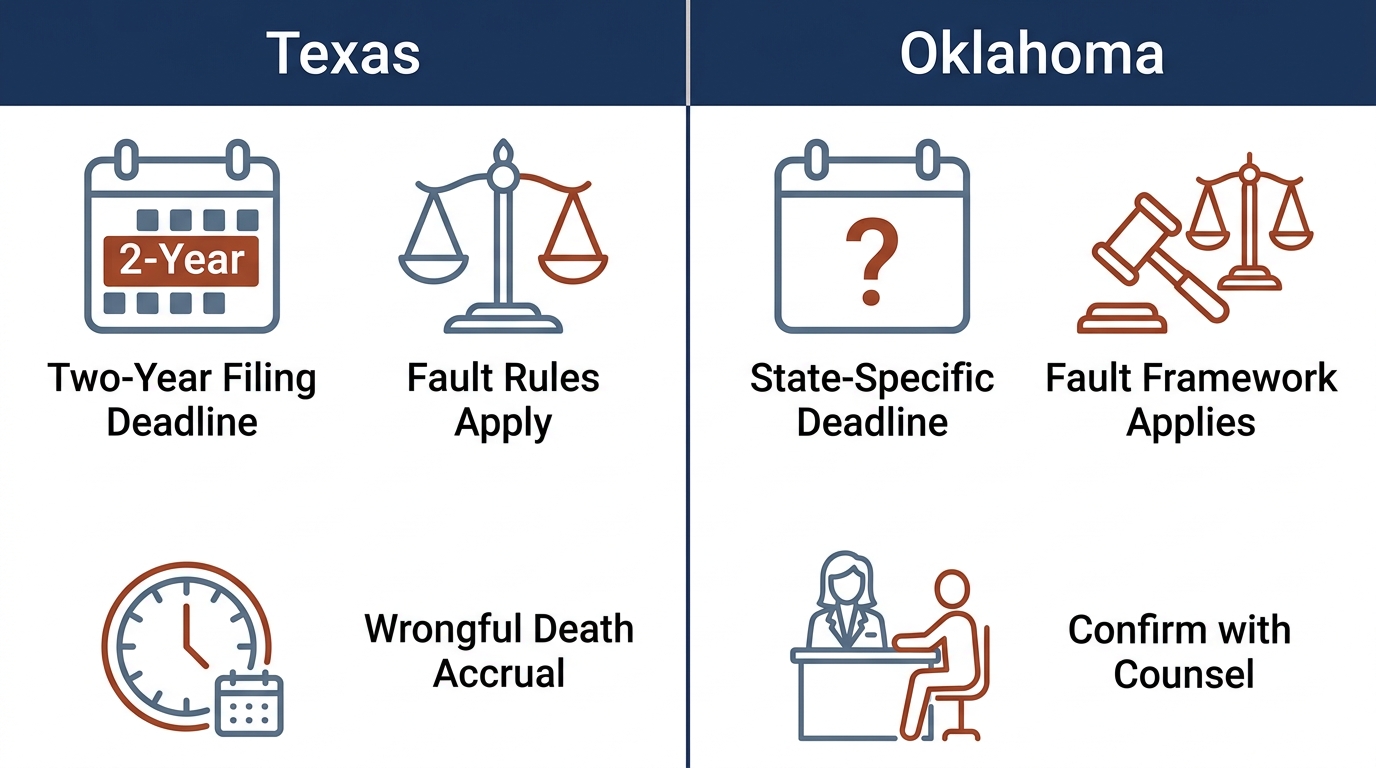
A personal injury lawyer in San Antonio can confirm the two-year Texas deadline, while a West Texas accident may raise cross-state questions best addressed by a personal injury lawyer in Midland who understands both jurisdictions. Missing a filing deadline or falling on the wrong side of a fault bar can end a claim entirely, which is why identifying the correct state’s rules early matters. We do not offer legal advice, but we help readers find local attorneys who can verify deadlines and fault frameworks specific to their case.
Contingency Fees and Free Consultations
This type of law means that your lawyer won’t collect any consulting charges unless he can get compensation for you. The law firm will charge you on a portion of what they recovered instead of paying them each hour. It is vital that you ask your lawyer during your consultation exactly how case costs—such as the expense involved in filling out documents or getting testimonies from expert witnesses—are handled, because they are separate and may be deducted before or after the fee percentage is applied.
A free consultation lets you meet with local injury lawyers to discuss your claim, review fault rules, and understand potential outcomes without financial obligation. Please bear in mind this visit is for information only; it does not create an attorney-client relationship, and no outcome can be guaranteed.
Depending upon what part of the country your case will be heard in, the amount of money that may be recovered is dictated by various states’ fault rules which determine whether pure comparative negligence, modified fault rules (50% or 51% bar), or the few states that retain contributory negligence principles will allow you to recover for the full value of the claim. Contingency fees can also vary greatly based on your location. Injury Nation enables you to find local personal injury attorneys in Texas and Oklahoma who can help guide you through this process without cost at an initial consultation.
Warning Signs When Evaluating Attorneys
Beware of red flags when looking for personal injury attorneys in Texas and Oklahoma, like being pressured into signing a contract immediately. Don’t be rushed; take time to compare options before committing. Failure to respond promptly to return calls or not answering basic questions about their services and costs may indicate they will also neglect you throughout your case. Always ask to have the lawyer’s license checked by their state bar association to verify their license and standing before making any final decisions. These criteria help you screen candidates effectively without relying on endorsements or guarantees.
What to Ask Before Hiring
Now that you know what kinds of signs to look out for when deciding which personal injury lawyers in Texas or Oklahoma would be most appropriate for you, your next move should be to write up some simple questions that you can ask your lawyer. The answers will allow you to compare all the personal injury attorneys in Texas and Oklahoma, helping you pick the one that matches your needs.
- Ask about their experience handling cases similar to yours and their success rate.
- Inquire whether they will personally manage your file or assign it to another attorney.
- Clarify how often they will communicate updates and their preferred method of contact.
- Confirm the expected timeline for your case and any potential challenges.
- Ask about the statute of limitations in your state to ensure your claim is filed on time.
Your candidates’ responses can tell you if they match up with what you’re looking for in the ideal candidate for that position.
What Attorney Fees Typically Look Like
When meeting with personal injury attorneys in Texas and Oklahoma, the first thing they’ll likely explain is how they get paid for their legal representation. They typically charge a percentage of any money won from the case, only if their client prevails in court. Some lawyers keep costs separate, however, so make sure that the agreement covers everything that needs paying for before signing up.
That isn’t the only payment plan out there. Some lawyers charge by the hour or a flat fee for straightforward matters. Ask about all available options during your free consultation.
City-Level Considerations Across Texas and Oklahoma
When a personal injury matter unfolds in Texas or Oklahoma, the practical details can shift depending on the city. Whether you’re working with a personal injury attorney in Houston, Dallas, or Austin, or you need a personal injury attorney in San Antonio, Midland, or Oklahoma City, the local courts, filing logistics, and Oklahoma City legal resources will differ, even though the state-level filing deadlines remain consistent. In Texas, the law sets a two-year window to file most personal injury lawsuits under Texas Civil Practice and Remedies Code Section 16.003, with wrongful death claims beginning on the date of the injured person’s death. Oklahoma’s limitations period is governed by state law as well, so confirm the current deadline before delaying action. We maintain city guides and local listings for these areas to help you find the right personal injury attorneys in Texas and Oklahoma and understand the city-specific steps ahead.
Your Pre-Hire Checklist
Before you hire personal injury attorneys in Texas and Oklahoma, check whether they have a valid license to practice law with the State Bar of Texas or the Oklahoma Bar Association by using the online public lookup system. Ask them how their fees will be worked out, especially whether there is any contingency fee involved. Remember though that case costs may still apply even when there is a contingency fee arrangement. They should also regularly practice in your local courts, as city-level differences can shape outcomes. A consultation does not create an attorney–client relationship, so choose carefully based on your own needs and research. So choose wisely who will be handling your personal injury case.
Frequently Asked Questions
How long do I have to file a personal injury lawsuit in Texas?
Section 16.003 of the Texas Civil Practice and Remedies code says that pretty much all lawsuits for injury or property damages have to be brought into court within two years from when the injury or damage actually happened.
When does the two-year filing clock start?
Generally speaking, the statute of limitations for bringing a lawsuit commences from the time when the harm or damage transpired. As far as wrongful death cases go, the statute of limitations commences on the date of the injured person’s death.
Do wrongful death claims follow the same deadline?
It sure does. The state of Texas says that a wrongful death claim works like any other personal injury action according to section 16.003, with the two-year period starting on the date of death.
Are there exceptions to the standard two-year rule?
Some claims, such as claims for injuries resulting from asbestos or silica exposures, shall be governed by the separate limitation rules set forth at section 16.0031.
How can I find personal injury attorneys in Texas and Oklahoma?
Consider reaching out to personal injury attorneys in Texas and Oklahoma who specialize in your type of claim.
Frequently Asked Questions
How does the statute of limitations for personal injury differ between Texas and Oklahoma?
Texas sets a two-year deadline under Section 16.003 of the Texas Civil Practice and Remedies Code to file personal injury lawsuits. Oklahoma’s deadline is set by state law and should be confirmed with a licensed attorney, as it differs from Texas.
Can a personal injury attorney represent me in both Texas and Oklahoma?
Yes, some attorneys hold licenses in both states and can handle cross-border claims. Verify each lawyer’s bar licensure in Texas and Oklahoma before hiring to ensure they can practice in both jurisdictions.
What is the difference between comparative negligence rules in Texas and Oklahoma?
Texas uses modified comparative negligence with a 50% bar rule, while Oklahoma uses a 51% bar rule. Both systems reduce recovery based on fault but bar claims entirely if the plaintiff exceeds the threshold.
How do I choose the best personal injury attorney for a cross-state accident?
Confirm the attorney is licensed in both Texas and Oklahoma and has experience handling cross-border claims. Check their success rate with similar cases and verify their standing through state bar associations.
Are there specific legal requirements for filing injury claims in both Texas and Oklahoma?
Texas requires claims to be filed within two years under Section 16.003, while Oklahoma’s deadline is set by state law. Both states may have special notice requirements for claims involving government entities, so confirm details with a licensed attorney.
Find Personal Injury Lawyers Near You
Browse personal injury attorneys in Texas and Oklahoma in our free directory and connect with local lawyers. Ask about free consultations and contingency-fee arrangements when you reach out.
This site is for advertising and informational purposes only and does not provide legal advice. No attorney–client relationship is formed by using it or contacting a listed lawyer.