

Understanding the Impact and Recovery of Burn Injuries
A burn compensation claim is a legal process that allows victims of burn injuries caused by another party’s negligence to recover financial damages for medical expenses, lost wages, pain and suffering, and other losses. If someone else’s carelessness caused your burn injury—whether at work, in a car accident, or through a defective product—you may be entitled to compensation.
Key things to know about burn compensation claims:
- Eligibility: You can claim if someone else’s negligence caused your burn injury.
- Compensation types: Includes medical costs, lost income, pain and suffering, and future care expenses.
- Time limits: Most jurisdictions have a 2-3 year deadline from the injury date.
- No upfront costs: Most burn injury lawyers work on a “No Win, No Fee” basis.
Burn injuries are profoundly life-altering, causing not only severe physical damage but also deep psychological harm that can rival the physical wounds.
Beyond the immediate physical pain, burn victims often face years of treatment, multiple surgeries, permanent scarring, psychological trauma, and significant financial strain. The recovery journey is long and complex—but you don’t have to steer it alone.
This guide will walk you through everything you need to know about making a burn compensation claim, from understanding your injury to working with a lawyer to secure the financial recovery you deserve.
Key terms for burn compensation claim:
Understanding Burn Injuries and Their Causes
A burn injury is a life-altering event, often caused by another party’s negligence. Understanding the types of burns and their common causes is the first step in determining if you have a valid burn compensation claim.
Classifying Burn Severity: From First to Fourth Degree
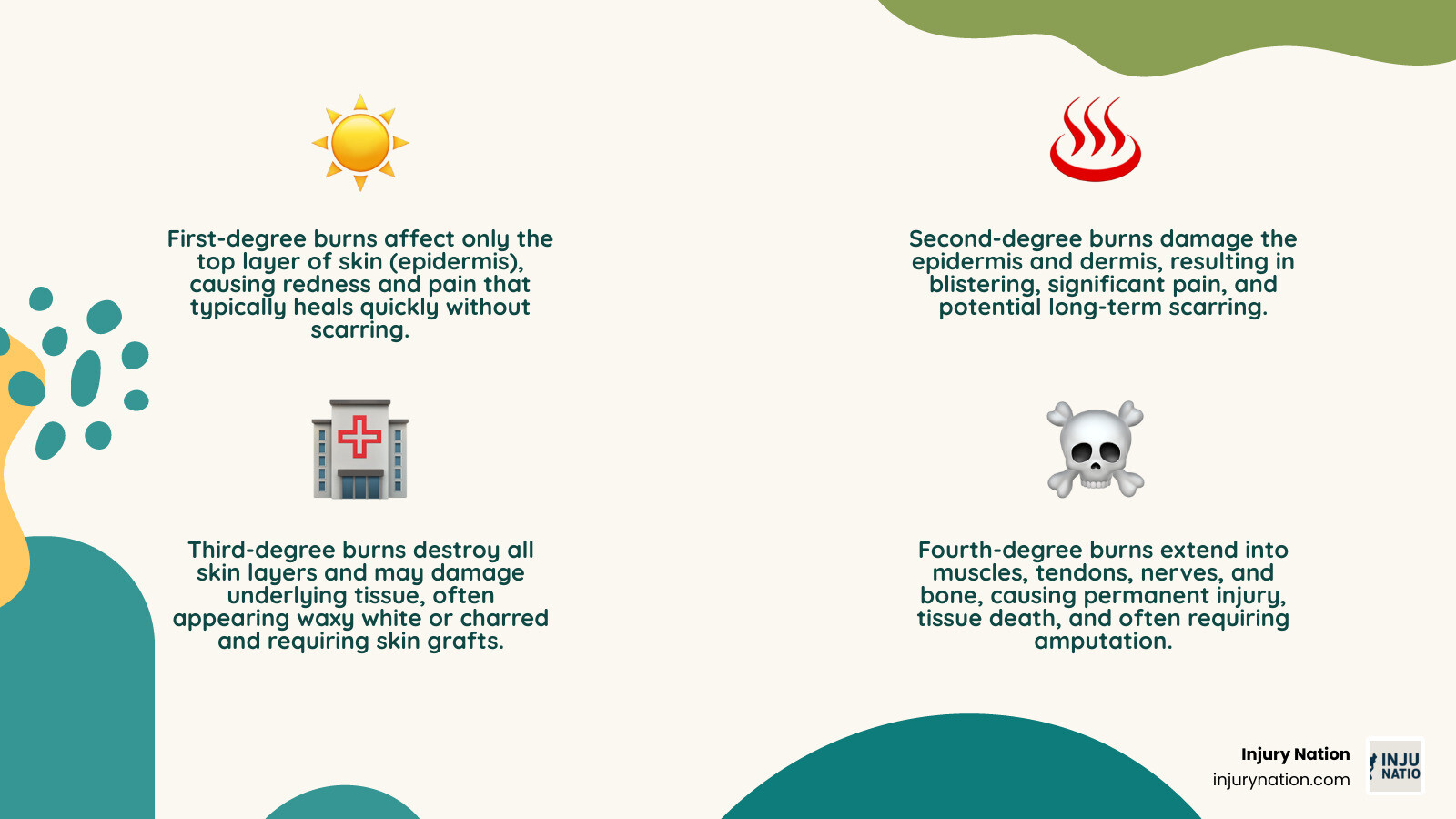
Burns are classified by their depth and the extent of damage to the skin and underlying tissues. This classification is crucial for medical treatment and for determining the potential value of a burn compensation claim. The human skin is a complex organ, comprising layers like the epidermis and dermis, which are affected differently by various burn severities. For a visual understanding of skin layers, you can refer to this scientific research on the layers of the skin.
Here’s a breakdown of burn degrees:
- First-Degree Burns: These are the mildest, affecting only the outermost layer of skin (the epidermis). Think of a bad sunburn – your skin will be red, painful, and might swell slightly, but there are no blisters. These usually heal within a week without scarring.
- Second-Degree Burns: Damaging both the epidermis and dermis, these burns are characterized by redness, blistering, and significant swelling. They are more painful than first-degree burns and can take several weeks to heal, potentially resulting in scarring. Severe cases may require skin grafting.
- Third-Degree Burns: These severe injuries destroy all skin layers and may damage underlying tissue. The skin may look white, leathery, or charred. Nerve endings are often destroyed, which can reduce pain. These burns always require medical intervention like skin grafts, leaving permanent scars and often requiring years of treatment and rehabilitation.
- Fourth-Degree Burns: The most severe and life-threatening, these burns extend through the skin into muscle, tendons, or bone. The skin is charred, and extensive nerve damage often eliminates pain. They cause permanent injury, frequently requiring amputation and resulting in significant functional loss.
The severity of your burn injury directly impacts the physical symptoms, long-term effects, and the complexity of your recovery, all of which are key factors in your burn compensation claim.
Common Causes Leading to Claims
Burn injuries can arise from a wide array of incidents, many of which involve someone else’s negligence or wrongdoing. If you’ve suffered a burn injury, identify the cause to determine who might be liable for your damages.
Common scenarios leading to burn compensation claims in places like Las Vegas, Nevada, include:
- Workplace Accidents: Workplace burns often happen when employers fail to provide safe conditions, proper training, or adequate Personal Protective Equipment (PPE). Incidents can involve exposed wires, chemical spills, or faulty machinery. Learn more from our Chemical Burn Injury Attorney Guide.
- Vehicle Crashes: Car accidents can lead to severe burn injuries from vehicle fires, explosions, or contact with superheated auto parts. Negligent motorists who cause collisions could be held responsible for resulting burn injuries. Even airbag inflation can cause burns in some cases.
- Defective Products: Defective consumer goods like appliances or electronics can cause fires or explosions. Manufacturers, distributors, and retailers can be held strictly liable if their product is unreasonably dangerous and causes injury.
- Scalding Liquids: Scalding from hot liquids is a common cause of burns, especially in restaurants. A business may be liable for serving dangerously hot drinks or for spills caused by employee negligence. Liquids over 52°C (125.6°F) can cause burns very quickly.
- Electrical Burns: These can occur from exposed wiring, faulty appliances, or power line accidents. Depending on the source, liability could fall on property owners, employers, or utility companies.
- Premises Liability: Property owners, including landlords and businesses like hotels or casinos in Las Vegas, must maintain safe premises. They can be liable for burns caused by negligence, such as failing to maintain fire alarms, sprinkler systems, or safely storing hazardous materials. This also applies to venues using pyrotechnics.
Understanding these common causes helps us pinpoint potential liable parties and build a strong foundation for your burn compensation claim.
Understanding Your Burn Compensation Claim: What Can You Recover?

A burn injury causes physical, emotional, and financial devastation. A burn compensation claim seeks to recover damages for all these losses, covering both immediate costs and long-term impacts, so you can focus on healing.
Types of Damages: General vs. Special
In a burn compensation claim, damages are typically categorized into two main types: general damages and special damages. This distinction helps us ensure all your losses are accounted for.
-
General Damages: These compensate you for the non-economic impacts of your injury, often referred to as “pain and suffering.” They are subjective but critically important for burn victims.
- Pain and Suffering: Covers the physical pain and agony from the injury, treatment, and recovery process.
- Emotional Distress and Psychological Trauma: Compensation for psychological trauma such as anxiety, depression, and PTSD, which are common after severe burns.
- Loss of Enjoyment of Life/Loss of Amenity: Accounts for the reduced ability to participate in hobbies, sports, or daily activities you once enjoyed.
- Disfigurement and Scarring: Covers the psychological and social impact of permanent scarring and disfigurement.
-
Special Damages: These are economic damages that cover your direct financial losses related to the burn injury. They are based on specific bills, receipts, and income statements.
- Medical Expenses: All past and future medical costs, including emergency care, hospitalization, surgeries, therapy, medication, and specialized care.
- Lost Wages: Compensation for past and future lost income, including wages and benefits, if the injury prevents you from working.
- Future Care Costs: Costs for long-term needs like rehabilitation, adaptive equipment, home health care, and psychological counseling.
- Property Damage: Costs to replace personal property damaged in the incident.
- Travel Expenses: Travel costs for medical appointments and legal consultations.
- Home Modifications: Costs for necessary home modifications for accessibility.
How Compensation is Calculated
Compensation in a burn compensation claim is calculated based on several factors. While no calculator can provide an exact figure, legal professionals assess these key elements:
- Injury Severity: The degree and extent of the burn are primary factors. More severe burns warrant higher compensation due to greater medical needs and long-term impact.
- Impact on Life: We assess how the burn injury has affected your daily life, work, relationships, and overall quality of life, including physical and emotional trauma.
- Medical Costs and Prognosis: The total cost of past and anticipated future medical treatments, including surgeries, rehabilitation, and long-term care, is a major component.
- Lost Earnings: Both current and future lost income are factored in, especially if the injury prevents you from returning to your previous profession or earning capacity.
- Case Precedents: While every case is unique, lawyers refer to similar past cases (case law) to help determine how courts might value damages for comparable injuries. This provides a benchmark for assessing pain and suffering.
- Psychological Evaluations: Expert psychological evaluations can help quantify the emotional and mental impact of the burns, which significantly contributes to general damages.
- Inflation Adjustments: For long-term losses or when comparing to older case precedents, adjustments for inflation are made to ensure the compensation reflects current economic values.
Your specific burn compensation claim will depend entirely on the unique facts of your situation, and an experienced lawyer can provide a more accurate valuation.
The Legal Path to Compensation
Navigating the aftermath of a burn injury is overwhelming. Understanding the legal process for a burn compensation claim can provide clarity and empower you. Each phase, from injury to settlement, requires careful, strategic action.
Immediate Steps to Take After a Burn Injury
The actions you take immediately following a burn injury are crucial, both for your health and the strength of any future burn compensation claim.
- Seek Immediate Medical Attention: Your health is the priority. For any burn more serious than a minor first-degree injury, seek emergency medical care. This creates an official medical record of your injury. Following all medical advice is crucial, as non-compliance can be used to reduce your compensation.
- Document the Scene: If safely possible, take photographs and videos of the accident scene, including what caused the burn and the immediate aftermath. Note the date, time, and location.
- Preserve Evidence: Keep any clothing, products, or other items involved in the incident. Do not clean or repair them. This evidence can be vital in proving negligence.
- Identify Witnesses: If anyone saw the incident, get their names and contact information. Their statements can corroborate your account.
- Report the Incident: Report the injury to the appropriate party (e.g., your employer, the property owner, or law enforcement) and obtain a copy of any official report.
- Avoid Admitting Fault: Do not apologize or admit any responsibility for the accident. Such statements can be used against you later.
The Legal Process for a Burn Compensation Claim
Once your immediate medical needs are addressed, the legal process for a burn compensation claim typically unfolds in several stages:
- Initial Consultation: This is your first meeting with a personal injury lawyer to discuss the details of your injury and assess the merits of your potential claim.
- Investigation and Evidence Gathering: Our team will conduct a thorough investigation, collecting all necessary evidence, including medical records, witness statements, and expert opinions.
- Letter of Claim: Once sufficient evidence is gathered, we will send a formal Letter of Claim to the at-fault party and their insurance company, outlining their responsibility and the compensation owed.
- Negotiation: Most personal injury claims are settled out of court. We will advocate on your behalf to negotiate a fair settlement with the insurance company.
- Mediation: If negotiations stall, mediation offers a confidential and often quicker, less expensive path to an agreement. An impartial mediator helps both sides find a resolution. You can learn more about this process here: negotiate a settlement using mediation.
- Litigation (Filing a Lawsuit): If a fair settlement cannot be reached, we may advise filing a lawsuit. This involves formal legal proceedings, findy (the exchange of information), and potentially a trial.
Evidence Needed for a Successful Burn Compensation Claim
A strong burn compensation claim is built on solid evidence. The more comprehensive the evidence, the better your chances of securing fair compensation.
- Medical Records and Bills: These are fundamental. They document the extent of your injuries, the treatment received, and the costs incurred.
- Photographs and Videos: Visual evidence of the burn injury over time, the accident scene, and any property damage is incredibly powerful.
- Witness Statements: Accounts from anyone who saw the incident can provide crucial support for your version of events.
- Accident Reports: Official reports from police, fire departments, or workplace safety agencies provide an objective account of the incident.
- Financial Records: Documentation of lost wages (pay stubs, tax returns) and receipts for all out-of-pocket expenses are essential for proving special damages.
- Expert Testimony: In complex cases, we may work with medical experts, vocational experts, or accident reconstructionists to provide testimony on the injury’s cause, long-term impact, and your future needs.
Understanding Time Limits (Statute of Limitations)
Time is of the essence in a burn compensation claim. Every state has strict deadlines, known as the “statute of limitations,” for filing personal injury lawsuits. In Nevada, you generally have two years from the date of the injury to file a personal injury claim. Missing this deadline typically forfeits your right to seek compensation.
There are some exceptions to this rule:
- Findy Rule: If the injury or its cause was not immediately apparent, the clock may start ticking from the date you finded it (or reasonably should have).
- Exceptions for Minors: If the injured party is under 18, the statute of limitations typically begins when they turn 18. A suitable adult can file a claim on their behalf before then.
- Mental Incapacity: If the injured person lacks the mental capacity to file a claim, the deadline may be paused until their capacity is restored.
Given these strict deadlines, it is vital to contact a personal injury lawyer as soon as possible after a burn injury to ensure all legal requirements are met and your claim is filed on time.
The Crucial Role of a Personal Injury Lawyer
A severe burn injury is both a medical and legal crisis. Navigating the complexities of a burn compensation claim while recovering from life-altering injuries is challenging, making a dedicated personal injury lawyer’s expertise invaluable.
Navigating Complex Legal and Insurance Problems
The legal landscape surrounding burn injuries is intricate, and insurance companies are notoriously difficult to deal with. Their primary goal is to minimize payouts. Our role is to be your advocate and guide through this daunting process.
- Proving Negligence: To win your burn compensation claim, we must demonstrate that the responsible party breached their duty of care, leading to your burn injuries. This involves establishing four key elements: duty, breach, causation, and damages.
- Dealing with Adjusters: Insurance adjusters are trained to minimize payouts. They may push for a low settlement or try to get you to make statements that harm your claim. We handle all communication with insurers to protect your rights.
- Managing Paperwork: Personal injury claims generate a mountain of paperwork. We manage all documentation, ensuring nothing is missed and everything is filed correctly and on time.
- Court Procedures: Should your case go to trial, we will handle all aspects of litigation, from filing the lawsuit to presenting your case in court.
- Protecting Your Rights: We ensure your rights are protected at every stage, from preventing you from being pressured into a quick, low settlement to ensuring you receive the medical care you need.
Maximizing Your Settlement
Our ultimate goal is to maximize your settlement, ensuring you receive comprehensive compensation for all your physical, emotional, and financial losses.
- Building a Strong Case: By carefully gathering evidence, consulting with experts, and constructing a compelling legal argument, we build the strongest possible case on your behalf.
- Calculating Full Damages: We calculate all current and future damages, including long-term medical care, lost earning capacity, and the profound impact on your quality of life, ensuring no potential compensation is overlooked.
- Skilled Negotiation: Our experienced negotiators aggressively pursue fair settlements with insurance companies. We know the tactics they use and how to counter them.
- Trial Representation: If the insurance company refuses to offer a fair settlement, we are prepared to take your case to court and represent your interests fiercely.
- Securing Interim Payments: In cases involving severe burn injuries, we can often negotiate for interim payments. These provide financial assistance for immediate treatment costs before the final settlement is reached.
Having a personal injury lawyer on your side allows you to focus on your recovery while we handle the legal complexities, striving to secure the compensation you truly deserve.
Frequently Asked Questions about Burn Injury Claims
We understand you likely have many questions about pursuing a burn compensation claim. Here, we address some of the most common inquiries to provide you with further clarity.
Can I still claim compensation if the burn was partially my fault?
Yes. Nevada uses a modified comparative negligence rule. This means that if you are found to be less than 51% responsible for the accident, you can still recover damages. However, your compensation will be reduced by your percentage of fault.
For example, if the court determines you were 25% at fault for an accident that resulted in $100,000 in damages, your compensation would be reduced by 25%, meaning you would receive $75,000. If your fault is determined to be 51% or greater, you would be barred from recovering any damages. We will assess the specifics of your case to determine how to best protect your rights.
How much does it cost to hire a burn injury lawyer?
Most personal injury lawyers handle burn compensation claims on a contingency fee basis, often referred to as “No Win, No Fee.” This means:
- No Upfront Fees: You don’t pay any legal fees out of your pocket to start your case.
- Payment Upon Success: We only get paid if we win your case, either through a settlement or a court award.
- Success Fee: Our fee is a pre-agreed percentage of the compensation you receive.
- Free Initial Consultation: Most firms offer a free initial consultation to discuss your case and explain the contingency fee arrangement.
This arrangement ensures that everyone, regardless of their financial situation, can access quality legal representation for their burn compensation claim.
How long will my burn compensation claim take to settle?
The time it takes to settle a burn compensation claim varies from months to years, depending on several factors:
- Case Complexity: Simple cases with clear liability may settle quickly. Complex cases involving severe burns, multiple liable parties, or disputes over fault can take much longer.
- Severity of Injury: For severe injuries requiring long-term treatment, it’s best to wait until your medical prognosis is clear. Understanding the full extent of your damages before settling is crucial, as you cannot claim more later.
- Defendant Cooperation: The willingness of the at-fault party and their insurance company to negotiate fairly plays a big role. If they deny liability or offer unreasonably low settlements, the process will be prolonged.
- Negotiation vs. Trial: Cases that settle through negotiation are generally resolved faster than those that proceed to trial, which can add months or even years to the process.
While we strive for efficient resolution, our priority is always to secure the maximum possible compensation for your burn injuries.
Conclusion
A burn injury is a devastating experience, inflicting not only profound physical pain but also deep emotional, psychological, and financial scars. Navigating the complex legal landscape of a burn compensation claim can seem like an impossible task, especially when you’re focused on healing and recovery.
You don’t have to face this journey alone. We are here to help you understand your rights, build a strong case, and fight for the justice and compensation you deserve. Our commitment is to allow you to focus on what matters most: your recovery and rebuilding your life.
If you or a loved one has suffered a burn injury due to someone else’s negligence, please reach out to us. Injury Nation is a leading directory of top-rated personal injury lawyers in America, dedicated to connecting victims with legal experts who can help them win a larger settlement. Let us help you find the right legal partner to guide you through every step of your burn compensation claim.