

When Trust Breaks Down: Understanding Your Legal Rights After a Daycare Injury
Daycare injury lawyer representation is critical when your child suffers harm due to negligence or abuse at a childcare facility. When you drop your child off at daycare, you trust that they will be cared for safely and returned to you unharmed. That trust is fundamental to the parent-daycare relationship. But when that trust is broken—when your child comes home with unexplained injuries, exhibits sudden behavioral changes, or tells you something troubling happened—you need to know what to do and where to turn.
If you’re searching for a daycare injury lawyer, here’s what you need to know:
- You have legal rights to pursue compensation when daycare negligence causes your child’s injuries
- Liability waivers you signed are often unenforceable if negligence or abuse occurred
- Most daycare injury lawyers work on contingency, meaning no fees unless you win
- You should act quickly to preserve evidence and meet filing deadlines
- Document everything immediately—injuries, medical visits, and incident reports
Every parent’s worst nightmare is receiving that emergency call from the daycare center. Your child has been hurt. Whether it’s a serious injury from inadequate supervision, a preventable accident due to unsafe conditions, or signs of physical or emotional abuse, the emotional toll is immense. You’re likely feeling overwhelmed, angry, and unsure of your next steps.
Daycare facilities have a legal duty of care to protect the children in their supervision. This includes maintaining safe facilities, hiring qualified staff, providing adequate supervision, and following state regulations. When they fail in this duty—whether through lack of supervision, inadequate staffing, unsafe conditions, or improper employee screening—they can be held legally accountable.
According to research, lack of supervision is cited as the single greatest cause of daycare injuries. In New York alone, licensed daycare centers must adhere to specific caregiver-to-child ratios, such as 1:4 for infants and 1:7 for three-year-olds. While we’ll focus on Nevada, the principle holds true: when facilities cut corners on staffing or training, children pay the price.
This guide will walk you through everything you need to know about daycare injury claims: recognizing negligence, understanding your legal options, gathering evidence, and finding the right attorney to fight for your child’s rights and future.
Daycare injury lawyer terms you need:
Understanding Daycare Negligence and Injury

When we entrust our children to a daycare, we expect them to be safe. This expectation is rooted in a legal concept known as the “duty of care.” Daycare facilities and their staff have a legal obligation to provide a safe environment and adequate supervision to prevent foreseeable harm to children in their care. When a daycare fails in this duty, and that failure directly causes a child to be injured, it constitutes negligence.
To pursue a legal claim for daycare negligence, we generally need to demonstrate four key elements:
- Duty of Care: The daycare had a legal obligation to keep your child safe. This is almost always true for licensed childcare providers.
- Breach of Duty: The daycare failed to meet that obligation. This could involve inadequate supervision, unsafe premises, or other failures.
- Causation: The daycare’s breach of duty directly caused your child’s injuries. There must be a clear link between their failure and the harm.
- Verifiable Damages: Your child suffered actual harm that can be quantified, such as medical expenses, pain, and suffering.
A skilled daycare injury lawyer will work to prove these elements, establishing the daycare’s liability for your child’s suffering. You can learn more about how these elements work in personal injury cases in general on resources like the tort law overview page.
What Constitutes Daycare Negligence?
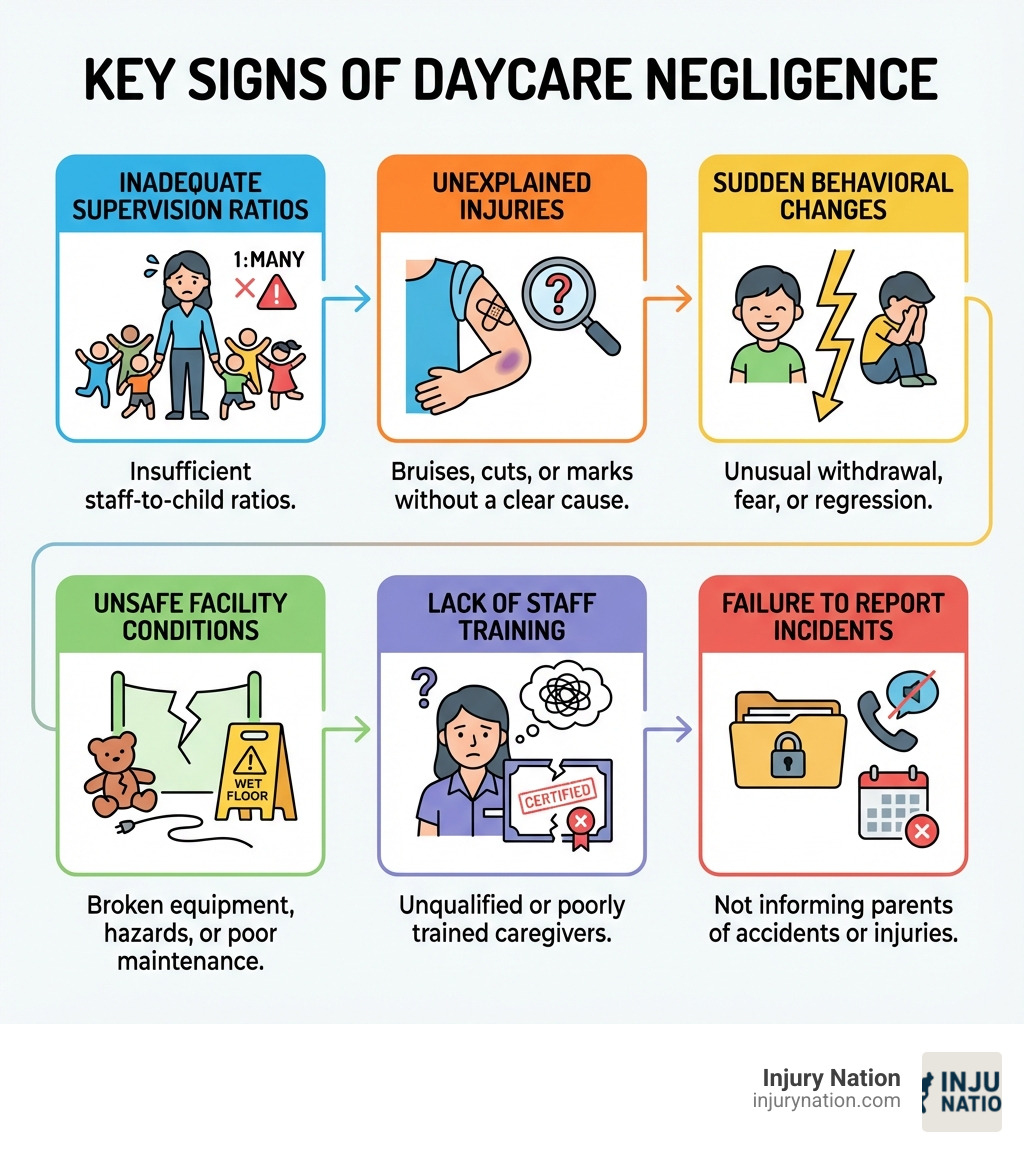
Daycare negligence can manifest in various ways, often stemming from systemic failures within the facility. Some of the most common forms include:
- Inadequate Supervision: This is frequently cited as the single greatest cause of daycare injuries. When staff are distracted, overwhelmed, or simply not paying attention, children can wander into dangerous situations, get into fights, or access hazardous items. Adequate supervision is a complex concept that depends on factors like the child’s age, the activity, and the environment.
- Unsafe Facilities: Daycares must maintain a safe physical environment. This includes regularly checking and repairing playground equipment, ensuring proper safety surfacing, securing windows, doors, and gates, and keeping hazardous materials (like cleaning supplies or medications) out of reach. Injuries can occur due to broken equipment, unsanitary conditions, inadequate lighting, or unsecured access points.
- Improper Staff Screening: State regulations, including those in Nevada, require comprehensive background checks for all daycare employees and volunteers. Failure to conduct thorough screenings can lead to hiring individuals with histories of abuse, neglect, or criminal behavior, putting children at severe risk.
- Inadequate Training: Even well-meaning staff can be negligent if they lack proper training in child development, safety protocols, first aid, and emergency procedures. Staff members who cannot respond appropriately during medical emergencies or safety threats increase children’s risk of harm.
- Staff-to-Child Ratio Violations: Every state, including Nevada, sets specific maximum ratios of children per caregiver based on age groups. When daycares operate below these required ratios, supervision challenges increase, and emergency response becomes more difficult, creating dangerous gaps in child monitoring.
- Regulatory Compliance Failures: Every state maintains licensing systems for childcare facilities, with agencies conducting regular inspections and maintaining public records of violations. Daycaes that violate these specific legal requirements, such as staffing ratios or health and safety standards, can be deemed negligent “per se,” meaning their violation automatically establishes negligence.
Common Daycare Injuries and Their Long-Term Impact
Children in daycare settings are unfortunately susceptible to a range of injuries, some minor, but many with serious, long-term consequences. Common preventable daycare injuries include:
- Playground Accidents: These are among the most frequent sources of daycare injuries. The Consumer Product Safety Commission reports that playground-related injuries send over 200,000 children to emergency rooms annually. These can include broken bones, sprains, head injuries, or even strangulation from clothing caught on equipment. For more data, you can review the playground safety information.
- Slips and Falls: Wet floors, cluttered pathways, or unsecured rugs can lead to falls resulting in fractures, concussions, or other head injuries.
- Choking and Suffocation: Young children are prone to putting objects in their mouths. Inadequate supervision can lead to choking on small toys, food, or other accessible items.
- Burns: Access to hot liquids, stoves, or unprotected electrical outlets can cause severe burn injuries.
- Allergic Reactions/Poisoning: Failure to properly manage dietary restrictions or leaving harmful substances (like cleaning products or medications) within reach can lead to severe allergic reactions or poisoning.
- Physical and Emotional Abuse: While distinct from negligence, abuse by staff or other children is a horrific possibility. Signs of abuse require immediate action and reporting to authorities.
The impact of these injuries can extend far beyond immediate physical pain. Daycare negligence can result in serious harm, including:
- Long-term Physical Effects: Chronic pain, permanent disabilities, loss of mobility, or ongoing medical needs requiring extensive rehabilitation and therapy.
- Emotional Trauma: Children may experience anxiety disorders, PTSD, nightmares, fear, depression, or difficulty in social situations.
- Developmental Setbacks: Injuries, especially head trauma or severe emotional distress, can lead to learning disorders, cognitive disabilities, and developmental delays, impacting a child’s educational opportunities and future earning capacity.
Understanding these potential long-term impacts is crucial when considering child injury claims. No child should have their future compromised due to someone else’s carelessness. For more information on protecting your child’s rights, visit our Child Injury Lawyer page.
[TABLE] comparing Daycare Negligence vs. Daycare Abuse
| Feature | Daycare Negligence | Daycare Abuse |
|---|---|---|
| Intent | Unintentional failure to meet a duty of care (e.g., poor supervision, unsafe conditions). | Intentional harmful act (e.g., physical assault, sexual abuse, emotional torment). |
| Legal Claim | Primarily a civil personal injury lawsuit to seek compensation. | Can involve both criminal charges (by the state) and a civil lawsuit for damages. |
| Reporting | Report to daycare administration, licensing agencies, and potentially law enforcement. | Must be reported immediately to law enforcement, child protective services, and licensing agencies. |
| Burden of Proof | Plaintiff must prove negligence by a “preponderance of the evidence” (more likely than not). | Criminal cases require proof “beyond a reasonable doubt.” Civil cases require a “preponderance of the evidence.” |
| Outcome | Financial compensation for damages. | Criminal: fines, imprisonment. Civil: financial compensation for damages. |
Immediate Steps to Take After a Daycare Injury

The moments immediately following the findy of a child’s injury at daycare can be overwhelming. However, taking the right steps quickly is critical for your child’s well-being and any potential legal claim. We recommend the following:
- Prioritize Your Child’s Safety and Seek Medical Attention: Your child’s health is paramount. If the injury appears serious, call 911 or take them to the nearest emergency room. Even for seemingly minor injuries, a medical professional should evaluate your child. It’s crucial to inform medical providers that the injury occurred at daycare and provide all available details. This creates an official medical record of the injury and its potential cause.
- Document Everything: As soon as possible, begin documenting everything related to the incident. This includes the injury itself, your child’s behavior, and all communications with the daycare.
- Report the Incident: File an official incident report with the daycare administration. Request a copy of their report. If you suspect abuse or serious negligence, contact the relevant authorities immediately. In Nevada, this would include local law enforcement and child protective services. You can also contact the state’s childcare licensing agencies to report the incident and request copies of recent inspection reports.
- Preserve Evidence: Do not wash any clothing your child was wearing if it is soiled or damaged. Place it in a sealed plastic bag and label it with the date and circumstances. If relevant, preserve any toys or objects involved in the incident.
Gathering Crucial Evidence for Your Case
Building a strong case for daycare negligence requires thorough evidence gathering. Your daycare injury lawyer will play a significant role in this, but the more information you can provide, the better.
- Medical Records: These are vital. They document the extent of your child’s injuries, the treatment received, and any prognoses for recovery. Ensure you keep all medical bills, receipts, and records of appointments.
- Official Incident Report: Obtain a copy of the daycare’s incident report. Be aware that these reports may be incomplete or biased.
- Photographs and Videos: Take clear, dated photos and videos of your child’s injuries as soon as they are finded and throughout the healing process. Also, photograph the location where the injury occurred, pointing out any unsafe conditions (e.g., broken equipment, hazards).
- Witness Contact Information: If you spoke with other parents, staff members, or anyone else who might have witnessed the incident or observed unsafe conditions, collect their contact information.
- Damaged Clothing or Objects: As mentioned, preserve any physical evidence related to the injury.
- Your Personal Notes: Keep a detailed journal of events, including dates, times, who you spoke with, what was said, and any changes in your child’s behavior or emotional state. Document your child’s statements about how the injury occurred while the details remain fresh.
The victim in these cases (your child) is often too young to fully communicate what happened, making a lawyer’s “detective” role crucial. Daycare facilities may also go into “defense mode” immediately, contacting their insurance and lawyers to build their own defenses. Acting quickly to gather evidence is paramount.
The Legal Process: How a Daycare Injury Lawyer Can Help
When a child is injured due to daycare negligence, navigating the legal system can seem daunting. This is where an experienced daycare injury lawyer becomes an invaluable ally. We can help you understand your legal options, hold the negligent parties accountable, and pursue the compensation your child deserves.
The legal process generally involves:
- Filing a Claim: Your lawyer will file a personal injury claim on your child’s behalf against the negligent daycare facility and potentially other responsible parties.
- Proving Liability: Through careful investigation and evidence analysis, your attorney will work to establish the daycare’s duty of care, their breach of that duty, and that their negligence directly caused your child’s injuries.
- Negotiating with Insurance Companies: Daycares typically carry insurance, and their insurers will often try to minimize payouts. Your lawyer will handle all communications and negotiations, advocating for a fair settlement that covers all of your child’s damages.
- Litigation Process: If a fair settlement cannot be reached, your lawyer will be prepared to take the case to court, presenting evidence and arguing your child’s case before a judge and jury.
- Protecting Your Child’s Rights: Throughout the entire process, your attorney’s primary goal is to protect your child’s legal rights and ensure their long-term well-being is secured.
What is the Role of a Daycare Injury Lawyer?
A dedicated daycare injury lawyer performs a wide range of critical tasks to build a strong case and secure justice for your child:
- Case Investigation: We thoroughly investigate the circumstances of the injury, interviewing witnesses, reviewing daycare policies, and examining incident reports.
- Evidence Analysis: We carefully analyze all gathered evidence, including medical records, photographs, and regulatory compliance documents, to build a compelling narrative of negligence.
- Expert Consultation: We may consult with medical experts, child development specialists, and safety engineers to understand the full extent of your child’s injuries and the long-term impact on their development.
- Calculating Damages: We assess all current and future costs associated with your child’s injury, including medical bills, therapy, and potential long-term care, as well as pain and suffering.
- Legal Representation: We represent your child’s interests in all legal proceedings, from initial negotiations to trial, if necessary.
- Communication with Opposing Counsel: We handle all communications with the daycare’s legal team and insurance adjusters, shielding you from added stress.
In Nevada, parents have the right to bring a lawsuit on behalf of their child against the daycare or other liable parties. This is often done under the “next friend” rule, which allows a parent or legal guardian to represent their minor child in court when their interests align. Your lawyer will guide you through this process. For more information, you can explore our directory of top-rated personal injury lawyers to find a qualified Daycare Injury Lawyer.
What Compensation Can You Recover?
No amount of money can truly compensate for a child’s pain and suffering, but securing financial compensation can significantly ease the burden on your family and provide for your child’s future needs. The types of compensation we can pursue on your behalf include:
- Current Medical Bills: Costs for emergency room visits, doctor appointments, medications, and initial treatments.
- Future Medical Care: Expenses for ongoing therapy, rehabilitation, specialist consultations, and potential surgeries.
- Rehabilitation and Therapy: Costs for physical therapy, occupational therapy, psychological counseling, or speech therapy.
- Pain and Suffering: Compensation for the physical pain and emotional distress your child endures.
- Emotional Distress: Damages for anxiety, fear, PTSD, and other psychological impacts resulting from the injury.
- Parent’s Lost Wages: If you had to take time off work to care for your injured child, you might be able to recover these lost earnings.
- Special Educational Needs: If the injury leads to learning disabilities or developmental delays, compensation for specialized education or accommodations.
- Loss of Normal Childhood: Damages for the child missing out on typical childhood experiences or activities due to their injuries.
Compensation awarded to a child is often placed into a court-appointed trust until the child turns 18, ensuring the funds are used for their benefit.
Can a Liability Waiver Prevent a Lawsuit?
Many parents sign liability waivers or release forms when enrolling their child in daycare. These documents often state that parents agree not to sue the daycare for injuries. However, it’s crucial to understand that liability waivers signed by parents do not protect negligent daycare centers if a child is injured due to daycare negligence or abuse.
Courts in Nevada and other states often rule that it is against “public policy” for a parent to sign away a child’s right to sue for injuries before they occur. While a waiver might acknowledge some inherent dangers of certain activities, it generally cannot absolve a daycare of responsibility if the injury occurred due to their negligence, gross negligence, or intentional misconduct.
If a daycare’s actions fall below the standard of care expected of a reasonably prudent childcare provider, or if they violate state licensing regulations, a waiver is unlikely to protect them. Do not let a signed waiver discourage you from seeking legal advice if your child has been injured.
How to Find and Choose the Right Daycare Injury Lawyer
Finding the right legal advocate for your child is a critical decision. Here’s what to look for when choosing a daycare injury lawyer:
- Experience with Child Injury Cases: Look for a lawyer with a proven track record specifically in child injury and daycare negligence cases. These cases have unique complexities, as the primary witness (the child) may be too young to communicate effectively.
- Track Record of Success: Inquire about their past settlements and verdicts in similar cases. A firm with a strong record of securing significant compensation demonstrates their capability.
- Client Testimonials: Read reviews and testimonials from previous clients. These can offer insight into the lawyer’s professionalism, compassion, and effectiveness. For example, Ashley Manalo from Las Vegas shared, “Everybody was really good about keeping me updated. The whole staff was very friendly, and provided great customer service. I’m happy with this Office.” (Ashley Manalo testimonial).
- Contingency Fee Structure: Most reputable daycare injury lawyers work on a contingency fee basis. This means you pay no upfront legal fees, and the lawyer only gets paid if they win your case. This allows families to pursue justice without financial risk.
- Free Initial Consultation: A good law firm will offer a free, no-obligation consultation to discuss your case, assess its merits, and explain your legal options. This is an opportunity for you to evaluate the lawyer and ask questions.
Frequently Asked Questions About Daycare Injury Claims
We understand you likely have many questions during this challenging time. Here are answers to some of the most common inquiries we receive:
How long do I have to file a daycare injury lawsuit?
This is a critical question, as legal time limits, known as the statute of limitations, vary by state. In Nevada, the statute of limitations for most personal injury cases is two years from the date of the injury.
However, cases involving minors have a crucial distinction: a child also has the opportunity to sue for damages once they reach adulthood. This means the clock for a child’s personal injury claim may be “tolled” (paused) until they turn 18. Even with this extension, it is always best to act promptly. Evidence can disappear, and witness memories fade over time. Consulting with a daycare injury lawyer immediately after an injury ensures that crucial evidence is preserved and all filing deadlines are met.
How much does it cost to hire an attorney for a daycare injury?
For most personal injury cases, including those involving daycare injuries, attorneys work on a contingency fee basis. This means:
- No Upfront Fees: You do not pay any legal fees out of pocket.
- Paid Only If You Win: The attorney’s fees are a percentage of the compensation they secure for you, either through a settlement or a court award.
- Case Expenses: Your lawyer may advance the costs of litigation (expert witness fees, court filing fees, etc.), and these expenses are typically reimbursed from the settlement or award.
This “no win, no fee” guarantee makes quality legal representation accessible to everyone, regardless of their financial situation.
Can I sue if my child was hurt by another child at daycare?
Yes, you absolutely can. While the injury was caused by another child, the legal claim would likely be against the daycare facility for negligent supervision. Daycares have a duty to adequately supervise all children in their care to prevent foreseeable harm, including harm caused by other children.
If a daycare’s staff failed to intervene in a fight, allowed an aggressive child to harm others due to lack of oversight, or maintained inadequate staff-to-child ratios that led to insufficient supervision, they could be held liable. Your daycare injury lawyer would investigate whether the daycare’s negligence contributed to the incident.
Conclusion: Protecting Your Child’s Future and Finding Representation
As parents, our children are our most precious possessions. When a daycare facility, entrusted with their care, fails in its duty and causes harm, the emotional and financial toll can be devastating. However, we want you to know that you have rights, and there are legal avenues to seek justice and compensation for your child.
Understanding what constitutes daycare negligence, knowing the immediate steps to take after an injury, and recognizing the critical role of a daycare injury lawyer are essential. We believe in holding negligent parties accountable, not only to secure your child’s future but also to prevent similar incidents from happening to other families.
At Injury Nation, we are dedicated to helping victims find the legal representation they need. If your child has been injured due to daycare negligence in Las Vegas or anywhere in Nevada, we can connect you with a top-rated daycare injury lawyer who understands these complex cases.
Don’t let the fear of legal complexities or financial burdens prevent you from seeking justice. Many lawyers work on a contingency basis, meaning you pay nothing unless they win your case. Take the first step today towards protecting your child’s well-being and securing their future.
Find a top-rated daycare injury lawyer near you by visiting our directory: https://injurynation.com/find-a-lawyer/