

When Property Dangers Lead to Serious Injuries
Finding the right premises liability attorney can be the difference between a fair settlement and years of financial struggle after an injury on someone else’s property. Whether you slipped at a grocery store or were hurt by unsafe conditions at a business, you need an expert in premises liability law.
What to Look for in a Premises Liability Attorney:
- Experience with your specific case type (slip and fall, negligent security, etc.)
- A track record of successful settlements and verdicts
- Knowledge of state-specific laws and deadlines
- Resources to investigate and gather evidence
- Contingency fee basis (no upfront fees)
- Clear communication about your case
Property owners have a legal duty to keep their property safe for visitors. When they fail, they can be held liable for medical bills, lost wages, and pain and suffering. However, proving their negligence requires specific evidence and legal expertise.
Slip and fall accidents alone lead to about 1 million emergency room visits annually in the U.S. The success of your claim often depends on proving the property owner knew about the hazard and failed to address it.
Time is critical in these cases. Evidence disappears, witnesses forget, and states have strict deadlines for filing claims, typically 2 to 3 years from the date of injury.
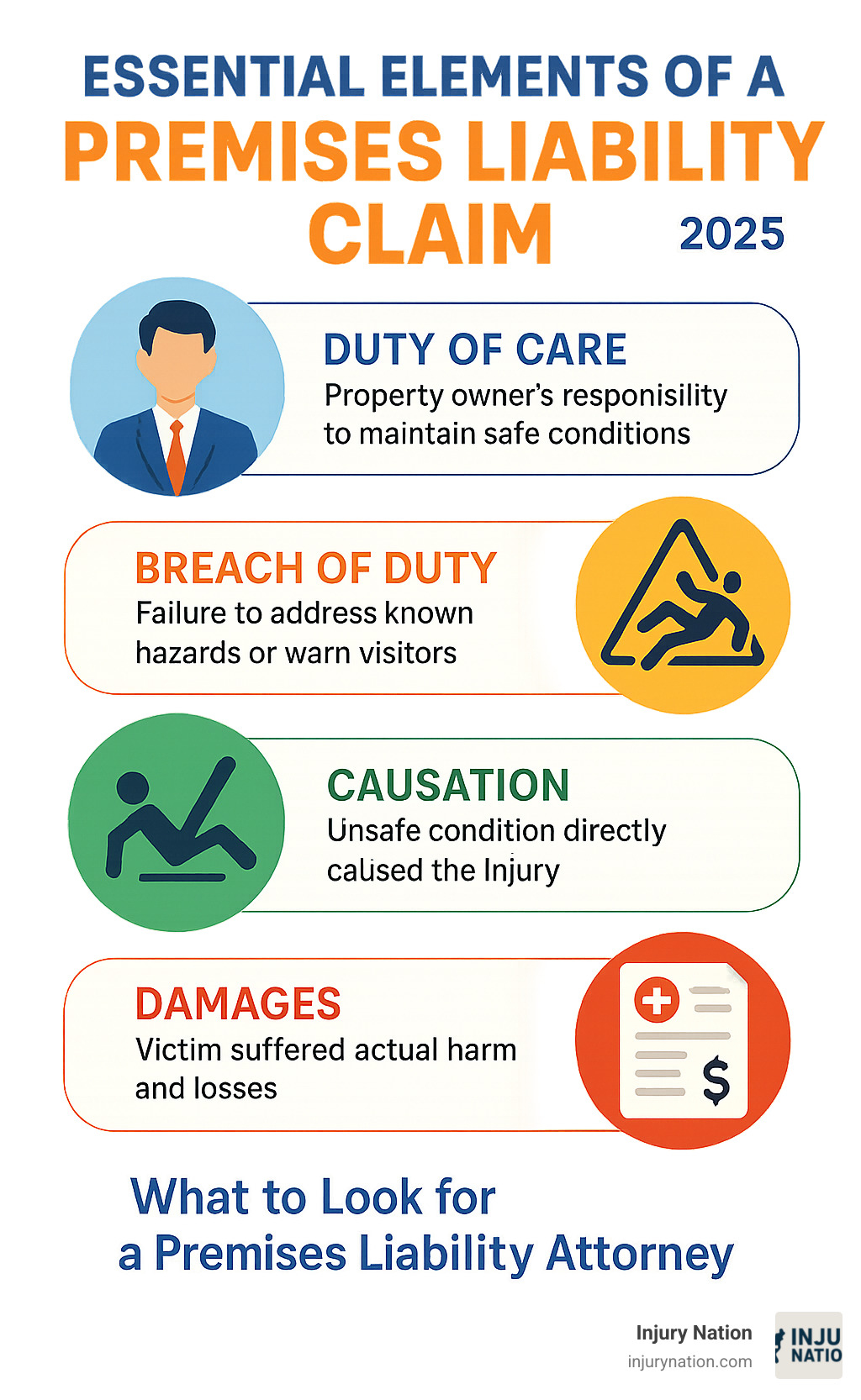
Understanding the Foundations of a Premises Liability Claim
Imagine slipping on a puddle in a grocery store or tripping on a broken step in a poorly lit stairway. These common scenarios are what premises liability law is designed to address.

At its core, premises liability is about property owner responsibility. Owners or controllers of property have a “duty of care” to keep their property reasonably safe and warn visitors of non-obvious dangers. This duty varies depending on the visitor’s status. When owners fail in this duty and someone gets hurt, a premises liability attorney is essential to prove that an unsafe condition existed and the owner should have addressed it.
Visitor Status and the Duty of Care
Your legal status on a property determines the level of protection you are owed.
-
Invitees: These are individuals on the property for a business purpose, like customers in a store. They are owed the highest duty of care. Owners must actively inspect for, repair, and warn about dangers.
-
Licensees: These are social guests, like friends visiting a home. Owners must warn licensees of known dangers but do not have a duty to inspect for unknown hazards.
-
Trespassers: These individuals enter without permission and are owed the lowest duty of care—to avoid intentional harm. However, special considerations apply to children who might be attracted to a dangerous condition (like a swimming pool).
Landlord vs. tenant liability adds another layer. Landlords are typically responsible for common areas (hallways, parking lots), while tenants handle their own units. However, a landlord may be liable for a known hazard within a tenant’s space if they failed to address it.
The most common case types handled by premises liability attorneys include:
- Slip and fall accidents
- Negligent security cases (assaults, robberies)
- Dog bites
- Swimming pool accidents
- Falling objects
Each case is unique, but all hinge on whether the property owner failed in their duty to keep visitors reasonably safe. A skilled attorney knows how to investigate these incidents and build a compelling case.
Building Your Case: Proving Negligence and Gathering Evidence
Simply being injured on someone’s property isn’t enough to win a case. A premises liability attorney must prove the owner was negligent—that they failed in their duty to keep you safe, and this failure caused your injuries.
A key element is proving the owner had “notice” of the hazard.
- Actual notice means the owner or an employee knew about the specific danger (e.g., a customer reported a spill).
- Constructive notice means the danger existed long enough that a reasonable owner should have finded it (e.g., spilled milk on the floor for an hour).
Property owners will use defenses, claiming the hazard was “open and obvious,” that you were distracted, or that they didn’t have time to fix it. An experienced attorney knows how to counter these arguments.
How a premises liability attorney proves negligence
Building a winning case requires gathering solid proof to tell a compelling story.
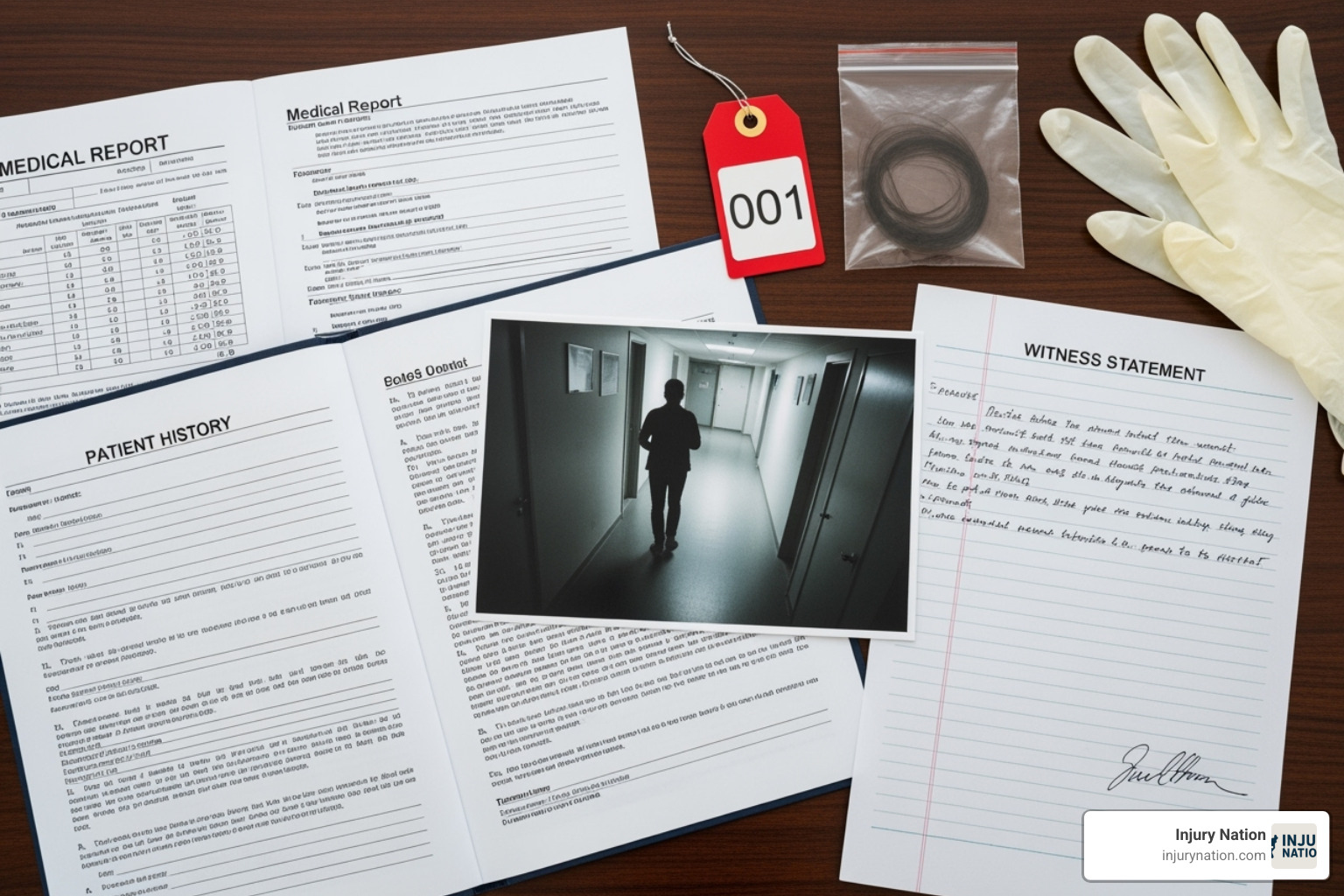
- Witness testimony can corroborate your story and confirm the hazard existed.
- Surveillance video is powerful evidence, showing how the accident happened and how long the hazard was present. Your attorney will act fast to preserve it.
- Medical records link your injuries directly to the accident, which is especially important for issues like brain trauma.
- Accident reports, maintenance logs, and inspection records can reveal a history of negligence or ignored complaints.
- Expert witnesses, like safety engineers or medical experts, can explain complex safety standards or the long-term effects of your injuries.
Your attorney will also steer comparative fault rules. Many states reduce your compensation if you are found partially responsible. Understanding what is comparative fault? helps set realistic expectations for your case.
What to Do Immediately After an Injury
The steps you take right after an injury can significantly impact your claim.
- Seek medical attention immediately. Adrenaline can mask serious injuries, and a medical record is crucial evidence.
- Report the incident to the owner or manager and insist on an official report. Keep a copy.
- Document the scene with photos of the hazard, the surrounding area, lighting, and your injuries.
- Get witness information, including names and phone numbers.
- Avoid admitting fault or apologizing, as it can be used against you.
- Be careful with insurers. Do not give a recorded statement or sign documents from the owner’s insurance company without first consulting your premises liability attorney.
- Keep detailed records of all medical bills, lost wages, and other related expenses.
For more tips, visit more info about our legal blog.
The Legal Journey: Navigating the Lawsuit and Recovering Damages
With a premises liability attorney as your guide, the legal process becomes manageable. The journey typically involves investigation, filing a claim, findy (evidence gathering), settlement negotiations, and potentially a trial. Most cases resolve in several months to a few years, and rushing the process often means accepting a lower settlement.
Calculating damages with a premises liability attorney
A key role of your attorney is to calculate the full value of your claim, considering both current and future losses. Damages fall into two main categories.
Economic damages are tangible losses with a clear dollar value, including:
- Current and future medical bills (ambulance, surgery, physical therapy).
- Lost wages and reduced future earning capacity.
- Related expenses like prescription costs and transportation to appointments.
Non-economic damages compensate for intangible losses and are often the largest part of a settlement. These include:
- Pain and suffering for physical discomfort and chronic pain.
- Emotional distress, such as anxiety, depression, or post-traumatic stress.
- Loss of enjoyment of life when injuries prevent you from participating in hobbies and activities you once loved.
For severe injuries like brain trauma, these damages can be substantial due to their lifelong impact.
Key Deadlines and Lawsuit Stages
Time is a critical factor in premises liability claims. Every state has a statute of limitations, which is a strict deadline for filing a lawsuit. If you miss it, you lose your right to sue.
For example, Massachusetts has a three-year limit for personal injury claims, but other states may only allow two years or less. Contacting an attorney early is crucial to preserve evidence and meet deadlines.
Once a lawsuit is filed, the findy phase begins. Here, your attorney can demand documents like maintenance records and question the property owner and witnesses under oath in depositions.
Settlement negotiations often follow findy, as both sides have a clearer view of the case’s strengths. About 95% of cases settle before trial, offering a faster and more certain outcome. However, if a fair settlement isn’t offered, your attorney will be prepared to take your case to court to fight for the compensation you deserve.
Why You Need an Experienced Premises Liability Attorney
After an injury on someone else’s property, you face not only a painful recovery but also aggressive insurance companies aiming to minimize their payout. Handling a complex legal case alone is a significant risk.

An experienced premises liability attorney is your strongest ally. They provide the legal expertise needed to steer state-specific laws and counter the tactics of insurance adjusters. Insurers are trained to offer quick, lowball settlements that rarely cover the full extent of an injury’s impact.
Proper case valuation is critical. An attorney calculates not just current medical bills but also future treatment costs, lost earning capacity, and non-economic damages like pain and suffering. Claimants with legal representation typically receive significantly higher settlements, even after legal fees.
The Role of Your Attorney
Your premises liability attorney acts as your investigator, negotiator, and advocate.
- Investigating the claim: They immediately work to preserve evidence, such as surveillance footage and witness statements, and dig into maintenance records and incident reports.
- Handling legal paperwork: They manage all complex legal filings and deadlines, preventing your case from being dismissed on a technicality.
- Hiring expert witnesses: They retain safety engineers, medical professionals, and other experts to add credibility and weight to your claim.
- Fighting for a fair settlement: They use their negotiation skills and knowledge of insurance company tactics to push for the maximum possible compensation.
- Representing you in court: If a fair settlement cannot be reached, they are prepared to take your case to trial.
Having an attorney signals to the insurance company that you are serious about your claim. A qualified premises liability attorney will handle the legal fight while you focus on your recovery.
Frequently Asked Questions about Premises Liability Claims
If you’ve been hurt on someone else’s property, you likely have many questions. Here are answers to some of the most common ones.
How much is my premises liability case worth?
There is no simple answer, as every case is unique. A premises liability attorney evaluates several factors to determine your case’s potential value:
- Severity of your injuries: More serious injuries with long-term consequences lead to higher values.
- Total economic losses: This includes all current and future medical bills, lost wages, and other out-of-pocket expenses.
- The defendant’s level of fault: Clear evidence of the property owner’s negligence strengthens your case.
- Strength of your evidence: Surveillance video, credible witnesses, and detailed medical records all increase value.
- Impact on your quality of life: Compensation for pain, suffering, and loss of enjoyment of activities is a major component.
- Insurance policy limits: The defendant’s insurance coverage can sometimes cap the amount you can recover.
How does comparative negligence affect my claim?
Comparative negligence laws address situations where you may be partially at fault for your own injury. Most states, including Nevada, use a modified comparative negligence rule. This means if you are found to be 50% or less at fault, your compensation is reduced by your percentage of fault. If you are 51% or more at fault, you cannot recover any damages. Your attorney will work to minimize any fault assigned to you by proving the property owner’s negligence was the primary cause of your injury.
What are the most common types of premises liability cases?
Premises liability law covers a wide range of incidents. The most common types include:
- Slip and fall accidents: Injuries from slipping on wet, icy, or slick surfaces.
- Trip and fall accidents: Injuries from tripping over hazards like broken sidewalks, torn carpets, or debris.
- Inadequate maintenance: Harm caused by neglected property conditions like broken handrails, faulty elevators, or crumbling stairs.
- Negligent security: Assaults or robberies that occur due to poor lighting, broken locks, or a lack of security personnel.
- Dog bites and animal attacks: Injuries caused by an owner’s pet.
- Swimming pool accidents: Drowning or other injuries resulting from a lack of proper fencing, broken equipment, or inadequate supervision.
The common thread is a property owner’s failure to keep their premises reasonably safe for visitors. If this failure caused your injury, you may have a valid claim.
Conclusion
Being injured on someone else’s property is overwhelming, leaving you with pain, medical bills, and a complex legal system to steer. The most important takeaway is that time is not on your side. Evidence disappears, and strict legal deadlines apply.
Property owners have a legal responsibility to keep their premises safe. When they fail—by leaving a floor wet, ignoring a broken stair, or providing inadequate security—they can be held accountable. Proving their negligence requires gathering evidence, calculating your full range of damages, and building a strong legal case.
Insurance companies will try to settle your claim for as little as possible. An experienced premises liability attorney levels the playing field, handles the legal complexities, and fights for the full compensation you need to rebuild your life.
Don’t let legal complexities stop you from seeking justice. If you’ve been injured due to unsafe property conditions, act now to protect your rights.
At Injury Nation, we’re here to help. Our directory connects you with top-rated attorneys who have the experience and resources to take on insurance companies and win.
Find top-rated personal injury lawyers in your area to handle your premises liability claim