When Medical Trust is Broken: Understanding Anesthesia Error Lawsuits
An Anesthesia error lawsuit is a medical malpractice claim filed when a patient suffers harm due to negligent anesthesia administration. These cases can result in compensation ranging from $200,000 to over $3 million, depending on injury severity. Key elements include:
- Proving negligence: You must show the anesthesiologist breached the standard of care
- Establishing causation: The error directly caused your injury
- Types of errors: Dosage mistakes, failure to monitor, improper intubation, equipment malfunction
- Common injuries: Brain damage, nerve damage, cardiac arrest, anesthesia awareness
- Time limits: In Nevada, you generally have 2-3 years from findy to file
- Who’s liable: Anesthesiologists, nurse anesthetists, hospitals, or surgical centers
During surgery, you trust medical professionals to keep you safe. Anesthesia is meant to keep you comfortable and pain-free, but when errors occur, the consequences can be devastating and permanent.
In as many as 1 in 90 general anesthesia administrations in the United States, something goes wrong with the medications used. That’s a startling statistic. Even more concerning: 1 in 20 anesthesia procedures involves preventable errors.
A recent Baltimore case illustrates these risks tragically. A 43-year-old patient undergoing a routine endoscopy experienced a drop in oxygen saturation and heart rate. The anesthesiologist allegedly failed to intubate for 8-12 minutes. The patient suffered brain injury from lack of oxygen and died days later. His family was awarded over $8 million in a wrongful death lawsuit.
If you or a loved one has suffered from an anesthesia error, you are likely overwhelmed and searching for answers. You deserve to know what happened, who is responsible, and what your legal options are.
Anesthesia error lawsuit vocab explained:
What Constitutes Anesthesia Malpractice?
Anesthesia is a marvel of modern medicine, allowing us to undergo complex procedures without pain. Administered by a specialized doctor known as an anesthesiologist, or a certified registered nurse anesthetist (CRNA), anesthesia can be categorized into three main types: local, regional, and general. You can learn more about these types of anesthesia on the Cleveland Clinic’s Anesthesia page.
However, when medical professionals deviate from the accepted standard of care during anesthesia administration, causing harm, it can constitute anesthesia malpractice. This means the provider failed to act as a reasonably prudent professional would under similar circumstances. Not every adverse outcome is malpractice; the error must be proven to be preventable and that a similarly qualified professional would not have made the same mistake.

What exactly are we talking about when we say “anesthesia malpractice”? It boils down to medical negligence during any stage of anesthesia care—before, during, or after a procedure.
Here are some common anesthesia errors that can lead to a Anesthesia error lawsuit:
- Incorrect dosage (too much or too little anesthetic)
- Improper intubation or extubation
- Failure to properly monitor the patient’s vital signs
- Failure to account for drug interactions or allergic reactions
- Equipment malfunction or misuse
- Delayed response to complications
- Inadequate pre-operative assessment
- Poor communication among the medical team
Common Causes of Anesthesia Errors
Anesthesia errors are not always obvious, but their causes often stem from a breakdown in the accepted standard of care. Our research indicates that in as many as 1 in 90 general anesthesia administrations, something goes wrong with the medications used. Furthermore, almost one-fifth of anesthesiology malpractice claims are for the inadequate treatment of postoperative complications. These statistics highlight the critical importance of meticulous care throughout the entire process.
Common causes include:
- Dosage Miscalculations: Administering too much or too little anesthetic can have severe consequences. An overdose can lead to brain damage, cardiac arrest, or even death, while insufficient anesthesia can result in a patient waking up during surgery, experiencing excruciating pain and psychological trauma.
- Improper Intubation: This involves inserting a breathing tube into the patient’s airway to ensure proper oxygen flow during general anesthesia. Errors during intubation can lead to dental injuries (one-third of anesthesiology lawsuits are brought because of dental injuries due to intubation errors), airway damage, oxygen deprivation, and even brain injury or stroke. Improper extubation (removal of the breathing tube) can also cause complications if the patient is not ready to breathe on their own.
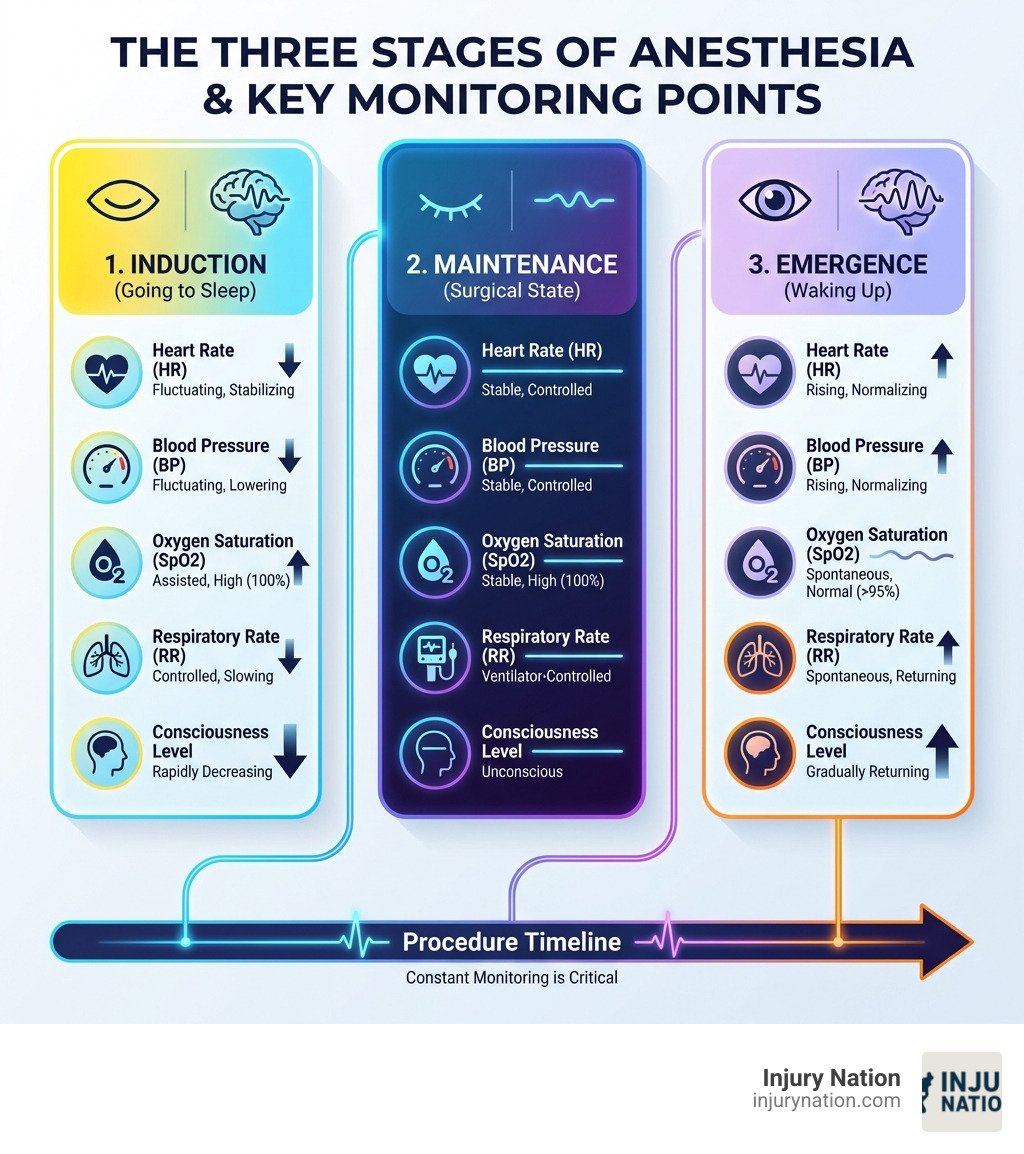
- Failure to Monitor: Continuous monitoring of vital signs (heart rate, blood pressure, oxygen levels, consciousness) is paramount. If an anesthesiologist fails to adequately monitor a patient, critical changes in their condition may go unnoticed, leading to delayed intervention and serious harm. Turning off monitoring equipment, even accidentally, can be considered negligence.
- Allergic Reactions and Drug Interactions: A thorough review of a patient’s medical history for allergies and current medications is crucial. Failing to identify potential allergic reactions or dangerous drug interactions can lead to life-threatening complications.
- Equipment Malfunction: While less common, faulty or improperly maintained anesthesia equipment can contribute to errors. Hospitals and staff have a responsibility to ensure all equipment is in working order.
- Communication Breakdown: Poor communication among the medical team can lead to missed information and an increased risk of errors. Our research shows that poor communication is a major factor in one-third of medical malpractice claims and the primary cause of more than half of serious adverse effects in hospitals.
For a deeper dive into the complexities of anesthesia administration and potential errors, you can refer to Anesthesia Errors Research.
Types of Injuries from Anesthesia Negligence
The injuries resulting from anesthesia negligence can range from temporary discomfort to permanent disability or even wrongful death. When we talk about the severe consequences, we often see:
- Brain Damage: One of the most devastating outcomes, often caused by oxygen deprivation (hypoxia) due to improper intubation, failure to monitor oxygen levels, or cardiac arrest. Even a few minutes without adequate oxygen can lead to irreversible brain injury. If you or a loved one has suffered this type of injury, our Brain Injury Lawyer Guide can provide valuable information.
- Nerve Damage: Can occur from improper patient positioning during surgery, prolonged pressure on nerves, or errors during regional anesthesia (like nerve blocks). This can lead to chronic pain, numbness, paralysis, or loss of function in affected limbs.
- Cardiac Arrest or Stroke: These can be triggered by incorrect medication dosages, adverse drug interactions, or a failure to properly manage a patient’s cardiovascular system under anesthesia.
- Anesthesia Awareness: This is when a patient unexpectedly wakes up during surgery, feeling pain and terror but unable to move or communicate. While rare, it can lead to severe psychological trauma, including PTSD, anxiety, and insomnia.
- Wrongful Death: In the most tragic cases, anesthesia errors can be fatal, leading to a wrongful death claim where surviving family members seek justice and compensation for their profound loss.
- Dental Injuries: As mentioned, improper intubation is a frequent cause of dental damage, including chipped, broken, or lost teeth, often requiring extensive dental work.
Errors Across Different Anesthesia Types
Anesthesia is not a one-size-fits-all solution. Different procedures call for different types of anesthesia, each with its own set of potential risks and error points.
- General Anesthesia Risks: This type induces complete unconsciousness, requiring the patient to be intubated and breathing to be managed by a machine. Errors here often involve dosage, intubation, and continuous monitoring of vital signs.
- Regional Anesthesia Errors (Epidurals, Nerve Blocks): This numbs a larger region of the body, such as an arm or the lower half of the body. Errors can include improper placement of the needle, leading to nerve damage, spinal cord injury, or infection. Too much anesthetic can also cause systemic toxicity.
- Local Anesthesia Mistakes: Used to numb a small, specific area, like for a dental procedure or minor skin surgery. While generally safer, errors can involve administering too much medication, injecting into a blood vessel, or allergic reactions, which can lead to systemic complications if not managed properly.
Across all types, the importance of patient monitoring cannot be overstated. Anesthesiologists and CRNAs must continuously observe a patient’s vital signs, oxygen saturation, and response to medication to prevent and quickly address any complications.
Proving Negligence in an Anesthesia Error Lawsuit
Filing an Anesthesia error lawsuit is complex. It requires proving that a healthcare provider’s actions fell below the standard of care and directly caused your injury. This legal burden of proof involves extensive investigation, expert testimony, and a meticulous review of medical records.

Proving liability is challenging, as complications can arise even with proper care. That’s why having experienced Medical Malpractice Lawyers is crucial. They understand how to steer these complexities and build a strong case on your behalf.
The Four Legal Elements of Malpractice
To prove medical malpractice, including an anesthesia error, we must establish four key legal elements:
- Duty of Care: This is the most straightforward element. It simply means that a doctor-patient relationship existed. When you sought medical treatment, the anesthesiologist or other healthcare provider owed you a professional obligation to provide care consistent with accepted medical standards.
- Breach of Duty: This is where we must prove that the healthcare provider failed to meet the professional duty of care. This means their actions or omissions fell below what a reasonably prudent and competent anesthesiologist or CRNA would have done under similar circumstances. This often requires expert medical opinion to define the standard of care and show how it was violated.
- Causation: We must demonstrate a direct link between the healthcare provider’s breach of duty and your injury. In other words, the negligence must have been the factual cause of your harm. If the injury would have occurred regardless of the negligence, causation cannot be established. This is frequently the most contentious element in a Anesthesia error lawsuit.
- Damages: Finally, we must prove that you suffered measurable losses or harm as a result of the negligence. These damages can be economic (like medical bills and lost wages) or non-economic (like pain and suffering).
Who Can Be Held Liable?
In an Anesthesia error lawsuit, several parties might be held responsible, depending on the specific circumstances of the negligence:
- Anesthesiologist Liability: The physician specializing in anesthesia is often the primary defendant. They are responsible for assessing the patient, formulating the anesthesia plan, administering medications, and monitoring the patient throughout the procedure.
- Certified Registered Nurse Anesthetist (CRNA): Many anesthesia services are provided by CRNAs, who are highly trained advanced practice nurses. If the CRNA’s negligence caused the injury, they can be held liable.
- Surgeon’s Role: While the anesthesiologist manages anesthesia, the surgeon also has a duty to ensure patient safety. In some cases, a surgeon might be held partially liable if they failed to communicate critical information, ignored obvious signs of distress, or contributed to the error.
- Hospital or Surgical Center Negligence (Vicarious Liability): Hospitals can be held liable for the negligence of their employees, including anesthesiologists (if directly employed by the hospital), nurses, and other staff members. This is known as vicarious liability. Hospitals can also be directly liable if they failed to maintain equipment, had inadequate safety protocols, or negligently credentialed an incompetent provider.
The Critical Role of Expert Testimony in an Anesthesia Error Lawsuit
Expert testimony is not just important; it’s absolutely essential in nearly every Anesthesia error lawsuit. Medical malpractice cases are highly technical, involving complex medical concepts that are beyond the understanding of an average juror or judge.
An expert witness, typically a board-certified anesthesiologist from a similar medical field, serves several crucial functions:
- Defining the Standard of Care: The expert explains what a reasonably prudent anesthesiologist would have done under the same circumstances. This sets the benchmark against which the defendant’s actions are judged.
- Explaining Complex Medical Issues: Experts translate intricate medical procedures, physiological responses, and pharmacological effects into understandable terms for the court.
- Proving Causation: The expert provides an opinion on whether the defendant’s breach of the standard of care directly caused the patient’s injury. This is vital for establishing the causation element of malpractice.
- Testifying for the Plaintiff: In Nevada, an initial medical malpractice lawsuit complaint often requires an “affidavit of merit” from a qualified expert. This affidavit confirms that the expert has reviewed the case and believes there is a reasonable basis for the claim, stating that the healthcare provider’s acts or omissions deviated from the accepted standard of care. Without this, a lawsuit can be dismissed.
Our team at Injury Nation works with a network of top medical experts available to review your case and testify on your behalf if needed, helping to ensure your claim is thoroughly supported.
Navigating a Claim in Las Vegas, Nevada: Special Rules and Timelines
When pursuing an Anesthesia error lawsuit in Las Vegas, Nevada, it’s crucial to understand the state’s specific legal rules and timelines. Nevada has particular requirements that differ from other states, designed to manage medical malpractice claims.
Nevada’s Statute of Limitations
The statute of limitations dictates the strict deadline by which you must file your Anesthesia error lawsuit. In Nevada, for medical negligence cases, you generally have:
- Three years from the date the malpractice occurred, OR
- Two years from the date you find, or reasonably should have finded, the malpractice.
Whichever of these two deadlines comes first is typically the one that applies. This rule applies to incidents occurring after October 1, 2023. For wrongful death claims resulting from medical malpractice, the statute of limitations is two years after the victim’s date of death.
There are some exceptions that can extend these deadlines, such as cases involving:
- Minors: The statute of limitations may be paused or extended for minors until they reach adulthood.
- Fraudulent Concealment: If the healthcare provider intentionally concealed the malpractice, the deadline might be extended from the date of findy of the concealment.
It is critical to contact an attorney promptly to confirm the specific statute of limitations for your unique circumstances. Missing this deadline almost always means losing your right to file a claim, regardless of the severity of your injury.
Pre-Suit Requirements for a Nevada Anesthesia Error Lawsuit
Nevada law includes specific pre-suit requirements that must be met before a formal Anesthesia error lawsuit can proceed to court. These steps are designed to ensure the merits of the claim are properly assessed early on.
The most significant pre-suit requirement in Nevada is the affidavit of merit. When you file an initial medical malpractice complaint, it must be accompanied by an affidavit from a qualified medical expert. This affidavit must:
- Be issued by an expert in a similar medical field to the defendant.
- Agree with the assertions of negligence against the defendant.
- Identify each healthcare provider accused of negligence.
- Clearly describe their negligent acts or omissions.
If an adequate affidavit of merit is not submitted, your lawsuit can be dismissed. While it might be dismissed “without prejudice” (allowing you to refile if you correct the issue), it adds delays and costs. This requirement underscores the importance of having an experienced medical malpractice attorney who knows how to secure the necessary expert opinions and steer these procedural problems.
How Nevada’s Damage Caps Affect Compensation
When pursuing compensation for an anesthesia error, it’s important to understand how Nevada’s laws on damage caps can affect the potential recovery, particularly for non-economic damages.
- Non-Economic Damages: These are subjective losses that don’t have a direct monetary value, such as pain and suffering, emotional distress, loss of enjoyment of life, and loss of consortium. Nevada law caps non-economic damages in medical malpractice cases. As of January 1, 2025, this cap is set at $510,000, with annual increases. This means that no matter how severe the pain and suffering, the amount awarded for non-economic damages cannot exceed this cap.
- Economic Damages: These are quantifiable financial losses, including past and future medical bills, lost wages, loss of earning capacity, and other out-of-pocket expenses. Fortunately, Nevada law does not impose a cap on economic damages in medical malpractice cases. This means that if you can prove these financial losses, you can recover the full amount.
The presence of non-economic damage caps can significantly influence the valuation of a Anesthesia error lawsuit and highlights the need for skilled legal representation to maximize recovery for all available damages.
Compensation and Case Outcomes
If you’ve been harmed by an anesthesia error, a Anesthesia error lawsuit is about seeking justice and financial recovery. While no amount of money can undo the harm, compensation can help cover medical expenses, lost income, and the impact on your quality of life.
An attorney’s role is paramount. They will investigate your claim, gather evidence, consult experts, negotiate with insurers, and represent you in court if needed. Our team at Injury Nation helps you steer these complex legal waters. You can find a qualified lawyer through our Anesthesia Error Lawsuit directory.
Types of Recoverable Damages
Victims of anesthesia malpractice can typically recover two main types of damages:
- Economic Damages: These are tangible, quantifiable financial losses directly resulting from the anesthesia error. They include:
- Past and future medical expenses (hospital stays, surgeries, rehabilitation, medications, ongoing care).
- Lost wages and loss of earning capacity (if the injury prevents you from working or reduces your ability to earn).
- Out-of-pocket expenses related to your injury (e.g., adaptive equipment, transportation to appointments).
- Non-Economic Damages: These are subjective losses that are harder to quantify but significantly impact your quality of life. In Nevada, these are subject to caps, as discussed previously. They include:
- Pain and suffering (physical pain and emotional distress).
- Mental anguish and emotional trauma.
- Loss of enjoyment of life.
- Loss of consortium (the impact on your relationship with your spouse or partner).
While Nevada caps non-economic damages, ensuring a comprehensive assessment of economic damages is crucial for full recovery.
What is the Average Settlement for Anesthesia Malpractice?
The “average” settlement for an Anesthesia error lawsuit can be misleading because each case is unique. However, our research indicates that settlements for anesthesia malpractice claims typically range from $200,000 to $3 million or more for severe injuries. This wide range reflects the variability in the factors influencing case value.
Several factors determine the potential value of your claim:
- Severity of Injury: Catastrophic injuries like brain damage or paralysis will command higher settlements than less severe, temporary injuries.
- Strength of Evidence: A clear and compelling link between the anesthesia error and your injury, supported by strong expert testimony and medical records, significantly strengthens your case.
- Economic Losses: The total amount of medical bills, lost income, and projected future care costs will directly impact the economic damages.
- Impact on Quality of Life: How the injury affects your daily activities, independence, and overall well-being.
- Liability: The clarity of who is at fault and the degree of negligence.
- Nevada’s Damage Caps: As discussed, the cap on non-economic damages in Nevada will affect the maximum possible recovery for pain and suffering.
Most medical malpractice claims, including those for anesthesia errors, are resolved through negotiation and settlement rather than going to trial. Insurance companies often prefer to settle to avoid the uncertainty and cost of a jury trial. However, if a fair settlement cannot be reached, our attorneys are prepared to represent you aggressively in court.
Frequently Asked Questions about Anesthesia Malpractice
We understand you likely have many questions about anesthesia errors and your legal options. Here, we address some of the most common inquiries we receive.
Can a patient sue if they woke up during surgery?
Yes, if you experienced anesthesia awareness and it was caused by negligence, it can absolutely be grounds for a Anesthesia error lawsuit. Anesthesia awareness occurs when a patient gains some level of consciousness during a procedure but is often unable to move or communicate. This can be due to:
- Inadequate anesthesia dosing.
- Equipment failure (e.g., a vaporizer malfunction).
- Poor pre-operative assessment of the patient’s condition or medication history.
The experience of waking up during surgery can be incredibly traumatic, leading to severe psychological distress, including PTSD, anxiety, and nightmares. If the awareness was preventable and directly resulted from a breach in the standard of care, you may have a valid claim for the significant emotional and psychological damages you endured.
What is the most important evidence in a malpractice case?
In any medical malpractice case, including an Anesthesia error lawsuit, the most crucial pieces of evidence are:
- Patient Medical Records: These are the backbone of your case. They provide a detailed account of your medical history, pre-operative assessments, the anesthesia plan, notes from during the procedure (including vital signs, medication administration, and any incidents), post-operative care, and subsequent treatments. Any discrepancies, omissions, or clear deviations from protocols within these records can be critical.
- Expert Witness Testimony: As we discussed, medical experts are indispensable. They interpret the medical records, explain the accepted standard of care, highlight where the defendant deviated from that standard, and establish the causal link between the negligence and your injury. Their professional opinion provides the necessary foundation for a successful claim.
Without thorough medical records and compelling expert testimony, proving negligence becomes exceedingly difficult.
How can a failure to properly manage oxygen levels lead to injury?
Failure to properly manage oxygen levels, a condition known as hypoxia (insufficient oxygen supply to tissues) or anoxia (complete lack of oxygen), is one of the most dangerous anesthesia errors. The consequences can be swift and catastrophic:
- Brain Damage: The brain is highly sensitive to oxygen deprivation. Just a few minutes without adequate oxygen can lead to severe, irreversible brain damage, resulting in cognitive impairments, motor skill deficits, or a persistent vegetative state.
- Cardiac Arrest: Prolonged hypoxia can cause the heart to stop functioning, leading to cardiac arrest.
- Other Organ Damage: Other vital organs, such as the kidneys and liver, can also suffer damage from prolonged oxygen deprivation.
Anesthesiologists and CRNAs are responsible for continuously monitoring a patient’s blood oxygen saturation, ensuring the breathing tube is properly placed and functioning, and reacting immediately to any drops in oxygen levels. A failure to perform these duties is a serious breach of the standard of care and a common cause for a Anesthesia error lawsuit resulting in devastating injuries.
How to Find the Right Legal Help
Navigating an Anesthesia error lawsuit is a challenging journey. The legal complexities and emotional toll can be overwhelming, especially while you are focused on recovery. This is not a battle you should face alone.
The importance of experience cannot be overstated when it comes to medical malpractice. You need a legal team that understands the intricate details of anesthesia care, the specific requirements of Nevada medical malpractice law (like the affidavit of merit and damage caps), and how to effectively challenge powerful healthcare institutions and their insurance companies.
Our goal at Injury Nation is to connect victims with the legal representation they need. If you or a loved one has suffered due to an anesthesia error in Las Vegas, Nevada, we encourage you to use our directory to find a qualified medical malpractice attorney in your area. An experienced lawyer can provide a free case evaluation, help you understand your legal rights, gather the necessary evidence, and fight tirelessly to secure the justice and compensation you deserve.