

Car Accident Claims Assistance in Omaha: What to Do When the Other Driver Gives You an Expired Insurance Card
After a collision in Omaha, an expired insurance card can create immediate uncertainty—especially when you are injured, your vehicle is damaged, and the other driver’s coverage is unclear. The most important point is simple: an expired insurance card is not proof that the driver had no active insurance on the date of the crash. Cards may be outdated, policies may have renewed electronically, or the vehicle may be insured under different documentation.
At the same time, you should not assume coverage exists or wait for an insurer to sort out the issue while evidence disappears. A careful response can protect a potential car accident claim in Omaha, preserve information needed to verify coverage, and help you identify other possible insurance paths if the other driver’s policy is lapsed, denied, or insufficient.
An Expired Insurance Card Does Not Automatically Mean No Coverage
Insurance cards are often snapshots of a policy at one moment in time. A driver may keep an old paper card in a glove compartment after renewing a policy. They may have digital proof of insurance on a phone but hand over the first document they find. A vehicle may also be covered under a policy held by another household member or business.
That means an expired insurance card car accident situation requires verification, not assumptions. The expiration date on the card may be relevant, but it does not alone answer the key question: whether insurance was active at the exact date and time of the collision.
It is also possible that the policy was canceled, that the driver was not covered for this crash, or that the policy limits are not enough to cover the injuries and losses involved. Those are separate coverage questions. They should be addressed through appropriate reporting and insurance channels rather than through an argument at the roadside.
If you were hurt, focus on your health and the evidence first. Do not accuse the other driver of being uninsured based only on an old card, and do not let the uncertainty prevent you from documenting the crash thoroughly.
Why the distinction matters for an injury claim
A coverage dispute can affect where a claim is presented, but it does not erase what happened in the collision. The facts of the crash still matter: who had the right of way, traffic signals, vehicle positions, witness observations, roadway conditions, visible damage, and the nature of your injuries.
Injury documentation matters as well. Pain, stiffness, headaches, dizziness, numbness, and other symptoms can appear or worsen after the shock of a collision fades. Prompt medical evaluation can help protect your health and create a record of the condition you reported after the crash. This is not a direction to pursue a particular course of treatment; it is a practical reason not to dismiss symptoms simply because you left the scene under your own power.
What to Do at the Omaha Crash Scene
In a serious or uncertain crash, the scene is where valuable evidence is easiest to preserve. If you can do so safely, take deliberate steps before vehicles are moved or the other driver leaves. Call 911 when someone is injured, when there is a safety concern, or when law enforcement assistance is needed. Follow directions from responding officers and emergency personnel.
Exchange more than an insurance card
An insurance card is only one part of the information exchange. Obtain or photograph the following information when possible:
- The other driver’s full name, address, phone number, and driver’s license information.
- Their vehicle’s make, model, color, license plate number, and vehicle identification number if safely accessible.
- The name of the vehicle owner if the driver says the car belongs to someone else.
- The insurer name, policy number, and any claim-reporting information shown on the card or electronic proof.
- Photos of both sides of the insurance card, including dates, policy details, and vehicle information.
- Photos or screenshots of any digital insurance information the driver voluntarily shows you.
- The names and contact details of witnesses.
- The responding agency, officer name or badge number if available, and any incident or report reference information.
Be accurate and calm. Avoid debating fault, apologizing for the crash, guessing about injuries, or agreeing that you are “fine” if you are unsure. A brief exchange of facts is usually more useful than a roadside discussion about who will pay.
Document what was actually provided
If the other driver gives you an outdated card, photograph it exactly as provided. Do not alter it, write over it, or discard it later because it looks invalid. Note the date, time, and location of the crash, as well as anything the driver said about their insurer or policy. For example, you may note that the driver stated the policy had been renewed, that they could not locate a newer card, or that the vehicle belonged to a family member.
That record is not proof that their statement is true. It is simply a contemporaneous record of what was exchanged and said. In a disputed claim, details captured early can be more reliable than memories reconstructed weeks later.

Capture the broader crash picture
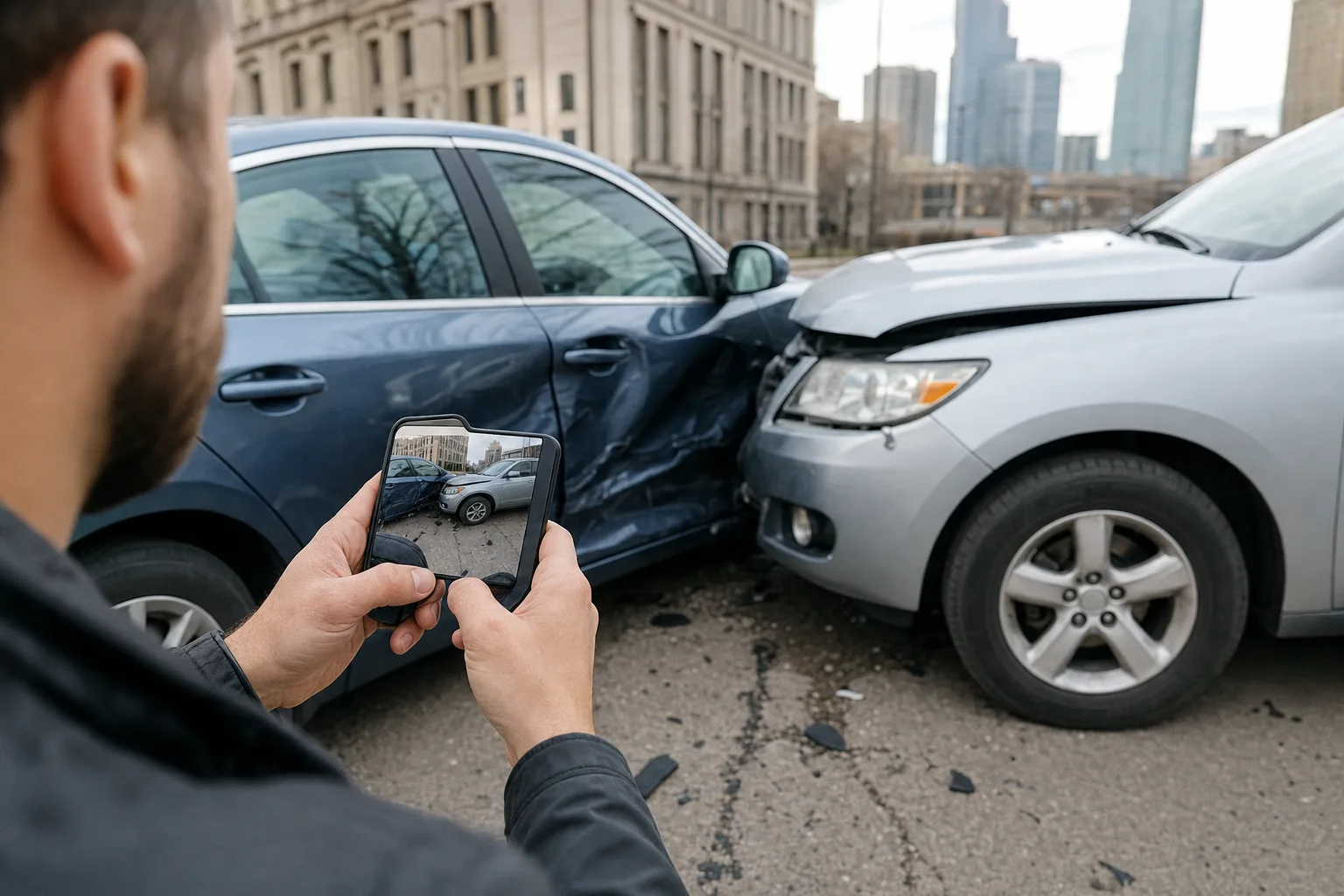
Take wide and close photos of vehicle positions, damage, debris, traffic lights or signs, lane markings, skid marks, road conditions, and nearby landmarks. If a nearby business, intersection camera, or other source may have recorded the event, make a note of its location. Video footage can be overwritten quickly, so identifying possible sources early may matter.
For a fuller overview of the local area and available legal resources, visit Injury Nation’s Omaha personal injury local guide.
How to Verify the Other Driver’s Insurance Coverage
Coverage verification should occur through appropriate channels—not by relying solely on the printed expiration date. If you have the insurer name and policy number shown on the card, you can report the crash or seek to open a claim with that insurer. Provide factual information: the crash date, involved vehicles, identifying information, and the available policy details.
The insurer may confirm a claim was opened, investigate whether the policy applied on the crash date, request additional information, or later communicate a coverage position. Do not assume that a claim number means coverage has been accepted. Likewise, do not treat an initial statement that coverage cannot be confirmed as the final word without understanding the basis for that position.
Use the crash report as an important reference point
A Nebraska accident report can help establish foundational information such as the parties involved, vehicle details, location, date, time, and responding officer’s observations. It is not necessarily the final answer to fault or insurance coverage, but it may provide facts useful to insurers and to your own claim review.
Keep the report number, request the report through the appropriate official process when available, and compare its basic identifying details with your own photographs and notes. If you notice an apparent factual error, preserve your evidence and ask a lawyer about the appropriate way to address an issue that could affect the claim.
Notify your own insurer carefully and promptly
Your own auto policy may require prompt notice of a crash, even if you believe the other driver caused it. Reporting the collision does not automatically mean you accept fault or must agree with another insurer’s version of events. It gives your insurer notice and can allow you to ask what coverages may be available under your policy.
When making a report, stick to known facts. You can say that the other driver supplied an expired card and that coverage is being verified. Avoid speculating that the driver had no insurance unless an appropriate investigation has established that conclusion.
Keep a written claim log
Insurance uncertainty often leads to repeated calls and conflicting information. A simple claim log can help you stay organized. Record:
- The date and time of each call, email, text, or online submission.
- The name and role of the person you spoke with.
- Claim numbers and reference numbers.
- What documents you provided and how they were sent.
- What was requested from you and any stated deadline.
- Any statement that coverage is pending, denied, disputed, or unavailable.
Save copies of correspondence, medical bills, repair estimates, photos, receipts, and work-related loss documentation. Organization does not guarantee a particular outcome, but it can make it easier to respond accurately when questions arise.
File the Right Reports and Preserve Claim Evidence
One of the most important car accident insurance claim steps is separating the documents that establish the crash from the documents that establish your losses. Both categories may be important in an Omaha injury claim.
Evidence about how the crash happened
Preserve photos, videos, witness information, vehicle damage evidence, and a copy of the applicable crash report. Do not repair, sell, or dispose of a damaged vehicle before documenting it thoroughly and before any necessary inspection is complete. If the vehicle must be moved or repaired, take comprehensive photographs first and retain repair records.

If you had a dashboard camera, preserve the original file. If a passenger recorded video or took photos, request copies promptly. Avoid posting crash footage, detailed injury updates, or arguments about fault on social media. A post made in frustration can be misunderstood or used to challenge the seriousness of injuries later.
Evidence about your injuries and losses
Save documents connected to the physical, financial, and practical effects of the crash. This may include medical visit records, itemized bills, prescription receipts, records of time missed from work, towing invoices, rental transportation records, and communications about vehicle repairs.
Keep a personal symptom and limitation journal if injuries affect daily activities. Use straightforward observations rather than exaggeration: difficulty sleeping, pain while driving, inability to lift usual items, missed activities, or changes in mobility. Such notes can help you remember the progression of symptoms when speaking with medical providers or reviewing the claim later.
For a broader explanation of the general process, Injury Nation also covers common car accident claim steps and legal protections. The legal rules and insurance language can vary by state, so an Omaha-specific review is important when coverage is disputed.
Your Claim Options if Coverage Is Lapsed, Denied, or Unclear
If investigation shows that the other driver had no active applicable liability coverage, or if an insurer denies coverage, the issue becomes more complicated—but not necessarily hopeless. The available path depends on the crash facts, vehicle ownership, policy language, the injuries involved, and other circumstances.
Liability coverage from the other side
If the other driver’s policy was active and applies to the crash, a liability claim may be the first route for injury-related losses and property damage. The insurer may still investigate fault, medical causation, the value of damages, and policy limits. An active policy does not mean every demand will be paid, and a card that appears expired does not mean coverage did not exist.
Your own uninsured or underinsured motorist coverage
Your policy may include uninsured motorist coverage, underinsured motorist coverage, or both. In general terms, uninsured motorist coverage may become relevant when the at-fault driver had no applicable insurance. Underinsured motorist coverage may become relevant when the other driver’s available liability coverage is not enough for covered losses, subject to the specific policy and applicable law.
Whether a Nebraska uninsured motorist claim is available depends on the language of your policy and the particular facts. It should not be assumed. Review the declarations page and policy documents, and ask the insurer what coverage it is evaluating. Because first-party claims can involve notice requirements, exclusions, offsets, and disputes about losses, legal guidance can be valuable before giving a recorded statement or accepting a proposed resolution.
Other possible sources of coverage
Depending on the situation, there may be questions about whether the vehicle was owned by another person, used for work, covered under a household policy, or insured differently than the card suggested. These questions are fact-specific. They are reasons to investigate, not reasons to make assumptions about a driver, employer, vehicle owner, or insurer.
If a coverage denial is based on a policy lapse or cancellation, ask for the basis of the denial in writing where possible. A written explanation can help clarify what is being denied, which policy is involved, and whether the issue is lack of active coverage, a policy exclusion, a driver-related issue, or something else.
Mistakes That Can Hurt an Omaha Car Accident Claim
A coverage problem can feel urgent enough to make anyone rush. But several common reactions can make a claim harder to evaluate later.
- Assuming the driver is uninsured: An old card may be outdated. Preserve it, report the facts, and let appropriate channels verify policy status.
- Failing to document the card and vehicle: A photo of the card, license plate, vehicle damage, and driver information can be more useful than a hurried handwritten note.
- Waiting too long to report the crash: Delays can make it harder to obtain evidence, identify witnesses, or meet policy notice obligations.
- Giving broad recorded statements without preparation: You can report known facts without guessing about speed, fault, the full extent of injuries, or insurance coverage.
- Accepting a quick payment before the coverage picture is clear: A payment or release can have consequences. Understand what you are being asked to sign and what claims it may affect.
- Ignoring symptoms: Seek timely medical evaluation if you have pain or other symptoms after the crash. A delay may affect both your health and later documentation.
- Relying only on verbal updates: Ask for important claim positions and requests in writing, and maintain your own communication log.
- Posting about the collision online: Even casual posts, photos, or comments can be taken out of context in an injury claim.
These are practical claim-protection steps, not individualized legal advice. The facts and legal options in any case can differ substantially.
When to Have an Omaha Car Accident Lawyer Review the Case
You do not need to wait until every insurance question is resolved before asking for guidance. In fact, an early consultation may be especially useful when the other driver supplied an expired card and the insurer is slow to confirm whether coverage existed.
Consider speaking with an Omaha personal injury lawyer when any of the following applies:
- You have injuries that require medical evaluation, follow-up care, or time away from work.
- The other driver’s insurer says it cannot locate an active policy or has issued a coverage denial.
- The other driver disputes fault or gives a different account of the collision.
- You are being asked for a recorded statement, a broad medical authorization, or a release.
- You have uninsured or underinsured motorist coverage questions under your own policy.
- There are multiple vehicles, a commercial vehicle, a borrowed vehicle, or uncertainty about who owned the vehicle.
- The insurer is delaying, sending inconsistent information, or pressuring you to resolve the claim before the injury picture is clear.
What a consultation can help diagnose
A consultation is an opportunity to review the crash facts, the expired insurance documentation, the police-report information, your injuries, the communications you have received, and the insurance policies that may be relevant. An attorney can help identify questions that need answers before the insurance narrative becomes fixed, such as whether liability coverage may still apply, whether your own policy needs closer review, and what evidence should be preserved now.
A lawyer cannot promise that coverage exists, that a claim will be accepted, or that a particular settlement result will occur. But a focused review can help you understand the next practical steps and avoid overlooking a potential claim path.
Frequently Asked Questions
Can I still file a car accident claim in Omaha if the other driver gave me an expired insurance card?
Yes, you may still be able to pursue a claim. An expired card does not establish that the policy was inactive on the crash date. Report the collision, preserve the card and other scene evidence, and seek verification through the insurer and other appropriate channels. If you were injured or coverage is disputed, prompt legal review can help clarify the available options.
Should I call the insurance company listed on an expired card after a crash?
You can report the crash or seek to verify whether a claim can be opened using the insurer information on the card. Provide accurate crash facts and retain a record of the communication. Remember that the insurer may need to investigate whether a policy was active and applicable, so a report is not the same as a coverage acceptance.
What happens if the other driver was uninsured or their policy had lapsed?
The other driver’s liability insurer may deny coverage if no active applicable policy existed. Your own uninsured motorist coverage may be relevant, depending on your policy and the facts. There may also be other coverage questions involving vehicle ownership or other policies. A claim review can help identify what should be investigated rather than assuming there is no path forward.
Will my uninsured or underinsured motorist coverage help after an Omaha crash?
It may help in some situations, but coverage depends on the terms of your policy, the available evidence, and the facts of the crash. Review your policy declarations and notify your insurer as required. If the injuries are significant or the other insurer has denied coverage, consider having an attorney review the policy before you make decisions that could affect the claim.
How soon should I speak with a lawyer if an insurer says there was no active coverage?
It is wise to seek guidance promptly, particularly if you were injured, you have received a written denial, or you are unsure whether your own coverage applies. Early review can help preserve evidence, organize the claim record, and identify policy-related questions while records and witness information are still available.
Get the Coverage Problem Evaluated Before It Controls Your Claim
An expired insurance card after an Omaha crash is a warning to investigate—not a final answer about whether compensation may be available. Preserve the card, gather the complete exchange of information, document the collision and your injuries, report the claim through appropriate channels, and keep careful records of every coverage update.
If an injury, policy lapse, denial, or insurer delay is making the situation harder to manage, Injury Nation can help you schedule a free consultation to review the crash facts, insurance information, injuries, and available coverage questions. An Omaha claim review can help diagnose the issue before an insurer’s incomplete account of the crash controls the narrative.