Understanding Your Legal Rights After a Brain Injury
A head injury attorney specializes in helping victims of traumatic brain injuries (TBIs) and other head trauma recover compensation for medical expenses, lost wages, pain and suffering, and long-term care. These attorneys understand the complex medical and legal issues unique to brain injury cases and work with medical experts to prove the full extent of your damages.
What a head injury attorney does for you:
- Investigates your case by gathering medical records, accident reports, and witness statements
- Proves negligence by establishing that someone else’s careless actions caused your injury
- Calculates full damages including current and future medical costs, lost earning capacity, and pain and suffering
- Negotiates with insurance companies who often try to minimize payouts or deny claims
- Handles all legal deadlines including statutes of limitations (typically 2-3 years, depending on your state)
- Works on contingency meaning you pay no fees unless they win your case
Brain injuries are among the most serious injuries possible. In the U.S. alone, hundreds of thousands are hospitalized for TBI-related injuries annually, and tens of thousands die from them.
Beyond the statistics, a head injury can change everything: your ability to work, your relationships, and your capacity for self-care. Medical bills mount quickly, rehabilitation can take years, and many symptoms have a delayed onset. Navigating the complex legal process is daunting. Insurance companies aim to pay as little as possible, and without an experienced attorney, you risk being undercompensated or having your claim denied.
This guide explains what you need to know about head injury claims, from recognizing symptoms to understanding your legal rights. Most importantly, it will help you understand why having the right attorney makes all the difference in securing the compensation you deserve.
Understanding the Impact of a Head Injury
A head injury is a profound event with far-reaching consequences. For victims, understanding the medical basics is the first step toward recovery and seeking justice.
What Constitutes a Head Injury?
A head injury is any trauma to the scalp, skull, or brain. These are broadly categorized as Traumatic Brain Injuries (TBI), caused by an external force, and Acquired Brain Injuries (ABI), caused by internal factors like a stroke. Our focus is on TBIs, which typically form the basis of personal injury claims.
Traumatic Brain Injuries (TBIs) occur from a sudden blow, jolt, or penetration to the head, with severity ranging from a mild concussion to permanent brain damage. You can find more information from the National Institute of Neurological Disorders and Stroke (NINDS).
Acquired Brain Injuries (ABIs) result from internal factors like strokes or infections. Legal claims for ABIs often involve medical malpractice rather than personal injury.
Here’s a quick comparison:
| Feature | Traumatic Brain Injury (TBI) | Acquired Brain Injury (ABI) |
|---|---|---|
| Cause | External force (e.g., impact, jolt, penetration) | Internal factors (e.g., stroke, infection, lack of oxygen) |
| Onset | Sudden, immediately following trauma | Can be sudden or gradual, due to internal medical event |
| Examples | Concussion, diffuse axonal injury, skull fracture, hematoma | Stroke, brain tumor, anoxia, encephalitis, aneurysm rupture |
| Legal Claim | Personal injury (negligence, assault) | Medical malpractice, sometimes product liability |
Common TBI classifications include:
- Closed Head Injuries: The skull remains intact, but the brain is jostled inside (e.g., concussions).
- Open Head Injuries: The skull is fractured, and an object may penetrate the brain.
- Concussion: A mild TBI (mTBI) where the brain shifts inside the skull, which can still have lasting effects.
- Diffuse Axonal Injury (DAI): A severe TBI where the brain’s connecting fibers (axons) are torn.
- Intracranial Hemorrhage: Bleeding within the skull, causing dangerous pressure on the brain.
Common Causes of Head Injuries
Head injuries are often the result of someone else’s negligence.

Common causes include:
- Automobile Accidents: A leading cause of TBIs, accounting for over 50 percent of cases.
- Falls: Slip and fall accidents are another prevalent cause, especially among seniors.
- Sports Injuries: Contact sports like football and hockey carry a high risk of concussions and other head trauma.
- Workplace Accidents: Industries like construction pose risks from falls, falling objects, or machinery accidents.
- Physical Assault: Acts of violence, including domestic violence, can lead to severe head injuries.
Recognizing the Symptoms: Immediate and Long-Term
Symptoms can be immediate or delayed, appearing days or weeks later. This is why immediate medical attention is crucial.
Immediate Symptoms:
- Sudden headache or confusion
- Dizziness, nausea, or vomiting
- Blurred vision or slurred speech
- Memory loss or loss of consciousness
Long-Term Symptoms:
- Physical: Persistent headaches, dizziness, balance issues, seizures, fatigue.
- Cognitive: Memory loss, difficulty concentrating, impaired judgment, trouble with planning.
- Emotional/Behavioral: Personality shifts, irritability, mood swings, depression, anxiety.
- Delayed Onset: Serious symptoms can emerge hours or days after an accident. For more on the effects, you can refer to Brain Injury Canada’s insights.
How Head Injuries Are Diagnosed
A head injury is a medical emergency. Proper diagnosis is vital for treatment and for documenting the injury for a legal claim.
Medical assessment includes:
- Physical and Cognitive Exams: Doctors check neurological function, reflexes, memory, and orientation. The Glasgow Coma Scale (GCS) is often used to assess severity.
- Imaging Tests: These are essential for visualizing brain damage.
- CT (Computed Tomography) Scans: Quickly detect skull fractures, bleeding, and swelling.
- MRI (Magnetic Resonance Imaging) Scans: Provide more detailed images and can detect subtle changes not visible on a CT scan.
- Neuropsychological Testing: If symptoms persist with normal scans, these comprehensive tests evaluate cognitive functions like memory and attention to reveal subtle brain damage. A normal MRI or CT scan does not rule out a TBI.
Follow all medical advice and attend follow-up appointments. Comprehensive documentation is paramount for your health and any legal action. You can find more general information on Healthline.
The Legal Process for a Head Injury Claim
Dealing with the aftermath of a head injury is overwhelming. Understanding the critical legal steps, deadlines, and potential compensation is vital for victims and their families.
What to Do Immediately After Sustaining a Head Injury
Your actions immediately following a head injury can significantly impact your health and any future legal claim.
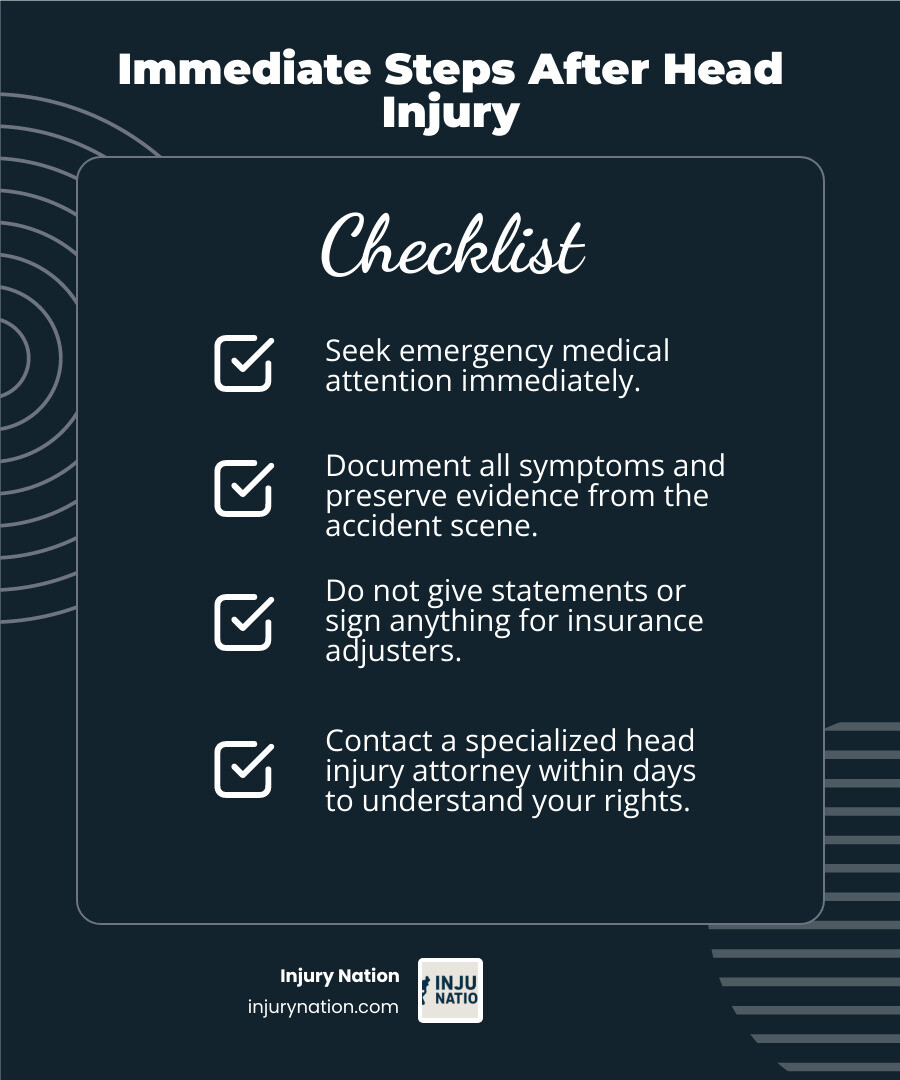
- Seek Immediate Medical Attention: This is the most crucial step. Head injuries are a medical emergency. Delaying care can worsen your prognosis and weaken your legal case.
- Report the Incident: Ensure the event is officially documented. File a police report for crashes, an incident report for falls, or a workplace injury report.
- Document Everything: Keep a detailed record of symptoms, medical visits, and how the injury impacts your daily life. Take photos of the scene and your injuries.
- Preserve Evidence: Collect contact information for any witnesses. Do not discard damaged items related to the incident.
- Avoid Speaking to Insurance Adjusters: Their goal is to minimize payouts. Do not give recorded statements or sign anything without first consulting a head injury attorney.
- Contact a Lawyer: As soon as you are medically stable, reach out to a qualified head injury attorney to protect your rights.
Legal Time Limits: The Statute of Limitations
Every personal injury claim is subject to a statute of limitations—a strict legal deadline for filing a lawsuit. If you miss this deadline, you will likely lose your right to pursue compensation.
In Nevada, the general statute of limitations for personal injury claims is two years from the date of the accident. There can be exceptions, such as for minors or when an injury isn’t immediately finded. Given these complexities, it’s paramount to act quickly. An experienced head injury attorney in Las Vegas can ensure all deadlines are met.
What Types of Compensation Can Be Recovered?
A successful claim aims to recover compensation for all damages suffered, both economic and non-economic.

Economic Damages: These are quantifiable financial losses:
- Medical Expenses (Current and Future): Includes all care, from emergency services to long-term rehabilitation and counseling.
- Lost Wages: Compensation for income lost while unable to work.
- Loss of Earning Capacity: Compensation for future lost income if your ability to earn is permanently impaired.
- Rehabilitation Costs: Covers specialized programs, adaptive equipment, and home modifications.
Non-Economic Damages: These compensate for intangible losses:
- Pain and Suffering: For the physical pain and emotional distress caused by the injury.
- Emotional Distress: Includes anxiety, depression, PTSD, and other psychological impacts.
- Loss of Enjoyment of Life: If the injury prevents you from enjoying hobbies and activities.
- Loss of Consortium: A spouse may seek damages for the loss of companionship and support.
Severe injury claims may be classified as “catastrophic injuries,” which involve extensive long-term needs. You can learn more about how we handle such cases at Spinal Cord Injury Lawyer Complete Guide.
The Role of a Litigation Guardian
If a head injury renders someone incapable of making legal decisions, a “litigation guardian” (often a close family member) must be appointed by the court to act on their behalf. This guardian manages the personal injury claim, makes legal decisions, and ensures any compensation is managed in the victim’s best interest. A head injury attorney can guide families through this necessary legal process.
Why You Need a Specialized Head Injury Attorney
While many lawyers handle personal injury, a head injury case is unique. The complex science, often-invisible nature of the injury, and profound long-term impact demand specialized expertise that a general practitioner may not possess.
How a Head Injury Attorney Builds a Strong Case
Building a strong head injury case involves meticulous investigation, expert collaboration, and a deep understanding of how to prove negligence.
Here’s how a dedicated head injury attorney approaches it:
- Investigation and Evidence Gathering: We dig deep, gathering and organizing crucial evidence like medical records, accident reports, and witness statements. We also collect statements from family and friends who can testify to changes in the victim’s abilities or personality.
- Working with Experts: Expert witnesses are indispensable. We work with neurologists, neuropsychologists, life care planners, and financial experts to establish the full extent of the injury, its cause, future medical needs, and lost earning capacity.
- Proving Negligence: To win, we must prove the at-fault party was negligent by demonstrating four key elements:
- Duty of Care: The responsible party owed you a legal duty to act reasonably (e.g., a driver’s duty to be attentive).
- Breach of Duty: The party failed to uphold that duty (e.g., they were texting while driving).
- Causation: This breach of duty directly caused your head injury. This is often a contentious point, requiring expert testimony to draw a clear link.
- Damages: You suffered actual financial and personal losses as a result.
What to Expect During Your Consultation with a Head Injury Attorney
The initial consultation is a free, no-obligation opportunity for you to understand your options and for the attorney to assess your case.
During this meeting, you can expect to:
- Discuss Your Case: We will listen to your story, asking about the accident, your symptoms, and how your life has been affected.
- Review the Facts: Be prepared to provide details, dates, and any documents you have (medical records, police reports).
- Understand Your Rights: We will explain the legal process, your rights under Nevada law, and the types of compensation you may be eligible for.
- Discuss Fees: Most head injury attorney firms work on a contingency fee basis. This means you pay no upfront fees, and the attorney only gets paid if they win your case.
How to Find the Best Head Injury Attorney for Your Case
Choosing the right attorney is a critical decision. You need someone with specific qualifications.
Look for a lawyer who has:
- Experience with TBI Cases: This is non-negotiable. The attorney should have a proven track record of handling complex TBI lawsuits in Nevada.
- Trial Experience: While most cases settle, you want an attorney prepared to go to trial. Insurance companies make better offers when they know your lawyer isn’t afraid to litigate.
- Access to Medical Experts: A top attorney will have a network of respected medical professionals who can provide expert testimony.
- A Strong Reputation: Look for positive client testimonials and a good reputation in the legal community.
- Resources: Head injury litigation is expensive. Ensure the firm has the financial resources to fund expert witnesses and see your case through to the end.
Injury Nation connects victims with top-rated legal professionals who specialize in these complex cases. If you’re looking for an attorney in Las Vegas, Nevada, start your search with us. Find a qualified head injury attorney near you through our directory: Brain Injury Lawyer Near Me.
Frequently Asked Questions about Head Injury Claims
Navigating a head injury claim can bring up many questions. Here are answers to some of the most common concerns.
How long do head injury claims typically take to resolve?
The timeline for a head injury claim varies from several months to a few years. Key factors include:
- Case Complexity: Simple cases with clear fault may resolve faster than those with multiple parties or complex medical issues.
- Severity of Injury: For severe injuries, it’s often best to wait until the victim reaches “maximum medical improvement” (MMI) to accurately assess future damages before settling.
- Negotiation vs. Litigation: Most cases settle through negotiation. If a fair offer isn’t made, filing a lawsuit and going to trial will extend the timeline.
Can I still have a case if my MRI or CT scan is normal?
Absolutely. A normal MRI or CT scan does not rule out a traumatic brain injury.
Standard imaging tests often cannot detect microscopic damage to brain cells and nerve fibers, which is common in concussions and diffuse axonal injuries. Brain injuries often manifest as cognitive or emotional symptoms, not visible structural damage. Neuropsychological testing can reveal these deficits in memory, attention, and executive function, providing crucial evidence for your claim.
If you have symptoms of a head injury, even with normal scans, it is vital to consult a head injury attorney who understands these diagnostic challenges.
What are the potential long-term effects of a brain injury on an individual’s life?
The long-term effects can be profound, impacting every aspect of a person’s life. These may include:
- Permanent Disability: Physical impairments affecting mobility, coordination, or speech.
- Cognitive Deficits: Chronic issues with memory, concentration, and problem-solving.
- Personality Changes: Increased irritability, anxiety, depression, or impulsivity that can strain relationships.
- Financial Strain: The immense cost of long-term care, rehabilitation, and lost income.
- Diminished Quality of Life: The cumulative effect of these changes can lead to social isolation and a loss of enjoyment in life.
These long-term effects underscore why it is critical to secure comprehensive compensation that accounts for a lifetime of needs.
Conclusion: Taking the Next Step Towards Justice
A head injury is not merely a physical ailment; it’s a life-altering event that can bring profound changes to an individual’s physical, cognitive, emotional, and financial well-being. The path to recovery is often long and arduous, filled with medical complexities and financial burdens.
Securing fair compensation is not about getting rich; it’s about ensuring that you have the resources necessary for the best possible recovery, long-term care, and a stable future. It’s about holding negligent parties accountable and alleviating the immense stress that comes with unexpected medical bills and lost income.
This is precisely why an experienced head injury attorney is not just an option, but your most important advocate. They handle the intricate legal complexities, fight against insurance companies who seek to minimize your claim, and ensure that all aspects of your suffering are recognized and compensated. This allows you to focus on what truly matters: your healing and rehabilitation.
At Injury Nation, we understand the devastating impact of head injuries and the critical need for expert legal representation. Our directory is designed to connect victims in Las Vegas, Nevada, and across the nation with top-rated legal professionals who possess the specialized knowledge, experience, and resources to handle these challenging cases.
Don’t steer this difficult journey alone. Take the next step towards justice and a more secure future. Find experienced catastrophic injury attorneys to handle your case today: Find experienced catastrophic injury attorneys to handle your case.