

When Someone’s Negligence Takes a Life
A wrongful death case is a civil lawsuit filed when someone dies due to another’s negligent, reckless, or intentional actions. These cases allow surviving family members to seek financial compensation and hold the responsible party accountable.
Key facts about wrongful death cases:
- Who can file: Typically the deceased’s spouse, children, parents, or estate representative
- Common causes: Car accidents, medical malpractice, workplace incidents, defective products
- Types of damages: Lost income, funeral costs, loss of companionship, medical bills
- Time limit: Usually 2 years from the date of death (varies by state)
- Standard of proof: Preponderance of the evidence (more likely than not)
- Separate from criminal cases: Civil wrongful death claims proceed independently from any criminal prosecution
When a loved one’s life is cut short by another’s wrongful actions, the emotional pain is unbearable. The legal system refers to this as a wrongful death. Most fatal accidents are preventable. While no amount of money can replace a loved one, wrongful death laws provide financial stability for survivors and hold negligent parties accountable.
These civil claims are separate from criminal cases. Families can pursue compensation regardless of criminal charges, as the law recognizes the financial hardships survivors face, from funeral costs to lost income.
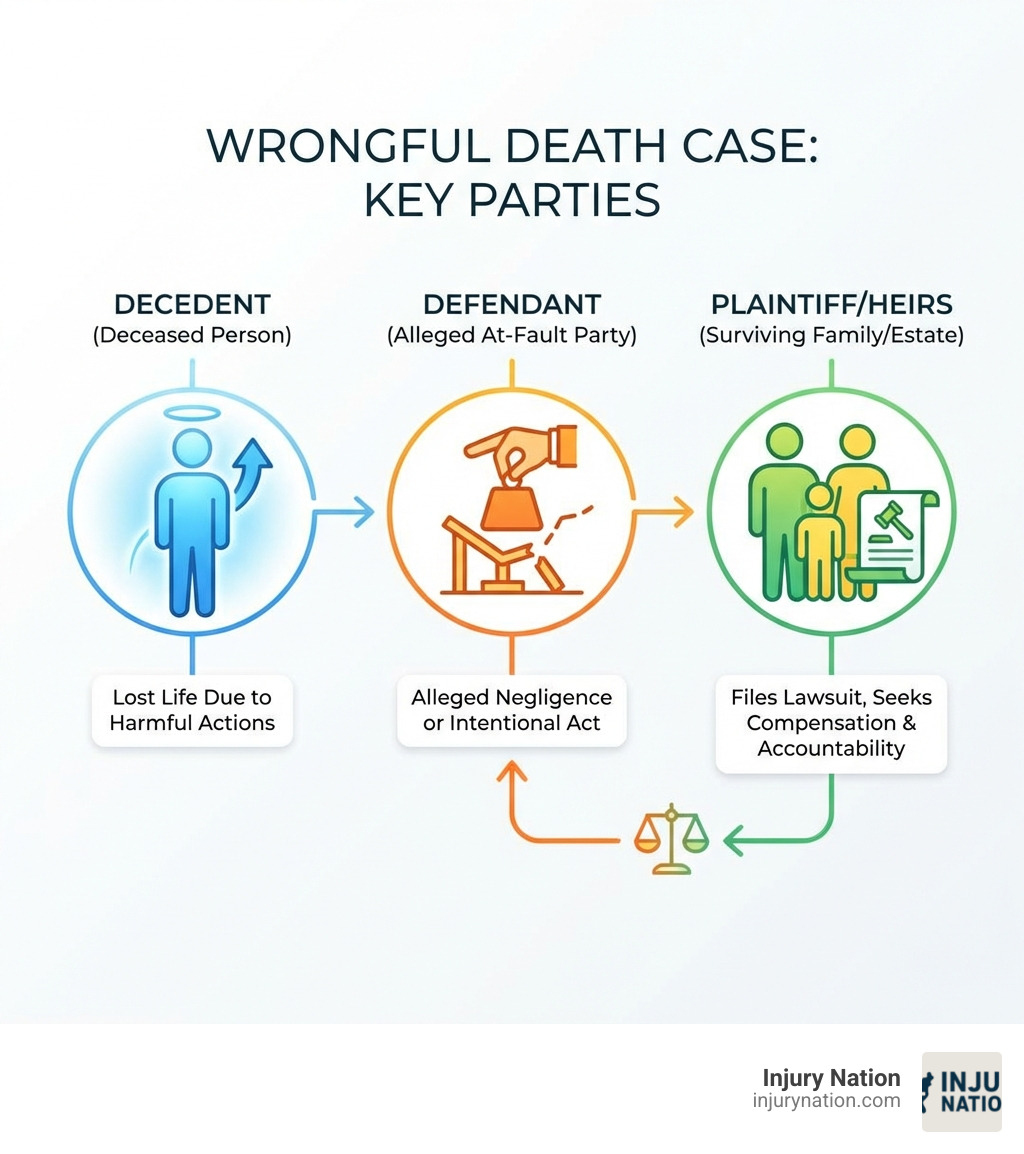
This infographic illustrates the three key parties in a wrongful death case: the decedent (the person who died), the defendant (the person or entity allegedly responsible for the death through negligence or intentional harm), and the plaintiff or heirs (surviving family members such as spouse, children, or parents who file the lawsuit seeking compensation for their losses).
Quick wrongful death case definitions:
What is a Wrongful Death Claim?
A wrongful death case is a civil lawsuit against a person or entity liable for a death. Its goal is to compensate surviving family members for their losses, not to impose criminal penalties like jail time.
This concept provides justice and financial recovery when a death is caused by another’s negligence or intentional act. The Legal Information Institute at Cornell Law School defines a “wrongful death action” as a civil claim against a person liable for a death. A legal definition of a “Wrongful death action”.
Historically, such claims weren’t allowed. However, modern statutes in states like Nevada now grant families the right to seek compensation for the financial and emotional burdens they face.
Proving Your Wrongful Death Case: The Four Core Elements
To successfully prove a wrongful death case in Nevada, we generally need to establish four key elements:
- Duty of Care: The defendant owed the deceased a legal duty to act with reasonable care (e.g., a driver’s duty to drive safely).
- Breach of Duty: The defendant breached this duty through negligence or a wrongful act (e.g., a driver speeding or texting).
- Causation: The defendant’s breach directly caused the death. We must prove their actions were the factual and proximate cause of the fatality (e.g., a drunk driver running a red light and causing a fatal crash).
- Damages: The death resulted in quantifiable damages for the surviving family, such as lost income and emotional distress.
The legal burden of proof in a civil wrongful death case is the “preponderance of the evidence.” This means we must demonstrate that it is more likely than not (over 50% probability) that the defendant’s actions caused your loved one’s death. This is a lower standard than “beyond a reasonable doubt,” which is used in criminal cases.
Who Can File a Wrongful Death Lawsuit?
State law, including Nevada’s, strictly defines who can file a wrongful death case. The lawsuit is typically filed by the personal representative of the deceased’s estate for the benefit of eligible heirs.
In Nevada, eligible parties usually include:
- The deceased’s spouse or domestic partner
- The deceased’s children
- The deceased’s parents (if no surviving spouse or children)
- The deceased’s siblings (if no surviving spouse, children, or parents)
- Other close, financially dependent relatives in some situations
Nevada law generally excludes fiancés, unmarried partners, and unadopted step-children from filing. Our team can help determine your eligibility.
Civil vs. Criminal Cases: A Key Distinction
A wrongful death case is a civil action, separate from any criminal proceedings related to the same death.
Here’s a quick comparison:
| Feature | Civil Wrongful Death Case | Criminal Homicide Case |
|---|---|---|
| Purpose | To compensate the deceased’s family for their losses (financial, emotional) | To punish the offender for breaking the law, protect society |
| Filed By | The deceased’s family (or their legal representative) | The state (prosecutor) |
| Burden of Proof | Preponderance of the evidence (more likely than not) | Beyond a reasonable doubt (much higher standard) |
| Outcome | Monetary damages (compensation) | Jail time, fines, probation, other penalties |
| Legal Basis | State statutes (e.g., Nevada’s wrongful death laws) | Criminal codes (e.g., laws against murder, manslaughter) |
| Example | Family sues a drunk driver for compensation after their loved one’s death | State prosecutes the drunk driver for vehicular homicide |
The O.J. Simpson case is a famous example. Though acquitted in his criminal trial, he was found liable in a civil wrongful death case brought by the victims’ families. This shows how different burdens of proof can lead to different outcomes. Jury Decides Simpson Must Pay $25 Million in Punitive Award.
This means you can pursue a civil wrongful death case for compensation even if no criminal charges are filed or if the defendant is acquitted. Our focus is on proving liability to secure your family’s financial future.
Common Causes and Determining Liability
A wrongful death case can arise from many preventable circumstances where negligence or an intentional act causes a death.
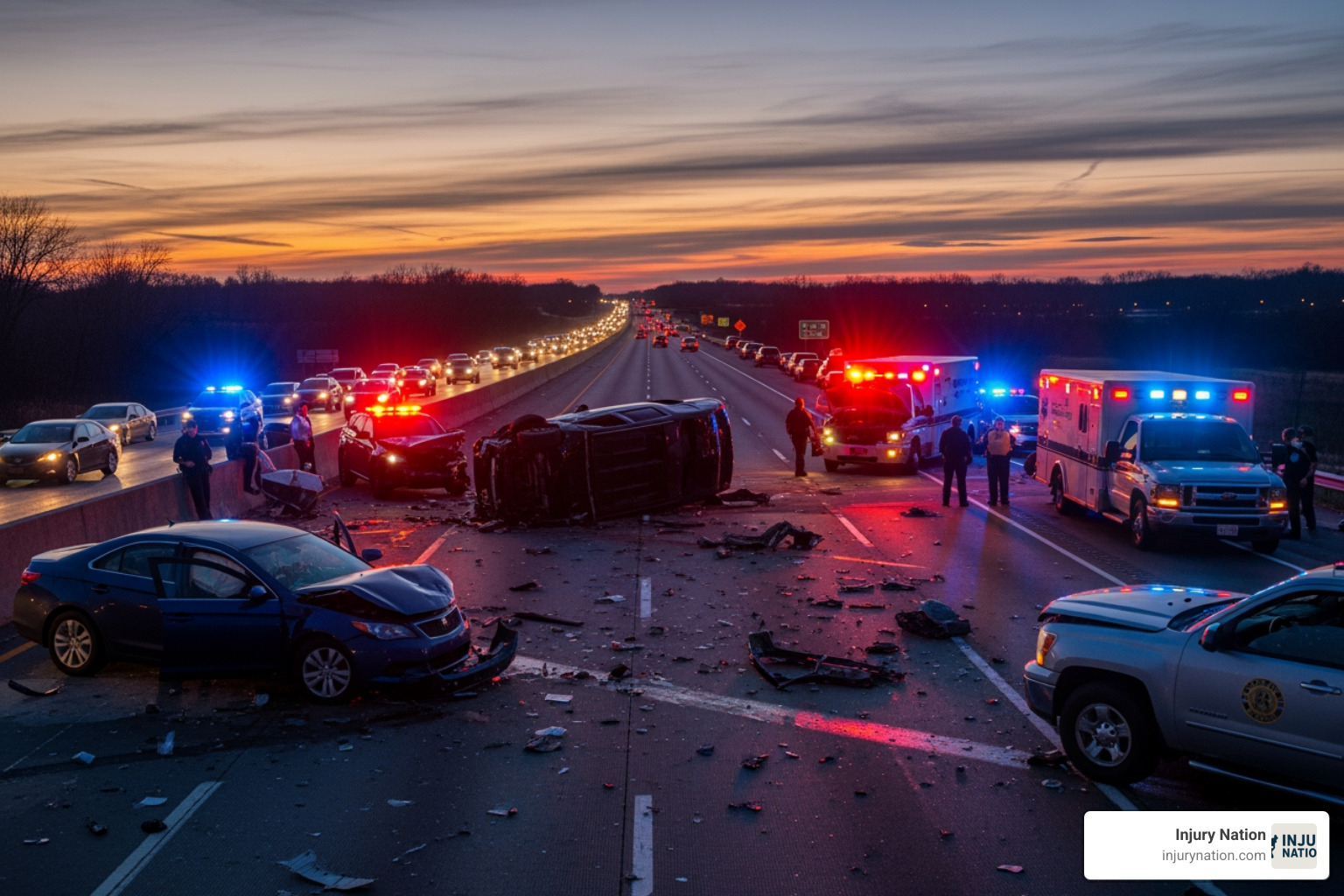
Some of the most common causes we see in Nevada include:
- Car Accidents: These are a leading cause of wrongful deaths, often due to human errors like distracted driving, speeding, or drunk driving.
- Truck Accidents: Collisions involving large commercial trucks often result in fatalities due to their size and weight.
- Motorcycle and Pedestrian Accidents: Vulnerable road users are at high risk when drivers are negligent.
- Medical Malpractice: Fatal errors by healthcare professionals, including misdiagnosis, surgical mistakes, or medication errors.
- Defective Products: Manufacturers, distributors, or sellers can be liable when a dangerous product, from auto parts to medical devices, causes a death.
- Workplace Accidents: Fatalities can result from unsafe work conditions, poor training, or equipment failure, for which employers may be liable.
- Premises Liability: Property owners can be liable for deaths caused by unsafe conditions like hazardous surfaces or inadequate security.
- Intentional Acts: Intentional acts like assault can be the basis for both criminal charges and a civil wrongful death case.
Determining liability requires a thorough investigation. We gather evidence like police reports, medical records, and expert testimony to establish how the defendant’s breach of duty led to your loved one’s death.
Critical Deadlines: The Statute of Limitations
While grieving, it’s hard to think about legal deadlines, but the “statute of limitations” is a critical deadline for filing a wrongful death case. Missing this deadline means you lose your right to seek compensation.
In Nevada, the standard limitation period for filing a wrongful death case is generally two years from the date of the deceased person’s passing. This clock starts on the day of death, not the day of the incident.
While rare exceptions exist, it is vital to act quickly. Consulting an attorney promptly helps preserve evidence and ensures you don’t miss the deadline, which would permanently bar your claim.
Understanding Damages and Compensation in a Wrongful Death Case
A wrongful death case aims to provide financial compensation to survivors for their losses. While money cannot replace a loved one, damages help ease financial burdens and hold negligent parties accountable.

Successful claims help families regain financial stability by covering immediate and long-term costs.
Economic, Non-Economic, and Punitive Damages
In Nevada, damages in a wrongful death case are typically categorized into economic, non-economic, and sometimes punitive damages:
-
Economic Damages: These are calculable financial losses, including:
- Lost income and earning capacity
- Medical expenses incurred before death
- Funeral and burial expenses
- Loss of inheritance
- Value of lost household services
-
Non-Economic Damages (General Damages): These compensate for intangible, personal losses, which in Nevada can include:
- Loss of companionship, comfort, and society
- Grief and sorrow of the survivors (each heir must file a separate claim)
- Loss of training and guidance
-
Punitive Damages: These are awarded to punish the defendant for egregious or malicious conduct and to deter future wrongdoing. They are not for compensation. In Nevada, they may be awarded for extreme or intentional negligence, as seen in the O.J. Simpson civil case. Jury Decides Simpson Must Pay $25 Million in Punitive Award.
How Settlements Are Calculated
Calculating a fair settlement is complex, involving more than just adding up bills. It requires valuing intangible losses and extensive negotiation. Our legal team assesses every factor to seek full compensation.
Key factors influencing settlement calculations in Nevada include:
- Deceased’s Age and Health: The deceased’s age, health, and life expectancy affect calculations for lost earnings and companionship.
- Earning Capacity and Employment History: The deceased’s income, career path, and benefits are key to calculating lost financial support.
- Life Expectancy: The life expectancies of both the deceased and beneficiaries are considered.
- Number and Relationship of Dependents: The number of dependents and their relationship to the deceased impacts damages.
- Degree of Fault (Comparative Negligence): Under Nevada’s modified comparative negligence rule, the award is reduced if the deceased was partially at fault.
- Insurance Policy Limits: The at-fault party’s insurance policy limits often cap the recoverable amount.
- Strength of Evidence: Strong evidence of liability and damages leads to higher settlements.
- Negotiation Process: Skilled negotiation is key, as most cases settle out of court.
Experts like economists and vocational specialists are often vital for calculating complex future losses.
Navigating the Lawsuit Process
Navigating a wrongful death case is daunting while grieving. Understanding the process can help. We handle the legal complexities so you can focus on your family.
The process typically involves several stages:
- Initial Consultation: We meet with you for free to discuss the case and explain your legal options.
- Case Investigation: Our team launches a thorough investigation, gathering evidence like accident reports, medical records, and witness statements.
- Filing the Claim (Complaint): We draft and file a formal complaint with the court, outlining the facts, defendants, and damages sought.
- Findy Phase: Both sides exchange information through written questions (interrogatories), document requests, and depositions (sworn testimony).
- Settlement Negotiations: Most cases are resolved through negotiation or mediation. We negotiate aggressively to achieve a fair settlement.
- Trial: If a settlement isn’t reached, the case goes to trial, where a judge or jury decides liability and damages.
- Verdict and Appeals: The losing party may appeal the court’s decision, which can extend the process.
- Collection of Damages: After a settlement or judgment, we ensure the compensation is collected and distributed to the beneficiaries.
How Can a Wrongful Death Lawyer Help? Our role is to manage all these intricate steps, allowing you to focus on your family during this difficult time.
Timeline of a Typical Wrongful Death Case
A wrongful death case can take months or years to resolve. The timeline depends on several factors unique to each case in Nevada:
- Case Complexity: Simple cases resolve faster than complex ones with multiple defendants or difficult liability issues.
- Extent of Damages: Cases seeking very high damages often require more rigorous investigation and negotiation.
- Defendant’s Willingness to Settle: A defendant’s willingness to negotiate in good faith speeds up the process; disputes cause delays.
- Court Docket: The court’s schedule can affect how quickly a case proceeds.
- Findy Process: The amount of evidence and number of depositions required impacts the timeline.
- Negotiation vs. Trial: Settlements are much faster than trials, which require extensive preparation.
- Potential for Appeals: Appeals after a trial verdict can add significant time.
We strive for an efficient resolution but prioritize securing maximum compensation. We will keep you informed about the timeline at every stage.
Common Mistakes to Avoid When Pursuing a Claim
While grieving, it’s easy to make mistakes that could jeopardize your wrongful death case. Avoid these common pitfalls:
- Waiting Too Long to File: Nevada has a strict two-year statute of limitations. Missing this deadline bars your claim, so contacting an attorney immediately is crucial.
- Speaking to Insurance Adjusters Alone: Insurance adjusters aim to minimize payouts. They may use your statements against you or offer a low settlement. Let your attorney handle all communications.
- Accepting the First Settlement Offer: Initial settlement offers are almost always too low. Don’t accept one without a full valuation of your claim.
- Posting on Social Media: Refrain from posting about your case on social media. The defense can use anything you post to undermine your claim.
- Not Documenting Expenses: Keep detailed records of all expenses and financial losses. This documentation is crucial for proving damages.
- Failing to Hire an Experienced Wrongful Death Lawyer: These cases are complex. An experienced lawyer understands Nevada law, knows how to value your claim, and can effectively fight experienced defense teams on your behalf.
Frequently Asked Questions about Wrongful Death Lawsuits
We understand you likely have many questions during this difficult time. Here are answers to some common inquiries about wrongful death cases:
What is the difference between a wrongful death action and a survival action?
A wrongful death case in Nevada compensates surviving family members (heirs) for their own losses, such as lost financial support and loss of companionship.
A survival action is brought by the deceased’s estate to recover damages the deceased could have claimed if they had survived. This includes their pain and suffering, medical bills, and lost wages between the injury and death.
Both claims are often filed together to maximize recovery. Our team can advise on the appropriate claims for your situation.
Can I still file a claim if the deceased was partially at fault?
Yes. Nevada uses a “modified comparative negligence” rule. If the deceased was 50% or less at fault, your compensation is reduced by their percentage of fault. For instance, a $1M award would be reduced to $800,000 if the deceased was 20% at fault. However, you cannot recover any damages if the deceased was more than 50% at fault.
How much does it cost to hire a wrongful death lawyer?
Most wrongful death lawyers work on a contingency fee basis. This means you pay no upfront fees. The lawyer’s fee is a percentage of the compensation we secure for you. If we don’t win, you owe no legal fees. This allows families to access high-quality legal help without financial risk.
Finding a Path Forward After a Tragic Loss
Losing a loved one is an unimaginable tragedy, and when that loss is due to someone else’s negligence, the pain can be compounded by feelings of anger and injustice. While no legal action can ever truly fill the void left by your loved one, pursuing a wrongful death case can provide your family with critical financial security and hold the responsible parties accountable for their actions.
Our goal at Injury Nation is to help you steer these challenging times with clarity and compassion. We understand the emotional, physical, and financial costs that accompany such a loss. By taking legal action, you not only seek compensation for your family’s future but also contribute to preventing similar tragedies from happening to others.
We encourage you to focus on healing and supporting your family. Let us handle the legal complexities. If you believe your loved one’s death was caused by another’s negligence, don’t hesitate to reach out. We are here to listen, offer guidance, and connect you with experienced legal professionals who can fight for the justice and compensation you deserve.
Find a compassionate personal injury lawyer in your area and take the first step toward finding a path forward.