Why Finding the Right Lawyer Matters When You’re Injured
When you’re injured and need legal help, finding the best lawyer rating website can feel overwhelming. You’re likely dealing with pain, medical bills, and the stress of recovery- and now you need to choose someone to trust with your case and your future.
The legal industry has evolved dramatically. Years ago, choosing a lawyer meant relying on word-of-mouth referrals or flipping through the Yellow Pages. Today, over one-third of prospective clients rank positive reviews as a top three factor when deciding whether to hire a lawyer.
Think of it like buying a car without any information- no safety ratings, no performance data, no reviews. That’s what choosing a lawyer used to be like. Now, lawyer rating websites provide the analytical information you need to make an informed decision during one of the most vulnerable times in your life.
These platforms serve a dual purpose. For clients, they offer transparency and empower you to compare attorneys based on experience, peer recognition, and actual client feedback. For attorneys, they provide visibility and a way to showcase their expertise and track record.
The stakes are high. The wrong lawyer could mean a smaller settlement, missed deadlines, or feeling like just another case number. The right one can make all the difference in your recovery- both physical and financial.
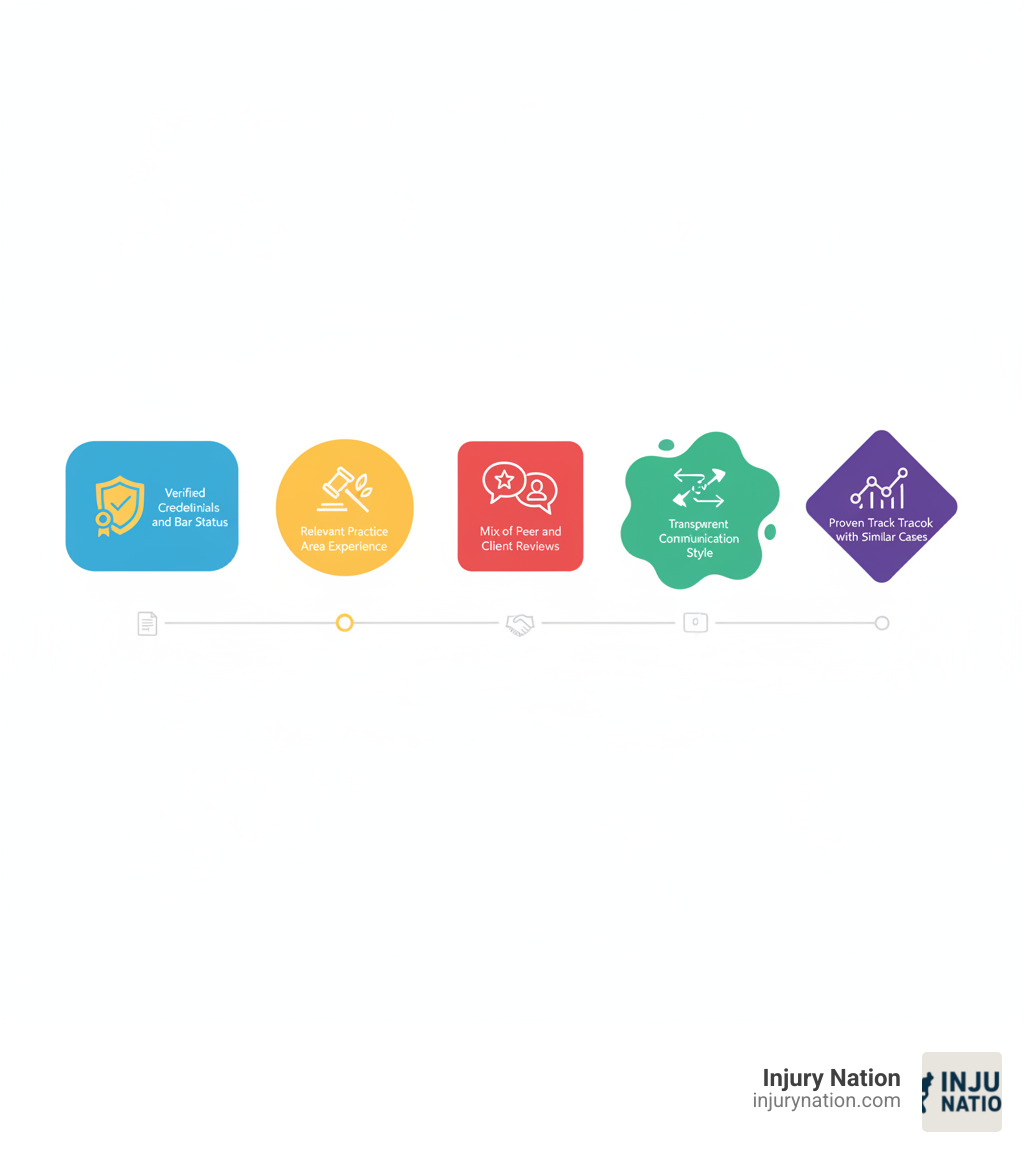
Why Lawyer Review Sites are Essential for Clients and Attorneys
When you’re hurt and searching for help, the last thing you want is to feel like you’re taking a shot in the dark. That’s where best lawyer rating websites come in- they’ve completely changed how people find legal help and how attorneys connect with the clients who need them most.
A decade ago, you’d ask a friend for a referral. Today, you can read what real clients have to say, see what other lawyers think of an attorney’s work, and get a clear picture before you ever pick up the phone. This shift has created something powerful- client empowerment meets attorney visibility.
These platforms pull back the curtain on the legal profession, making it easier for you to find someone who truly fits your needs. For attorneys, they’re a way to build trust and show potential clients exactly what they bring to the table. In fact, over one-third of prospective clients rank positive reviews as a top factor when deciding who to hire. If you want to explore the attorneys in our network, check out more info about our lawyers.
Benefits for Prospective Clients
When you’re dealing with an injury, finding a lawyer shouldn’t add to your burden. Lawyer review sites help you make informed decisions by providing a wealth of information before your first consultation.
- Transparency and Confidence: You’re no longer walking into a meeting blind. You can see how an attorney has handled cases similar to yours, building confidence that you’re making a choice based on real evidence.
- Valuable Feedback: You get access to both peer and client feedback, which gives you a complete picture. Client reviews tell you about the human side- communication and compassion- while peer reviews speak to professional skill and ethical standing.
- Easy Comparison: These platforms make it straightforward to compare multiple attorneys who handle your type of case. You can weigh their experience and track records to narrow down your options. If you’re ready to start, you can compare lawyers directly.
- Legal Education: Many sites also help explain the legal process through Q&A forums and articles, empowering you with knowledge as you steer your case.
Benefits for Legal Professionals
For lawyers, these review platforms are dynamic tools for growth and reputation building.
- Reputation Management: Attorneys can claim their profiles, respond to reviews, and actively shape how potential clients see them. A strong digital presence is essential when most people search online before making any decision.
- Credibility and Lead Generation: Positive reviews, high ratings, and peer endorsements build credibility and act as powerful social proof. Platforms with many visitors become natural gathering places for people actively seeking legal help.
- Feedback for Improvement: The client feedback loop is invaluable. Reviews show attorneys what they’re doing well and where there’s room to grow, helping them refine their practice and serve clients better.
- Showcasing Expertise: These platforms give attorneys a place to highlight professional recognition and awards, demonstrating their expertise and helping them stand out in a crowded field.
Understanding the Different Types of Lawyer Rating Websites
Not every lawyer rating website works the same way. Some rely on computer algorithms, others on peer recognition, and still others focus entirely on what clients have to say. Understanding these differences will help you find the best lawyer rating website for your situation.
For example, if you’re looking for a personal injury lawyer, you probably care about what past clients say about their experience. But for a highly complex case, peer recognition might matter more. Let’s break down the main types of platforms you’ll encounter.
Platforms with Transparent Rating Systems
Some websites use algorithms that analyze public data to create a score or rating. The goal is objectivity- letting numbers tell the story based on verifiable facts. These ratings often come from a proprietary formula that looks at a lawyer’s experience, professional achievements, industry recognition, and peer endorsements.
The important part is that this core rating generally cannot be bought or manipulated. While lawyers can pay for advertising to improve their profile’s visibility, their fundamental score is based purely on professional data. This approach aims to give you an unbiased look at a lawyer’s qualifications.
Peer-Reviewed and Award-Based Directories
These platforms operate on a simple principle: lawyers know lawyers best. They use rigorous selection processes based on peer nominations, independent research, and professional achievement evaluations. Often, these directories recognize only a small, exclusive percentage of attorneys each year.
Selection may be based on an exhaustive peer-review survey where lawyers vote on who they believe are the best in each practice area. Being named to one of these exclusive lists carries serious weight in the legal profession, as it signifies a high degree of respect from one’s colleagues. These platforms believe the best judges of a lawyer’s skill and ethics are their fellow legal professionals.
Client Review and Matching Services
These sites flip the script and put client experiences front and center. They feature extensive client testimonials, direct feedback, and sometimes even matching services that connect you with lawyers based on your specific case details.
Some platforms work differently than a traditional directory. You might submit details about your case, and the service matches you with pre-screened lawyers who are interested in your specific legal matter. This approach focuses heavily on your direct needs and facilitates a connection based on your case specifics rather than just browsing profiles. They are designed with the client experience in mind, emphasizing user-generated content and direct connections.
How to Find the Best Lawyer Rating Website for Your Needs

Searching for a lawyer is like shopping for a car after an accident. You wouldn’t just pick the first one you see. You’d research, compare, and read reviews. The same goes for finding the best lawyer rating website that works for you.
When you’re injured, the last thing you need is to waste time on platforms that don’t help. The key is knowing what to look for and how to use these tools effectively.
Key Features to Look For in the Best Lawyer Rating Website
Here’s what separates the helpful platforms from the time-wasters:
- Advanced search filters are your best friend. You should be able to narrow results by practice area, location, and specific legal issues.
- Practice area specialization matters. A profile should clearly show what types of cases a lawyer handles day-to-day. Personal injury is broad, so you want someone who specializes in your exact situation.
- Detailed attorney profiles tell you who you’re potentially hiring. Look for education, bar admissions, years in practice, and a clear description of their approach.
- Client testimonials provide a reality check. Real feedback reveals how responsive a lawyer is and how they communicate during stressful times.
- Peer endorsements add another layer of credibility. When other lawyers recognize someone’s skill and ethics, that means something.
A Step-by-Step Guide for Prospective Clients
Here’s how to use lawyer review sites without getting overwhelmed:
- Define your legal need. Be specific. “I was rear-ended and have whiplash” is more helpful than “I need a lawyer.”
- Use location and practice area filters. If you’re in Las Vegas, search for “personal injury lawyer in Las Vegas, Nevada” to eliminate irrelevant results.
- Read a mix of reviews. Pay attention to patterns. If multiple clients mention prompt communication, that’s meaningful. If several mention feeling ignored, that’s a red flag.
- Look for how lawyers respond to reviews. A professional response to a complaint shows they care about client satisfaction.
- Cross-reference with your state bar association. Verify the attorney’s license and check for any disciplinary history. This step is crucial—use your state bar association to get started.
Finding a Specialist for Your Personal Injury Case
Personal injury law is diverse. The lawyer who excels at slip and fall cases might not be the best for a complex brain injury claim. Specialization is key.
- Look for relevant case results. While past results don’t guarantee future outcomes, they show experience and capability.
- Find experience with specific injuries. If you have a spinal cord injury, you want a lawyer who understands the long-term costs and impact. Our Vehicle Injury Attorney Complete Guide breaks down these specializations.
- Prioritize communication. You need a lawyer who returns calls and explains things clearly. Look for reviews that mention communication style.
- Seek local expertise. A lawyer who knows the local courts and judges can steer your case more effectively. For guidance on finding the right fit, check out our Best Las Vegas Personal Injury Guide.
Navigating the Pitfalls and Maximizing Your Search

Lawyer rating websites are incredibly helpful, but they’re not perfect. Think of them like restaurant reviews- they give you a good sense of what to expect, but you still need to form your own opinion. When using the best lawyer rating website, approach your research with clear eyes and a commitment to digging deeper than just star ratings.
Potential Drawbacks of Relying Solely on Ratings
Understanding the limitations of online ratings will help you use them more effectively.
- Fake or biased reviews are a real problem. While reputable platforms work to filter them, some slip through. Reviews are subjective, and a single opinion may not reflect the typical client experience.
- A rating is just a single data point. It doesn’t capture a lawyer’s personality, communication style, or whether they are the right fit for your specific case.
- Outdated information is another common pitfall. A lawyer’s practice focus or contact information might have changed, but their online profile may not reflect it.
While learning How to Negotiate a Car Accident Settlement Without a Lawyer can provide background knowledge, it doesn’t replace careful vetting when you hire representation.
Best Practices for Using Review Sites Effectively
So how do you steer this process? Here’s what works best.
- Treat review sites as your starting point, not your finish line. They’re fantastic for creating a shortlist of potential lawyers, but they shouldn’t be where your research ends.
- Always verify credentials independently. Check your state bar association’s website to confirm your potential lawyer’s license is active and in good standing. This is non-negotiable.
- Schedule consultations with multiple attorneys. Most personal injury lawyers offer free consultations. This is your chance to ask questions and see who you connect with.
- Trust your gut during these meetings. Does the lawyer listen carefully? Do they explain things clearly? Your intuition picks up on subtle cues that no online rating can capture.
Combine your online research with real-world interaction. The ideal scenario is finding a lawyer with a strong online reputation who also makes you feel confident and comfortable during your consultation.
The Future of Legal Reviews: Technology and Transparency

The way we find and choose lawyers is changing fast. What started as simple online directories has evolved into sophisticated platforms. The best lawyer rating website of tomorrow will look very different from what we use today- and that’s exciting news for anyone searching for legal help.
We’re moving toward a future where finding the right lawyer feels less like a search and more like a guided process. The human element will always matter, but technology is making the path to that first meeting clearer and faster.
How Technology is Enhancing the Review Process
Artificial intelligence is already reshaping how lawyer review platforms work, making them smarter and more helpful.
- AI-powered tools are changing how lawyers interact with client feedback, helping them acknowledge reviews promptly and showing their commitment to service.
- Advanced matching algorithms go far beyond basic searches. These systems can analyze the details of your case, a lawyer’s track record, and even communication style to suggest better fits.
- Data analysis can process millions of data points from reviews and case outcomes to spot trends. This helps predict case timelines, estimate potential settlements, and identify which lawyers excel at specific injury types.
Technology is also getting better at spotting fake or suspicious reviews, which protects the integrity of the platforms we all rely on.
The Continuing Push for Transparency
Behind all this technology is a simple, powerful idea: everyone deserves access to clear, honest information about lawyers.
- Democratizing legal information means breaking down old walls. Detailed information about thousands of attorneys is now available to anyone with an internet connection, leveling the playing field.
- Accountability in the legal profession has never been higher. Public visibility creates a powerful incentive for lawyers to provide excellent service and communicate clearly.
- Accessibility for consumers keeps improving as platforms become more intuitive and easier to steer, which is crucial when you’re stressed and injured.
This isn’t just about convenience- it’s about justice. When people can easily find qualified legal help and the entire process is transparent, everyone wins.
Frequently Asked Questions about Lawyer Rating Websites
You’ve made it this far, and we know you might still have some burning questions about how these platforms actually work. Let’s tackle the most common ones head-on.
How are lawyer ratings calculated?
Ratings are calculated using various methods, and it depends on the platform. There’s no single universal standard, which is why understanding each site’s approach matters.
- Algorithmic ratings use transparent formulas that analyze public data like a lawyer’s years of experience, professional achievements, and peer endorsements to generate a numerical score.
- Peer-review ratings rely on extensive surveys where lawyers confidentially evaluate their colleagues. This method is highly credible within the legal profession.
- Client-focused ratings blend attorney-to-attorney reviews with direct client feedback and testimonials, giving you both professional and personal perspectives.
Each approach has its strengths, and the best platforms are often clear about how their ratings work.
Can lawyers pay to get a better rating?
This is a crucial question, and the answer should provide some peace of mind: reputable platforms state that core ratings cannot be bought or manipulated.
A lawyer’s numerical score or peer-reviewed status is earned through professional data and achievements, not purchased with advertising dollars.
However, lawyers can often pay for better visibility. This might mean a premium profile that appears higher in search results or other forms of advertising. The key distinction is that paid advertising affects how prominently a profile appears, not the underlying score. This is why it’s important to look beyond who appears first in your search results.
What is the best lawyer rating website for finding an attorney?
Honestly, there’s no single “best” platform for everyone. The best lawyer rating website really depends on what matters most to you.
- If you want a broad directory with a transparent score, some platforms offer exactly that. They’re comprehensive and great for getting a wide view of your options.
- If you’re more interested in peer-vetted excellence, other platforms recognize only a small percentage of lawyers based on rigorous peer review.
For finding a local personal injury lawyer in Las Vegas, Nevada, we recommend a combination approach. Use sites that offer both client reviews and peer recognition, then cross-reference what you find with the Nevada State Bar Association.
The smartest strategy is to consult a mix of platforms to get a well-rounded view. Then, schedule consultations with your top choices. No online rating can replace that face-to-face meeting where you see if there’s a genuine connection.
Conclusion
You’ve made it through the maze of information about lawyer rating websites, and we hope you’re feeling more confident about your search. Finding the right legal representation doesn’t have to feel like a gamble anymore. The best lawyer rating website options- from those with transparent algorithms to those with exclusive peer recognition- put powerful information right at your fingertips.
These platforms have genuinely transformed how people find legal help. Whether you’re dealing with a car accident in Las Vegas or any other personal injury, you now have access to tools that were once only available through insider connections.
But here’s the thing: these tools are only as good as how you use them. Think of lawyer review sites as your starting point, not your finish line. Read reviews, check ratings, and cross-reference credentials. Then take the next crucial step- actually talk to the lawyers on your shortlist. No algorithm can tell you if someone will be the right fit for your personality and your case. That’s where your own judgment comes in.
The legal profession is becoming more accountable and accessible every day, and this momentum benefits people like you who need help during a difficult time.
You’re not just looking for a lawyer. You’re looking for an advocate who will fight for your rights, communicate clearly, and treat you with respect. Someone who understands that behind every case is a real person dealing with real challenges.
We built Injury Nation because we believe everyone deserves access to quality legal representation. The information is out there. The tools exist. Now it’s your turn to use them wisely and find someone who will truly advocate for you.
Ready to take that next step? Let us help you Find the right personal injury lawyer for your case and start your journey toward the settlement you deserve.